This site is supported by our readers. We may earn a commission, at no cost to you, if you purchase through links.
Quilting bees bring together friends who share a love for fabric and stitching. But when you’re working on group projects, your home machine might not be up to the task. The right quilting machine makes all the difference between smooth sailing and constant frustration.
You need a machine that can handle bulky layers, give everyone enough space to work, and keep up with different skill levels. A good quilting bee machine brings features like large throat space, adjustable speed controls, and extension tables that turn cramped stitching into comfortable group work.
When you choose the right equipment, your quilting circle can focus on what matters most—creating beautiful quilts together.
Table Of Contents
- Key Takeaways
- Essential Features in Quilting Bee Machines
- Types of Quilting Machines for Bees
- Top Quilting Machines for Quilting Bees
- 1. Juki Computerized Quilting Sewing Machine
- 2. Brother PQ1600S High-Speed Sewing and Quilting
- 3. Singer Quantum Stylist Sewing Machine
- 4. Brother Sewing And Quilting Machine
- 5. Brother Computerized Sewing Machine
- 6. Juki Sewing And Quilting Machine
- 7. Janome Sewing Quilting Machine
- 8. Bernette Sewing Quilting Machine
- Benefits of Using Specialized Machines at Bees
- Tips for Choosing and Maintaining Bee Machines
- Frequently Asked Questions (FAQs)
- Conclusion
Key Takeaways
- Choosing a quilting machine with a large throat space, extension table, and adjustable speed makes group projects much easier and more comfortable.
- Durable machines with features like adjustable presser foot pressure and free motion settings help everyone create neat, even stitches, no matter their skill level.
- Regular cleaning, maintenance, and hands-on demos are key to keeping your bee’s machines running smoothly and matching your group’s needs.
- Most quilting bees work best with four to six machines and often start by renting before investing in ownership for long-term collaboration.
Essential Features in Quilting Bee Machines
When you’re shopping for a machine to use at your quilting bee, you need features that support group work and handle large projects. The right machine makes it easier for everyone to contribute and keeps your communal quilts moving smoothly.
Here are the essential features to look for in a quilting bee machine.
From stitch quality to throat space, knowing the key features to look for in a quilting machine helps you choose equipment that matches your skill level and project ambitions.
Large Throat Space for Bulky Quilts
A roomy throat is like giving your quilts breathing room. When you’re tackling bulky projects at your bee, you need at least 9 to 11 inches of throat space to keep layers flat and tension even.
Key throat space benefits:
- Bulky quilts lie flat without bunching or lifting
- Multiple layers feed smoothly through without snagging
- You can stitch edge to edge without constant repositioning
- Free motion work stays precise across wide sections
- Less fabric drag means consistent stitches throughout
This machine throat capacity reduces strain on your hands and keeps everyone’s work looking professional.
To understand more about why this space matters, check out this detailed guide to throat space measurement essentials.
Extension Tables for Increased Workspace
Extension tables give you the extra real estate you need when group projects spread out. These add-ons attach right to your quilting machines and boost your workspace by 12 to 24 inches on each side.
Here’s what makes them work for bee sessions:
| Feature | Benefit |
|---|---|
| Sliding panels | Lock securely for stability during long stitching |
| Edge alignment rails | Keep seams flush with your main surface |
| Anti-slip surfaces | Stop rulers from shifting mid-cut |
| Quick-release clamps | Remove extensions fast without tools |
Good table extensions mean better fabric management and quilt maneuverability for everyone sharing the machine.
Adjustable Presser Foot Pressure
Pressure adjustment on sewing machines lets you dial the presser foot force up or down to match your fabric layers. When your bee works with cottons, blends, or bulky batting, you’ll turn that dial higher to grip everything firmly.
Lighter fabrics need less pressure so they don’t pucker. This foot calibration keeps your sewing accuracy sharp across different quilting machines and fabric settings during group sessions.
For more details on achieving the ideal setting for each material, review these presser foot pressure adjustment techniques.
Speed Control for Consistent Stitching
When you set your sewing speed just right, every quilter at your bee gets the same smooth stitch length. Motor calibration keeps thread tension steady across multiple layers, so you won’t see puckering or skipped stitches.
Pedal control lets you start slow and ramp up gently—perfect when hands guide bulky fabric.
Longarm machines and newer sewing machine features often include digital speed regulation to help groups work together without fighting the feed.
Free Motion and Drop Feed Settings
Drop feed settings let you lower the feed dogs so you can guide fabric by hand during free motion quilting. This gives you total control over stitch length and lets you create custom designs. A free motion foot improves visibility while you work.
Many longarm machines and newer models offer a simple lever or button to switch between standard sewing and drop feed mode.
Types of Quilting Machines for Bees
When you’re shopping for a quilting bee machine, you’ll find several types to choose from. Each type offers different features and price points to match your group’s needs.
Let’s look at the main categories so you can figure out which one works best for your bee.
Computerized Quilting Machines
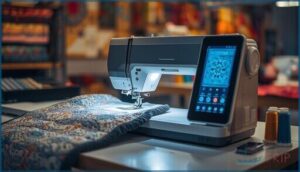
Computerized sewing machines bring automated quilting features that make bee projects easier and more enjoyable. These best quilting machines use precision guiding and stitch regulation to keep everyone’s work looking consistent. You’ll love how thread management systems and machine calibration simplify setup.
- Pattern memory stores hundreds of designs you can reload across multiple quilts
- Automated thread trimming gives cleaner finishes at every seam
- Built-in software enables modern quilting techniques and custom pattern editing
- Servo motors provide quiet operation ideal for group settings
Mechanical Quilting Machines
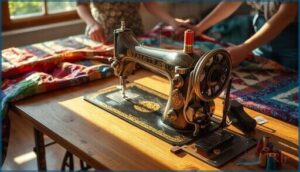
Mechanical quilting machines give your quilting bee reliable performance without complicated electronics. These sewing machines deliver steady throat space—often 6 to 12 inches—so group members handle large panels without constant repositioning.
Foot controls let you adjust speed manually while machine frames stay stable under heavy fabrics.
When you need durable quilting equipment and straightforward quilting accessories, mechanical models serve your bee well.
Longarm Quilting Machines
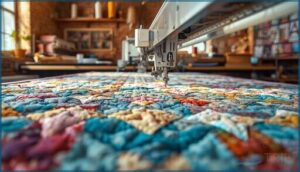
Longarm quilting machines transform how your bee handles king-size projects with throat space stretching 18 inches or wider. Handi Quilter and Bernina lead longarm quilting machine sales with frame designs that hold your quilt sandwich taut while you glide across 10 to 14 feet of fabric.
Look for these features:
- Stitch regulation systems that keep stitches even at any speed
- Automation features for repeating pantograph patterns
- Quilting software that turns digital designs into stitches
- Machine customization options for tension and speed settings
Midarm Quilting Machines
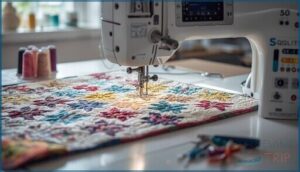
Midarm quilting machines give your bee the sweet spot between size and control with throat space around 9 to 10 inches. These machines shine with built-in stitch regulation and free motion tips that keep every quilter’s stitches consistent.
You’ll love the machine ergonomics with knee lifters and hand-grip controls, plus thread management features like side-loading bobbins that speed up your group sessions.
Top Quilting Machines for Quilting Bees
You’ve learned what features matter most and which types of machines work best for quilting bees.
Now let’s look at eight specific machines that deliver the throat space, speed control, and durability your group needs. These models have proven themselves in both solo and shared quilting environments.
1. Juki Computerized Quilting Sewing Machine
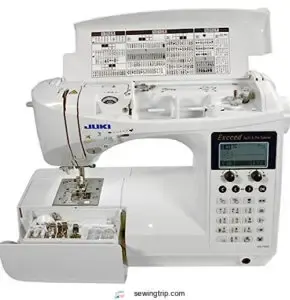
The Juki computerized machine gives you serious speed with up to 2,500 stitches per minute. You’ll love the automatic needle threader that saves time when your bee rotates stations.
The throat space measures 6 to 9 inches, so you can handle bulky layers without bunching. You get 255 built-in stitches and a digital control panel for easy adjustments.
The drop feed lets you do free motion work, and the solid metal frame keeps everything steady during long quilting sessions.
| Best For | Quilters and sewers who want a fast, feature-packed machine that can handle everything from delicate fabrics to thick layers without slowing down. |
|---|---|
| Built-in Stitches | 255 stitches |
| Automatic Needle Threader | Yes |
| Weight | 30 lbs |
| Power Source | AC |
| Extension Table | Accessories included |
| Material | Metal |
| Additional Features |
|
- Blazing fast with 2,500 stitches per minute and 255 built-in patterns for any project you can dream up
- Automatic needle threader and drop feed make setup quick and free-motion quilting a breeze
- Solid metal frame keeps stitches smooth and consistent even during marathon sewing sessions
- The automatic needle threader and bobbin winder can be finicky and sometimes fail to work properly
- Struggles with very thick fabrics or multiple dense layers despite the marketing claims
- Takes some practice to master all the computerized features, and customer support quality is hit-or-miss
2. Brother PQ1600S High-Speed Sewing and Quilting
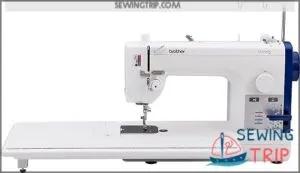
The Brother PQ1600S brings you straight-stitch power at up to 1,500 stitches per minute. You’ll appreciate the 11-inch throat space that manages big quilts without wrestling layers.
The pin feed mechanism moves thick fabrics smoothly, and the push-button thread cutter saves you time between rotations. You get an extension table that holds heavy projects while you work.
The adjustable presser foot pressure works great with different fabric weights. The knee lift frees both hands so you can guide your quilt exactly where it needs to go.
| Best For | Experienced quilters and sewists who tackle large projects and need professional-grade speed and precision. |
|---|---|
| Built-in Stitches | 1 stitch (straight) |
| Automatic Needle Threader | No |
| Weight | 24 lbs |
| Power Source | Corded Electric |
| Extension Table | 11.1″ x 23.3″ |
| Material | Plastic/Metal frame |
| Additional Features |
|
- Blazing fast at 1,500 stitches per minute with a huge 11-inch throat space for handling bulky quilts
- Pin feed mechanism and adjustable presser foot pressure handle thick fabrics and multiple layers like a champ
- Time-saving features like the push-button thread cutter and knee lift keep your workflow smooth
- Too complex and fast for beginners who are still learning basic techniques
- Needle threader is finicky and struggles with lower-quality thread
- Top thread tension dial is hard to see and the side-loading bobbin doesn’t warn you when thread runs low
3. Singer Quantum Stylist Sewing Machine
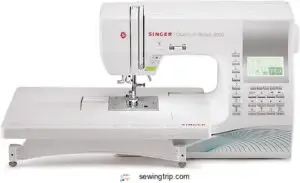
The Singer Quantum Stylist 9960 gives you 600 built-in stitches and 13 automatic buttonholes for your bee projects. You’ll find the backlit LCD screen helpful when selecting patterns during group sessions.
The metal frame holds steady through thick layers, and the automatic needle threader gets you back to sewing fast. You can adjust the speed control to match your comfort level.
The drop feed setting works well for free-motion quilting. At $549.99, you get 13 presser feet and an extension table in the box.
| Best For | Sewers who want a ton of stitch options and built-in features without spending over $600, especially if you do quilting, garment sewing, or home décor projects. |
|---|---|
| Built-in Stitches | 600 stitches |
| Automatic Needle Threader | Yes |
| Weight | 14.6 lbs |
| Power Source | Corded Electric |
| Extension Table | Yes |
| Material | Metal/Plastic |
| Additional Features |
|
- 600 stitches and 13 buttonhole styles give you way more creative options than most machines in this price range
- Automatic needle threader and drop-in bobbin save time on the annoying setup tasks
- Comes with 13 presser feet and an extension table right in the box, so you don’t need to buy extras immediately
- The needle threader can be tricky to use according to some users
- Limited throat space might frustrate quilters working on larger projects
- You’ll need to spend time with the manual to actually use all those features properly
4. Brother Sewing And Quilting Machine
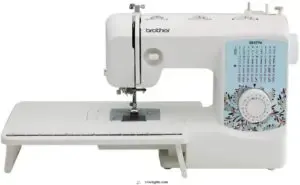
With 37 built-in stitches and a one-step buttonhole, the Brother Sewing and Quilting Machine manages your bee projects with ease. You’ll appreciate the automatic needle threader that saves time between turns.
The wide table gives you room to maneuver bulky quilts, while the free arm design works for different project types. This model comes with eight sewing feet and weighs just 15 pounds for portability.
The drop-in bobbin makes thread changes quick during group sessions.
| Best For | Beginners and intermediate sewers who want a versatile machine for everyday sewing, quilting, and home decor projects without spending a fortune. |
|---|---|
| Built-in Stitches | 37 stitches |
| Automatic Needle Threader | Yes |
| Weight | 15 lbs |
| Power Source | Corded Electric |
| Extension Table | Wide table |
| Material | Metal/Plastic |
| Additional Features |
|
- 37 built-in stitches plus automatic needle threader make it easy to tackle different fabrics and techniques right out of the box
- Wide table and free arm design give you flexibility for both large quilts and smaller detailed work
- Comes with 8 sewing feet and handles everything from thin fabrics to canvas and upholstery
- Gets pretty noisy during operation, which might bother you during long sewing sessions
- Machine can vibrate and move around when sewing at high speeds, especially without better grip pads
- Struggles with really thick layers like multiple pieces of fleece or minky fabrics stacked together
5. Brother Computerized Sewing Machine
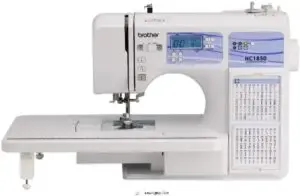
Looking for more stitches and digital control? The Brother Computerized Sewing Machine offers 130 built-in stitches with a backlit LCD display that helps you choose options quickly.
You’ll find the automatic needle threader and drop-in bobbin make setup simple during bee rotations.
The wide table expands your workspace for bulky quilt layers, while the 7-point feed system moves fabric smoothly through multiple thicknesses.
Variable speed control keeps your stitching consistent, and the drop feed feature lets you switch to free-motion quilting when your design calls for it.
| Best For | Sewers who want lots of stitch options and digital controls for everything from basic garments to decorative projects and light quilting. |
|---|---|
| Built-in Stitches | 185 stitches |
| Automatic Needle Threader | Yes |
| Weight | 10.1 lbs |
| Power Source | Corded Electric |
| Extension Table | Wide table |
| Material | Metal |
| Additional Features |
|
- 185 built-in stitches including alphabets for monogramming give you tons of creative options
- Automatic needle threader and drop-in bobbin make setup quick and frustration-free
- LCD screen and wide table make it easy to see settings and handle larger projects
- Struggles with heavy fabrics like multiple layers of denim
- Only works with 120V power, so using it outside the US voids the warranty
- Weighs over 10 pounds, which might be awkward to carry around despite being called portable
6. Juki Sewing And Quilting Machine
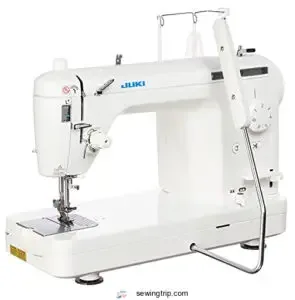
Precision matters when you’re quilting together as a group, and that’s where Juki shines. You get a sturdy frame, high-speed stitching up to 1500 SPM, and a generous throat space that makes maneuvering large quilts much easier.
The extension table helps everyone keep bulky layers flat, while the knee lifter lets you adjust hands-free. Automatic thread cutting saves time during busy sessions.
If your bee handles heavy fabrics or wants consistent results, Juki’s industrial heritage gives you peace of mind.
| Best For | Quilting groups and serious sewers who need a reliable, high-speed machine that can handle heavy fabrics and large projects with precision. |
|---|---|
| Built-in Stitches | 1 stitch (straight) |
| Automatic Needle Threader | Yes |
| Weight | Not specified |
| Power Source | 110V |
| Extension Table | Yes |
| Material | Aluminum die cast |
| Additional Features |
|
- Fast 1500 SPM stitching speed with sturdy construction keeps up with group projects and reduces vibration
- Generous throat space and extension table make quilting large pieces much easier to manage
- Knee lifter and automatic thread cutter let you work hands-free and save time during long sessions
- Only does straight stitch, so you’ll need another machine for decorative or zigzag stitching
- Requires oiling before each use, which adds an extra maintenance step
- Some users find the foot pedal’s reverse function annoying to work with
7. Janome Sewing Quilting Machine
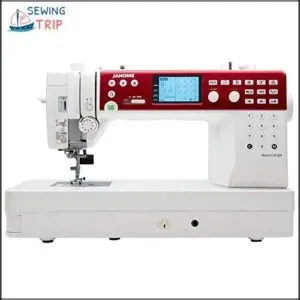
Janome machines offer your bee group a 10-inch throat space and solid metal construction, making it easy to manage thick quilts. The AcuFeed system ensures layers remain aligned during long communal sessions, while the adjustable presser foot pressure accommodates various batting weights.
You’ll appreciate the 172 built-in stitches and automatic needle threader, which saves time between projects. With 1000 stitches per minute and free motion settings, you can seamlessly transition from precise piecing to creative freehand designs, maintaining your bee’s momentum.
| Best For | Quilters who work in bee groups or need extra throat space for managing larger projects with consistent accuracy. |
|---|---|
| Built-in Stitches | 172 stitches |
| Automatic Needle Threader | Yes |
| Weight | 24.2 lbs |
| Power Source | Corded Electric |
| Extension Table | 10″ flatbed |
| Material | Metal/Plastic |
| Additional Features |
|
- 10-inch throat space and solid metal construction handle thick quilts and multiple layers without struggle
- 172 built-in stitches with automatic needle threader speed up transitions between different techniques
- AcuFeed system keeps fabric layers aligned during long sessions, preventing shifting on large projects
- Some users report the machine skipping stitches or needing frequent maintenance
- Instruction manual isn’t thorough enough for troubleshooting or learning advanced features
- Quality control issues mean you might receive a damaged unit that needs immediate servicing
8. Bernette Sewing Quilting Machine
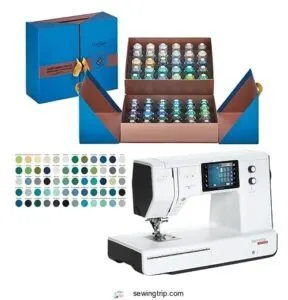
The Bernette quilting machine offers your bee group a compact design with a detachable extension table for extra workspace. Its DC motor ensures steady stitching on medium to heavy fabrics, while LED lighting illuminates the needle area when working through dense layers.
You’ll find the drop feed and grid guidelines helpful for free motion quilting. The automatic needle threader and thread cutter speed up setup between blocks, and the top loading bobbin system makes thread changes quick during long sessions.
| Best For | Quilters and sewers who want a reliable machine with helpful features like automatic threading and a good workspace, though they should be prepared to fine-tune tension settings. |
|---|---|
| Built-in Stitches | Multiple stitches |
| Automatic Needle Threader | Yes |
| Weight | Light weight |
| Power Source | Corded Electric |
| Extension Table | Yes |
| Material | Various compatible |
| Additional Features |
|
- Comes with a 60-piece thread bundle and plenty of accessories to get started right away
- Extension table gives you room to handle larger quilting projects comfortably
- Automatic needle threader and thread cutter save time during repetitive tasks
- Tension needs manual adjustment and may require some trial and error to get right
- Some users report the machine requires backstitching since automatic stitch securing isn’t always reliable
- Customer support can be slow to respond if you run into technical issues
Benefits of Using Specialized Machines at Bees
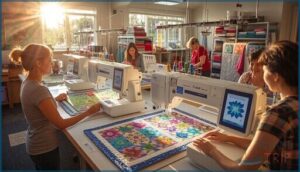
When your quilting bee shares machines, the right equipment makes all the difference. Specialized quilting machines help everyone work faster and create better results together. Here’s how the right machine benefits your whole group.
Improved Group Productivity and Efficiency
When your quilting bee shares specialized machines, you’ll see your quilt workflow speed up right away. These efficiency tools support team collaboration and group synchronization in real ways.
- Larger throat space lets multiple quilters handle bulky projects without constant repositioning.
- Extension tables cut fabric handling time by up to 20 percent.
- Speed control keeps everyone’s stitch length consistent across shifts.
- Quick-access presets reduce setup errors during communal sessions.
Enhanced Precision and Stitch Variety
You’ll love how micro tension adjustments give you impeccable seams every time, even across dense layers. Precision alignment keeps your stitches perfectly even on complex patterns. Stitch elongation lets you stretch motifs without losing shape.
With thread control features and varied stitch options, your quilting machine or embroidery machines deliver the creative freedom your bee projects deserve. It’s like having a steady hand guiding every stitch.
Durability for Handling Multiple Layers
When you’re working with multiple quilters on the same project, heavy-duty frames make all the difference. Machines built for layer stability handle quilt thickness without straining, thanks to reinforced construction and fabric resistance features.
That machine longevity matters at bees where longarm quilting machines get steady use. Check best quilting machines and quilting machine reviews to find models that won’t quit on thick layers.
Convenience for Communal Quilting Projects
When your group shares machines, automatic features cut setup time between quilters. Fabric handling becomes smoother with built-in guides that help team members position blocks quickly.
Session productivity jumps when everyone can adjust settings without hunting through menus. That group workspace flexibility matters—you spend more time stitching together and less time fussing with equipment.
Tips for Choosing and Maintaining Bee Machines
Picking the right machine for your quilting bee takes a bit of homework. You want features that work for everyone in the group and a machine that’ll hold up through all those shared projects.
Let’s walk through what matters most when choosing and caring for your bee’s workhorse.
Matching Machine Features to Group Needs
Your quilting bee deserves sewing machine sales that match your real needs. Think about quilt size first—groups tackling king-sized charity projects need at least 8 to 11 inches of throat space, while baby quilt circles work fine with smaller models. Budget planning and member skills guide your machine selection too.
- Assign feature-rich computerized machines to experienced quilters and simpler mechanical models to beginners
- Match multineedle machines or high-speed straight-stitch models to groups finishing many tops each year
- Choose sturdy, portable machines under 20 pounds if your bee moves between venues weekly
Importance of Regular Cleaning and Servicing
Routine machine service and maintenance keeps your bee’s equipment running strong. Schedule a machine oil change every three to six months, check thread tension tips before big projects, and replace needles after eight hours of stitching. Clean bobbin areas weekly to prevent lint buildup.
Professional sewing machine repair twice a year catches problems early, especially if you rely on sewing machine sales and service for group equipment.
Troubleshooting Common Quilting Machine Issues
Even with regular care, quilting machines can act up during bee sessions. Thread breakage often signals a tension adjustment is needed or the needle needs replacing. Fabric snagging points to a dull or bent needle. When stitches look uneven, check your machine calibration and presser foot pressure.
- Test thread tension on scrap fabric before rejoining your group project
- Replace needles immediately after hitting thick seams or pins
- Clean lint from the bobbin case between major quilting sessions
Trying Machines Before Purchasing
Before you commit to a sewing machine, take advantage of hands-on demos at local sewing machine dealers. Test drives reveal how each model manages your bee’s projects. Most shops welcome trial runs on sample quilts.
| Pre Purchase Tips | What to Check |
|---|---|
| Sewing Machine Reviews | Read feedback from other quilters |
| Test Drives | Try multiple best quilting machines |
| Machine Trials | Sew through thick layers |
| Quilting Machine Buying Guide | Compare throat space and features |
| Hands On Demos | Practice free motion stitching |
Frequently Asked Questions (FAQs)
What sewing machine do most quilters use?
Most quilters gravitate toward Brother, Janome, and Bernina sewing machines based on user experiences and machine comparisons.
Quilter preferences focus on stitch quality and reliable performance, making these brands stand out in sewing machine reviews.
What brands of longarm machines are available?
Popular longarm quilting machines come from HandiQuilter, APQS, Gammill, Nolting, Innova, Juki, Bernina, Brother, and Janome.
These brands offer different throat sizes, computerized features, and frame options for your quilting needs.
How much does a Nolting longarm cost?
Picture a gleaming longarm ready to quilt. Nolting longarm costs start around $10,000 for basic models. Computerized upgrades, quilting frames, and automation push prices higher, reaching mid-teens with complete setups.
Why do they call it a quilting bee?
The term “bee” comes from colonial America, when neighbors gathered for shared tasks like barn raisings.
Quilting bees became social events where women stitched together, building community bonds while finishing large projects efficiently.
How many machines does a quilting bee need?
Most quilting bees run smoothly with four to six sewing machines, allowing members to work simultaneously. Your group size and session length determine the ideal machine quantity for productive gatherings.
Whats the ideal budget for bee quilting machines?
A solid machine for group projects runs between $800 and $7, Mechanical models start around $800, while computerized and longarm options usually range from $2,500 to $6,000 depending on features.
Do quilting bees prefer owning or renting machines?
Most groups rent longarm time first to learn features without the upfront machine cost. Ownership pros come later when shared expenses and group financing make sense for bees that quilt together often.
How do bees transport machines to different locations?
You’d think delicate sewing equipment would stay put, but quilting machines travel often.
Bee teams use padded straps and protective casings on portable units, managing transit logistics with shock-absorbing liners and careful machine alignment at each location.
Conclusion
Picture your quilting circle gathered around a machine that keeps pace with every creative idea. The hum of steady stitching, the ease of maneuvering bulky layers, and smiles all around—that’s what happens when you invest in quality quilting machines for quilting bees.
Your group deserves equipment that fosters collaboration instead of creating roadblocks. Choose a machine that matches your bee’s needs, maintain it well, and watch your shared projects flourish with every stitch you make together.