This site is supported by our readers. We may earn a commission, at no cost to you, if you purchase through links.
Threading a serger for the first time often stops a classroom cold. Four spools, a chain of loops, and one wrong move sends the whole setup back to square one. It’s the machine students fear most—and the one that transforms their work fastest.
A serger trims, wraps, and finishes a seam in a single pass, cutting construction time nearly in half while producing results that look like something pulled off a retail rack.
For educators building a serious textiles program, choosing the right serger machines for classroom use means finding equipment that beginners can thread without a meltdown and that holds up through five periods a day.
Table Of Contents
Key Takeaways
- Color-coded threading guides and safety switches are the features that actually make a serger work in a classroom — without them, you’re setting students up to struggle.
- A serger trims, stitches, and finishes a seam in one pass, cutting construction time nearly in half and giving student work a professional, store-bought look.
- Differential feed is what separates clean seams from wavy ones — set it right for your fabric type, and stitch quality takes care of itself.
- Budget doesn’t have to mean compromise: mixing a couple of mid-range machines with reliable entry-level models like Brother or Singer ($200–$300) stretches your program further without sacrificing the features students actually need.
Key Features of Sergers for Classrooms
Not every serger belongs in a classroom — the wrong machine can frustrate beginners and slow down an entire lesson. A few key features separate the ones that actually work in a teaching environment from the ones that just look good on paper.
The same logic applies when buying for a shop — this breakdown of serger machines for small business owners shows exactly which features matter when reliability and speed are non-negotiable.
Here’s what to look for before you buy.
Threading Ease and Color-Coded Guides
Threading a serger doesn’t have to be the part students dread. Most classroom-friendly serger machines print permanent, color-coded threading paths directly on the machine — blue for the upper looper, red for the lower looper, green and yellow for the needles — making navigation simple from day one.
Follow this threading sequence:
- Blue — Upper looper first
- Red — Lower looper second
- Green — Right needle third
- Yellow — Left needle last
Color-coded threading and clear visual guides help students rethread independently in under 20 minutes with practice.
For a deeper understanding of the process, students can benefit from reviewing essential serger threading techniques and tools.
Versatility in Thread Configurations
Once students get comfortable with color-coded threading, the next thing worth understanding is how much one serger can actually do. Most classroom serger machines support 2, 3, and 4 thread options — giving you real stitch variety without swapping equipment.
A 3-thread setup works well for lighter fabrics, while 4-thread builds stronger seams. Needle choices and tension control let you match thread configuration to the fabric compatibility you need.
For detailed information on the types and purposes of stitches, review the serger stitch basics and uses.
Speed, Stitch Quality, and Differential Feed
Speed matters more than you’d think. Most serger machines run between 1,300 and 1,500 stitches per minute — but for beginners, that’s fast. Dialing back stitch speed gives students time to guide fabric without losing control.
Differential feed is what keeps seams smooth. Here’s what to watch for with differential control:
- Stitch formation stays clean when fabric tension is balanced
- Differential feed set to 1.0 works well on most wovens
- Settings above 1.0 prevent knit seams from rippling
- Below 1.0 creates stretch effects like lettuce edges
- Thread management and needle quality reduce skipped stitches
Stitch quality depends on all these working together.
Durability and Safety Considerations
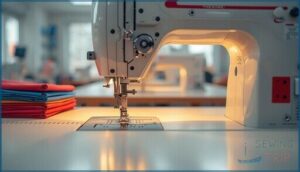
A serger built on a Metal Frame Construction stays put when your class is running full tilt. Heavy Duty Materials and Vibration Reduction keep things stable — and quieter, which means you can actually talk over the machines.
| Safety Feature | Why It Matters | Classroom Benefit |
|---|---|---|
| Metal frame body | Resists flexing at high speeds | Fewer repairs over time |
| Speed Control limiter | Caps maximum SPM for beginners | More reaction time for students |
| Rubberized feet | Grips laminate tables | Prevents sliding during use |
| Finger guards | Blocks needle access | Reduces contact injuries |
| Grounded Electrical Safety plug | Prevents shock risk | Safer daily operation |
Durability protects your budget. Safety protects your students.
Portability and Classroom Storage
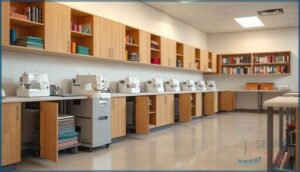
For a shared sewing lab, portability makes a real difference. Most classroom-ready serger machines weigh between 14 and 17 pounds and measure roughly 12 by 12 inches — compact enough to store vertically in cabinets without sacrificing workspace. Good storage solutions keep your classroom layout flexible and your sewing equipment secure.
- Built-in carry grips support easy machine mobility between rooms
- Lockable cabinets protect equipment and support space optimization after hours
- Rolling carts let you reconfigure the classroom in under 15 minutes
Benefits of Using Sergers in Education
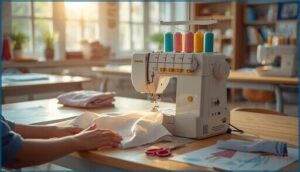
Adding a serger to your classroom does more than speed up projects — it raises the quality of everything students make. Once you see what these machines can do, it’s hard to go back to finishing seams by hand.
Here’s a closer look at the real benefits they bring to a sewing education setting.
Seam Strength and Professional Finishes
One pass through a serger does what takes three steps on a regular machine. You get a trimmed fabric edge, a locked stitch, and a clean interior finish all at once. That’s real seam durability.
If you’re just getting started, pairing a serger with the right setup makes all the difference—check out this guide to industrial sewing machines built for beginners to find one that fits your workflow.
One serger pass trims, locks, and finishes a seam in the time a regular machine takes three steps
Differential feed keeps seams flat, and consistent stitch quality means your finished garments actually look store-bought.
The table below shows how stitch type affects garment longevity for common classroom projects.
| Stitch Type | Best Use | Strength Level |
|---|---|---|
| 4-Thread Overlock | T-shirts, knits | High |
| 5-Thread Safety | Bags, jackets | Very High |
| Rolled Hems | Scarves, ruffles | Medium |
| Flatlock | Activewear | Medium-High |
| Coverstitch | Professional Hems | High |
Prevention of Fraying and Unraveling
Fraying fabric is one of the fastest ways to ruin a student project. Sergers solve this by wrapping overlock stitches completely around raw edges, encasing fibers so they can’t pull free — even after repeated washes.
Thread tension controls how tight that wrap sits, while rolled hems seal lightweight edges cleanly.
The result is reliable fray prevention, solid seam reinforcement, and professional fabric finishing every time.
Demonstrating Multiple Sewing Techniques
A single machine, a whole semester’s worth of lessons. Sergers let you walk students through 4-thread overlock seams, rolled hems on sheer fabric, flatlock seams for sportswear, and coverstitch hems — all without switching machines.
Each stitch type teaches different garment construction tips: thread tension, fabric handling, and stitch quality shift noticeably between techniques, giving students real, hands-on experience with professional serging techniques and seam finishing in one class.
Supporting Various Fabric Types
Classroom projects rarely stick to one fabric type — and that’s exactly where sergers shine. With the right dial adjustments, one machine manages jersey knits, chiffon, and denim. Here’s what makes fabric versatility possible:
- Differential Feed controls stretch on knits and prevents wavy seams on lightweight fabric
- Stitch Length and Knife Adjustment prevent stiff or frilly edges on thick or thin fabric
- Thread Tension and Fabric Selection guide thread choice so stitch speed stays consistent across projects
Top Serger Machines for Classroom Use
Not every serger will survive a classroom full of beginners, so the right pick matters more than you’d think. Each machine below made the cut based on ease of use, durability, and real classroom practicality.
Here are eight solid options worth considering for your sewing program.
1. Bernette Airlock Overlocker Sewing Machine
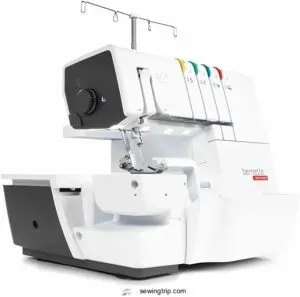
The Bernette B64 AIRLOCK might be the closest thing to a “set it and forget it” serger for busy classrooms. Its automatic air threading system blows looper threads through internal tubes at the push of a lever — no more students struggling to reach inside the machine.
With 16 built-in stitches, speeds up to 1,300 SPM, and a safety switch that stops operation when the looper cover is open, it manages both the curriculum and the chaos of a shared workstation.
| Best For | The Bernette B64 Airlock is best for sewers of all skill levels who want a reliable, feature-packed serger for everything from quilting to heavy-duty projects. |
|---|---|
| Stitch Types | Label only |
| Max Speed | N/A |
| Frame Material | Plastic |
| Weight (lbs) | 1.1 |
| Color | Grey |
| Differential Feed | No |
| Additional Features |
|
- The automatic air threading system makes setup quick and painless — no more wrestling with loopers.
- Built-in LED lighting and micro thread control make precision stitching a lot easier to pull off.
- The 130mm working area gives you plenty of room to handle bigger, bulkier projects without frustration.
- Some users have run into issues with the air threading system not working as smoothly as advertised.
- It runs louder than you might expect, which can be a bit much in quieter settings.
- Warranty coverage depends on where you buy it, so you’ll want to double-check before purchasing.
2. Juki White Serger Machine
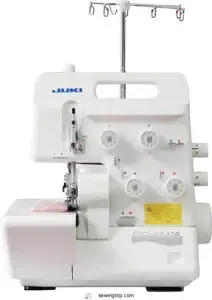
If air threading isn’t in your budget, the Juki MO-654DE is the next best thing for classrooms. Its color-coded threading diagram is printed right on the machine — students don’t need to hunt for the manual.
It accommodates 2, 3, and 4 thread setups, sews up to 1,500 SPM, and weighs just over 15 pounds, so it’s easy to store and move.
The built-in safety switch prevents operation when the looper cover is open — a real plus in shared workspaces.
| Best For | Beginners and experienced sewists alike who want a reliable, easy-to-thread serger for garment construction, home decor, or classroom use without breaking the bank. |
|---|---|
| Stitch Types | 2-3-4 thread |
| Max Speed | N/A |
| Frame Material | Aluminum |
| Weight (lbs) | 20.5 |
| Color | Black/White |
| Differential Feed | Yes |
| Additional Features |
|
- Color-coded threading guide is printed right on the machine — no manual hunting required
- Handles 2, 3, and 4 thread setups at up to 1,500 SPM, great for light to heavy fabrics
- Built-in safety switch stops operation when the looper cover is open, making it ideal for shared spaces
- No coverstitch or coverhem feature, so you’ll need a separate machine for those finishes
- Needs a step-down transformer if you’re in a country with 220V outlets
- Instruction manual may not be available in your language, which can make troubleshooting tricky
3. Brother Coverstitch Serger Machine
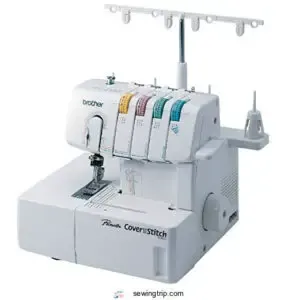
If your students are working with knit fabrics, the Brother 2340CV deserves a close look. It’s a dedicated coverstitch machine — not a full overlocker — so it focuses on one job: clean, stretchy hems.
You get three stitch options: narrow, wide, and tri cover stitch, which covers everything from sleeve hems to activewear. At 1,100 SPM and 12 pounds, it’s quick and manageable. Color-coded threading keeps frustration low, and the 25-year warranty means it’ll outlast most school budgets.
| Best For | Sewing students and educators working regularly with knit fabrics, activewear, or stretch materials who need a reliable, single-purpose coverstitch machine. |
|---|---|
| Stitch Types | 2-3-4 thread |
| Max Speed | 1500 spm |
| Frame Material | Aluminum |
| Weight (lbs) | 15.18 |
| Color | White |
| Differential Feed | 0.7-2.0 ratio |
| Additional Features |
|
- Three cover stitch options (narrow, wide, and tri) handle everything from T-shirt hems to swimsuit strapping
- Color-coded threading makes setup less intimidating, especially for beginners
- Backed by a 25-year limited warranty — solid value for a school or studio setting
- Thread breakage can be an issue if the machine isn’t threaded just right
- New users will likely hit a learning curve before getting consistent results
- Only works on US voltage (120V), so it’s not an option for international use
4. Singer Metal Frame Serger Machine
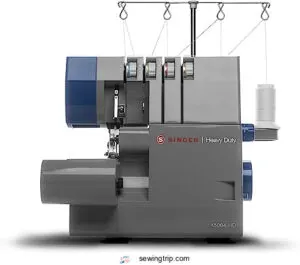
If knit hems are covered, you’ll also need a machine that manages heavier work without flinching. The Singer X5004HD fits that bill. Its metal frame keeps things stable at 1,300 stitches per minute — no wobbling, no skipped stitches.
The cutting knife is about 60 percent larger than most consumer models, so denim and fleece aren’t a problem. It accommodates 2-3-4 thread setups, weighs 15.5 pounds, and the color-coded threading helps beginners get started without constant hand-holding.
| Best For | Anyone who sews through heavy fabrics regularly — from beginners who want room to grow to seasoned sewists who need a reliable, fast machine. |
|---|---|
| Stitch Types | 2-3-4 cover stitch |
| Max Speed | 1100 spm |
| Frame Material | Metal |
| Weight (lbs) | 12.35 |
| Color | Trim Trap |
| Differential Feed | 0.7-2.0 mm |
| Additional Features |
|
- Metal frame keeps it rock-solid at top speed, so your seams stay clean and consistent
- The oversized cutting knife handles thick stuff like denim and fleece without a fight
- Color-coded threading makes setup way less intimidating, especially for newcomers
- Threading by hand can be a bit of a puzzle, especially the first few times
- No manual included, so you’re on your own if something goes sideways
- The scrap bag is pretty small — you’ll fill it up fast on bigger projects
5. Brother Heavy Duty Serger Machine
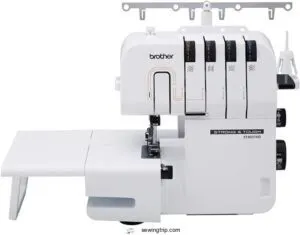
The Brother ST4031HD takes durability a step further. Its internal metal frame holds steady at 1,300 stitches per minute — even when students are powering through multiple denim layers. The carbon steel blade cuts clean without tearing, and the color-coded threading paths keep setup straightforward.
You also get three presser feet and a wide extension table right out of the box. For a classroom that runs hard all semester, this machine is built to keep up.
| Best For | Sewing enthusiasts, professionals, and small businesses tackling heavy-duty projects like denim, thick fabrics, and layered materials. |
|---|---|
| Stitch Types | 2-3-4 thread |
| Max Speed | 1300 spm |
| Frame Material | Metal/Plastic |
| Weight (lbs) | 15.52 |
| Color | Grey/Blue |
| Differential Feed | Yes |
| Additional Features |
|
- Metal frame keeps it rock-solid even at 1,300 stitches per minute
- Carbon steel blade cuts clean through heavy fabrics without snagging
- Comes with three presser feet and an extension table right out of the box
- Threading can be tricky, especially if you’re just starting out
- Needs regular oiling to stay quiet and run smoothly
- The manufacturing oil smell can be pretty strong when it first arrives
SINGER S14-78 Serger Machine
The SINGER S14-78 is a solid budget pick for classrooms dipping into serger sewing machines for the first time. Its color-coded threading guides and detailed user manual make thread tension less intimidating for beginners. With 12 stitch types and differential feed, stitch quality stays consistent across fabric weights. Machine noise is moderate — typical for this range.
| Feature | Detail | Classroom Benefit |
|---|---|---|
| Thread Options | 2-3-4 thread | Flexible demos |
| Stitch Types | 12 total | Broad technique range |
| Cutting Width | Up to 7mm | Adjustable edge finish |
| Differential Feed | Yes | Manages stretch fabrics |
| Serger Maintenance | Manual included | Guides student care |
6. Lumina Moda Serger Machine
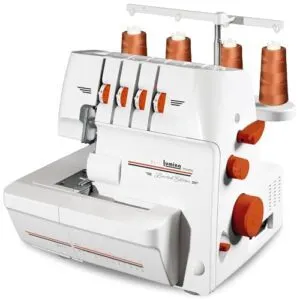
The Lumina Moda punches above its price point in a classroom setting. Its color-coded threading guides are printed right on the machine, so students aren’t constantly flipping through manuals. You get 2/3/4 thread flexibility, a 1,250 SPM speed, and differential feed — enough range to cover most curriculum projects.
The heavy-duty metal frame keeps vibration low on shared tables, and the built-in trim trap cuts cleanup time. At roughly 19.8 pounds, it’s easy to move between workstations without much hassle.
| Feature | Detail | Classroom Benefit |
|---|---|---|
| Thread Options | 2/3/4 thread | Flexible technique demos |
| Speed | 1,250 SPM | Efficient lab time |
| Differential Feed | Yes | Controls knits and wovens |
| Frame | Metal | Stable at high speed |
| Trim Trap | Built-in | Tidier shared workspace |
| Best For | Teachers and students who want a reliable, easy-to-follow serger that handles a wide range of fabrics and techniques without a steep learning curve. |
|---|---|
| Stitch Types | 3-4 thread |
| Max Speed | 1300 spm |
| Frame Material | Metal/Plastic |
| Weight (lbs) | 17.64 |
| Color | White |
| Differential Feed | Yes |
| Additional Features |
|
- Color-coded threading guides make setup quick, even for beginners
- Metal frame keeps things steady at high speeds, which is a big plus in busy classrooms
- Differential feed handles both knits and wovens, so it’s versatile enough for most projects
- Threading and tension can be tricky for newer users to dial in
- The manual doesn’t always cover specific techniques like narrow rolled hems
- Results can vary a lot depending on the user’s experience level
7. Millepunti Serger Overlock Sewing Machine

The Millepunti MLD42 is a solid pick when you want a beginner-friendly machine that doesn’t sacrifice durability. Its metal frame keeps things stable at up to 1,300 stitches per minute, and the color-coded threading guides help students find their way without frustration. You get 2/3/4 thread flexibility and adjustable differential feed — enough to move between knits, wovens, and home decor projects. At 18 pounds, it’s manageable to reposition, and the included accessory kit means fewer supply scrambles on lab day.
| Feature | Detail | Classroom Benefit |
|---|---|---|
| Thread Options | 2/3/4 thread | Covers core techniques |
| Speed | 1,300 SPM | Fast seam finishing |
| Frame | Metal | Stays put during use |
| Differential Feed | Adjustable | Manages stretch and stable fabrics |
| Accessory Kit | Included | Ready out of the box |
| Best For | Home sewists and beginners who want a durable, versatile serger for garment construction and home decor projects without the industrial price tag. |
|---|---|
| Stitch Types | 2-3-4 thread |
| Max Speed | 1200 spm |
| Frame Material | Metal/Plastic |
| Weight (lbs) | 13.89 |
| Color | White |
| Differential Feed | Yes |
| Additional Features |
|
- Metal frame keeps the machine stable even at top speed, so you’re not fighting wobble mid-seam
- 2/3/4 thread capability plus adjustable differential feed means you can handle everything from stretchy knits to sturdy denim
- Free arm and integrated waste collector make the workspace cleaner and small items like cuffs way easier to manage
- Threading can be a real headache at first, especially for newer users still learning the ropes
- Can run loud and may rattle, which gets old fast in a quiet workspace
- Not built for heavy-duty or industrial work, so thick or demanding projects may push it past its limits
How to Choose The Right Classroom Serger
Picking the right serger for your classroom comes down to a few practical factors that can make or break the experience for both you and your students. Get these right, and the machines will work with you instead of against you.
Here’s what to look at before you buy.
Comparing Thread Options (3 Vs. 4 Thread)
Thread count shapes everything — from seam durability to fabric selection. Here’s what each option delivers:
- 3-thread: Best for edge finishing and delicate fabrics; uses less thread
- 4-thread: Adds a reinforced stitch for stronger, ready-to-wear seams
- Thread tension: Easier to balance with fewer threads
- Differential feed: Works with both configurations
- Stitch quality: 4-thread wins for high-stress seams
Evaluating Ease of Use for Students
A machine that fights your students is a machine that fails your class. When evaluating ease of use, focus on the student interface first — clear tension dials, color-coded threading paths, and adjustable speed controls make beginner-friendly serger sewing machines far less intimidating. Good thread management features, like air threading on the Juki MO-1000, cut setup time dramatically.
| Feature | Beginner-Friendly | Not Ideal |
|---|---|---|
| Threading | Color-coded guides | Manual looper threading |
| Speed Control | Adjustable foot pedal | Fixed high-speed only |
| Tension System | Numbered dials | Unmarked disks |
Prioritizing user experience during classroom setup keeps serging and overlocking accessible for every student.
Balancing Budget and Performance
Budget analysis doesn’t have to be complicated. Entry-level sergers for beginners from Brother or Singer run $200–$300, while midrange models with better performance metrics sit around $1,300–$1,500.
Smart resource allocation means mixing a couple of premium machines with several budget units. This sewing machine comparison approach stretches financial planning further — students still access quality features without every workstation carrying the highest price tag.
Selecting Machines for Fabric Versatility
Beyond budget, fabric variety is what really tests a serger’s worth in the classroom. A machine with differential feed ranging from 0.7 to 2.0 manages everything from cotton lawn ruffles to knit seams without puckering.
Look for these when checking sewing machine reviews:
- Thread options supporting 3 and 4 thread configurations
- Machine flexibility across lightweight silks and heavy denim
- Fabric compatibility confirmed through adjustable presser foot pressure
- Sewing techniques like rolled hem and flatlock on one machine
Tips for Integrating Sergers Into The Classroom
Having the right machines is only half the battle — knowing how to use them well in a classroom setting is what really makes the difference.
A few practical strategies can help your students build confidence and keep things running smoothly from day one. Here’s what works.
Setting Up Safe and Accessible Workstations
Before students sit down to sew, your workspace layout sets the tone for safety and success. Keep table heights between 28–34 inches, with at least 30×48 inches of floor clearance for accessibility. Ergonomic design and proper lighting reduce injury prevention risks markedly.
| Safety Feature | Standard |
|---|---|
| Knee clearance depth | 19 inches minimum |
| Task lighting | Aimed at needle zone |
Teaching Threading and Maintenance
Once your workstations are set, teaching Threading Techniques comes next. Use color-coded guides and hands-on practice to build Thread Management skills.
Maintenance Schedules should include daily lint removal and regular oiling—never skip blade checks for Classroom Safety.
Demonstrate Serger Troubleshooting by showing how tension adjustments affect stitch quality. These routines help students master Serger Machines and Sewing Machine care confidently.
Incorporating Sergers Into Lesson Plans
With threading routines in place, your lesson plans can carry that momentum into real projects. A solid Skill Progression ties Curriculum Integration together naturally — moving students from napkins to garments builds confidence step by step.
Try this Project Based Learning sequence for Classroom Management and Garment Construction success:
- Week 1 – Sergers for Beginners: straight seams on cotton
- Week 2 – Curved seams and corners using Sewing Machine basics
- Week 3 – Knit fabrics with differential feed adjustments
- Week 4 – Capstone project using two techniques, scored with clear Assessment Strategies and Sewing Equipment Guides
Troubleshooting Common Classroom Issues
Even the best sergers throw curveballs mid-project. Knowing what to look for saves class time fast.
| Problem | Likely Cause | Quick Fix |
|---|---|---|
| Thread Breakage | Misthreaded path | Rethread all paths from scratch |
| Tension Issues / Stitch Imbalance | Closed tension discs | Raise presser foot before threading |
| Fabric Jams | Pins or thick seams | Remove pins; lift foot and ease fabric out |
Return tension dials to mid-range, sew a test strip, then adjust one dial at a time.
Frequently Asked Questions (FAQs)
What sewing machines do schools use?
Most schools rely on basic sewing machines for general sewing curriculum, then add serger machines like Brother models to help students tackle garment construction and alteration within classroom setup and school budgets.
Is there a difference between a serger and an overlock machine?
Serger and overlock machine are often used interchangeably in sewing technology. In North America, “serger” is common; elsewhere, “overlock.”
Both perform overlock functions—trimming, stitching, and finishing edges—with similar threading systems and tension controls.
What is the easiest serger to use for a beginner?
Baby Lock models top the list for ease of use — air threading and auto tension practically do half the work for you, making the learning curve almost invisible for beginners.
What age groups benefit most from serger use?
Middle school and high school students benefit most from serger use. Younger learners, around age 13 and up, have the focus and coordination for safe classroom integration and meaningful learning outcomes.
How many sergers should one classroom have?
Most classrooms do fine with two to five sergers. For 20 students, three to four machines usually cover finishing work while pairs share and rotate without long waits slowing sewing projects down.
Can students with disabilities operate serger machines?
Yes, with the right setup. Adaptive controls, tactile guides, and accessible table heights make serger machines workable for students with disabilities — inclusive design and assistive technology turn a steep learning curve into a manageable one.
Are sergers suitable for after-school sewing clubs?
Sergers work well in after-school clubs once students show solid basic machine skills.
Keep ratios tight, enforce clear safety protocols, and start with supervised scrap practice — then watch their sewing projects improve fast.
What certifications do teachers need to instruct serging?
No specific “serger license” exists. Most states require a Family and Consumer Sciences or CTE teaching credential, plus OSHA safety training.
Private sewing certifications, like Martha Pullen’s program, strengthen your qualifications considerably.
Conclusion
Nobody walks into a textiles classroom hoping to spend twenty minutes untangling thread paths—yet that’s exactly how students learn to respect the machine that saves them the most time. Once they understand it, the serger becomes the tool they fight over.
Choosing the right serger machines for classroom use means fewer meltdowns, stronger seams, and work that actually looks finished. Pick well, and your students won’t just sew—they’ll produce.
- https://www.bsewinn.com/blogs/inspiration/best-serger-machine-for-beginners
- https://sewingfromhome.com/best/serger-sewing-machine/
- https://stylemakerfabrics.com/blogs/maker-resources/working-with-a-serger
- https://sewingmachineman.substack.com/p/sewing-knit-fabric-and-differential
- https://makerspaces.northeastern.edu/create/library/serger-user-guide/