This site is supported by our readers. We may earn a commission, at no cost to you, if you purchase through links.

Your first sewing project sits in front of you, pattern pieces cut and ready. But when you start stitching, the fabric slides away from the needle, stretches out of shape, or puckers at every seam. This frustration drives more beginners to abandon sewing than any other challenge.
The problem isn’t your skill—it’s the fabric. Choosing material that works with you, not against you, transforms sewing from a struggle into something you’ll actually finish.
The right fabric forgives small mistakes, holds its shape while you learn, and builds the confidence you need to keep going.
Table Of Contents
Key Takeaways
- Start with stable, medium-weight fabrics like quilting cotton, linen blends, or cotton twill—they forgive mistakes, hold their shape, and let you build confidence without fighting slippery or stretchy materials that cause over 60% of beginners to abandon their first projects.
- Avoid slippery fabrics (silk, satin), very stretchy knits, expensive materials, and loosely woven sheers until you’ve mastered the basics—these fabrics shift, distort, and require specialized techniques that turn simple seams into frustrating battles.
- Always pre-wash your fabric before cutting to prevent 3-5% shrinkage, remove excess dye that causes bleeding, and align the grain properly—this single step protects your time investment and ensures your finished project fits as intended.
- Match your fabric choice to your skill level and project type by considering weight (measured in GSM), drape, stability, and care requirements—quilting cotton suits over half of beginner projects because it’s predictable, affordable, and cooperates as you learn.
Why Fabric Choice Matters for Beginners
When you’re just starting out, fabric choice can make or break your first few projects. The right material helps you learn without fighting unnecessary challenges, while the wrong one can turn a simple seam into a frustrating battle.
Let’s look at why this decision matters so much for your sewing success.
Impact on Sewing Success
The right fabric selection shapes your entire beginner sewing journey. When you choose stable, forgiving materials, you’ll notice fewer frustrations and stronger confidence building as your skills develop.
How Fabric Choice Influences Project Success:
- Seam accuracy improves by up to 30% with stable wovens versus stretchy knits
- Stitch quality stays consistent when medium-weight fabrics feed smoothly through your machine
- Project completion rates rise when fabric properties match your skill level
- Confidence building accelerates with predictable, easy-to-handle materials
- Learning curve shortens dramatically when you start with beginner-friendly substrates
For example, beginners may find that cotton lawn is easier to manage.
Common Beginner Mistakes
Many new sewers jump in with slippery satin or stretchy knits—fabrics that slide, distort, and frustrate. Over 60% of beginners who quit their first garment had chosen these challenging materials.
Over 60% of beginners who quit their first garment had chosen slippery satin or stretchy knits that slide, distort, and frustrate
Ignoring preparation like prewashing causes shrinkage up to 10%, and skipping pattern recommendations leads to poor drape and mismatched seams. Novices should also consider that stable fabrics are easier to manage.
When fabric difficulty exceeds your skill level, abandoned projects pile up fast.
How Fabric Affects Project Outcome
Your fabric choice determines whether seams lay flat or pucker, whether your dress hangs gracefully or stiffly.
Fabric weight influences drape quality—heavier cotton resists bending, while lightweight wovens flow naturally.
Fiber friction affects seam strength; cotton grips thread better than slippery silk.
Stretch content changes fit entirely, and matching fabric to projects means understanding how fabric properties and fabric characteristics shape the final result before you cut the first piece.
Best Fabrics for Beginner Sewers
Not all fabrics are created equal when you’re just starting out. Some materials practically guide themselves through your machine, while others fight you at every step.
The fabrics below will make your early projects easier and help you build confidence without the frustration.
Quilting Cotton
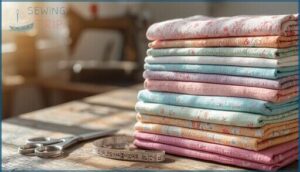
If you’re just starting out, quilting cotton is your best friend. This cotton quilting fabric features a tight weave and thread count that keeps it from fraying while you learn.
At around 120-150 GSM, it holds its shape beautifully for beginner sewing projects. You’ll find it in 45-inch widths—plenty of room to cut without waste—and that crisp hand makes every stitch count.
Linen and Linen Blends

For beginners tackling linen and linen blends, you’ll appreciate the forgiving drape and wrinkle resistance these fabrics offer. Blends with cotton or rayon reduce creasing by up to 50% while maintaining that relaxed linen drape perfect for summer garments.
When sewing with linen, consider these blend benefits:
- Medium weight (150-200 GSM) provides structure without bulk
- Stable weave prevents fraying at quarter-inch seams
- Natural breathability keeps garments comfortable
- Colors stay vibrant through multiple washes
- Forgiving nature masks beginner stitching mistakes
Linen sourcing becomes easier once you understand these sewing techniques and characteristics.
Medium-Weight Cotton Twill
You’ll love working with cotton twill for structured garments like pants and jackets. This diagonal weave structure delivers 20% higher durability than plain cotton, making it perfect for pieces that take wear and tear.
| Property | Measurement | Benefit |
|---|---|---|
| Weight | 250-300 GSM | Easy handling |
| Shrinkage | 2-5% | Predictable sizing |
| Needle Size | 90/14 | Clean stitches |
Pre-wash on a gentle cycle before cutting. Use triple straight stitching for seams to hold their shape.
Cotton Canvas and Flannel

When your project needs structure or softness, these two cotton options shine. Canvas weighs 300-400 gsm, giving bags and sturdy items serious durability, while flannel ranges from 180-250 gsm with a brushed finish that’s perfect for cozy quilts.
- Canvas holds its shape with minimal stretch—ideal for totes and home décor that won’t sag
- Flannel shrinks 5-10%, so always pre-wash on delicate before cutting
- Both fabrics forgive beginner mistakes with easy seam ripping and stable edges
Cotton Blends and Muslin
Think of muslin as your practice partner—it weighs just 100-150 gsm and won’t break the bank when you’re learning new techniques. Both have minimal stretch (under 1-2%), so your cuts stay accurate.
Cotton blends like Essex linen-cotton offer blend durability with textured drape, perfect when you’re ready for something nicer.
For cost analysis, muslin wins for mockups, while blends suit finished projects.
Fabrics to Avoid When Starting Out
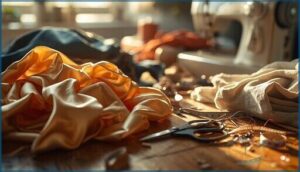
Not all fabrics are created equal when you’re learning to sew. Some materials shift, stretch, or fray in ways that can turn a simple project into a frustrating mess.
Here are the fabrics you’ll want to skip until you’ve built up your skills and confidence.
Slippery Fabrics (Silk, Satin)
Silk and satin can feel like wrestling with butter—they shift and slide right out from under your scissors. Fabric distortion happens when slippery fabrics move during cutting, and you’ll find yourself frustrated with wavy seams and puckering stitches. Here’s why you should skip these for now:
- Cutting challenges multiply as the material shifts during layout
- Seam puckering requires at least 15 stitches per inch
- Needle types matter—you’ll need specialized microtex needles
Start with stable fabrics first.
Very Stretchy Knits
Stretchy fabrics like T-shirt knit and cotton jersey knit bend and warp under your hands, making seam allowances unpredictable. When sewing with knit fabrics, you’ll face skipped stitches unless you adjust tension control and switch to ballpoint needle types.
Stabilizing seams requires narrow zigzag stitch settings—14 to 18 stitches per inch—to prevent cracking. Master woven fabrics first, then tackle knits.
Expensive or Delicate Materials
Beyond stretchy fabrics, costly materials like silk or velvet add financial pressure you don’t need while learning. Silk handling demands precision, velvet fraying happens three times faster than cotton, and satin deformation occurs under minimal tension. Avoiding delicate fabrics protects your budget and confidence.
Consider these challenging materials:
- Sequined sewing requires specialized feet, adding 20 minutes to setup
- Organza stitching needs 15 stitches per inch for seam integrity
- Slippery fabrics shift constantly, frustrating even patient sewers
Loosely Woven or Sheer Fabrics
Sheers like chiffon and organza bring their own headaches. Lightweight sheers under 100gsm increase fabric damage risk by 25% without sharp needles, and chiffon puckers unless you loosen tension settings by 20%.
Pinning challenges arise when slippery fabrics shift during placement, damaging material in half of attempts.
Loosely woven fabrics compromise edge strength, making seam puckering almost inevitable for beginners learning tension control.
Heavyweight and Thick Fabrics
Heavy or thick fabrics like denim over 12oz or canvas test beginner skills. Fabric thickness builds seam bulk four layers high, challenging home machines. Denim sewing requires longer stitch lengths—3 to 3.5mm—while upholstery fabrics need 4mm for cushions.
Understanding fabric properties helps: clips secure durable fabrics 90% better than pins. Needle selection and seam finishing become essential when fabric weight strains your equipment.
Key Factors in Choosing Fabric

When you’re standing in front of a wall of fabric bolts, it’s easy to feel overwhelmed by the sheer number of choices. Knowing what to look for makes the selection process much simpler and helps you avoid fabrics that will fight you at every step.
Let’s break down the most important factors to weigh so you can pick fabric that sets you up for success.
Fabric Weight and Drape
Fabric weight and drape directly determine whether your project succeeds or struggles. Understanding fabric properties starts with GSM Explained—quilting cotton measures 110-150 GSM, while structured skirts need 227-340 GSM. Weight conversion helps compare fabrics: 200 GSM equals roughly 5.9 oz/yd².
Consider how the importance of fabric weight and drape coefficient impact your factors when choosing fabric:
- Lightweight fabrics under 113 GSM create flowing blouses with beautiful movement
- Midweight cottons (150-350 GSM) provide predictable body for beginner-friendly garments
- Fabric stiffness affects project suitability—canvas resists draping while jersey flows freely
- Drape coefficient ranges from 47% to 91%, revealing how fabric falls naturally
Stability and Stretch
When you’re just starting out, understanding woven vs knit construction changes everything. Stable weave cottons stretch less than 5% lengthwise, keeping pieces predictable during sewing. Stretchy fabrics like jersey knits can stretch 60-235% widthwise but require special techniques.
| Fabric Type | Stretch Percentage | Recovery Rate | Beginner Difficulty |
|---|---|---|---|
| Quilting Cotton | Under 5% | 95%+ | Level 1 (Easy) |
| Jersey Knit | 60-235% width | 46-100% | Level 3 (Difficult) |
| Cotton Twill | 10-20% crosswise | 95%+ | Level 1 (Easy) |
| Double Knit | 45-136% width | 56-100% | Level 2 (Intermediate) |
Choose easy-to-sew fabrics with minimal stretch—grainline matters because proper alignment maintains your garment’s shape through 50+ washes.
Ease of Handling and Cutting
When you’re pinning down a piece of quilting cotton, notice how it cooperates—that’s what easy-to-handle fabrics should feel like. Cutting fabric precisely starts with understanding texture and grain, and those fundamentals separate frustration from smooth sewing.
- Fabric grain awareness: Align your cuts parallel to the selvage to prevent 10% stretch in the bias direction and maintain shape through multiple washes
- Cutting tool sharpness: Sharp rotary cutters slice through 4 layers in one pass, while dull blades drag and distort fabric edges by up to 1/8 inch
- Surface texture effects: Textured cottons like chambray reduce slippage by 35-40% during pinning compared to slippery satins
- Pre-cutting treatments: Steam pressing removes creases and improves cut accuracy by 25%, aligning fibers for cuts within 1mm
- Layering fabric tips: Stack no more than 3 layers to limit accuracy loss to 1/8 inch per piece, or cut single layers for 100% precision on slippery materials
Care Requirements and Durability
When your first project shrinks 10% in the dryer, fabric care suddenly matters. Cotton fabrics generally shrink 3–5% after that first wash, so always pre-wash to avoid heartbreak.
Washing at 30°C instead of 40°C can extend fabric lifespan by over 50%, preserving color fastness and reducing fiber wear.
Low-maintenance fabrics like cotton blends resist shrinkage rates better than pure cotton, making fabric care and maintenance simpler as you build sewing skills.
Project Compatibility
Matching fabric weight and drape suitability to your project structure saves you from wrestling with stiff canvas when you need flow, or watching a flowy rayon collapse where you need crisp edges.
Quilting cotton suits over half of beginner sewing projects like tote bags and cushion covers because it holds shape predictably.
Your skill level matters—save slippery silks for later, and let pattern matching guide early fabric choice toward stable, forgiving materials that cooperate as you learn.
Essential Tips for Fabric Selection
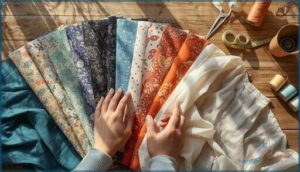
Knowing which fabric to choose is one thing, but learning how to work with it effectively is what really sets you up for success. A few simple habits can save you from frustration and wasted material as you build your skills.
Let’s look at some practical tips that will make your fabric selection process easier and more confident.
Identifying Fabric by Touch
Your fingertips can reveal a lot about fabric types before you cut. Tactile perception lets you feel texture differences—cotton feels smooth and firm, while linen has a rougher hand.
Try the scrunch test: squeeze fabric for five seconds. Natural fibers wrinkle easily; synthetics bounce back.
Though instrumental accuracy beats human touch, learning to identify fabric characteristics by feel builds confidence in your fabric choice.
Pre-Washing and Preparation
Laundering fabric before cutting prevents fabric shrinkage—cotton usually shrinks 3–5% on the first wash. Pre-washing guards against color bleeding, especially from reds and indigo denim, while removing detergent residue that blocks absorbency.
Wash at your garment’s intended temperature, then check grain alignment by matching selvedges. This simple washing protocol gives you a shrinkage allowance and minimizes grain distortion before you start sewing.
Using Beginner-Friendly Patterns
Once your fabric is ready, pair it with patterns labeled by difficulty so you’re not thrown by hidden challenges. Beginner-friendly patterns use simple construction—straight seams, elastic waists, minimal pieces—and often include step-by-step photos.
Look for instructional design that explains terms as you go, and choose projects that match your easy-to-sew fabrics for a smooth learning progression through beginner sewing.
Affordable Places to Buy Fabric
You don’t need expensive fabrics to learn well. Big-box discounts at Hobby Lobby or Joann often drop cotton prices to around $3–$6 per yard during regular sales. Online retailers like Fabric Mart run promotions as low as $2 per yard. Thrift stores sell textiles by the pound—often under $2. Check remnant sections for half-price cuts, making affordable fabrics and smart sewing materials easy to find.
- Chain craft stores: Weekly ads feature 40–70% off fabric by the yard
- Online discount outlets: Clearance cotton and seasonal sales reduce costs dramatically
- Outlet bins: Repurpose sheets or garments at thrift stores for pennies per yard
Frequently Asked Questions (FAQs)
How do I calculate fabric yardage needed?
To convert inches to yards, divide your project’s length by
Factor in pattern size, fabric width, repeat length, and shrinkage allowance when planning your project.
Online calculators simplify choosing fabrics for beginners by accounting for these variables automatically.
What does grainline mean in sewing patterns?
Grainline marks the invisible highway your fabric wants to travel—ignore it and watch your dress twist like a politician’s promise.
It’s the arrow on sewing patterns that shows where threads run, preventing pattern distortion and beginner mistakes.
Can I mix different fabric types together?
You can combine fabric types, but fiber compatibility and weight balance matter. Pre-wash each material first, and avoid mixing wovens with knits.
Beginner recommendations suggest starting with similar fabrics until you gain experience.
How do I store fabric to prevent damage?
Store your fabric stash in airtight containers away from light exposure and humidity control zones. Pest prevention starts with clean, dry fabric care.
Regular inspection frequency—twice yearly—catches problems early, preserving your fabric storage investment.
Whats the difference between woven and knit?
Woven fabrics crisscross threads at right angles, creating stability with minimal stretch. Knit construction loops yarn continuously, offering flexibility and stretch in multiple directions.
Each requires different sewing techniques—wovens fray, knits curl.
Conclusion
Think of fabric as your partner in a dance—the right one moves with you, aids your steps, and makes learning feel natural. The wrong one? You’ll spend the whole song just trying to keep up.
Smart sewing fabric selection for beginners means choosing materials that help you build rhythm and confidence. Start with forgiving fabrics like quilting cotton or linen blends. They’ll steady you through those first projects, turning fumbles into progress you can actually see and feel.
- https://www.modaes.com/global/companies/world-fiber-production-132-million-tons-and-more-polyester
- https://www.linkedin.com/pulse/how-much-polyester-used-fashion-industry-lutz-walter-yzn5e
- https://www.cotton.org/pubs/cottoncounts/fieldtofabric/uses.cfm
- https://www.fortunebusinessinsights.com/polyester-fiber-market-111384
- https://www.longancraft.com/blogs/fabric-knowledge/fabric-weight-guide-how-to-choose-fabric