This site is supported by our readers. We may earn a commission, at no cost to you, if you purchase through links.
When you’re wrestling a king-sized quilt through six inches of throat space, your shoulders know it by the third seam. That cramped feeling isn’t just uncomfortable—it’s your body telling you something’s wrong with your workspace.
A sewing machine with a large sewing area changes the game entirely, giving you 10 to 13 inches of breathing room where it counts. Your wrists stay neutral, your neck relaxes, and suddenly those marathon quilting sessions don’t leave you feeling like you’ve been in a wrestling match.
The difference shows up in your stitches too—smoother lines, better control, and fewer moments where you’re fighting the fabric instead of guiding it. If you’re ready to upgrade from cramped to comfortable, you’ll want to know what separates the truly spacious machines from the ones that just claim extra room.
Table Of Contents
- Key Takeaways
- Benefits of Large Sewing Machine Workspaces
- Key Features in Large Throat Sewing Machines
- Top 9 Sewing Machines With Large Sewing Area
- 1. Cutie Tabletop Quilting Frame Machine
- 2. Flynn Multi Frame Quilting System
- 3. Janome MC6650 Sewing and Quilting Machine
- 4. Janome Horizon 8200QCP Sewing Machine
- 5. Elna Elnita ef72 Sewing Machine
- 6. Juki NX7 Long Arm Sewing Machine
- 7. Juki DX-4000QVP Kokochi Sewing Machine
- 8. Juki DX 3000QVP Sewing Machine
- 9. Juki TL-2000Qi Sewing Quilting Machine
- Comparing Workspace and Performance
- Choosing The Right Large Sewing Machine
- Frequently Asked Questions (FAQs)
- Conclusion
Key Takeaways
- Large throat space (10-13.5 inches) reduces physical strain by promoting neutral wrist alignment and proper posture, letting you quilt longer without neck and back pain.
- Extension tables and dual-feed systems prevent fabric bunching and layer shifting on bulky projects, improving stitch quality by up to 30% while cutting repositioning time.
- Mid-range machines like the Janome Horizon 8200QCP and Juki NX7 offer 11-12 inches of throat space with smart feed technology, bridging the gap between standard machines and expensive longarm setups.
- Tabletop quilting frames like the Cutie transform your existing machine into a king-size quilting setup for under $550, though you’ll sacrifice 2 inches of throat space to the frame itself.
Benefits of Large Sewing Machine Workspaces
A larger workspace can transform your quilting experience from a constant wrestling match with fabric into smooth, enjoyable stitching. When you’ve got room to spread out, you’ll notice the difference in everything from comfort to the final quality of your work.
A larger workspace transforms quilting from a constant wrestling match with fabric into smooth, enjoyable stitching
Let’s look at the main reasons quilters invest in machines with generous throat space and work surfaces.
Enhanced Comfort for Quilting and Sewing
A spacious throat transforms your quilting sessions from a physical challenge into pure creative flow. Large throat sewing machines with 13.5-inch workspaces promote neutral wrist alignments, slashing repetitive strain during those marathon quilting days.
You’ll notice reduced back and neck stress when you’re seated comfortably instead of hunched over a cramped machine. Consider how the throat area size impacts your project.
Improved workspace ergonomics can lower your heart rate to 103 beats per minute, letting you quilt longer without fatigue.
Easier Handling of Bulky Projects
Large throat sewing machines excel when you’re wrestling king-size quilts or heavy canvas. With 13.5-inch throat space, you’ll manage bulky layers without constant fabric manipulation or the fatigue of repositioning every few inches.
Extension tables boost your workspace, giving you better project control as thick batting glides smoothly past the needle. That extra room transforms seam quality, especially when layer management matters most for your oversized creations.
This is especially important, as throat space limitations can affect quilting operations.
Improved Precision and Stitch Quality
When your throat space expands to 13 inches or more, you’ll notice stitch quality jumps dramatically. Tension control benefits from that extra room, keeping thread consistent at speeds up to 1,300 stitches per minute. Plus, error reduction metrics show skipped stitches drop by 7% with optimized workspace dimension impacts.
- Stitch length consistency holds steady even at high speed
- Automatic thread cutter saves time between seams
- Needle updown control arranges fabric precisely for turns
Reduced Fabric Bunching and Drag
Beyond stitch precision, workspace stability addresses the fabric bunching that slows you down. Extension tables expand your surface to 26 inches, cutting drag on king-size quilts. Walking feet sync upper and lower feed, eliminating layer shift. Throat dimensions of 12 inches or more let you accordion-fold fabric instead of fighting gravity.
Proper stitch tension plus an extension table boosts productivity by 30%, and the right presser foot types handle bulk without wrinkling.
Key Features in Large Throat Sewing Machines
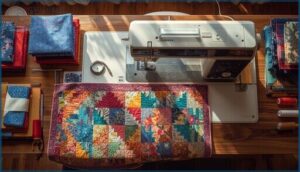
When you’re shopping for a large-throat sewing machine, you’ll notice a few features that show up again and again across different models. These aren’t just technical specs on a box—they’re the tools that actually make your quilting easier and more enjoyable.
Let’s look at what matters most when you’re comparing machines with generous workspace.
Throat Space and Workspace Dimensions
When shopping for large throat sewing machines, throat space is the most critical factor—it refers to the horizontal clearance from the needle to the machine body. Premium quilting machines now offer throat spaces ranging from 13 to 13.5 inches, approximately double the 6-inch standard.
Workspace depth adds vertical room, so a 13.5-by-5.5-inch sewing area provides about 74 square inches for quilt clearance. A larger machine footprint also enhances stability.
Stitching Speed and Performance
When you’re ready to tackle bigger quilts, stitching speed and performance become game-changers. High-speed models like the Juki TL-2000Qi hit 1,500 SPM, while others range from 850 to 1,600 stitches per minute—SPM advantages that save hours on long seams.
- Speed control sliders let you dial down for intricate work or ramp up for straight runs
- Vibration reduction through metal frames keeps stitch quality consistent at top speed
- Workspace influence means extended tables help you maintain control during rapid stitching
- Automation aids like automatic needle threaders minimize downtime between seams
A durable machine with solid motor power and throat space delivers the precision you need without sacrificing speed.
Feed Systems and Extension Tables
With quilting, feed system types make all the difference in stitch quality impact. Drop feed works for lighter layers, but dual-feed or walking-foot mechanisms reduce drag and puckering on thick sandwiches.
An extension table paired with frame integration extends your workspace support, letting large throat sewing machines glide bulky projects smoothly across the surface—your secret weapon against bunching and operator fatigue.
Presser Foot and Needle Threader Options
A presser foot for quilting is like choosing the right brush for painting—specialty feet enable techniques standard ones can’t touch. Quilters working on large projects benefit from Teflon feet for vinyl and walking feet for bulky batting layers.
When shopping for sewing machines with large work areas, pay attention to these details:
- Foot Compatibility: Low-shank snap-on systems let you swap between 9 to 32 specialty feet without tools
- Shank Heights: High-shank models (1 inch) versus low-shank (0.5 inch) determine which presser foot kits work with your machine
- Specialty Feet: Walking feet synchronize layers, preventing shifting on thick quilt sandwiches
- Threader Reliability: Many automatic needle threader mechanisms succeed in fewer than half of attempts without careful alignment
- Threader Maintenance: Keep the hook clean and position the needle at the reference point before each use
Top 9 Sewing Machines With Large Sewing Area
Now that you know what features matter most, let’s look at nine machines that deliver the workspace quilters need.
Each one brings something different to the table, whether it’s speed, stitch variety, or pure throat space.
You’ll find options here for everything from traditional piecing to ambitious long-arm projects.
1. Cutie Tabletop Quilting Frame Machine
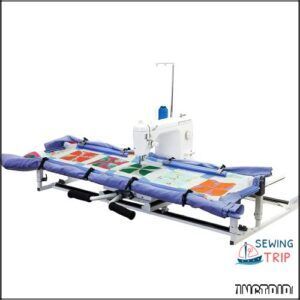
You won’t believe how much workspace you can get from a tabletop frame. The Cutie Tabletop Quilting Frame transforms your domestic sewing machine into a capable quilting machine by adding 48 inches of width and adjustable depth up to 42 inches.
It accommodates king-size quilts without hoging a dedicated room, and at 30 pounds, you can tuck it under a bed when you’re done.
Most machines with 7 inches or more of throat space will fit, though you’ll lose about 2 inches to the frame itself. Grace Company backs it with a 5-year warranty.
Best For: Hobby quilters in small spaces who want to tackle king-size projects on their domestic machine without investing in a full-size longarm setup.
- Handles quilts up to king size on any standard table while storing flat under a bed or in a closet when not in use
- Works with most home sewing machines that have at least 7 inches of throat space, so you don’t need to buy specialized equipment
- Priced around $549 on sale compared to $1,400–$4,000 for traditional longarm frames, backed by a 5-year warranty
- You lose about 2 inches of throat space to the frame itself, and quilt bulk can shrink your working area down to 5 inches on some setups
- Rolling and repositioning fabric sections for large quilts is tedious and can interrupt your quilting flow
- Assembly takes patience, and some users report frustration with rail caps and customer support responsiveness
2. Flynn Multi Frame Quilting System
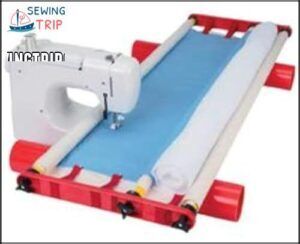
If you’re looking for a quilting frame that stows away in a closet, the Flynn Multi Frame Quilting System delivers 48 inches of working width with three fiberglass rods and two PVC roller pipes.
You’ll need at least 9 inches of throat space on your sewing machine to clear the frame assembly, and the tension control ribbons keep your layers taut during free-motion quilting.
At 3 pounds, portability isn’t an issue, though fabric compatibility works best with twin-size projects.
The modular design lets quilters adjust the frame for different project sizes without permanent workspace changes.
Best For: Quilters with limited workspace who need a portable frame for wall hangings, table runners, and twin-size projects up to 45 inches wide.
- Compact storage—rolls up and stacks inside the PVC pipes so you can tuck it in a closet between projects
- Strong tension control with side ribbons and adjustable knobs that keep your quilt layers flat during free-motion stitching
- Modular setup lets you swap in longer rods from a hardware store if you want to tackle wider quilts down the road
- Requires at least 9 inches of throat space on your machine, which rules out some compact models
- Small working area means you’ll reposition the quilt frequently, adding time to each session
- Assembly and tensioning take practice—some users find the initial setup fiddly and time-consuming
3. Janome MC6650 Sewing and Quilting Machine
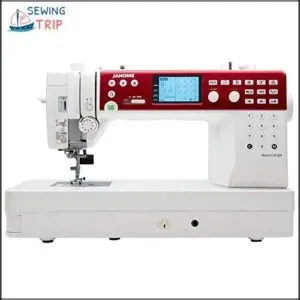
The Janome MC6650 offers quilters a 10-inch flatbed workspace, one of the roomier throats available without entering long-arm territory. Six LEDs in three spots illuminate your work surface, and the ergonomic design includes a built-in thread cutter that saves time on chain piecing.
You get 170 stitches and nine one-step buttonholes, plus speed control that caps at 1,000 stitches per minute when you need smooth precision on intricate blocks. The all-metal bed stays steady under bulkier projects, and adjustable presser foot pressure accommodates everything from quilting cottons to light upholstery.
Best For: Quilters and serious sewists who need extended throat space for larger projects but aren’t ready to invest in a long-arm machine.
- 10-inch throat space gives you room to maneuver bulky quilts and home décor projects without constant repositioning.
- 170 built-in stitches and 9 one-step buttonholes cover everything from basic piecing to decorative work and garment construction.
- All-metal flatbed and sturdy 24-pound frame keep the machine stable at high speeds, while 6 LEDs in three locations light up your entire work area.
- Some users report durability issues after a few months, including skipped stitches, broken foot controls, and a thread cutter that stops working.
- The auto threader can be finicky with synthetic threads, and the instruction manual doesn’t always walk you through troubleshooting clearly.
- At over 24 pounds and 20 inches wide, it’s not the easiest machine to move around or store in tight spaces.
4. Janome Horizon 8200QCP Sewing Machine
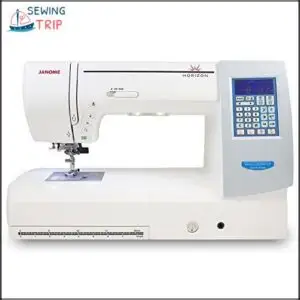
With 11 inches to the right of the needle, the Janome 8200QCP gives you breathing room for king-size quilts without constant repositioning. Its AcuFeed system synchronizes upper and lower feed to prevent shifting on multi-layer sandwiches, while the extension table extends your flat surface so bulky projects won’t drag.
You’ll find 170 stitches in the stitch library, one-hand needle threading, and an ergonomic design that includes a knee lifter for hands-free pivots.
At 1,000 stitches per minute, this Janome quilting machine balances speed with the large throat space serious quilters demand.
Best For: Quilters working on large projects who need extra throat space, reliable fabric feeding on thick layers, and a machine that can handle both precision piecing and fast straight-line quilting.
- 11-inch throat space and extension table make it much easier to manage king-size quilts and bulky home décor projects without constant fabric wrestling.
- AcuFeed system keeps multiple layers aligned during quilting, and the 7-piece feed dogs grip everything from lightweight cotton to heavy canvas without slipping.
- 1,000 stitches per minute with 170 built-in stitches and 9mm stitch width give you speed and creative range in one machine.
- At 30 pounds, it’s heavy and not something you’ll want to move around frequently or take to classes.
- The automatic bobbin winder can be inconsistent and tricky to get right, requiring some patience to master.
- The walking foot occasionally slips during use and needs regular adjustment, which interrupts your flow on longer seams.
5. Elna Elnita ef72 Sewing Machine
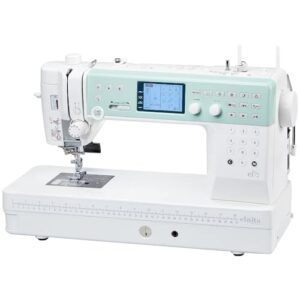
The Elna ef72 delivers a 10-inch continuous flatbed and 4.7-inch throat space, letting you maneuver bed quilts and layered projects with less wrestling. At 1,000 stitches per minute, it matches the Janome’s speed while offering 350 built-in stitches for decorative work.
You’ll appreciate the convertible free-motion foot and even-feed attachment for consistent stitch quality across multiple layers.
Some quilters report the automatic thread cutter clips too short and the needle threader can be fussy, but the 25-year mechanical warranty signals Elna’s confidence in this value-priced quilting machine.
Best For: Quilters who need generous workspace for large projects and want a fast machine with extensive stitch options at a mid-range price point.
- 10-inch seamless flatbed and 4.7-inch throat height give you serious room to work with bed-sized quilts and bulky layers
- 350 built-in stitches and 1,000 stitches per minute let you tackle both decorative work and high-speed piecing
- Includes convertible free-motion foot and even-feed attachment right in the box, plus a 25-year mechanical warranty
- Automatic thread cutter tends to clip the top thread too short, which means re-threading more often than you’d like
- Needle threader can be finicky and doesn’t always work smoothly
- Some users report the machine jams when sewing over thick cotton seams with heavy fabrics
6. Juki NX7 Long Arm Sewing Machine
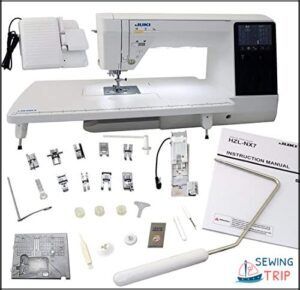
If you’re ready to step up from a 10-inch throat, the Juki Kirei NX7 opens up 12 inches of throat space—putting it in midarm quilting machines territory without the frame commitment. That extra room makes a real difference when you’re managing a king-size quilt top.
You’ll get 351 stitch patterns, Smart Feed dual-feed synchronization, and 14 presser feet to tackle everything from piecing to free-motion work. The touch panel lets you adjust tension digitally, and the knee-lifting lever keeps both hands on your fabric when precision matters most.
Best For: Quilters who need more throat space than a standard machine but don’t want the footprint of a longarm frame—especially those tackling large quilts with complex piecing or free-motion work.
- 12-inch throat space gives you room to maneuver king-size quilts without constant repositioning
- Smart Feed dual-feed system keeps multiple layers aligned, which is huge for tricky fabrics like minky or flannel
- 351 stitch patterns and 14 included presser feet mean you’re covered for just about any technique without buying extras
- Some users report the needle threader and thread cutter can be finicky, especially with heavier threads
- At 43 pounds and nearly 27 inches wide, it takes up serious table space and isn’t easy to move around
- Service requires shipping to Juki America in Florida, which can mean downtime if you need repairs
7. Juki DX-4000QVP Kokochi Sewing Machine
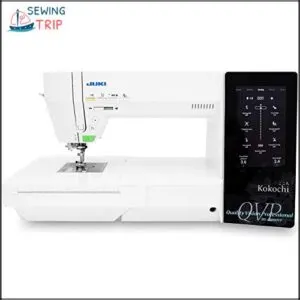
Think of the DX-4000QVP Kokochi as your digital upgrade—12 inches of throat space paired with a 7-inch touchscreen interface that lets you tweak stitch customization on the fly. Quilters who juggle heavy layers will appreciate the built-in walking foot and BOX Feed system, while the Wi-Fi connectivity creates opportunities for new patterns and updates.
Six lighting options dial in the perfect workspace glow. At 1,050 stitches per minute and 368 patterns, it bridges the gap between the Juki TL2010Qi’s simplicity and full-featured sewing machines built for creative exploration.
Best For: Quilters and professionals who need precise digital control over complex projects with heavy fabrics and want the flexibility of touchscreen customization plus WiFi connectivity.
- 12-inch throat space with built-in walking foot and BOX Feed system handles thick layers and large quilts smoothly
- 7-inch touchscreen with 368 stitch patterns and WiFi capability makes customization and updates incredibly accessible
- Adjustable 6-LED lighting system and 1,050 stitches per minute deliver both workspace comfort and serious speed
- $4,779 price point puts it out of reach for casual sewers or those just starting out
- Some users report thread tension issues and problems with the built-in cutter requiring troubleshooting
- Mostly plastic construction and spotty customer service raise durability and support concerns at this price level
8. Juki DX 3000QVP Sewing Machine

A step down from the DX-4000QVP, the DX-3000QVP still delivers 12 inches of throat space and Smart Feed technology for layered quilting projects. You’ll find 351 stitch variety options on the touch panel, plus a handy bobbin counter that tracks thread usage.
At 1,050 stitches per minute, it matches the speed of the Juki TL2010Qi while adding computerized conveniences. Warranty details include five years mechanical coverage, making this large throat space sewing machine a solid investment for quilters ready to expand their creative reach.
Best For: Quilters and advanced home sewers who need professional-level throat space and speed but want computerized features without stepping up to the flagship model.
- 12-inch throat space with Smart Feed dual-feed system handles large quilts and tricky fabrics like a champ
- 1,050 stitches per minute matches industrial-style speed while the touch panel and automatic threader keep things user-friendly
- Five-year mechanical warranty backs up the investment, plus the bobbin counter helps you avoid running out mid-seam
- $3,999 price tag puts it out of reach for casual sewers or beginners just getting into quilting
- 44-pound weight makes it a permanent fixture on your sewing table—not something you’ll move around easily
- Only available in white, so you’re stuck with that color whether it matches your space or not
9. Juki TL-2000Qi Sewing Quilting Machine
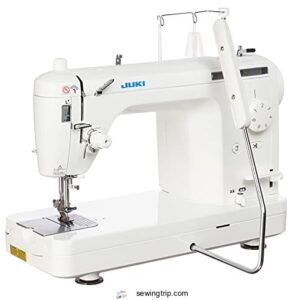
If you’re pushing through batting sandwiches and dense layers, the Juki TL2000Qi offers a straight-stitch powerhouse with 8.5 inches of throat space. High-speed stitching reaches 1,500 stitches per minute, keeping your quilting applications moving efficiently.
Heavy fabrics glide under the aluminum die-cast frame, which provides vibration reduction even at top speed. The included accessories—extension table, knee lifter, and walking foot—turn this quilting machine into a complete machine quilting setup right from the box.
Best For: Quilters and sewists who regularly work with thick fabrics, large projects, and multiple layers who need a dedicated straight-stitch machine with serious speed and throat space.
- 1,500 stitches per minute with an 8.5-inch throat makes quick work of large quilts and heavy materials
- Comes ready to quilt with an extension table, knee lifter, and walking foot included in the box
- Aluminum die-cast construction keeps vibration low even at high speeds for consistent stitches
- Straight-stitch only—you won’t get zigzag or decorative stitches
- At 25.4 pounds, it’s heavy enough that moving it around takes some effort
- Some users report the automatic needle threader can be finicky and may not work reliably
Comparing Workspace and Performance
When you’re comparing machines with large sewing areas, you’ll want to look at more than just the throat space measurements. The right machine for your projects depends on how throat dimensions work together with stitch options, speed, and special features like embroidery capabilities.
Let’s break down how these popular models stack up across the features that matter most to quilters.
Throat Space Across Leading Models
When you’re comparing machines, throat space is where the rubber meets the road. Janome throat sizes range from 10 inches on the MC6650 up to 11 inches on the Horizon 8200QCP, while Juki throat sizes stretch to 12 inches across the NX7, DX-4000QVP, and DX-3000QVP models.
Elna throat sizes mirror Janome’s generous platform, giving you frame compatibility and usable quilting depth that transforms how you work with large quilts.
| Model | Throat Space |
|---|---|
| Janome MC6650 | 10″ × 4.7″ |
| Juki NX7 | 12″ × height |
| Elna ef72 | 10″+ (shared platform) |
Stitch Variety and Decorative Options
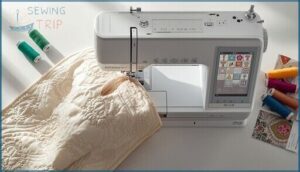
Most large-throat sewing machines offer between 100 and 350 decorative stitches, giving you serious creative versatility beyond straight seams. The Juki NX7 packs 351 stitches with alphabet options and stitch editing that let you customize width, length, and mirror patterns on the fly.
Pattern selection on these machines includes specialized quilting stitches—feather, blanket, and heirloom motifs—designed specifically for borders, sashing, and surface embellishment across king-sized quilts.
Embroidery and Quilting Capabilities
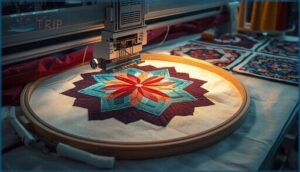
When you select an embroidery machine with a large workspace, you enable hoop sizes up to 10.5 by 16 inches—enough to stitch entire quilt centers or complex weaving-inspired motifs in one pass.
Sophisticated feed systems and specialized quilting feet handle batting thickness, while software integration lets you merge stitch design libraries, edit patterns, and preview layouts before your first needle drop.
Speed and Ease of Use
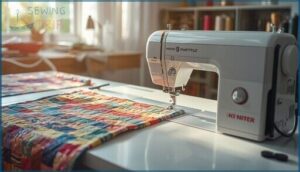
Once you’ve chosen your workspace and hoop size, speed becomes your next ally. Machines like the Juki TL-2000Qi reach 1,500 SPM, letting you complete long seams fast, while ergonomic design—think knee lifters and speed control sliders—keeps you comfortable through hours of quilting.
Time-saving features smooth your user experience:
- Automatic needle threaders cut setup delays
- Snap-on feet speed tool changes
- Adjustable throat space improves control
- Independent bobbin winders eliminate downtime
Choosing The Right Large Sewing Machine
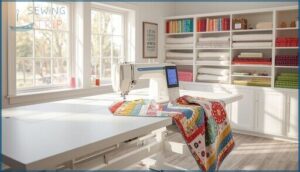
Choosing the right large sewing machine isn’t just about workspace dimensions—it’s about matching the machine to your actual projects and how you work. You’ll want to think through what you’re making, which features matter most, and how the machine fits into your sewing space and budget.
Let’s break down the key factors that’ll help you find the perfect match.
Project Types and Workspace Needs
When you’re planning your next quilting adventure, think about the quilt size you’ll tackle most often. Baby quilts and table runners work fine on machines with 6 inches of throat space, but throw quilts and bed-size projects need at least 8 to 10 inches to avoid constant fabric wrestling.
Your workspace ergonomics matter too—corner setups with extended tables keep large quilting projects supported and reduce shoulder strain.
Machine Features for Quilters and Sewists
Beyond throat space and extension table size, look for features that match how you quilt. Stitch regulation keeps your stitches even during free-motion work, while dual-feed systems prevent layers from shifting.
Automatic thread cutter and built-in knee lifter speed up your workflow, and lighting options brighten intricate piecing.
A speed control slider plus dedicated free-motion feet give you the control you need, and needle threaders save your eyes on long sewing days.
Budget and Brand Reliability
Your investment in a large throat quilting machine should balance brand repair costs with long-term durability. Janome and Elna models demonstrate excellent value machine features, rarely needing service over decades, while Singer’s budget model reliability varies widely.
Before deciding on cost-effective sewing machine options, check warranty coverage length:
- Juki offers five-year parts and labor protection
- Janome and Brother provide up to twenty-five years on mechanical defects
- Singer generally covers just three months to one year
Sewing machine brands reliability matters more than sticker price.
Ergonomics and Table Compatibility
When your table height forces your shoulders above elbow level, expect neck pain and fatigue—especially during long quilting sessions. Proper workspace ergonomics match your seated elbow height to the sewing surface, keeping your posture neutral.
A large throat quilting machine paired with an extension table reduces reach envelope strain by supporting fabric weight, while integrated planning of chair, table, and throat space transforms comfort across marathon projects.
Frequently Asked Questions (FAQs)
What domestic sewing machine has the largest throat space?
The Brother Aveneer EV1 currently leads with 1 inches of throat space, giving you more room than even the Janome M7’s 5 inches for handling large quilts and bulky projects.
What is the best sewing machine for heavy fabrics?
For heavy fabrics, you’ll want motor strength and needle power that won’t quit. The Singer 4423 delivers with a 60% stronger motor, reliable feed system, and solid presser foot lift for multiple fabric layers.
How do I get my sewing machine to sew over thick seams?
You’ll want to switch to a 100/16 needle and lengthen your stitch to 5 mm.
Use a hump jumper behind your presser foot to keep it level, and increase foot pressure for better fabric control.
What is the longest stitch length sewing machine?
The proof is in the pudding when selecting your ideal stitch length. Industrial machines like the Techsew 4800 offer up to 9mm maximum length, while vintage machines occasionally reach 12mm for specialized quilting and fabric thickness needs.
How do I maintain a large throat machine?
Daily lint removal with a soft brush, one-drop oiling after bobbin changes, and needle replacement for each quilting project keep your large throat machine running smoothly.
Schedule annual professional service for lasting performance.
Can large throat machines handle embroidery?
Sure, large throat machines can tackle embroidery—if you’re willing to settle for the “rustic charm” of free-motion work. Real embroidery machines use computer-guided hoops, but quilting machine throat space accommodates decorative stitches and design complexity with manual finesse.
What accessories improve quilting efficiency?
Walking feet reduce layer shifting by up to 70%, while extension tables expand your work surface 18–24 inches.
Free-motion feet, stitch regulators, and handling aids like knee-lifters keep complex quilts moving smoothly and accurately.
Are large throat machines beginner-friendly?
Yes, large throat machines suit beginner quilters when you prioritize ease of use. A 6-to-8-inch throat space reduces learning curve challenges, offering workspace for skill development without overwhelming feature complexity or cost barriers.
What fabrics suit large quilting machines best?
Cotton durability makes 100% quilting cotton ideal for large throat space machines. Pre-washing prevents shrinkage, while 68×68 thread count and 140-160 gsm fabric weight guarantee stability during workspace-intensive projects involving large item sewing.
What thread types work best for quilting frames?
When your quilting frame hums through an intricate feather pattern, you want thread that won’t snap mid-motion. Polyester thread (40–50 wt) offers greater fiber strength, low lint production, and excellent colorfastness, while cotton delivers traditional beauty with slightly higher maintenance and careful tension balance on quilting frames.
Conclusion
Picture Sarah, who spent years hunching over a standard machine, battling queen-sized quilts through a six-inch gap. After switching to a sewing machine with a large sewing area, she finished her first project pain-free and two days faster.
The right workspace isn’t just about convenience—it’s about transforming your craft from a physical struggle into pure creativity. When your machine bolsters your vision instead of fighting it, everything else falls into place.
- https://www.sewingmachinefun.com/large-throat-sewing-machines-for-quilting/
- https://graceframe.com/en/resources/blog/choosing-the-sewing-machine-with-the-correct-throat-length
- https://apparelresources.com/business-news/manufacturing/the-sewing-machine-as-a-workplace/
- https://straitsresearch.com/report/industrial-sewing-machine-market
- https://dataintelo.com/report/global-quilting-machine-market