This site is supported by our readers. We may earn a commission, at no cost to you, if you purchase through links.
A dull sewing machine needle doesn’t announce itself—it just quietly ruins your work. Skipped stitches, puckered seams, thread that snaps for no obvious reason: these are the telltale signs most sewists blame on tension settings or thread quality, never the needle.
Yet a needle normally earns its retirement after just 8–10 hours of use, and many machines run with one that’s long past its prime. Proper sewing machine needle maintenance isn’t complicated, but it does require knowing what to watch for, when to act, and how to choose the right needle for each job.
Table Of Contents
Key Takeaways
- Replace your needle every 8–10 hours of sewing—or right after any heavy project—because a dull needle quietly causes skipped stitches, thread breaks, and fabric damage before you ever suspect the needle is the problem.
- Match the needle type to your fabric: ballpoint for knits, denim needles for thick layers, microtex for delicate fabrics, and universal for everyday wovens—using the wrong type undermines even perfect tension settings.
- Always unplug your machine, raise the needle to its highest point, and insert the new needle with the flat side facing back—skipping any of these steps risks misalignment, skipped stitches, or machine damage.
- Store spare needles labeled by type in a dry, airtight container, and keep new and used needles strictly separated—poor storage leads to corrosion, point damage, and accidentally sewing with a worn needle.
Why Needle Maintenance Matters

A dull needle does more damage than most sewers realize—and it happens quietly, stitch by stitch.
Each skipped stitch is often a quiet signal that it’s time to review your sewing machine needle selection for craft room setups before blaming tension or thread.
A dull needle silently sabotages every stitch before you ever notice the damage
Before you blame your thread or your tension settings, your needle is usually the first place to look. Here’s what goes wrong when needle maintenance gets skipped.
Skipped Stitches From Dull Needles
When needle starts to dull, your machine feels it before you do. Needle wear creates friction that builds heat against the fabric, increasing Fabric Snag Risk and causing Stitch Length Variability across seams.
That extra resistance leads to Thread Tension Fluctuation, Motor Strain Increase, and — most visibly — skipped stitches.
Needle dullness doesn’t announce itself loudly; it quietly undermines every stitch you make. A dull needle also raises the risk of fabric integrity issues.
Thread Breakage and Fraying
Dull needles don’t just skip stitches — they fray and snap thread, too. Needle wear creates tiny burrs on the eye that roughen up fibers with every pass.
Poor Thread Quality makes this worse, and if your Bobbin Tension is off or Environmental Humidity is high, breaks happen fast.
clean needle, proper Tension Calibration, and smart Fabric Compatibility choices keep thread intact.
Fabric Puckering and Snags
Thread fraying wears on fabric, too. A needle with burrs or a bent tip drags fibers instead of parting them cleanly, causing fabric puckering and snags along the seam.
Identifying needle wear and burrs early saves your material.
Pair needle burr removal with Tension Balancing, Stitch Length Optimization, and Walking Foot Usage — small adjustments that keep every stitch clean and flat.
Preventing Machine Damage
Fabric damage doesn’t stop at the seam. bent or worn needle can strike the hook and bobbin case with every pass, leaving burrs that compound over time.
That’s why needle care connects directly to your machine’s longevity.
regular replacement with a lubrication schedule, dust accumulation prevention, and thread tension calibration to keep every moving part protected and running true.
When to Replace Needles
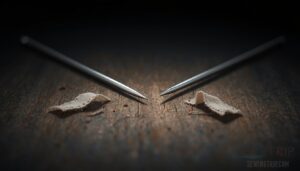
Knowing when to swap out a needle is one of the simplest things you can do to keep your stitching clean and consistent. Most sewists wait too long, and the results show up in their fabric before they ever notice the needle.
Here’s what to watch for so you can stay ahead of the problem.
Replace After 8–10 Sewing Hours
Think of your needle like a razor blade — it dulls faster than you’d expect.
Keeping an Hour Tracking Log helps you stay on top of the Needle Life Cycle before problems appear.
Most guidelines for needle replacement intervals recommend changing the needle every 8–10 sewing hours.
Fabric Wear Rate matters too — dense materials accelerate decline.
Replace the Needle on schedule, and Stitch Consistency takes care of itself.
Swap Needles After Major Projects
Every major project puts your needle through serious stress — multiple layers, dense seams, hours of tension. That’s why a needle swap after finishing a big job isn’t optional; it’s part of your post-project inspection checklist.
- Log your needle usage metrics alongside project notes
- Follow fabric change guidelines when switching to new material
- Update your needle inventory tracking with each replacement
- Replace the needle before quality slips, not after
Change Sooner for Thick Fabrics
Thick fabrics hit harder on your needle than you might expect.
Dense materials like denim and canvas cause Accelerated Needle Dullness and Elevated Heat Build-up with every pass, so Frequent Needle Swaps aren’t overcautious — they’re smart.
Thick Fabric Stress pushes needles past their limit faster, making denim needles your best ally. Swap them more often, and your stitches will stay clean.
Signs of a Worn Needle
Your needle won’t announce when it’s past its prime — but it will leave clues. Watch for these signs of wear before they ruin your work:
- Tip Dullness causes increased Thread Friction and visible Stitch Irregularity
- Shaft Bend leads to skipped stitches and uneven tension
- Eye Burrs fray thread and block smooth passage
- Audible popping signals a damaged tip hitting fabric
- Fabric puckering persists even after rethreading
Identifying needle wear and burrs early protects both your fabric and machine longevity.
Choosing The Right Needle
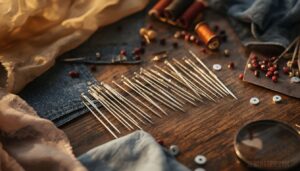
Not all needles are created equal, and grabbing the wrong one can quietly sabotage even your best fabric. The good news is that once you know what each type is designed for, matching needle to material becomes second nature.
Here’s a breakdown of the main needle types you’ll want in your kit.
Universal Needles for Woven Fabrics
Universal needles are your everyday workhorse for woven fabrics like cotton, linen, and quilting blends. Built on the Standard 130/705H system, they fit most home machines without fuss.
Piercing Geometry sits between sharp and ballpoint, so the tip slides cleanly through woven fibers. Scarf Length Advantage and Eye Placement Precision work together to improve stitch consistency and reduce skipped stitches across sizes 60/8 to 90/14.
Ballpoint Needles for Knits
Knits need a different approach entirely. Ballpoint needles have a rounded tip that pushes fibers apart rather than piercing them — protecting your fabric’s elasticity and preventing runs.
They work beautifully across knit fabric types like jersey, interlock, and ponte. Size 70/10 accommodates lightweight jersey; 90/14 suits heavier ponte.
Microballpoint variants offer finer stitch visibility on delicate knits. Color identification markings make needle replacement quick and confident.
Denim Needles for Heavy Layers
When denim’s involved, you’re asking your machine to muscle through multiple dense layers at once. Denim needles are built for exactly that — their Reinforced Shaft Design resists bending under Layer Penetration Force, while the Sharp Blade Edge slices clean through stacked twill.
Wide Eye Accommodation manages heavy topstitch thread without friction.
Keep Sewing Speed Control steady; slower passes mean more consistent stitches.
Microtex Needles for Delicate Fabrics
Delicate fabrics deserve a needle that works with them, not against them. That’s where microtex needles earn their place. Their Sharp Point Advantage and Thin Shaft Benefits make them ideal for silk, chiffon, and organza — piercing cleanly without distortion.
Your needle care routine matters here too. Precision Stitching depends on it:
- Silk glides smoothly under a sharp, slim microtex point
- Chiffon stays pucker-free thanks to minimal shaft drag
- Organza shows every flaw — a dull needle exposes them fast
- Fabric Compatibility spans voile, tulle, and fine sateen equally
- Thread Weight Pairing with 50–60 wt thread keeps holes invisible
Matching Needle Size to Thread
Think of the needle eye as a doorway — it needs to fit the thread, not fight it. The right thread diameter ratio keeps stitches smooth and even.
For a basic eye size match, a 75/11 needle suits 40-weight thread well, while 60-weight embroidery thread pairs with a 90/14. When thread ply adjustment is needed, simply size up your needle.
Safe Needle Removal and Installation
Swapping out a needle sounds simple, but a few small missteps can damage your machine or leave you with uneven stitches. The good news is that doing it safely comes down to a short, repeatable routine.
Follow these steps each time you remove or install a needle.
Unplug The Machine First

Before you touch a single screw, unplug the machine — full stop. Your Power Disconnect Procedure starts at the wall outlet, not the power strip.
Electrical Safety for sewing machines means a direct disconnect every time. Let a few seconds pass for Residual Power Drain to complete. This one step anchors your entire Pre-Maintenance Checklist and keeps safety first, always.
Raise The Needle Before Removal
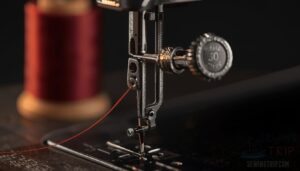
Once the machine is unplugged, your next move is simple but critical — raise the needle to its highest position before touching the needle clamp. This single step manages Thread Path Alignment, keeps your fingers clear of the point, and ensures clean Fabric Release Mechanism action.
Here’s why Needle Stop Verification matters:
- Use the Hand Wheel Nudge if automatic raise fails
- Confirm the needle has fully stopped before removal
- A proper Safety Pause Timing prevents accidental finger contact
- Raising realigns the thread above the hook, protecting needle alignment
- Skipping this step can bend or snap the needle eye
Lower The Presser Foot
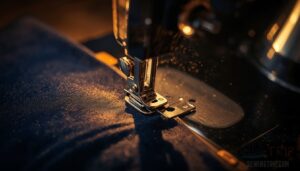
Always lower the presser foot before loosening the needle clamp — this is one step many sewers skip. Lowering it activates Feed Dog Sync and stabilizes the needle plate area, making Fabric Slip Prevention automatic. It also locks the foot’s position for accurate Foot Height Calibration and keeps needle alignment steady during removal.
| Action | Purpose | Result |
|---|---|---|
| Lower presser foot | Activates Feed Dog Sync | Stabilizes work area |
| Use Quick-Release Lever | Drops foot instantly | Saves setup time |
| Check Foot Pressure Adjustment | Confirms correct foot height | Prevents needle misalignment |
| Verify needle plate clearance | Ensures safe removal path | Reduces snag risk |
| Confirm foot is fully lowered | Locks Fabric Slip Prevention | Keeps parts steady |
Insert With The Flat Side Back
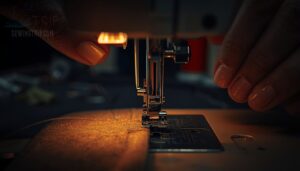
Once the old needle is out, orient the new one so the flat side faces the back — that’s your Flat Side Indicator, and it’s not optional.
This position locks in Entry Angle Control, keeps the Thread Eye Alignment true with the bobbin thread, and allows smooth Fabric Glide through every layer.
It also facilitates Burr Prevention by keeping the shaft flush inside the clamp.
Tighten The Clamp Securely
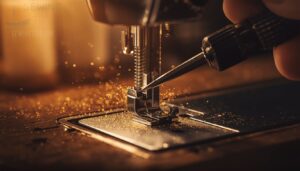
With the flat side seated back, it’s time to secure the needle clamp screw — firm but not forced. Think of it like hand-tightening a jar lid: stop when you feel solid resistance.
Over-tightening causes Clamp Material Wear, and can warp the shaft. Follow Alignment Verification Steps by checking Thread Path Clearance before your first test stitch.
Clamp Torque Guidance keeps everything running true.
Cleaning Sewing Machine Needles
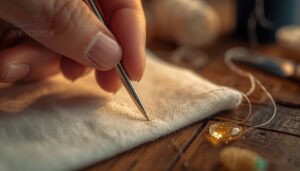
A clean needle does more for your stitching than most people realize. Even a thin layer of residue or a tiny burr can throw off your tension and snag delicate fabric.
Here’s exactly how to clean yours the right way.
Wipe The Shaft and Eye
A grimy needle is a silent saboteur — and wiping the shaft and eye takes under a minute. Before you start, use pre-wipe lighting and a magnifier inspection to spot any residue or micro-burrs. Dampen a lint-free cloth — avoid fiber transfer by skipping cotton swabs — with 70% isopropyl alcohol and wipe gently along the needle shaft and around the needle eye.
- Set up a dedicated cleaning station with your cloth, alcohol, and magnifier ready
- Follow drying time guidelines: let the clean needle air-dry fully before reinserting
- The sewing machine needle cleaning process directly impacts stitch quality — a clean needle glides; a dirty one drags
Remove Lint and Residue
Lint is sneakier than it looks. Polyester and nylon threads shed microfibers that embed in the needle groove and eye — slowing penetration before you notice anything wrong. Use the Microfiber Brush Technique: run a soft brush along the shaft, then perform a Fiber Debris Inspection using a magnified needle eye view. A lint-free cloth manages surface residue; for the eye, a cotton swab with Static-Free Lint Removal strokes clears trapped fibers. The Airless Vacuum Method works well mid-project.
| Residue Type | Cleaning Technique |
|---|---|
| Surface lint | Soft brush + lint-free cloth |
| Thread microfibers | Microfiber Brush Technique |
| Eye blockage | Cotton swab, dry pass |
| Mid-project buildup | Airless Vacuum Method |
| Embedded groove fibers | Fiber Debris Inspection + brush |
Follow the sewing machine needle cleaning process after every project — consistency prevents buildup.
Use Isopropyl Alcohol Carefully
Once the dry brush pass is done, a quick wipe with isopropyl alcohol takes care of anything stubborn — adhesive residue, oil smears, or staining that lint removal misses. It’s a simple step, but it pays off in clean needle performance.
Follow these Ventilation Practices and safety habits every time:
- Open a window — keep vapors moving and below safe levels
- Never clean near open flames; isopropyl alcohol ignites easily, so Fire Prevention isn’t optional
- Wear gloves for basic Skin Protection against repeated contact
- Use small amounts only, stored following Proper Storage guidelines in sealed, labeled containers
- Dispose of used cloths through Hazardous Disposal channels — don’t bin soaked rags carelessly
Check for Burrs and Rust
With the shaft wiped clean, now’s the time for a proper visual inspection. Hold the needle under good light and run a clean cotton swab along the shaft — any roughness signals a burr or rust.
Magnification techniques, like a jeweler’s loupe, help confirm what your fingers detect.
Even a small burr wrecks stitch quality, so keep a deburring tool handy for the deburring process.
Replace Bent or Corroded Needles
If your swab catches roughness during a Corrosion Inspection or Surface Pitting Review, stop right there — cleaning won’t fix what’s already compromised.
Replace the needle immediately when:
- Bent Needle Detection reveals any kink along the shaft
- Shaft Straightness Check shows visible deviation from true
- Eye Alignment Checks confirm distortion increasing thread resistance
- Rust spots appear despite wiping
A fresh needle restores stitch quality instantly.
Storing Spare Needles Properly

How you store your spare needles matters more than most sewists realize. A little organization now saves a lot of frustration later — no more grabbing the wrong size or accidentally using a dull needle on a fresh project.
Here are the key habits that will keep your needle collection in good shape and ready to use.
Keep Needles Labeled by Type
A well-organized needle kit is like a toolbox where every drawer has a label. Assign each needle type its own container using Color‑Code Labels — denim gets one color, knits another.
Add Alphanumeric Codes, Fabric Compatibility Tags, and a Needle Size Index so you’re always choosing the right needle for specific fabrics instantly.
Batch Date Stamps help you follow needle and bobbin replacement guidelines and track guidelines for needle replacement intervals without guessing.
Separate New and Used Needles
Once a needle has seen a full project, it doesn’t belong anywhere near your fresh stock. Keep new needles in their original packaging — that sleeve protects the point and confirms the size at a glance.
Drop used needles into a dedicated sharps container immediately. This segregated storage prevents contamination, eliminates mix-ups, and makes identifying signs of a worn needle versus a fresh one simple.
Store in a Dry Container
Humidity is a quiet enemy of metal needles. Store your spare stock in a container with airtight seal integrity — glass or BPA-free plastic both make smart container material choices. Tuck a desiccant packet nearby if your workspace sees seasonal humidity spikes.
Follow a inventory rotation system: newest needles go in last.
Temperature stable storage away from heat vents keeps corrosion from sneaking in.
Protect The Point From Damage
Even a brand-new needle becomes useless fast if the point gets nicked in storage. A padded or lined container cushions the tip against impact — that’s Tip Pressure Control working before you even thread the machine.
- Inspect sharpness before each project — Sharpness Monitoring catches damage early
- Keep Thread Path Smoothness in mind; a bent point snags thread instantly
- Make sure Presser Foot Clearance when storing loaded needle cases
- Use a Stabilizer Use mindset — protect delicate points from shifting inside containers
Keep Common Sizes on Hand
Running out of the right needle mid-project is its own kind of frustration. Build a Standard Size Sets collection covering sizes 60 through 100 — your everyday backbone.
A Backup Needle Pack of ballpoint and universal types covers most fabrics instantly. Post a Size Chart Display or Fabric Matching Guide nearby, and cross-reference your Thread Compatibility Matrix so you always change your needle with confidence.
Troubleshooting Needle Problems

Even with careful maintenance, needles can still act up in ways that throw off your whole sewing session. Most problems have clear warning signs once you know what to look for.
Here are the most common needle issues and how to handle each one.
Skipped Stitches After Changing Needles
Skipped stitches right after a needle change are frustrating — and usually fixable. Most of the time, one small detail goes wrong during installation.
Check these four culprits first:
- Needle scarf alignment — flat side must face back
- Proper needle depth — push it fully into the bar
- Tension calibration — re-thread both upper and bobbin
- Fabric feed adjustment — don’t rush the first few stitches
Audible Popping During Sewing
A popping or clicking sound mid-seam is your machine talking — and it’s worth listening. Lint buildup near the bobbin or needle plate, needle clamp looseness, or a tension imbalance can all trigger that sharp pop.
Fabric thickness stresses a dull needle fast.
Check hook timing if the pop persists after re-threading. Keeping the needle clean directly impacts stitch quality and prevents bigger problems.
Frequent Thread Snapping
Thread breakage often traces back to upper tension set too high or bobbin tension that’s out of sync.
Poor thread quality makes it worse — old or brittle thread snaps under normal load.
Check fabric compatibility too, since dense stitch density on thick layers strains even good thread.
Clean your needle regularly; a nicked eye frays thread fast and breaks it mid-seam.
Fabric Damage After Stitching
Even after thread snapping is solved, damage may already show in the fabric itself.
A dull or dirty needle distorts fibers instead of parting them cleanly, leading to puckering, seam slippage, or fiber breakage along stitch lines.
You might also notice color bleeding or post-wash shrinkage that worsens existing distortion.
Proper needle care directly shapes stitch quality — and fabric longevity.
Clean or Replace The Needle
Once fabric damage shows up, your needle is telling you something. Here’s how to respond:
- Run a Visual Needle Check — look for bends, dull tips, or Burr Spotting under good light.
- Use a Micro-Brush Cleaning tool to clear lint from the eye.
- Apply an Alcohol Swab carefully along the shaft.
- Assess the impact of needle cleanliness on stitch quality — clean needles glide; dirty ones drag.
- When cleaning doesn’t fix skipped stitches, Needle Disposal is the right call — replace it.
Frequently Asked Questions (FAQs)
How do you care for a sewing machine?
Caring for a sewing machine means staying consistent — regular oiling schedules, dust removal techniques, thread path cleaning, presser foot maintenance, and electrical safety checks all work together to keep every stitch smooth and reliable.
How often should you change a sewing machine needle?
Change your needle every 8–10 hours of active sewing. Project-based replacement works well too—swap after each major project. Watch for needle wear signs like skipped stitches or popping sounds.
What happens if you don’t take care of your sewing machine?
Skip maintenance long enough, and your machine will let you know — louder hum, increased noise, belt wear, and eventually motor overheating or electrical failure. Neglect shortens its lifespan fast.
How to choose a sewing machine needle size?
Match your needle size to your fabric weight. The European Size System runs from 60 to 110; the American Size System from 8 to Heavier fabric needs a higher number.
Is WD-40 ok for sewing machines?
No, WD-40 isn’t safe for sewing machines. It dissolves existing lubricants, leaves sticky residue, and attracts dust.
Always use proper sewing machine oil instead, to protect moving parts and avoid warranty risks.
How do you change needles on a sewing machine?
Ever wonder why a simple swap makes such a difference?
Unplug first, raise the needle, loosen the clamp, then pull straight down. Insert with the flat side back, tighten, and run a quick Test Stitch Verification.
How to maintain a sewing machine?
Maintaining a sewing machine means regular oiling and lubrication, bobbin case care, feed dog maintenance, and machine exterior cleaning. Consistent needle and thread maintenance practices keep everything running smoothly.
Don’t forget electrical safety checks.
Why is changing a sewing machine needle important?
A dull needle quietly ruins your work.
It causes skipped stitches, breaks thread, snags fabric, and strains your machine.
Regular needle changes protect stitch quality consistency, thread tension stability, and machine longevity — all at once.
How often should you replace your sewing needles?
Replace your needle every 8–10 hours of active stitching. That’s your baseline for healthy needle life expectancy.
Stitch count monitoring keeps your machine usage patterns in check and your results consistently clean.
When should I change my sewing machine needle?
Change your needle every 8–10 hours of sewing. That’s your stitch count threshold.
Switch sooner after heavy duty projects or a fabric switch frequency change — your thread and fabric will thank you.
Conclusion
Think of needle as the tip of a surgeon’s scalpel—when it’s sharp and right for the job, everything flows cleanly. When it’s not, every stitch pays the price.
Consistent sewing machine needle maintenance is what separates frustrating sessions from smooth results. Change it regularly, match it to your fabric, store it properly, and clean it often.
Machine will run smoother, your seams will hold stronger, and your finished work will show the difference.