This site is supported by our readers. We may earn a commission, at no cost to you, if you purchase through links.
There’s something magical about watching a child thread their first needle and stitch two pieces of fabric together. That moment when they hold up their finished creation—a wonky but wonderful bookmark or a slightly lopsided scrunchie—and beam with pride? That’s the spark that turns into a lifelong skill.
Sewing projects for kids don’t need fancy equipment or perfect straight lines. They need excitement, achievable goals, and plenty of room for creative expression. Whether your young maker wants to craft a cuddly stuffed owl, stitch together a colorful tote bag, or design their own pencil case, these beginner-friendly projects build confidence one stitch at a time.
From quick 20-minute wins to weekend adventures in fabric and thread, you’ll find projects that match your child’s skill level and interests while teaching them something valuable they’ll carry forward.
Table Of Contents
Key Takeaways
- Start with quick-win projects like scrunchies, bookmarks, and simple skirts that take 20-60 minutes so kids see results fast and build confidence before tackling complex patterns
- Hand sewing with blunt needles on felt or soft fabric works best for ages 4-6, while machine sewing becomes appropriate around ages 6-8 depending on each child’s motor skills and attention span
- Safety comes first through supervised sessions, child-safe tools like ball-tip needles and 5-inch blunt scissors, and skipping choking hazards like button eyes in favor of embroidered faces on plushies
- Let kids choose their own fabrics and colors to boost ownership and creativity, celebrating wonky seams as learning moments rather than mistakes that need fixing
Easy Sewing Projects for Beginners
When you’re just starting out, you want projects that feel like wins—not frustrations. The best beginner sewing projects use simple shapes, forgiving fabrics, and just a few steps so kids can see results fast.
Here are five easy projects that build skills without feeling like work.
Basic Band Skirt Tutorial
A basic band skirt is perfect for kids sewing tutorials—you’ll finish it in about 20 minutes! Start with simple woven fabric, cut to twice your child’s waist measurement. Sew the short edges together, fold a neat hem, and attach one-inch elastic directly to the waistband.
This project is made easier because it requires no casing or gathering. This easy sewing project for children teaches straight seams and customization through fabric selection and waistband variations.
Easy Bow Scrunchies
Hair scrunchies are one of the most popular easy sewing projects for children—and adding a bow makes them extra special! You’ll start with a fabric rectangle about 50 cm by 10 cm, fold it into a tube, and thread elastic through. Fabric choices range from cotton to velvet, following current market trends. A fun way to add a feminine touch to any hairstyle is to create DIY scrunchie bows.
Here’s what makes bow scrunchies perfect for beginner sewing:
- Complete in under an hour with basic straight stitches
- Use fabric scraps smaller than 0.1 meters per scrunchie
- Choose 1/4-inch elastic for easy threading and secure hold
- Create bow variations by adjusting fabric width from 10 to 15 cm
- Practice essential safety tips like securing elastic ends with multiple stitches
This sewing for kids project teaches measuring, stitching, and turning fabric right-side-out—skills you’ll use again and again!
Simple Kids Doll Skirt
A doll skirt is one of the best easy sewing projects for kids ready to level up! Using a fat quarter of cotton fabric and elastic waistbands (about 12 inches of 3/8-inch elastic for 18-inch dolls), you’ll practice fabric selection, quarter-inch seam allowances, and basic hemming techniques.
The whole project takes about an hour, costs around $10, and opens up endless embellishment options—from ribbon trim to fabric pockets!
Reversible Fabric Basket
After mastering that adorable doll skirt, you’re ready for something extra useful—a reversible fabric basket! This beginner project transforms two fat quarters and interfacing into a sturdy fabric tray perfect for storing toys, craft supplies, or organizing your sewing space.
You’ll learn:
- Straight seams with quarter-inch allowances
- Boxing corners for three-dimensional structure
- Topstitching for a polished finish
- Sewing with fabric scraps to reduce waste
Safety tips: Keep fingers away from the needle, and work with adult supervision when using the machine!
Quilting Art Bookmarks
With just a few fabric scraps, you can create quilted bookmarks that make reading even more exciting! These tiny treasures—perfect for kids sewing for beginners—measure about 2.5 by 7 inches and build fine motor skills through straight stitching.
Customize them with favorite colors for creative expression, then gift them to friends or teachers. Simple sewing projects like these turn leftover fabric into reading incentives!
Fun Wearable Sewing Projects for Kids
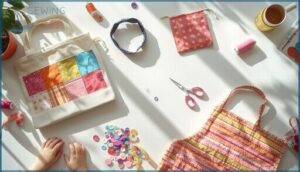
Once kids nail the basics, they’re ready to make things they can actually wear or carry every day.
These projects turn fabric into real clothes and bags that show off their new skills.
Let’s look at some fun wearables that are simple enough for beginners but cool enough to use all the time.
Easy Leggings Pattern
An easy leggings pattern is perfect for learning to sew clothing for kids! Sizing options range from preemie to size 16, and most patterns require just 1 to 1.25 yards of stretchy knit fabric.
Beginner tips focus on simple elastic waistband construction and straight seams. Pattern adjustments are minimal, allowing you to finish a pair in under an hour with basic stitches!
Simple Pants in Multiple Sizes
With sizing and fit that spans toddlers to early teens, simple pants for kids offer a grow-with-you project! Most patterns include sizes 2–8 or 12 months to size 18, so sewing clothing for kids becomes more flexible.
Elastic waistbands eliminate tricky closures, while pocket variations and cuff options let you customize. These easy sewing projects for kids use 1–1.5 yards of fabric, making them beginner-friendly sewing patterns for beginners.
Unisex Messenger Bag
You’ll love how simple unisex messenger bags become one of the best sewing projects for kids! With material choices like cotton or fleece, bag customization through strap lengths and pocket placements, and safety features such as magnetic snaps, these children’s sewing projects pack serious skill development.
Project variations let you adjust sizing while sewing bags and pouches that work for any young sewist.
Mini Messenger Bag Tutorial
Ready to make something you can wear every day? This mini messenger bag tutorial teaches beginner-friendly sewing projects using simple cotton fabric and customizable strap adjustment for a perfect fit.
Safety considerations include supervised machine use, while a 1/2 inch seam allowance keeps construction straightforward.
Customization options let you choose colors and add pockets, making these children’s sewing projects truly yours!
Free Drawstring Backpack Pattern
This free drawstring backpack pattern transforms simple rectangles into wearable art—no printed pattern needed! You’ll master basic straight stitching while creating a functional bag that finishes at 14 inches wide by 15.5 inches tall in about an hour.
Size variations span Little Kid to Adult dimensions, while fabric selection ranges from quilting cotton to durable canvas.
Key beginner-friendly features include:
- Strap length adjusts through easy grommet placement
- Drawstring options customize with 66-inch finished cords
- Free sewing pattern uses only rectangle cuts
Perfect for kids ready to tackle practical sewing projects with confidence!
Creative Toys and Plushies to Sew
There’s something magical about making a toy you can actually play with and hug. Sewing your own stuffed animals and felt creations lets you pick the colors, add fun details, and bring your imagination to life.
Here are some adorable plushies and toys that are perfect for beginners.
Teddy Bears and Plush Dolls
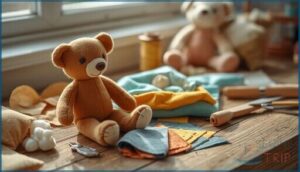
Sewing toys and plushies like easy teddy bears teaches you valuable skills while creating cuddly companions. When sewing with kids, material selection and age appropriateness matter—use washable fabrics and embroidered faces instead of button eyes for younger children.
Toy sewing patterns designed for sewing projects for children emphasize safety standards, durability testing, and hygiene practices, ensuring your creations withstand hugs, tumbles, and repeated washing while keeping little ones safe.
Easy Sheep Softie Pattern
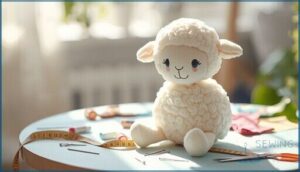
A cuddly sheep softie takes your plushie game to the next level! This beginner sewing skills project uses about half a yard of white fleece for the body and fits perfectly in small hands at just six inches tall. You’ll practice curved stitching—great for motor skill benefits—while creating a squeezable friend.
Why kids love making sheep softies:
- Simple shapes mean quick wins – Most felt sheep design patterns use fewer than 10 pieces, so you won’t feel overwhelmed cutting or pinning.
- Smart pattern adaptations keep everyone safe – Swap softie safety eyes for embroidered faces if sewing with younger children.
- It’s tougher than it looks – Reinforced seams handle all the hugs and adventures your creation will go on.
This easy sheep softie teaches hand-eye coordination as you stitch around curves. Hand or machine sewing both work, making it perfect for whatever equipment you have. Use polyester fiberfill that meets toy safety standards, and consider blunt-tipped needles with larger eyes for easier threading. Pre-cut your fabric pieces so kids focus on the fun part—bringing their woolly friend to life!
Adorable Owl Family Pattern

An adorable owl family pattern lets you create a whole flock of handmade toys with varying pattern complexity levels! Kids aged 8–10 can follow the step-by-step instructional formats to build owls with wings, felt beaks, and embroidered eyes—much safer than buttons for younger siblings.
This sewing project builds developmental benefits through cutting, pinning, and stitching while teaching owl family safety through smart material selection and strong seams.
Glove Monsters Tutorial
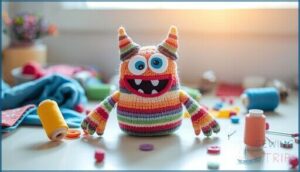
Turn a single glove into a quirky monster by stitching a curved seam across the fingers, stuffing each one, and adding felt eyes—perfect for upcycled materials and skill development!
This Glove Monsters Tutorial suits kids aged 8–13 learning hand sewing with safety first practices like blunt needles.
Design variations let you experiment with colors, and educational extensions can link your plushie to storytelling or character-building exercises.
Mix-n-Match Felt Monsters
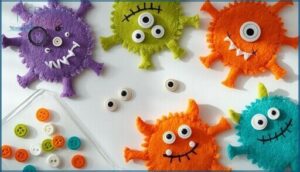
With interchangeable pieces like eyes, mouths, and arms, these felt monster designs let you build character after character on acrylic sheets costing under a dollar each. Motor skill development soars during classroom implementation as you stitch, stuff, and swap parts—plus beginner-friendly sewing projects like these meet safety considerations and material durability standards.
Next, try Felt Food for more children’s sewing projects and easy sewing crafts!
Felt Food Patterns
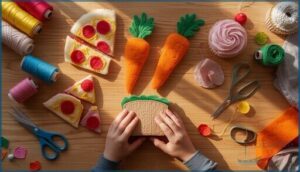
Felt food patterns transform scrap fabric into durable pizza, carrots, and cupcakes, perfect for years of imaginative play. These children’s sewing projects not only build focus but also support educational benefits like shape recognition and creative cooking games.
- Market trends show DIY craft kits for kids growing 18.90% annually through 2033
- Felt food durability improves when you choose natural-fiber felt over synthetic
- Pattern design variety spans 16+ vegetables plus fruits, breads, and desserts
- Material safety features non-fraying edges and child-safe needle compatibility
Next, explore sewing gifts for kids!
Practical Accessories and Gifts Kids Can Make
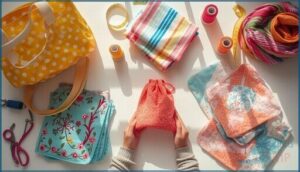
Once your child gets comfortable with the basics, they’ll love making things they can actually use or give as gifts.
These projects turn fabric into useful everyday items that friends and family will appreciate.
Let’s look at some practical sewing ideas that make great presents and teach real-world skills.
Photo Fabric Throw Pillows
Photo fabric throw pillows are perfect beginner-friendly sewing gifts for kids! You’ll use inkjet fabric safety-rated materials and standard 12″ to 16″ pillow inserts that make size standardization simple. Beginner seams mean just sewing straight lines along three or four sides.
Print durability improves when you choose pigment-based inks, and these throw pillows become treasured gifting ideas that showcase your child’s favorite photos in sewing projects they’ll love making.
Japanese-Inspired Boxy Bag
Looking for beginner sewing that combines fun with skill development? A Japanese-inspired boxy bag is perfect for kids!
You’ll use two fat quarters—one exterior, one lining—and create structured corners that teach 3D construction.
Cultural motifs like anime or kawaii designs make customization options exciting, while material choices such as recycled cotton add eco-friendly appeal.
Most first-timers finish this practical project in 60–90 minutes!
DIY Tote Bag Pattern
A classic tote bag lets you explore fabric selection (cotton quilting prints work great!), practice strap length calculations (around 27 inches fits most kids), and master seam allowance consistency—usually 0.5 inches.
You’ll learn corner boxing to create a flat base, plus lining options that add polish.
This DIY sewing project transforms rectangles into a functional bag, teaching kids spatial reasoning while they craft something they’ll actually use!
Patchwork Drawstring Bag
Pre-cut charm packs make fabric selection a breeze for this DIY sewing project! You’ll sew twenty-four 5-inch squares into colorful panels, then add grommets at strategic placement points for sturdy drawstring options. Learning casing techniques means folding and topstitching a channel near the bag’s top—it’s simpler than it sounds and creates a polished finish kids love showing off as handmade gifts for kids.
- Master basic seam allowances joining squares
- Practice grommet installation for functional hardware
- Explore creativity through patchwork design choices
- Build confidence completing beginner-friendly multi-step projects
Pencil and Notebook Case
Zipper insertion gets much easier once you’ve practiced seams on your drawstring bag. Fabric selection matters—pick sturdy cotton that won’t slide around while you work. Most beginner-friendly sewing tutorials recommend case dimensions around 5 by 9 inches, perfect for standard pencils.
Kids love adding personalization ideas like iron-on patches or hand-stitched initials, turning basic pencil cases into signature school gear they’re proud to carry daily.
Tips for Teaching Kids to Sew Safely
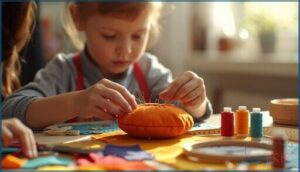
Teaching kids to sew doesn’t have to feel scary or stressful. With the right approach, you can help them build skills while staying safe and having a blast.
Here are a few simple ways to make sewing time both fun and worry-free for everyone.
Choosing Kid-Friendly Tools and Materials
Before you hand over sewing tools, think safety first. Choose blunt-tip scissors sized for small hands—5-inch safety-edge styles work well for younger kids. Opt for ball-tip or tapestry needles instead of sharp points to protect fingers.
Always pick non-toxic fabric markers that meet toy safety standards, and check that fabrics meet flammability requirements, especially if your child’s making anything to wear.
Starting With Simple Stitches
Safety first—now let’s get those little hands stitching! Start with lacing cards or cardstock to build fine-motor skills before touching fabric. Running stitch is your best friend here; it’s beginner-friendly and perfect for kids mastering the simple in-and-out motion.
Once they’re comfortable, try backstitch for stronger seams. These stitch types lay the foundation for all their future sewing skills, plus children love seeing quick results!
Encouraging Creativity and Patience
Once your little ones grasp those simple stitches, it’s time to nurture creativity and patience. Let kids choose their own fabrics and colors—this ownership builds confidence like nothing else!
Sewing projects naturally teach perseverance development and focused attention as children work through mistakes. Research shows that structured creative problem-solving activities help kids stick with challenging tasks longer.
Celebrate every crooked seam—those “oops” moments are where real learning happens, and routine establishment through beginner-friendly handmade gifts turns crafting into a calming, screen-free ritual children truly treasure.
Every crooked seam is a lesson, and handmade gifts become calming rituals children treasure
Making Sewing a Fun Family Activity
Turning needle and thread into family bonding time creates memories that last long beyond the final stitch. Pandemic sewing taught us that screen-free fun strengthens connections while building real skills.
Here’s how to make sewing with kids a joyful family activity:
- Set aside weekly crafting sessions to establish a creative climate everyone anticipates
- Let siblings choose projects together for natural skill development at every age
- Create gifts as a team so children feel proud sharing handmade treasures
- Celebrate wobbly stitches and creative solutions to keep kids activities stress-free and encouraging
Frequently Asked Questions (FAQs)
What are some fun things to sew for kids?
Kids love creating wearable items like elastic-waist skirts and scrunchies, plus soft toys such as felt monsters and teddy bears.
Beginner-friendly sewing projects include tote bags, bookmarks, and simple plushies that build confidence fast.
How do I teach my child to sew?
Ready to get started? Start with blunt needles and soft fabrics like felt around ages 6–7, using simple hand stitches before machines. Close supervision, clear safety rules, and patience transform teaching kids to sew into joyful skill-building.
What are some easy DIY sewing projects for kids?
Start with beginner-friendly sewing projects like bow scrunchies, simple skirts, fabric baskets, and felt softies.
These DIY sewing projects use straightforward stitches and minimal pattern pieces, supporting skill development while addressing safety considerations for young makers.
Are there free sewing projects for kids?
Plenty of pattern packs are posted online—more than 25 beginner-friendly tutorials for children’s sewing projects live on blogs and websites, completely free.
These digital formats support skill development with safety guidelines and accessible, step-by-step instructions for young makers.
What can you sew for a toddler?
You can sew soft clothing, comfort toys, and fabric baskets for toddlers using easy sewing projects with soft fabrics.
Safety standards emphasize secure seams, washability, and avoiding choking hazards during their developmental stage.
When can a child learn to sew?
Most children can start hand sewing around age 4 with close supervision, while machine sewing usually begins at 6–8 depending on motor development, attention span, and interest in learning sewing skills through age-appropriate children’s sewing projects.
How do you teach a child to sew?
Teach hand sewing first using simple stitches on marked fabric—it’s safer and builds foundational sewing skills.
Progress slowly to machines around age six or eight, prioritizing patience and making mistakes part of the learning journey for beginner-friendly success.
What are some cool things to sew for kids?
From simple scrunchies to stuffed animals, beginner-friendly sewing projects spark creativity while building fine motor skills.
Personalization options let kids choose fabrics and colors, making each creation uniquely theirs through age-appropriate skill development.
Are these 25 sewing patterns for kids easy to sew?
Most patterns range from very simple to moderately complex. Skill level, age suitability, and supervision needs vary widely—straight-seam projects like scrunchies suit true beginners, while garments and plushies demand more experience and safety oversight.
What can I make with sewing for kids?
You can make wearable items like pants and bags, fun toys such as plush dolls and felt monsters, plus practical home decor including pillows and bookmarks—all beginner-friendly sewing projects that build skill development and creative expression.
Conclusion
Practice makes progress, not flawlessness—and that’s the beauty of learning to sew. These sewing projects for kids to make turn scraps of fabric into real confidence builders.
Your young stitcher might fumble with thread or cut a crooked line, but with each project, their skills sharpen and their imagination grows bolder.
Hand them fabric, thread, and encouragement, then step back and watch them create something wonderfully their own.
- https://dataintelo.com/report/global-craft-kits-and-projects-market
- https://www.businessresearchinsights.com/market-reports/craft-kits-and-projects-market-120289
- https://ducksncrafts.com/blogs/articles/children-and-sewing-how-sewing-can-benefit-your-kids-development
- https://www.franklinsgroup.com/next-generation-sewing-how-to-teach-the-love-of-crafting-in-kids/
- https://bloomfieldarts.com/how-sewing-builds-creativity-confidence-in-children/