This site is supported by our readers. We may earn a commission, at no cost to you, if you purchase through links.
Picking a sewing machine under $200 used to mean compromising somewhere—either the stitch selection was thin, the controls felt like a guessing game, or the machine shook apart the moment you fed it denim.
The Brother HC1850 landed in a crowded field promising to break that pattern, and for a lot of home sewers, it delivers. With 130 built-in stitches, a clean LCD interface, and a drop-in bobbin that won’t make you want to throw it across the room, this machine punches noticeably above its price tag.
Whether it’s worth your money in 2026 depends on what you’re actually making—and that’s exactly what this Brother HC1850 review breaks down.
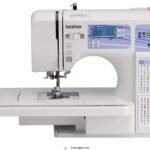
The Brother HC1850 is a solid machine that earns its place on a beginner’s table without overwhelming you. Right out of the box, the automatic needle threader saves you the squinting and frustration that kills momentum on a project. The drop-in bobbin is just as easy — load it, close the cover, go.
You get 185 built-in stitches, including 55 alphanumeric ones, which means basic monogramming is within reach without buying a separate machine. The wide quilting table attaches cleanly and gives you real room to maneuver larger pieces.
At just over 10 pounds, it’s light enough to take to a class, though lugging it around often gets old fast. One thing to watch: the feed-dog lever has a habit of being left down without you noticing, which can throw off your next project if you’re not checking.
For the price and feature set, it’s a genuinely useful machine that grows with you as your skills do.
Best For: Beginners and hobbyists who want a versatile, easy-to-set-up machine for quilting, garment sewing, and light monogramming without a steep learning curve.
- The automatic needle threader and drop-in bobbin make setup fast and nearly foolproof, which matters a lot when you just want to start sewing.
- 185 built-in stitches — including alphanumeric options — give you real creative range without needing a second, more specialized machine.
- The included wide quilting table expands your workspace noticeably and makes handling larger quilt layers much more manageable.
- At 10 pounds, it’s portable in theory, but frequent trips to class or workshops will wear on you quicker than you’d expect.
- The feed-dog lever can be accidentally left in the lowered position, causing stitch problems that aren’t obvious until you’re already mid-project.
- It’s rated for 120V only, so if you travel internationally or move abroad, you can’t use it with an adapter without voiding the warranty
Table Of Contents
- Key Takeaways
- Brother HC1850 Overview and Specifications
- Who Should Buy The Brother HC1850?
- Built-in Stitches and Customization
- LCD Display and User Controls
- Included Accessories and Presser Feet
- Quilting and Fabric Handling Performance
- Automatic Features and Ease of Use
- Common Issues and Troubleshooting
- Price, Warranty, and Value Assessment
- Frequently Asked Questions (FAQs)
- Conclusion
Key Takeaways
- The Brother HC1850 punches well above its price with 185 built-in stitches, free-motion quilting, and a 25-year warranty — rare features for a sub-$200 machine.
- It’s a strong pick for beginners and hobbyists, but its consumer-grade motor struggles under sustained heavy-duty use like thick denim or marathon sewing sessions.
- Smart automation — drop-in bobbin, automatic needle threader, speed slider, and start/stop button — makes the machine genuinely easy to control without sacrificing creative range.
- The built-in LED lighting is notably dim, so adding a daylight-balanced lamp to your workspace isn’t optional if you want accurate color and clean stitch quality.
Brother HC1850 Overview and Specifications
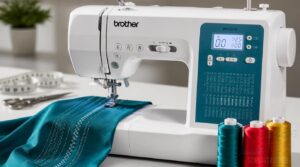
Brother HC1850 has been around long enough to build a solid reputation among home sewers, and the specs behind that reputation are worth knowing before you spend a dime.
Its feature set makes it a natural fit for quilting projects, and browsing computerized quilting machines for sale helps put its capabilities in context alongside the wider market.
This is a computerized machine packed with features that go well beyond what most entry-level models offer. Here’s a closer look at what it actually brings to the table.
Release Date and History
The Brother HC1850 isn’t a newcomer — it’s a machine with staying power. Brother launched this computerized model as part of their HC-series lineup, building on decades of reliable sewing heritage:
- Designed for home sewers
- Refined over multiple model generations
- Built to compete on value
That legacy still makes it a top pick in consumer buying guides today.
Core Technical Features
The HC1850 packs serious capability into a compact frame. Its high torque motor keeps speed steady through dense fabrics without stalling.
A dedicated feed dog system moves fabric evenly for consistent stitches. The drop-in bobbin delivers smooth winding with minimal jams.
Seam guidelines on the stitch plate keep your alignment precise — giving you real control from the very first seam.
Computerized Interface Details
The backlit LCD screen puts everything you need at a glance — stitch number, length, width, and speed, all in large illuminated numerals.
Using the stitch selection interface is as simple as pressing forward or backward buttons. The speed-control slider lets you adjust pace without touching the foot pedal, and the start/stop button means you can sew hands-free entirely.
Who Should Buy The Brother HC1850?
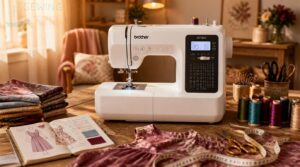
The Brother HC1850 isn’t built for everyone, and that’s actually a good thing. Knowing who it’s made for helps you decide whether it belongs in your sewing room. Here’s a closer look at who gets the most out of this machine — and who might want to look elsewhere.
Beginner Suitability
If you’ve never touched a sewing machine before, the HC1850 makes the learning curve surprisingly gentle. The automatic needle threader cuts out one of the most frustrating parts of setup, and the easy controls — including a clear LCD screen — guide you through stitch selection without confusion.
It’s a solid beginner sewing machine built for real skill development.
Hobbyist and Quilter Appeal
For quilters and hobbyists, the HC1850 feels like a genuine creative partner.
Its 185 built-in stitches and free‑motion quilting capability give you real room to experiment — whether you’re piecing improv blocks, journaling fabric swatches for your next project, or diving into a quilting community challenge.
The detachable wide quilting table makes spreading out your layers easy.
For more details on accessing resources, see the guide on institutional IP‑based access.
Limitations for Heavy-duty Use
If heavy-duty work is your goal, the HC1850 will hit its limits fast. Its consumer‑grade DC motor heats up quickly under thick fabric or denim, sometimes triggering automatic shutoffs.
Tension drift and thread bunching follow when you push multiple dense layers. This machine is built for home projects — not marathon heavy‑duty sessions.
Built-in Stitches and Customization
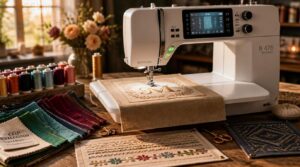
The HC1850 doesn’t skimp in the area of stitch variety — this machine gives you a lot to work with right out of the box. Whether you’re quilting, monogramming, or just figuring out your style, there’s room to make things your own. Here’s a closer look at what’s built in.
130 Sewing Stitches
The Brother HC1850 hands you a digital stitch library of 130 stitch choices that covers nearly every home sewing need. Here’s what that breaks down to:
- Utility stitch versatility — straight, zigzag, and stretch stitches for everyday repairs
- Stretch stitch performance — manages knit fabrics without popping seams
- Satin stitch application — smooth, dense lines for decorative detailing
- Decorative motif variety — built-in patterns for hems, topstitching, and embellishment
- Seam strength optimization — longer lockstitches hold firm through denim and canvas
55 Alphanumeric for Monogramming
Monogramming on the Brother HC1850 feels surprisingly personal for a machine at this price.
Its 55 alphanumeric characters cover A–Z and 0–9, giving you everything needed for classic initial combinations.
Follow the traditional three-letter monogram order — first, last, middle — for a polished result.
Always test on a scrap piece first, and use a stabilizer to keep letters crisp.
8 Automatic Buttonhole Styles
Eight buttonhole styles mean you’re rarely stuck. The Brother HC1850’s automatic buttonhole function covers everything from a clean basic rectangular buttonhole on cotton to a keyhole style for shanked buttons on denim.
Bound edges add refined polish, corded versions reinforce heavier fabrics, and decorative satin finishes turn a functional detail into a design statement.
All 8 one-step buttonholes are menu-selectable with a built-in stitch preview.
Adjustable Stitch Length and Width
Stitch length and width adjustment gives you real control over how your project feels and holds. Three settings worth mastering:
- 1.5–2.0 mm length for lightweight fabrics to prevent puckering
- 3.0–3.5 mm length for denim and heavier materials
- Up to 7 mm width for bold decorative stitches
Tighter stitches build seam strength; wider ones affect fabric drape beautifully.
LCD Display and User Controls
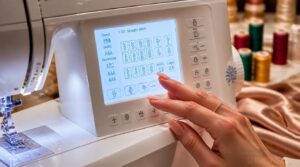
The HC1850 keeps things simple where it counts — the controls are laid out so you spend less time figuring out the machine and more time actually sewing. A clear LCD screen and a handful of smart buttons put everything from stitch selection to speed right at your fingertips.
Here’s what you need to know about how it all works.
Stitch Selection Navigation
Exploring 185 built-in stitches might sound overwhelming, but the HC1850 keeps it surprisingly simple. Two forward and backward push-buttons let you flip through options like a stitch selection flipchart — the backlit LCD screen updates instantly, showing stitch number, length, and width as you scroll.
| Feature | What It Shows | Benefit |
|---|---|---|
| LCD Preview Accuracy | Stitch type, length, width | Confirms settings before sewing |
| Buttonhole Selection | 8 styles with visual indicator | Quick, confident choosing |
| Custom Stitch Settings | Adjustable per stitch | Custom results every time |
Specialty stitch access — including decorative and utility categories — requires no submenus. Easy button stitch selection puts every option one push away.
Speed Control Slider
Once you’ve locked in your stitch, controlling how fast you sew is just as important.
The speed control slider on the Brother HC1850 sits right on the front panel and gives you a continuous range from slow to full speed — no foot pedal required. It responds instantly, with built-in speed smoothing that prevents jarring starts and protects your thread from snapping.
Start/stop Button Operation
The start/stop button takes pedal-free sewing one step further. While the speed control slider sets your pace, this button actually launches and halts the machine — no foot involved.
Press it once to go, once to stop. It’s responsive, with clean tactile feedback, so you’re always in control.
Perfect for sewists who want both hands guiding the fabric.
Included Accessories and Presser Feet
The Brother HC1850 doesn’t just come with the machine — it arrives ready to sew. Brother bundles in a solid set of accessories that cover the basics and then some. Here’s what you get right out of the box.
8 Presser Feet Uses
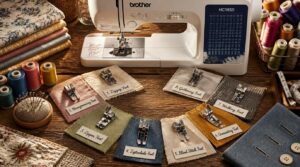
The Brother HC1850 comes with 8 presser feet, each built for a specific job. The Buttonhole Foot guides clean, consistent buttonholes. The Overcasting Foot takes care of preventing edge fraying without a serger. Use the zipper foot for zipper installation tips, the blind hem foot for mastering blind hems, and the applique foot for applique placement precision and straight stitch stability.
| Presser Foot | Best Use | Fabric Type |
|---|---|---|
| Buttonhole Foot | One-step buttonholes | Cotton, woven |
| Overcasting Foot | Edge finishing | Knit, woven |
| Blind Hem Foot | Invisible hems | Woven fabrics |
| Zipper Foot | Zipper insertion | Lightweight fabrics |
Wide Quilting Extension Table
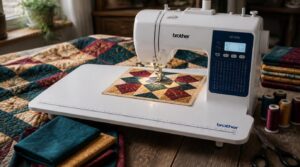
If you’re tackling large quilts, the detachable wide table on the Brother HC1850 is a must-have feature. It expands your working surface to roughly 340 mm by 225 mm, giving fabric room to move freely without bunching.
The beveled front edge guides long seams smoothly, and a built-in ruler helps you align blocks quickly. It snaps on and off without tools.
Bobbins, Needles, Accessory Pouch
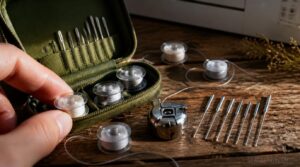
The accessories tucked inside the HC1850’s pouch are easy to overlook — but they matter.
You get extra class 15 plastic bobbins, which slot into the quick-set drop-in top bobbin system effortlessly. Wind them evenly, insert clockwise, and tension stays consistent.
Needles sized 14 or 16 handle most fabrics well. Replace them every 6–8 hours.
Keep everything in the accessory pouch so nothing wanders.
Quilting and Fabric Handling Performance
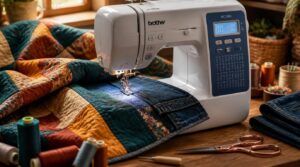
The HC1850 accommodates a surprisingly wide range of fabrics for a machine at this price point. Whether you’re layering quilt batting or working with something as unforgiving as denim, it holds its own in ways that matter to everyday sewers. Here’s how it performs across the three areas that quilters and fabric enthusiasts care about most.
Free-motion Quilting Capability
Free-motion quilting on the Brother HC1850 opens up a whole new creative lane.
Drop the feed dogs, attach the spring action quilting foot, and the fabric moves wherever you guide it.
Adjust your speed with the slider for steady control, baste your layers well to prevent shifting, and fine‑tune tension — then your quilt stitching flows freely.
Multiple Layers of Denim
Pushing denim through a sewing machine is where many machines tap out — but the Brother HC1850 holds its own. It processes eight layers of 12-ounce denim cleanly with the right needle.
Reach for a 90/14 denim needle, slow your speed, and let a walking foot keep layers feeding evenly.
Press seams flat after each pass for clean, durable results.
Performance on Delicate Fabrics
Delicate fabrics like silk and chiffon are where precision really matters.
Drop your stitch length to 2.0–2.5 mm and slow your speed to avoid puckering. A size 70/10 needle prevents snags, while a Teflon foot glides without dragging.
Keep tension moderate — too tight, and you’ll distort the weave. The HC1850 manages both beautifully when you dial in these small adjustments.
Automatic Features and Ease of Use
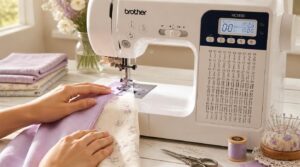
The HC1850 packs in several automatic features that make everyday sewing less fussy — especially if you’re still building your skills. A few of these stand out for how much time they save, and a couple come with trade-offs worth knowing about. Here’s a closer look at what to expect.
Needle Threader and Bobbin System
Threading a needle by hand is one of those tasks that sounds simple but gets old fast. The Brother HC1850’s automatic needle threader changes that — one small press guides the thread through the eye cleanly, every time.
Here’s what makes the threading and bobbin system genuinely beginner-friendly:
- Jam-resistant quick-set bobbin drops in from the top and clicks into place without fuss.
- Easy bobbin winding is handled by a built-in mechanism that distributes thread evenly.
- Tension balance between upper and bobbin thread keeps stitches consistent across fabrics.
The drop-in bobbin has a clear cover, so you can check your thread supply at a glance. The bobbin case is durable enough for regular home use, and routine thread path cleaning keeps everything running smoothly. Threader maintenance is minimal — just keep the guides clear of buildup and you’re set.
LED Work Light Limitations
The built-in LED lighting is functional but dim. With a narrow beam and a CRI between 70–85, color accuracy suffers — especially on darker fabrics.
Over time, lumen output declines noticeably after extended use.
Most sewers add an external light source for sewing to compensate. It’s a small gap, but worth knowing before you sit down to work.
Thread Cutter and Free Arm
The handy thread cutter on the Brother HC1850 trims both upper and bobbin threads in one clean action — no scissors needed. It sits near the needle plate for quick reach.
The free arm capability lets you tackle cuffs and sleeves by simply removing the accessory tray. Keep the free arm area lint‑free for consistent stitch quality.
Common Issues and Troubleshooting
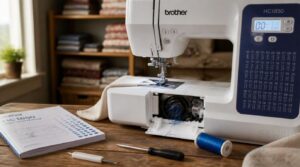
Every sewing machine has its quirks, and the HC1850 is no different. The good news is that most problems you’ll run into have simple, straightforward fixes. Here’s what to watch for and how to handle it.
Thread Bunching Fixes
Thread bunching is almost always a threading mistake. Rethread with the presser foot raised — this releases the tension discs so thread seats correctly. Check every guide and the take-up lever.
Next, remove and reseat your bobbin until you hear that firm click. Finally, match your needle size to your fabric — a size 90/14 or 100/16 sews denim or thick layers cleanly.
Buttonhole Misalignment Solutions
Getting buttonholes right takes a little prep. Mark your placket clearly before you start — a fabric marker or chalk line gives the machine a path to follow. If your fabric shifts mid-stitch, add a stabilizer underneath to keep everything locked in place.
- Attach the buttonhole foot securely and confirm the needle centers in the groove
- Match the buttonhole length setting to your actual button size
- Adjust stitch density slightly on heavier fabrics so the sides meet evenly
- Test on a scrap piece first to verify symmetry before sewing the real thing
The HC1850’s 8 one-step buttonhole styles take most of the guesswork out, but fabric prep still matters.
Lighting and Stitch Quality Tips
The HC1850’s built-in LED lighting is dim — and that gap shows up in your stitching. Add a daylight-balanced lamp (5000K–6500K) to your workspace for true color accuracy.
| Lighting Tip | Why It Matters |
|---|---|
| Use 5000K–6500K bulbs | Daylight color accuracy for threads |
| Aim for 400–600 lux | Reduces eye strain at the needle |
| Choose CRI 90+ light | Shows true fabric and thread color |
| Angle light from the front | Prevents glare on glossy fabrics |
| Add a secondary fill light | Eliminates shadows under thick layers |
Better lighting reveals tension imbalances the LCD screen can’t flag — making stitch quality tips like these genuinely useful.
Price, Warranty, and Value Assessment
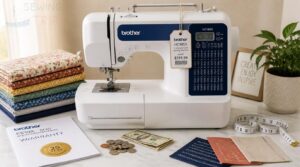
Now that you know how it performs, the real question is whether the Brother HC1850 earns its price tag. A good machine isn’t just about features — it’s about what you actually get for your money long-term. Here’s a closer look at the cost, what the warranty covers, and whether the value holds up.
Affordability for Home Sewers
The Brother HC1850 sits in a sweet spot for home sewers watching their budget.
You get a fully computerized sewing machine loaded with 185 stitches for a price that won’t clear out your savings.
For beginners or hobbyists, that sewing machine price-to-performance ratio is hard to argue with — it’s a genuinely affordable sewing setup without sacrificing capability.
Warranty Coverage Details
Regarding peace of mind, Brother backs the HC1850 with a 25-year limited warranty — which is genuinely rare at this price point. That covers the machine’s head against defects in materials and workmanship.
Labor and parts carry shorter coverage windows, and normal wear items like needles and presser feet are excluded. Authorized Brother service centers handle any repairs needed under the plan.
Overall Price-to-value Analysis
The HC1850 earns its price tag without apology. You’re getting 185 built-in stitches, monogramming, free‑motion quilting, and a 25‑year warranty — bundled with the extension table and accessories.
The Brother HC1850 packs 185 stitches, free-motion quilting, and a 25-year warranty into a budget-friendly machine that truly earns its price
That’s serious value for a budget‑friendly sewing machine. Compared to pricier models, the price-to-performance ratio holds up well for beginners and hobbyists who want real creative range without overspending.
Frequently Asked Questions (FAQs)
When did Brother HC1850 come out?
Released around 2016–2017, the Brother HC1850 has been a steady favorite for nearly a decade. For a machine that’s been around that long, it still holds its own against newer models today.
What is the difference between Brother CS5055 and HC1850?
The HC1850 offers 185 stitches versus the CS5055’s 60, adds monogramming, a wide quilting table, and an extra presser foot — making it the stronger pick for quilters who want more creative range.
Can the Brother HC1850 be used for embroidery projects?
The HC1850 isn’t built for embroidery. It has 55 alphanumeric stitches for basic monogramming, but no embroidery hoop, arm, or font library. For true embroidery, you’ll need a dedicated machine.
Does the Brother HC1850 have a built-in thread cutter?
Yes, the HC1850 has a built-in thread cutter mounted on the machine body. It lets you trim threads instantly — no scissors needed — keeping your workflow smooth and your hands focused on the fabric.
Is the Brother HC1850 compatible with other presser feet?
The HC1850 uses a low shank system, making it compatible with a wide range of third-party presser feet. It ships with 8 quick-change feet, including a zipper foot, expanding your sewing options right out of the box.
What type of maintenance is required for the Brother HC1850?
Keep it running smoothly with regular lint removal from the bobbin area, needle replacement after heavy use, and light oiling of metal parts. A quick tension check on scrap fabric keeps every stitch clean.
Does the Brother HC1850 come with a protective case?
The Brother HC1850 is a capable machine, but it ships without a protective case. You’ll need to buy one separately — a universal sewing machine cover works well and helps prevent dust buildup during storage.
Can the HC1850 sew leather or vinyl?
Yes, the HC1850 can handle light to medium leather or vinyl. Use a size 90/14 leather needle, slow your speed, and stick to straight stitches around 0 mm for clean, secure seams.
Does it work with twin needles?
The HC1850 manages twin needle stitching well. Install the twin needle on the single needle bar, flat side back, load two spool pins, and select a stitch width that keeps both needles clear of the needle plate.
How do I clean and maintain it?
Wipe it down weekly, clean the bobbin area after each project, and swap needles every 8–12 hours. Lower the feed dogs to brush out lint, and rinse presser feet with warm soapy water.
Conclusion
Imagine a sewing machine that costs less than a night out, but somehow outlasts your enthusiasm for both hobbies.
That’s the quiet joke the Brother HC1850 keeps telling.
This Brother HC1850 sewing machine review keeps returning to one honest truth: it’s not built for professionals chasing an ideal outcome, but it’s remarkably capable for everyone else.
If your projects live between beginner curiosity and serious craft, this machine doesn’t just fit your budget—it fits your ambition.