This site is supported by our readers. We may earn a commission, at no cost to you, if you purchase through links.
Most sewists don’t struggle with technique—they struggle with fit. beautifully sewn seam means nothing when the waist gaps, the shoulders pull, or the bust strains across the chest.
Getting garment fit right starts long before you cut a single piece of fabric. It begins with accurate measurements, smart pattern choices, and a willingness to test before you commit.
sewing tips for perfect garment fit walk you through each stage of the process—from the measuring tape to the final press—so the clothes you make actually feel like they were made for you.
Table Of Contents
Key Takeaways
- Accurate measurements are your starting point — without them, even the best-sewn garment won’t fit right.
- Always make a muslin test garment first so you catch fit problems in cheap fabric, not your good stuff.
- Blending between pattern sizes and adjusting for your bust, waist, and hips turns a generic pattern into something made for your body.
- Keep a fit journal and save your adjustments — your future self will thank you every time you start a new project.
Take Accurate Body Measurements
Getting your measurements right is the foundation of every well-fitted garment. Before you cut a single piece of fabric, you need a few simple tools and a clear method.
Once you’ve nailed those numbers, projects like sewing Roman shades step by step become far less intimidating.
Here’s what to gather and how to get it done.
Tools for Precise Measuring
Before you cut a single piece of fabric, your tools need to be dialed in.
- A flexible measuring tape — ideally fiberglass — won’t stretch, keeping your reads consistent every time
- A clear grid ruler helps align grainlines and mark seams with real precision
- French curves and rulers and curve tools shape smooth necklines and armholes cleanly
- An adjustable dress form or digital measuring device takes the guesswork out of fit testing
How to Measure Bust, Waist, Hips, and Inseam
With your tools ready, it’s time to get numbers you can actually trust.
| Measurement | Key Reference | Common Mistake |
|---|---|---|
| Bust | Fullest chest point | Tape too tight |
| Waist | Narrowest torso point | Measuring after inhaling |
| Hip | 7–9 inches below waist | Uneven tape at back |
Posture Alignment matters — stand straight, arms relaxed. Tape Tension Control keeps readings honest. Measure at consistent Measurement Timing, since Seasonal Body Shifts are real. Always recheck inseam twice.
Using High Bust for Better Bodice Sizing
Once you have your bust, waist, and hip numbers, take one more measurement: your high bust. Wrap the tape just under your arms, across your upper chest.
This number guides High Bust Alignment and Shoulder Seam Balance, keeping your bodice adjustments accurate. It controls Neckline Ease, helps Dart Positioning, and shapes Fabric Drape Control — especially before making Full Bust Adjustments to your pattern adjustment.
Measuring for Tops, Dresses, Skirts, and Pants
Each garment type needs specific body measurements beyond bust, waist, and hips.
- Tops: shoulder width and armhole depth
- Dresses: full dress length, shoulder to hem
- Skirts: waist to skirt hemline, plus full hips
- Pants: inseam, rise, and thigh circumference
- Size chart matching: compare all relevant numbers before cutting
Recording and Updating Measurements Over Time
Your body changes more than you think — and your measurements should keep up. Use Measurement Log Templates or a fit journal to track bust, waist, and hip entries by date.
Once you’ve logged your measurements, use them alongside sewing pattern alteration tips to make targeted adjustments that actually fit your body.
Active sewers benefit from checking every three to six months, while fitness plans call for monthly updates.
Digital Measurement Apps simplify Body Change Tracking and catch Seasonal Size Variations before they throw off your next project.
Accurately recording the full bust measurement helps guarantee pattern fit.
Choose Patterns and Fabrics Wisely
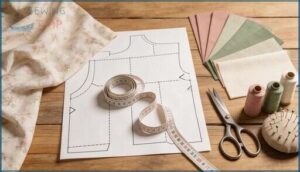
Getting the right pattern and fabric is where a good fit actually begins. Before you cut a single piece, a few smart choices will save you a lot of rework later.
Here’s what to keep in mind as you get started.
Selecting The Right Amount of Ease
Ease is the breathing room between your body and the fabric — and getting it right changes everything. For fitted bodices, aim for 2–4 cm of ease allowance; waists need just 0–2 cm.
Your fabric drape influence matters too — lightweight wovens carry a little more, heavy fabrics less. Always factor in body shape compatibility and seasonal layering ease considerations when doing your pattern drafting fit adjustments.
Blending Between Sizes for Custom Fit
Most patterns don’t fit perfectly straight out of the envelope — and that’s okay. Blending between sizes gives you a custom fit without starting from scratch.
Here’s how to do it:
- Use intermediate size curves at the bust and waist seam line grading.
- Taper blend zone notches gradually over 1–2 inches.
- Blend hip curve shift smoothly from waist to thigh.
- Maintain cap ease blending for natural sleeve movement.
- Check grain alignment after every size alteration.
Matching Fabric Stretch, Weight, and Drape
Fabric choice can make or break your fit. Think of the Stretch‑Weight Ratio as your pattern’s handshake with the fabric.
Stretch fabrics like spandex blends need negative ease, while nonstretch fabrics need more room built in.
Check Drape Compatibility and Weight‑Based Drape before cutting.
Always run a Recovery Speed Test — good spandex snaps back in under 15 seconds. Grainline Alignment seals the deal.
For accurate fitting, consult the pattern reduction guidelines.
Prewashing Fabric to Avoid Shrinkage Issues
Skipping the prewash is how a perfectly fitted bodice becomes a too-tight disaster. Always prewash fabric before you cut.
Use the Prewash Swatch Method — wash and dry a test piece first, then measure shrinkage. Cotton can shrink up to 5 percent.
Run a Colorfastness Evaluation with a white swatch to catch bleeding. Shrinkage Testing protects your pattern work before it’s too late.
Make a Muslin Before Cutting
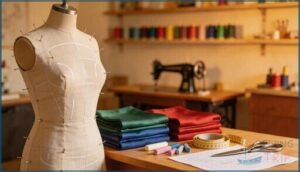
Skipping the muslin is one of the most common mistakes sewists make — and one of the easiest to avoid. A quick test garment saves you from cutting into good fabric before you know the fit is right.
Here’s what making a muslin actually involves.
Why a Test Garment Improves Fit
Think of a muslin prototype as your dress rehearsal before opening night. Fit issue identification happens in cheap fabric, not expensive material — saving real money.
A muslin prototype is your dress rehearsal — catch fit issues in cheap fabric, not expensive material
Fit testing reveals how the garment moves when you sit, reach, or bend. It also gives you a fabric behavior preview before committing to your final cloth. That’s the heart of smart pattern making and muslin fitting.
Marking Seam Lines, Grainlines, and Notches
Now that your muslin is cut, accurate marking is what separates a good fit from a great one.
- Use tailor’s chalk for seam line transfer on the wrong side
- Double-check notch placement against every matching pattern piece
- Keep grainline alignment arrow-straight, parallel to the selvage
Basting verification before final stitching catches mismatched notches and marks early. Pattern symbols matter — don’t skip them.
Checking Balance, Drag Lines, and Comfort
Once your muslin is on, it’s time for a real fit analysis. Start with a Balance Line Check — those horizontal lines at bust, waist, and hip should run parallel to the floor.
Then scan for drag lines. Diagonal drag lines usually mean twisting; horizontal ones signal tightness.
Transferring Muslin Changes Back to The Pattern
Once you’ve spotted those drag lines and balance issues, don’t lose those discoveries. Transfer every seam allowance change — Seam Allowance Transfer, Notch Replication, and Dart Redrawing — directly onto your muslin prototype before removing it.
Mark balance alignment shifts, update your pattern pieces for waist and hip, then save it as a new version.
Pattern Versioning protects your original while locking in your best fit.
Adjust Patterns for Your Shape
Every body is different, and your pattern needs to reflect that. A few targeted adjustments can take a garment from almost-there to truly yours. Here’s where to start.
Lengthening or Shortening Pattern Pieces
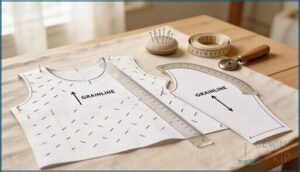
Pattern pieces that are too long or too short throw off everything else. Work in incremental length changes — small additions of ¼ to ½ inch keep things manageable.
Always redistribute length sections between torso and skirt carefully, using a balance line check to confirm the garment hangs right. Don’t forget sleeve cap matching and grainline alignment after any adjustment — both shift when you do.
Full Bust and Small Bust Adjustments
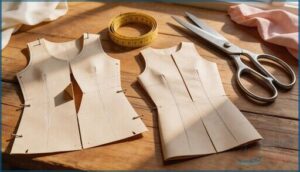
Bust fitting is where most sewists hit a wall — and it’s completely fixable. Your bust measurement drives everything here.
Two adjustments cover most bodies:
- Slash and Spread adds volume using dart redistribution and peak repositioning.
- Small Bust Adjustments remove excess fabric to stop gaping.
- Both methods require neckline compatibility checks and shoulder balance tweaks after.
These pattern modification methods work. Trust the process.
Waist and Hip Adjustments for Smoother Fit
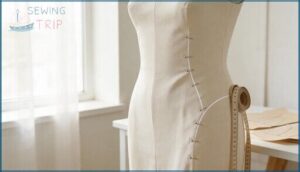
When your waist and hips don’t match the same pattern size, that’s your cue for Body Proportion Mapping.
Distribute ease evenly across side seams — never dump it all in one spot.
Hip Curve Contouring keeps the fabric flowing cleanly.
Waistline Balance prevents diagonal drag lines.
| Issue | Adjustment | Result |
|---|---|---|
| Hip pulling | Hip Drape Management via seam shift | Smooth hang |
| Waist gaping | Waist measurement seam intake | Clean silhouette |
| Uneven drape | Seam Allowance Optimization at side seams | Balanced fit |
Adjusting patterns here transforms how a garment wears.
Fixing Shoulders, Sleeves, and Armholes
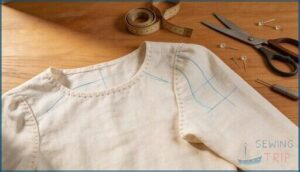
Shoulder and sleeve fit often trips people up — but small tweaks make a huge difference.
Shoulder Slope Alignment means adjusting the shoulder point up or down to eliminate drag lines.
Sleeve Cap Ease and Armhole Depth Tuning keep movement smooth.
Fix Front Armhole Gapping by truing the curve, and dial in Back Armhole Fit to stop fabric pulling.
Shoulder and Bicep adjustments complete the picture.
Using Darts, Tucks, and Seam Shifts
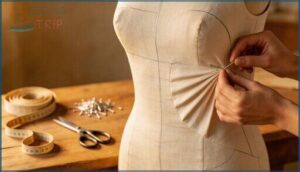
Darts are your secret weapon for shaping fabric exactly where your body needs it. Place a bust dart toward the top, and suddenly that boxy front becomes a fitted bodice.
If darts feel too stiff, try a dart tuck conversion — redistribute fullness into soft tucks instead.
Tuck direction changes drape completely.
Seam shift technique fine-tunes fit without touching your seam allowance or adjusting patterns further.
Sew and Refine The Final Fit
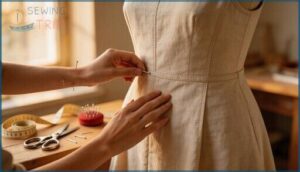
Once your pattern is adjusted, it’s time to sew and fine-tune the fit. This stage is all about making sure your garment feels comfortable and looks just right.
Here’s how you can check and perfect each detail as you sew.
Basting Seams for Easy Try-ons
Think of basting as a dress rehearsal before the real show. It lets you try on the garment and catch fit issues before they’re locked in.
- Use a basting stitch length of 4–5 mm for easy removal
- Adjust thread tension so stitches sit on top, not pulled tight
- Practice smart pinning techniques at shoulders, side seams, and waist
- Focus marking basting lines along the seam allowance, never through it
- Check fabric compatibility — knits and silks need gentler handling
Taking in or Letting Out Seams
Seam allowance control is what separates a good fit from a great one. Taking in or letting out seams doesn’t have to feel intimidating.
| Adjustment | Key Technique |
|---|---|
| Taking in side seams | Incremental seam shifts, ¼ in at a time |
| Letting out seams | Requires extra seam allowance of ¼–½ in |
| Symmetrical bust darts | Adjust both sides evenly |
| Curved hip seam | Taper gradually to avoid pulling |
Always reinforce armhole reinforcement zones after adjusting.
Pressing Seams to Improve Garment Shape
Once your seams are adjusted, pressing them makes all the difference. Use seam flattening techniques with the right heat and steam settings for your fabric — lower for synthetics, higher for cotton.
A seam roll application keeps curves smooth, and a pressing cloth selection protects delicate materials. Press seams open to iron the fabric flat, improving drape enhancement, grainline alignment, and overall seam finishing.
Troubleshooting Gaping, Pulling, and Tight Spots
Even after pressing, a few fit problems might still pop up. Here’s how to fix the most common ones:
- Gaping necklines — Use Bias Facing Stabilization to hold the curve in place.
- Pulling at the bust — Try the Dart Pivoting Method to redirect tension.
- Tight spots — Let out seams gradually, adding ease where needed.
- Drag lines — Seam Clip Notching smooths curved areas instantly.
- Fabric creep — Switch to a Walking Foot Technique and match Thread Weight Matching to your fabric.
Troubleshooting Common Fitting Issues gets easier once you know where to look when adjusting patterns and refining seam finishing.
Saving Fit Notes for Future Garments
Once you’ve fixed tight spots or drag lines, start documenting adjustments for future projects. Use a Digital Fit Journal to track measurement accuracy and pattern modification details. Update your Pattern Adjustment Log after each fit test.
Garment Family Profiles help organize fit notes.
The Notation Legend System and Personal Fit Benchmarks make adjusting patterns based on fit tests much easier next time.
Frequently Asked Questions (FAQs)
How do I fit garments for posture differences?
Posture shapes how a garment hangs. Focus on Shoulder Slope Adjustment, Neckline Alignment, and Back Dart Placement first.
Then balance Hip Pelvic Tilt and Sleeve Cap Ease through careful adjusting patterns against your body measurements.
What causes fabric drag lines and wrinkles?
Drag lines happen when fabric is pulled by body curves or poor grain alignment.
Tension direction, fabric recovery, surface friction, and seam proximity all play a role in how wrinkles form and hold.
How do shoulder slopes affect overall fit?
Your shoulder slope shapes how everything above the waist behaves.
Poor slope alignment triggers drag line minimization challenges, throws off upper body balance, and shifts sleeve cap alignment — all at once.
Can I grade between multiple pattern sizes?
Yes, you can. Pattern grading lets you blend sizes smoothly using grading rules.
seam allowance consistency, scale your sleeve cap, adjust darts, and respect fabric behavior for proportional sizing throughout.
How does fabric weight change garment drape?
Fabric weight shapes how a garment hangs on your body. Heavier fabric stiffness creates smooth, structured lines, while lightweight fluid drape moves softly with every curve.
Grain alignment impact and fiber type interaction matter too.
How do pants fitting rules differ from skirts?
Ever wonder why pants feel so different to fit than skirts? Pants demand waistband flexibility, rise proportion, inseam length control, and closure contouring.
Skirts simply need hip ease and clean drape.
What causes ready-to-wear garments to fit poorly?
Ready-to-wear struggles because standard size grading targets one "ideal figure" — not your body.
Retail cut conventions and mass production constraints mean size chart numbers rarely match real body measurements, leaving fit issues everywhere.
How does fabric grain affect finished garment hang?
Grain alignment controls how your finished garment hangs. Warp tension creates crisp drape; weft pull shapes the silhouette.
Bias stretch softens the hang, while drape weight interaction determines whether fabric falls straight or sags.
When should you regrade an entire pattern?
Regrade your entire pattern when measurement deviation exceeds two inches at the bust, waist, or hip.
Extensive body changes, fabric property shifts, or pattern reuse longevity across seasons all signal it’s time for full pattern grading.
How does ease change for outerwear versus fitted tops?
Outerwear needs 2–6 inches more layering ease than fitted tops.
Extra back fullness, shoulder mobility, and cuff allowance keep movement comfortable, especially when fabric stiffness impacts how the garment drapes over layers.
Conclusion
Master your measurements, choose patterns wisely, and let muslins guide your adjustments—each step builds confidence. These sewing tips for perfect garment fit transform frustration into finesse, ensuring every seam works with your body, not against it.
Test, tweak, and trust the process: a well-fitted garment starts with patience and ends with pride.
Soon, you’ll stitch clothes that feel like a second skin, proving that fit isn’t luck—it’s a skill you’ve earned. Wear your creations boldly; they’re made for you, by you.
- https://www.charmingosews.com/blog/perfect-fit-sewing-tips-learn-the-art-of-taking-measurements-for-sewing-success
- https://www.sewessential.co.uk/blog/how-to-achieve-the-perfect-fit-from-your-sewing-pattern/
- https://fitsewbeautiful.substack.com/p/sewing-your-perfect-fit-a-step-by
- https://dressed-in-a-dress.com/blog/basic-pattern-adjustments/
- https://www.craftsy.com/post/fitting-as-you-sew