This site is supported by our readers. We may earn a commission, at no cost to you, if you purchase through links.
Most sewing businesses fail within their first year—not because the founder lacked talent with needle and thread, but because they treated their craft like a hobby instead of a business.
The difference between stitching for fun and building a profitable sewing enterprise comes down to strategy, not skill level. You need more than a quality machine and a passion for fabric.
You need a niche that sets you apart, a pricing model that sustains growth, and marketing tactics that put your services in front of paying customers. This tutorial walks you through every decision point, from choosing your business structure to scaling operations, so you can transform your sewing expertise into steady income.
Table Of Contents
- Key Takeaways
- Choosing Your Sewing Business Niche
- Essential Equipment and Supplies
- Developing a Business Plan
- Registering and Licensing Your Business
- Pricing Sewing Services and Products
- Building an Online Presence
- Marketing Strategies for Sewing Businesses
- Income Streams for Sewing Entrepreneurs
- Managing Operations and Finances
- Scaling and Growing Your Sewing Business
- Frequently Asked Questions (FAQs)
- Conclusion
Key Takeaways
- Most sewing businesses fail because founders treat their craft like a hobby instead of running it strategically with clear niches, sustainable pricing models, and targeted marketing that attracts paying customers.
- Choosing a specialized niche—whether custom alterations, teaching workshops, selling digital patterns, or offering sustainable repairs—determines your income potential and sets you apart from competitors trying to serve everyone.
- Profitable pricing requires calculating exact costs (materials, labor, overhead), researching competitor rates within 5 percent, and building service packages that bundle value while protecting margins of at least 25 percent.
- Scaling successfully means expanding product lines strategically based on market gaps, building loyalty through referral programs and exclusive benefits, and adapting to industry trends like upcycled fashion that’s growing 18 percent annually.
Choosing Your Sewing Business Niche
Your niche determines everything from your daily tasks to your income potential, so choosing the right one matters.
If you’re considering a seasonal wardrobe refresh, this fabric guide for summer clothes breaks down the best materials for comfort and breathability.
You don’t need to do it all—in fact, trying to serve every customer usually means you’ll stand out to none. Here are four proven niches that give you the freedom to build a business on your own terms.
Custom Clothing and Alterations
Custom clothing and alterations deliver higher margins when you charge by garment complexity and fabric type.
Tailored tailoring and custom dressmaking target professionals needing precise garment fitting within 48 hours. Alteration techniques like bridal gown adjustments and suit hemming justify premium pricing.
Fabric selection—silk, wool—requires specialized finishing. Custom embroidery adds unique value.
Your tailoring sewing business thrives on steady demand from formal wear and professional attire. For additional insight into the field, explore the diverse types of sewing professionals who contribute to the industry’s growth.
Sewing Classes and Workshops
Teaching sewing classes and workshops flips your studio time into a steady income. Group or one-on-one sessions range from $25 to $60 per hour per student, covering beginner basics through pattern cutting and upcycling projects.
Here’s why sewing workshops work:
- You control scheduling with recurring workshop series or private lessons
- Curriculum design builds loyal communities around shared sewing skills
- Student engagement creates referrals without paid advertising
Online sewing education extends your teaching reach beyond local markets. Exploring the full list of sewing niches can help you expand your offerings and appeal to diverse student interests.
PDF Patterns and Digital Products
PDF pattern sales let you design once and sell forever. You create downloadable sewing patterns priced between $5 and $20, paired with online tutorials and step-by-step diagrams.
Digital products mean instant delivery with zero inventory costs. Pattern design using sewing software builds fast cash flow, while ebook publishing and online sewing courses expand your digital sales beyond traditional fabric work.
Repairs, Mending, and Upcycling
Repair techniques and visible mending turn rips into revenue while championing sustainable fashion. You’ll fix seams, patch jeans, and transform vintage finds into upcycled products that eco-conscious customers crave.
Your mending services attract clients seeking alteration services beyond basic hems:
- Patch repairs for jackets and denim starting at $10 to $25
- Seam reinforcement using eco-friendly materials
- Zipper replacements with quick turnaround times
- Creative upcycled fashion from old garments
- Flat rate repair packages for specialty items
This sewing business niche builds loyal followers who value sustainability over disposability.
Essential Equipment and Supplies
Your equipment choices will make or break your sewing business before you even stitch your first seam.
You don’t need to mortgage your house for top-of-the-line gear, but you can’t cut corners on the essentials that’ll keep you productive and profitable.
Let’s break down what you actually need to invest in, starting with the backbone of your operation.
Selecting Quality Sewing Machines

Your sewing business depends on a machine that won’t quit mid-seam. Look for metal chassis construction and stainless steel components—these features define machine durability and keep you running through high-volume orders.
Motor power between 60 and 90 watts enables multiple fabric layers without stalling. Prioritize stitch options including straight, zigzag, and buttonhole functions.
Factor in maintenance costs and warranty coverage when comparing models against your business plan.
Must-Have Tools and Accessories
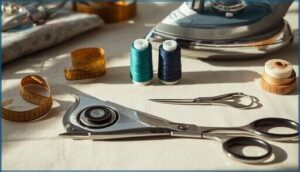
You’ll need sharp fabric cutters like rotary blades and quality shears for clean edges on every project. Stock diverse thread types—polyester all-purpose, cotton, and specialty embroidery threads.
Essential sewing notions include measuring tapes, seam rippers, and pin cushions. Don’t skip ironing tools—a dependable iron and pressing mat create professional finishes that separate custom sewing services from amateur work.
Sourcing Fabrics and Notions

Reliable fabric sourcing separates thriving sewing businesses from struggling ones. Request swatches from wholesale markets to test textile quality before committing to bulk orders—colorfastness and shrinkage matter.
Diversify suppliers for cotton, linen, and sustainable materials to avoid production delays. Negotiate minimum order quantities that align with your cash flow. Stock core notion supplies like zippers, interfacing, and elastic from established distributors offering consistent fabric and notions sales terms.
Developing a Business Plan

A business plan isn’t just paperwork—it’s your roadmap to turning creative skills into steady income. You need concrete numbers, a clear identity in the market, and proof that customers actually want what you’re offering.
Here’s how to build a plan that sets up your sewing business for real profitability from day one.
Setting Clear Financial Goals
Your business plan needs rock-solid financial projections that map the path to financial freedom. Budget planning starts with a concrete yearly revenue target—write down a specific dollar amount and deadline, like $60,000 by December 31, 2026.
Revenue tracking keeps you accountable with monthly progress checks:
- Set quarterly milestones for steady cash flow
- Monitor material costs to boost profit margins
- Test pricing with client feedback regularly
This financial management system turns dreams into dollars.
Identifying Unique Selling Points
What makes clients choose your shop over fifteen others? Your unique selling points separate you from the competition and become your competitive edge. Customer focus drives brand identity when you offer exclusive services competitors can’t match—like 24-hour rush alterations or sustainable upcycling that transforms old garments into fresh custom clothing.
| Service Type | Unique Advantage | Client Benefit |
|---|---|---|
| Rush Alterations | 24-hour turnaround | Saves time for busy professionals |
| Upcycling Services | Eco-friendly transformations | Reduces waste, creates one-of-a-kind pieces |
| Custom Fit Consultations | One-on-one measurements | Perfect fit guaranteed every time |
Market research reveals what your neighborhood lacks. Build your sewing business ideas around gaps competitors ignore—customized styling advice, transparent itemized pricing, or specialty fabrics sourced responsibly. These unique services become your marketing strategies, attracting customers who value craftsmanship and authenticity in their entrepreneurship journey.
Analyzing Market Demand
Understanding customer needs drives every smart business decision you’ll make. Target audiences reveal demand through clear signals—track seasonal spikes before holidays, survey local homeowners about alteration requests, and monitor sewing industry trends like upcycling. Your competitive research uncovers what rivals miss.
Test market trends through four validation methods:
- Run social media polls to gauge pattern bundle interest
- Launch pre-sales of digital products to measure receptivity
- Create waitlists for new class offerings
- Conduct in-person surveys at craft markets
Demand analysis separates profitable sewing business ventures from costly mistakes in this $4 billion market.
Registering and Licensing Your Business

Getting your legal ducks in a row isn’t the glamorous part of starting a sewing business, but it’s the foundation that keeps you protected and professional.
You’ll need to make some decisions about business structure, paperwork, and banking before you can officially open your doors. Here’s what you need to handle to make your business official.
Choosing a Business Structure
Your legal foundation determines how you’ll pay taxes and protect your assets. Sole proprietorships offer the quickest path—no separate business registration in most states—but expose your personal property to risk.
LLC formation shields you from liability protection while keeping tax implications simple through pass-through taxation. Corporate structures provide the strongest liability protection and let you issue stock, though they demand formal governance and annual filings.
Obtaining Permits and Insurance
Once you’ve chosen your structure, you’ll need the right licensing and permits to operate legally. Your local government requires a business license before you start sewing for clients.
Home-based operations may face zoning restrictions on hours and foot traffic. General liability coverage protects you from injury claims, while professional liability insurance covers design advice mishaps. Most policies range from $1 to $2 million per occurrence.
Setting Up Business Banking
After securing your licensing and permits, it’s time to separate your finances from personal funds. Open a dedicated business bank account using your Tax ID and business registration documents. This move strengthens your financial planning and simplifies tax filing.
Here’s what you need to set up:
- Compare account fees and minimum balances across banks offering small business specialists and cash management tools.
- Link merchant services to accept card payments for alterations and custom orders.
- Enable accounting software integration to track invoices, expenses, and cash flow automatically.
- Explore business loans or credit lines to finance equipment upgrades as you grow.
Choose a bank with mobile deposit and real-time alerts to monitor transactions on the go.
Pricing Sewing Services and Products
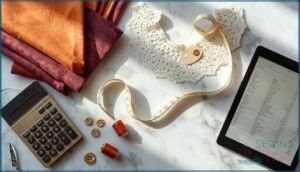
Setting the right prices can make or break your sewing business—charge too little and you’ll work yourself into the ground, charge too much and customers won’t bite.
Setting the right prices can make or break your sewing business—charge too little and you’ll work yourself into the ground, charge too much and customers won’t bite
You need a pricing strategy that covers your costs, pays you fairly, and keeps you competitive in your local market. Here’s how to price your services and products so you can actually make money doing what you love.
Calculating Costs and Profit Margins
Your financial freedom starts with knowing your numbers cold. Direct material costs—fabric, thread, zippers—combine with direct labor (your sewing time) and overhead like rent and utilities to form your total cost per unit. Calculate gross margin using (Revenue minus Cost of Goods Sold) divided by Revenue.
Track every expense monthly to spot deviations from your business plan.
| Cost Component | Example Items |
|---|---|
| Direct Materials | Fabric, thread, zippers, notions |
| Direct Labor | Sewing time, alterations, finishing |
| Overhead | Rent, insurance, utilities, depreciation |
Competitive Pricing Strategies
You can’t thrive selling custom dresses at basement prices or charging premium rates without proof of value. Price benchmarking against your top three local competitors establishes a realistic market range within 5 percent of the median rate. Your business plan and marketing strategies must align with flexible rates that shift based on demand, seasonal peaks, and service complexity to protect your finances.
- Track competitor pricing quarterly to adjust your tiered pricing structure and maintain market competitiveness without leaving money on the table
- Apply value pricing for rush orders by adding a 15 to 30 percent surcharge that reflects faster turnaround and prioritized scheduling
- Use cost analysis to set minimums ensuring every alteration covers direct materials, labor, and overhead with at least a 25 percent gross margin
- Implement weekday discounts strategically to fill slower booking days while preserving weekend and peak-season rates for your small business
- Leverage psychological pricing endings like $49.95 instead of $50 to create perceived savings while maintaining profitability across all service tiers
Creating Service Packages
Package pricing transforms scattered custom sewing services into clear service tiers that convert browsers into buyers. Build three delivery options—basic, standard, premium—each stating client outcomes like “perfect fit in two fittings” with exact payment terms.
Your income streams for sewing businesses multiply when packages bundle alterations, rush delivery, and revisions into one attractive price.
| Package Tier | What’s Included |
|---|---|
| Basic | Single fitting, standard turnaround, one revision |
| Premium | Three fittings, priority delivery, unlimited revisions |
Building an Online Presence

Your online presence is where most customers will discover your sewing business, so getting it right matters more than you think.
You need a solid foundation that showcases your work, builds trust, and makes it easy for people to find and hire you. Let’s break down the three essential components that’ll put your business on the map.
Creating a Business Website
Your website is your digital storefront, and it needs to work as hard as you do. Focus on mobile design first—most customers browse on their phones.
Keep website navigation simple with clear sections: Home, Services, and Contact. Build on ecommerce platforms like Shopify or Squarespace for selling crafts online.
Add SEO basics and conversion tracking to measure what’s working in your online marketing efforts.
Showcasing a Portfolio Online
Your portfolio is where visual storytelling transforms browsers into buyers. Display 6 to 9 projects in a clean grid layout with high-quality photos that highlight your craftsmanship. Each project should include before-and-after images, materials used, and a brief narrative explaining your approach.
Add client testimonials for credibility. This digital showcase becomes your most powerful online marketing tool, proving you can deliver results worth paying for.
Leveraging Social Media Platforms
Social media marketing transforms your online presence from invisible to irresistible when you master platform management. Focus your content creation on these high-impact strategies:
- Post Instagram Reels and TikTok videos under 60 seconds for maximum reach
- Enable shopping features on Facebook and Instagram for direct ecommerce platforms
- Share YouTube Shorts showcasing quick sewing tutorials
- Use Pinterest keywords for evergreen discoverability
- Demonstrate expertise through LinkedIn behind-the-scenes content
This marketing strategy builds digital engagement that converts followers into paying customers.
Marketing Strategies for Sewing Businesses

You’ve built your online presence—now it’s time to get your sewing business in front of paying customers.
Marketing doesn’t have to mean spending a fortune on ads or complicated campaigns.
Here are three practical strategies that combine local connections with digital tools to grow your customer base and keep them coming back.
Local and Digital Advertising
You can’t build a loyal customer base without showing up where they’re already looking. Start with Google Ads strategy targeting sewing classes near me and alterations with location modifiers.
Boost visibility using local SEO tips—improve your Google My Business profile with photos and hours. Pair paid advertising on Facebook and Instagram with content marketing that showcases your work, driving both foot traffic and online inquiries.
Email Marketing and Newsletters
Email lists turn one-time browsers into repeat buyers for your sewing business. Build your subscriber base by offering a free PDF pattern or discount code, then send newsletters with project tips and behind-the-scenes content.
Strong subject lines and mobile-friendly newsletter design boost subscriber engagement, while content strategy that balances education with promotions keeps your ecommerce funnel active. Track campaign optimization metrics to fine-tune your business plan and drive conversions.
Partnering With Local Businesses
Local partnerships expand your sewing business reach without draining your marketing budget. Team up with fabric stores, bridal boutiques, or alterations shops for joint marketing campaigns and referral networks.
Co-branding events build community outreach and trust with shared audiences. Written agreements protect both parties while cross-promotions bring steady leads—your small business thrives when you weave authentic connections into your entrepreneurship journey.
Income Streams for Sewing Entrepreneurs
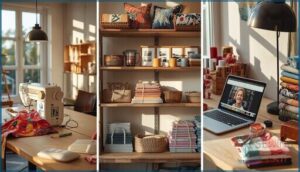
Running a successful sewing business means building multiple streams of income instead of relying on just one source. You’ll want to mix service-based work with products and education to create stability and increase your earning potential.
Let’s break down three proven revenue channels that can work together to fuel your sewing business growth.
Offering Custom Sewing Services
Custom sewing services—think custom dressmaking, alterations, and custom garment construction—let you turn client measurements into perfectly fitted pieces. You’ll manage custom fittings, oversee fabric sourcing, and apply rigorous quality control at every stage.
This income stream rewards precision and craftsmanship, building loyal clients who value individualized attention. Custom clothing commands premium pricing because you’re delivering fit and design that off-the-rack options can’t match.
Selling Handmade Products Online
Shifting from one-to-one projects to expanding revenue, selling handmade products online puts your creations in front of buyers everywhere.
Ecommerce platforms like Etsy and Shopify let you list items—think tote bags, fabric bundles, and handmade products—with integrated online payments and customer reviews. Product photography matters: clean shots boost conversion up to 30 percent on digital marketplaces, turning browsers into paying customers fast.
Teaching Sewing Classes
Teaching sewing classes transforms your expertise into recurring income. You’ll design curriculum covering basic sewing techniques through complex projects, with proper classroom setup including machines and tools for 4 to 8 students per session.
Student assessment through project completion keeps workshops structured, while teacher training sharpens your instruction style. Offer beginner through intermediate levels—rates run $35 to $75 per two-hour class.
Managing Operations and Finances

Running a sewing business isn’t just about creating beautiful pieces—it’s about keeping the operational side running smoothly so you can actually turn a profit.
You’ll need systems in place to track what’s coming in and going out, manage your money intelligently, and build a team that backs your growth.
Here’s how to keep your business organized and financially healthy from day one.
Tracking Inventory and Orders
Your sewing business thrives when you know exactly what’s on hand. Inventory management keeps your supply chain running smoothly while order tracking ensures nothing falls through the cracks. Track stock levels in real time so you’re never caught without essential sewing equipment when a custom order lands.
- Scan barcodes or SKUs to update quantities instantly across all locations
- Set reorder alerts when fabric or notions drop below minimum thresholds
- Assign unique order numbers with status updates from entry to shipment
- Link supplier records and receiving dates to calculate true landed costs
- Generate picking lists showing exact item locations for faster fulfillment systems
Bookkeeping and Cash Flow
Financial freedom starts the moment you separate your business and personal accounts—clear visibility drives smarter decisions. Record every transaction using double-entry bookkeeping tips so your books stay balanced month to month. Issue invoices at delivery to speed cash receipts, then reconcile your bank statement against your records to catch errors fast.
| Action | Purpose |
|---|---|
| Issue invoices immediately | Accelerate cash flow management |
| Track aging receivables | Prioritize collection efforts |
| Schedule bill payments | Maintain supplier relationships |
| Build 1–3 month cash reserve | Strengthen liquidity during lulls |
| Review gross profit margin | Assess product profitability |
A payments calendar prevents missed deadlines and late fees. Run financial reporting each month to see net cash burn rate and adjust your business plan before shortages arise. Scenario planning—best case, worst case—equips you for seasonal peaks and sudden demand shifts, weaving expense monitoring into your routine so you control the narrative instead of reacting to it.
Hiring and Training Staff
Your team becomes your reputation once you move beyond solo stitching. Staff recruitment lays the foundation: write detailed job descriptions, test skills during interviews, and check references carefully. Hire employees who share your commitment to quality and customer service.
- Define roles and responsibilities before posting any job opening.
- Use structured interviews to assess technical sewing abilities and cultural fit.
- Create standardized onboarding including paperwork, safety training, and mentorship pairings.
- Schedule weekly feedback sessions during the first month of employment.
- Implement quarterly performance reviews tracking accuracy, speed, and customer satisfaction scores.
Training methods blend hands-on practice with digital guides. Invest in continuous learning opportunities—paid classes, certifications—to boost employee retention. Monitor workload balance to prevent burnout as your sewing business scales.
Team management shapes small business success: competitive wages, clear communication channels, and advancement paths keep skilled seamstresses engaged. Business growth accelerates when your crew operates like a well-oiled machine, freeing you to focus on strategy instead of every seam.
Scaling and Growing Your Sewing Business

Once your sewing business is running smoothly, it’s time to think bigger.
Growth isn’t just about making more money—it’s about creating opportunities that align with your vision and keep your customers coming back.
Here’s how to expand strategically while staying true to what makes your business unique.
Expanding Product and Service Offerings
Your sewing business gains momentum when you fill local market gaps with cross-selling products that complement your core services. Combine tier-based alteration services with seasonal offerings like prom dress packages.
Launch sewing subscription boxes featuring curated fabrics and patterns. Develop sewing business ideas around handmade clothing lines that reflect community needs.
Diversify your revenue streams strategically—don’t just add services randomly.
Building Customer Loyalty Programs
Loyalty rewards turn one-time buyers into loyal advocates who fuel entrepreneurial success. Set up a points system where customers earn benefits on every purchase—100 points equal a five-dollar discount.
Offer referral incentives that reward both parties, and send tailored offers based on past orders. Membership benefits like exclusive access boost customer retention.
Your sewing business thrives when marketing builds meaningful relationships, not just transactions.
Adapting to Industry Trends
Loyalty programs set the foundation, but staying ahead means watching what’s next.
Social media analytics reveal that upcycled fashion and repair services are climbing 18 percent year over year—sustainable fashion isn’t just buzz, it’s your growth engine.
Track sewing industry trends through market research, adopt digital patterns for speed, and let customer insights guide your crafting business toward small business growth and development that lasts.
Frequently Asked Questions (FAQs)
Is sewing a profitable business?
Yes, when you know the ropes and pick smart niches. Alterations deliver 30 to 60 percent profit margins, while custom garments tap premium revenue streams beyond basic sewing costs in today’s market.
What can I sew to make money?
You can sew custom clothing, alterations, handmade home decor, tailored gifts, upcycled products, reusable tote bags, pillow covers, quilts, fabric crafts, and sewing accessories—all proven sewing business ideas that turn your creative sewing venture into consistent profit.
How to start a small tailoring business at home?
Choose your niche—alterations or custom clothing. Set up a dedicated home workspace.
Complete business registration and financial planning. Build marketing strategies.
Launch your sewing business with clear service offerings and competitive pricing.
How do I choose the right bag accessories for my sewing project?
Match bag hardware like magnetic snaps and D rings to your project’s weight.
Select strap options and lining materials that complement your fabric.
Source quality accessories from reputable suppliers with clear return policies.
Are there any additional tips or techniques for sewing projects that you can share?
Want perfect seams every time? Apply silicone spray to thread spools for smoother flow and fewer snags.
Keep spare rotary blades handy, clean feed dogs weekly, and test tension on scrap fabric before starting each project.
How do I handle difficult or demanding clients?
Stay calm and listen actively listen to understand their concerns.
Set clear boundaries on revisions and timelines.
Document all agreements in writing. Use empathy to de-escalate tension while maintaining professionalism throughout every interaction.
What insurance coverage does my sewing business need?
Your sewing business faces massive exposure without general liability insurance. General liability shields you from client injury and product claims, while property coverage protects equipment.
Workers comp ensures employee safety, and business interruption replaces lost income during shutdowns.
How can I protect my original designs legally?
You’ll need to file for design registration and understand copyright law to protect your original patterns.
Intellectual property rights, including trade secrets and patent protection, create legal barriers against copycats stealing your creative work.
What are common mistakes new sewing businesses make?
Starting a business without a clear niche is like stitching without a pattern—messy and directionless.
Financial pitfalls, equipment failures, and marketing errors derail startups. Avoid these startup blunders with solid risk management and a business plan.
How do I price rush or expedited orders?
Rush order fees usually range from 20 to 100 percent above standard pricing.
Add expedited pricing based on urgency, plus overtime labor and capacity implications.
Clear priority surcharges protect your margins while meeting tight deadlines.
Conclusion
The gatekeepers who once controlled the fashion industry don’t own your future anymore. Every tutorial, sewing business decision you’ve mapped out here—from niche selection to scaling operations—puts revenue in your hands, not someone else’s approval.
You’ve got the roadmap. Now you choose: stay safely stitching in the shadows or claim your place as a business owner who transforms fabric into profit. The machine is ready. Your next move defines everything.
- https://www.irs.gov/businesses/small-businesses-self-employed/apply-for-an-employer-identification-number-ein-online
- https://www.ibisworld.com/united-states/market-research-reports/fabric-craft-sewing-supplies-stores-industry/
- https://www.zippia.com/sewing-machine-operator-jobs/demographics/
- https://www.bark.com/
- https://www.thumbtack.com/