This site is supported by our readers. We may earn a commission, at no cost to you, if you purchase through links.
Your machine doesn’t care how expensive your fabric is. Feed silk through with a denim needle, and you’ll punch visible holes straight through the weave. Use a fine needle on canvas, and it’ll bend or snap before you finish the seam. The mismatch between needle diameter and fabric density causes more ruined projects than any other single factor in machine sewing.
European sizing runs from 60 to 110, measuring needle thickness in hundredths of a millimeter. American numbers go from 8 to 18, following the same thickness progression. Matching these numbers to your fabric weight determines whether your stitches sit clean or your material bunches, puckers, and frays.
Table Of Contents
- Key Takeaways
- How Sewing Machine Needle Sizes Work
- Needle Size Chart for Different Fabrics
- Universal Needles: When to Use Them
- Ballpoint and Stretch Needle Sizes
- Denim and Heavy Fabric Needle Sizing
- Leather and Vinyl Needle Requirements
- Specialty Needle Sizes and Applications
- Top 9 Sewing Machine Needles
- 1. Schmetz Universal Sewing Machine Needles
- 2. Organ Ball Point Sewing Machine Needles
- 3. SCHMETZ Stretch Sewing Machine Needles
- 4. Schmetz Denim Machine Needles
- 5. SCHMETZ Leather Sewing Needles
- 6. Schmetz Quilt Machine Needles
- 7. Brother Embroidery Machine Needles
- 8. SCHMETZ Microtex Sewing Machine Needles
- 9. SCHMETZ Twin Stretch Sewing Machine Needle
- How to Choose The Right Needle
- Common Needle Problems and Solutions
- Frequently Asked Questions (FAQs)
- Conclusion
Key Takeaways
- Match needle size to fabric weight using European (60-110) or American (8-18) sizing, where larger numbers indicate thicker needles for heavier materials like denim and canvas, while smaller sizes handle delicate fabrics like silk and chiffon.
- Universal needles work for most woven fabrics in the 70/10 to 90/14 range, but specialized needles—ballpoint for knits, wedge-point for leather, stretch for elastic materials—prevent fabric damage and skipped stitches that universal types can’t handle.
- Replace needles every 6-8 hours of sewing or when you hear popping sounds, see visible damage, or notice declining stitch quality, since dull needles cause thread breakage, fabric puckering, and permanent holes in your projects.
- Thread weight determines needle eye size requirements: 40-weight thread pairs with 75/11 or 80/12 needles, while heavier 30-weight metallic threads need 90/14 to 100/16 to prevent fraying and breakage during stitching.
How Sewing Machine Needle Sizes Work
Needle sizing systems can seem confusing at first, but they follow straightforward measurement rules. You’ll encounter two main systems—European and American—that work alongside each other on most needle packages.
Understanding how these numbers relate to actual needle thickness helps you select the right size for any fabric you’re working with.
European Sizing System (60-110)
The European sizing system runs from 60 to 110, measuring needle diameter in hundredths of a millimeter. A size 60 needle measures roughly 0.60 mm across, while a 110 reaches about 1.10 mm. This metric conversion makes size selection straightforward: larger numbers mean thicker needles for heavier fabrics.
Your needle size guide will show this European–American sizing paired together, like 80/12. For accurate knitting, understanding needle size conversions is essential.
American Sizing System (8-18)
The American sizing system uses numbers 8 through 18, matching European sizes in a simple ratio. A size 8 needle equals European 60, while size 18 matches 110.
Most needle size guides show both measurements together, like 80/12, making fabric compatibility easy to verify. This dual-system labeling helps you maintain stitch quality and proper thread tension across different sewing machine needles without constantly checking needle size conversions.
Understanding the correct needle size systems is essential for achieving the best sewing results.
How Size Numbers Relate to Needle Thickness
Higher numbers mean thicker needles in both systems. The metric size tells you the blade diameter in hundredths of a millimeter—size 80 has a 0.80 mm blade diameter, while size 100 measures 1.00 mm.
For knit fabrics that need more give, many sewers switch to a ballpoint or stretch twin needle to prevent skipped stitches.
This needle thickness directly affects fabric penetration and thread compatibility. Larger needles create bigger holes and accommodate heavier threads, making proper needle selection critical for fabric compatibility and stitch quality.
Needle Size Chart for Different Fabrics
Matching the right needle size to your fabric prevents skipped stitches, thread breaks, and fabric damage.
For detailed guidance on working with different fabric types, check out this step-by-step shirt sewing tutorial that covers needle selection and technique.
The chart below organizes fabrics by weight, showing both European and American sizing systems. Use these ranges as your starting point, then adjust based on your specific project needs.
Lightweight Fabrics (Size 8-11 / 60-75)
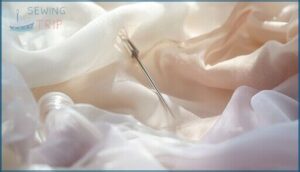
Delicate materials like silk, chiffon, and fine cotton require precision in fabric selection and needle sizes. For these lightweight fabrics, use needle sizes 8-11 (60-75 in European measurements). Thread tension is critical—excessive pressure can cause puckering. Slow your sewing speed to maintain control and prevent needle breakage.
| Fabric Types | Needle Sizes |
|---|---|
| Silk & Chiffon | 60-70 (8-10) |
| Fine Cotton | 70-75 (10-11) |
| Organza | 60-65 (8-9) |
| Voile | 65-75 (9-11) |
Always check your fabric compatibility chart before threading up.
For best results with sharp needles on fine fabrics, consult our quilting and sewing machine needle recommendations to match point styles with your project.
Medium Weight Fabrics (Size 12-14 / 80-90)
Most everyday projects fall into the medium weight category, where you’ll reach for needles sized 12-14 (80-90 European). Cotton, polyester blends, and linen respond well to this range. Your fabric selection determines exact sizing—thread tension and sewing speed affect stitch quality and needle durability. These sewing machine needles handle standard garment construction with reliable performance.
Polyester threads deliver stronger seams and better elasticity, and you can refine your overall sewing technique to maximize stitch consistency across different fabric weights.
| Fabric Types | Needle Sizes | Typical Projects |
|---|---|---|
| Cotton Poplin | 80 (12) | Shirts, dresses |
| Polyester Blend | 80-90 (12-14) | Everyday garments |
| Linen | 90 (14) | Home décor, clothing |
| Light Denim | 90 (14) | Casual wear |
| Flannel | 80 (12) | Pajamas, quilts |
Match your sewing needle selection to fabric weight for consistent results.
Heavyweight Fabrics (Size 16-18 / 100-110)
Thick fabric demands respect—anything less than a 16-18 needle (100-110 European) invites bent needles and broken threads. Heavy duty denim sewing, canvas stitching, and industrial sewing applications require this range. Your heavyweight fabrics need proper sewing machine needle selection to prevent skipped stitches and fabric damage.
| Fabric Types | Needle Sizes | Application Focus |
|---|---|---|
| Heavy Denim | 100-110 (16-18) | Jeans, jackets |
| Canvas | 100-110 (16-18) | Bags, upholstery |
| Twill | 100 (16) | Workwear, home goods |
Extra Heavy Fabrics (Size 18-20 / 110-120)
Industrial sewing projects—multiple-layer denim, leather upholstery, and reinforced canvas—require the toughest needles available. Size 18-20 needles (110-120 European) handle extreme fabric thickness without bending. Heavy-duty applications like bag construction and industrial sewing demand this range for reliable performance.
| Fabric Types | Needle Sizes | Application Focus |
|---|---|---|
| Multiple Layer Denim | 110-120 (18-20) | Belt loops, hems |
| Thick Leather | 110-120 (18-20) | Upholstery, bags |
| Heavy Canvas | 110-120 (18-20) | Tarps, industrial |
| Reinforced Webbing | 110-120 (18-20) | Straps, safety gear |
Universal Needles: When to Use Them
Universal needles are the workhorses of your sewing machine, designed with a slightly rounded point that works across most common woven fabrics. They handle everything from cotton quilting fabric to lightweight polyester without requiring constant needle changes.
However, knowing their strengths and limitations helps you decide when to reach for a specialty needle instead.
Best Fabrics for Universal Needles
Universal needles handle most woven fabrics with confidence. You’ll find them ideal for cotton, linen, chambray, and polyester in lightweight to medium weights.
Fabric density and weaving determine compatibility—fine batiste pairs with size 60/8, while standard cotton works best with 80/12. Thread compatibility matters too; match your thread weight to needle sizes for ideal fabric selection.
These needles offer reliable needle durability across everyday sewing techniques, though stretchy knits and leather need specialty options.
Recommended Size Range for Everyday Sewing
You’ll find most household projects fall within the 70/10 to 90/14 universal needle range—this trio covers your Sewing Needle Basics for standard fabric weight and Stitch Quality needs:
- Size 70/10 manages lightweight voile, sheer silks, and delicate wovens
- Size 80/12 acts as your baseline for medium cottons and standard shirtings
- Size 90/14 manages heavier linen, calico, and light denim layers
- Thread Compatibility improves when you match all-purpose polyester to these sizes
- Fabric Thickness determines your choice—start small, move up if stitches skip
Limitations of Universal Needles
Even though a universal needle manages medium wovens, it can cause fabric damage on knits by piercing yarns instead of parting them, leading to runs. Material compatibility drops when you stitch stretchy fabrics—you’ll see skipped stitches and poor sewing performance. Heavyweight canvas or leather strains the shaft, risking needle breakage. Your stitch quality improves when you match specialty needles to fabric weight.
| Fabric Type | Universal Needle Issue | Better Alternative |
|---|---|---|
| Knits & jersey | Snagging, runs, pulled loops | Ballpoint or stretch needle |
| Heavy denim, canvas | Bending, breakage, penetration failure | Denim/jeans needle size 100–110 |
| Leather, vinyl, coated | Irregular holes, tearing surface | Leather wedge or Microtex sharp |
Ballpoint and Stretch Needle Sizes
Ballpoint and stretch needles prevent runs and snags when you’re working with knits and elastic fabrics. The rounded tip slides between fabric fibers instead of piercing through them, which matters when you’re sewing T-shirts or athletic wear.
Here’s what you need to know about sizing these needles for different stretchy materials.
Needle Sizes for Knit Fabrics
Knit Fabric Types demand precision in your elastic needle selection. Fabric thickness drives every choice you make—too small and you’ll see needle breakage, too large and stitch quality suffers.
- Lightweight knits: Use 60/8 to 75/11 ball point or stretch needles for chiffon and fine jersey
- Medium weight knits: Choose 75/11 to 90/14 for T-shirts and interlock fabrics
- Heavy knits: Select 90/14 to 100/16 for fleece and dense structures
- Highly elastic materials: Stretch needles in 65/9 to 90/14 prevent skipped stitches
- Standard sizing: Match needle sizes to fabric weight for best performance
Jersey and T-Shirt Fabric Recommendations
Your jersey and T-shirt fabrics perform best with ballpoint needles in sizes 70/10 or 75/11 for lightweight cotton or viscose knits, preventing yarn breakage.
Medium-weight T-shirt weaves need 75/11 or 80/12 ballpoint or stretch needles to balance fabric stretch and needle durability.
For heavier sweatshirt jersey, choose 80/12 or 90/14 to avoid skipped stitches. Adjust sewing tension and test on scraps first.
Highly Elastic Material Guidelines
High stretch materials such as swimwear, activewear, and Lycra blends demand stretch needles rather than standard ballpoint types. You’ll get the best results with 75/11 needles for lightweight elastic fabrics and 90/14 for heavier or thicker threads.
- Stretch needles feature a modified eye and deeper scarf that prevent skipped stitches on spandex-rich fabrics
- Pair your needle with polyester thread, which stretches 17-20 percent before breaking
- Change needles every 8-10 hours when sewing elastic materials to maintain stitch integrity
Denim and Heavy Fabric Needle Sizing
Denim and heavy fabrics demand stronger needles that can punch through multiple layers without bending or breaking. You’ll need a denim needle, also called a jeans needle, with a reinforced shaft and sharp point designed to penetrate dense weaves.
The right size depends on your fabric weight and how many layers you’re stitching at once.
Best Needle Size for Denim
For standard jeans, you’ll want a 90/14 denim needle—it balances penetration and fabric preservation. Lightweight denim (8–10 oz) works fine with an 80/12, while heavyweight fabric and multi-layer seams demand a 100/16 or even 110/18 to prevent needle breakage.
Match your denim thread types and fabric thickness carefully, and adjust sewing machine settings for heavy denim projects to avoid skipped stitches.
Canvas and Upholstery Fabric Needles
Heavy canvas and home upholstery fabrics demand sturdy sewing machine needles—usually size 100/16 or 110/18—to punch through dense weaves without bending. Universal needles won’t cut it here—reach for denim needle or leather needle strength.
You’ll pair these upholstery needle sizes with heavier thread and choose needle point styles carefully: rounded tips push yarns aside on tight weaves like Sunbrella, while sharper points handle coated canvas fabric types.
Multiple Layer Stitching Considerations
Multilayer stitching tests your machine’s limits—stacked denim or canvas easily overloads a domestic needle. When you’re tackling thick seams with three or more heavy layers, jump to a 100/16 or 110/18 jeans needle to avoid deflection at bulk intersections.
- Heavy duty needles with reinforced shafts resist bending in dense layered fabric
- Increase presser foot pressure so the hook catches your thread loop reliably
- Match heavy topstitching thread (Tex 45–70) to larger needle sizes for smooth feeding
- Test multilayer stitching on scraps before committing to your final seam
Leather and Vinyl Needle Requirements
Leather and vinyl don’t behave like woven fabrics, so you can’t use a standard needle and expect clean results. These materials require needles with wedge-shaped points that cut through instead of pushing fibers aside.
Let’s break down the specific needle sizes and types you’ll need for genuine leather, faux leather, and heavy synthetic materials.
Wedge-Point Needle Sizes for Leather
For leather thickness up to 1.2 mm, you’ll get the best stitch quality with wedge-point leather needles in sizes 70/10 to 90/14. The wedge point cuts cleanly through leather, unlike standard sewing needle sizes and types.
Thicker hides demand 90/14 to 100/16 to guarantee proper needle penetration without fabric damage. When stitching multiple layers, step up one needle size to maintain smooth thread flow and prevent skipped stitches.
Faux Leather and Synthetic Materials
Faux leather and synthetic materials require different needle selection than genuine hide because of their coated surfaces and varied fabric weight. For lightweight synthetics, you’ll want a Microtex 70/10 to avoid fabric damage. Medium-weight materials work best with leather needle sizes 80/12 or 90/14 to guarantee stitch quality while protecting the coating.
Follow these faux leather tips for better results:
- Use Microtex needles (80/12 or 90/14) for thin synthetics to prevent lifting the coating
- Choose leather needle sizes 90/14 to 100/16 for medium and heavy faux leather
- Increase stitch length to 2.5-3.0 mm to reduce perforations and fabric damage
- Install a Teflon or roller presser foot to prevent sticking on coated surfaces
- Test on scrap pieces first since synthetic materials vary widely in thickness and finish
Remember, once you punch a hole in faux leather, it won’t self-heal like woven fabric and thread choices. Your needle sizes and sewing techniques for different fabrics make all the difference in preventing skipped stitches.
Heavy Non-Woven Fabric Guidelines
Dense substrates like felt and interfacing throw many sewers off, but needle selection follows the same fabric weight principles as woven materials. Start with size 90/14 for medium-weight non-woven materials, then move to 100/16 for very heavy fabric tips.
Your needle sizes directly affect stitch quality—test on scraps first since these substrates won’t self-heal. Match heavier fabric and thread choices with correspondingly larger sewing machine needles using proper sewing techniques for different fabrics.
Specialty Needle Sizes and Applications
Specialty needles handle tasks that universal needles can’t manage effectively. Each type tackles specific challenges like decorative stitching, thick threads, or delicate piecing work.
Here’s what you need to know about sizing these specialized tools correctly.
Quilting Needle Size Recommendations
Quilting needles feature a special taper and slightly rounded point designed to penetrate fabric layers without damaging cotton or quilt batting. Choose your needle sizes based on the project stage and thread type:
- Piecing quilt tops – Use 70/10 or 75/11 with 50-weight quilting thread for clean seams
- Machine quilting layers – Switch to 90/14 for stitching through top, batting, and backing
- Lightweight batting – An 80/12 sewing machine needle manages thinner quilts adequately
- Dense or bulky quilts – Move up to 100/16 when fabric weight demands stronger penetration for stitch quality
Embroidery Needle Sizing
Embroidery needles differ from quilting types in how they handle thread weight and embroidery speed. You’ll want a 75/11 embroidery needle for standard 40-weight thread on most fabrics—it’s your go-to size.
Switch to 80/12 or 90/14 when fabric density increases or you’re working with heavier decorative threads. For delicate materials, drop to 70/10 to maintain stitch quality without leaving visible holes.
Twin and Triple Needle Options
Moving beyond single-point embroidery, twin and triple needles mount multiple needles on one shank for parallel stitching. You’ll need two or three upper threads with Multi Thread Management alongside a single bobbin. Twin Needle Spacing ranges from 1.6 to 4.0 mm—closer spacing suits lighter Fabric Weight, while wider gaps work for denim.
Common sizes include:
- 2.5/80 universal twin for medium fabrics
- 4.0/75 stretch twin with Ballpoint Needles for knits
- 2.5/80 triple for decorative Triple Stitch Effects on stable wovens
Topstitch and Metallic Thread Needles
When heavy decorative threads or Metallic Thread cause Thread Shredding, standard Sewing Machine Needles won’t cut it. Topstitch Needles feature an extra-large Needle Eye Size—up to twice the standard opening—plus a deep groove that shields delicate strands during Stitch Formation.
For 40‑weight metallic, start with 90/14; thinner metallics run best at 80/12. Match your Needle Size to both Thread Type and Fabric Weight to prevent breakage and keep decorative seams smooth.
Top 9 Sewing Machine Needles
You need reliable needles that perform consistently across different fabric types and sewing tasks. The right brand and needle type can prevent thread breakage, skipped stitches, and fabric damage.
Here are nine proven sewing machine needles that technicians and experienced sewers trust for professional results.
1. Schmetz Universal Sewing Machine Needles
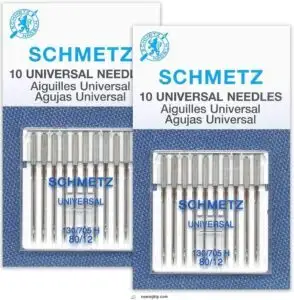
Schmetz Universal needles handle about 80% of your sewing projects, from cotton shirts to lightweight home décor fabrics. These System 130/705 H needles work with most household sewing machines, using a slightly rounded point that penetrates both wovens and knits without causing damage.
You’ll find them in sizes 60 to 110, letting you match needle size to fabric weight. The needles deliver consistent stitch quality across different thread types, and they’re straightforward to replace when you notice skipped stitches or fabric puckering.
| Best For | Home sewers and quilters who need reliable, general-purpose needles for everyday projects with wovens and knits. |
|---|---|
| Brand | SCHMETZ |
| Point Type | Slightly Rounded Point |
| Compatible Devices | Household Sewing Machines |
| Needle Count | 20 |
| Size | System 130/705 H |
| Primary Use | General Purpose Sewing |
| Additional Features |
|
- Works with most household sewing machines right out of the box
- Slightly rounded point handles both woven and knit fabrics without snagging
- Comes with 20 needles so you’ve got plenty of replacements on hand
- Not built for heavy-duty or industrial sewing tasks
- Some sewing machine models might have compatibility issues
- No warranty information included with purchase
2. Organ Ball Point Sewing Machine Needles
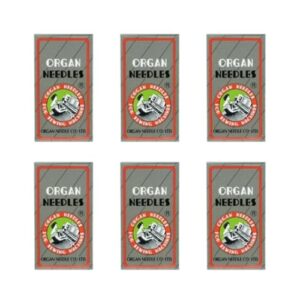
Organ ball point needles solve a common problem with knit fabrics—they glide through jersey and interlock without snagging or breaking loops. The rounded ball point tip pushes yarns aside instead of piercing them, which prevents runs and skipped stitches.
You’ll match the needle shaft sizes to your fabric weight, usually choosing 70/10 to 90/14 for light to medium knits. Pair the needle size with your thread thickness to maintain proper stitch formation and fabric tolerance, avoiding puckering or distortion across your seam lines.
| Best For | Sewers working with knit fabrics, jersey, and stretch materials who want to prevent snags, runs, and skipped stitches. |
|---|---|
| Brand | NaFurAhi |
| Point Type | Ball Point |
| Compatible Devices | Domestic Sewing Machines |
| Needle Count | 60 |
| Size | 65/9 to 100/16 |
| Primary Use | Knit Fabrics |
| Additional Features |
|
- Rounded ball point tip glides through knit fabrics without damaging loops or causing runs
- Wide size range (65/9 to 100/16) lets you match needle to fabric weight and thread thickness
- Compatible with most domestic sewing machines including popular brands like Brother and Janome
- Not suitable for heavy-duty materials like denim or thick upholstery fabrics
- Requires regular needle changes to maintain consistent stitch quality and prevent dullness
- Package labeling could be more detailed (some users want clearer markings for needle type identification)
3. SCHMETZ Stretch Sewing Machine Needles
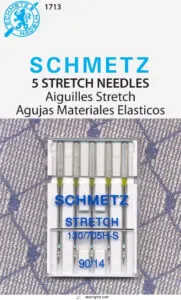
Highly elastic materials demand a specialized tool—the Schmetz Stretch needle, marked with a yellow color band for quick identification. Its medium ball point and deeper scarf geometry prevent skipped stitches on lycra, spandex, and performance knits better than standard jersey types.
You’ll rely on size 75/11 for lighter stretch fabrics and 90/14 for heavier elastic material tips or thicker threads. The reinforced blade resists deflection across dense seams, reducing needle breakage prevention issues.
This knitwear needle selection ensures sewing machine compatibility across most domestic flat-shank systems, delivering consistent stitch formation on fabrics with twenty percent or more elastic content.
| Best For | Sewers working with highly elastic fabrics like spandex, lycra, activewear, and swimwear who need consistent stitches without skipping. |
|---|---|
| Brand | SCHMETZ |
| Point Type | Ball Point |
| Compatible Devices | Domestic Sewing Machines |
| Needle Count | 5 |
| Size | 90/14 |
| Primary Use | Stretch Fabrics |
| Additional Features |
|
- Medium ball point and deeper scarf design cut skipped stitches by up to 40% compared to regular needles on stretchy materials
- Reinforced blade handles dense seams and multiple layers without deflecting or breaking
- Yellow color band makes it easy to grab the right needle from your collection
- Only works well on fabrics with 20% or more elastic content—overkill for regular cotton knits
- Some buyers report receiving wrong products due to vendor mix-ups
- You’ll need to tweak tension and stitch length settings to get the best results
4. Schmetz Denim Machine Needles
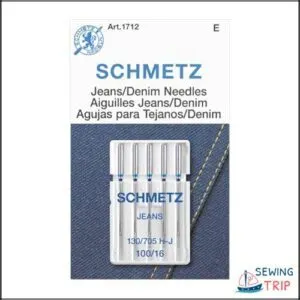
When thick woven fabric fights back, reach for the Schmetz Denim needle—marked with a blue band and built for battle. Its reinforced blade and medium ball point cut through multiple layers of jeans, canvas, and heavy twill without deflection or breakage.
You’ll need size 90/14 for standard denim, 100/16 for thick seams, and 110/18 for extra-heavy projects. This needle size matches fabric weight precisely, delivering exceptional denim stitch quality where universal types bend or snap.
The Schmetz needle comparison proves clear: heavy fabric sewing demands purpose-built tools, not compromises.
| Best For | Sewers working with thick, tightly woven fabrics like denim, canvas, and heavy twill who need reliable penetration through multiple layers without needle breakage. |
|---|---|
| Brand | SCHMETZ |
| Point Type | Sharp Point |
| Compatible Devices | Domestic Sewing Machines |
| Needle Count | 5 |
| Size | 16/100 |
| Primary Use | Denim & Heavy Fabrics |
| Additional Features |
|
- Reinforced blade and medium ball point reduce deflection and skipped stitches when sewing through dense seams and layered denim
- Available in multiple sizes (70/10 to 110/18) to match different fabric weights, with larger sizes handling extra-heavy materials effectively
- Blue color-coded shank makes identification easy, and Chrome or Gold variants offer enhanced heat resistance for high-speed sewing on thick fabrics
- Not suitable for delicate or thin fabrics due to the reinforced construction designed for heavy materials
- Potential for breakage if used incorrectly or with incompatible fabric types
- Performance may vary depending on the sewing machine used and proper size selection for the project
5. SCHMETZ Leather Sewing Needles
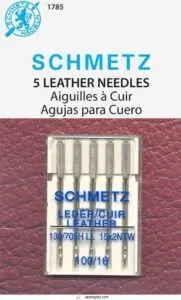
Leather cuts needles down fast unless you shift to the LL point—SCHMETZ Leather Needles slice through hides with a wedge-tipped blade that creates clean holes, not frayed punctures. Heavy Duty Sewing demands size 100/16 for thick leather, faux leather, and stiff synthetics; lighter material runs on 90/14.
These Leather Needles prevent Needle Breakage and skipped stitches where Denim Needles fail, delivering exceptional Leather Stitch Quality. The brown-band shank marks your edge over woven fabric tools.
Match needle size to fabric weight, change tips often, and watch heavy-layer projects hold tight.
| Best For | Sewers working with leather, faux leather, suede, or heavy synthetics who need clean cuts and reliable stitches without breakage or skipped loops. |
|---|---|
| Brand | SCHMETZ |
| Point Type | LL Cutting Point |
| Compatible Devices | Home Sewing Machines |
| Needle Count | 5 |
| Size | 100/16 |
| Primary Use | Leather & Heavy Materials |
| Additional Features |
|
- LL cutting point slices through thick leather and stiff materials cleanly, preventing skipped stitches and reducing needle deflection
- Available in sizes 70/10 through 110/18, so you can match needle diameter to material thickness and avoid breakage on heavy projects
- Brown color-coded shank makes it easy to identify and grab the right needle when switching between leather and fabric work
- Cutting tip will damage woven or knit fabrics by severing threads, so you can’t use these needles for general sewing
- Holes are permanent in leather—if you rip out a seam and restitch, the old cuts stay visible and can weaken the material
- Five-needle packs run out quickly on big projects, and frequent users may find themselves reordering more often than they’d like
6. Schmetz Quilt Machine Needles
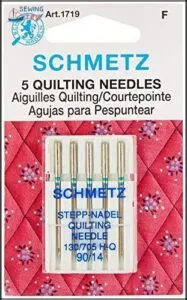
Piecing layers without skipped stitches demands a tapered point—SCHMETZ Quilting Needles drive through cotton sandwiches where universal tips stall. The slim, rounded blade in system 130/705 H Q pierces tightly woven fabric and batting without fraying, delivering reliable Fabric Compatibility across Quilting Techniques.
Size 75/11 manages fine piecing with 50-weight Thread Selection; size 90/14 manages thicker batting and 40-weight thread. Match needle size to fabric weight and thread, swap tips every 8 hours, and adjust Machine Settings to eliminate tension problems in your Sewing Machine Needle Sizes rotation.
| Best For | Quilters who piece and machine-quilt cotton projects and need needles that can push through multiple layers without skipping stitches or damaging tightly woven fabric. |
|---|---|
| Brand | SCHMETZ |
| Point Type | Quilting |
| Compatible Devices | Most Domestic Sewing Machines |
| Needle Count | 5 |
| Size | 14/90 |
| Primary Use | Quilting |
| Additional Features |
|
- Tapered point design cuts through quilt sandwiches and dense seam allowances smoothly, reducing skipped stitches and keeping stitch quality consistent across layers.
- Two sizes cover most quilting tasks—75/11 for fine piecing with lightweight thread, 90/14 for thicker batting and heavier quilting thread.
- Fits the standard 130/705 H system used by nearly all modern home sewing machines, so you don’t need to hunt for specialty compatibility.
- Won’t work well on knits or stretchy fabrics—the piercing point is built for woven cotton, not jersey or elastic materials.
- Some buyers report packaging or authenticity issues, so double-check the seller before ordering.
- Needles dull after about 8 hours of stitching, meaning you’ll replace them often if you quilt frequently.
7. Brother Embroidery Machine Needles
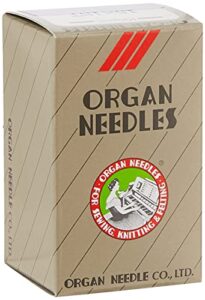
Dense embroidery designs demand the right Needle Size to stop Needle Breakage before it ruins hours of work. Brother Embroidery Machine Needles in 75/11 balance thread clearance with clean perforation, preventing Fabric Puckering on woven cloth while maintaining Stitch Quality across rayon and metallic Embroidery Thread.
The system 15×1 shank delivers Machine Compatibility with PE770 and similar frames, though you’ll swap tips every 6,000 stitches to prevent frayed thread.
Stock the 100-piece Organ set for economy; size 90/14 handles dense stabilizers without tearing base fabric.
| Best For | Hobbyists and frequent embroiderers who need a reliable, affordable bulk supply of all-purpose needles for Brother machines tackling varied fabrics and thread types. |
|---|---|
| Brand | Brother |
| Point Type | Standard |
| Compatible Devices | Brother Embroidery Machines |
| Needle Count | 100 |
| Size | 75/11 |
| Primary Use | Embroidery |
| Additional Features |
|
- The 75/11 size works across most fabrics and threads, giving you flexibility without constant swaps
- Buying 100 needles at once saves money and keeps replacements on hand for large projects
- Compatible with popular Brother models like the PE770, so you won’t waste time hunting for specialty needles
- Needles may bend or snap around 6,000 stitches, meaning heavy users will burn through them faster
- Some customers report inconsistent durability, with certain needles breaking unexpectedly
- Not all Brother embroidery machines accept these, so double-check your model before ordering
8. SCHMETZ Microtex Sewing Machine Needles
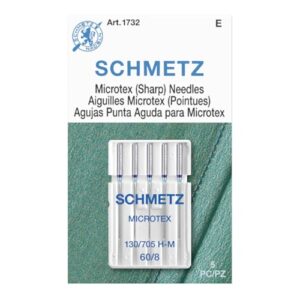
Tightly woven silk and microfiber need precision stitching that ordinary Sewing Machine Needles can’t deliver. The SCHMETZ Microtex Needle in 60/8 slices through dense weave with a slim acute point, maintaining Stitch Quality Optimization on synthetics where blunt tips shred fibers.
This Fabric Compatibility covers satin, cotton lawn, and polyester blends, though you’ll adjust Needle Thread Tension down 15% to prevent puckering.
The sharp Microtex Needle Tips demand Sewing Machine Maintenance every 4 hours—swap before the blade dulls and skips stitches on your next topstitch seam.
| Best For | Sewers working with tightly woven fabrics like silk, microfiber, and satin who need sharp, precise stitches without fabric damage. |
|---|---|
| Brand | SCHMETZ |
| Point Type | Slim Acute Point |
| Compatible Devices | Domestic Sewing Machines |
| Needle Count | 5 |
| Size | 60/8 |
| Primary Use | Fine Fabrics |
| Additional Features |
|
- Ultra-sharp slim point penetrates dense weaves cleanly without snagging or fraying fibers
- Works across multiple delicate fabrics including polyester, cotton lawn, and synthetic blends
- Delivers professional-quality topstitching and detail work on fine materials
- Thin construction makes needles prone to breaking, especially on very lightweight fabrics
- Small eye can be difficult to thread without a needle threader
- Some quality control issues reported with incomplete or damaged packages
9. SCHMETZ Twin Stretch Sewing Machine Needle
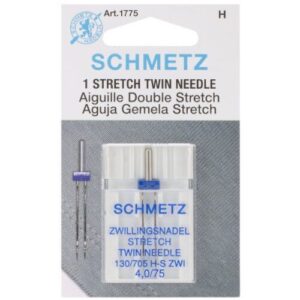
Ribbed hems and decorative twin seams on jersey demand two parallel needles working in sync. The SCHMETZ Twin Stretch in 75/11 ball point manages elastic material with Twin Needle Tips spaced 2.5mm apart, preventing needle breakage through balanced tension on both threads.
Your stretch fabric sewing improves when you match fabric weight to needle size—fine knits need 60/8, while thick rib needs 90/14 for knit fabric guidance. Check presser foot clearance before running elastic material handling seams, or you’ll snap both needles mid-stitch.
| Best For | Sewers who work with jersey, rib knits, and other stretchy fabrics and want professional-looking parallel stitching for hems and decorative seams without investing in a coverstitch machine. |
|---|---|
| Brand | Euro-Notions |
| Point Type | Ball Point |
| Compatible Devices | Domestic Sewing Machines |
| Needle Count | 1 |
| Size | Twin Stretch |
| Primary Use | Elastic Knitwear |
| Additional Features |
|
- Creates two perfectly parallel rows of stitches in one pass, saving time on hems and topstitching for knit garments.
- Ball point tips prevent snags and skipped stitches on elastic materials like jersey and stretch blends.
- Works with standard domestic sewing machines that have adequate presser foot and needle plate clearance.
- Some users report needles breaking after just one use, suggesting inconsistent quality control.
- The underside of seams may not look as polished as the topside, which can be noticeable on visible hems.
- Requires careful attention to tension settings and fabric-to-needle size matching, or you’ll end up with looping or broken needles.
How to Choose The Right Needle
Choosing the right needle comes down to two main factors that work together. You need to match the needle size to your fabric’s weight and density.
You also need to account for the thread you’re using, since heavier threads require larger needle eyes and stronger shafts.
Matching Needle to Fabric Weight
Fabric weight dictates needle size. Lightweight materials need sizes 8–11 (60–75) to preserve fabric integrity and stitch quality. Medium fabrics require 12–14 (80–90) for balanced material compatibility. Heavyweight textiles demand 16–18 (100–110) to maintain needle thickness and prevent deflection.
When stitching multiple layers, move toward larger sizes within the range. This pairing controls fabric density and thread tension, ensuring your needle technology matches fabric selection perfectly.
Considering Thread Type and Weight
Thread weight and fabric density govern needle eye selection for proper stitch formation. Heavier threads demand larger needles to prevent thread fraying and breakage.
Match thread type to fabric weight, then adjust needle size and thread tension accordingly.
- 40 weight polyester pairs with 75/11 or 80/12 needles for balanced performance
- 30 weight metallic requires 90/14 to 100/16 for reduced friction
- Size 69 nylon matches 100/16 to 110/18 for strength applications
- Finer 60 weight threads need sizes smaller than 75/11
Common Needle Problems and Solutions
Your sewing machine needle can tell you a lot about what’s going wrong with your project. When stitches start skipping, threads keep breaking, or fabric puckers under the presser foot, the needle is usually the culprit.
Let’s look at the most common needle problems you’ll encounter and how to fix them before they ruin your work.
Signs You Need a Larger Needle
Your needle is undersized if you notice fabric puckering, thread breakage, or needle deflection while sewing. Frequent skipped stitches and declining stitch quality signal a mismatch between needle size and fabric weight. Visible fabric damage around needle entry points confirms the need for a larger gauge.
Switching from universal needles to appropriate sizes prevents these issues and maintains proper needle maintenance.
When to Change Your Needle
Regular maintenance tips dictate that you replace your needle after six to eight hours of active sewing, or at the start of each new project. Needle wear signs appear through these indicators:
- Audible changes: A distinct “pop” or “thud” sound when penetrating fabric signals a dull point requiring replacement.
- Visible damage: Inspect for bending, nicks, or roughness along the shaft and point using a magnifying glass.
- Stitch quality decline: Skipped stitches, thread breakage, or fabric puckering indicate worn needles affecting performance.
- Fabric shift: Switch to fresh needles when moving from lightweight materials to heavier fabric weight categories like denim or canvas.
Sewing speed impact and fabric damage prevention depend on recognizing these needle life expectancy markers. Thread type and sewing machine needles work together optimally only when the needle maintains sharp penetration, so establishing consistent needle maintenance intervals protects both your fabric and machine from unnecessary strain.
Regular needle changes and proper thread-to-needle matching protect both fabric quality and machine performance throughout every project
Preventing Skipped Stitches and Fabric Damage
Precision in needle maintenance directly controls stitch quality and fabric care outcomes. Start each project with a fresh needle sized for your fabric weight, and verify that thread type matches the needle’s eye capacity. Machine calibration checks every 8 hours prevent deflection and loop-formation failures that cause skipped stitches.
| Problem | Root Cause | Solution |
|---|---|---|
| Skipped stitches | Dull or bent needle | Replace needle; match size to fabric weight |
| Visible holes | Oversized needle for fabric | Use smallest needle that penetrates cleanly |
| Thread breakage | Needle-thread mismatch | Coordinate thread selection with needle eye size |
| Fabric puckering | Poor fabric tension or needle plate fit | Adjust presser foot pressure; use straight-stitch plate |
Ballpoint sewing machine needles prevent fiber cutting in knits, while sharp points suit woven cottons—choosing the correct type reduces damage as effectively as proper sizing.
Frequently Asked Questions (FAQs)
Can I use serger needles in regular machines?
Seventy-five percent of needle-related machine issues stem from improper needle selection. Sergers feature incompatible shank designs and double grooves, causing thread tension issues, fabric puckering problems, and potential machine damage risks in household machines.
Do needle brands affect stitch quality significantly?
Yes. Quality brands like Schmetz maintain tighter tolerances in needle size, point geometry, and thread tension consistency. Poor manufacturing leads to skipped stitches, puckering, and uneven fabric interaction regardless of proper sewing machine calibration.
What causes needles to break during sewing?
Needle fracture happens when excessive sewing speed, fabric tension, or thread breakage creates stress. Using the wrong needle size for fabric weight, hitting pins, or poor sewing machine compatibility also causes breaks during stitching.
Should needle size match bobbin thread weight?
Your bobbin weight doesn’t dictate needle size directly. Instead, focus on fabric penetration and thread compatibility.
Coordinate needle size with fabric weight and thread tension to prevent needle deflection and guarantee balanced stitch formation across materials.
How do I store needles to prevent dulling?
Store your needles in a dry, climate-controlled space using dedicated organizers with individual cells. Keep them away from humidity above 80 percent and heat sources to prevent corrosion and maintain sharpness.
Conclusion
Some sewers treat needle selection like a lottery—grab whatever’s in the drawer and hope for the best. Then they wonder why their silk looks like Swiss cheese.
Knowing what size needle to use for different fabrics isn’t optional information; it’s the difference between professional results and expensive mistakes. Your fabric weight dictates your needle size, your needle size determines your stitch quality, and your stitch quality defines whether your project survives its first wash or its first wear.
- https://www.servicethread.com/blog/how-to-interpret-needle-size
- https://www.thesewingdirectory.co.uk/sewing-machine-needle-guide/
- https://www.thethreadexchange.com/miva/merchant.mvc?Screen=CTGY&Category_Code=needle_size_conversion_chart
- https://www.goldstartool.com/blog/the-complete-guide-to-sewing-machine-needles-and-sizes.htm
- https://www.schmetzneedles.com/pages/how-to-pick-the-correct-sewing-machine-needle