This site is supported by our readers. We may earn a commission, at no cost to you, if you purchase through links.
Timing a sewing machine purchase right can save you hundreds of dollars—sometimes more than the cost of a beginner machine itself. For instance, a Juki HZL-DX7 that normally runs $1,599 can drop by $500 or more when the right sale hits. These savings are significant enough to warrant strategic planning.
Most shoppers miss these windows because they don’t know the calendar retailers follow. Knowing when sewing machines go on sale shifts control of your budget back to you. Retailers adhere to predictable patterns, and understanding these cycles transforms timing into a powerful tool for savings.
The patterns are predictable once you recognize them—and the savings are worth planning for. By aligning your purchase with these cycles, you avoid paying full price and maximize value.
Table Of Contents
Key Takeaways
- The best times to buy a sewing machine are Black Friday, Cyber Monday, post-Christmas clearance (starting Dec. 26), and January markdowns, where discounts can reach up to 20–90% off.
- When a brand releases a new model, older versions quickly go on sale — so tracking model release announcements is one of the smartest moves you can make.
- A low sale price isn’t always a real deal — always factor in shipping costs, warranty coverage, and financing terms before you commit.
- Signing up for brand newsletters, using price tracking tools, and checking manufacturer rebate pages are the easiest ways to catch deals before they disappear.
When Sewing Machines Go on Sale
Sewing machines don’t go on sale randomly — there’s actually a pattern if you know where to look. Retailers and manufacturers tend to discount machines at the same times every year, which makes it easy to plan ahead.
The biggest drops usually land around Black Friday, Cyber Monday, and major holiday sales, so marking those dates now can save you a lot.
Here are the key sale windows worth marking on your calendar.
Black Friday Discounts
Black Friday is one of the best times to score a sewing machine deal. Discounts usually hit 20–30% off, peaking on the Friday after Thanksgiving. Watch for early week teasers that reveal doorbuster strategies before the rush.
Retailers often apply automatic price guarantee policies at checkout and sweeten the deal with bundle incentives. Turn on app notifications so you don’t miss a thing.
According to recent data, overall Black Friday discounts average around 30% across categories.
Cyber Monday Deals
Cyber Monday keeps the momentum going, with online retailers often matching or beating Black Friday prices. Discounts typically hit 20–40% off popular models, making it a prime time for savings.
To ensure deals are genuine, use Price Tracking Tools to verify price drops. Stay alert for App-Only Offers and Early Access Codes, often shared via brand newsletters, to secure exclusive discounts.
Maximize savings further by leveraging Stackable Coupons and Online Flash Discounts. Keep promotion codes organized and ready before checkout to stretch budgets even further.
Christmas Clearance Sales
Once Cyber Monday wraps up, Christmas clearance sales kick in fast. Starting December 26, Post-Holiday Markdown events slash prices by 50–90%, making inventory liquidation one of the best times to score your dream machine.
Christmas clearance sales starting December 26 slash sewing machine prices by up to 90%, making post-holiday the ultimate time to buy
Watch for:
- Deep Discount Bundles on accessories and machines
- Limited-Time Offers with clearance pricing, dropping hourly
- price matching policies across competing retailers
- Seasonal discounts extending into early January
January Inventory Markdowns
January keeps the savings rolling. Early-year repricing kicks in quickly as stores push storewide clearance and warehouse stock rotation to make room for spring. You’ll find tiered discounting that deepens week by week — sometimes hitting 50% on selected models.
Watch for loyalty bonus points through email lists, too. These perks often accompany the seasonal shifts in inventory.
Seasonal discounts, stock liquidation, inventory clearance, and clearance pricing all peak at this time, creating prime opportunities for savvy shoppers.
Mother’s Day Promotions
Mother’s Day rolls around every May — and sewing machine deals come with it.
Retailers run targeted promotions that make holiday shopping genuinely worthwhile. Here’s what to look for:
- Gift Bundles pairing machines with accessories at a price reduction
- Free Wrapping on select purchases
- Promo Codes shared via email for discounted machines
- Gift Card Bonuses on qualifying orders
- Local Partnerships offering in-store exclusives
Best Times to Buy
Timing your purchase right can mean the difference between full price and a serious deal. Beyond the big holiday sales, there are quieter windows throughout the year where prices quietly drop and shelves get cleared out.
End-of-season sales are especially worth watching if you’re shopping for a portable sewing machine for quilting, since retailers often slash prices right when newer models roll in.
Here are the best times to catch a sewing machine at a lower price.
End-of-season Clearance
End-of-season clearance is one of the best-kept secrets in sewing machine shopping. Retailers launch these stock liquidation events during the final weeks of a season — usually running 2 to 6 weeks — with price reductions of 20–60% off MSRP. Clearance timing matters, so watch for end-of-summer sales in late August.
Higher-end machines often come as bundle deals instead of straight price cuts.
Always use price comparison tools, check return policies, and confirm discount periods before buying.
February Overstock Events
February is quietly one of the smartest spots on the retail calendar to score a price drop. Retailers run inventory and clearance sales early in the month to clear last year’s stock.
You’ll find Open-Box Deals, Limited Edition Colors, and Flash Doorbusters with Bundle Savings on accessories included.
Some stores even offer Return Waivers to move slow sellers faster — so don’t overlook pairing a manufacturer rebate for extra savings.
Summer Model Closeouts
Summer is actually a hidden gem for deal hunters. As retailers run end-of-summer clearance sales to free up floor space for fall lines, stock clearance metrics show discounts ranging from 20 to 60 percent off.
Watch for mid-summer drops when manufacturers announce new models—that’s when dealer floor models and seasonal colorways get marked down fast. Online promo codes tied to these inventory sales make it even easier to save without leaving home.
Holiday Weekend Sales
Holiday weekends are the heartbeat of sewing machine sales. Black Friday and Cyber Monday together stretch into a multi-week shopping window, giving you more time to compare deals. Sign up for Early Access Alerts through brand emails — retailers often offer extra discounts before the public sale timing kicks in.
Watch for:
- Bundle Incentives like free presser feet or accessory kits
- Price Matching Strategies to stack retailer guarantees
- Limited Stock Alerts since popular models sell out fast
- Extended Return Policies, common during the holiday season
New Model Releases
When a brand drops a new model, older versions quietly go on sale — that’s your window. New releases push dealers to clear shelf space, so sale timing lines up perfectly if you’re price tracking the model below the latest one. Watch trade shows and brand sales for these moments.
New machines now feature Stepper Motor Speed up to 8,000 stitches per minute, USB Firmware Updates, Expanded Presser Feet kits, Extended Warranty coverage, and published Model Dimension Specs — making it the best time to buy a sewing machine at a discount.
Where to Find Sewing Sales

Knowing when to buy is only half the battle — you also need to know where to look. Sales don’t always announce themselves, and the best deals can disappear fast if you’re not watching the right places.
Here are the five spots worth checking first.
Authorized Dealer Promotions
Authorized dealers offer your best bet for exclusive dealer discounts you won’t find elsewhere. Through secure Dealer Portal Incentives, brands like Brother and BERNINA provide exclusive accessory bundles and Tiered Rebate Programs directly to verified storefronts.
MAP Compliance ensures fair pricing across dealer competition, preventing unfair undercutting of deals.
Dealers also complete Promotional Training Requirements, enabling them to clearly explain every offer—including authorized Brother dealer retailer promotions, sales, or special in-store promotions.
Manufacturer Rebate Pages
Manufacturer rebate pages are worth bookmarking, offering deals beyond dealer discounts. Brother’s Instant Rebate Event (May 1–26, 2026) featured a $600 limited-time offer on select PR machines.
Rebate terms, eligibility criteria, and required documentation varied by model, so careful review is essential. The submission process is typically handled online, though regional variants may apply.
Before purchasing, verify whether promotional financing periods can stack with your rebate to maximize savings.
Brand Email Newsletters
Signing up for a brand’s email list is one of the smartest, lowest-effort moves you can make. Singer, for example, offers 20% off just for subscribing — that’s a coupon landing straight in your inbox before you’ve even searched a deal site.
Good newsletters use Adaptive Content Personalization and Send Time Optimization to surface the right promotions at the right time. With Mobile-Friendly Design and Performance Metric Tracking, brands optimize what they send you.
Check the brand website regularly too — those Subject Line Strategies often hint at flash sales worth catching.
Online Retailer Discounts
Online retailers like Amazon use Variable Pricing to shift sewing machine prices constantly — sometimes hourly. That means a good deal today might disappear tomorrow. Set up a price tracker to catch drops before they’re gone.
Smart shoppers also stack savings using Coupon Campaigns, Tiered Discounts, and Free Shipping thresholds. Here’s what to watch for:
- Coupon codes clipped directly on Amazon’s coupon center
- Tiered discounts that grow with your cart total
- Free shipping minimums that bundle accessories affordably
- Black Friday Lightning Deals with real-time countdown timers
- Real-Time Alerts via online price monitoring tools like CamelCamelCamel
Sewing Shows and Festivals
At sewing festivals, craft festivals, and quilt shows, vendors often run sales or special promotions you won’t find anywhere else. Walk the floor for Live Machine Demos and use Vendor Booth Navigation to compare models side by side. Workshop Registrations get you hands-on time with new machines.
Fashion Runway Shows and Networking Socials connect you with dealers open to deal negotiation — especially on the last day.
Top 4 Sale-Worthy Sewing Machines
Not every sewing machine is worth waiting for a sale to buy — but some are absolutely worth the patience.
These four models consistently show up in clearance events, holiday promotions, and dealer discounts throughout the year. If you’re ready to shop smart, here’s where to start.
1. Singer Quantum Stylist 9960 Computerized Sewing Machine
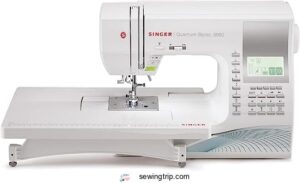
Think of the Singer 9960 as a Swiss Army knife for sewers — one machine that manages quilting, garments, and custom projects without breaking a sweat. It packs 600 built-in stitches and 1,172 stitch applications, plus 13 automatic one-step buttonholes. You also get a built-in thread cutter, automatic needle threader, and a transparent drop-in bobbin.
Singer’s own site currently lists it at $549.99, down from $689.99 — making sale season an ideal time to grab it.
| Best For | Home sewers and hobbyists who want one versatile machine for quilting, garment making, and personalized projects without buying multiple specialized machines. |
|---|---|
| Built-in Stitches | 600 stitches |
| Machine Weight | 14.6 lb |
| Bobbin Type | Top drop-in clear |
| LED Lighting | Yes |
| Needle Threader | Automatic |
| Presser Feet Included | 13 feet |
| Additional Features |
|
- 600 stitches and 13 automatic one-step buttonholes cover everything from basic seams to decorative finishing with zero fuss
- The automatic needle threader, thread cutter, and transparent drop-in bobbin seriously cut down on setup time and mid-project interruptions
- The included accessory package — 13 presser feet, extension table, and hard case — means you’re ready for specialized tasks right out of the box
- No separate top-thread tension wheel, so getting decorative stitches just right can take some trial and error
- The needle threader can be a little finicky and sometimes needs a helping hand to work properly
- The standard throat plate is smaller than what you’d find on a dedicated quilting machine, which can make large quilt projects a bit awkward to maneuver
2. Singer Heavy Duty 4423 Sewing Machine
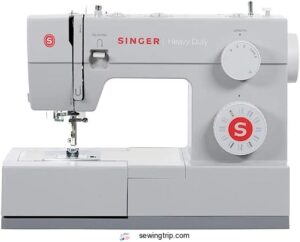
If raw power is what your projects demand, the 4423 delivers without apology. Built around a heavy-duty metal frame and a motor that’s 60% stronger than standard home machines, it punches through denim, canvas, and leather without skipping a beat.
You get 23 built-in stitches, a one-step buttonhole, automatic needle threader, and a top drop-in bobbin — all the essentials, nothing extra. Singer’s site currently lists it at $229.99, down from $289.99.
| Best For | Sewers who regularly work with heavy fabrics like denim, canvas, or leather and want a reliable, no-frills workhorse that can handle tough projects without breaking the bank. |
|---|---|
| Built-in Stitches | 23 stitches |
| Machine Weight | 14.6 lb |
| Bobbin Type | Top drop-in clear Class 15 |
| LED Lighting | Yes |
| Needle Threader | Automatic |
| Presser Feet Included | 4 feet |
| Additional Features |
|
- The 60% stronger motor and metal frame make short work of thick fabrics and multiple layers that would choke a standard machine.
- Setup is simple — the automatic needle threader and clear drop-in bobbin mean less squinting and more sewing.
- One-step buttonhole and a solid set of included presser feet cover most everyday sewing and repair tasks right out of the box.
- The stock needles can bend on very heavy materials, so you’ll likely need to buy stronger ones for serious denim or leather work.
- Only 23 stitch patterns — fine for most people, but if you want embroidery or computerized designs, you’ll need to look elsewhere.
- The foot pedal runs sensitive and the cable is short, which can be a bit awkward until you find a setup that works for you.
3. Janome 2212 Sewing Machine
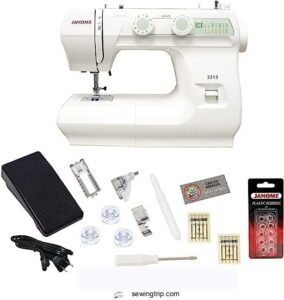
Think of the Janome 2212 as your no-fuss starting point — reliable, simple, and priced at just $217.
It runs up to 860 stitches per minute and manages everyday fabrics with ease. You get 12 built-in stitches, a four-step buttonhole, free arm, and snap-on presser feet — everything a beginner actually needs.
It’s lightweight enough to carry to class and sturdy enough to last. No fancy extras, no steep learning curve. Just a solid machine that gets the job done.
| Best For | Beginners and casual sewers who want a simple, affordable machine that’s ready to use right out of the box. |
|---|---|
| Built-in Stitches | 12 stitches |
| Machine Weight | 14 lb |
| Bobbin Type | Standard drop-in |
| LED Lighting | No |
| Needle Threader | None |
| Presser Feet Included | 4+ feet (bundle) |
| Additional Features |
|
- Comes with a solid bonus bundle — extra bobbins, needles, and presser feet mean you can start projects immediately without extra shopping
- Lightweight at 12 lb, so it’s easy to toss in a bag and take to a class or workshop
- Simple dial controls and 12 built-in stitches keep things approachable, even if you’ve never touched a sewing machine
- No built-in needle threader, which can be frustrating — especially for anyone with limited dexterity
- Only 12 basic stitches, so if you want decorative or embroidery options down the road, you’ll outgrow it fast
- The instruction manual skips some setup steps, so expect to hunt down a YouTube video or two when you’re first getting started
4. Juki HZL DX7 Computerized Sewing Machine
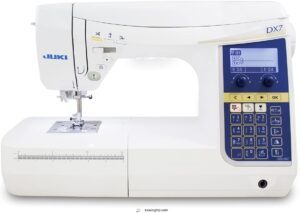
Ready to level up from a beginner machine? The Juki HZL-DX7 is built for sewists seeking serious performance without industrial complexity.
It boasts 287 stitch patterns, a built-in knee lift, automatic thread cutter, and an 8-inch throat space—ideal for quilts and layered projects.
The all-metal frame ensures stability under pressure, while the drop feed enables effortless free-motion work.
Regular price is around $1,599, but dealers frequently discount it—often saving you $500 or more.
| Best For | Intermediate to advanced sewists who want a feature-rich, durable machine for quilting, garment construction, and decorative work without stepping into full industrial territory. |
|---|---|
| Built-in Stitches | 277 stitches |
| Machine Weight | 16 oz listed (approx 16 lb actual) |
| Bobbin Type | Class 15 compatible |
| LED Lighting | Yes |
| Needle Threader | Automatic |
| Presser Feet Included | Standard compatible feet |
| Additional Features |
|
- 277 built-in stitches plus four font options give you plenty of creative range, from everyday seams to decorative embroidery
- The 8-inch throat space and box-feed system make quilting and heavy layered projects noticeably smoother and more consistent
- Auto needle threader and thread cutter save real time when you’re switching fabrics or colors frequently
- The needle threader has a reputation for failing early, which is frustrating on a $1,599 machine
- The pedal cord feels thin and cheap for the price—something to watch if you sew heavily or for long sessions
- Getting the tension and bobbin orientation right takes time; expect to sit with the manual before things run perfectly
How to Compare Sale Prices
A low price tag doesn’t always mean a good deal.
Before you hand over your money, there are a few things worth checking first. Here’s what to look at when comparing sewing machine sales.
Shipping and Handling Costs
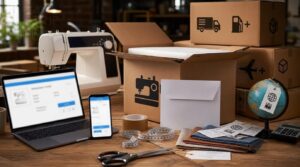
A great sale price can quietly fall apart once shipping and handling costs hit your cart. When you shop by mail, factor in packaging fees, fuel surcharges, residential delivery charges. Dimensional weight can inflate costs on bulky machines. International duties apply if ordering from abroad.
For accurate price comparison during holiday sales, always calculate the full delivered price before any deal negotiation.
Warranty Coverage Details
Price tags don’t tell the whole story. Once shipping costs are settled, your next checkpoint is warranty coverage — and it’s worth a close look before you finalize any sale purchase.
- Warranty Duration varies widely; Singer’s Quantum Stylist 9960 carries a 25/5/1-year product warranty covering the machine head, electronics, and labor separately
- Covered Components usually include internal mechanisms, motors, and electrical parts — but not consumables like needles or bobbins
- Exclusion Details matter: misuse, unauthorized repairs, and normal wear and tear void most warranty coverage
- Claim Procedure usually requires proof of purchase, a serial number, and contact with an authorized dealer or retailer first
- Extended Options may be available through your retailer, since some manufacturers don’t offer them directly
Trade-in Allowances
Warranties checked — now look at what your old machine can do for you. A trade-in program can quietly shave dollars off your total before sales or special promotions even kick in. Dealers weigh three things during condition evaluation: how old it is, age depreciation, and whether you include accessory bonuses like original packaging or extra feet. That credit applies before taxes, which means tax reduction is a real benefit too.
Dealers prioritize condition evaluation, age depreciation, and accessory bonuses when assessing value. Newer models retain value better, while extras like original packaging or additional components can boost offers. To maximize trade-in credit, clean and service your machine before appraisal, and bundle accessories like hoops, feet, and the original box.
| Factor | Impact on Value | Negotiation Strategies |
|---|---|---|
| Condition Evaluation | Higher credit for clean, working machines | Clean and service before appraisal |
| Age Depreciation | Newer models hold value better | Use price comparison tools across dealers |
| Accessory Bonuses | Extras can raise the offer | Bundle hoops, feet, and original box |
Singer’s trade-in program even accepts Husqvarna and PFAFF machines. Timing matters — during holidays, dealers often temporarily raise credits to move inventory faster.
Financing Offer Terms
Trade-in credit handled — now look at how you’ll pay. Sewing machine financing can stretch big purchases comfortably.
Brother’s 0% financing for 72 months on machines $9,000+ sounds great, but check the APR breakdown carefully. That zero percent interest is promotional — miss a payment, and the purchase APR jumps to 34.99%.
Down payment requirements, prepayment penalties, and credit eligibility all affect what you actually owe.
Required Sewing Features
Once financing is sorted, focus on what the machine actually does. Don’t pay sale prices for features you’ll never use — but don’t skip the basics either.
Look for Stitch Variety, Adjustable Tension, and Presser Foot Options that match your projects. Speed Control, an automatic needle threader, and Maintenance Essentials like a drop-in bobbin matter daily. Basic features beat flashy extras every time.
Frequently Asked Questions (FAQs)
What is the best time of year to buy a sewing machine?
The best time to buy a sewing machine is during Black Friday, the holiday season, or January Early-Year Rebate Windows. These periods offer prime opportunities for significant savings.
Retail promotions and Quarter-End Clearance events during these windows typically release the deepest discounts, making them ideal for purchases.
How to get the best price on a sewing machine?
Use price tracking tools, set a price alert, and compare prices across stores to monitor deals effectively.
Stack coupons with Black Friday or holiday season retail promotions to maximize savings during peak discount periods.
Leverage loyalty perks, price matching, and bulk discounts for additional cost reductions.
How much should I pay for a decent sewing machine?
A decent machine sits in the $100–$500 price range. Budget-friendly options under $500 cover most beginner needs.
Compare prices across brand tiers to match feature value with your total ownership goals before buying.
Do sewing machines go on sale during Black Friday?
Yes — Black Friday is one of the best times to buy a sewing machine.
Expect doorbuster timing, bundle add-ons, and limited stock offering discounts of 15–40% off across major retailers during this prime holiday season event.
What features are essential for beginner sewing machines?
Look for an easy interface, core stitches, adjustable speed, a durable build, and starter accessories. These basic features make any beginner sewing machine practical and confidence-building from your very first seam.
Are extended warranties worth the additional cost?
Extended warranties rarely deliver strong ROI. Coverage exclusions, like routine maintenance and accidental damage, limit real value.
Match your risk tolerance and budget before committing.
For most buyers, a small repair fund beats the added cost.
How do refurbished machines compare to new models?
Refurbished machines offer real Price Gap savings — 20–50% less than new — with Performance Parity on stitching.
Warranty Length is shorter, and Availability Variability means stock changes fast.
It’s worth checking if budget-friendly options matter to you.
Which brands have the best customer support?
Brother and Singer — brands your great-grandmother likely recognized — still lead in multi-channel support, warranty transparency, and 24/7 live chat.
Janome adds loyalty perks and an extended return policy worth your research before Black Friday.
What accessories are must-haves for quilters?
Quilters can’t go wrong starting with a walking foot, rotary cutter, needle set, pincushion clips, and pressing tools.
These five essentials keep your layers aligned, your cuts clean, and your seams crisp every time.
Do floor model sewing machines come with warranties?
Think of a floor model like a test-drive car — it’s been used, but it’s not unprotected. Most come with either a manufacturer warranty or a retailer warranty, so you’re covered.
Conclusion
Knowing when sewing machines go on sale means you’re never left holding the short thread. Black Friday, January markdowns, and new model releases aren’t random—they’re your calendar for smarter spending.
Track prices early, sign up for dealer newsletters, and compare total costs before you buy. The right machine at the right price is within reach.
You don’t have to rush or overpay. Patience and preparation are the two most underrated tools in any sewer’s kit.