This site is supported by our readers. We may earn a commission, at no cost to you, if you purchase through links.
A nine-year-old with a needle, some felt, and thirty minutes can walk away holding something she made with her own hands—and that feeling sticks.
Sewing gives kids a rare kind of win: something tangible, useful, and completely theirs. It also quietly builds focus, fine motor skills, and patience without feeling like practice at all.
The projects in this list range from no-machine hand-sewing for total beginners to wearable pieces kids can gift or actually use every day.
Whether your child is picking up a needle for the first time or ready to try the sewing machine, there’s a starting point here that fits.
Table Of Contents
Key Takeaways
- Felt is the best fabric to start with because it doesn’t fray, costs under $5, and lets kids finish a real project — like a plushie or pouch — in a single sitting.
- Hand sewing comes first: a blunt needle, basic running stitch, and 15–20 minute sessions build confidence and fine motor skills before a sewing machine ever enters the picture.
- The best beginner projects — scrunchies, tote bags, finger puppets, star pillows — are short enough to finish in one afternoon and useful or wearable enough to make kids genuinely proud.
- Letting kids choose their own fabric, celebrating small wins, and keeping sessions short are the three things that keep motivation alive and turn a first project into a lasting hobby.
Best Sewing Projects for Kids
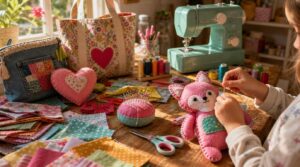
The right first project can make all the difference between a kid who falls in love with sewing and one who gives up after ten minutes. You want something quick to finish, fun to keep, and just challenging enough to feel like an accomplishment. Here are some of the best starter projects that hit all three marks.
Once kids build confidence with small wins, beginner sewing projects for kids can open the door to bigger, more rewarding makes.
The right first sewing project decides everything: make it quick, fun, and just challenging enough to feel like a win
Felt Animal Plushies
Felt animal plushies are one of the best simple hand sewing projects for kids — and it’s easy to see why. Felt doesn’t fray, so little hands can cut shapes without things unraveling.
Common DIY crafts for children start here: bears, cats, rabbits, owls. Stitch two pieces together, stuff lightly, and you’ve got a soft toy they’ll actually treasure.
Choosing biodegradable natural wool ensures the plushies are eco‑friendly and support sustainable artisans.
Star Pillows
Once your kids have made their first plushie, a star pillow is the perfect next step. Cut two matching star shapes from quilting cotton or minky fabric, stitch around the edges, and stuff with polyester fiberfill.
The five-point silhouette looks impressive but stays manageable. Toss in a free sewing pattern online, and you’re ready to go.
Soft Toy Squares
If a star pillow feels like a big jump, soft toy squares are wonderfully forgiving. Two equal-sided felt pieces, some polyester fiberfill, and a basic running stitch are all you need.
- Embroidered faces turn plain squares into characters
- Mix bold color combinations like teal and orange
- Fleece or minky adds extra durability and softness
Done in one sitting. No fraying, no fuss.
Fabric Memory Games
Now here’s a project that does double duty — it’s a hand-sewing practice piece and a ready-made game.
Cut 2–3 inch felt or quilting cotton squares from fat quarters, pair up matching prints, and stitch the edges with a simple running stitch.
No fraying, easy to wash, and kids love flipping them to find pairs.
Finger Puppets
Finger puppets are one of those rare projects that feel more like play than practice.
No sewing machine needed — just felt, embroidery floss, and a blunt needle. Cut two matching felt pieces, stitch the sides with a basic running stitch, and suddenly your kid has a tiny dragon or princess ready for a story.
Easy Hand Sewing Projects
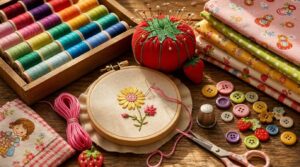
Hand sewing is the perfect starting point because all you need is a needle, some thread, and a small piece of fabric. No machine, no big setup — just a quiet spot and a little patience. Here are five easy projects your kid can stitch up by hand.
Felt Bags and Pouches
Felt bags and pouches might just be the perfect first hand-sewing project — no fraying edges, no fuss.
They’re especially great for kids, and pair perfectly with these fun summer sewing project ideas that are quick enough to finish in an afternoon.
Wool and acrylic felt blends hold their shape well and come in every color imaginable. RPET felt is a great eco-friendly pick too, made from recycled plastic bottles.
| Feature | Wool Felt | Synthetic Felt |
|---|---|---|
| Durability | High | Medium |
| Cost | Higher | Budget-friendly |
| Eco Option | Natural | RPET available |
Double-stitched seams keep hand-sewn felt pouches sturdy enough for daily use. Reinforce hand straps with extra stitches so your felt purse or drawstring bag actually holds up.
For personalization, try appliqués, embroidery, or monogramming — felt takes decoration beautifully. Spot clean with a damp cloth and air dry to keep everything looking sharp.
DIY Pencil Cases
Making a DIY pencil case is one of those projects that feels genuinely useful the moment it’s done. Use cotton canvas or denim for durability, and add fusible interfacing to keep the shape firm.
A 7- to 9-inch zipper is the perfect fit.
Kids can hand-sew felt panels for decoration or practice straight machine stitches on the main seams.
Simple Stuffed Shapes
Sometimes the simplest shapes make the most lovable soft toys. Cut two identical pieces from felt — a circle, star, or heart — using printable felt shape templates for clean, consistent edges.
Sew around the border with a blanket stitch, leave a small gap, stuff lightly with polyfill from edges inward, then stitch it closed.
No fraying, no fuss — just an adorable miniature plushie kids can truly call their own.
Doll Clothes
Tiny clothes for a doll might just be the most charming hand sewing project a kid can tackle. Using felt or cotton blends, you can cut simple rectangles and straight-edged pieces sized for 11–12 inch fashion dolls — no complicated curves needed.
Here’s why kids absolutely love making doll clothes:
- They see instant, wearable results
- Every outfit feels like a tiny creative victory
- Fabric scraps become something magical
- Kids practice real stitches on a forgiving scale
- Dolls become even more special when dressed by hand
Pattern scaling keeps things easy — print free sewing patterns at 100% and trace directly onto fabric. Stick with a basic running or whip stitch along straight seams, and use Velcro or small snaps as kid-friendly fasteners instead of fiddly buttons. Always choose non-toxic, washable fabrics so finished outfits hold up through endless playtime adventures.
Bookmark Sewing Crafts
A bookmark might be the perfect first hand sewing project — small enough to finish in one sitting, useful enough to actually keep.
Cut a 6-inch by 2-inch felt strip, then whip stitch a tiny animal shape on top using bright embroidery floss. Add a ribbon tab at the top, and you’ve got a gift-worthy bookmark in under an hour.
Beginner Machine Sewing Projects
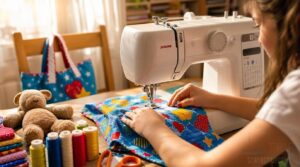
Once a child gets comfortable with the basics, a sewing machine opens up a whole new world of projects they can actually finish in one afternoon.
The speed and straight seams make it easier to tackle things that feel more "grown‑up" — and way more satisfying to show off.
Here are five great beginner machine sewing projects to get them started.
Scrunchies and Bow Scrunchies
Scrunchies are one of the most satisfying beginner machine sewing projects — quick to finish and instantly wearable. Cut your fabric to 21½″ × 3″, fold it in half lengthwise, and stitch a straight seam. Thread ¼″ flat elastic (about 9″) through using a safety pin, knot the ends, and sew the opening closed. Done!
Want to level up? Sew on a fabric bow using satin, cotton, or grosgrain for different looks. Hand wash cold and air dry to keep everything looking fresh.
Tote Bags
Once your child has mastered scrunchies, a tote bag is the perfect next step — bigger project, bigger payoff.
Cut a single 16″ × 36″ fabric piece from medium-weight cotton or canvas, attach two 27″ twill straps, and let the machine do the work.
Kids can carry their finished bag to school that same afternoon.
Drawstring Backpacks
A drawstring backpack is one of the most rewarding beginner sewing projects for kids — compact, functional, and done in a single session for under $5.
Here’s what makes it a standout among sewing project ideas for kids:
- Straight seams only — no curves or complicated cuts
- Single fabric piece — less prep, more sewing
- Nylon drawcord threads through a simple channel
- 7–10 liter capacity fits gym clothes or library books perfectly
- Customizable fabric choices let kids personalize every bag
Use lightweight cotton or ripstop nylon and reinforce the cord channel with a double stitch for durability.
Simple Dish Towels
After tackling a backpack, a simple dish towel feels refreshingly low-stakes — and that’s exactly what makes it perfect for beginners.
Cut your fabric to 18 by 28 inches, hem the edges, and you’re done.
Use cotton for absorbency or linen for quick drying.
Flour sack towels and waffle weave texture are great fabric choices that make these easy sewing projects genuinely useful.
Pillowcases
A pillowcase is one of those beginner machine projects that looks impressive but comes together fast.
Cut your fabric to 20 by 26 inches for a standard fit, sew three straight seams, and fold a finished cuff at the open end for a polished look.
Use quilting cotton — it’s easy to handle and comes in endless fun prints kids will love.
Wearable and Giftable Kids Projects
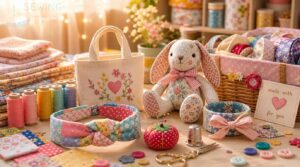
Once kids get a feel for basic sewing, making something they can actually wear or give away takes the excitement to a whole new level. There’s something special about finishing a project that a friend or family member can use and love.
Here are some of the best wearable and giftable projects to try with your young sewist.
Easy Aprons
An apron is one of the most satisfying beginner sewing patterns you can make with a kid. It’s wearable, useful, and done in a single session.
Here’s what makes it work so well:
- Simple hemming techniques keep raw edges neat without tricky folds
- Apron pocket design uses one rectangular pocket with basic topstitching
- Adjustable neck strap with a sliding buckle fits multiple ages easily
Choose machine washable fabric like cotton — it withstands messy kitchens and washes at 30°C without fading.
Simple Skirts
Making a simple skirt might be the most wearable win you can give a kid at the sewing machine. It’s fast, functional, and genuinely exciting to put on afterward.
An A-line construction works best here — it flares gently from the waist, flatters every body shape, and requires only straight seams.
| What to Choose | Why It Works |
|---|---|
| Cotton quilting fabric | Easy to cut, holds shape, doesn’t fray badly |
| Elastic waistband | No zipper needed — beginner-friendly and comfortable |
| Fat quarter cuts | Affordable, pre-sized, perfect for small skirts |
| Straight hem | Simple fold-and-stitch finish, no curves to wrestle |
Start with pattern drafting basics — just a rectangle or gentle A-line shape drawn directly onto fabric. For elastic waistband options, a casing sewn at the top and threaded with ¾″ elastic takes minutes. Fold the hem twice and topstitch for clean hemming techniques that actually hold up in the wash.
Fleece Ear Warmers
Fleece ear warmers are one of those beginner projects that kids actually want to wear the moment they finish. You only need fleece fabric — usually 200–300 GSM brushed fleece — scissors, and a free ear warmer sewing pattern to get started.
Here’s what makes this project worth picking:
- No fraying edges — fleece doesn’t unravel, so cutting and sewing stays clean and simple.
- One-session finish — the straight seams mean most kids wrap it up in under an hour.
- Sizing and fit — a width of 2.5 to 3.5 inches covers ears fully without blocking glasses.
- Durability features — reinforced edge stitching means it survives the washing machine on a gentle cycle.
- Reflective details — add iron-on reflective tape for a safety-smart finishing touch kids love.
These pop up in nearly every kids sewing tutorials list for good reason. They’re fast, functional, and genuinely exciting to gift. Bright prints, animal patterns, or classic solids — let your child pick the fabric and they’re already invested before the first stitch.
Fabric Snack Pouches
A fabric snack pouch might be the most practical beginner project on this list.
Kids hand sewing a pouch they’ll actually use at lunch? That’s instant motivation. Keep it compact — around 4 to 6 inches square — with a simple Velcro or zipper closure, a waterproof lining inside, and non-toxic, food-safe fabric outside.
Quick to finish, easy to love.
Handmade Gift Bags
There’s something special about giving a gift wrapped in something you made yourself.
Kids can sew simple drawstring bags or hand-sewn felt pouches using leftover cotton or upcycled fabric — kind to the planet and easy on the budget. Pick sizes like 6×8 inches for small gifts or 12×14 inches for clothing.
- Personalize with fabric markers or appliqué
- Add a drawstring or Velcro closure
- Topstitch loops for extra durability
Teaching Kids to Sew Safely
Teaching kids to sew is exciting, but getting the setup right makes all the difference. The right tools, fabrics, and a little structure keep things fun and frustration-free from the very first stitch. Here’s what to focus on when you’re just getting started.
Age-appropriate Sewing Tools
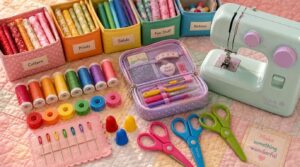
The right tools make all the difference. For little ones just starting out, blunt tapestry needles are your best friend — no sharp tips, big eyes for easy threading, and much less worry for everyone. Pair those with child-safe scissors that fit small hands comfortably, and you’ve already cleared two of the biggest safety hurdles.
As kids build confidence, add ergonomic thimbles to protect fingertips during longer hand-sewing sessions. For machine work, look for a beginner-friendly sewing machine with built-in machine speed control — slow and steady wins here. Finally, keep everything in labeled bins or a color-coded kit. Good tool storage solutions teach responsibility and make cleanup almost fun.
Best Beginner Fabrics
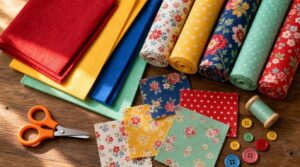
Once you’ve got the right tools sorted, picking the right fabric is your next big win.
Felt is the top pick for beginners — it doesn’t fray, comes in bright colors, and forgives wobbly cuts.
For simple sewn projects, quilting cotton keeps edges clean and stitches visible.
Both options cost under $5 for a solid starter supply.
Basic Stitches to Teach
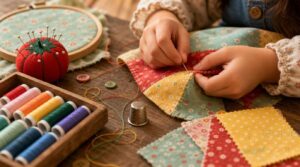
Once you’ve chosen your fabric, it’s time to pick up that needle and learn a few stitches.
Start with the running stitch — thread in, thread out, evenly spaced. It’s the building block of nearly every beginner project. From there, the blanket stitch adds a decorative edge, while the back stitch creates stronger seams. The slip stitch closes openings invisibly — perfect for stuffed toys.
Practice Sewing Sheets
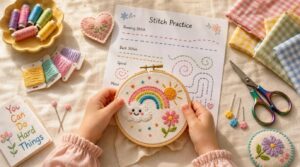
Knowing your stitches is only half the battle — actually controlling them is where practice sheets come in.
Printable stitch guides give kids a visual roadmap to follow before they ever touch real fabric. Think of them like training wheels: dot-to‑dot sewing sheets and maze sewing sheets build muscle memory through guided repetition, keeping frustration low and confidence high.
Choosing Kid-friendly Patterns
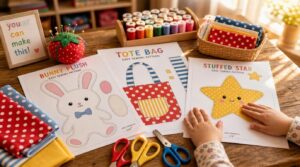
Not every pattern is made equal — and for kids, the right one makes all the difference. Look for large, simple shapes, bold labels, and a clear difficulty rating (easy, medium, hard).
A good kid-friendly PDF sewing pattern prints at 100% scale, shows a visual preview of the finished project, and lists exactly which stitches and materials you’ll need before you begin.
Frequently Asked Questions (FAQs)
What’s a good first sewing project?
A felt animal plushie is hard to beat. Felt doesn’t fray, hand sewing clicks fast, and kids finish in one session — walking away with something real to show off.
What to make with a sewing machine for kids?
A sewing machine opens up so many fun possibilities. Kids can stitch tote bags, scrunchies, star pillows, zipper pouch pencil cases, fabric coasters, mini quilts, fabric headbands, phone cases, and DIY fabric gifts quickly.
What to make for kids with fabric?
Fabric is basically a blank canvas — you can cut, stitch, and create almost anything with it. Think star pillows, scrunchies, tote bags, doll clothes, fabric wall art, play mats, gift tags, and zipper pouch pencil cases.
What can a four year old sew?
A four-year-old can absolutely pick up a blunt needle and start hand sewing. Think tiny fabric squares, simple knots, and short 10–15 minute sessions — felt and finger puppets are perfect first projects.
Are hand-sewing projects suitable for young children?
Yes — with the right tools and adult supervision, hand sewing is genuinely suitable for young children. Blunt needles and felt make it safe, while short 15–20 minute sessions keep little hands busy without frustration.
How to teach basic sewing machine skills safely?
Start with the machine off. Let kids explore the hand wheel and foot pedal before any stitching. Always supervise closely, use slow speed settings, and keep fingers guided by a rail — never near the needle.
What are the best sewing tools for kids?
The best sewing tools for kids include safety scissors, a blunt tapestry needle, large-eye needles, a measuring tape, stitch counter, and a beginner-friendly sewing machine with a top-loading bobbin.
At what age can kids start sewing?
Most kids can begin hand stitching for children around ages 5 to 7 with supervision and large plastic needles. Fine motor skills guide readiness more than age alone.
How to keep kids motivated while sewing?
Let motivation be the thread that holds everything together. Let kids choose their fabric, celebrate each finished seam, and keep sessions short. Small wins build big confidence fast.
How do I fix common sewing mistakes kids make?
Mistakes happen — even for adults. Rethread the needle, check your tension, and press seams as you go. Most fixes take seconds and teach kids more than getting it right the first time.
Conclusion
Every stitch is a small act of confidence—and it adds up faster than you’d think. The sewing projects for kids in this list aren’t just crafts; they’re proof that patient hands can build real things.
Start small, stay consistent, and let your child lead the pace. The felt scraps and crooked seams of today become tote bags and gifts of tomorrow.
Hand them the needle. The rest follows naturally.
- https://www.diaryofaquilter.com/sewing-projects-for-teaching-kids-beginners
- https://thewildcherryfarm.com/39-hand-sewing-projects-you-can-make-with-fabric-scraps-easy-creative
- https://www.skiptomylou.org/sewing-activities-for-kids
- https://sewasoftie.com/tutorials
- https://crazylittleprojects.com/25-beginner-sewing-projects