This site is supported by our readers. We may earn a commission, at no cost to you, if you purchase through links.
Most sewing machine problems trace back to three things: threading, the needle, and tension. A machine that skips stitches, breaks thread, or bunches loops underneath the fabric isn’t broken—it’s usually off in one of those areas.
Technicians see it constantly, the same fixable issues are misread as mechanical failure.
Sewing machine basic troubleshooting rarely requires tools or a repair shop. Work through each system methodically, and most problems clear up before you finish your first test seam.
Table Of Contents
Key Takeaways
- Most sewing machine problems trace back to three things — threading, needle condition, and tension — so always work through those before assuming something’s broken.
- The presser foot must be raised before threading, because that’s what opens the tension discs and lets the thread actually seat where it needs to be.
- Needle choice isn’t optional: matching size, type, and thread weight to your fabric prevents skipped stitches, bird-nesting, and puckered seams before they start.
- When the same problem keeps coming back after you’ve re-threaded and swapped the needle, stop sewing — repeated jams, timing drift, or grinding sounds mean it’s time for a professional tune-up.
Check Threading First
Threading issues are behind more sewing problems than most people realize, and the fix is usually simpler than you’d expect. Before adjusting tension or swapping parts, run through these four checks in order.
If tension keeps giving you trouble, these sewing machine tension troubleshooting tips walk you through exactly what to look for and when.
Getting the thread path right is the fastest reset your machine can have.
Re-thread The Top Thread With The Presser Foot Up

Before anything else, raise your presser foot — this opens the tension discs so the thread actually seats properly.
- Check spool orientation so thread unwinds cleanly.
- Manage tail length to about six inches before you start.
- Confirm take-up lever timing by threading at its highest point.
Then rethread top and bobbin completely, following the full thread path through every guide. Check the proper tension disc routing before sewing.
Confirm The Thread Follows Every Guide and Tension Disc
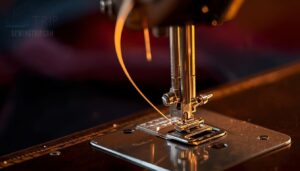
Once you’ve re-threaded, slow down and trace the path back from the spool to the needle. Every guide matters — skipping one throws off your Thread Path Cleanliness and kills your thread tension quickly.
| Checkpoint | What to Verify |
|---|---|
| Tension Disc Engagement | Thread sits snugly between discs |
| Take-up Lever Sync | Thread passes cleanly through the hook |
Run a Guide Sequence Check before testing.
Check Bobbin Direction and Case Placement
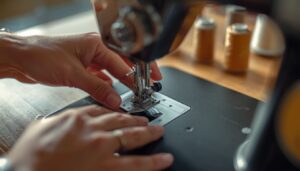
Once your thread path checks out, turn your attention to the bobbin. Bobbin Rotation matters more than most people realize — it must unwind in the direction your manual specifies.
Case Seating next: the bobbin case should sit flush, with Spring Engagement confirmed and the Thread Exit Notch aligned correctly.
Poor bobbin insertion causes more tension grief than almost anything else.
Test Stitch on Scrap Fabric After Re-threading
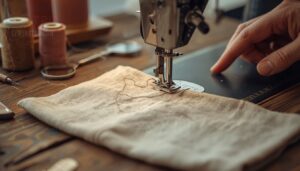
With the bobbin seated correctly, now put it all to work. Grab a scrap of the same fabric you’re planning to use — fabric type matching here isn’t optional; it’s how you catch real problems.
Sew a few inches, vary your speed control, then flip it over. Visual inspection techniques reveal everything: loops, puckering, stitch length consistency.
Document what you see before adjusting thread tension or replacing the needle.
Inspect Needle Condition

A bad needle causes more trouble than most people expect — skipped stitches, broken thread, snagged fabric.
Before you adjust tension or re-thread anything, take a close look at what’s actually doing the work. Here’s what to check.
Replace Bent, Dull, or Damaged Needles
A dull needle is like a blunt knife — it tears instead of cuts. Run your finger gently along the tip; any roughness means it’s time to replace the needle immediately.
Your needle change routine should kick in every 8–10 hours, or sooner if you notice snags, skipped stitches, or visible bending.
Keep spare needle stock nearby, and always dispose of old needles safely in a sealed container.
Match Needle Size to Fabric Weight
Choosing the right needle size isn’t guesswork — your Needle Size Guide and Fabric Weight Chart do the heavy lifting. Lightweight fabrics need a 60/8–70/10; medium-weight cottons and linens sit comfortably at 80/12–90/14.
For Denim Needle Selection, go 100/16–110/18.
Thread Weight Pairing matters too — heavier thread needs a larger needle eye.
Nail this, and your Stitch Balance Tips practically take care of themselves.
Use Ballpoint Needles for Knits and Stretch Fabrics
When you’re working with sharp needle or stretch fabrics, a sharp needle is the wrong tool — it pierces fibers instead of sliding between them, causing snags and runs. Ballpoint needle benefits kick in immediately: the rounded tip preserves weave integrity.
knit fabric compatibility, follow this guide:
- Use 70/10–80/12 for lightweight jersey
- Choose 80/12–90/14 for ponte or heavier knits
- Pair with stretch polyester thread for better stretch seam performance
- Replace every 8–10 hours for consistent stitch quality
Insert The Needle Fully With The Flat Side Back
Getting needle placement wrong is one of the sneakiest causes of skipped stitches. Push the needle fully up into the clamp — it should seat firmly against the stop — then confirm the flat side faces back.
That flat side verification isn’t optional; it syncs the scarf with the hook timing, so loops form cleanly. One quick orientation check procedure prevents thread bunching, needle breaking, and frustrating restarts.
Fix Thread Tension Problems
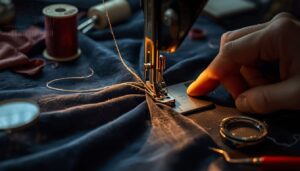
Thread tension is one of those things that looks mysterious but follows a clear logic once you know what to check. The good news is you don’t need to guess — few simple steps will tell you exactly where the problem is.
Here’s how to work through it.
Identify Loose, Tight, or Uneven Stitches
Start by flipping your fabric over — both sides tell the story. Loose stitches on top usually mean upper thread tension is too light, while loops underneath point to bobbin issues.
Visual stitch inspection reveals uneven stitches almost immediately: watch for inconsistent stitch length consistency, puckering, or thread dragging.
These are your fabric tension indicators, and catching them early makes thread tension adjustment straightforward.
Start With The Machine’s Standard Tension Setting
Think of tension setting 4 as your home base — most machines use a 0–9 scale, and that midpoint covers the majority of everyday fabrics without drama. Before reaching for any Tension Adjustment Tips, always reset there first.
This Baseline Tension Calibration eliminates guesswork and gives your Tension Consistency Checks a reliable reference point. From there, diagnosing real tension problems becomes much simpler.
Adjust Upper Tension in Small Increments
Once you’re at that midpoint setting, move the dial in quarter-turn steps — no more. This Light Touch Adjustment approach keeps your Tension Dial Sensitivity working for you, not against you.
After each Incremental Test Stitch, check both fabric sides. Use a Fabric Weight Guide to set your starting direction, then keep a Tension Recording Log so you’re never guessing twice on the same fabric.
Balance Upper and Lower Thread Tension
Once your upper tension is dialed in, the real test is how it pairs with your bobbin. Think of it as a handshake — both sides need equal grip for a clean Stitch Lock Point.
Run a Tension Balance Test with this sequence:
- Check bobbin spring for smooth thread drop
- Confirm Thread Weight Matching between top and bobbin thread
- Adjust Tension Dial Calibration to center the stitch knot
- Fine-tune Bobbin Spring Adjustment only if loops persist after upper tension correction
Solve Bobbin Jams
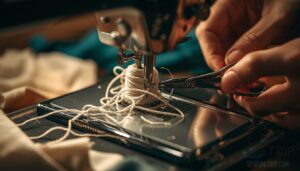
A bobbin jam can stop your project cold, and most of the time, the fix is simpler than you’d expect. The key is working through a short, logical sequence rather than yanking at threads and hoping for the best.
Here’s exactly what to check.
Remove Tangled Thread From The Bobbin Area
Gently lift the presser foot and raise the needle to give your threads room to move. Open the bobbin cover, remove the bobbin, and use a small brush for thorough bobbin case cleaning — lint hides in every corner.
For stubborn thread bunching, fine tweezers removal works best; use slow, careful thread loop extraction to avoid scratching the metal. Sweep out all debris using a consistent dust removal technique before reinserting anything.
Rewind and Reinstall The Bobbin Correctly
Once the area is clean, focus on bobbin winding — uneven winding causes more jams than people expect. Wind slowly and keep the thread layers smooth.
For bobbin insertion, the thread should exit the case toward the left, following your machine’s intended thread exit path. Confirm the bobbin secure fit by pulling lightly — it shouldn’t spin freely.
bobbin tension balance means the thread drops slowly, not falls.
Check Bobbin Compatibility With Your Machine
Not all bobbins are created equal — using the wrong type is a silent jam trigger. Start with Bobbin Type Verification: check your manual’s Manufacturer Compatibility List for the exact class your machine requires.
Case Fit Confirmation matters too; the bobbin should sit flush with no wobble. Material Suitability and Winding Tension Guidelines also vary, so confirm bobbin type compatibility before reinserting.
Verify The Bobbin Thread Drops Smoothly
Once the bobbin is back in place, do a quick Smooth Drop Test: hold the thread end and let the bobbin case hang. It should drop slowly with slight resistance — that’s your Bobbin Spring Tension doing its job.
If it free-falls, your Bobbin Case Orientation or Thread Path Alignment is off.
Good Bobbin Thread Quality and proper Bobbin Insertion eliminate most Thread and Bobbin Issues instantly.
Stop Bird-Nesting Quickly
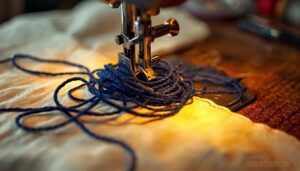
Bird-nesting — that messy tangle of thread bunched up under your fabric — almost always comes down to a threading mistake.
The good news is it’s one of the easier problems to fix once you know where to look.
Work through these four steps in order and you’ll clear it up fast.
Re-thread Both Top Thread and Bobbin Thread
When bird-nesting strikes, re-threading everything is your fastest reset. Thread bunching under the fabric almost always means something slipped out of place — on top, below, or both. Pull both threads completely free and start fresh.
- Check Spool Placement Precision and Guide Path Cleanliness before re-threading
- Confirm Bobbin Case Alignment and that Bobbin Thread Not Catching is resolved
- Verify Thread Tension Matching with a Stitch Sample Verification on scrap fabric
Raise The Presser Foot Before Threading
One small habit fixes most upper threading problems instantly — always raise the presser foot before threading.
Foot Positioning Benefits go beyond convenience: a raised foot opens the Tension Disc Access, letting thread seat properly between the discs.
This improves Thread Path Visibility, ensures Take-up Lever Alignment, and prevents Thread Snags before they start.
Threading with the presser foot up makes every guide easier to follow.
Clear Lint and Trapped Thread Under The Plate
Hidden lint under the stitch plate is often the real culprit behind bird-nesting — not your technique. Follow this Plate Access Procedure to clear it fast:
- Unplug, then remove the plate to expose the lint pocket near the feed dogs.
- Use Lint Removal Tools — a narrow brush or Vacuum Use attachment works best.
- Wipe away fine fibers, a cloth catches after brushing.
- reinstall the plate snugly before retesting.
Cleaning Frequency matters: clear this area after every project. Preventive Thread Management — keeping thread guides free of buildup — stops thread jams before they start.
Use a Fresh Needle Before Retesting
A dull needle is often the last thing you’d suspect — but it’s the first thing you should swap out before retesting. Even a slightly worn tip transfers debris, creates burrs, and disrupts Thread-Needle Interaction enough to trigger bird-nesting all over again.
Needle coating benefits like titanium finishes extend sharpness, but no needle lasts forever — keep a Needle Wear Log to track sewing hours and replace needle every 8–10 hours.
| Needle Type | Recommended Fabric | Needle Size |
|---|---|---|
| Universal | Cotton, linen, general use | 80/12–90/14 |
| Ballpoint | Knits, stretch fabrics | 75/11–90/14 |
| Microtex/Sharp | Silk, delicate sheers | 60/8–70/10 |
| Titanium-coated | Heavy or high-speed use | 90/14–100/16 |
| Standard | Medium-weight wovens | 80/12 |
For Retest Sample Selection, use scrap fabric that mirrors your project weight — that’s your truest Stitch Consistency Check. Needle wear detection becomes instinctive with practice: skipped stitches and thread shredding are your clearest warnings. Smart needle selection before every retest keeps needle breaking out of the equation entirely.
Fix Skipped Stitches
Skipped stitches are one of those problems that seem random but almost always trace back to the needle. A few focused checks will pinpoint the cause faster than you’d expect.
Start with these four areas.
Replace Worn or Wrong-type Needles
Skipped stitches are often your machine’s way of telling you the needle isn’t right for the job. Check your Needle Compatibility Chart to match needle type and needle size to your fabric — using a universal needle on knits, for example, causes exactly this problem.
Follow a consistent Needle Replacement Schedule, swapping in a fresh needle every 8 sewing hours. Wear Indicator Signs like blunting or bending mean replace the needle immediately.
Check Needle Installation and Height
Even a brand-new needle fails if it’s seated wrong. Push it fully up into the clamp — that’s your Check Needle Insertion step — then confirm Needle Bar Alignment and Scarf Orientation Check: flat side faces back, scarf toward the hook.
Needle Clamp Tightening prevents wobble. Proper Needle Height Gauge positioning ensures Presser Foot Clearance so the tip doesn’t strike the plate and skip.
Match Thread Weight to The Needle Size
Thread and needle size go hand in hand. Use a Thread Weight Charts or Needle Gauge Guide to match them properly — a 40-weight thread pairs with an 80/12 needle for most medium fabrics.
Go too fine a thread through a large needle and you’ll see thread breaking from slack friction. Size Conversion Tables make Fabric Compatibility and Thread Strength Considerations straightforward to check before you start.
Test on Fabric Similar to Your Project
Once your thread and needle are matched, test everything on a scrap that mirrors your actual project fabric — same weight, weave, and finish. Swatch Matching isn’t just busywork; it reveals real issues like poor fabric feeding, uneven fabric tension control, or Stretch Recovery failures before they reach your project.
Run a quick Seam Strength Test, check your Drape Evaluation, and note any skipped stitches honestly.
Improve Fabric Feeding
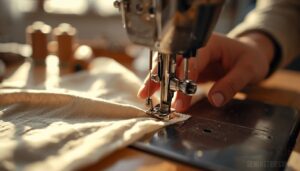
When fabric stops moving smoothly, the fix is usually simpler than you’d think. A few small adjustments to your machine’s feeding setup can make an immediate difference.
Here’s what to check first.
Raise Feed Dogs Before Sewing
Before you sew a single stitch, make sure your feed dogs are fully raised — this one step is the foundation of smooth fabric feeding. Use the dog lever activation switch, usually located near the base or behind the needle plate, to confirm they’re up.
Proper height adjustment technique ensures seam start control, fabric grip optimization, and prevents feed dogs not working mid-project.
Remove Lint From Feed Dogs and Needle Plate
Lint buildup is quieter than a bent needle, but just as disruptive to your feed. Before running any sewing machine cleaning, unplug the machine and remove the needle plate using a small screwdriver — this exposes the hidden grime beneath.
- Sweep feed dog cleaning zones with a small brush between the teeth.
- Use tweezers for stubborn threads; skip compressed air.
- Wipe the plate with a lint-free cloth before reinstalling.
Adjust Presser Foot Pressure for Fabric Thickness
Pressure Dial Calibration is your next lever to pull. Start at your machine’s default, then adjust in small increments while doing foot pressure testing on scrap fabric.
Heavy Denim Settings call for mid-to-upper range pressure; Delicate Fabric Care needs less to prevent fabric puckering.
Layered Fabric Balance, find the middle ground.
Presser foot issues like dragging or buckling signal it’s time to adjust presser foot pressure.
Use The Right Presser Foot for Tricky Fabrics
The right foot is half the battle. Matching your presser foot to the fabric type solves most feeding problems before they start:
- Walking Foot Benefits — Walking Foot feeds layered quilts and thick denim evenly, eliminating shifting.
- Roller Foot Application — Glides over satin and vinyl without sticking.
- Teflon Nonstick Foot — Prevents faux leather from catching on metal.
Presser Foot Adjustment alone won’t fix what the wrong foot creates.
Prevent Puckered Seams

Puckered seams are frustrating, but they almost always come down to a few fixable settings. The good news is you don’t need to tear the whole project apart — just work through these adjustments one at a time.
Here’s what to check first.
Lower Upper Tension if Seams Gather
When your seams pucker and gather, upper tension is usually working too hard. Ease it down in small increments — one step at a time — and test on a scrap first.
| Fabric Weight | Recommended Upper Tension | Stitch Length |
|---|---|---|
| Sheer/Lightweight | 2–3 | 2.5–3mm |
| Medium Weight | 3–4 | 2.5mm |
| Knit/Stretch | 2–3 | 3mm |
| Woven/Heavy | 4–5 | 2mm |
| Delicate Silk | 1–2 | 3mm |
Incremental tension steps keep you from overshooting. Thread weight choice matters too — lighter threads need lower tension to prevent fabric damage during gathered seam tension work.
Match Needle Size to Fabric Type
Your needle is doing more work than you think — and the wrong size shows up immediately in your stitches. Use Fabric Weight Guides to match correctly: lightweight fabrics like chiffon need a 70, while heavy denim calls for a 90 or 100.
Needle Point Shapes matter too — sharp points suit wovens, ballpoints protect knits.
Thread Thickness Matching completes the equation, keeping Stitch Appearance Effects clean across Multi-Layer Projects.
Slow Down on Lightweight Fabrics
Speed is the hidden culprit behind puckered seams on lightweight fabrics. Slow Feed Speed gives you control — think of it like handwriting slowly for better penmanship.
Slow down on lightweight fabrics — speed is the hidden culprit behind puckered seams
Stitch Length Adjustment around 2.0 mm, apply Gentle Hand Guidance without pulling, and consider Walking Foot Technique or Stabilizer Use to keep things steady.
Let the Feed Dogs do their job.
Use Proper Presser Foot Pressure
Presser foot pressure works hand in hand with your speed control.
If foot clamps too hard, fabric bunches; too light, and it drifts.
Use your Pressure Dial Settings to find the middle ground — start at 3, test on scrap, and adjust in half-step increments.
Foot Pressure Testing takes a minute but saves your seam.
Specialty Fabric Pressure to your material, and stitch quality troubleshooting becomes straightforward.
Handle Thread Breakage
Thread breakage can feel random, but it almost always has a clear cause you can track down in a few minutes. Before you rethread and hope for the best, it helps to check a few specific things first.
Start with these four areas and you’ll find the problem faster than you’d expect.
Check for Bent Needles or Rough Needle Tips
A damaged needle is often the quiet culprit behind stubborn thread breakage. Run a quick Bright Light Check, holding the needle sideways — any visible bend or Tip Angle Test failure means it’s done. Use a magnifier if needed.
- Feel the tip: a rough point snags thread instantly.
- Try the Thread Pull Test: resistance signals needle damage.
- Check needle size matches your fabric weight.
- Practice Needle Storage Care to prevent rust and bending.
Inspect Thread Quality and Age
Old thread breaks more than fresh thread. Feel it between your fingers — aged thread often feels chalky or rough, a sure sign of Coating Wear Detection failure.
Watch for Color Fading Indicators, uneven Thread Diameter Consistency, or Fiber Lint Accumulation on the spool.
Storage Humidity Impact accelerates this breakdown fast. When thread keeps breaking, swap the spool first.
Confirm The Thread Path is Smooth
Run a Thread Path Visual Check before anything else — trace the thread from spool to needle and look for trouble spots.
Guide Edge Smoothness matters: bent or nicked guides cause upper threading problems and thread bunching fast.
Check Tension Disc Cleanliness and the Take-Up Lever Slot for trapped lint.
A Lint-Free Thread Path keeps thread tension adjustment stable and prevents thread jams entirely.
Avoid Pulling Fabric While Stitching
Pulling fabric forward while stitching is one of the fastest ways to snap thread — let the feed dogs do that job. Keep your hands at the fabric edges using proper hand guiding technique, applying light pressure for fabric stabilization.
Stitch speed control, especially on curves. With your presser foot down and grain alignment correct, tension adjustment stays balanced and fabric puckering disappears naturally.
Know When to Service

Some problems go beyond what a quick fix can handle, and that’s completely okay. Knowing when to step back and call in a professional is just as important as knowing how to thread your machine.
Here’s what to watch for.
Watch for Grinding or Metal-on-metal Noises
grinding or metal-on-metal sound isn’t something to sew through. Machine noise like this — especially deep rumble that worsens with speed — often signals serious bearing wear or internal contact that won’t fix itself.
Stop immediately, unplug, and oil the machine if it’s overdue.
persistent grinding means professional service, not another test stitch.
Stop if Timing Problems Keep Returning
Timing issues that keep coming back aren’t a threading problem — they’re mechanical. Gear wear, drive shaft backlash, and servo motor play all cause machine timing to drift and reset with every restart.
Check belt tension and inspect timing marks carefully.
If your systematic troubleshooting routine keeps cycling through the same timing thread and tension fixes without lasting results, stop sewing and call a technician.
Seek Help for Repeated Jams and Skipped Stitches
Some problems just won’t quit — and repeated jams or skipped stitches after re-threading and needle replacement usually point deeper than routine fixes. A technician will perform a Timing Belt Inspection, Hook Clearance Check, and Internal Gear Alignment to catch what you can’t see.
Bring a Diagnostic Service Log of fabrics, stitch types, and jam frequency. That detail speeds up your sewing machine repair and protects any Warranty Repair Guidance still in effect.
Schedule Routine Cleaning and Tune-ups
Think of routine care as your machine’s insurance policy.
Set up a Cleaning Calendar and stick to a Lubrication Routine — clean lint from the bobbin area monthly, and keep it properly oiled every six months.
Log each session in a Maintenance Log, keep your tools in order with smart Tool Organization, and book an Annual Service.
That’s preventive maintenance done right.
Frequently Asked Questions (FAQs)
What are the 10 common sewing machine troubles?
Most problems come down to ten culprits: tension problems, skipped stitches, thread bunching under fabric, bird nesting, bobbin thread not catching, bobbin case alignment, presser foot slippage, stitch length variability.
machine noise issues, and machine not sewing.
and electrical power problems.
What is the most common problem when a machine doesn’t sew correctly?
The most common culprit is User Error — usually improper threading. Skipped Stitches, Bird Nesting, and Thread Bunching Under Fabric trace back to this almost every time.
Fix your thread path first.
Why is the thread not going through fabric?
Usually, it’s a thread path obstruction or needle eye blockage. Check for fabric lint buildup, bobbin tension imbalance, or misthreading.
Each issue stops the thread from catching cleanly through the fabric.
How to tell if thread tension is correct?
Flip your scrap fabric over. A balanced sample stitch looks identical on both sides — no thread visibility test needed beyond that.
Equal tension means the upper tension and bobbin thread interlock cleanly in the middle.
How to select the right fabric for sewing?
Match your fabric to the project by checking fiber content, fabric weight, drape characteristics, and fabric stretch. Natural fibers breathe well; synthetics add durability. Always review care instructions before cutting.
What adjustments are needed for thicker materials?
Think of thick fabric like a steep hill — your machine needs lower gears.
Increase needle size, raise feed dogs, slow your machine speed, and adjust bobbin tension and presser foot pressure for smooth fabric stabilization.
How to identify compatible sewing machine feet?
Check your machine’s shank height first — low or high shank determines which presser foot fits.
Use the brand’s Foot Compatibility Chart, confirm snap-on vs screw-on style, and grab an adapter if switching between brand-specific feet.
What is the best lighting setup for sewing?
A daylight LED task lamp at 6500K with high CRI brightness above 90, placed directly over your needle eliminates shadows.
Task lamp placement, color temperature matching, and a shadow‑free panel keep your work clear and your eyes safe.
How to troubleshoot sewing machine accessories not working?
Even reliable sewing accessories fail. Start by confirming your presser foot adjustment is correct, bobbin case is seated, and takeup lever moves freely.
Foot pedal issues, spool pin problems, and thread cutter jams usually trace back to lint or misalignment.
How often should I oil my sewing machine?
For most domestic machines, oil every 8–12 sewing hours. Light users can follow a monthly lubrication schedule. Always check your manual first — it overrides any general rule.
Conclusion
The most complicated part of sewing machine basic troubleshooting turns out to be convincing yourself it’s worth trying before calling a technician. Thread, needle, tension—three things standing between a frustrating afternoon and a running machine.
You’ve worked through every system now, and that methodical approach is what separates a confident sewist from one who dreads every skipped stitch.
Your machine didn’t need saving. It just needed someone who knew where to look.