This site is supported by our readers. We may earn a commission, at no cost to you, if you purchase through links.
Threading a needle shouldn’t be the hardest part of your sewing project, yet here we are—squinting under lamps, licking thread ends, and questioning our life choices. That frustration ends when you choose the right machine. Brother, Singer, Janome, Bernina, and Pfaff have cracked the code with automatic needle threaders that guide thread through the eye in under 15 seconds, no glasses required.
These brands don’t just slap on a gimmick and call it innovation—they’ve engineered threading systems that actually work across entry-level models and professional-grade machines alike. Whether you’re a beginner tired of the threading struggle or a seasoned sewist who values every saved second, understanding which brands deliver reliable automatic threaders puts you back in control of your creative time.
Table Of Contents
- Key Takeaways
- Best Sewing Machine Brands With Built-in Needle Threader
- Top Sewing Machines With Built-in Needle Threaders
- Key Benefits of Automatic Needle Threaders
- Essential Features to Consider When Buying
- How Built-in Needle Threaders Work
- Maintenance Tips for Needle Threader Machines
- Frequently Asked Questions (FAQs)
- Conclusion
Key Takeaways
- Brother, Singer, and Janome dominate the automatic needle threader market with reliable mechanisms across both entry-level and professional models, eliminating the 60% of setup time beginners waste on manual threading.
- Automatic needle threaders aren’t just convenience features—they’re accessibility tools that protect your vision health and remove the physical barriers that prevent seniors and those with dexterity challenges from sewing confidently.
- Metal-frame construction matters more than stitch count when you’re evaluating machines, because a stable frame keeps that automatic threader aligned through thousands of projects while plastic alternatives lose calibration.
- The threading mechanism only stays functional if you treat it like the precision tool it is—replace needles every 8 hours, clean lint buildup weekly, and use a feather-light touch instead of forcing thread through resistance.
Best Sewing Machine Brands With Built-in Needle Threader
You want a sewing machine that threads itself without the headache, and that means choosing a brand that’s actually built their automatic threaders to last. Brother, Singer, and Janome lead the pack here, each bringing their own approach to making threading feel easy instead of impossible.
If you’re weighing your options, these affordable sewing machine brands for home use all offer reliable auto-threading in their mid-range models without breaking the bank.
Let’s break down what sets these brands apart and why their needle threaders consistently outperform the competition.
Overview of Brands Offering Automatic Threaders
Brother leads the pack with built-in needle threaders across entry-level and computerized models, delivering one-action threading mechanics that put you in control from the first stitch. Singer brings automatic threader technology to both basic and heavy-duty lines, while Janome integrates threading innovations across multiple price tiers.
Bernina and Pfaff round out the top tier with precise lever mechanisms designed for smooth needle systems on higher-end machines.
Advantages of Choosing Recognized Brands
When you pick sewing machine brands with decades of market presence, you’re securing built-in needle threaders backed by quality assurance that won’t leave you stranded. Customer support networks provide real technicians, not runarounds, while product longevity means your investment pays off for years.
Brand loyalty grows when manufacturers stock replacement parts and honor warranties, giving you control over your sewing machine reviews and future projects.
Brand Reputation and Support
Warranty policies build customer trust when brands back their machines with real service quality. You’ll find Brother and Singer maintain 24/7 support channels, not just business-hour voicemail. Brand loyalty thrives when repair networks respond within 24 hours and replacement parts arrive fast.
That commitment shows in sewing machine reviews where:
- Authorized service centers diagnose issues on-site
- Online scheduling tracks repair status in real time
- Official tutorials and forums answer common questions
- Clear warranty terms include 90-day money-back guarantees
- Dedicated phone, email, and live chat connect you to help anytime
Top Sewing Machines With Built-in Needle Threaders
You’ve narrowed down your search to machines that won’t make you squint at that tiny needle eye, and now it’s time to meet the models that actually deliver.
The brands below have built their reputations on reliable automatic threading systems that work when you need them, not just in the showroom.
Here are the top contenders that combine solid threading mechanisms with the features you need to take control of your projects.
1. Brother Sewing And Quilting Machine
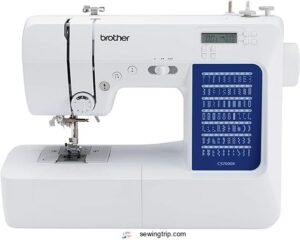
If you want a machine that manages both everyday sewing and ambitious quilting projects, the Brother CS7000X stands out with its rock-solid performance. You’ll get 70 built-in stitches, including utility, decorative, and quilting options, plus that improved automatic needle threader that actually works.
The metal frame keeps everything stable when you’re wrestling with thick fabrics or denim, while the large workspace gives you room to maneuver quilts without fighting the machine. At 14 pounds, it’s portable enough to take to classes.
| Best For | Beginners and experienced sewers who want a reliable machine that handles everything from everyday repairs to ambitious quilting projects without breaking the bank. |
|---|---|
| Built-in Stitches | 70 stitches |
| Automatic Needle Threader | Yes |
| Buttonholes | 7 auto-size |
| Frame Material | Metal |
| Weight | 14 pounds |
| Included Feet | 10 feet |
| Additional Features |
|
- 70 built-in stitches and 7 auto-size buttonholes give you plenty of creative options right out of the box
- Metal frame keeps the machine steady when working with thick fabrics like denim or multiple quilt layers
- Comes loaded with accessories including a wide table, 10 feet, and a hard case so you’re ready to start projects immediately
- Only works with 120-volt US power, so international use requires adapters and workarounds
- Doesn’t include any thread, which means an extra trip to the store before your first project
- Not built for heavy-duty industrial work if you’re planning to sew canvas or leather regularly
2. Brother Computerized Sewing Machine
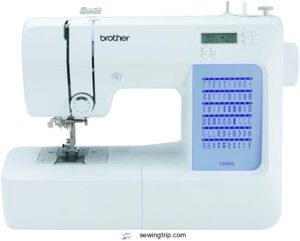
When you’re ready to step up your sewing game, the Brother CS5055 delivers 60 built-in stitches with LCD clarity that cuts through guesswork. You get automatic needle threading paired with a jam-resistant top bobbin, so you spend less time fussing and more time creating.
If you’re weighing features for your first machine, check out key considerations before buying a sewing machine to see how the CS5055 stacks up.
The metal frame won’t wobble when you’re tackling denim or tweed, while the large workspace accommodates everything from clothing to home decor. At $189, you’re grabbing serious capability without the industrial price tag.
| Best For | Beginners and hobbyists who want a reliable machine that handles everything from lightweight quilting to thicker fabrics like denim without breaking the bank. |
|---|---|
| Built-in Stitches | 60 stitches |
| Automatic Needle Threader | Yes |
| Buttonholes | 7 auto-size |
| Frame Material | Metal |
| Weight | 10.5 pounds |
| Included Feet | 7 feet |
| Additional Features |
|
- 60 stitches and 7 buttonhole styles give you plenty of creative options right out of the box
- Automatic needle threader and jam-resistant bobbin cut down on frustrating setup time
- Metal frame keeps things stable when you’re working with heavy materials
- Instruction manual can be confusing for first-time users
- Gets noticeably loud when sewing through multiple layers or thick fabric
- Thread occasionally slips out of the needle eye during use
3. Brother Sewing Machine XM2701
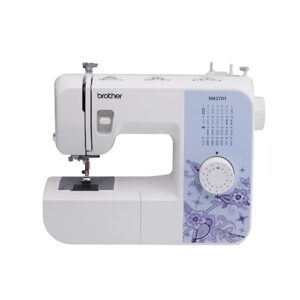
The Brother XM2701 puts full sewing power in a 12.5-pound frame you can carry anywhere without breaking a sweat. You get 27 stitches—from utility seams to decorative flourishes—plus that automatic needle threader that saves your eyes and sanity.
The jam-resistant top bobbin and one-step buttonhole function mean you’re not wrestling with basic tasks. At around $149, this lightweight machine manages everything from quick hems to full garment projects, backed by six presser feet that expand your creative range without cluttering your workspace.
| Best For | Beginners and home sewers who want a portable machine that handles everyday projects—hemming, garments, and light quilting—without overwhelming you with features you won’t use. |
|---|---|
| Built-in Stitches | 27 stitches |
| Automatic Needle Threader | Yes |
| Buttonholes | 1-step automatic |
| Frame Material | Metal |
| Weight | 12.6 pounds |
| Included Feet | 6 feet |
| Additional Features |
|
- Automatic needle threader and quick-drop bobbin cut out the fiddly setup that makes most people hate sewing machines
- 27 stitches and six presser feet give you room to grow from basic repairs into creative projects
- Lightweight at 12.6 pounds, so you can actually move it from closet to table without help
- Spool pin feels flimsy and can break if you’re not gentle with thread changes
- Struggles with thick fabrics like denim or canvas—the presser foot doesn’t have enough clearance
- Learning curve on features means you’ll spend time with the manual before everything clicks
4. Singer Simple Sewing Machine
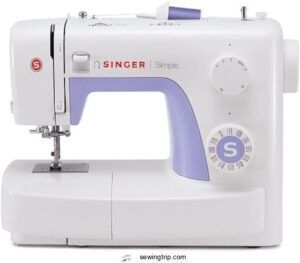
The Singer Simple 3337 delivers 108 stitch applications with a straightforward manual dial that won’t intimidate first-time sewers. You get that built-in needle threader working from the front of the machine, plus a one-step buttonhole function that eliminates garment-making guesswork.
The metal frame keeps vibration at bay while the free arm manages cuffs and sleeves without contortion.
At this price point, you’re looking at reliable everyday performance—quick repairs, home decor accents, and light garment work—all backed by adjustable presser foot pressure that accommodates different fabric weights.
| Best For | Beginners and casual sewers who want a straightforward machine for everyday projects like garment repairs, simple home decor, and light quilting without a steep learning curve. |
|---|---|
| Built-in Stitches | 110 stitch applications |
| Automatic Needle Threader | Yes |
| Buttonholes | 1-step built-in |
| Frame Material | Heavy-duty metal |
| Weight | 12.6 pounds |
| Included Feet | Multiple feet |
| Additional Features |
|
- 110 stitch applications with easy manual dial selection give you plenty of creative options without complicated digital menus
- Heavy-duty metal frame keeps the machine stable during use, reducing vibration and improving stitch quality
- Automatic needle threader and one-step buttonhole function remove two of the most frustrating tasks for new sewers
- Not built for thick or heavy-duty fabrics like denim or upholstery, which can cause speed issues or thread jamming
- Automatic needle threader takes some practice to use comfortably, despite being designed as a convenience feature
- Instruction materials leave some users confused, requiring online research or trial-and-error to figure out certain functions
5. Singer Heavy Duty Sewing Machine
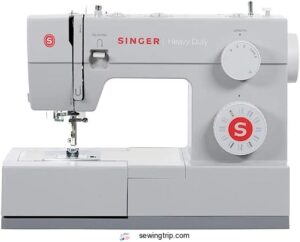
When you’re pushing through multiple layers of denim or canvas, you need serious muscle—this Singer Heavy Duty model punches out 1,100 stitches per minute without breaking stride.
That automatic needle threader cuts your setup frustration, while the metal frame keeps everything stable when you’re working at top speed.
You get 97 stitch applications and adjustable presser foot pressure that handles thick fabrics, plus a stainless steel bed plate that feeds material smoothly through long seams without dragging or bunching.
| Best For | Sewers who regularly work with heavy fabrics like denim, canvas, or upholstery and need a fast, reliable machine that can handle multiple layers without slowing down. |
|---|---|
| Built-in Stitches | 97 stitch applications |
| Automatic Needle Threader | Yes |
| Buttonholes | Included |
| Frame Material | Heavy-duty metal |
| Weight | 17.1 pounds |
| Included Feet | Multiple feet |
| Additional Features |
|
- Blazing fast 1,100 stitches per minute with a sturdy metal frame that stays put during high-speed sewing
- Automatic needle threader and 97 stitch options make setup quick and give you plenty of versatility for different projects
- Adjustable presser foot pressure and stainless steel bed plate handle thick materials smoothly without jamming or bunching
- Thread tension requires some trial and error to get right, and improper bobbin threading can cause frustrating jams
- The manual doesn’t provide much detail, so you might need to troubleshoot setup issues on your own
- Despite being marketed as heavy-duty, the machine can be noisy and may vibrate or move around during use
6. Janome Computerized Sewing Machine
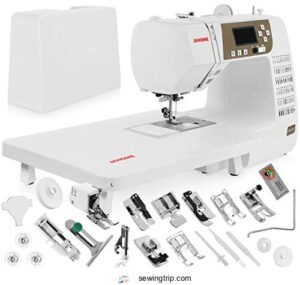
If you want precision stitching that won’t quit after thousands of projects, Janome’s computerized lineup delivers metal-frame stability and a needle threader that actually stays calibrated.
You’ll breeze through 60 built-in stitches at 820 stitches per minute, with an LCD panel that shows exactly which presser foot you need for each pattern.
The jam-proof top-loading bobbin system cuts your thread tangles, while the built-in thread cutter and adjustable presser foot pressure handle everything from silk to denim without babysitting.
| Best For | Sewers who want a reliable, beginner-friendly machine that handles everything from basic alterations to quilting without constant maintenance headaches. |
|---|---|
| Built-in Stitches | 60 stitches |
| Automatic Needle Threader | Yes |
| Buttonholes | 6 built-in |
| Frame Material | Metal |
| Weight | 23 pounds |
| Included Feet | Multiple feet |
| Additional Features |
|
- 60 stitches and 6 buttonhole styles give you plenty of creative options without overwhelming complexity
- Automatic needle threader and jam-proof bobbin system eliminate the two most annoying setup tasks
- Metal frame keeps stitches consistent even at 820 stitches per minute, so your seams stay straight on long projects
- Speed may feel sluggish if you’re used to industrial machines or working on large-scale projects
- Thicker arm design makes hemming slim-fit pants or sleeves more awkward than expected
- Buttonhole feature gets mixed reviews, with some users reporting inconsistent sizing
Key Benefits of Automatic Needle Threaders
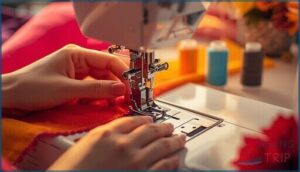
If you’ve ever squinted at a needle for five minutes straight, you know threading isn’t just annoying—it’s a creativity killer.
Threading a needle shouldn’t kill your creativity before you even start sewing
Automatic needle threaders don’t just make sewing easier, they fundamentally change how you approach every project.
Here’s what happens when you stop fighting with thread and start actually sewing.
Reducing Eye Strain and Fatigue
If you’ve ever squinted at a needle until your temples throbbed, you know the toll manual threading takes on your vision health. An automatic needle threader rescues you from this daily grind, eliminating the close-up focus that causes fatigue prevention issues.
Pair it with workspace ergonomics—proper sewing posture, task lighting, and regular breaks—and you’ll protect your eyes while reclaiming control over every project.
Saving Time and Boosting Efficiency
Beyond protecting your eyes, an automatic needle threader transforms your time management and workflow optimization in ways that compound every session.
Built-in needle threaders guide threading in under 15 seconds, slashing setup time by 60 percent for beginners. That’s not just a sewing shortcut—it’s a productivity hack that keeps your momentum alive. You’re in charge of your timeline, not the needle.
Enhanced Accessibility for Beginners and Seniors
Automatic needle threaders level the playing field for anyone who’s struggled with shaky hands or dimming vision. Senior-friendly designs with large button controls and high-contrast labeling turn frustration into confidence, while beginner sewing lessons become pure joy instead of a threading ordeal. Adaptive sewing technology isn’t optional anymore—it’s your ticket to real independence.
- On-screen displays guide you through easy threading tips with large fonts you can actually read
- Tactile feedback on dials confirms selections without squinting at tiny labels
- Built-in LED lighting reduces eye strain during detailed sewing for beginners
- Audible cues announce stitch changes for accessible machine controls that work for everyone
Essential Features to Consider When Buying
You’ve already seen how an automatic threader can change your entire sewing experience, but that feature alone won’t guarantee you end up with the right machine.
The truth is, you need to look beyond the threader and consider what else will support your projects day after day.
Let’s break down the essential features that separate a machine you’ll tolerate from one you’ll actually love using.
Stitch Options and Patterns
A comprehensive stitch library transforms your creative freedom. Look for machines offering straight seams, zigzag edges, buttonholes, and decorative patterns. Satin stitches fill solid shapes, while stretch options handle knits effortlessly.
Pattern control over width and length lets you tailor every technique to your fabric choices. Wider stitch variety means you won’t outgrow your sewing machine as your skills expand.
Ease of Use and User Interface
User-friendly controls matter as much as stitch count when choosing a computerized sewing machine. Look for large backlit displays that show stitch length and tension settings at a glance. One-touch buttons should give you quick access to common functions, while clear menu navigation keeps you focused on creating, not hunting through confusing submenus.
Built-in error handling with troubleshooting prompts saves you from guesswork when problems arise.
Machine Durability and Build Quality
A machine’s skeleton determines whether you’ll get decades of reliable stitching or buyer’s remorse. Frame materials like steel and aluminum deliver rigidity that keeps your automatic needle threader aligned when you’re powering through heavy canvas or layered quilts, while quality gears and motors maintain stitch consistency.
Look for these durability markers:
- Metal construction in the frame and internal components resists flexing under needle force
- Sealed gear trains protect against lint intrusion and extend sewing machine maintenance intervals
- Precision ball bearings reduce wobble at high speeds, preserving automatic needle threader accuracy
Cast metal housings and chrome-plated parts outlast plastic alternatives through thousands of thread changes.
Additional Convenience Features
Your workflow accelerates when Thread Cutter Systems slice threads in under 6 seconds per seam, while Automatic Bobbin winding snaps full in 20 seconds. Smart Stitching via backlit touchscreens grants instant access to 60 patterns, and Extended Workspaces stretch from 6.5 to 9 inches for sleeves and hems. Enhanced Illumination casts 180-degree LED coverage around your Computerized Sewing Machine needle, transforming precision into second nature.
| Feature | Function | Impact |
|---|---|---|
| Built-in Thread Cutter | Snips thread near needle | Saves 6 seconds per seam |
| Quick Bobbin System | Completes winding in 20 seconds | Eliminates setup delays |
| 180-Degree LED Work Light | Illuminates entire needle area | Enhances threading precision |
How Built-in Needle Threaders Work
You don’t need to know every gear and lever to appreciate how a built-in needle threader makes your life easier, but understanding the basics gives you real control.
These mechanisms aren’t magic—they follow simple mechanical steps that, once you see them in action, make perfect sense.
Let’s break down how automatic threaders actually work, the different types you’ll encounter, and what to do when things don’t go as planned.
The Automatic Threading Process Explained
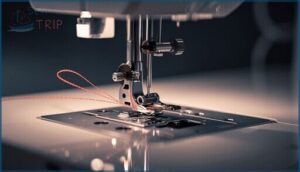
You’ve probably wondered how that automatic needle threader actually does its job without you fumbling in frustration. The threading mechanics rely on a precise hook or lever that guides your thread through the needle eye while a spring-loaded arm captures it in the needle channel. Meanwhile, automatic systems monitor thread tension and needle alignment to guarantee sewing efficiency every single time.
Here’s what happens inside your sewing machine during automatic needle threading:
- The hook mechanism situates itself – A small threader arm swings into place, aligning perfectly with your needle’s eye to guide the thread through without guesswork or squinting.
- Thread tension gets automatically adjusted – Built-in sensors coordinate with tension disks to maintain consistent thread flow, preventing jams before they derail your project momentum.
- Safety checks run in milliseconds – Your machine pauses if threading needles goes wrong, displaying an error code instead of forcing a stitch that’ll wreck your seam. Thanks to innovations in, modern machines now also reduce setup time and guarantee consistent stitching across all projects.
Types of Built-in Needle Threaders
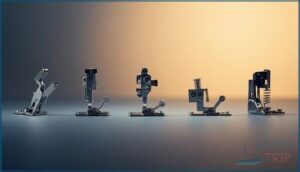
Your sewing machine uses one of five automatic needle threader designs, each adapted to different needle types and threading speed demands. Mechanical winged threaders guide thread with a wire hook, while one-finger head threaders position a tiny hook near the eye for instant threading. Electronic systems push thread through at button press, spring-loaded mechanisms reduce hand effort, and magnetic threaders use tiny magnets for precise automatic needle threading alignment.
For a clear explanation of how, see this detailed resource.
Common Issues and Troubleshooting
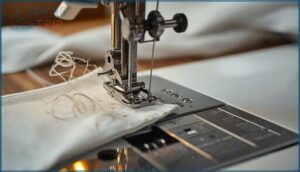
You’ll face thread breakage when lint clogs your bobbin area or tension runs too tight. Threading errors pop up if your needle plate shifts or the automatic needle threader lever bends. Needle damage from dull points prevents proper threading, while machine jamming happens when presser foot pressure crushes fabric.
Check your sewing machine accessories regularly, swap needles often, and keep tension balanced to avoid these frustrations.
Maintenance Tips for Needle Threader Machines
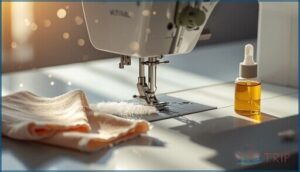
Your automatic threader won’t last forever if you treat it like an afterthought, but a little consistent care goes a long way. The good news is that keeping your needle threader in top shape doesn’t require fancy tools or hours of your time.
Let’s look at three practical maintenance habits that’ll protect your investment and keep frustration at bay.
Cleaning and Preventing Lint Buildup
Dust and thread fragments don’t just clutter your workspace—they sabotage your automatic needle threader. Machine lint cleaning around the needle bar and presser foot prevents threading failures, keeping your sewing machine features performing flawlessly.
Here’s your quick-hit maintenance routine:
- Brush the needle area after every three projects
- Vacuum bobbin compartments weekly with a small attachment
- Wipe tension discs gently with a lint-free cloth
- Cover your machine between sessions to block airborne dust
Gentle Use of Threading Mechanisms
Your automatic needle threader won’t survive brute force. Use a feather-light touch when guiding the threading lever—cramming thread through tight spots bends mechanisms and misaligns needle alignment.
Pause if you feel resistance during threading techniques; forcing it damages the hook that catches your thread.
Treat your built-in needle threader like the precision tool it’s, and it’ll reward you with perfect threading needles every single time.
When to Replace Needles and Seek Service
Replace your needle every 8 hours of sewing, or sooner if you spot needle wear signs like bent tips or rough eye burrs.
Persistent thread tension problems, skipped stitches, or sewing machine noise that won’t quit even after a fresh needle? Schedule service immediately—your automatic needle threader and timing mechanism need professional attention before small hiccups turn into costly repairs.
Frequently Asked Questions (FAQs)
Which sewing machines have auto threading?
Here’s the punchline nobody tells you: threading system reviews show that automatic needle threaders appear on most computerized sewing machines now, from Brother and Singer models to Janome and Juki units with self-threading mechanisms.
Which Brother sewing machine has built-in needle threader?
Most Brother models across the product line include automatic threading—XM2701, CS5055, CS7000X, SE600, and SM1704 all feature this needle threader mechanism, making setup fast and eliminating frustrating eye strain.
What is a built-in needle threader?
Threading needles by hand? That ends now. A built-in needle threader is your machine’s integrated tool—a tiny hook passes thread through the needle eye automatically, slashing setup time and eliminating squinting frustration forever.
Is there a sewing machine needle threader?
Yes, most modern sewing machines now include automatic needle threaders that eliminate manual threading frustration. Brands like Brother, Singer, and Janome commonly feature built-in needle threaders, dramatically improving sewing ease and machine accuracy for every skill level.
Why are Juki sewing machines so expensive?
When you’re eyeing a machine built like a tank, you’re paying for industrial-grade engineering, premium materials, and sophisticated automation.
The Juki HZL-F300 and Juki America HZL-353Z deliver these features through strict quality control and a legendary brand reputation.
Which sewing machine has the least problems?
Metal-frame Brother models consistently show the lowest error rates in reliability tests and user reviews, thanks to sturdy construction that minimizes problem frequency and extends machine longevity beyond plastic-framed competitors.
What is the best sewing machine with automatic needle threader?
The Brother CS7000X stands out with its reliable automatic needle threading, smooth sewing speed, and 70 built-in stitches.
User reviews consistently praise its threader mechanism, needle quality, and excellent machine comparison value.
What is an automatic needle threader?
An automatic needle threader uses a tiny hook or lever to pull thread through the needle’s eye with one push, eliminating manual threading and boosting sewing efficiency for users of all skill levels.
Which Singer sewing machine has a needle threader?
You’d think finding a Singer with a needle threader would be rocket science, but most Singer Simple, Singer Heavy Duty, and Singer Quantum Stylist 9960 models automate threading with built-in spring-loaded mechanisms—beginner tips made easy.
How do you use a needle threader in a sewing machine?
Lower the threader lever until the hook catches your thread, then release it to pull the thread through the needle eye automatically.
This threading technique saves time and preserves your sewing efficiency every session.
Conclusion
Threading a needle is the gate between frustration and creation—and these sewing machine brands with built-in needle threaders swing it wide open for you. Brother, Singer, Janome, Bernina, and Pfaff hand you the key to reclaim your time, protect your eyes, and eliminate that maddening first hurdle.
You’ve got the knowledge now. Pick the brand that matches your ambition, thread with confidence, and let nothing stand between you and the work you’re meant to create.