This site is supported by our readers. We may earn a commission, at no cost to you, if you purchase through links.
Your embroidery machine sits ready, but that gap between unboxing and creating your first perfect project? That’s where most beginners stall out.
The truth is, machine embroidery success isn’t about expensive equipment—it’s about knowing which tools actually matter and how to use them right. A quality stabilizer makes more difference than a pricey thread, and proper hooping beats fancy software every time.
Once you understand the essentials—from selecting the right needle-thread combo to mastering tension adjustments—you’ll move from fumbling with tangled bobbins to stitching clean, professional designs. These tutorials break down exactly what you need and how to use it, so you can skip the trial-and-error frustration and start creating.
Table Of Contents
Key Takeaways
- Success in machine embroidery depends less on expensive equipment and more on mastering fundamental techniques like proper stabilizer selection, correct needle-thread pairing, and precise tension adjustments that prevent common failures like puckering and thread tangling.
- The essential toolkit includes properly sized hoops, fabric-appropriate stabilizers (cut away, tear away, or water soluble), specialty needles matched to your material, and pre-wound bobbins—each playing a specific role in achieving professional-quality results.
- Setup precision matters more than speed: drum-tight hooping, accurate design alignment using center points or grid markings, and methodical troubleshooting during stitching will transform guesswork into consistent, clean embroidery.
- Advanced techniques like appliqué, quilting in the hoop, and multi-color layering become accessible once you understand how to adjust stitch density, select appropriate stabilizers for specialty fabrics, and manage thread changes strategically.
Essential Tools for Machine Embroidery
You can’t create stunning embroidery without the right tools in your corner! Think of your machine as the engine and these accessories as the fuel that makes everything run smoothly.
From stabilizers and hoops to specialty needles, each item in your quilting and embroidery toolkit plays a key role in achieving crisp, professional results.
Let’s walk through the must-haves that’ll take your projects from good to absolutely breathtaking.
Must-Have Embroidery Machine Accessories
You’ll need the right gear to transform your embroidery machine into a creative powerhouse! Start with hoops sized for your projects—4 by 4 inches works perfectly for baby bibs.
Grab stabilizers (cut away, tear away, or water soluble) to prevent puckering. Don’t forget embroidery scissors, pre-wound bobbins for consistent thread tension, and cleaning brushes for machine maintenance. These embroidery tools are game-changers!
For even more tips on essential embroidery accessories, explore expert recommendations for setup and success.
Choosing The Right Needles and Threads
Once you’ve gathered your accessories, picking the right embroidery needle and thread makes all the difference! Match needle types to your fabric—ballpoint for knits, denim needles for heavy material, and embroidery needles (size 75/11) for general projects.
Thread selection impacts stitch quality too!
- Choose 40-weight polyester thread for most projects
- Use rayon thread for extra sheen
- Match needle size to fabric weight
- Replace needles every 8-12 hours
- Test thread tension on scrap fabric first
For more help on matching needle and thread types, explore expert advice on selecting the ideal combination for your projects.
Selecting Stabilizers for Different Fabrics
Stabilizers are the foundation that prevents puckering and keeps your fabric stable during stitching. Cut away stabilizers work wonders for knits because they prevent stretching.
Tear away stabilizers support woven fabrics and remove easily. Water soluble options dissolve completely—perfect for delicate materials. Adhesive backed stabilizers stick right to your fabric, eliminating shifting.
Match your stabilizer choices to fabric types, and you’ll see professional results every time!
Useful Tools for Precision and Finishing
Once your stabilizers are ready, precision cutting and finishing tools take your work from good to perfect. Sharp embroidery scissors trim jump threads cleanly. Embroidery brushes sweep lint from your bobbin area—keeping tension consistent.
Pairing these tools with beginner-friendly decorative stitches lets you experiment confidently while your equipment handles the technical details.
Thread management tools like bobbin holders prevent wobbling. Finishing aids like fray check seal edges beautifully. Here’s what you need:
- Rotary cutters for clean straight cuts on woven fabrics
- Stabilizer removal tweezers for tight corners
- Pre-wound bobbins for consistent thread tension
- Point transfer pens for accurate hoop alignment
- Air dusters to remove dust from needle plate gaps
Setting Up Your Embroidery Machine
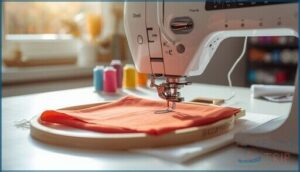
Getting your embroidery machine ready isn’t complicated, but doing it right makes all the difference in how your projects turn out.
You’ll want to master a few key setup steps before you start stitching—trust me, it’s worth the extra few minutes!
Let’s walk through the essentials that’ll have you embroidering like a pro in no time.
Preparing and Hooping Fabric Properly
Think of embroidery hooping like stretching a canvas—you want it drum-tight, not sagging or warped! Start by choosing the smallest hoop that fits your design.
Press your fabric flat, then layer it over the right stabilizer for your material. Use basting spray to lock everything in place, smoothing from the center outward. Mark your design placement lightly with chalk for perfect alignment every time!
Threading and Tension Adjustment Tips
Threading your embroidery machine with the presser foot up is the first step toward stitch balance mastery! Thread tension controls how your needle and bobbin threads meet in the fabric, and getting it right means zero puckering and impeccable designs.
Start at the midpoint, test on scrap fabric, then tweak in tiny increments. Needle selection matters too—wrong needles create false tension issues you’ll chase all day!
Transferring Designs to Your Machine
Getting your designs from computer to machine is easier than you think! Use a USB drive formatted to FAT32, or explore wireless options if your embroidery machine is compatible with Wi-Fi transfer.
Always match file formats to what your device reads—PES, DST, or others—and verify hoop sizes before sending. Name files clearly, keep backups, and you’ll master design transfer in no time!
Step-by-Step Machine Embroidery Tutorial
Ready to turn your machine on and create something beautiful? This step-by-step tutorial walks you through your first embroidery project from start to finish.
You’ll learn how to load designs, align your fabric, monitor your stitching, and add those final touches that make your work shine.
Downloading and Loading Embroidery Designs
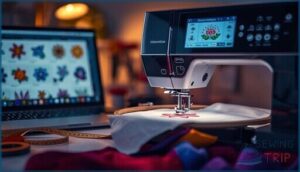
Ready to bring your creative vision to life? Start by downloading designs from trusted embroidery design catalogs—they come in ZIP files you’ll unzip first. Check file formats like PES or DST match your machine compatibility, then verify hoop sizes and stitch counts fit your project.
Transfer designs via USB to your machine, and you’re set! Embroidery tutorials and digitizing software make selecting patterns simple.
Aligning and Starting Your First Project
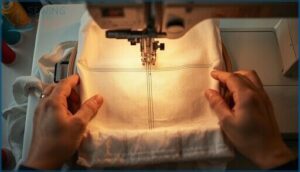
Your first embroidery project starts with solid hoop preparation! Load your design on the machine, then focus on these essential steps for perfect design alignment:
- Use the hoop’s center point or grid markings to position fabric precisely where the design will stitch
- Check fabric tension—it should be drum-tight without puckering
- Confirm the machine’s origin point matches your design placement
These starting tips transform machine embroidery techniques from guesswork into precision work!
Monitoring Stitching and Troubleshooting Issues
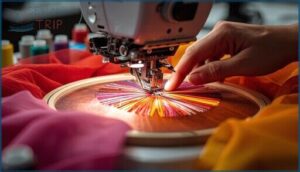
Watch your machine like a hawk during stitching—stitch quality depends on it! Check thread tension to prevent looping or puckering, and verify hoop alignment stays centered.
If fabric puckering appears, add stabilizers or adjust needle calibration immediately. Machine embroidery troubleshooting becomes second nature once you recognize these signs.
Replace needles after each project to maintain impeccable embroidery machine usage and perfect thread flow!
Removing Stabilizer and Finishing Touches
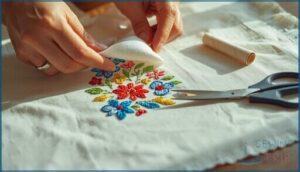
Once stitching wraps up, stabilizer removal is your next move! Tear away varieties come off in small sections—lift gently from the back to protect threads.
Cutaway stabilizers need careful trimming close to stitches. Thread management matters too—snip loose ends and weave them through the back for clean fabric finishing.
Brush away stabilizer dust with a lint roller, and you’re done!
Machine Embroidery Techniques and Methods
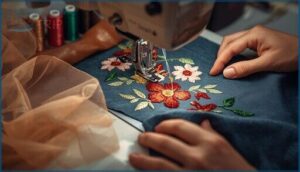
Once you’ve mastered the basics, it’s time to push your skills further with techniques that reveal what your machine can really do.
From applique to specialty fabrics, these methods give you the creative freedom to tackle projects you might’ve thought were out of reach. Here’s what you need to know to expand your embroidery toolkit!
Applique With an Embroidery Machine
Applique with machine embroidery transforms fabric layers into stunning designs! You’ll secure fabric selection with stabilizers like tear away or fusible types that prevent shifting.
Your embroidery machine follows digitized embroidery designs, using satin stitch or blanket stitch for edge finishing. Design placement matters—use basting spray for precision.
These applique techniques let you combine creativity with technical skill, making each project uniquely yours!
Quilting in The Hoop Techniques
You’ve mastered applique—now quilting in the hoop takes your machine embroidery to the next level! This quilting method secures fabric layers with stabilizers while your machine stitches precise patterns.
Here’s your game plan:
- Hoop size selection determines your quilt block dimensions—4×4 to 8×12 inches work beautifully
- Fabric tensioning prevents puckering during dense stitch sequences
- Quilt block alignment using hoop marks ensures pattern continuity
Stitch density control and border stitching techniques create polished, professional results every time!
Embroidering on Specialty Fabrics (Fleece, Denim, Etc.)
Specialty fabrics like fleece and denen demand smart adjustments to your machine embroidery setup! Fleece embroidery tips start with water-soluble toppers that prevent stitches from sinking into that cozy nap.
For denim stitching, grab heavy cutaway stabilizers and sharp 90/14 needles—they’ll power through thick layers. Your fabric selection drives thread choices and stabilizer options, so match polyester 40-weight thread with proper fabric stabilization for perfect results!
Tips for Layering and Multi-Color Designs
Multi-color embroidery designs demand precision for jaw-dropping results! Start your fabric selection with neutral bases to let vibrant thread colors shine without clashing.
Pair 75/11 needles with cutaway stabilizers for dense color blending, and change needles every six to eight color changes to prevent skipped stitches.
Smart stitch sequencing and careful thread management transform your embroidery machine into a color-layering powerhouse!
Creative Machine Embroidery Project Ideas
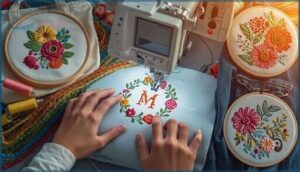
Now that you’ve got the embroidery machine techniques down, it’s time to put your machine to work on projects that actually matter! Whether you’re stitching up gifts that’ll make people say “you made this?!” or building skills with more ambitious creations, there’s a project here for every mood and skill level.
Let’s explore some ideas that’ll keep your embroidery machine humming.
Personalized Gifts and Monograms
Nothing beats the joy of giving a one-of-a-kind gift! Monogramming lets you transform everyday items into customized gifts with custom colors and font selection that match your recipient perfectly.
Choose from classic monogram styles or modern tailored text—both work beautifully on towels, totes, and apparel. Browse embroidery designs and embroidery patterns specifically created for machine embroidery, and watch something ordinary become exceptional!
Seasonal and Holiday Embroidery Projects
Seasonal embroidery collections let you celebrate every holiday in style! From winter embroidery with snowflakes and icy blues to autumn themes bursting with harvest golds, you’ll find festive stitches for every occasion.
Holiday designs featuring Christmas reds, Halloween oranges, and Thanksgiving browns transform your seasonal patterns into showstoppers. These DIY embroidery projects make perfect sewing and embroidery projects—embroidery tutorial guides show you exactly how!
Functional Items: Towels, Bags, and Apparel
Everyday items become canvases for creativity when you master embroidery placement on towels, bags, and apparel. These sewing and embroidery projects demand smart fabric selection and stitch density adjustments—your embroidery machine needs the right balance to shine.
- Choose cotton blends or poly blends for durable apparel that holds thread colors brilliantly
- Position embroidery designs on towel edges or bag front panels for maximum visual impact
- Scale designs between 70-90% depending on item size using your embroidery tutorial guides
- Adjust tension settings based on fabric weight to prevent puckering on delicate materials
Advanced Projects for Skill Building
Push your machine embroidery skills with complex designs that demand four to ten hours of focused work!
Multi layer projects combine dense stitching and sophisticated hooping techniques—you’ll need laser-perfect alignment and ultra-stable frames.
These embroidery projects test your precision embroidery abilities through 3 to 6 color stops and intricate stitch order planning.
Track your progress to identify where sewing and embroidery techniques need refinement.
Frequently Asked Questions (FAQs)
Is machine embroidery an expensive hobby?
Machine embroidery can seem pricey upfront—entry-level machines start around $200, but ongoing supplies like thread, stabilizers, and needles add up.
Budget planning and expense tracking make this hobby investment surprisingly sustainable!
Is machine embroidery easy to learn?
Yes, it’s surprisingly approachable for beginners! The learning curve flattens fast once you master basic stitches, thread control, and fabric selection.
Focus on machine embroidery basics and beginner tips—you’ll build confidence quickly with introduction to proper embroidery machine selection.
How to keep your machine embroidery from puckering?
To prevent puckering, hoop your fabric taut with the right stabilizer, balance thread tension carefully, and slow your machine speed for dense designs.
Test stitches first—it’s your best defense against warping!
How much is 1000 stitches in embroidery?
In embroidery pricing, you’re looking at one to three dollars per 1000 stitches for single orders.
Stitch cost factors like fabric costs, thread usage, and design complexity all shape the final quote.
How do I digitize my own embroidery designs?
Start with digitizing software like Wilcom Hatch or Brother PE Design. Import vector graphics, manually control stitch paths, and adjust density for ideal coverage.
Test-stitch your embroidery design creation to perfect quality!
Whats the difference between embroidery and sewing machines?
A sewing machine constructs seams with straight stitches and feed dogs, while an embroidery machine creates decorative patterns using programmable design input, hoops, and specialized needles—two distinct fabric handling approaches serving different sewing techniques.
How do I embroider on curved surfaces?
Bending the rules takes flexible stabilizers! Use them with proper hoop placement, adjust thread tension carefully, and choose designs with shorter stitches.
This prevents fabric stretching on curved surfaces and keeps your embroidery smooth.
Can I use regular sewing thread for embroidery?
You can, but it’s not ideal! Sewing thread lacks the sheen and coverage embroidery threads deliver.
Adjust tension settings carefully, match fabric compatibility with stabilizer selection, and test first—your results will thank you!
How do I care for embroidered items?
Hand wash your embroidery with mild detergent and cold water, or use a gentle cycle.
Blot stains gently, iron on the reverse side, and store flat with tissue between folds to protect those beautiful stitches.
Conclusion
Master the machine embroidery—that’s your roadmap from fumbling beginner to confident creator. These machine embroidery tutorials give you the exact setup steps, techniques, and projects that turn intimidation into innovation.
You’ve got the knowledge now: proper hooping, tension tricks, stabilizer secrets, and designs that actually work. So thread that needle, grab your favorite fabric, and start stitching. Your first impeccable project isn’t some distant dream—it’s waiting in your hoop right now.