This site is supported by our readers. We may earn a commission, at no cost to you, if you purchase through links.

Viscose feels like a dream to wear — soft, breathable, and elegant enough to pass for silk. But wash it wrong once, and that flowing blouse or fitted dress can shrink, distort, or pill beyond repair.
The problem isn’t the fabric itself. Viscose is plant-based, which makes it more reactive than synthetics. Wet fibers lose a significant portion of their strength, and even a single cycle of hot water and high-speed spinning can cause 2–5% shrinkage — enough to ruin the fit permanently.
The good news: viscose isn’t fragile once you know the rules. A few consistent habits — the right water temperature, the right spin speed, the right drying method — keep it looking sharp wash after wash.
Table Of Contents
Key Takeaways
- Wet viscose loses strength almost instantly, making cold or lukewarm water (max 30°C), minimal agitation, and a low spin speed the three non-negotiables for every wash.
- Always check the care label before washing — it tells you the exact temperature, spin limits, and whether the garment can be machine washed at all or needs dry cleaning.
- Drying is where most shrinkage happens, so skip the tumble dryer entirely, press water out gently with a towel, and lay the garment flat to air dry reshaped while still damp.
- Store woven viscose on broad wooden hangers, fold knits flat, and always use breathable cotton bags — never sealed plastic, which traps moisture and leads to mildew.
Care for Viscose Gently

Viscose is a beautiful fabric, but it won’t forgive rough handling. The fibers are naturally delicate, and a few basic habits go a long way in keeping your pieces looking their best. Here’s what you need to understand before you wash, dry, or store a single viscose garment.
Viscose is especially prone to creasing, so understanding how much viscose wrinkles and why will help you handle it with the care it genuinely needs.
Why Viscose Needs Care
Viscose looks tough, but it’s actually one of the most delicate fabrics in your wardrobe. The fibers come from plant material, which means they respond to heat, agitation, and rough handling the same way a leaf does — they wilt.
Viscose does shrink, colors can bleed, and repeated harsh cycles cause real texture degradation that no amount of steaming can fix. You can unshrink your viscose by soaking it in room-temperature water mixed with hair conditioner.
Wet Fiber Weakness
When viscose gets wet, its fibers lose much of their strength almost instantly. Water molecules break into the cellulose structure, disrupting hydrogen bonds and acting as a plasticizer — softening fibers until they stretch, snag, or tear under the lightest tension.
Wet viscose fibers lose their strength instantly, turning water into a force that stretches, snags, and tears with the lightest tension
That’s why even gentle wringing can permanently warp a wet viscose garment.
Shrinkage Risk
Shrinkage is the other thing to watch. Viscose can shrink 2–5% in a single wash — enough to tighten a sleeve or shorten a hem noticeably. Hot water and tumble drying are the main culprits, but even prolonged soaking causes fibers to contract.
Blended or prewashed viscose holds its shape better, since the fibers are already stabilized before they reach you.
Label-first Rule
That’s where the care label earns its place. Before water, detergent, or heat enters the picture, the label tells you exactly what the garment can handle. It’s your starting point — not an afterthought.
- Check "dry clean only" warnings first
- Look for washing temperature symbols
- Note spin speed restrictions
- Read bleach guidance carefully
- Confirm ironing heat limits
The label is the plan. Follow it.
Check The Care Label First
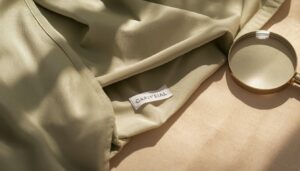
Before you do anything else, check the care label sewn inside your garment. That small tag holds the exact instructions you need to wash, dry, and iron your viscose safely. Here’s what to look for on it:
Dry Clean Only Warnings
That small label carries a serious warning. If your garment says dry clean only, don’t test it with water — professionals use solvents like perchloroethylene that clean without triggering shrinkage or dye migration. Water can loosen embellishments, bleed colors, and warp the fit permanently.
Check the composition label too. Silk blends, structured linings, and rayon mixes rarely survive home washing.
Washing Symbols
Those tiny symbols on your label are a shorthand care code — each one tells you exactly how to treat the fabric.
A tub with a hand means hand wash only. A tub with one line underneath signals a delicate machine cycle. Two lines means extra gentle. Dots inside the tub indicate heat — one dot means 30°C maximum.
Read them before you do anything else.
Temperature Guidance
What does the temperature number on your label actually mean? It’s your washing limit — never go above it.
- 30°C or below — cold water only
- 40°C max — cool or lukewarm water
- No number, no tub — skip water entirely
- Low dot inside tub — use the coldest setting
Heat causes immediate shrinkage. Always stay at or below the listed temperature.
Ironing Symbols
The iron symbol tells you exactly how much heat viscose can handle. One dot means low heat — around 110°C, the silk setting. Two dots mean medium; three mean high. Viscose needs just one dot.
If you’re ever unsure whether your iron is set right, this guide on ironing viscose safely walks through exactly what to watch for before you press.
A crossed-out iron means no ironing at all. If you see steam lines, steam is allowed, but always at that same low temperature.
Bleach Restrictions
Bleach is a hard no for viscose. It breaks down the cellulose structure, weakening fibers permanently. Here’s what the label symbols tell you to avoid:
- A crossed triangle means no bleach at all
- A plain triangle permits oxygen bleach only on whites
- Chlorine bleach causes color fading and yellowing
- Bleach near metal trims risks corrosion of fasteners
Stick to non-chlorine alternatives for stain treatment.
Hand Wash Viscose Safely

Hand washing is the gentlest way to clean viscose, and it’s easier than you might think. The key is moving through each step in the right order so the fabric stays intact. Here’s exactly what to do.
Use Cold Lukewarm Water
Fill your basin with cold or lukewarm water — no warmer than 30°C. Hot water causes thermal shock, which weakens viscose fibers and triggers dye migration in colored garments. Lukewarm water also activates your detergent without straining the fabric.
Keep the temperature steady throughout. A consistent, gentle soak preserves fiber elasticity and prevents the distortion that hotter water brings.
Add Mild Detergent
Once the water is ready, add a small amount of mild, enzyme-free detergent — liquid mixes faster than powder in cool water. Dissolve it fully before adding your garment; concentrated soap hitting fabric directly can leave spots.
Choose a detergent labeled for delicates or hand washing. Enzyme-free formulas protect viscose fibers without the fiber-weakening agents found in standard cleaners.
Soak Under 30 Minutes
With your detergent dissolved, lower the garment in and let it soak. Keep it under 30 minutes — viscose fibers absorb water quickly, and longer immersion weakens their structure, risking texture changes and shrinkage.
Don’t agitate or push the fabric around. Just let it sit. Cool or lukewarm water does the work. When time’s up, lift the garment gently without bunching it.
Rinse Without Twisting
Once the soak is done, hold the garment under cool running water and rinse until the water runs clear. Keep your grip loose and even — uneven tension pulls the fibers out of shape.
Never wring or twist. Instead, gently press the fabric flat against the sink basin to push water through without stretching or distorting the weave.
Press Water Out Gently
Lay a clean, thick cotton towel flat on a surface. Place your garment on top, then fold the towel over it and press firmly with both flat hands. Work from the center outward. The towel pulls moisture away without you tugging the fabric at all.
Swap in a dry towel if the first one soaks through. Once it feels just slightly damp, lay your viscose flat to dry.
Machine Wash Viscose Carefully

Machine washing viscose is possible, but only if you take the right precautions. One wrong setting can shrink or distort your garment beyond repair. Here’s exactly how to do it safely.
Use Delicate Cycle
When machine washing viscose, always select the delicate or hand wash cycle. This setting uses low agitation, which protects the fiber from stress and tearing.
Here’s what to set on your washing machine:
- Cycle: delicate or hand wash
- Agitation: lowest available
- Temperature: cold or max 30°C
- Load size: never overload
- Detergent: mild liquid, minimal amount
Too much detergent leaves residue on lightweight fabric.
Choose Low Spin
High spin speeds tear wet viscose fibers apart — the fabric is weakest when soaked. Set your machine to the lowest spin available, ideally under 400 RPM.
Think of it like a launch monitor catch: too much force and everything goes wrong fast. Gentle extraction keeps the garment’s shape intact and prevents that dreaded post-wash shrinkage.
Use Mesh Laundry Bag
Place your viscose inside a fine mesh laundry bag before it goes anywhere near the drum. The bag acts as a buffer — it stops the fabric from rubbing against the machine walls, which prevents pilling and keeps embellishments like beads or sequins firmly attached.
Zipper-closure bags offer the tightest seal and the least snag risk.
Turn Garments Inside Out
Before the garment bag goes on, flip every piece inside out. This shields the outer surface from drum friction, which is the main cause of pilling on viscose.
It also protects prints, embroidery, and embellishments from direct agitation — keeping colors sharp and surfaces intact wash after wash.
Wash With Similar Fabrics
What you put in the machine with your viscose matters just as much as the settings you choose. Wash similar fabrics together — lightweight viscose pairs best with other delicate, low-weight pieces.
This reduces friction, prevents pilling, and stops dye from bleeding onto lighter items. Mixing heavy fabrics with viscose causes uneven wear and snagging.
Remove Stains Without Damage
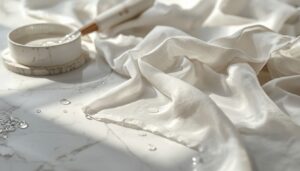
Stains on viscose need quick, careful action — the fabric is too delicate to survive aggressive scrubbing or harsh chemicals. The good news is that with the right approach, you can lift most stains without weakening the fibers. Here’s how to handle them safely.
Blot Stains Immediately
A spill on viscose is a race against the clock. The moment liquid touches the fabric, blot from the outside edge inward toward the center — this stops the stain from spreading further into the fibers.
Use a clean white cloth and press gently. No rubbing. Replace the cloth with a fresh section after each pass to avoid redepositing what you just lifted.
Use Delicate Stain Remover
Once you’ve blotted up the excess, reach for a delicate stain remover — ideally one with enzymes or surfactants designed for fragile fabrics. Apply a small amount directly to the mark, then blot gently. Let it sit for 5 to 10 minutes.
Before treating any dyed viscose, test on an inside seam first to check for color bleeding.
Avoid Chlorine Bleach
Chlorine bleach burns viscose fibers on contact. Skip it, even diluted. It releases harmful fumes when mixed with other cleaners in a poorly ventilated space — a risk beyond the fabric itself.
For white viscose, oxygen bleach is the safe swap.
Never use these on viscose:
- Chlorine bleach
- Ammonia-based cleaners
- Fabric softeners with bleaching agents
- Hot chemical solutions
- Undiluted stain removers
Use Soft Stain Brush
Once you’ve kept bleach out of the equation, the right tool matters just as much as the right cleaner. Reach for a soft stain brush — one with fine synthetic or natural bristles.
Work in small circular motions, moving from the stain’s edge inward. This lifts the stain without grinding fibers deeper into the weave, which is how fraying starts on viscose.
Test Hidden Seams First
Before you treat any stain, test your cleaner on a hidden seam or inner hem first. Apply a small amount, wait 60 seconds, then check for color bleed or puckering.
Viscose reacts fast to moisture and chemicals, so this quick water test can save your garment from permanent damage before you touch the stain itself.
Dry Viscose Without Shrinking
Drying viscose the wrong way is where most shrinkage happens — and it’s easier to avoid than you’d think. Heat and rough handling while the fabric is wet are the two things you’re protecting against here. Follow these steps to dry your viscose safely every time.
Avoid Tumble Drying

The dryer is your viscose’s worst enemy. Heat damage triggers textile shrinkage almost instantly, and repeated cycles cause fabric pilling that strips the soft drape right out.
- Never tumble dry — viscose shrink can happen even on a low heat setting
- Always air dry on a drying rack for preventing shrinkage and shape distortion
- Stay well away from radiators during drying
Lay Flat to Dry
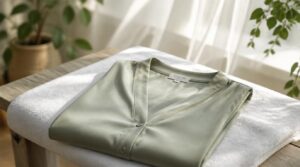
Pick a clean, flat surface — a table or shelf works well. Lay a towel down first to soak up excess moisture and protect the fabric underneath.
Smooth the garment out fully, aligning the seams. Good airflow around all sides helps it dry evenly. Keep it away from direct sunlight to prevent color fading while air drying, a simple step that goes a long way in preventing shrinkage.
Reshape While Damp
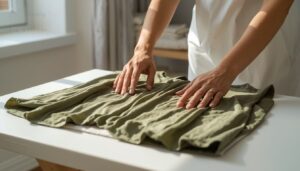
While the garment is still damp, gently guide it back to its original shape using your hands. Viscose fibers are most pliable when wet, so this is your best window.
Work from the center outward, smoothing seams and edges flat. Don’t pull from the corners — that stretches the fabric unevenly and can leave it permanently distorted.
Keep Away From Radiators

Radiators are a hidden threat to damp viscose. Heat this intense causes immediate shrinkage and fiber damage — sometimes in minutes.
Keep your garment at least 30 cm away from any heat source while drying. That distance matters.
Avoid these three spots entirely:
- On top of a radiator
- Draped over a heated towel rail
- Pressed against a warm wall
Prevent Stretching

Wet viscose is surprisingly fragile — the fibers lose structure and stretch out of shape under their own weight.
Don’t wring or twist the fabric. Instead, press water out gently with flat hands. Lay the garment on a clean towel, smooth it back into shape, and let it dry flat. That simple step keeps the shoulders, hem, and seams exactly where they belong.
Iron and Steam Viscose Correctly

Ironing viscose takes a little extra care, but it’s nothing you can’t handle once you know the right approach. The key is working with the fabric gently rather than forcing wrinkles out with high heat. Here’s exactly how to do it safely.
Iron Slightly Damp Fabric
Slightly damp viscose irons far better than bone-dry fabric. The moisture improves heat transfer from iron to fiber, helping wrinkles relax with less pressure and reducing scorch risk.
Aim for just a touch of dampness — not soaking wet. If your fabric dries mid-session, mist it lightly using distilled water to avoid mineral streaks and keep the fibers responding evenly.
Use Low Heat Setting
Set your iron to 110°C (silk/low heat). That’s the safe ceiling for viscose — anything hotter risks scorching or a permanent sheen.
- Too much heat melts fibers, causing shine
- Even heat distribution prevents hot spots
- Low settings protect color and structure
Test on a hidden spot first. If it looks right, you’re good to continue.
Iron on Reverse Side
With the heat set correctly, flip your garment over. Iron on the back side to protect the visible surface from direct contact — this prevents fabric shine and keeps the texture intact.
Viscose is fragile enough that even a low iron on the front can leave marks. Working from the reverse lets heat smooth wrinkles without scorching or flattening the fabric face.
Use Pressing Cloth
Place a thin cotton or muslin cloth between the iron and your viscose. This creates a heat buffer that prevents shiny marks and protects any embroidery or appliques from scorching.
Keep the cloth slightly damp — it transfers steam evenly through the fabric, relaxing wrinkles without over-wetting or flattening delicate fibers. Avoid synthetic cloths; they can leave lint or marks.
Steam Wrinkles Gently
A steamer is often the easier route after using a pressing cloth. Hold the steamer head 2–3 inches from the fabric and work in smooth vertical passes, section by section. This lets steam penetrate the fibers evenly, relaxing wrinkles without pressure.
Use distilled water to keep the steamer head clean and the output consistent.
Store Viscose to Preserve Shape

How you store viscose matters just as much as how you wash it. The wrong setup can stretch, flatten, or leave your pieces looking tired before you’ve even worn them. Follow these steps to keep everything in good shape between wears.
Fold Knitted Viscose
Knitted viscose holds its shape best when stored flat. The knit stitch pattern is built from interlocking loops — folding keeps those loops aligned and prevents the neckline or hem from stretching out over time.
Lay your knitted tops flat in a drawer rather than hanging them. Gravity pulls the fabric down, and viscose is too fluid to resist it.
Hang Woven Garments
Woven viscose — blouses, trousers, dresses — hangs well. Use broad, contoured wooden hangers that match your shoulder width.
- Choose wooden or padded hangers
- Avoid wire or narrow plastic hangers
- Leave space between garments for airflow
- Make sure hems clear the floor
Wire hangers concentrate weight and cause dimples. Good airflow prevents odor and moisture buildup.
Use Breathable Cotton Bags
Slip clean viscose into breathable cotton bags before storing. Unlike plastic, cotton lets air move freely around the fabric, which keeps moisture from building up and stops mildew before it starts.
These bags are washable, long-lasting, and reusable — a simple upgrade that genuinely extends your garment’s life. One bag, used well, protects your pieces for years.
Avoid Plastic Containers
Plastic is a moisture trap. Storing viscose in sealed plastic containers cuts off airflow, letting humidity build up inside — and that’s exactly the environment where mildew takes hold and fabric yellows over time.
Stick to breathable storage alternatives like cotton bags or open shelving to keep your garments fresh and structurally sound.
Store Completely Dry
Never store viscose while it’s still damp. Trapped moisture feeds mildew fast and breaks down fibers quietly over time.
- Air dry completely before folding or hanging
- Tuck silica gel packs into storage boxes to absorb residual moisture
- Keep humidity below 50% using a dehumidifier in damp rooms
- Inspect storage spaces regularly for leaks or damp walls
- Use a moisture meter to catch hidden humidity early
Breathable cotton bags let air circulate — keeping your garments fresh, not fossilized.
Frequently Asked Questions (FAQs)
What happens if you wash 100% viscose?
Washing 100% viscose can cause tensile strength loss, shrinkage of up to 7%, and color fading. Hot water and agitation are the main culprits — handle it gently or the fabric won’t recover.
What are the disadvantages of viscose fabric?
Viscose looks beautiful but comes with real trade-offs. It loses up to 80% of its strength when wet, wrinkles easily, and can shrink, bleed dye, or grow mildew if stored damp.
Is viscose basically plastic?
Looks can be deceiving. Though it’s processed with chemicals, viscose is regenerated cellulose from renewable wood pulp — not petroleum. It’s a semisynthetic fiber, closer to cotton than plastic, and biodegrades faster than most synthetics.
What detergent to use for viscose?
Use a mild liquid detergent with a neutral pH around 7, free from enzymes, bleach, and optical brighteners. A formula made for rayon or silk works best to protect viscose fibers without stripping color or sheen.
How often should I wash my viscose fabric?
Don’t wash it after every wear. Aim for every 2–3 wears, unless you spot stains or odor. Air the garment out between uses to keep it fresh and reduce fiber fatigue.
Can I bleach my viscose fabric?
Yes, but with caution. Oxygen bleach only — never chlorine bleach, which damages the fibers. Always test on a hidden seam first. Rinse thoroughly after, and check your care label; if it says do not bleach, stop there.
Is there a way to avoid shrinkage when washing viscose?
Keeping your viscose in good shape comes down to three things: cold or lukewarm water, a mild delicate detergent, and no wringing. Lay it flat to dry, reshape while damp, and the size stays intact.
What temperature should I use to iron viscose fabric?
Set your iron to 110–130°C — the silk or low setting. Any hotter risks damaging the fibers. Iron on the reverse side while the fabric is slightly damp for the smoothest results.
Can I use fabric softener on viscose fabric?
Skip the softener. Viscose is naturally soft, and adding it leaves a residue that dulls its luster, flattens its drape, and disrupts the fiber’s moisture balance. A splash of white vinegar in the rinse works better.
Can viscose fabric be washed with other fabrics?
Viscose can share a wash, but choose your companions carefully. Avoid heavy fabrics like jeans or towels — they snag delicate fibers. Separate by color to stop dye bleeds, and always use a mesh laundry bag.
Conclusion
Viscose isn’t fragile — it’s just particular. Treat it like a trusted tool rather than a delicate ornament, and it rewards you every time.
Knowing how to care for viscose fabric comes down to three non-negotiables: cool water, low spin, flat drying. Skip the shortcuts, and these garments stay exactly as you bought them — soft, shaped, and lasting. Master the method once, and you’ll never ruin another piece again.
- https://anahidesaintandre.com/en/blogs/blog/guide-how-wash-care-ironing-viscose-clothing
- https://www.aprayon.com/en/media-english/articles/how-to-wash-viscose-properly
- https://www.suncoo-paris.com/the-brand/edito/how-to-wash-and-care-for-viscose-fabrics-4.html?publication_rayon=the-brand
- https://www.thelaundress.com/blogs/tips/viscose
- https://boody.com/blogs/guide/how-to-wash-viscose