This site is supported by our readers. We may earn a commission, at no cost to you, if you purchase through links.

Most sewing machines don’t wear out—they get neglected into early retirement. A machine that skips stitches, tangles thread, or suddenly jams mid-project rarely has a mechanical defect. More often, it just needed a brush, a drop of oil, and five minutes of attention.
Preventive care for sewing machines is the difference between a workhorse that runs for decades and one that collects dust after a single frustrating breakdown. Lint packed around the bobbin, a dull needle dragging through fabric, dry gears grinding against each other—these are slow killers, and none of them announce themselves until the damage is done.
The good news? Keeping your machine in peak condition doesn’t require a technician or an expensive tune-up kit. A few consistent habits handle most of it.
Table Of Contents
Key Takeaways
- Lint buildup, dry gears, and dull needles are the real culprits behind most sewing machine failures — not mechanical defects — so routine cleaning after every project is your strongest preventive move.
- Using the right oil matters as much as oiling at all: lightweight, machine-grade oil applied only at manufacturer-approved points keeps parts gliding, while WD-40 strips lubricant, traps lint, and can void your warranty.
- Replacing your needle every 4–8 hours of sewing time and scheduling a professional service every two years catches hidden wear before it turns into an expensive repair.
- Proper storage — breathable cover, climate-controlled space between 10–25°C, presser foot cushioned with fabric, and machine unplugged — protects your investment during every idle stretch.
Why Preventive Sewing Machine Care Matters
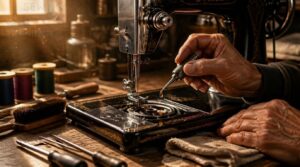
A well-maintained sewing machine doesn’t just run longer — it works better every single time you sit down to sew.
If you’re shopping for something easier to keep up, checking out top-rated sewing machines for elderly users can point you toward models built with simple, low-maintenance designs in mind.
Skipping routine care might seem harmless at first, but small issues tend to snowball into bigger, more expensive problems. Here’s why staying on top of preventive maintenance is worth every bit of effort.
Better Stitch Quality
A well-maintained machine doesn’t just run — it sews. When tension balance is off, you get puckering, skipped stitches, and fraying at seam edges before you even finish a project.
Regular cleaning keeps your bobbin winding even, your thread compatibility consistent, and your fabric handling smooth. That means tighter stitch density, cleaner seams, and far less time spent on thread tension troubleshooting mid-project. Maintaining a consistent stitch length consistency is also essential for achieving professional-grade results.
Longer Machine Lifespan
Stitch quality and machine longevity go hand in hand. With regular lubrication intervals and consistent mechanical upkeep, machines can run reliably for decades — not just years.
Three habits that directly extend machine longevity:
- Apply sewing machine oil at designated points every 8–10 hours of use
- Control environmental humidity to prevent corrosion on metal components
- Invest in operator training to avoid misuse that strains internal parts
Fewer Costly Repairs
A machine that runs well rarely needs emergency repairs. Preventive maintenance catches early warning signs — grinding noises, skipped stitches, sluggish feed dogs — before they become expensive fixes.
Avoiding gear damage is as simple as keeping lint clear and applying sewing machine oil regularly. Reducing component wear now means fewer part replacements later, protecting both your budget and your machine longevity.
Safer Sewing Sessions
Saving money on repairs is satisfying — but keeping yourself safe matters even more. A well-maintained machine is a predictable one.
Frayed cords, dull needles, and poor lighting all increase your risk of injury. Keep your workspace clear of floor scraps, use bright task lighting (at least 1,000 lux), and always unplug before changing needles or presser feet. Small habits build a workspace that protects you every session.
Protected Warranty Coverage
Skipping regular maintenance can quietly void your warranty. Most manufacturers require documented service records to honor claims — so hold onto those receipts and log every cleaning session.
Warranty transferability can also add resale value if you sell your machine within the coverage term. And if you want protection against accidents, ask about accidental damage add-ons — they’re worth comparing before purchase.
Essential Sewing Machine Care Tools
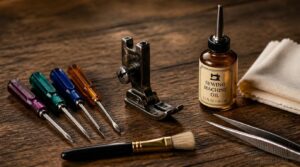
Good maintenance starts with having the right tools on hand — nothing fancy, just a small kit that does the job well. Before you clean or oil anything, it helps to know what you’re actually working with. Here are the five essentials every sewing machine owner should keep nearby.
A small brush or can of compressed air goes a long way — and if lint buildup is affecting your stitches, checking your correct bobbin settings for better stitch quality is often the next smart step.
Lint Brush
A good lint brush is your machine’s first line of defense. Bristle material selection matters — coarse bristles tackle heavy fabrics, while fine soft ones protect delicate materials like silk. Static charge removal happens naturally as bristles attract lightweight lint during debris removal.
Look for ergonomic handle design to reduce fatigue. Store it dry, clean bristles after each use, and it’ll last years.
Microfiber Cleaning Cloth
Reach for a microfiber cloth whenever you wipe down your machine’s exterior — it’s genuinely the right tool for the job. Made from split polyester-nylon fibers, it lifts oils and debris rather than smearing them around. That electrostatic charge traps dust on contact.
One cloth can handle hundreds of washes without losing much performance, as long as you skip fabric softener.
Sewing Machine Oil
Not all oils are equal. Sewing machine oil — lightweight, clear, and purpose-made — keeps moving parts gliding without attracting lint. Mineral-based oils work well for most home machines, while synthetic blends handle temperature shifts better and resist oxidation longer.
Either way, a precise applicator matters. One or two drops at the right point beats a generous pour that gums everything up.
Small Screwdriver
A tiny screwdriver earns its place in your kit fast. Sewing machines use small Phillips and slotted screws — PH000 to PH00 — around the needle plate and bobbin housing.
A magnetic tip keeps screws from vanishing into the machine during routine inspection. Choose a precision driver set with a ribbed grip so you maintain control without stripping delicate hardware.
Tweezers or Pipe Cleaners
Thread hides in places no brush can reach. That’s where tweezers and pipe cleaners earn their keep.
- Pointed tip tweezers extract thread fragments from tight tension disks
- Slant tips reach lint in angled, hard-to-access spots
- Curved pipe cleaners follow needle plate contours during internal mechanism cleaning
- Bendable wire cores let you remove lint deep inside feed dogs
- Fine tips (0.5–1.0 mm) lift fibers without bending delicate parts
Daily and Weekly Cleaning Tasks
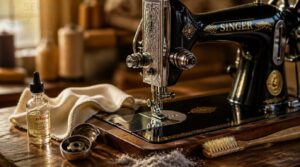
Keeping your machine clean doesn’t have to be complicated — most of it comes down to a few quick habits done regularly. Whether you sew every day or just on weekends, a simple cleaning routine prevents the kind of buildup that causes real problems over time. Here’s what you should be doing on a daily and weekly basis.
Wipe Exterior Surfaces
Start with a damp microfiber cloth and a mild, pH-neutral cleaner — never apply liquid directly to the machine. Wipe from top to bottom in gentle, consistent strokes to avoid streaks.
Before wiping the whole surface, test your cleaner on a hidden spot first. Then dry with a second clean cloth so no moisture sneaks into the controls or seams.
Clean Bobbin Area
Once the exterior is wiped down, the bobbin area deserves your full attention. Lint buildup here is the most common cause of skipped stitches and tension problems.
Remove the needle plate, then use a soft lint brush — never canned air — to sweep debris out gently:
- Brush in one direction to avoid pushing lint deeper
- Use tweezers for threads caught around the bobbin assembly
- Wipe surfaces with a microfiber cloth
- Inspect the bobbin case for wear or snagging points
- Run a test stitch on scrap fabric afterward
Clean after every project.
Brush Feed Dogs
Once you’ve cleaned the bobbin area, the feed dogs need attention. Lint buildup between those serrated teeth causes skipped stitches and weak fabric grip.
| Issue | Fix |
|---|---|
| Skipped stitches | Brush teeth clear |
| Uneven feeding | Clean channels out |
| Fabric drag | Remove debris buildup |
| Poor grip | Deep clean feed dogs |
Use a small lint cleaning brush and sweep outward — never push debris inward.
Remove Needle Plate Lint
The feed dogs aren’t the only trap for lint. Lift the needle plate carefully — power off and unplug first — and you’ll often find dense fiber pockets hiding underneath.
Use a small cleaning brush to sweep corners outward. Short bursts of compressed air dislodge fine debris without scattering it deeper. Re-seat the plate evenly; uneven screw tension warps alignment and throws off your stitch.
Check Cords and Needles
While you have the machine unplugged, run your fingers along the power cord’s full length — fraying, cracks, or a warm smell after use signals a replacement. Confirm three prongs are straight and the voltage rating matches your machine.
For needles, check the tip alignment and seat it fully against the needle bar before tightening. Replace needles every 8–12 hours to prevent breakage.
Oiling and Lubrication Best Practices
Lubrication is one of those things that’s easy to overlook — until your machine starts squeaking or skipping stitches. Using the right oil in the right places makes a real difference in how smoothly everything runs. Here’s what you need to know to do it correctly.
Use Proper Machine Oil
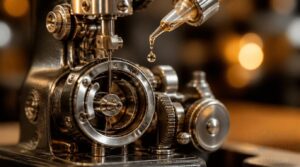
Not all oils are created equal — and your sewing machine knows the difference.
Always use sewing machine-grade oil: lightweight, low-viscosity, and manufacturer-approved. It flows smoothly through the hook race and presser bar levers without gumming up.
- Choose oil with rust and corrosion inhibitors
- Match viscosity to your machine’s operating temperature
- Store oil sealed, upright, away from sunlight
- Label bottles with the purchase date to track shelf life
- Never reuse oil that’s collected lint or debris
Oil contamination is a silent problem — degraded lubricant leaves varnish-like residue that slows needle movement and wrecks tension consistency.
Avoid WD-40
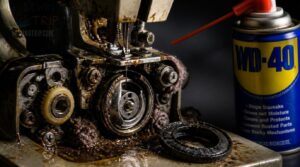
WD-40 seems like a quick fix, but it’s the wrong tool for this job. It displaces existing lubricants rather than replacing them, leaving behind a sticky residue that traps lint deep in the bobbin area.
WD-40 doesn’t fix sewing machines — it leaves sticky residue that traps lint and displaces the lubricants your machine actually needs
Worse, its solvents can degrade rubber seals, and most manufacturers explicitly prohibit it — meaning one spray could void your warranty and invite rust over time.
Oil Only Approved Points
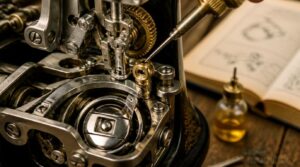
Your machine’s manual lists specific approved oil points — don’t guess. Oiling the wrong spot can gum up gears, throw off timing, or damage components the manufacturer never intended to lubricate.
Stick to designated bearings and oil holes only. One or two drops of lightweight sewing machine oil at each approved point is enough to protect every moving part without overdoing it.
Remove Excess Oil
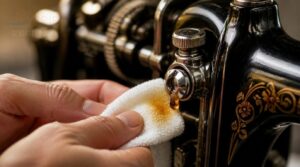
Too much oil is almost as bad as none. After lubricating your machine, blot excess immediately using a clean, lint-free microfiber cloth — dab, don’t rub, or you’ll spread oil into places it shouldn’t go.
Work outward from each oiling point. Absorbent blotting material pulls residual oil up from the surface cleanly. Swap cloths often; a saturated cloth just redistributes the problem.
Test on Scrap Fabric
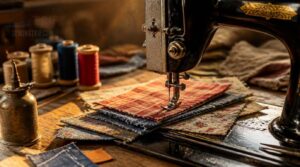
Before you put your machine back to work, run a few stitches on scrap fabric first.
- Colorfastness testing checks that excess oil won’t bleed into your actual project
- Abrasion resistance reveals early tension problems before they damage real fabric
- Seam integrity confirms stitch quality is holding under normal stress
- Shrinkage measurement spots uneven stitches caused by tension imbalance
- Water absorption helps predict how the fabric reacts to pressing after oiling
Watch for skipped stitches — your signal to recheck lubrication or adjust tension.
Long-Term Maintenance and Storage
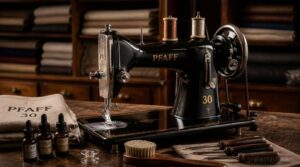
Daily cleaning keeps your machine tidy, but long-term care is what keeps it running strong for years to come. A few simple habits — done consistently — can prevent the kind of wear that sends machines to the repair shop before their time. Here’s what to focus on when you’re thinking beyond the basics.
Replace Dull Needles
Swap your needle every 4–8 hours of sewing time — or after each major project. A dull tip snags fabric, skips stitches, and snaps thread even when your tension is perfectly set.
For light fabrics, use a 70/10 needle; jump to a 90/14 or 100/16 for denim or thick layers. Match needle type to your fabric, and your seams will show it.
Balance Bobbin Tension
Needles sorted, now let’s talk about what’s happening underneath.
Bobbin tension controls how your lower thread feeds through the case. Too tight, and loops appear on top. Too loose, and thread bunches on the underside. Fix it by turning the slotted-head screw in 30–45 degree increments — tiny moves matter. Always test on scrap fabric first, especially after switching thread weight or fabric type.
Schedule Professional Servicing
Even with clean parts and balanced tension, your machine needs professional eyes every two years. Schedule a technician visit before problems develop — not after. Book early; slots fill weeks out.
Bring your serial number, current needle type, and a note on any odd behavior. A good shop provides a completion report and a 30-day follow-up check.
Store Covered and Dry
Once your technician visit is logged, storage becomes your next line of defense. Keep your machine in a dry, temperature-controlled spot — ideally between 10 and 25°C — away from basements and attics where humidity spikes.
Use a breathable fabric cover, not plastic, and tuck a silica gel pack nearby. Place fabric under the presser foot and keep the machine unplugged.
Watch for Warning Sounds
Your machine talks. A grinding noise, a rhythmic clicking, or a faint burning electrical smell aren’t quirks — they’re warnings.
Skipped stitches and sudden tension problems often signal the same mechanical distress, just quieter. Stop sewing, note what you heard, and consult the error code. If the sound repeats, call your technician before small wear becomes a costly fix.
Frequently Asked Questions (FAQs)
How do you take care of a sewing machine?
Taking care of a sewing machine means regular lint removal, proper lubrication with sewing machine oil, tension adjustment, safe storage, and scheduling professional servicing — simple habits that keep every stitch clean and your machine running for years.
What tools do I need to care for my sewing machine?
You need five basics: a lint brush, microfiber cloth, sewing machine oil, small screwdriver set, and tweezers. These handle most cleaning and minor adjustments without any guesswork.
Why is regular maintenance important for a sewing machine?
Regular maintenance keeps your stitches consistent, reduces vibration noise, and helps avoid costly breakdowns mid-project. A clean, lubricated machine simply lasts longer — protecting your investment and keeping your sewing sessions frustration-free.
How to maintain a sewing machine?
Clean lint from the bobbin area after every project, oil designated points with sewing machine oil, replace needles every 4–8 hours of use, and schedule professional servicing every two years to keep stitches consistent.
Can I use WD-40 to oil my sewing machine?
No — WD-40 is a solvent, not a lubricant. It strips away proper oils and evaporates fast, leaving your machine dry and unprotected. Stick with lightweight sewing machine oil made specifically for precision components.
How to maintain a sewing machine that is not in use?
A stored machine is like a parked car — it still needs attention. Unplug it, cover it against dust, and store it somewhere dry and climate-controlled to prevent rust and mold from quietly taking hold.
What are four tips for routine care of a sewing machine?
Four key routine care tips: clean the bobbin area after each project, inspect the thread path before sewing, replace needles every 8–10 hours, and test tension on scrap fabric when switching materials.
Do I really need to oil my sewing machine?
It depends on your machine. Sealed bearing models built after 1950 often need minimal user oiling. But if yours squeaks or runs dry, a drop or two of sewing machine oil makes a real difference.
Can I use my machine during pregnancy safely?
Yes, for most pregnancies, using your sewing machine is safe. Keep sessions short, check your cord before plugging in, and stop immediately if you feel dizzy or uncomfortable.
What fabrics are safest for beginners to practice on?
Cotton, muslin, linen blends, chambray, and broadcloth are your safest starting points. They’re stable, affordable, and forgiving — perfect for building confidence before tackling slippery or stretchy fabrics.
Conclusion
A stitch in time saves nine"—and nowhere is that truer than with preventive care for sewing machines. Lint builds silently. Dry gears grind slowly. A dull needle doesn’t announce itself until your fabric is ruined.
But five minutes of cleaning after every project, a drop of oil in the right spots, and a fresh needle when it’s due? That’s how a machine outlasts its owner. Small habits protect big investments. Don’t wait for the breakdown.
- https://weallsew.com/machine-maintenance-frequently-asked-questions-cleaning-and-oiling
- https://sewcanshe.com/diy-sewing-machine-maintenance-guide
- https://whip-stitch.com/sewing-machine-maintenance-a-sample-schedule
- https://blog.moodfabrics.com/sewing-machine-care-and-maintenance
- https://www.maggieframes.com/blogs/embroidery-blogs/bobbin-casing-mastery-installation-tension-maintenance-guide