This site is supported by our readers. We may earn a commission, at no cost to you, if you purchase through links.
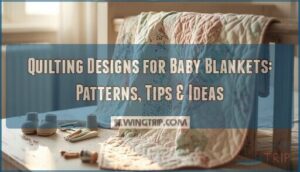
Something about wrapping a newborn in a quilt you made yourself feels like no other gift. It’s personal, soft, and built to last through every nap, stroller ride, and sticky-fingered adventure ahead.
Quilting designs for baby blankets range from sweet and simple to bold and modern—and the best part is that even beginners can create something truly beautiful.
Whether you’re making your first quilt or your fifteenth, the right pattern, fabric, and size make all the difference. Here’s everything you need to get started.
Table Of Contents
- Key Takeaways
- Essential Supplies for Baby Quilt Making
- Choosing The Perfect Baby Quilt Pattern
- Deciding on Baby Quilt Size and Layout
- Selecting Fabrics and Colors for Baby Quilts
- Step-by-Step Baby Quilt Making Process
- Creative Ideas and Trends in Baby Quilt Designs
- Frequently Asked Questions (FAQs)
- Conclusion
Key Takeaways
- A handful of basic tools — a self-healing mat, rotary cutter, and a good iron — is genuinely all you need to start making beautiful baby quilts.
- Precut fabrics like jelly rolls and fat quarter bundles save time and take the guesswork out of color matching, making them a smart pick for beginners.
- Baby quilt size depends on how it’ll be used — 36"×52" for a crib, 30"×35" for a stroller, and 40"×40" for a playmat.
- Organic cotton and bamboo fabrics are the safest choice for baby quilts because they’re soft, breathable, and hold up through countless washes.
Essential Supplies for Baby Quilt Making
Before you cut a single square of fabric, it helps to know what you’re working with. Having the right tools on hand makes the whole process so much smoother — and honestly, a lot more fun.
From fabric scissors to seam rippers, this complete guide to sewing a Christmas stocking walks you through exactly what you’ll need before you start.
Here’s what you’ll want to gather before you get started.
Must-Have Quilting Tools for Beginners
A handful of good tools is truly all you need to get started. For Cutting Mat Setup, a 24"×36" self-healing mat keeps your cuts straight and your table scratch-free. Pair it with a 45mm rotary cutter—Rotary Cutter Safety matters, so look for one with a retractable blade. Add a 6"×24" ruler for Quilt Ruler Selection, an iron for your Pressing Tools Guide, and curved safety pins for Basting Pin Basics. You’re ready.
For a more thorough overview of essential beginner quilting supplies, you can explore a full checklist of recommended tools and materials.
Choosing Quality Fabric and Batting
Good tools get you started — but your fabric and batting choices are what make a baby quilt truly special.
Here’s what matters most:
- Fabric Softness Factors — 100% quilting fabric in cotton or bamboo-blend gives you breathable fiber options that feel gentle on newborn skin.
- Durable Weave Quality — Look for tightly woven cotton with 60–75 threads per inch so it holds up through countless washes.
- Batting Loft Selection — Low-loft cotton batting keeps things light, breathable, and easy to quilt.
Hypoallergenic material picks like OEKO-TEX certified cotton are worth it.
For a deeper dive into materials, loft, and specialty options, you can review this resource on detailed quilt batting guidance to choose the best fill for your baby quilt.
Precut Fabrics Vs. Yardage: Pros and Cons
Once your fabric and batting are sorted, you’ll face one more choice: precut fabrics or yardage?
For PreCut Fabric Quilting, the Time-Saving Benefits are real. Jelly rolls and fat quarter bundles come ready to sew — no measuring, no cutting. They also come in Coordinated Collections, so your baby quilt fabric choices already match beautifully.
The tradeoff? Cost Comparison Basics show precuts run about $14–18 per yard versus $11–12 for yardage. Yardage wins on Layout Flexibility and Precision and Waste control, letting you cut exactly what you need.
For beginners, fat quarter friendly patterns make precuts the easier, faster starting point.
Choosing The Perfect Baby Quilt Pattern
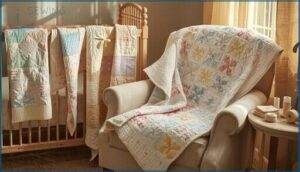
Picking the right pattern is honestly where the fun begins. There’s something out there for every skill level, style, and budget — you just need to know where to look.
Here’s what to keep in mind as you narrow it down.
Easiest Baby Quilt Patterns for Beginners
Starting your first baby quilt doesn’t have to be scary. These beginner-friendly baby quilt patterns make it easy to jump in and actually finish something beautiful.
Here are some simple techniques to get you started:
- Simple Grid Quilts — arrange 4.5-inch squares in rows for clean, No-Math Quilt Designs
- Beginner Strip Piecing — sew long fabric strips together, then cut into blocks
- Easy HST Layouts — two fabrics, straight seams, stunning results
- Quick Jelly Roll Projects — strips are precut, so you skip most measuring
Tons of free baby quilt patterns and baby quilt pattern tutorials are available online to guide you every step of the way.
Before you start cutting fabric, check a baby and standard quilt size chart so your finished project fits exactly where you need it.
Modern Vs. Classic Quilt Designs
Both modern quilting and classic designs bring something special to a baby quilt. Modern baby quilt patterns leave traditional styles behind with bold geometry, clean negative space, and high-contrast palettes — think crisp solids on white or gray. Classic designs lean into soft pastels, repeating patchwork blocks, and small florals that feel timeless.
Your choosing baby quilt patterns journey really comes down to the quilt aesthetics you love. Either way, the design evolution of baby quilt design ideas means you’ve got beautiful options waiting.
Where to Find Free Baby Quilt Patterns
Finding free baby quilt patterns is easier than you’d think. Sites like Polka Dot Chair offer 40-plus free designs with photo tutorials, while Fat Quarter Shop has downloadable PDFs ready to print.
Quilt Blog Directories, Online Quilt Shops, and Printable PDF Libraries put hundreds of free quilt patterns right at your fingertips.
YouTube Quilt Tutorials walk you through every stitch, and Community Pattern Shares let quilters swap ideas and show off finished projects you’ll love.
Deciding on Baby Quilt Size and Layout
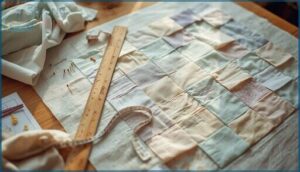
Getting the size right makes everything else fall into place. A quilt that’s too big can be awkward, and one that’s too small won’t do the job.
Here’s what you need to know about sizing before you cut a single piece of fabric.
Standard Baby Quilt Dimensions
Getting the right baby quilt size makes all the difference. Most nursery quilt standards fall between 30 and 45 inches, but a baby quilt size guide takes the guesswork out. Crib quilt dimensions are usually 36 by 52 inches, while a snuggly 30 by 40 inch blanket works perfectly for newborns.
Quilt size charts help you match baby blanket measurements to your growing child, from infant to toddler quilt sizes, so your quilt pattern size stays useful for years.
Crib, Stroller, and Playmat Quilt Sizes
Each quilt lives a different life. Crib Quilt Dimensions land at 36 by 52 inches — just right for a standard mattress. Stroller Sizes stay compact, around 30 by 35 inches, so nothing trails on the pavement. Playmat Measurements reach 40 by 40 inches, giving babies real room to wiggle.
Baby Quilt Sizing doesn’t have to feel overwhelming with the right baby quilt size guide.
Here’s a quick Quilt Size Variations breakdown:
- Crib — 36" × 52"
- Stroller — 30" × 35"
- Playmat — 40" × 40"
- Newborn — 30" × 40
Tips for Scaling Quilt Patterns
Think of pattern scaling like adjusting a recipe — small tweaks make a big difference. For block resizing, multiply your finished block measurement by a simple factor like 1.5× or 2× to keep quilt proportions clean and even. Always test one block first before cutting everything.
Border and sashing widths can stay consistent even when blocks grow. Measurement accuracy matters most here — a half-inch off early compounds fast.
Smart fabric selection ensures you buy enough yardage before starting your baby quilt pattern.
Selecting Fabrics and Colors for Baby Quilts
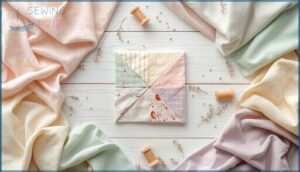
Fabric and color choices can make or break a baby quilt. The right picks keep little ones cozy, safe, and wrapped in something truly beautiful.
Here’s what you need to know before you start shopping.
Best Fabrics for Baby Blankets
Fabric is everything for quilting for babies. The right choice keeps little ones safe, comfy, and cool — the wrong one can irritate sensitive skin fast. Soft cotton and quilted cotton are always a solid starting point. Organic textiles, especially GOTS-certified options, are grown without pesticides and skip harsh dye processes, making them gentle against newborn skin.
For babies, fabric isn’t just aesthetic — the right choice protects sensitive skin, and organic cotton does it best
Natural fibers like bamboo and muslin are breathable materials that wick moisture and prevent overheating during sleep. For winter snuggles, flannel adds cozy warmth without bulk.
Whatever eco-friendly fabric choices for quilts you lean toward, make sure they hold up to frequent washing. Baby quilt pattern designs look beautiful — but durability matters just as much as style.
Color Combinations and Print Ideas
Now that your fabric choices are locked in, it’s time for the most exciting part — colors and prints. Your color palette sets the whole mood. Soft pastel hues like mint green paired with blush pink feel calm and dreamy. Neutral palettes using sandy beige, olive, or warm gray stay timeless for any nursery.
Here’s what works beautifully in baby quilt pattern designs:
- Color blocking with bold contrasting squares creates eye-catching visual energy
- Print mixing large florals with small geometrics adds playful depth
- Fabric textures like smooth cotton beside soft flannel create cozy contrast
- Woodland animal prints grounded in earthy tones make quilt design feel natural and warm
Safe and Washable Fabric Choices
Those beautiful prints deserve equally safe foundations. For baby quilts, organic cotton is your best friend — it’s breathable, gentle on sensitive skin, and holds up through endless washes. Look for OEKO-TEX or GOTS certifications when shopping for quilting fabrics.
| Fabric | Why It Works |
|---|---|
| Organic Cotton | Breathable, hypoallergenic materials; machine washable |
| Bamboo Rayon | Ultra-soft fabric choices, naturally antimicrobial |
| Cotton Muslin | Lightweight breathable textiles; great airflow |
| Flannel | Cozy warmth; easy quilting materials for patchwork |
| Cotton Batting | Low-loft, washable fabric selection for layering |
Always prewash everything and use gentle detergents — fragrance-free works best for fabric safety near newborn skin.
Step-by-Step Baby Quilt Making Process
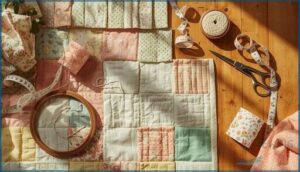
Making your first baby quilt doesn’t have to feel overwhelming. Once you break it down into a few simple steps, the whole process starts to click.
Here’s exactly what you’ll work through to get from fabric to finished quilt.
Cutting and Piecing Quilt Blocks
Precision is your best friend here. Start with clean fabric cutting — run your rotary cutter along a clear acrylic ruler, keeping everything straight on the grain. Cut your quilt blocks consistently, since even a tiny slip throws off your whole quilt assembly.
Stick to a scant quarter-inch seam for seam accuracy, then chain piecing lets you sew multiple patchwork pairs without stopping. Press each seam flat before joining the next. Good block trimming keeps your quilt patterns neat, your fat quarter friendly layouts tidy, and those quilting techniques stress-free.
Assembling The Quilt Sandwich
With your blocks pressed and ready, it’s time for sandwich construction. Lay your quilt backing face-down on a flat surface, smoothing it completely flat. Add your batting selection — cotton breathes beautifully for newborns — then place your pieced top face-up.
Layer alignment matters here, so take your time centering everything. Quilt basting with safety pins every three to five inches locks all three layers together, keeping edge finishing clean and your patchwork quilting stress-free from the very first stitch.
Simple Quilting Techniques for Beginners
Your sandwich is stitched and ready — now the fun truly begins. Three beginner-friendly techniques make patchwork quilting approachable:
- Straight Line Quilting — Use a Walking Foot and sew parallel rows for a clean, modern finish.
- Stitch In Ditch — Follow your seam lines so stitches stay nearly invisible.
- Hand Basting — Large running stitches temporarily secure layers before final quilting.
Chain piecing leftover units keeps your workflow smooth. These quilting techniques and patterns build real confidence.
Binding and Finishing Touches
Binding strips wrap your quilt in a clean, finished frame — and it’s simpler than it looks. Cut your strips at 2½ inches, fold them lengthwise, and sew around the front. These finishing techniques make all the difference:
- Create mitered corners at each turn
- Join ends with a diagonal seam
- Flip and secure with hand stitching
- Attach quilt labels with care instructions
Your baby quilt finishing techniques are complete.
Creative Ideas and Trends in Baby Quilt Designs
Baby quilt designs have come a long way from simple squares and basic stitches. Today’s trends mix creativity with meaning, giving you so many fun directions to explore.
Here are some of the most popular styles quilters are loving right now.
Geometric and Minimalist Patterns
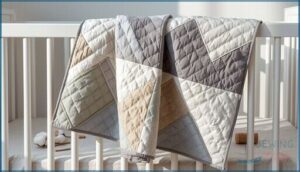
Sometimes the simplest shapes make the biggest statement. Geometric baby quilt patterns using Diamond Blocks, Half Squares, or Large Pieces feel fresh and modern without being complicated. Echo Quilting lines follow your diamond shapes in clean parallel rows, adding texture without clutter.
Stick to soft Color Palettes — two or three tones work beautifully together. Low-volume greys paired with a bright accent? That’s baby quilt pattern inspiration at its best.
Geometric quilt patterns and patchwork don’t have to be fussy — they just have to feel right.
Applique, Patchwork, and Reversible Quilts
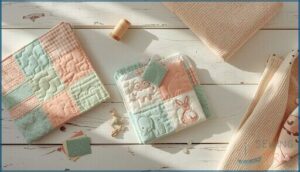
Want a baby quilt that feels truly special? Applique techniques, patchwork designs, and reversible quilting make that happen.
Fusible web applique bonds hearts, bunnies, or birds right onto your background fabric — press, stitch, done. Raw-edge applique with a dense zigzag holds up beautifully through countless washes. And reversible quilts? You’re basically getting two baby quilt patterns in one.
Here’s what makes these approaches shine:
- Applique shapes like elephants or clouds add sweet, layered quilt embellishments
- Four-patch patchwork uses fat quarters efficiently
- Reversible quilts use the "birthing" method for soft, clean edges
- Fabric selection should always favor 100% quilting cotton
- Mixing patchwork with applique creates modern, standout quilt patterns
Personalizing Baby Quilts With Names or Motifs
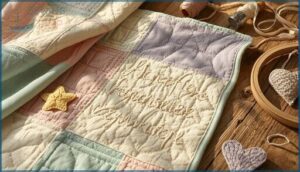
A name stitched into soft fabric turns a baby quilt into a keepsake. Name embroidery using backstitch or chain stitch gives you clean, beautiful letters — perfect for beginners.
For monogram styles, try bold block or flowing script with custom fonts like Jeremy or classic serif. Applique methods using Heat n Bond let you add quilt motifs like stars, hearts, or initials with just an iron.
These baby quilt pattern ideas are simple, personal, and genuinely unforgettable.
Trending Animal and Nature-Inspired Designs
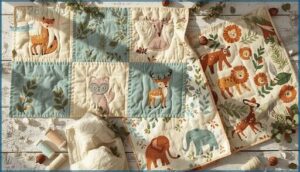
Animal and nature themes are having a real moment in baby quilt patterns right now. Woodland creatures like foxes, deer, and owls look beautiful paired with leafy teals and dusty greens. Ocean themes bring calm to any nursery with soft aqua waves and gentle sea-life blocks. Jungle prints featuring lions and elephants work best in earthy, neutral tones so the shapes stay clear in your patchwork.
Here are three trending baby quilt pattern ideas worth trying:
- Earthy Textures with floral motifs in sage, butter yellow, and pale coral
- Geometric baby quilt patterns layered over woodland animal panels
- Jungle Prints combined with quilting patterns for babies using simple strip piecing
Frequently Asked Questions (FAQs)
What are the best stitch patterns for baby blankets?
Straight line quilting and stitch-in-the-ditch are top picks for baby blanket designs. Both work beautifully with beginner-friendly baby quilt patterns, secure all layers firmly, and keep patchwork details looking clean and intentional.
What is the fastest baby quilt pattern?
The Maypole quilt is hard to beat — it finishes at 40 by 45 inches in about an hour. Four simple strip blocks, no complex piecing. Fast quilt methods don’t get much easier.
What is a good baby quilt pattern?
A good baby quilt pattern keeps things simple without being boring. Four-patch blocks, large squares, and strip designs are all beginner friendly and come together fast — perfect for your first baby quilt.
Are baby quilts easy to make?
Yes — and no. Baby quilts are actually one of the best places to start. Small size, simple baby quilt patterns, and beginner tips make quilting basics approachable for almost anyone picking up fabric for the first time.
Can you make a baby quilt with a free pattern?
Absolutely — free patterns are everywhere online. Sites like SewCanShe and Fat Quarter Shop offer dozens of beginner-friendly options, complete with size charts and video tutorials, so you can start stitching without spending a dime.
How do you quilt a baby quilt?
Layer your quilt top, batting, and backing into a snug sandwich. Use straight-line quilting techniques along seams, then finish with clean binding methods to lock every baby quilt edge securely.
What is a baby quilt?
A baby quilt is a small, soft blanket made from three layers: a pretty quilt top, a cozy batting middle, and a backing.
It’s perfect for cuddles, floor play, and gifting.
Can you make a baby quilt from print fabrics?
Print fabrics work beautifully for baby quilts. Choose quilting cotton prints in coordinating colors, mix small and large scales thoughtfully, and prewash to prevent bleeding. Your finished patchwork will be soft, safe, and washable.
How long does a baby quilt typically last?
A well-made baby quilt usually lasts 5 to 15 years. With gentle washing and proper storage, premium cotton quilts can go even longer — sometimes becoming treasured keepsakes that outlast the baby years entirely.
Can you quilt without a sewing machine?
Yes, you can absolutely quilt by hand. Hand Quilting Basics like running stitches and tying with perle cotton are perfect hand sewing methods for beginners — no machine needed, just a needle, thread, and patience.
Conclusion
Every stitch you sew into a baby quilt might just be the most important thing you’ll ever make. Quilting designs for baby blankets aren’t just pretty patterns—they’re tiny works of love that outlast toys, clothes, and even nursery themes.
Pick your fabric. Choose your pattern. Start with one square. Before you know it, you’ll have something soft, lasting, and completely yours to give. That first snip of fabric is all it takes.