This site is supported by our readers. We may earn a commission, at no cost to you, if you purchase through links.
A dull blade doesn’t just slow you down—it destroys your fabric. Frayed edges, skipped stitches from distorted weave, and entire panels are ruined before you reach the machine.
Most seamstresses don’t replace their shears until the damage is already done, and even then, they often grab whatever’s closest rather than what’s right for the job.
The wrong scissors can turn a clean linen shirt into a jagged mess, while the right pair of fabric scissors for professional seamstresses cuts through 16 layers of denim without a second thought.
Blade material, handle geometry, and balance all determine whether your tools work with you or against you.
Table Of Contents
- Key Takeaways
- 10 Best Fabric Scissors for Professionals
- 1. Professional Titanium Coated Sewing Scissors
- 2. Westcott Titanium Fabric Scissors
- 3. Gingher Stainless Fabric Scissors
- 4. Sewphee Ergonomic Fabric Scissors
- 5. Fiskars Orange Handled Scissors
- 6. Fiskars RazorEdge Fabric Scissors
- 7. Singer Heavy Duty Sewing Scissors
- 8. Heavy Duty Fabric Cutting Scissors
- 9. Stainless Steel Utility Scissors
- 10. High Carbon Fabric Scissors
- Key Buying Factors for Seamstresses
- Best Blade Materials Compared
- Ergonomics and Cutting Performance
- Care Tips for Fabric Shears
- Frequently Asked Questions (FAQs)
- Conclusion
Key Takeaways
- Your blade material is the foundation of everything—titanium-coated or high-carbon steel hold a sharper edge longer and handle heavy fabrics like denim or canvas without breaking down between sessions.
- Handle design isn’t just comfort—bent handles keep fabric flat on the table, ergonomic grips reduce wrist strain, and the right fit lets you cut for hours without losing control or accuracy.
- Matching your scissors to your fabric type matters more than brand loyalty—silk needs fine-tipped thin blades, denim needs reinforced 9-inch shears, and leather demands carbide-reinforced edges.
- Maintenance is what separates a tool that lasts years from one you’re replacing every few months—wipe blades after every session, oil the pivot regularly, and never use your fabric shears on paper or cardboard.
10 Best Fabric Scissors for Professionals
Not every pair of scissors deserves a place in your workroom, and the wrong choice will cost you clean cuts and patience. These ten options have earned their spot through blade quality, handle comfort, and real-world cutting performance. Here’s what made the cut.
If you’re unsure whether your blades are up to the task, understanding whether stainless steel scissors are actually worth it can help you make a smarter choice before you buy.
1. Professional Titanium Coated Sewing Scissors
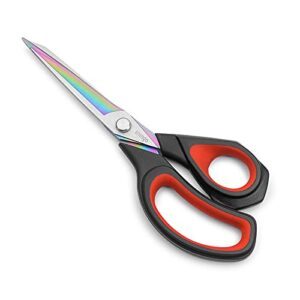
The Professional Titanium Coated Sewing Scissors (Model H1B) are built for seamstresses who don’t compromise on performance.
At 9.45 inches, the forged high-density stainless steel blades are three times harder than standard steel, cutting cleanly through more than 16 layers of denim, leather, canvas, and carpet.
The titanium coating resists rust, adhesives, and friction, so fabric glides through without snagging.
Ergonomic comfort grip handholds keep your control precise, though users with smaller hands may find the handle slightly oversized.
| Best For | Tailors, quilters, and professional crafters who regularly cut through heavy materials like leather, denim, and canvas. |
|---|---|
| Blade Material | Stainless steel with titanium coating |
| Overall Length | 9.45 in |
| Handle Grip Type | Ergonomic comfort grip |
| Multi-Layer Cutting | 16+ layers |
| Protective Cover | Not specified |
| Primary Material Use | Leather, canvas, denim |
| Additional Features |
|
- Blades are three times harder than standard steel, so they slice through 16 layers of fabric without hesitation
- Titanium coating keeps rust and sticky residue off the blades, meaning less maintenance and smoother cuts
- Works across a wide range of materials—from delicate fabric to carpet—making it a solid all-around tool
- The handle runs on the larger side, which can feel clunky if you have smaller hands
- Extended cutting sessions may leave your hand feeling fatigued or tight
- If you’re used to Japanese shears, the smoothness won’t quite match up
2. Westcott Titanium Fabric Scissors
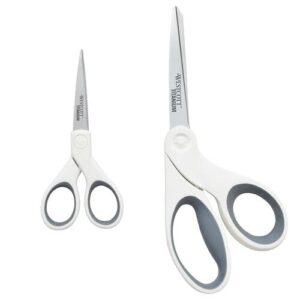
If the H1B felt like the heavy artillery, the Westcott Titanium set takes a different approach — precision over brute force.
You get two scissors in one kit: an 8-inch bent blade for general fabric cutting and a 5-inch micro-tip for tight corners and detail trimming. The titanium-bonded blades stay sharper longer than standard stainless and resist corrosion well in humid workrooms.
The soft-grip hand grips reduce fatigue, though the 5-inch finger holes can feel snug during extended fine work.
| Best For | Sewers, embroiderers, and crafters who need a versatile dual-scissor set for both general fabric cutting and detailed trim work. |
|---|---|
| Blade Material | Titanium-bonded alloy |
| Overall Length | 8 in / 5 in set |
| Handle Grip Type | Contoured soft-handle |
| Multi-Layer Cutting | Not specified |
| Protective Cover | Not specified |
| Primary Material Use | Fabric, quilts, thread |
| Additional Features |
|
- Titanium-bonded blades hold an edge longer than standard stainless and handle heavy fabrics, quilts, and threads with ease
- Two sizes in one kit means you’re covered for big cuts and fiddly detail work without switching sets
- Soft-grip handles make long crafting sessions noticeably more comfortable
- The 5-inch finger holes run small and can feel tight during extended detail cutting
- Thick handles may feel bulky for users with very small hands
- Not built for heavy-duty materials like leather or dense upholstery
3. Gingher Stainless Fabric Scissors
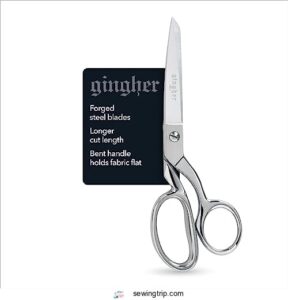
Where the Westcott leans on titanium bonding, Gingher takes the time-tested route — stainless steel done right.
The 8-inch knife-edge blades stay flat against the cutting table, delivering clean cuts from heel to tip on cotton, linen, and denim. The bent, chrome-over-nickel grips keep fabric from lifting, so your long straight cuts stay true. A balanced pivot reduces drag across layers.
The included nylon sheath protects the edge between sessions — a detail Gingher consistently gets right.
| Best For | Sewists, quilters, and crafters who cut a lot of fabric and want a reliable, long-lasting pair of scissors that’ll hold up session after session. |
|---|---|
| Blade Material | Chrome-over-nickel plated stainless steel |
| Overall Length | 8 in |
| Handle Grip Type | Bent all-metal ergonomic |
| Multi-Layer Cutting | Multiple layers to tip |
| Protective Cover | Nylon sheath |
| Primary Material Use | Fabric, quilts, curtains |
| Additional Features |
|
- Knife-edge blades cut cleanly all the way to the tip — great for layered fabrics and precise pattern work
- Bent handles keep fabric flat on the table, so your cuts don’t drift
- Comes with a nylon sheath, which actually protects the blade between uses
- Stainless steel handles can feel slippery if your hands are dry
- Screws can loosen over time and need the occasional tightening
- Sharp blades demand careful handling — the sheath isn’t optional if you want to avoid nicks
4. Sewphee Ergonomic Fabric Scissors
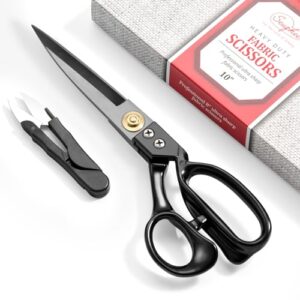
Gingher wins on tradition, but if your hands give out before your workday does, the Sewphee deserves serious consideration.
The contoured ergonomic handle aligns with your hand’s natural curve, distributing grip pressure evenly across your palm. That matters on a six-hour quilting day. Stainless steel blades with a micro-honed edge cut cleanly through layered interfacing without snagging, and the adjustable pivot screw lets you dial in resistance to match your cutting rhythm.
The included sheath keeps edges protected between sessions.
| Best For | Sewers and quilters with arthritis, wrist pain, or anyone who spends long hours cutting through heavy fabrics like denim, leather, or upholstery. |
|---|---|
| Blade Material | Carbon steel with manganese |
| Overall Length | Not specified |
| Handle Grip Type | Ergonomic molded handle |
| Multi-Layer Cutting | Not specified |
| Protective Cover | Plastic sleeve and box |
| Primary Material Use | Denim, leather, upholstery |
| Additional Features |
|
- Ergonomic handle reduces wrist strain during long cutting sessions
- Carbon steel blades deliver clean, fray-free cuts on tough materials
- Dual-screw blade lock keeps cuts stable and consistent
- Designed for right-handed users, so lefties may find it uncomfortable
- Blades need periodic oiling and cleaning to stay sharp
- Not meant for paper or plastic — fabric only
5. Fiskars Orange Handled Scissors
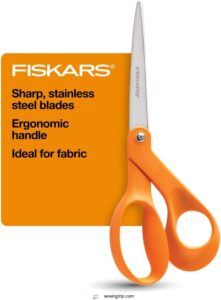
Few scissors carry as much legacy as the Fiskars Orange Handled Scissors. Since their 1960s debut, that iconic orange grip has been a fixture in sewing rooms worldwide, and for good reason.
Pairing them with a quality cutting surface makes all the difference — here’s why self-healing mats protect both your fabric and your blades.
The bent ergonomic handle keeps your fabric flat against the cutting surface, improving straight-line accuracy without extra effort. Precision-ground stainless-steel blades cut cleanly from base to tip, handling fabric, paper, and everyday crafts reliably.
At 8 inches, they’re compact, lightweight, and backed by a full lifetime warranty.
| Best For | Crafters, quilters, and hobbyists who want reliable, comfortable scissors for fabric, paper, and everyday cutting tasks. |
|---|---|
| Blade Material | Stainless steel |
| Overall Length | 8 in |
| Handle Grip Type | Ergonomic bent orange handle |
| Multi-Layer Cutting | Not specified |
| Protective Cover | Not specified |
| Primary Material Use | Fabric, paper, crafts |
| Additional Features |
|
- Precision-ground blades cut cleanly all the way to the tip — great for detailed work
- The bent ergonomic handle keeps material flat, making cuts straighter with less effort
- Backed by a full lifetime warranty, so it’s a one-time buy
- Not built for heavy-duty jobs — thick cardboard or metal will dull the blades fast
- At 8 inches, they can feel small when cutting large pieces of fabric
- The compact size might not suit people with bigger hands or those doing high-volume cutting
6. Fiskars RazorEdge Fabric Scissors
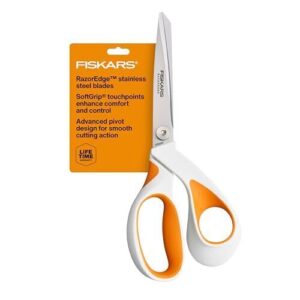
The Fiskars RazorEdge Fabric Scissors take everything the orange-handled classic does well and sharpen it—literally.
Ultra-sharp RazorEdge blades, precision-honed to the tip, deliver clean, fringe-free cuts on cotton, silk, and layered materials alike. The refined pivot design keeps the action smooth without snagging. Your hand stays comfortable through long sessions thanks to the SoftGrip molded handle, and the included protective sheath keeps the edge ready between projects.
| Best For | Sewers of all skill levels who want clean, precise cuts through a wide range of fabrics without wearing out their hands. |
|---|---|
| Blade Material | Premium stainless steel |
| Overall Length | 8 in |
| Handle Grip Type | SoftGrip molded handle |
| Multi-Layer Cutting | Wide range of weights |
| Protective Cover | Removable sheath |
| Primary Material Use | Fabric, vinyl |
| Additional Features |
|
- Blades stay sharp to the very tip, so you get clean cuts every time—no fraying, no dragging
- The SoftGrip handle and smooth pivot make long cutting sessions way easier on your hand
- Comes with a protective sheath, so the edge stays ready between uses
- Stick to fabric only—paper or leather will dull these blades fast
- The blunt tip isn’t great if you need precision point work like detailed needlework
- Heavy industrial use may wear them down quicker than lighter home sewing would
7. Singer Heavy Duty Sewing Scissors
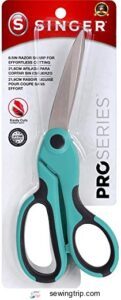
Singer’s heavy-duty reputation isn’t just marketing—these shears back it up. Forged stainless steel blades resist rust and hold their edge through repeated passes on denim and heavy cotton without complaint.
The raised pivot screw keeps the action fluid, so your hand doesn’t tire mid-project. Contoured handgrips fit most grip styles naturally, and the non-slip finish gives you steady control even when things get sweaty.
A reliable workhorse for demanding sewing sessions.
| Best For | Sewers and crafters who work with multiple fabric layers, ribbon, fleece, and everyday materials and want a comfortable, long-lasting pair of scissors for extended projects. |
|---|---|
| Blade Material | High carbon steel |
| Overall Length | 8.5 in |
| Handle Grip Type | Rubberized comfort-grip |
| Multi-Layer Cutting | Multiple layers |
| Protective Cover | Not specified |
| Primary Material Use | Fabric, ribbon, fleece |
| Additional Features |
|
- Tempered high-carbon steel blades are ground on both sides, so they stay sharp and resist rust through regular use
- The rubberized comfort-grip handle makes long cutting sessions way easier on your hand
- Works for both lefties and righties, and every pair is hand-tested before it ships
- Not built for heavy-duty materials like leather, canvas, or metal—push it too hard and you’ll wear it out fast
- The blade will dull over time and need sharpening, even with tempered steel
- The rubber grip can break down with heavy use, which might mean replacing the handle down the line
8. Heavy Duty Fabric Cutting Scissors
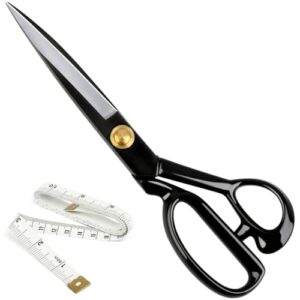
These shears mean business. With high carbon steel blades and a bent handle design, they keep your fabric flat and your cuts precise through leather, canvas, carpet, and heavy layered material.
The rubberized ergonomic grip reduces fatigue during long sessions, while the chamfered blade edge prevents accidental snags.
You also get a 60-inch dual-scale measuring tape included—a thoughtful bonus for layout work.
One caveat: the screw nut can loosen over time and may need occasional readjustment.
| Best For | Quilters, upholstery workers, and DIYers who regularly cut through thick, layered, or heavy-duty materials like leather, canvas, or carpet. |
|---|---|
| Blade Material | High carbon steel |
| Overall Length | 5.51 in |
| Handle Grip Type | Rounded rubberized grip |
| Multi-Layer Cutting | Multiple fabric layers |
| Protective Cover | Safety cover included |
| Primary Material Use | Fabric, leather, carpet |
| Additional Features |
|
- High carbon steel blades hold a sharp edge and slice cleanly through multiple fabric layers without fraying
- Bent handle keeps material flat on the table, making cuts more accurate and consistent
- Comes with a 60-inch dual-scale measuring tape, saving you from hunting down a separate tool
- Heavier and bulkier than standard scissors, which can feel tiring if you prefer a lightweight option
- The screw nut loosens over time and needs occasional readjustment to keep the blades aligned
- Not ideal for fine detail work or delicate fabrics where a lighter, more precise pair would do better
9. Stainless Steel Utility Scissors
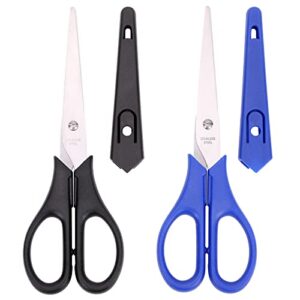
Not every project calls for heavy-duty shears. Sometimes you just need a reliable, adaptable utility scissor that manages everyday trimming without the bulk.
These 9-inch stainless steel scissors stay sharp through repeated fabric sessions and resist rust in humid studio conditions. The ambidextrous grip suits both hands comfortably, and the adjustable pivot screw lets you dial in blade tension exactly where you want it.
Practical, low-maintenance, and travel-friendly—these earn a permanent spot in your kit.
| Best For | Students, crafters, and office workers who need a dependable everyday scissor for light cutting tasks like paper, fabric, tape, and ribbon. |
|---|---|
| Blade Material | Stainless steel |
| Overall Length | 6.5 in |
| Handle Grip Type | Dual-color ergonomic handles |
| Multi-Layer Cutting | Not specified |
| Protective Cover | Protective caps |
| Primary Material Use | Paper, fabric, light items |
| Additional Features |
|
- Rust-resistant stainless steel blades hold up well over time, even in humid conditions
- Works for both right- and left-handed users, which is a nice touch
- Protective blade caps make it easy to toss in a bag without worrying about snags or accidents
- Not built for thick or heavy-duty materials—cardboard boxes and dense fabric will give these trouble
- Some users feel the durability doesn’t hold up after extended, heavy use
- The blade caps help, but they’re not foolproof against very fine mesh bags
10. High Carbon Fabric Scissors

High carbon steel is the blade standard serious seamstresses keep coming back to. The FS-01 model ships with 8-inch blades ground to a fine bevel, slicing cleanly through denim, canvas, and layered woven fabrics with minimal fraying. Rubber-coated metal grips distribute weight evenly, reducing wrist strain on long cutting sessions.
The included kit — measuring tape, thread snips, and sewing picks — keeps your workflow tight. Wipe the pre-oiled blades before first use.
| Best For | Tailors, seamstresses, and crafters who regularly cut through heavy or layered materials like denim, leather, and canvas. |
|---|---|
| Blade Material | High carbon steel |
| Overall Length | 8 in |
| Handle Grip Type | Rubber-coated metal handles |
| Multi-Layer Cutting | Multiple layers |
| Protective Cover | Thin plastic sheath |
| Primary Material Use | Fabric, leather, rope, denim |
| Additional Features |
|
- High carbon steel blades hold a sharp edge over time and can be re-sharpened, so you’re not replacing them every few months.
- The rubber-coated metal handles are weighted and balanced, which makes long cutting sessions a lot easier on your hands and wrists.
- Comes with a handy accessory kit — measuring tape, thread snips, and sewing picks — so everything you need is right there.
- These are on the heavier side, which might not be great if you prefer a lighter pair of scissors.
- The included sheath is thin, brittle plastic — it’s not going to protect your blades (or your fingers) very well long-term.
- Blades come pre-oiled from the factory, so you’ll need to wipe them down before you can actually use them.
Key Buying Factors for Seamstresses
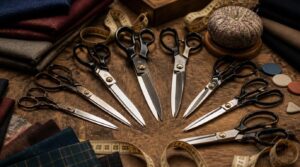
Not all fabric scissors are created equal, and the wrong pair can ruin a project fast. Before you spend a dime, there are five things worth checking every time. Here’s what actually matters when you’re choosing shears that’ll hold up to real work.
Blade Material Quality
The blade material you choose makes or breaks long-term performance. Titanium-coated forged stainless steel runs roughly three times harder than standard stainless, meaning the edge holds longer between sharpenings. High-carbon steel (0.6–1.0% carbon content) sharpens to a precise bevel that withstands repeated heavy‑fabric cuts without rolling.
Key material differences to weigh:
- Forged blades resist chipping better than stamped alternatives
- Titanium coatings reduce friction and corrosion simultaneously
- High-carbon steel needs chromium alloying or coating for rust resistance
- Premium stainless like 440C balances corrosion resistance with lasting sharpness
- PVD or DLC finishes add protection without meaningful weight gain
Choosing a thin blade can reduce kerf and improve precision on delicate fabrics, as highlighted by thin blade precision benefits.
Cutting Edge Performance
Once you’ve sorted blade material, cutting edge performance becomes the next test. High-carbon steel maintains razor-sharp edge geometry through 1,000+ cutting cycles on denim.
Micro-serrations grip slippery fabrics and prevent layer drift across stacked cuts. Hollow-ground geometry reduces friction, so you’re not fighting the scissors.
Professional fabric scissors with precision tips reach seams cleanly without snags.
Handle Comfort and Grip
Once blade performance is locked in, handle comfort decides whether you can work for two hours straight.
Soft-grip handgrips distribute pressure across the palm, not into one hotspot on your thumb joint. Contoured ergonomic shapes follow your hand’s natural curves, and a slight downward tilt keeps your wrist aligned without strain. Non-slip textures hold steady even when your hands get damp.
Scissor Length and Weight
Length and weight aren’t afterthoughts — they shape every cut you make. Blade length precision directly affects how much fabric you can move through in a single stroke. Longer blades, around 9–10 inches, offer maneuverability vs stability that favors straight cuts on wide cloth. Shorter blades give you finer control on curved seams.
Weight distribution balance matters just as much. A scissor weighing 4–6 oz with mass centered near the pivot feels controlled without tiring your hand. Too light, and it wobbles on denim.
Intended Fabric Applications
Fabric type is the real starting point for choosing your shears.
Silk and chiffon demand fine-tipped, thin blades — serrated edges grip slippery weaves and prevent fraying.
Denim and canvas need reinforced blades with serious cutting force behind them; 9-inch or larger cut multiple layers cleanly.
For leather and vinyl, look for carbide-reinforced edges.
Knits need scalloped blades to avoid snagging.
Best Blade Materials Compared
The blade material is where everything starts—it determines how long your edge lasts, what fabrics you can tackle, and how often you’ll need to sharpen. Not all steel is created equal, and the differences matter more than most people realize. Here’s how the most common blade materials stack up against each other.
Titanium-coated Stainless Steel
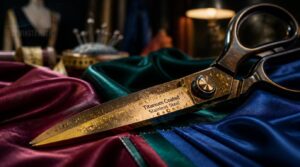
Titanium-coated stainless steel is the industry standard for professional fabric scissors, and for good reason. The coating forms a protective layer that delivers excellent edge retention, outperforming plain stainless steel through hundreds of cutting operations. It also reduces friction between blade and fabric, so your cuts stay smooth and consistent.
Key advantages include:
- Rust resistance in humid studios and near dyes or bleach
- Reduced galling on sticky synthetics and blended fabrics
- Lower surface roughness for cleaner fabric entry and exit
- Coating durability that resists micro-abrasions from everyday studio use
If you work with silk blends, knits, or synthetics regularly, titanium-coated blades simply won’t let you down.
High-carbon Steel Blades
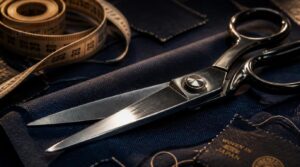
High-carbon steel blades earn their place in professional sewing rooms through sheer metallurgical precision. The carbide-rich microstructure that forms during heat treatment resists plastic deformation under repeated cutting pressure. Properly quenched and tempered, these blades reach 58–65 HRC hardness, holding a razor edge through denim, canvas, and thick wovens without frequent resharpening.
Forged construction refines grain structure further — stamped blades simply can’t match that stability. Keep them dry and oiled, because carbon steel rusts faster than coated alternatives.
Premium Stainless Steel
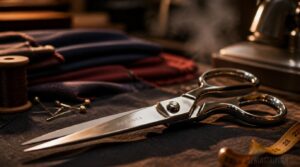
Premium stainless steel sits in a reliable middle ground—not as hard as high-carbon, but tough enough for daily professional use. Chromium content of 12–14% creates a passive oxide layer that resists moisture without constant oiling.
- Passivation treatments stabilize the surface and eliminate free iron
- Molybdenum additions boost corrosion resistance in humid studios
- Grain structure stays consistent through forged construction
- Hardness commonly reaches Rockwell C58–C61
Rust-resistant Finishes
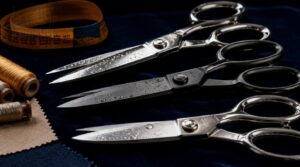
Even the sharpest blade fails early if rust gets a foothold. Rust‑resistant finishes are your first line of defense.
Powder coatings form a thick, non‑porous film that blocks moisture and oxygen directly.
Zinc plating sacrificially corrodes before your base steel does.
Fluoropolymer coatings add low‑friction, chemical‑resistant protection in humid studios—keeping blades sliding smoothly and staying rustproof longer.
Forged Versus Stamped Construction
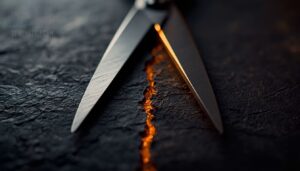
Forged blades aren’t just stronger—they’re engineered differently from the ground up. Continuous grain flow follows the blade’s contour, concentrating strength exactly where cutting stress peaks. Stamped blades, cut from flat sheet stock, lack this directional integrity, making edges more prone to micro-cracking under repeated heavy use.
That structural difference shows up in your workroom. Forged professional fabric scissors hold a sharper edge longer.
Ergonomics and Cutting Performance
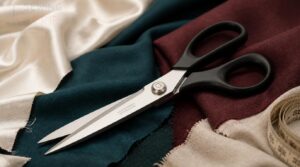
A sharp blade only takes you so far—how a scissor fits your hand and moves through fabric is what separates a good cut from a great one. Ergonomics and cutting performance work together in ways that show up fast once you’re halfway through a long project. Here’s what actually matters when you’re evaluating both.
Bent Handle Accuracy
A bent handle design minimizes wrist deviation by aligning your hand with the blade pivot. Blade angle balance at 15–25° keeps force steady, and proper forearm posture reduces grip tension over long sessions.
- Improves pivot alignment stability on curved seams
- Assists professional tailors’ cutting precision daily
- Steadies professional fabric scissors across dense layers
- Eases grip tension management during heavy cuts
Soft-grip Fatigue Reduction
Blade angle matters, but so does what happens in your hand after hour three.
Soft-grip hand grips on ergonomic sewing scissors use polyurethane and rubber blends to distribute pressure evenly, cutting point load on your thumb and index finger noticeably.
Foam padding under the grip layer delivers up to an 18 percent reduction in perceived grip effort during fatigue‑free cutting sessions.
Left-handed Scissor Options
If soft-grip grips help your right hand, true left-handed design does the same for your left—except the fix goes deeper than surface comfort.
Left-handed scissors reverse blade orientation, keeping the lower blade on your dominant side so your cut line stays visible. That alone prevents most miscuts on delicate fabrics.
Multi-layer Cutting Capacity
Left-handed scissors solve visibility—multi-layer capacity solves volume. When you’re cutting multiple layers of fabric at once, the stakes shift entirely.
Most professional fabric shears handle 8 to 16 layers cleanly, but composite stack stability depends on blade geometry and consistent downward pressure. Without it, layer shifting mid-cut ruins your edge quality from top to bottom.
Precision Tips and Serrations
Precision tips and serrations quietly determine whether a cut succeeds or fails on demanding fabrics. Fine-tooth serrations grip silk and slippery synthetics without tearing delicate threads, while coarse patterns deliver serious bite through denim.
Micro-tip accuracy lets you navigate tight corners cleanly.
After each session, clear lint from the serration valleys—buildup dulls engagement faster than any heavy use will.
Care Tips for Fabric Shears
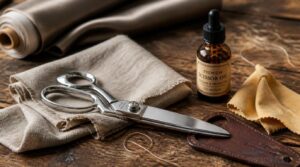
Good scissors are an investment, and how you treat them between projects determines how long they stay sharp. A few simple habits go a long way toward protecting that edge. Here’s what every seamstress should know.
Clean Blades After Use
Your blades are only as good as the care you give them.
After every session, wipe blades immediately with a dry microfiber cloth to lift lint, fiber dust, and moisture before either can settle.
For stubborn adhesive residue, use a cloth barely dampened with mild soap solution, then dry completely — any trapped moisture starts corrosion quickly.
Once clean, apply a thin film of machine oil along the cutting edge.
Lubricate The Pivot Screw
The pivot screw is the engine of your scissors — ignore it, and everything slows down.
Oil the pivot point every 6–12 months with a light synthetic or silicone-based lubricant. Apply a thin film directly to the screw threads, then open and close the blades several times to distribute it evenly. Avoid heavy greases; they attract lint and gum up the pivot fast.
Store in Protective Sheaths
A good sheath isn’t optional — it’s the last line of defense for an expensive blade.
Nylon or PVC sheaths protect against corrosion, moisture, and accidental nicks between sessions. A well-fitted sheath covers the full tip, preventing punctures and keeping blade alignment intact. For organized protective storage, color-coded sheaths by size or purpose save real time when you’re mid-project.
Sharpen Professionally When Needed
Even a top-tier blade loses its edge eventually — that’s not failure, it’s physics.
Schedule professional sharpening every 3–6 months under heavy daily use, or sooner if tips roll or cuts start snagging. A skilled technician will:
- Restore the original bevel angle for clean fabric penetration
- Remove burrs with leather stropping
- Verify coating integrity on titanium or coated blades before returning them
Use Only on Fabric
Here’s the rule that protects everything you’ve invested in your shears: use them on fabric only. Cutting paper, plastic, or metal dulls the edge fast — and many manufacturers will void your warranty the moment you do. Your precision cutting edge is honed for fiber, not stiffness. Treat it that way.
Fabric scissors are engineered for fiber alone—use them elsewhere and you dull the edge and void your investment
Frequently Asked Questions (FAQs)
How much should I budget for quality scissors?
For professional-grade tools, budget between $120 and $ Titanium-coated and high-carbon steel blades cost more upfront, but their durability of shears means fewer sharpenings and a lower total ownership value over time.
Can fabric scissors cut other crafting materials safely?
Fabric scissors can handle thin soft leather and felt cleanly, but paper, rope, and dense foam dull blades fast. Keep them fabric-only to protect edge retention.
When should I replace my fabric scissors?
Replace your scissors when sharpening no longer restores a clean edge after two attempts. If blades fray cuts, gap at the tips, or the pivot wobbles despite tightening, it’s time for a new pair.
What warranty coverage do professional scissors typically include?
Most brands cover manufacturing defects in blades, pivots, and alignment—some offering lifetime warranty support. Register your purchase to activate coverage. Misuse, improper sharpening, and non-authorized repairs usually void claims.
How often should professional scissors be replaced entirely?
There’s no fixed timeline—replace when sharpening no longer restores the edge. Daily professional use often demands replacement within 6–12 months; lighter home use can stretch two years or more with proper care.
Can fabric scissors double as general crafting tools?
Think of your scissors like a chef’s knife—expert at its job, but you wouldn’t use it to open a paint can. Fabric scissors work on felt and interfacing, but avoid cardboard—it dulls blades fast.
Do warranties cover sharpening or blade replacement costs?
Most warranties cover manufacturing defects, not routine dulling. Sharpening costs are rarely included unless explicitly stated. Lifetime warranties from brands like Gingher and Fiskars commonly exclude normal wear entirely.
Conclusion
A craftsman is only as good as their tools—and that truth cuts deepest right at the cutting table. The right fabric scissors for professional seamstresses don’t just make the job easier; they protect your work before it ever reaches the machine.
Keep your blades clean, your pivot well lubricated, and your shears reserved strictly for fabric. Invest in quality once, maintain it consistently, and your scissors will never be the reason a project fails.
- https://threadsketchinginaction.com/best-scissors-for-sewing-and-quilting-in-2023
- https://www.nytimes.com/wirecutter/reviews/best-scissors-kitchen-shears
- https://suzyquilts.com/best-sewing-scissors
- https://lacreativemama.com/best-sewing-scissors
- https://craftideas.blog/craft-supplies-tools/craft-gift-guides/best-sewing-scissors