This site is supported by our readers. We may earn a commission, at no cost to you, if you purchase through links.
A quarter-inch off at the waist can turn a fitted bodice into a costume nightmare, and it usually starts with a cheap tape stretched thin from years of tugging. Dressmakers learn this the hard way, pulling a warped tape across a pattern piece and wondering why the hem sits crooked.
The fix isn’t more skill; it’s better gear. Quality measuring tapes for dressmaking hold their shape, read clearly under bad light, and survive years of pinning, coiling, and shop-floor abuse.
Below, you’ll find ten tapes worth keeping in your kit, plus the details that separate a true sewing tool from a junk-drawer freebie.
Table Of Contents
- Key Takeaways
- Top 10 Measuring Tapes for Dressmaking
- 1. GDMINLO Double Scale Tape Measure
- 2. iBayam Dual Scale Tape Measure
- 3. iBayam Double‑Sided 60‑Inch Tape Measure
- 4. White Soft Flexible Measuring Tape
- 5. Unitedprime Dual Scale Flexible Tape Measure
- 6. GDMINLO Black Retractable Tape Measure
- 7. Double Scale Yellow Tape Measure
- 8. Huahaitgch Dual 60 Inch Measuring Tape
- 9. Fabric Soft Measuring Tape
- 10. 120 Inch Fabric Measuring Tape
- Choosing a Dressmaking Measuring Tape
- Key Features That Improve Accuracy
- How to Use Measuring Tapes
- Caring for Sewing Measuring Tapes
- Frequently Asked Questions (FAQs)
- Conclusion
Key Takeaways
- Choose a fiberglass-core tape with brass end tips, since fiberglass resists stretching and warping while brass prevents fraying, keeping measurements accurate for years.
- A 60-inch tape handles most bust, waist, and hip measurements, but a 120-inch tape avoids repositioning errors on long garments like gowns or fabric bolts.
- Dual-scale tapes with bold, high-contrast inch and centimeter markings prevent misreading and let you switch measurement systems without needing a second tool.
- Proper care—loose coiling, avoiding moisture and overstretching, and cleaning with a dry cloth—keeps a tape’s accuracy intact far longer than careless storage or handling.
Top 10 Measuring Tapes for Dressmaking
A good measuring tape can make or break your next project, so picking the right one matters more than you might think.
If you’re working with fabric instead of wood or metal, precise measurements matter just as much, which is why mastering basic block pattern making techniques pairs so well with a reliable tape.
Every dressmaker has different needs, from tight budgets to specific scale preferences, and the market has options for all of them.
Here are ten tapes worth keeping in your sewing kit, each one earning its spot for a different reason.
1. GDMINLO Double Scale Tape Measure
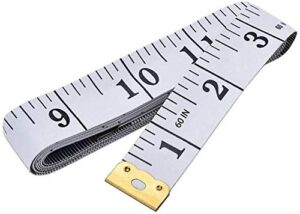
GDMINLO Double Scale Tape Measure earns its spot at the top for good reason: a soft, flexible vinyl body with dual scale markings (inches and centimeters) that resists stretching through repeated use. Metal end tabs keep fraying at bay and give you a firm starting point on every measurement.
At 60 inches long and barely 10 grams, it’s light enough for all-day pattern work, with bold black print on white for quick, accurate reading during fittings.
| Best For | Sewers, tailors, and quilters who need a compact, accurate measuring tool for garment fittings and craft projects on the go. |
|---|---|
| Length | 60 in / 150 cm |
| Material | Flexible vinyl with metal caps |
| Dual Scale | Inches and cm |
| Portability | Pocket-size |
| Use Case | Sewing and body measuring |
| Stretch Resistance | Limited, may stretch |
| Additional Features |
|
- Dual scale design (inches and centimeters) makes it easy to work in either measurement system
- Lightweight, pocket-sized build at just 10 grams is ideal for travel or on-the-go use
- Metal end tabs prevent fraying and give a secure starting point for precise measurements
- No locking or retractable mechanism, so the tape must be held manually while measuring
- Flexible vinyl construction isn’t as durable as steel or cloth tapes for heavy-duty use
- Narrow width can make it harder to measure very fine details or tight spaces
2. iBayam Dual Scale Tape Measure
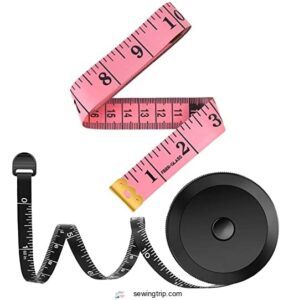
For a second option worth trusting, the iBayam Dual Scale Tape Measure pairs a soft fiberglass center with a flexible vinyl sheath, holding steady against stretching through regular sewing sessions.
Reinforced brass tips guard against fraying, while bold dual-sided markings let you read inches or centimeters without flipping the tape.
At 60 inches, with 1/8-inch subdivisions and millimeter increments, it’s built for precision garment drafting and quick pattern checks alike.
| Best For | This tape measure is best for anyone tracking body measurements, shopping for clothes online, or working on sewing and craft projects who wants a portable, easy-to-read dual-sided tool. |
|---|---|
| Length | 60 in / 150 cm |
| Material | Vinyl coating |
| Dual Scale | Inches and cm |
| Portability | Pocket-size |
| Use Case | Sewing and body measuring |
| Stretch Resistance | May stretch over use |
| Additional Features |
|
- Double-sided design with both a non-retractable pink tape and a retractable black tape for flexibility
- Large, clear inch and centimeter markings on both sides make readings easy
- Lightweight and pocket-sized, so it’s simple to carry in a bag or sewing kit
- The retractable black tape can snap loudly when released
- The pink tape has no retract mechanism, so it must be wound by hand
- The vinyl coating may stretch slightly over time, which can affect precision for detailed tailoring
3. iBayam Double‑Sided 60‑Inch Tape Measure
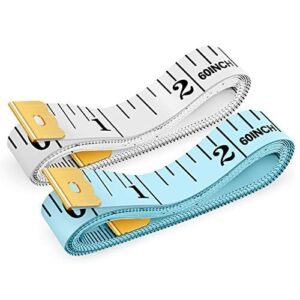
Round out your pack with a second iBayam entry, and you’ve got a pairing built for daily grind work. This 60-inch tape sticks to vinyl construction rather than fiberglass, keeping it lightweight and pocket-friendly for grab-and-go fittings.
Large numerals make inch readings easy to catch at a glance, while the centimeter back-side takes care of metric conversions without guesswork.
The reinforced end hook takes repeated pulling in stride, and smooth edges won’t snag delicate fabrics during hemming or seam checks.
| Best For | This tape measure is best for sewists, tailors, and fitness enthusiasts who need a lightweight, portable tool for body and fabric measurements. |
|---|---|
| Length | 60 in / 150 cm |
| Material | Vinyl |
| Dual Scale | Inches and cm |
| Portability | Lightweight |
| Use Case | Sewing and body measuring |
| Stretch Resistance | May stretch under tension |
| Additional Features |
|
- Double-sided design with both inch and centimeter scales for easy conversions
- Pocket-size and lightweight, making it easy to carry anywhere
- Comes with two tapes (white and blue) in one package
- Soft vinyl can stretch over time, which may affect measurement accuracy
- No locking or retractable mechanism, so it must be held manually while measuring
- Limited to 60 inches, making it unsuitable for longer measuring tasks
4. White Soft Flexible Measuring Tape
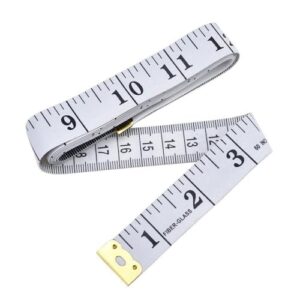
For fittings where fabric can’t take any abrasion, this white tape earns its spot. The soft fiberglass midsection stays low-stretch while hugging curves without kinking, and the silky surface glides over delicate cuts.
Dual scale markings run inches on one side, millimeters on the other, with bold lines every 5 and 10 inches for quick glances.
A reinforced metal end tab resists fraying, and at 60 inches it accommodates bust-to-hem measurements without running short.
| Best For | This tape is ideal for tailors, dressmakers, and crafters who need a soft, portable tool for precise fabric and body measurements. |
|---|---|
| Length | 150 cm / 59 in |
| Material | Soft flexible material |
| Dual Scale | Cm and inches |
| Portability | Fits sewing kits |
| Use Case | Tailoring and dressmaking |
| Stretch Resistance | May stretch with use |
| Additional Features |
|
- Dual-sided cm/inch markings make unit conversion quick and easy
- Soft, flexible material is gentle on both fabric and skin
- Lightweight, compact design fits easily into any sewing kit
- Repeated use can cause the tape to stretch, reducing long-term accuracy
- Narrow width may make the markings harder to read for some users
- Limited color options can make it hard to see against light-colored fabrics
5. Unitedprime Dual Scale Flexible Tape Measure
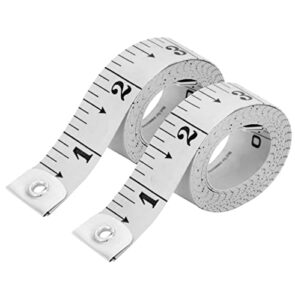
Here’s a tape built for tailors who cross-check often between metric patterns and imperial body measurements. The fiberglass layer resists stretching, keeping your bust and waist readings consistent even after months of daily coiling.
Once your tape is ready, put it to work with this beginner-friendly step-by-step guide to sewing placemats, where accurate measurements make all the difference.
Bold black print sits against a bright band, so millimeter and inch marks stay easy to spot in a dim workroom. The welded metal end tab anchors against fabric edges cleanly, and at 150 cm, it covers most garment measurements without running short mid-pattern.
| Best For | Tailors, sewists, and anyone tracking fitness or body measurements who needs quick, reliable switching between metric and imperial units. |
|---|---|
| Length | 150 cm / 60 in |
| Material | Fiberglass with metal tabs |
| Dual Scale | Inches and cm |
| Portability | Purse or bag friendly |
| Use Case | Sewing and body measuring |
| Stretch Resistance | Resists stretch |
| Additional Features |
|
- Fiberglass construction resists stretching, keeping measurements accurate over repeated daily use
- Dual-scale printing with bold, high-contrast numerals makes readings easy even in low light
- Metal end tabs anchor cleanly against fabric edges and help prevent fraying
- No digital readout or laser assistance, so accuracy depends on careful manual reading
- 150 cm (60 in) length isn’t suitable for measuring larger objects or rooms
- Metal ends can corrode with frequent moisture exposure, so dry storage is required
6. GDMINLO Black Retractable Tape Measure
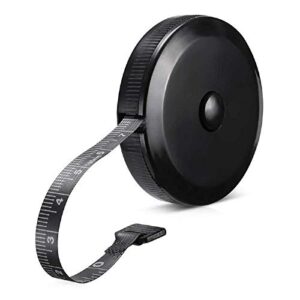
Push-button retraction sets this one apart, snapping the fiberglass blade back into its black case the moment you release it. That self-locking mechanism stops the tape from buckling mid-measurement, which matters when you’re pinning a hem solo.
At 60 inches, it covers most bodice and sleeve work, with inches on one face and centimeters on the reverse. The rigid housing survives drops onto your cutting table, while reinforced tips keep fraying at bay through daily studio use.
| Best For | Sewists, tailors, and crafters who want a compact, dual-unit tape measure for garment work, quilting, and quick body measurements. |
|---|---|
| Length | 150 cm / 60 in |
| Material | Non-stretch fiberglass |
| Dual Scale | Inches and cm |
| Portability | Compact travel size |
| Use Case | Sewing and body measuring |
| Stretch Resistance | May stretch after use |
| Additional Features |
|
- Retractable push-button design snaps the tape back automatically, keeping your workspace tidy
- Dual-sided inch and centimeter markings make it easy to read from either side
- Lightweight, compact case is easy to carry between projects or pack for travel
- Retraction can produce a loud click, which may be distracting in quiet settings
- 60-inch length may fall short for larger measuring jobs
- Soft fiberglass tape can wear or stretch with heavy, extended use
7. Double Scale Yellow Tape Measure
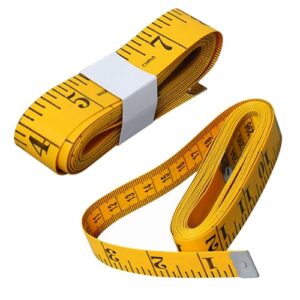
Bright yellow makes this tape hard to lose in a cluttered workroom, even buried under scraps and pattern paper. Both scales share one face, so you read inches and millimeters together without flipping the blade mid-measurement.
Large black numerals stand out at a glance, while a reinforced end hook grips fabric edges securely during solo work. The blade resists kinking around curved seams, staying furl-free through repeated draping and coiling on your cutting table.
| Best For | This tape measure is best for sewists, tailors, and quilters who need a portable, easy-to-read tool for measuring curved surfaces and fabric. |
|---|---|
| Length | 60 in / 150 cm |
| Material | Vinyl with metal hooks |
| Dual Scale | Inches and cm |
| Portability | Fits pocket or purse |
| Use Case | Sewing and body measuring |
| Stretch Resistance | Less durable, may wear |
| Additional Features |
|
- Bright yellow color with large black numerals makes it easy to spot and read, even in a cluttered workspace
- Metal end tabs provide a secure anchor point and help prevent fraying
- Compact, portable size fits easily in a pocket or purse for use on the go
- The two scales are on opposite sides, so you have to flip the tape to switch between inches and centimeters
- Vinyl construction isn’t as durable as reinforced fabric tapes for heavy industrial use
- 60-inch length isn’t long enough for measuring large spaces or long objects
8. Huahaitgch Dual 60 Inch Measuring Tape
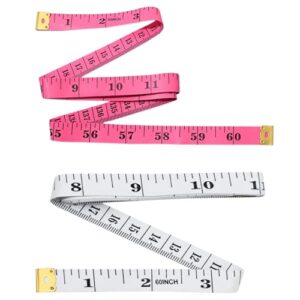
Reliability is what the Huahaitgch Dual 60 Inch Measuring Tape is built on, with a fiberglass-reinforced body that resists stretch through daily draping and pinning.
Dual scales sit on opposite sides, so you flip once for metric precision and once for imperial without hunting for a third reference. The 1/16-inch increments stay crisp, while a locking button holds your reading steady mid-measurement. Reinforced end hooks anchor firmly at fabric edges, and the retractable case tucks neatly into an apron pocket, ready whenever a fitting demands quick, accurate numbers.
| Best For | This tape is best for sewers, quilters, and fitness enthusiasts who need a lightweight, portable tool for accurate body and fabric measurements. |
|---|---|
| Length | 60 in / 150 cm |
| Material | Flexible sturdy material |
| Dual Scale | Inches only |
| Portability | Easy storage |
| Use Case | Sewing and body measuring |
| Stretch Resistance | May stretch with use |
| Additional Features |
|
- Includes two color options (rose red and white) for easy identification
- Flexible yet sturdy material that holds its shape during use
- Lightweight and compact, making it easy to store and carry
- Markings are only in inches, with no printed metric conversion
- Material may stretch over time with repeated use, potentially affecting accuracy
- 60-inch length may be too short for larger projects like upholstery or construction
9. Fabric Soft Measuring Tape
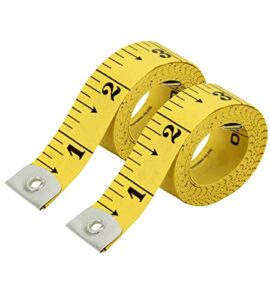
Comfort matters just as much as precision when you’re wrapping a tape around a client for the tenth time in a day. This polyester‑vinyl mix stays gentle against skin while its non‑stretch fiber center keeps readings honest, curve after curve.
Bold numerals in inches and centimeters sit on opposite faces, so switching scales takes a glance, not a search. Fine millimeter marks and eighth-inch fractions handle detailed pattern work.
Lightweight and foldable, it slips into any sewing box without snagging your pins or shears.
| Best For | Sewers, tailors, and fitness enthusiasts who need a comfortable, accurate tape for repeated body or garment measurements. |
|---|---|
| Length | 60 in / 150 cm |
| Material | Vinyl-coated fabric |
| Dual Scale | Inches and cm |
| Portability | Fits purse or toolbox |
| Use Case | Sewing and body measuring |
| Stretch Resistance | Resists stretching |
| Additional Features |
|
- Dual-scale inches and centimeters on opposite sides make switching measurements quick and easy
- Soft vinyl-coated fabric resists stretching while staying gentle on skin during repeated use
- Compact, foldable design with metal end tabs fits easily into a sewing box, purse, or toolbox
- Fixed 60-inch length isn’t suitable for measuring larger objects or rooms
- Fabric construction is less durable than metal tape under heavy, abrasive conditions
- Only available in yellow, with no color choice for the listed unit
10. 120 Inch Fabric Measuring Tape
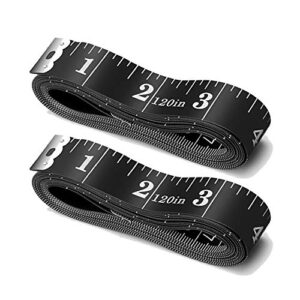
Ever tried measuring a full bridal gown with a 60-inch tape? You’ll be repositioning it three or four times, and each shift invites error. This 120-inch tape solves that, running a full 300 cm in one pass across long skirts, drapes, and bolts of fabric.
Fiberglass construction keeps it non-stretch even under repeated coiling, while metal-tipped ends resist fraying. Dual inch-centimeter scales with bold print make it a workhorse for pattern layouts and yardage checks alike.
| Best For | This tape is best for tailors, seamstresses, and medical or nursing professionals who need to measure long fabric pieces or full-body dimensions without repositioning the tape. |
|---|---|
| Length | 120 in / 300 cm |
| Material | Fiberglass fabric with metal ends |
| Dual Scale | Inches and cm |
| Portability | Flexible for large items |
| Use Case | Sewing and body measuring |
| Stretch Resistance | May stretch slightly |
| Additional Features |
|
- Extra-long 120 in / 300 cm length covers large items like gowns, drapes, and fabric bolts in one pass
- Dual inch-and-centimeter scales with bold, fade-resistant print make readings easy and versatile
- Reinforced metal ends and fiberglass fabric body resist fraying for a longer-lasting tape
- Soft fabric construction may stretch slightly over time with heavy use, which can affect accuracy
- Not built for high-impact or heavy-duty construction measuring tasks
- Maxes out at 120 in, so you’ll need another tool for longer distances
Choosing a Dressmaking Measuring Tape
Picking the right tape comes down to more than grabbing whatever’s in the drawer. You’ll want one that fits your project, your eyes, and your workflow, from garment length to travel size. Here’s what to weigh before you buy.
Best Length for Garments
Since garment length shapes every proportion decision you’ll make, a 60-inch fabric measuring tape covers most bust, waist, hip, and hem checks without repositioning.
Remember that a proper jacket length should align with fingertip level when arms are relaxed.
Match length to occasion and body type:
- Knee-length dresses end an inch above the knee for balanced silhouettes
- Midi skirts run 26-32 inches, waist to hem
- Petites keep hems 1-2 inches above the knee
- Tall frames carry mid-calf to floor lengths well
Metric and Imperial Scales
Once length is sorted, scale choice decides how smoothly you’ll work. Most quality fabric measuring tapes print metric on one edge and imperial on the other, so switching never means grabbing a second tool.
| Scale | Best For |
|---|---|
| Metric | Fine seam allowances, precision drafting |
| Imperial | Traditional pattern pieces, quick fractions |
Dual-scale convenience keeps your tailors tape handy—stick with one system per project to avoid conversion errors.
Flexible Body Measurement Use
Your body isn’t flat, so your flexible tape for body measurements needs to bend with it—hugging the bust, waist, and hips without slack. Contour accuracy matters more than raw length here.
Look for:
- Skin comfort on repeated wraps
- True muscle circumference readings
- Minimal posture variance readings
- Smooth measuring ergonomics for solo fittings
A quality tailors tape makes garment fitting precise, not guesswork.
Readable Markings and Numbers
Getting a good contour fit means nothing if you can’t read the number once you get there.
Look for bold, high-contrast numerals printed in both inches and centimeters, accurate to 1/16 inch and 1mm, with split-scale layouts that prevent parallax error.
UV-resistant ink and clear font legibility keep readings sharp for years, even under bright sewing-room lights.
Sewing Kit Portability
A tape that won’t fold flat is a tape you’ll leave behind. Look for a compact case design under 2 inches thick, with elastic loops keeping your tailor’s measuring kit organized.
Pair it with modular storage solutions and lightweight materials, and your portable measurement device rides along in any purse—ready for on-the-go repairs without adding real weight to your sewing kit.
Key Features That Improve Accuracy
Precision comes down to how a tape is built, not just what it measures. Every material choice and design detail plays a part in keeping your numbers honest, project after project. Here are the features worth checking before you trust a tape with your next garment.
Non-stretch Fiberglass Core
Precision starts at the center—literally. A nonstretch measuring tape relies on high-strength glass fibers bonded solidly, resisting stretch and warping under tension.
This gives:
- Fiberglass tensile strength for durability
- Thermal expansion stability across temperatures
- Moisture absorption resistance in humid rooms
That vinyl-coated fiberglass center keeps your professional tailor measuring tape dimensionally stable, cycle after cycle—exactly what precision dressmaking demands.
Brass Tips and Reinforced Ends
Small metal endings do more work than they get credit for, guarding every edge from fraying each time the tape gets tucked into a pocket or pattern piece. Brass end pieces stay smooth against fabric fibers, preventing snags during quick measurements.
Edge reinforcement, often rivets or adhesive bonding, resists bending under tension. That’s what turns a basic strip into a durable measuring tape worthy of any professional tailor’s kit.
Clear Inch Graduations
Ever squint at a blurry tape and misjudge a hem by a quarter inch? High-contrast markings solve that, printing bold black numerals on light backgrounds so 1/16 inch ticks stay sharp under any lighting.
Precision fractional increments matter most on curves, where scale distortion can creep in. Reliable sewing measuring tapes fight that with durable ink and visual reading aids, keeping accurate measurements steady across every dressmaking project.
Millimeter Measurement Markings
Metric precision lives in the small stuff: ten tiny marks between each centimeter, with the fifth often bolder for fast counting. Zero point alignment matters most here, since a crooked start throws off every millimeter after it.
- Count marks after the last full centimeter
- Watch for the emphasized fifth-millimeter tick
- Keep the tape flat, never twisted
- Read centimeters first, then add millimeters
Good tapes stay accurate to 1/16 inch and 1mm, with split-scale inches and metric printed clearly side by side.
Retractable Locking Designs
A retractable measuring tape for sewing keeps things tidy: press the button, and a spring-loaded latch locks the blade wherever you stop.
| Feature | Purpose | Benefit |
|---|---|---|
| Push-button locking | Holds blade still | Reads accurately |
| Spring-loaded latch | Prevents slack | Reliable locking |
| Reinforced housing | Withstands drops | Lasts longer |
Retraction speed stays smooth, never snapping back and risking your fingers.
How to Use Measuring Tapes
Owning a great tape measure only pays off once you know where and how to use it on a real body or a real bolt of fabric. Every dressmaking project asks something a little different of your tape, whether you’re checking a waistline or squaring up a seam allowance.
Here’s what you need to know to get precise, dependable results at every stage of the process.
Bust, Waist, and Hips

Getting these three numbers right sets the foundation for everything else.
For accurate bust sizing, wrap your tailor’s measuring tape around the fullest part, keeping it level and snug. Find your natural waist placement above the belly button, breathing out softly. Then locate the fullest hip measurement, tape parallel to the floor—these figures reveal your body shape for smarter pattern adjustments.
Inseam and Sleeve Measurements
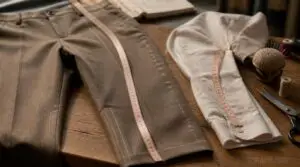
Pants and sleeves both hinge on one seam line, so precision here saves you from redoing hems twice.
Stand tall in the shoes you’ll wear, and run your sewing measuring tape from crotch to hem for the inseam. For sleeves, bend your arm slightly, tracing the natural curve to the wrist. This prevents bunching and keeps mobility, whether you’re chasing a custom break or a relaxed one.
Fabric and Pattern Measuring
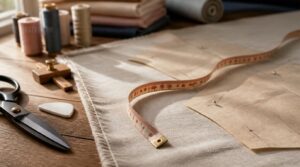
Once the tape’s off your body, it’s onto the fabric. Find the selvage edge first, that tightly woven border showing true grain, then check your pattern’s grain line against it.
Factor fabric shrinkage math before cutting, and calculate pattern ease for room to move.
A fabric measuring tape and pattern drafting tools keep nap direction and layout accurate.
Seam Allowance Checks
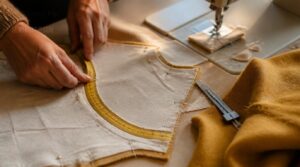
Once fabric’s cut, grab your sewing measuring tape again to confirm each seam allowance matches pattern instructions before you stitch a single line.
- Verifying seam accuracy at curved edges like necklines
- Checking fabric bulk management on heavier textiles
- Running a quick mock sewing test on scraps
A seam gauge works too, but precision tailoring tools catch shifting fabric fast.
Garment Fitting Adjustments
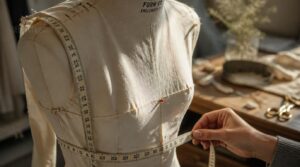
Once the muslin’s on the body, your tailors tape measure becomes a fitting tool, not just a cutting guide. Check shoulder slope alignment and bust dart placement first, then confirm waistline height balance and hip contour shaping.
For armhole ease adjustments, wrap the flexible tape for body measurements snugly under the arm. This body measurement tape catches every imbalance before you commit to permanent stitches.
Caring for Sewing Measuring Tapes

A good tape measure earns its keep for years, but only if you treat it right. The way you store, handle, and clean your tape has everything to do with how long it stays accurate. Here’s what you need to know to keep yours in top shape.
Store Loosely Coiled
Coil your sewing measuring tape loosely after each use, never cinched tight. Tight winding preventing fiber kinks fails—it causes them, straining the fiberglass center and flattening the blade over time.
Loose loops keep your tailors tape measure supple, maintaining coil elasticity for quick, tangle-free deployment. This habit also avoiding permanent flattening, letting air circulate around your dressmaking tools while resting on a shelf.
Avoid Pulling or Stretching
Yanking your tape taut might feel efficient, but excessive tension permanently warps the fiberglass center, quietly stealing measurement accuracy over time.
Yanking a tape taut may feel efficient, but that excess tension quietly warps its core and steals accuracy over time
- Don’t pull past the tape’s natural extension
- Never stretch across delicate fabrics
- Avoid forcing a curled tape straight
- Don’t snag it from tight pockets
- Release tension before recoiling
Overstretching distorts printed markings, turning reliable readings into systematic sizing errors.
Keep Away From Moisture
Water is your tape’s quiet enemy, causing rust on brass tips and blurring your carefully printed markings.
| Moisture Risk | Prevention |
|---|---|
| Rust on metal ends | Store in a clean dry place |
| Blurred ink | Add a silica gel packet |
| Condensation buildup | Avoid bathrooms, sinks, steam |
Good workspace moisture management protects measurement tape durability, keeping your tool accurate for years of dressmaking work.
Clean With Dry Cloth
Dust builds up fast on sewing measuring tapes, and a dry cloth takes care of it without risking moisture damage to brass tips or ink.
- Microfiber traps particles through static
- Lint-free material prevents residue transfer
- One-directional wiping lifts dust cleanly
- Buffing removes leftover static cling
- Regular dusting keeps fabric measuring tape readable
This quick habit keeps your tailoring tools precise, session after session.
Replace Worn Markings
Even the best sewing measuring tapes fade eventually. Run a quick legibility assessment whenever numbers blur or contrast drops noticeably.
Faded fabric measuring tools lose precision measuring accuracy fast. Replace with high-visibility materials, ensuring proper surface preparation and marking consistency with your other sewing equipment. Confirm readability through visibility verification under different lighting before trusting your tailoring tools again for garment work.
Frequently Asked Questions (FAQs)
What kind of measuring tape do tailors use?
Professional tailors reach for a fiberglass coated tape, not cloth, since it resists stretching and keeps body measurements true. This non-stretch section, paired with brass ends, meets professional accuracy standards that cloth measuring tape simply can’t match over time.
How do you measure yourself for dressmaking?
Stand still, shoulders relaxed, feet together, with a flexible tape snug against your skin. Take bust measurements, then waist and hip circumference at their fullest points. Use a mirror, recheck twice, and record each number for accuracy.
Are fabric measuring tapes accurate?
Yes—quality fabric measuring tapes hold NIST tolerance standards, staying accurate within 1/32 inch per 6 feet.
Fiberglass stretch resistance prevents material distortion, so your flexible tape delivers accurate measurements every time, provided you avoid pulling too tight.
What is the measuring tape in a sewing kit called?
Ever wonder what to call that flexible strip in your kit? It’s simply a tape measure, also known as a sewing tape measure, fabric measuring tape, cloth measuring tape, or tailors measuring tape—your essential tool for sewing.
What are the different types of tape measures for sewing clothes?
Sewing tape measures come in a few main types: soft cloth or fiberglass tapes, dual-scale versions with metric and imperial sides, retractable housings for portable sewing kits, and specialized tailoring tapes with brass-reinforced ends for lasting accuracy.
What is a fabric measuring tape called?
Most sewers just call it a sewing tape or tailoring tape, though "fabric tape" and "cloth measuring tape" work too. Whatever the label, it means a soft, flexible tool built for bodies and bolts, not stiff carpentry tapes.
What length measuring tape is best for dressmaking?
A single length rarely fits every job, so don’t assume one tape does it all. For standard 60-inch utility covering bust, waist, and hip circumference accuracy, that’s your workhorse—reserve a 120-inch tape for long garments and wide pattern layout needs.
Can measuring tapes be used for home décor?
Absolutely — beyond the sewing room, your tape covers curtain panel sizing, gallery wall spacing, upholstery yardage math, rug placement planning, and lighting fixture alignment.
It’s a trusty companion for DIY home décor projects like curtains, slipcovers, and tablecloths.
How do you read dual-scale measuring tapes accurately?
Measure twice, cut once: reading dual-scale tapes accurately means aligning zero points first, then keeping your eye level to avoid parallax. Read inches to the nearest 1/16, millimeters to the nearest 1mm, and cross-check both scales for consistency.
Are fiberglass tapes better than cloth for sewing?
For most projects, yes — fiberglass resists moisture and stretching, holding calibration through repeated use. Cloth measuring tapes stay softer for body contours but can fray and stretch over time, making fiberglass the sturdier choice for accurate, long-term textile measurement.
Conclusion
Most sewists assume any tape works fine until a hem proves otherwise. That myth falls apart the moment fiberglass meets a warped dollar-store coil.
The right measuring tapes for dressmaking aren’t fancy; they’re just honest, holding true inch after inch, season after season. Brass tips, clear numbers, a spine that won’t stretch—that’s the whole secret.
Buy once, measure right, and let your seams do the talking. Precision isn’t luck. It’s a tool you trust.
- https://perfectmeasuringtape.com/blog/waist-body-tapes/what-to-consider-when-choosing-a-measuring-tape-for-sewing
- https://www.nist.gov/how-do-you-measure-it/how-do-you-ensure-tape-measure-accurate
- https://wilkerdos.com/13-tape-measure-tips
- https://www.homedepot.com/c/ab/how-to-read-a-tape-measure/9ba683603be9fa5395fab90e6f14546
- https://www.moppetdolls.com/product-page/round-measuring-tape-in-stylish-leather-retractable-tape-measure-for-sewing