This site is supported by our readers. We may earn a commission, at no cost to you, if you purchase through links.
Most people pick clothes by color, fit, or price—and never think twice about what the fabric actually does. That’s a gap worth closing. The fiber in your shirt determines whether you’ll sweat through a meeting, shrink a favorite sweater, or watch a jacket pill after three washes.
Textile scientists call it “fiber behavior,” and once you understand it, you start making choices that hold up. Common fabric fibers explained clearly can save you money, frustration, and a lot of ruined laundry. Natural fibers, synthetics, and everything in between each come with trade-offs worth knowing before you buy.
Table Of Contents
Key Takeaways
- Natural fibers like cotton, linen, and wool each have distinct trade-offs in breathability, strength, and care needs that directly affect how long your clothes last.
- Synthetic fibers like nylon and polyester outperform natural ones in durability and color retention, but they come with environmental costs that don’t disappear after you toss them out.
- Fiber diameter, weave structure, and moisture behavior matter more than brand or price when it comes to comfort against your skin.
- Knowing a fabric’s fiber content before you buy — and washing it accordingly — is the single most effective way to protect your wardrobe and your wallet.
Natural Fabric Fibers Explained
Natural fibers come straight from plants and animals, which is why they’ve been used in clothing for thousands of years.
From cotton fields to sheep farms, each fiber has its own story — and choosing fabric by fiber content makes a real difference in how your finished piece looks and feels.
Each one has its own personality — some breathe well, some feel incredibly soft, and some hold up better than you’d expect. Here’s a closer look at the most common ones you’ll run into.
Cotton – Properties and Uses
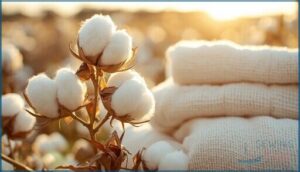
Cotton is arguably the most dependable natural fiber in textile science — and for good reason. It’s made of about 90% cellulose, absorbs up to 25 times its weight in moisture, and still feels dry against your skin.
Across fabric types and everyday use, it holds up well in both warmth and washing.
Linen and Flax – Breathable Plant Fibers
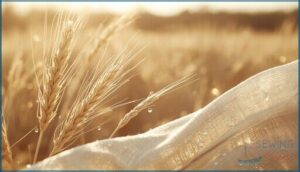
Linen takes a different approach than cotton — it starts stiffer but earns its place. Made from flax cultivation, its hollow fibers pass breathability tests that most fabric types can’t match.
Linen weaving creates an open structure that pulls moisture away fast. Fiber strength holds up through years of use, making it a standout in sustainable fashion and textile science.
Wool, Merino, and Cashmere – Animal-Based Fibers
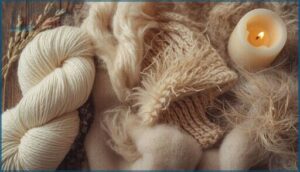
Where flax gives you lightness, animal-based fibers give you warmth you can actually feel. Wool production starts with keratin-rich fibers that trap air and regulate temperature naturally. Merino benefits go further — fine fibers around 17–21 microns sit soft against skin without itching.
Cashmere quality comes from a goat’s undercoat, yielding barely 200 grams yearly. Always follow proper fabric care and maintenance: hand wash or dry clean.
Silk – Luxurious Protein Fiber
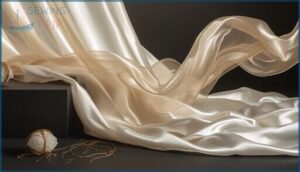
Cashmere keeps you warm, but silk wraps you in something altogether different. As a protein fiber, silk’s structure — about 75% fibroin — gives it that unmistakable drape and sheen.
Sericin removal during processing is what unlocks its softness. Silk weaving then transforms those fine filaments into fabric types like charmeuse and chiffon, making textile applications range from evening wear to surgical sutures.
Hemp and Jute – Sustainable Bast Fibers

Both hemp and jute pull their fibers from the same place — the bast, or phloem layer, just beneath the plant’s outer stem. That shared origin gives them real structural strength, and both break down naturally after use.
Here’s why they matter:
- Hemp tensile strength reaches up to 1,110 MPa — tougher than cotton
- Jute fiber uses span sacks, carpet backing, and industrial goods
- Bast fiber benefits include biodegradability and lower water demand than conventional cotton
The hemp and jute market trends reflect this growing appeal. Hemp production alone was valued near $5.78 billion in 2024. As sustainable textile options go, these natural fibers are hard to beat for eco-friendly textiles built to last.
Synthetic and Regenerated Fibers

Not every fabric starts with a plant or animal — some of the most useful ones are built from scratch in a lab.
Synthetic and regenerated fibers have become a big part of how we dress, work out, and stay warm. Here’s a look at the main types you’ll run into.
Caring for them properly makes a real difference—these washing instructions for synthetic and regenerated fabrics break down exactly how to keep each type looking its best.
Polyester and Fleece – Everyday Synthetics
Polyester is one of the most common man-made fiber types you’ll encounter today. This synthetic fiber dries fast, resists wrinkles, and holds its shape well.
Fleece takes it further — it’s polyester knit and brushed into a soft, insulating fabric that traps warm air without much weight. Both fabric types are machine-washable and built for everyday durability.
Nylon and Microfiber – Performance Materials
Nylon fabrication starts at the molecular level — long polyamide chains that hydrogen-bond tightly, giving the fiber outstanding tensile strength and abrasion resistance up to ten times greater than cotton. That’s why performance textiles and athletic wear rely on it. Microfiber weaves, usually nylon or polyester blended into ultra-fine synthetic fibers, absorb up to eight times their weight in water, making these technical textiles remarkably efficient for both performance fabrics and everyday synthetic blends.
Acrylic and Spandex – Specialty Uses
Acrylic and spandex are two synthetic fibers that punch well above their weight. Acrylic sweaters mimic wool’s warmth at a fraction of the cost, while spandex leggings stretch up to 800 percent without losing shape. Together, these man-made fibers represent real textile innovation.
Acrylic mimics wool’s warmth cheaply, while spandex stretches 800 percent without losing shape
Here’s what makes them stand out:
- Warmth without weight — acrylic traps heat effectively, making it ideal for cold-weather synthetic insulation
- Outstanding fabric stretch — spandex recovers over 95 percent after stretching
- Budget-friendly — acrylic costs far less than natural wool alternatives
- Easy care — most acrylic fabric types are machine washable
- Versatility — spandex textile fibers appear in everything from swimwear to medical compression sleeves
Viscose – Semi-Synthetic Option
Viscose sits in an interesting middle ground — it’s not quite natural fiber, not fully synthetic. This semi-synthetic fiber starts as real wood pulp, but the manufacturing steps involve dissolving that pulp with chemicals to regenerate it into filaments.
The result? Soft, breathable man-made fibers with a subtle drape. Just know the environmental impact is real — chemical-heavy viscose production affects both air and water.
Neoprene and Other Modern Fibers
Neoprene is one of those synthetic fibers that quietly shows up everywhere — from wetsuits to laptop sleeves. As ManMade Fiber technology progressed, so did our options for high-performance textile fibers across all fabric types.
Here are 5 modern HighPerformance Fibers worth knowing:
- Neoprene – waterproof, insulating, flexible
- Kevlar (aramid) – five times stronger than steel by weight
- Tencel lyocell – holds 50% more moisture than cotton
- Nylon – durable synthetic fibers for activewear
- Microfiber – ultra-fine weaving for softness and performance
Key Properties of Fabric Fibers
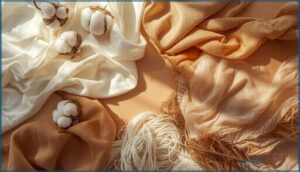
Knowing what a fabric is made of only tells half the story — how it behaves is what really matters.
Every fiber has its own set of traits that affect how it feels, holds up, and fits into your life. Here are the key properties worth understanding before you buy or care for any fabric.
Breathability and Moisture Absorption
Think of breathability as your fabric’s ability to let air in and sweat out. Natural fibers like cotton and linen use open fabric pores to boost air permeability, while hydrophobic fibers like polyester resist moisture absorption but can feel clammy without ventilation.
Moisture wicking blends balance both — pulling sweat away from your skin so breathable materials keep you comfortable longer.
Durability and Strength
Breathability tells you how fabric manages moisture — but tensile strength tells you how long it’ll last.
Nylon leads in wear resistance, handling roughly 10 times more friction than cotton before showing damage.
Polyester follows closely, offering solid fiber durability through repeated washing.
Natural fibers lose strength faster; cotton can drop 41% tensile capacity after 50 wash cycles.
Fabric abrasion, weave tightness, and material science all shape how your textile fibers hold up over time.
Comfort and Feel
Durability matters, but comfort is what you actually feel all day. Softness Factors like fiber diameter drive this — Merino wool and Cashmere sit under 20 microns, so they don’t prickle.
Silk’s Sensory Comfort comes from its smooth filaments. Cotton breathes in mild heat, while Wool manages Thermal Regulation through trapped air.
Moisture Management and Fabric Drape round out how a fabric truly wears.
Sustainability and Eco-Friendliness
How a fabric feels is only part of the story — what it costs the planet matters too. Eco-friendly textiles and sustainable fashion aren’t just trends; they’re responses to real data. Consider these three footprints:
- Wool emits ~13.89 kg CO₂ per kg of fiber
- Cotton uses ~93 billion cubic meters of water industry-wide annually
- Polyester persists in landfills for hundreds of years
Choosing sustainable textiles and eco-friendly materials means weighing these tradeoffs honestly.
Care and Maintenance Needs
Every fiber has its own rulebook. Wool and cashmere need cold water and flat drying to prevent fabric shrinkage. Silk demands a gentle cycle. Polyester resists color fading best when dried on low heat in shade.
For ironing tips, match dot symbols to fiber type — one dot for silk, two for synthetics. Proper storage methods and washing instructions together are the backbone of smart textile care.
Top 5 Products for Fabric Care
Knowing your fibers is only half the battle — taking care of them properly is what makes clothes and textiles last. The right products can protect delicate fabrics, tackle tough stains, and keep everything looking its best wash after wash.
Here are five fabric care products worth keeping on hand.
1. Handy Laundry Wool Dryer Balls
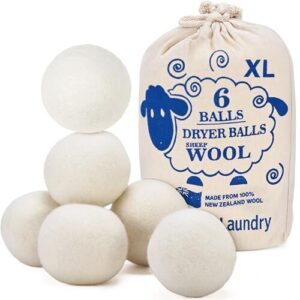
If you’re still tossing a plastic dryer ball into every load, it’s time to reconsider. Wool Dryer Balls are made from 100% New Zealand wool — solid all the way through, no plastic core hiding underneath.
They tumble through your laundry, separating fabrics so hot air circulates freely, cutting drying time by up to 25%. They naturally soften clothes without chemical residue, making them a smart choice for sensitive skin. One set of six can last over 1,000 loads.
| Best For | Anyone looking to ditch chemicals and plastic from their laundry routine, especially those with sensitive skin or allergies. |
|---|---|
| Material | 100% New Zealand Wool |
| Primary Use | Laundry Softening |
| Form Factor | Ball |
| Weight | 2.24 oz |
| Scent | Unscented (optional oils) |
| Fabric Safety | Safe for sensitive skin |
| Additional Features |
|
- Cuts drying time by up to 25%, which adds up to real energy savings over time
- Made from 100% New Zealand wool — no plastic, no chemicals, just natural softening
- One set of six lasts over 1,000 loads, so you’re not constantly buying replacements
- Can get tangled in sheets or larger items during the cycle
- Won’t fully eliminate static cling in very dry conditions
- No built-in scent — you’d need to add essential oils yourself if you want a fresh smell
2. Shout Color Catcher Sheets
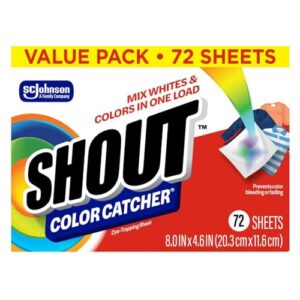
Mixed loads are a laundry gamble — toss a red shirt in with your whites and you might end up with pink everything.
Shout Color Catcher Sheets solve that problem cleanly. Each cellulose sheet absorbs and traps loose dyes released during the wash cycle, so colors don’t migrate onto lighter fabrics.
They work in any water temperature and with any detergent. One sheet takes care of a standard load; use two for large or heavily dyed items. At 144 sheets per box, they last a long time.
| Best For | Anyone who wants to skip sorting laundry and keep their colors from bleeding into each other. |
|---|---|
| Material | Dye-free Sheet |
| Primary Use | Color Protection |
| Form Factor | Sheet |
| Weight | 12.74 oz |
| Scent | Original Scent |
| Fabric Safety | Safe for all colorfast fabrics |
| Additional Features |
|
- Works with any water temp, detergent, or washer type — no fuss
- 144 sheets in a box means you’re stocked for a long time
- Great for people with allergies since it’s dye-free and low scent
- Some people find the scent stronger than expected
- One sheet might not cut it for really big or heavily dyed loads
- Cellulose sheets may not trap dyes as well as fabric-style alternatives
3. Leather Honey Leather Cleaner
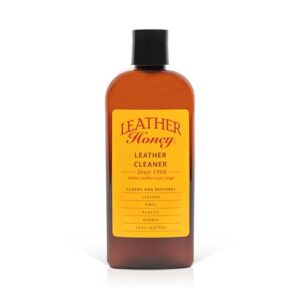
Leather is a surface that punishes harsh cleaners fast — strip its natural oils and you’re left with cracking, fading, and regret.
It’s the Leather Honey Leather Cleaner that takes a gentler approach. It’s non-toxic, pH balanced, and free from solvents, silicone, and animal products. That matters on finished leather, faux leather, vinyl, and even exotic hides.
It won’t work on suede, but for everything else — car seats, handbags, furniture, shoes — apply it with a lint-free cloth, let it dry, then condition.
| Best For | Anyone who wants a safe, no-fuss cleaner for finished leather — car seats, furniture, handbags, shoes, or exotic hides — without worrying about damage or harsh chemicals. |
|---|---|
| Material | Non-Toxic Liquid |
| Primary Use | Leather Cleaning |
| Form Factor | Liquid Spray |
| Weight | 8 oz |
| Scent | Unscented |
| Fabric Safety | Safe for all leather colors |
| Additional Features |
|
- EPA Safer Choice certified and non-toxic, so it’s gentle on leather and safe to use around kids and pets
- Works on a wide range of surfaces — finished leather, faux, vinyl, and exotic hides, including white leather
- Made in the USA since 1968, so there’s a solid track record behind it
- Won’t work on suede, so it’s not a one-cleaner solution for every leather type
- Heavily soiled areas may need more than one application to get fully clean
- Some users have reported packaging issues like loose tops and leaking, which can be frustrating
4. Shout Active Enzyme Stain Remover Spray
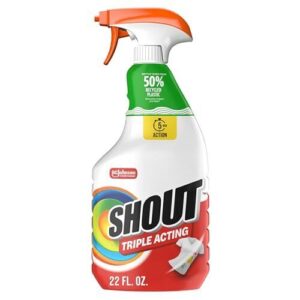
Some stains don’t go quietly — especially protein-based ones like blood, grass, and sweat that bond tight to fabric fibers.
Shout Active Enzyme Stain Remover Spray targets those stains with protease enzymes, breaking them into smaller fragments your wash cycle can actually rinse away. It’s 50x more concentrated than in-wash powder, works across cold, warm, and hot water, and is safe on colorfast washables. Just spray, rub it in, and wash. One 22oz bottle tackles a lot of laundry emergencies.
| Best For | Anyone dealing with tough protein-based stains like blood, grass, or sweat who wants a concentrated, easy-to-use pre-treatment that’s safe on most colors and fabrics. |
|---|---|
| Material | 25% Recycled Plastic Bottle |
| Primary Use | Stain Removal |
| Form Factor | Spray Bottle |
| Weight | 1.6 lbs |
| Scent | Fresh Scent |
| Fabric Safety | Safe for all colorfast washables |
| Additional Features |
|
- Super concentrated formula — 50x stronger than regular in-wash powder, so a little goes a long way
- Tackles over 100 stain types, including the stubborn ones like food, grass, and blood
- Simple to use: just spray, rub, and toss it in the wash
- Needs pre-treatment time before washing, so it’s not a grab-and-go quick fix
- The enzyme formula can irritate skin or airways for people with sensitivities
- Not great for delicate fabrics or hand-wash-only items
5. Muchfun Honeycomb Mesh Laundry Bag
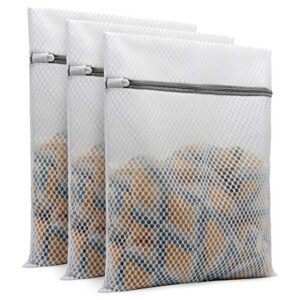
Delicate fabrics deserve a little armor in the wash. The Muchfun Honeycomb Mesh Laundry Bag gives them exactly that. Its polyester honeycomb mesh balances water flow with just enough structure to prevent snags, stretched straps, and tangled lace. The anti-rust zipper locks shut through full wash and dry cycles, so nothing escapes mid-spin. At 12″ x 16″, it fits lingerie, yoga pants, and even light jackets comfortably. It’s a simple tool that quietly extends the life of your most wear-sensitive pieces.
| Best For | Anyone who wants to protect delicate clothes — lingerie, yoga pants, light jackets — from the rough-and-tumble of a regular wash cycle. |
|---|---|
| Material | Polyester Mesh |
| Primary Use | Delicate Item Protection |
| Form Factor | Mesh Bag |
| Weight | 4.2 oz |
| Scent | Unscented |
| Fabric Safety | Safe for delicate fabrics |
| Additional Features |
|
- Honeycomb mesh lets water flow through freely so clothes actually get clean and dry evenly
- Anti-rust zipper with auto-lock keeps everything secure through the whole cycle
- Medium size hits a sweet spot — roomy enough for most delicates without being oversized
- Some users reported the zipper breaking or getting stuck after regular use
- Not great for bulky or oversized items
- Zipper needs a little care — rough handling can shorten its lifespan
Frequently Asked Questions (FAQs)
What are the different types of fabric fibres?
Fabric fibers fall into two main camps: natural and synthetic. Natural ones come from plants, like cotton and linen, or animals, like wool and silk.
Synthetics, like polyester and nylon, are made from chemicals.
What are the healthiest fibers to wear?
The healthiest fibers to wear are organic cotton, linen, merino wool, and silk.
They’re breathable and low in chemicals, and gentle on sensitive skin — helping your body stay cool, dry, and irritation-free.
What fabrics are best for sensitive skin?
For sensitive skin, 100% cotton, bamboo, and lyocell are your safest bets. They’re breathable, soft, and moisture-wicking — keeping skin cool and dry without trapping irritants.
Can natural fibers be blended with synthetics?
Yes, natural fibers blend easily with synthetics. Cotton-polyester is the most common mix, balancing breathability with wrinkle resistance and durability. Like the best partnerships, each fiber covers the other’s weaknesses.
How do fabric dyes affect fiber properties?
Dyes do more than add color — they can slightly stiffen fibers, reduce moisture absorption, and affect strength.
Reactive dyes on cotton, for example, bond chemically, which improves color fastness but marginally lowers water uptake.
Which fibers hold color best after washing?
Polyester and acrylic hold color best after washing. Their synthetic fibers lock dye in tightly, resisting fading through 30–50 wash cycles. Cotton fades faster unless treated with vat or fiber-reactive dyes.
What certifications indicate ethically sourced fabrics?
Like a seal of trust on a product label, certifications such as GOTS, OEKO-TEX, Fairtrade Cotton, SA8000, and Bluesign confirm ethical sourcing — covering labor rights, chemical safety, and environmental standards throughout the supply chain.
Conclusion
The theory that fabric choice is purely aesthetic doesn’t hold up under scrutiny. Every fiber tells a story written in trade-offs—breathability versus durability, softness versus strength, convenience versus sustainability.
With common fabric fibers explained, you now hold a practical lens for every label you’ll ever read. Trust what the fiber tells you, not just how the fabric looks on the rack. That knowledge changes what you buy—and how long it actually lasts.
- https://www.tiktok.com//video/7463575189507444014
- https://link.nbcnews.com/join/5cj/nbc-news-select-signup-pd
- https://ncls1.com/irk?o=nthd73&s=515050&subid=nbcnews.com&bkd=buffy.co&di=fabricglossaryrcna193819&d=https%3A%2F%2Fbuffy.co%2F
- https://www.pinterest.com/pin/477733472976929053/
- https://cuteoutfits.com/flats-shoes-cute-outfits/