This site is supported by our readers. We may earn a commission, at no cost to you, if you purchase through links.
After years at the machine, you stop tolerating compromises. A skipped stitch on a complex flying geese block isn’t a minor annoyance—it’s a sign your equipment can’t keep pace with your skill.
The gap between a capable quilting machine and a truly great one shows up in the details: throat space, motor torque, stitch consistency across twelve layers of batting and cotton. Quilting machines for experienced sewers carry far more technical weight than beginner models suggest, from microstepping motor control to sensor-adjusted tension that responds mid-seam.
The ten machines reviewed here earned their spots through specs that match serious workloads and features that reward the hands that already know what they’re doing.
Table Of Contents
- Key Takeaways
- Top 10 Quilting Machines Reviewed
- 1. Singer Quantum Stylist 9960 Computerized Sewing Machine
- 2. Brother XR9550 Computerized Sewing Quilting Machine
- 3. Brother HC1850 Computerized Sewing Quilting Machine
- 4. Brother CS7000X Sewing and Quilting Machine
- 5. Brother SE700 Sewing Embroidery Machine
- 6. Singer Heavy Duty 4452 Sewing Machine
- 7. Brother XM2701 Lightweight Sewing Machine
- 8. SEDNEE Portable Sewing Machine for Beginners
- 9. Industrial Portable Bag Sewing Machine
- 10. Singer Heavy Duty 4423 Sewing Machine
- Best Features for Advanced Quilters
- Computerized Vs Mechanical Quilting Machines
- Performance for Complex Quilt Projects
- Buying Guide for Experienced Sewers
- Frequently Asked Questions (FAQs)
- Conclusion
Key Takeaways
- Throat space, motor torque, and stitch consistency are the specs that actually separate a capable quilting machine from one that keeps pace with serious, experienced work.
- Computerized machines win on precision and pattern control, but mechanical models handle heavier loads and tolerate DIY maintenance far better over the long run.
- Free-motion quilting support — drop feed dogs, open-toe foot, and solid thread tension balance — is the real test of whether a machine can handle complex, creative quilt work.
- Matching features to your actual projects matters more than chasing the highest spec; throat space, presser foot options, and workspace size should drive your buying decision.
Top 10 Quilting Machines Reviewed
Finding the right quilting machine comes down to matching the right specs to the way you actually work. The ten machines below cover a wide range of needs, from heavy-duty stitching to computerized embroidery, so there’s something here for almost every experienced sewer. Here’s a close look at each one.
For a deeper dive into each option, this roundup of reliable sewing machines for professionals breaks down exactly what sets them apart.
1. Singer Quantum Stylist 9960 Computerized Sewing Machine
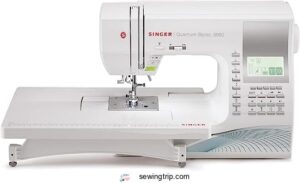
The Singer Quantum Stylist 9960 is a serious machine for sewers who want one tool to do it all. You get 600 built-in stitches and 1,172 stitch applications — enough variety to carry you from garment construction to decorative quilting without skipping a beat.
The automatic needle threader, built-in thread cutter, and top drop-in bobbin keep setup fast and interruptions rare. At 14.6 pounds with an extension table included, it’s practical, capable, and ready for long sessions.
| Best For | Sewers who want one machine that handles everything — garments, quilting, embroidery, and home décor — without buying extra equipment. |
|---|---|
| Built-in Stitches | 600 |
| Max Stitch Speed | Not specified |
| Frame Material | Plastic and metal |
| Power/Voltage | 120V / 84W |
| Machine Weight | 14.6 lb |
| Bobbin System | Top drop-in |
| Additional Features |
|
- 600 built-in stitches with 1,172 stitch applications gives you serious variety for any project
- Automatic needle threader, thread cutter, and drop-in bobbin make setup quick and keep you in flow during long sessions
- Comes loaded with 13 presser feet plus an extension table, so you’re not hunting for add-ons
- No dedicated top-thread tension wheel, so decorative stitches can take some trial and error to dial in
- Standard throat plate is smaller than dedicated quilting machines, which can get cramped on big quilting projects
- The needle threader can be a little finicky and sometimes needs a helping hand
2. Brother XR9550 Computerized Sewing Quilting Machine
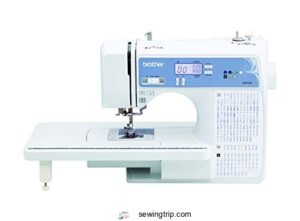
If the 9960 feels like too much machine, the Brother XR9550 lands in a sweet spot. You get 165 built-in stitches — utility, decorative, and heirloom styles included — plus 55 alphanumeric options for monogramming. The LCD display keeps navigation simple, and the jam-resistant drop-in bobbin cuts setup time noticeably.
At 10.1 pounds with a wide table included, it carries large quilt tops without feeling like a burden. 850 stitches per minute keeps your pace up when the project demands it.
| Best For | Beginners and hobbyist quilters who want plenty of stitch variety and easy controls without the overwhelm of a high-end machine. |
|---|---|
| Built-in Stitches | 165 |
| Max Stitch Speed | Not specified |
| Frame Material | Metal and plastic |
| Power/Voltage | 120V |
| Machine Weight | 10.1 lb |
| Bobbin System | Jam-resistant drop-in |
| Additional Features |
|
- 165 built-in stitches plus alphanumeric monogramming options give you a lot of creative range
- The jam-resistant drop-in bobbin and automatic needle threader make setup quick and frustration-free
- Lightweight at 10.1 lbs and comes with a wide table, so it handles big quilt tops and travels easily
- Only works at 120 volts, so it’s strictly a US-market machine
- The hard protective cover is reportedly tricky to get on and off
- Mostly plastic build, which could raise durability questions over years of heavy use
3. Brother HC1850 Computerized Sewing Quilting Machine
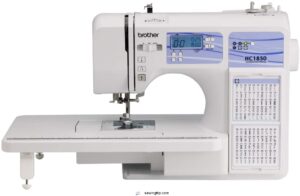
The HC1850 sits right alongside its XR9550 sibling but carves out its own lane. You get 185 built-in stitches — 130 sewing and 55 alphanumeric — plus eight styles of one-step auto-size buttonholes. The spring action quilting foot and drop-in feed dog make free-motion work genuinely smooth.
At 10.1 pounds, it’s portable without sacrificing stability. 850 stitches per minute keeps complex quilt patterns moving at a solid pace.
| Best For | Beginners and hobbyists who want a versatile machine for quilting, clothing, and basic monogramming without a steep learning curve. |
|---|---|
| Built-in Stitches | 185 |
| Max Stitch Speed | Not specified |
| Frame Material | Metal |
| Power/Voltage | 120V |
| Machine Weight | 10.1 lb |
| Bobbin System | Jam-resistant drop-in |
| Additional Features |
|
- 185 built-in stitches plus eight auto-size buttonhole styles give you serious variety without needing extra equipment
- Free-motion quilting with the spring action foot feels smooth and intuitive, even if you’re still getting comfortable with the craft
- Lightweight at 10.1 pounds and easy to pack up for sewing classes or craft nights
- Only works with 120V US power, so it’s not an option if you’re traveling or living abroad
- The alphanumeric monogramming font runs pretty small, which limits what you can do with personalization
- You have to raise the presser foot manually, which can slow things down compared to machines with an automatic lift
4. Brother CS7000X Sewing and Quilting Machine
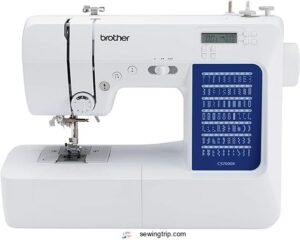
If the HC1850 impressed you with its speed, the Brother CS7000X takes a different approach — focusing on workspace and accessibility. You get 70 built-in stitches spanning utility, decorative, quilting, and heirloom styles, plus seven one-step auto-size buttonholes. The LCD display keeps stitch selection straightforward, and the automatic needle threader saves real time during long sessions.
At 14 pounds with a detachable wide extension table, it accommodates large quilts comfortably without feeling bulky or overpowered.
| Best For | Quilters, beginners, and home sewers who want a versatile machine with plenty of stitch options and room to work on larger projects. |
|---|---|
| Built-in Stitches | 70 |
| Max Stitch Speed | 750 SPM |
| Frame Material | Metal |
| Power/Voltage | 120V |
| Machine Weight | 14 lb |
| Bobbin System | Jam-resistant drop-in |
| Additional Features |
|
- 70 built-in stitches plus seven auto-size buttonholes gives you a lot of creative range without digging through menus
- The automatic needle threader and jam-resistant drop-in bobbin make setup quick and frustration-free
- Detachable extension table handles big quilts and larger fabric panels with ease
- Tops out at 750 stitches per minute, so it’s not the right pick if you need industrial-level speed
- Only works with 120V US power, which rules it out for international use
- The lightweight build can shift around on your table — you’ll probably want a non-slip mat underneath
5. Brother SE700 Sewing Embroidery Machine
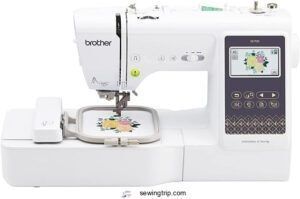
The Brother SE700 bridges sewing and embroidery in one tidy package — and at $579.99, it punches above its weight. You get 135 built-in embroidery designs, 103 sewing stitches, and wireless design transfer via Wi-Fi or USB. The 3.7-inch LCD touchscreen makes editing and previewing patterns genuinely easy.
The auto needle threader alone saves serious frustration, and you can explore the full range of Brother single-needle sewing machines to see how the SE700 stacks up against its siblings.
One real limitation: the 4×4 inch embroidery field keeps larger motifs out of reach. But for personalizing apparel, accessories, or small quilts, it manages the job confidently.
| Best For | Beginners who want to sew and embroider without buying two separate machines. |
|---|---|
| Built-in Stitches | 103 |
| Max Stitch Speed | 710 SPM |
| Frame Material | Not specified |
| Power/Voltage | 120V |
| Machine Weight | 15.6 lb |
| Bobbin System | Drop-in |
| Additional Features |
|
- Wireless Wi-Fi transfer and the Artspira app make loading new designs genuinely painless
- Auto-threader and auto-cutter save setup time and cut down on frustrating little mistakes
- 135 built-in embroidery designs plus 103 stitches gives you plenty to work with right out of the box
- The 4×4 inch hoop is limiting — anything larger than a small motif means you’ll need a different machine
- Narrow throat space makes wrestling wide fabric or big quilt tops a real headache
- Setup instructions are notoriously vague, so expect to hunt down YouTube tutorials before you’re up and running
6. Singer Heavy Duty 4452 Sewing Machine
At $219.99, the Singer Heavy Duty 4452 is built for sewers who mean business. Its 1,100 stitches per minute and full metal frame handle denim, canvas, and upholstery without breaking a sweat. You get 32 stitches, a one-step buttonhole, and a top drop-in bobbin for quick thread monitoring.
The trade-off? No digital display — just dials and knobs that’ll have you reaching for the manual. But if raw power matters more than screens, this machine delivers.
| Best For | Sewers who regularly work with heavy fabrics like denim, canvas, or leather and want a powerful, durable machine without paying for computerized features they don’t need. |
|---|---|
| Built-in Stitches | 32 |
| Max Stitch Speed | 1,100 SPM |
| Frame Material | Full metal |
| Power/Voltage | 120V |
| Machine Weight | 17.6 lb |
| Bobbin System | Top drop-in transparent |
| Additional Features |
|
- Punches through thick materials easily at 1,100 stitches per minute — great for upholstery, bag making, and heavy garment work.
- Comes loaded with useful accessories (walking foot, non-stick foot, zipper foot) so you’re ready to go right out of the box.
- Top drop-in bobbin with a clear cover makes it simple to check thread levels and swap bobbins mid-project.
- No digital display — the unlabeled dials and knobs can be confusing, and you’ll likely need the manual close by.
- Some users run into issues with thread jams, tricky walking foot installation, and inconsistent zig-zag stitching on stretchy knits.
- Ships with a U.S. plug only, so international buyers will need a voltage converter or adapter.
7. Brother XM2701 Lightweight Sewing Machine
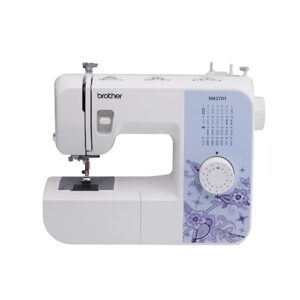
Lightweight doesn’t mean limited. The Brother XM2701 comes in at just 12.6 pounds and $149, making it easy to haul to a quilting class or a grandkid’s house. You get 27 built-in stitches, an automatic needle threader, and a jam-resistant drop-in bobbin — solid basics that keep your setup quick.
Just don’t push it through heavy denim or thick batting layers. For light piecing, simple quilts, and everyday repairs, it manages the job cleanly.
| Best For | Beginners, casual sewers, and anyone who wants a simple, reliable machine for everyday repairs, light quilting, and basic projects without a steep learning curve. |
|---|---|
| Built-in Stitches | 27 |
| Max Stitch Speed | Not specified |
| Frame Material | Metal |
| Power/Voltage | 120V |
| Machine Weight | 12.6 lb |
| Bobbin System | Drop-in top |
| Additional Features |
|
- Automatic needle threader and drop-in bobbin make setup fast and frustration-free.
- 27 built-in stitches cover everything from basic hems to decorative finishes.
- Light enough at 12.6 lbs to toss in the car and take wherever you need it.
- Struggles with heavy fabrics like denim, leather, or thick layered materials.
- Can shift around on the table when you’re running it at higher speeds.
- Only works on U.S. 120V power — using it abroad voids the warranty.
8. SEDNEE Portable Sewing Machine for Beginners
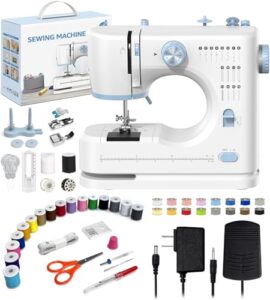
The SEDNEE FHSM-520 is honestly the odd one out on this list — and that’s worth addressing directly. It’s built for beginners, not experienced quilters. You get 16 built-in stitches, a drop-in bobbin, and a frame light enough to carry one-handed. It processes up to 5 layers of denim, which is respectable for its size.
If you’re buying it for a teenager or a quick travel kit, it makes sense. For complex quilting work, it won’t keep up.
| Best For | Beginners, teens, and students who need a lightweight, affordable machine for basic repairs and simple projects. |
|---|---|
| Built-in Stitches | 16 |
| Max Stitch Speed | Not specified |
| Frame Material | Internal metal |
| Power/Voltage | Not specified |
| Machine Weight | Not specified |
| Bobbin System | Not specified |
| Additional Features |
|
- 16 built-in stitches give you plenty of variety for everyday sewing needs
- Handles up to 5 layers of denim, so it’s tougher than it looks
- Compact and portable — easy to store in a dorm or small apartment
- Threading takes patience and getting it wrong can cause jams or broken needles
- Not built for complex or heavy-duty quilting projects
- Relies heavily on the manual for proper setup and use
9. Industrial Portable Bag Sewing Machine
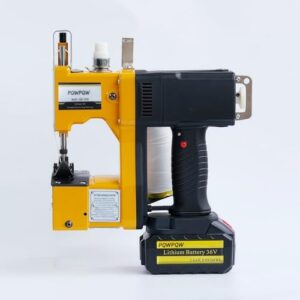
This machine is built for one job: sealing bags fast. With a stitch rate of 1,600–1,900 stitches per minute and an 11,000 RPM motor, it’s designed for industrial output — not your typical quilt project. It processes materials from 0.2mm up to 9mm thick, including woven PP, canvas, and leather.
For experienced sewers curious about high-volume industrial work, the portable pedestal design and chain stitch mechanism make it a niche but capable workhorse.
| Best For | Businesses and industrial operators who need high-volume bag sealing for agriculture, construction, or retail packaging. |
|---|---|
| Built-in Stitches | Not specified |
| Max Stitch Speed | 1,600–1,900 SPM |
| Frame Material | Aluminum alloy |
| Power/Voltage | 110V corded |
| Machine Weight | Not specified |
| Bobbin System | Not specified |
| Additional Features |
|
- Blazing fast at 1,600–1,900 stitches per minute — serious output for serious production lines
- Handles a wide range of materials, from lightweight woven PP to thick leather up to 9mm
- Portable design means you can move it where the work is
- Locked to a 110V corded power source, so you need the right setup nearby
- Stitch length maxes out at 11mm, which may limit certain heavy-duty applications
- Overkill (and likely too specialized) for anyone outside industrial or commercial use
10. Singer Heavy Duty 4423 Sewing Machine
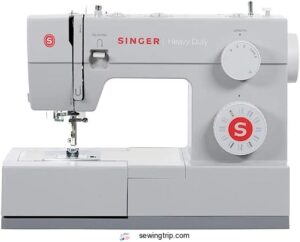
The Singer Heavy Duty 4423 earns its spot through raw reliability. It hits 1,100 stitches per minute and pushes through denim, canvas, and leather without complaint, thanks to a heavy-duty metal frame that keeps vibration in check.
You get 23 built-in stitches, adjustable presser foot pressure, and a drop feed for free-motion work. It won’t replace a longarm, but for everyday heavy-fabric quilting, it’s a dependable machine that doesn’t demand much from you.
| Best For | Sewers who regularly work with heavy fabrics like denim, leather, or canvas and want a reliable, no-fuss machine that can keep up. |
|---|---|
| Built-in Stitches | 23 |
| Max Stitch Speed | 1,100 SPM |
| Frame Material | Metal and plastic |
| Power/Voltage | 120V / 84W |
| Machine Weight | 14.6 lb |
| Bobbin System | Class 15 plastic |
| Additional Features |
|
- Blazing fast at 1,100 stitches per minute — it chews through thick materials without slowing down
- Sturdy metal frame keeps things stable and cuts down on vibration during long sessions
- Adjustable presser foot pressure means it handles delicate fabrics just as well as heavy ones
- The foot pedal is super sensitive, so new users will need some time to get comfortable with speed control
- Instruction manual leaves a lot to be desired — expect to hunt down YouTube tutorials to fill in the gaps
- The short foot pedal cord can be a pain depending on your setup
Best Features for Advanced Quilters
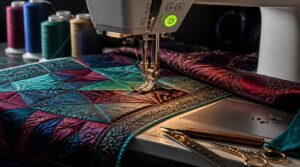
At this level, the features you choose make or break a project. Not every machine delivers what experienced quilters actually need, so knowing what to look for puts you ahead. Here are the key features worth prioritizing.
Wide Stitch Selection
Stitch Width Range is where serious quilters separate themselves from casual hobbyists. Machines offering widths from 5mm to 9mm — with 0.5mm incremental steps — give you precise control over every decorative border and appliqué edge. An adjustable stitch width also allows the narrow 2–3mm settings required for delicate silk.
Here’s what wide stitch selection actually unlocks for you:
- Bold appliqué work with clean, even coverage
- Consistent zigzag stretch on knits without yarn breakage
- Geometric and floral Decorative Stitch Options across 7 to 60 variants
- Fabric-matched stitch variety from lightweight sheers to layered quilts
A Quick Width Adjustment lever keeps your workflow moving without stopping mid-project. Stitch previews on LCD screens show your stitch patterns before a single thread drops, saving fabric and frustration. With Fabric Stitch Compatibility built into smarter machines, even dense denim accommodates Wide Stitch Control cleanly. Some models pack 70 built-in stitches or far more, giving your creativity real room to run.
Adjustable Speed Control
Wide stitch variety gives you creative control, but sewing machine speed control is what keeps that creativity precise. With Microstepping Control, you can adjust motor frequency in 0.5 percent steps — a small increment that makes a real difference when you’re maneuvering tight curves or dense batting. Experienced sewers know that speed consistency matters as much as stitch selection.
Speed Lock Presets let you store favorite speeds per project, so you’re not resetting every session. Pedal Sensitivity Settings soften or sharpen throttle response to match your personal touch. Add Torque Feedback Adjustment from integrated sensors, and your computerized sewing machine maintains even tension across thick layers without slowing unexpectedly.
Free-motion Quilting Support
Speed precision sets the stage, but free-motion quilting support is where experienced sewers truly test a machine’s capabilities. Dropping the feed dogs unlocks fluid movement across your quilt surface, letting you steer design lines instead of following them. A reliable Free Motion Foot — especially an open-toe version — gives you the visibility needed for tight curves and dense fills without snagging the batting.
Free-motion quilting is where experienced sewers truly test a machine — drop the feed dogs and steer the design
- Variable Stitch Speed lets you slow down for intricate motifs and open up for long sweeping fills
- Feed Dog Management via a dedicated lever keeps transitions smooth and consistent between passes
- Thread Tension Balance between top thread and bobbin prevents bird-nesting through thick batting layers
- Guide Aids like quilting gloves and ruler feet help you repeat motifs with accurate spacing
- A responsive presser feet system adapts easily to different quilting techniques mid-project
Your needle-to-arm workspace directly affects how freely you can maneuver larger quilts. Pair that with solid fabric tension control, and every stitch lands exactly where you want it.
Large Workspace Design
Your needle-to-arm workspace only gets you so far — the rest depends on how well your entire room is designed around the machine.
Extension tables 18–24 inches wide keep large quilts supported instead of dragging. Plan at least 3 feet of clear floor space on each side, pair it with 1,200–1,800 lumen LED lighting, and experienced sewers gain real control over every pass.
Automatic Thread Cutting
Automatic thread cutting saves more time than most sewers realize — especially across a complex, multi-section quilt. A built-in cutter severs both threads cleanly at the seam exit in one action. On machines like the Brother CS7000X, servo timing synchronizes the cut precisely with stitch termination.
Cutter blade life usually runs 20,000 to 80,000 cuts, so tracking a simple maintenance schedule keeps performance consistent. Manual override lets you disable auto-cutting for satin stitches where clean tails matter most.
Computerized Vs Mechanical Quilting Machines
Choosing between computerized and mechanical quilting machines is one of the biggest decisions you’ll face as an experienced sewer. Each type brings real trade-offs that affect how you work, what you can create, and how much upkeep you’re signing up for. Here’s how they compare across the factors that matter most.
Precision Stitch Control
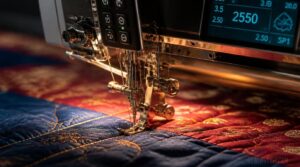
Precision means everything when you’re working across complex quilt layers. Stitch regulation keeps your stitch length consistent no matter how fast or slow you move — and computerized machines do this automatically. Sensor feedback monitors thread tension in real time, so you’re not babysitting every seam. Digital calibration aligns needle throw down to fractions of a millimeter, giving experienced sewers the control that truly matters.
| Feature | Computerized |
|---|---|
| Stitch regulation | Automatic |
| Thread tension | Sensor-adjusted |
| Motor calibration | Digitally precise |
Digital Pattern Editing
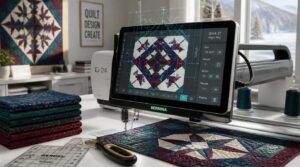
Editing patterns digitally is where computerized sewing genuinely pulls ahead. Vector conversion turns hand-drawn blocks into precise, resizable files — so resizing a quilt block never distorts a single seam. You can embed seam allowance values directly, apply pattern grading across 35 sizes automatically, and run 3D validation on a virtual avatar before cutting a single yard. Auto digitizing manages tracing, freeing experienced sewers to focus on design.
| Feature | Computerized |
|---|---|
| Pattern scaling | Vector-based, lossless |
| Grading | Auto, up to 35 sizes |
| Fit testing | 3D virtual validation |
Heavy-duty Reliability
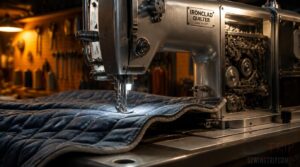
Regarding heavy-duty reliability, mechanical machines have a quiet edge that’s easy to underestimate.nnIndustrial-grade DC brushless motors maintain consistent torque through eight-hour quilting sessions without significant heat rise. Overload protection activates at 120 percent of rated load, shielding the motor from burnout. Sealed bearing longevity keeps dust out, extending motor life even in demanding environments.nnChassis integrity matters just as much. Solid steel or hardened aluminum frames resist flex at 1,500 stitches per minute, and welded corner joints prevent needle deflection during dense stitching.nn| Feature | Mechanical | Computerized |n|—|—|—|n| Motor Longevity | Industrial-grade brushless | Standard servo |n| Heavy Load Capacity | 12 denim layers | 6–8 layers |n| Thermal Protection | Fuse + sensors | Basic overheat cutoff |
Maintenance and Repairs
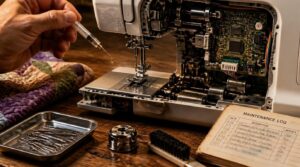
Keeping a quilting machine running well long-term comes down to consistency. Lubrication schedule, needle replacement, and bobbin maintenance differ noticeably between mechanical and computerized models — and ignoring those differences costs you time and money.
| Maintenance Area | Mechanical | Computerized |
|---|---|---|
| Service Intervals | Every 1–2 years | Annual factory-authorized service |
| Sewing machine tension | Manual bobbin adjustment | Digital calibration required |
Mechanical machines tolerate DIY cleaning protocol more forgiving. Computerized models need certified technicians for internal diagnostics and sewing machine troubleshooting to preserve warranty coverage.
Best User Fit
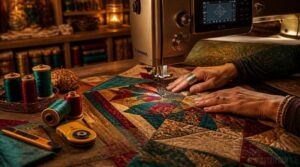
The right machine isn’t about specs alone — it’s about how well it fits you. Experienced sewers working on dense, multi-layer quilts need a machine that matches their pace and ambition. Use this quick-fit guide to narrow your choice:
| Feature | Computerized | Mechanical |
|---|---|---|
| Customizable Stitch Platform | Excellent | Limited |
| Ergonomic Control Layout | Digital presets | Manual dials |
| Sturdy Metal Frame | Most models | Standard |
Accessory versatility and fit customization options tip the scale toward computerized machines for skilled sewers chasing precision and creative range.
Performance for Complex Quilt Projects
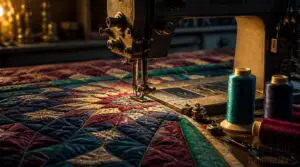
When you’re tackling a complex quilt project, your machine needs to keep up without flinching. Not every model accommodates thick layers, long sessions, or precision work the same way. Here’s what separates a capable machine from a truly reliable one.
Motor Strength
Motor strength is the quiet engine behind every spotless quilt. Heavy-duty motors give you the piercing power to push through dense batting without stalling mid-seam.
Key strength factors to watch:
- Grip strength keeps fabric control precise during long sessions
- Shoulder endurance prevents fatigue when guiding bulky layers
- Core stability bolsters posture across the entire workspace
- Muscle fatigue creeps in fast without proper strength training
- Sewing machine torque determines how cleanly your machine manages resistance
Fabric Layer Handling
Power alone won’t save you when fabric layer handling breaks down. Walking foot application syncs layers, top to bottom. Adjust layer tension control for heavy fabric handling and varying fabric thickness — that’s what keeps quilt making consistent.
| Challenge | Strategy | Result |
|---|---|---|
| Fabric shifting | Layer alignment techniques | Uniform stitches |
| Excess bulk | Bulk management strategies | Clean seams |
| Heavy-duty sewing | Layer compression methods | Even feed |
Frame Stability
Good layer handling gets you halfway there — but if your machine rocks or creeps, every seam suffers.
Frame feet and metal frame construction keep your machine planted. Diagonal bracing and joint reinforcement reduce sway under load, while vibration damping isolates movement from the needle path.
- Extension tables expand your workspace
- Material rigidity prevents flex during thick-batting runs
- Adjustable frame feet level the housing on uneven surfaces
Stitch Consistency
A stable frame gets the machine planted — but stitch consistency is what separates a polished quilt from a frustrating one.
Thread tension balance across your top and bobbin threads keeps stitches flat and even. Needle size matching to your fabric weight prevents skipped stitches entirely.
With proper feed dog uniformity and machine maintenance, your quilting machine holds a stitch length tolerance of ±0.5 mm across every seam.
Long-session Comfort
When a complex quilt pushes past the four-hour mark, your body starts filing complaints.
Ergonomic seating with lumbar support keeps your spine aligned so fatigue doesn’t win. Reduced vibration from quiet motors protects your hands over long runs. Good eye strain lighting means your eyes stay sharp, start to finish.
Adjustable pressure eases fabric drag, while balanced weight steadies the machine.
Buying Guide for Experienced Sewers
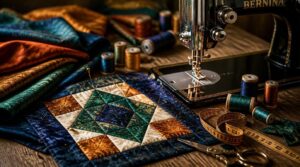
Buying the right quilting machine at this level isn’t just about specs — it’s about knowing which features actually matter for the work you do. A few key factors separate a machine you’ll love from one you’ll regret. Here’s what to look at before you spend a dime.
Throat Space Needs
Throat space is one of those specs that separates a machine you tolerate from one you love. Needle-to-arm workspace determines how freely your quilt bulk moves — and experienced sewers know that tight clearance means constant wrestling.
Most quilters need at least 8 inches of throat space for large projects. Wide quilts up to 110 inches demand generous room to prevent wrinkling and bunching.
Key benefits of extended throat space:
- Quilt bulk clearance reduces manual repositioning on large blocks
- Extra room minimizes thread nests during dense stitching
- Adjustable clearance settings let you tailor needle reach distance to batting thickness
Pair extended throat benefits with a wide table or extension table for full control.
Presser Foot Options
The right presser feet can make or break your results on a complex quilt.
Walking feet feed multiple layers evenly, preventing drift across thick batting. A zipper foot manages bulky edges cleanly, while an edge joining foot keeps topstitching arrow-straight. For decorative work, the satin stitch foot guides dense fills effortlessly.
Experienced sewers rarely regret building a solid presser foot collection.
Embroidery Capabilities
Embroidery can transform a quilt from functional to truly striking — and the right embroidery machine makes that jump much easier.
- Design library size matters: look for 135+ built-in designs
- Hoop alignment systems guarantee precise placement on quilt blocks
- Thread color management previews sequences before you stitch
Automatic needle threader and computerized sewing controls keep your workflow smooth across complex, multi-color decorative stitches.
Extension Table Value
An extension table isn’t a luxury — it’s a workspace multiplier. For experienced sewers tackling king-size quilts, workspace expansion matters enormously.
Aluminum tables offer a stability boost without the weight, keeping your quilting machine steady through long sessions. Material quality directly affects how smoothly fabric feeds, reducing puckering on long seams and saving you time, frustration, and costly do-overs.
Price Versus Features
Spending more doesn’t always mean getting more — but with quilting machines, the gap between tiers is real. Mid-range models usually offer 60 to 150 stitches, while high-end sewing machines push 200-plus with free-motion support and metal frames.
Your sewing machine value depends on matching features to actual project needs, not chasing specs you’ll rarely use.
Frequently Asked Questions (FAQs)
How do longarm quilting machines differ from domestic machines?
Think of it like a train versus a car — both get you somewhere, but they’re built for very different loads. A longarm quilting machine moves its head across a stationary quilt on a dedicated longarm frame, offering 20-plus inches of throat space compared to a domestic machine’s 8–9 inches. That extra needle reach means fewer repositioning stops and far less strain on your shoulders over long sessions.
Domestic machines move the fabric instead, which works fine for smaller projects but becomes a real wrestle with a king-size quilt. Servo control and built-in stitch regulation keep tension consistent across wide spans — something lighter motors simply can’t match. If you’re serious about large-scale work, the difference isn’t just convenience; it’s control.
What maintenance routines extend a quilting machines lifespan?
Regular cleaning, lubrication, and needle swaps go a long way. Clean every 15 hours, oil moving parts every 8–10, and replace needles consistently. Don’t skip belt checks or firmware updates — they protect core sewing machine components.
Conclusion
A craftsman is only as good as their tools—and at this level, that truth cuts deeper than any rotary blade. The right quilting machines for experienced sewers don’t just keep pace with your skill; they actively help you surpass it, seam by seam.
Throat space, motor strength, stitch consistency—these aren’t mere selling points; they’re the real difference between a quilt that reflects your best work and one that quietly falls short. Choose well.