This site is supported by our readers. We may earn a commission, at no cost to you, if you purchase through links.
Quilters used to spend hours at the cutting table before a single seam got sewn—measuring, marking, trimming, second-guessing every edge. Precut fabric bundles changed that.
A charm pack gives you 42 perfectly cut 5-inch squares, all from the same coordinated collection, ready to piece together the moment you sit down at your machine. Jelly rolls hand you 2.5-inch strips that practically beg to become a quilt top.
When the prep work is already done, you spend more time doing the part you actually love. Learning how to use precut fabric bundles for quilting opens up projects that feel approachable on a Tuesday evening, not just during a dedicated weekend retreat.
The right bundle, a few good tools, and a clear assembly process make the difference between a quilt that stays a daydream and one that ends up on your bed.
Table Of Contents
Key Takeaways
- Precut fabric bundles like charm packs, jelly rolls, and layer cakes save you hours of prep work and make quilting projects more approachable, even on busy weeknights.
- Choosing the right bundle means considering size, color coordination, and fabric collection, which helps your quilt come together with style and harmony.
- Essential tools such as a rotary cutter, self-healing mat, acrylic ruler, and proper needles streamline your process and keep your workspace efficient and safe.
- Caring for finished quilts and storing precut bundles properly—using gentle washing, rolling quilts, and climate‑controlled storage—preserves your hard work and keeps fabrics vibrant.
Choosing Precut Fabric Bundles for Quilting
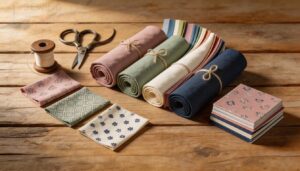
Picking the right precut bundle is honestly one of the most fun parts of starting a quilt project. There are a few key things worth knowing before you head to the shop or start browsing online.
If you’re just getting started, browsing simple quilting patterns designed for precut bundles can help you see exactly how different cuts translate into finished designs.
Here’s what to look for when choosing your bundle.
Types and Sizes of Precut Bundles
Precut bundles come in several handy sizes, each suited to different projects.
Charm Packs contain 5-inch squares — about 42 per pack — while Mini Charm Packs offer 2.5-inch squares, perfect for tiny details.
Layer Cake Squares measure 10 by 10 inches, and Jelly Roll Strips run 2.5 by 44 inches.
Fat Quarter Bundles give you generous 18 by 22-inch cuts for maximum versatility.
Picking Colors and Fabric Collections
Once you know your bundle’s size, it’s time to focus on color and fabric collections.
Color Wheel Harmony helps you pair bold and subtle hues, while Value Balance ensures depth in your blocks. Neutral Fabric Balance keeps things grounded, and Print Scale Matching avoids visual overload.
Theme Cohesion matters—florals, geometrics, or vintage designs shape your quilt’s mood and Colour Palette.
Cost and Value Considerations
Once your palette feels right, it’s smart to weigh price per yard and bundle discount strategies. Waste reduction savings kick in, since precuts mean less scrap and fewer miscuts. For quilt project budgeting with precuts, consider resale market value and longevity—premium bundles hold up and can be resold.
Three tips for budget-friendly quilting:
- Compare fabric bundle pricing
- Estimate costs for a first quilt project
- Factor in durability
Essential Tools and Setup for Precut Quilting
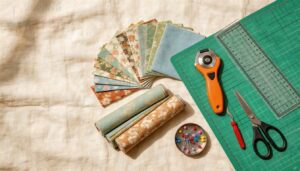
Before you sew a single stitch, having the right tools within reach makes everything smoother and more enjoyable. You don’t need a fully stocked studio to get started, but a few key pieces of equipment will save you time and frustration.
Here’s what you’ll want to have on hand before you begin.
Sewing Machine and Needles
Your sewing machine is the heart of every quilt you’ll make, so setting it up correctly matters. Start with a size 80/12 universal needle — it manages medium-weight cotton precuts beautifully.
Check your bobbin case for lint buildup before each project, and adjust thread tension until stitches look even on both sides. A walking foot helps feed multiple layers smoothly, preventing shifting seams.
Rotary Cutter, Mats, and Rulers
When you’re cutting fabric, a rotary cutter with an ergonomic grip makes all the difference. Pair it with a self-healing mat and an acrylic quilting ruler for grid precision and ruler alignment.
Blade safety is essential—always lock the blade after use. These tools speed up cutting time, keep your lines crisp, and support accurate fabric cutting methods.
- Ergonomic grip for comfort
- Self-healing mat prevents blade wear
- Acrylic quilting ruler ensures grid precision
- Blade safety keeps fingers protected
Pins, Scissors, and Workspace Tips
Three essentials anchor your quilting workspace: fabric scissors reserved for cloth, quilting pins stored in a pin cushion or magnetic pin bowl for quick access, and a selfhealing mat at an ergonomic cutting station.
Precision lighting setup helps you see seam lines clearly, while scissor blade maintenance—cleaning and storing dry—keeps your tools sharp and ready for every project.
Step-by-Step Quilt Assembly With Precuts
Now that your tools and fabric are ready, it’s time to walk through the main steps of quilt assembly with precuts. Each part builds on the last, making the process manageable and rewarding.
Here’s what you’ll tackle next.
Prewashing and Preparing Fabric Bundles
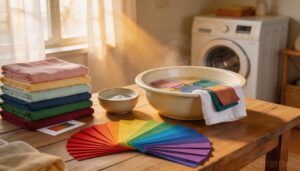
Did you know prewashing precut fabric bundles can save you headaches down the road?
Before you start, grab Warm Water, Mild Detergent, and a Color Catcher to protect your colors.
After a Shrinkage Check, dry on Low Heat.
Organize your prewashed fabric by color or size—these Fabric bundle organization tips keep your workspace tidy and your projects accurate:
- Test colorfastness with a swatch before full Prewash
- Use gentle cycles for Precut fabric washing considerations
- Press and sort fabrics for easy assembly
Simple Patchwork and Beginner Patterns
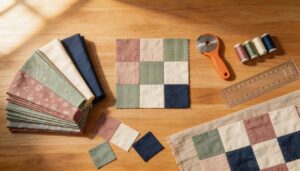
Ever notice how Patchwork Color Theory turns a pile of precut fabric bundles into a quilt that feels alive?
With Beginner Block Variations like nine-patch or rail fence, you’ll see Simple Piecing Techniques and Basic Quilt Layouts come together fast.
Here’s how these patterns connect emotion and skill:
| Pattern Name | Feeling Evoked |
|---|---|
| Nine-Patch | Comfort |
| Rail Fence | Momentum |
| Shoofly | Joy |
| Ohio Star | Hope |
Constructing Half-Square Triangles and Hour-Glass Blocks
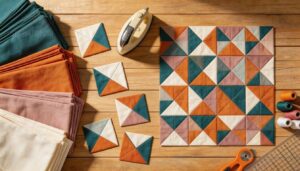
When you pair precut fabric bundles for Half Square Triangles, you’re setting the stage for precise Triangle Symmetry and a striking Hourglass Illusion. Pay attention to Block Sizing and Fabric Motif Integration—these details shape each Hourglass block design.
Staggered Seams help keep your quilt block construction flat, and following a step-by-step assembly of quilt top and layers ensures crisp results.
Seam Allowance, Pressing, and Joining Sections
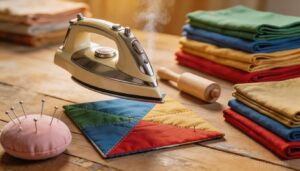
A scant ¼-inch seam allowance is your secret weapon for seam allowance consistency with precut fabric bundles. Press seams toward the darker fabric using smooth, lift-and-set pressing techniques — never drag the iron.
Nestle intersections together for natural section alignment and bulk reduction. Consistent stitch tension and careful basting keep everything flat, setting up your blocks for smooth joining before final pressing.
Adding Batting, Backing, and Binding
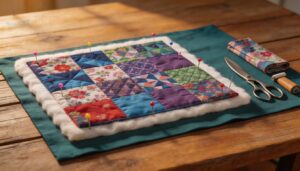
Once your blocks are pressed and joined, it’s time to build your layer sandwich. Cut your backing fabric 2–3 inches larger than the quilt top on all sides, then layer batting and backing beneath it.
Batting thickness affects drape, so 80-weight cotton works beautifully for pre-cuts.
Choose your basting method — pins or spray — then attach binding fabric cut at 2½ inches wide.
Caring for and Storing Precut Quilted Projects
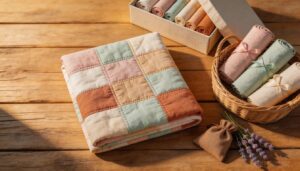
You’ve put real time and love into your quilt, so it deserves a little care to keep it looking its best for years to come.
Your quilt holds your time and love, so caring for it helps it stay beautiful for years
The good news is that washing, storing, and organizing your fabric stash is simpler than you might think. Here’s what you need to know to protect finished quilts and precut bundles going forward.
Cleaning and Washing Finished Quilts
Your finished quilt deserves the same care you put into making it. Always machine wash on Gentle Cycle Settings with a Cold Water Wash to protect color and prevent shrinkage. Tuck delicate quilts into a Mesh Bag Protection pouch to reduce agitation.
- Use mild, fragrance-free detergent
- Apply Stain Spot Treatment before washing
- Follow fabric prewash considerations for colorfastness
- Choose the Flat Drying Method to avoid batting shift
- Press lightly after drying for final pressing
Storing Fabric Bundles and Completed Quilts
Once your quilt is clean and dry, storing it right keeps all that hard work safe. Roll completed quilts rather than fold them to avoid permanent crease lines, and tuck them into breathable cotton muslin.
For your precut bundles, Climate Controlled Storage at 65–70°F with Acid-Free Packaging between layers prevents color transfer.
Keep everything away from windows — Light Exposure Management matters more than most beginners expect.
Organizing and Labeling Fabric Inventory
Just as careful storage protects your quilts, organizing fabric supplies for quilters starts with a clear labeling system design. Color-coded bins make seasonal reorganization simple, while digital inventory tracking and barcode implementation help you manage fabric precut inventory.
Labeling bundles by type, color, and purchase date keeps your master list accurate, especially when storing fabric precuts by shape and color.
Top Precut Quilting Products to Try
Having the right products in your quilting toolkit makes a real difference, especially when you’re working with precuts. Whether you’re just starting out or looking to level up your projects, a few well-chosen tools and fabric bundles can go a long way.
Here are some top picks worth adding to your collection.
1. Quilt in a Day Half Square Ruler
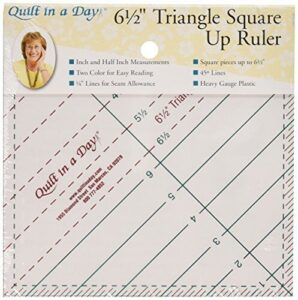
If you want to square up half-square triangles with speed and precision, the Quilt in a Day Half Square Ruler is an essential tool. This sturdy acrylic tool accommodates blocks up to 6½ inches, offering clear markings and a two-tone scale for easy reading.
You’ll trim two sides in one pass, saving time and reducing errors. Beginners appreciate the printed instructions, while seasoned quilters rely on its repeatable accuracy. Pair it with your rotary cutter, and you’ll notice your quilt blocks look sharper and more consistent.
| Best For | Beginners and experienced quilters who want fast, accurate trimming of half-square and quarter-square triangles up to 6½ inches. |
|---|---|
| Primary Use | Squaring quilt blocks |
| Skill Level | Beginner to advanced |
| Material | Heavy-gauge acrylic |
| Price | $18.95 |
| Brand | Quilt In a Day |
| Format/Form | Ruler tool |
| Additional Features |
|
- Trims two sides at once, speeding up squaring and reducing errors
- Clear dual-color markings make measurements easy to read
- Durable acrylic construction with helpful instructions included
- Only handles blocks up to 6½ inches—larger pieces won’t fit
- No metric markings, so it’s limited to inches
- Requires a separate rotary cutter or scissors for trimming
2. Fiskars Easy Action Pinking Shears
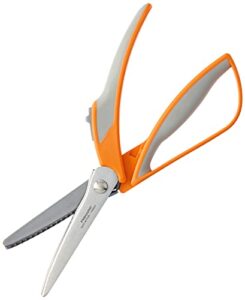
Fraying edges are one of those little frustrations that can slow your whole project down. That’s where the Fiskars Easy Action Pinking Shears ($43.99) really earn their place in your sewing room.
The spring-action blades open automatically after each cut, so your hand stays comfortable even during long sessions — a genuine lifesaver if you deal with arthritis or hand fatigue.
The stainless-steel blades cut cleanly to the very tip, giving you that neat zigzag edge that keeps cotton and flannel from unraveling.
| Best For | Sewers and crafters who work with fraying fabrics often — especially anyone dealing with hand fatigue, arthritis, or thumb strain. |
|---|---|
| Primary Use | Cutting fabric edges |
| Skill Level | Beginner to advanced |
| Material | Stainless steel |
| Price | $43.99 |
| Brand | Fiskars |
| Format/Form | Scissor tool |
| Additional Features |
|
- Spring-action blades open automatically, taking the strain off your hand during long cutting sessions.
- Premium stainless-steel blades cut cleanly all the way to the tip, perfect for trimming tight seams and narrow sections.
- Handles thick materials like denim and canvas while still leaving a clean, fray-resistant zigzag edge.
- Bulkier than standard shears, so they can feel a little awkward at first — especially if you’re used to traditional loop handles.
- The spring tension can feel stiff out of the box and may need some adjustment before it feels just right.
- At $43.99, it’s a bigger investment than basic pinking shears, and some users have reported occasional blade sticking on very dense fabrics.
3. FreeSpirit Kaffe Fassett Hot Design Jelly Roll
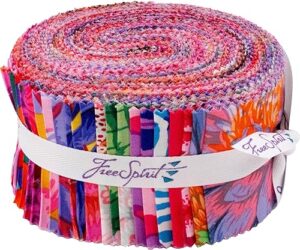
The FreeSpirit Kaffe Fassett Hot Design Jelly Roll is a real treat for anyone who loves bold color and lively prints.
Inside, you’ll find forty 2.5-inch wide cotton strips, each stretching 44 inches and bursting with reds, oranges, and pinks.
The curated palette makes mixing and matching easy, so your blocks come together with plenty of visual punch.
If you’re itching to try strip piecing or scrappy layouts, these pre-cut strips save time and guarantee a harmonious, vibrant quilt every time.
| Best For | Quilters and crafters who love bold, colorful designs and want to skip the cutting prep with ready-to-sew strips. |
|---|---|
| Primary Use | Pre-cut quilt strips |
| Skill Level | Beginner to advanced |
| Material | 100% cotton |
| Price | Not listed |
| Brand | FreeSpirit Fabrics |
| Format/Form | Bundled strips |
| Additional Features |
|
- 40 pre-cut strips mean you can jump straight into sewing without spending time at the cutting mat
- The Kaffe Fassett palette is rich and vibrant — great for eye-catching scrappy or strip-pieced quilts
- 100% cotton is easy to work with, soft to the touch, and holds up well over time
- You’re locked into 2.5-inch widths, so projects that need wider or custom cuts won’t work here
- The colors are pre-selected, so if you need a very specific palette, you might not get exactly what you want
- Cotton can shrink if you’re not careful — definitely pre-wash before you start sewing
4. Charm School Quilting Patterns Book
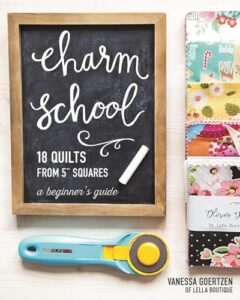
If you’ve ever stared at a charm pack wondering what to make, Charm School by Vanessa Goertzen answers that question 18 times over. This 128-page book, published by Stash Books, is built entirely around 5-inch precut squares — so your charm packs go straight to work.
You’ll find beginner-friendly patterns plus more ambitious designs like flying geese and half-square triangles, all with full-color photos and clear diagrams. At $24.98, it’s an affordable roadmap for turning those pretty squares into something you’re proud of.
| Best For | Beginners and experienced quilters who want quick, creative projects using 5-inch charm squares. |
|---|---|
| Primary Use | Quilting patterns book |
| Skill Level | Beginner to intermediate |
| Material | Paper (128 pages) |
| Price | $24.98 |
| Brand | Stash Books |
| Format/Form | Physical book |
| Additional Features |
|
- Clear instructions and diagrams make patterns easy to follow.
- Great variety, from simple blocks to more advanced designs.
- Helps use up charm packs and scrap fabric efficiently.
- Assumes you already know basic quilting skills.
- Some patterns need extra fabric beyond a single charm pack.
- Only works with 5-inch squares, limiting flexibility for other precut sizes.
5. Colourwash Quilts by Yan Pring
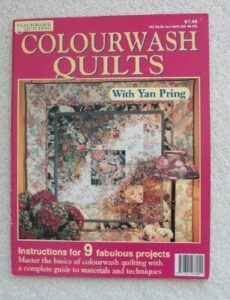
If you’re drawn to quilts that look like watercolor paintings, Colourwash Quilts by Yan Pring is worth a close look. This paperback guides you through nine projects, each blending soft pastels and bold hues in smooth gradients.
Pring’s technique uses small squares and rectangles to create depth, pressing seams open for a smooth color flow. The book’s full-color photos and practical instructions make it approachable for beginners, and at $25.07, it’s a solid investment for anyone exploring color transitions in quilting.
| Best For | Beginners and hobbyists who want to learn colourwash quilting and enjoy working on guided, visually rich projects. |
|---|---|
| Primary Use | Colourwash quilting guide |
| Skill Level | Beginner |
| Material | Paper (paperback) |
| Price | $25.07 |
| Brand | Express Publications |
| Format/Form | Physical book |
| Additional Features |
|
- Step-by-step instructions make it easy to follow, even if you’re new to quilting.
- Full-color photos offer clear inspiration and guidance.
- Includes nine ready-made project templates to get you started quickly.
- Some material suggestions may be outdated since the book was published in 1999.
- Only covers nine projects, so options are limited if you want more variety.
- No digital version available, so you’ll need to buy and store the physical book.
6. Riley Blake Piece and Plenty 10 Inch Squares
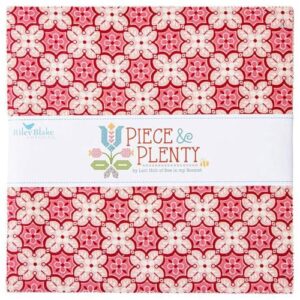
Looking for a shortcut to vintage charm? The Riley Blake Piece and Plenty 10‑inch Squares pack gives you forty-two premium cotton squares, each bursting with playful florals and retro motifs.
Lori Holt’s designs are coordinated for easy color blending, so you can build hourglass blocks or bold patchwork without fuss. These squares are ready for quilting, appliqué, or borders—perfect for beginners who want instant style.
Though the $49.99 price is higher than some bundles, you’ll save time on cutting and matching.
| Best For | Beginners or busy quilters who want easy, coordinated fabric squares with a vintage vibe. |
|---|---|
| Primary Use | Pre-cut quilt squares |
| Skill Level | Beginner to advanced |
| Material | 100% cotton |
| Price | $49.99 |
| Brand | Riley Blake Designs |
| Format/Form | Bundled squares |
| Additional Features |
|
- Saves time—no measuring or cutting needed
- Soft, premium cotton with vibrant, floral colors
- Designs blend easily for quick, stylish projects
- Higher price compared to buying fabric by the yard
- Shipping to Canada can be expensive
- Limited to preset 10-inch squares and colors
Frequently Asked Questions (FAQs)
Do You need A precut fabric to make a quilt?
You don’t need precut fabric to make a quilt, but it sure makes things easier.
Precuts save cutting time, help with color matching, and reduce waste, especially for beginners. They’re ready to sew, so you can jump right in.
What is precut quilting fabric?
Precut quilting fabric means fabric that’s already cut into standard shapes and sizes, like 5-inch squares or 5-inch strips.
These bundles, usually 100% cotton, save you time and guarantee colors coordinate beautifully for your quilt projects.
What are the benefits of using Precuts in quilting?
Quick color coordination, consistent cuts, and convenient construction—these are the main perks. You save time, reduce waste, and enjoy professional-looking results.
Precut bundles boost confidence, simplify pattern choices, and make quilting accessible for beginners and seasoned stitchers alike.
What are the different types of quilting precut packs?
You’ll find jelly rolls, layer cakes, charm packs, fat quarters, and mini bundles.
Each offers unique sizes—like jelly rolls with 5-inch strips or layer cakes with 10-inch squares—making them perfect for different quilt patterns and projects.
Can precut bundles be used for foundation paper piecing?
Yes, you can use fabric bundles for foundation paper piecing. Their consistent sizes and coordinated colors make cutting shapes easy and accurate, especially with 5″ or 10″ squares.
Sorting pieces by pattern segment helps prevent mix-ups during assembly.
How do you handle fabric fraying in precuts?
Imagine working with a jelly roll and noticing tiny threads at the edges—don’t worry, you’re not alone.
Use pinking shears, a narrow zigzag stitch, or fray check to protect those raw edges and keep everything tidy.
Are precuts suitable for English paper piecing projects?
Precut fabric bundles work well for English paper piecing because they offer uniform shapes and stable cotton, making precise assembly easier.
You’ll save time on cutting, and coordinated prints help plan motifs and color placement across your project.
What are creative ways to use leftover precut scraps?
Those little fabric survivors deserve a second act. Sew leftover precut scraps into cushion covers, tote bags, or table runners.
You can also group them by color into a lively scrap quilt with real personality.
How can you resize quilt patterns for different precut sizes?
To resize quilt patterns for different precut sizes, divide the target precut measurement by the original block size, redraw on graph paper, and adjust seam allowances.
Always recalculate fabric needs, especially for borders, to avoid running short.
Conclusion
While tedious cutting used to precede every quilting project, precut fabric bundles now empower you to dive right into the fun part—sewing. By mastering how to use precut fabric bundles for quilting, you’ll open up a world of creative possibilities.
With the right tools and techniques, you can turn a bundle of coordinated fabrics into a stunning quilt.
So, grab your precuts, and let your imagination run wild, creating something beautiful, one stitch at a time, every time.