This site is supported by our readers. We may earn a commission, at no cost to you, if you purchase through links.
Picking the wrong thread color is one of those small mistakes that announces itself on every finished seam. A stitch that’s even slightly off—too bright on a muted linen, too warm on a cool gray knit—catches the eye before anything else does.
Most sewers spend hours choosing fabric and minutes choosing thread, which is exactly backwards.
Thread color shapes how a garment reads from across the room.
The best thread colors for fabric work quietly, either disappearing into the weave or adding deliberate contrast that looks intentional.
Knowing which does which changes everything about your finished results.
Table Of Contents
- Key Takeaways
- 10 Best Thread Colors for Fabric
- 1. Connecting Threads Cotton Thread Set
- 2. Aurifil Mako 50wt Dove Cotton Thread
- 3. Gutermann Natural Cotton Thread White
- 4. Superior Threads Egyptian Cotton Thread
- 5. Eoehro Polyester Sewing Thread Kit
- 6. UHG Professional Polyester Thread Kit 48 Colors
- 7. Leonis Color Sewing Thread Set
- 8. Z Thread 36 Color Thread and Needle Set
- 9. Colored Polyester Thread Sewing Kit
- 10. CiaraQ Colorful Sewing Thread Kit
- Neutral Colors That Blend Best
- Match Thread Value, Not Hue
- Warm and Cool Undertone Matching
- Best Colors for Common Fabrics
- When Contrast Looks Better
- Thread Weight and Fiber Choices
- How to Test Before Sewing
- Smart Thread Buying Tips
- Frequently Asked Questions (FAQs)
- Conclusion
Key Takeaways
- Matching your thread’s value (how light or dark it is) to your fabric matters more than finding an exact color match.
- A core set of six neutrals — white, off-white, light gray, medium gray, beige, and taupe — covers nearly every sewing project without constant thread swaps.
- Medium gray is the closest thing to a universal thread color, blending cleanly across light, dark, and multicolor fabrics alike.
- When you want stitches to show, lean into contrast intentionally — black on light fabric or white on dark creates a clean, design-forward look rather than a mistake.
10 Best Thread Colors for Fabric
Picking the right thread color can make or break how your finished project looks.
A few simple tricks—like testing swatches in natural light—can save you from costly mistakes, and these thread color selection tips for sewing projects cover exactly what to watch for.
Whether you’re quilting, garment sewing, or patching something together, the thread you choose matters more than most people think.
Here are ten solid options worth having in your sewing kit.
1. Connecting Threads Cotton Thread Set
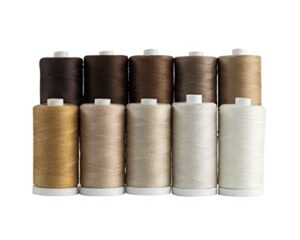
If you want a neutral thread starter kit that just works, the Connecting Threads Cotton Thread Set is hard to beat. You get 10 spools — Caramel, Parchment, Natural, Bark, Sandstone, Espresso, Brown, Latte, Fawn, and Ivory — each packed with 1,200 yards of smooth, 50-weight, three-ply cotton.
That’s a a lot of sewing before you reach for a new spool. The satin finish gives stitches a soft luster, and the low-lint cotton keeps your machine running clean through quilting, piecing, and appliqué alike.
| Best For | Quilters and home sewers who want a reliable, neutral thread collection that handles everyday projects without constant spool swaps. |
|---|---|
| Material | 100% Cotton |
| Spool Count | 10 spools |
| Yards Per Spool | 1,200 yards |
| Hand Sewing | Yes |
| Machine Compatible | Yes |
| Color Options | Neutral browns/tans |
| Additional Features |
|
- 1,200 yards per spool means you’re not constantly stopping to reload — great for big quilts or long sewing sessions.
- Low-lint, long-staple cotton keeps your machine happy and your stitches clean.
- The satin finish adds a subtle sheen that looks great on decorative and visible top-stitching.
- Slightly larger spools can be a pain on some machines (like the Viking Opal) without a dedicated holder.
- Thread runs a touch heavier than brands like Gutermann, which can mess with fine top-stitching or tight tension settings.
- Automatic threaders may struggle with it, and occasional spool defects mean it’s worth testing one before committing to the whole set.
2. Aurifil Mako 50wt Dove Cotton Thread
Aurifil’s Mako 50wt Dove thread takes neutral blending to another level. That soft gray — color code 2600 — sits right between white and charcoal, which means it disappears into a surprisingly wide range of fabrics.
Made from long-staple Egyptian Mako cotton and spun to a fine 50wt, it lays flat in seams without adding bulk.
Each large spool holds 1,422 yards, and you get two per pack for $26.80.
Clean, low-lint, and machine-friendly — it’s the thread you’ll keep reaching for.
| Best For | Quilters and sewists who want a versatile neutral thread that blends seamlessly across a wide range of fabric colors without constant thread changes. |
|---|---|
| Material | 100% Cotton |
| Spool Count | 2 spools |
| Yards Per Spool | 1,422 yards |
| Hand Sewing | Yes |
| Machine Compatible | Yes |
| Color Options | Dove gray only |
| Additional Features |
|
- Lays flat and feeds smoothly, which means fewer breaks and less fussing mid-project
- Super low lint keeps your machine cleaner and your bobbin area happier
- Each pack gives you 2,844 yards total — plenty of runway for big quilts or long-arm work
- At $26.80 for two spools, it’s a noticeable step up from budget threads — costs add up fast for high-volume sewing
- Only comes in Dove (2600) in this listing, so if you need other colors, you’re buying separately
- Just two spools per pack, which may feel light if you’re used to buying thread in bulk
3. Gutermann Natural Cotton Thread White
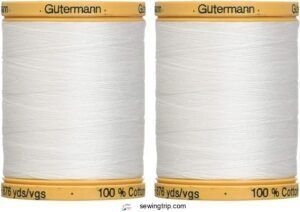
If Dove gray works with your neutrals, white pulls its own weight too.
Gutermann’s Natural Cotton Thread in white is made from 100% long‑staple mercerized cotton — fine, smooth, and stronger than it looks.
Each spool holds 876 yards, and the two-pack runs just $17.19.
It works for quilting, patchwork, and everyday clothing without adding any bulk to your seams.
Light fabrics especially benefit from this clean white shade, keeping stitches neat and nearly invisible where they belong.
| Best For | Quilters, costume makers, and everyday sewers who want a clean white thread that handles well and doesn’t break the bank. |
|---|---|
| Material | 100% Cotton |
| Spool Count | 2 spools |
| Yards Per Spool | 876 yards |
| Hand Sewing | Yes |
| Machine Compatible | Yes |
| Color Options | White only |
| Additional Features |
|
- 876 yards per spool means you won’t run out mid-project anytime soon
- Mercerized cotton gives you a smooth, strong stitch that works on both cotton and polyester fabrics
- Easy to handle for beginners but reliable enough for experienced sewers
- Can snap on very stretchy or heavy fabrics where polyester thread holds up better
- The fine, silky texture might need a needle threader on some machines
- Two large spools can take up more space in your sewing kit than you’d expect
4. Superior Threads Egyptian Cotton Thread
White thread manages light fabrics well — but what about projects that demand something built to last?
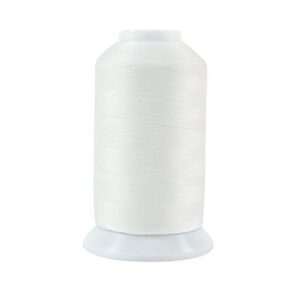
Premium Threads MasterPiece is made from certified Egyptian-grown, extra-long staple cotton in a 50 wt, 3-ply construction. That means smoother stitches, less lint, and fewer thread breaks mid-project.
The 2,500-yard cone gives you serious mileage for quilts, garments, or bobbin stocking. It works beautifully for piecing and appliqué alike.
The Blanc shade is a soft white — warm and clean, without looking stark against your fabric.
| Best For | Quilters, garment sewers, and high-volume sewists who want a reliable, low-lint white thread that works across a wide range of fabrics and projects. |
|---|---|
| Material | 100% Cotton |
| Spool Count | 1 cone |
| Yards Per Spool | 2,500 yards |
| Hand Sewing | Yes |
| Machine Compatible | Yes |
| Color Options | White only |
| Additional Features |
|
- Extra-long staple Egyptian cotton means a smoother, stronger stitch with far fewer breaks mid-project
- 2,500 yards per cone is a great deal — you’re set for quilts, garments, and bobbin stocking for a long time
- Low-lint construction means less time cleaning your machine and more time actually sewing
- Only comes in Blanc (soft white), so if you need other colors, you’ll have to shop separate listings
- The cone is on the larger side — not ideal if you’re working in a small space or prefer compact spools
- Blanc reads warm and soft, not bright white, which might not work for every project or fabric choice
5. Eoehro Polyester Sewing Thread Kit
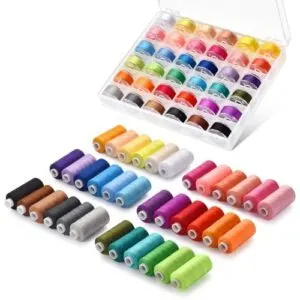
Sometimes you just need kit that has your back for every project on your table. The Eoehro Polyester Sewing Thread Kit gives you 36 colors across 36 spools — each wound with 400 yards — plus 36 pre-wound bobbins matched to every shade. That’s real convenience.
The 100% polyester build resists fraying and works with everyday fabrics well. You get both neutrals and brights, so color-matching isn’t a guessing game anymore. It’s a solid starter kit and a reliable backup for experienced sewers alike.
| Best For | Home sewers — beginners and seasoned alike — who want a ready-to-go thread collection without the hassle of winding bobbins before every project. |
|---|---|
| Material | 100% Polyester |
| Spool Count | 36 spools |
| Yards Per Spool | 400 yards |
| Hand Sewing | Yes |
| Machine Compatible | Yes |
| Color Options | 36 colors |
| Additional Features |
|
- 36 pre-wound bobbins mean you can jump straight into sewing without any setup
- Wide color range makes fabric matching easy, whether you’re patching, quilting, or getting creative
- Strong polyester thread holds up well on everyday fabrics and resists fraying and tangling
- High iron heat (above 300°F) can melt or discolor the thread, so you’ll need to watch your settings
- May not fit specialized or industrial machines without bobbin size adjustments
- Some users ran into occasional thread breakage, though it’s likely a tension issue rather than the thread itself
6. UHG Professional Polyester Thread Kit 48 Colors
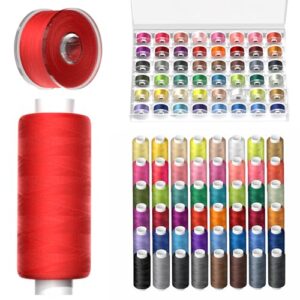
Forty-eight colors, 48 matching pre-wound bobbins, and a tensile strength of 20 N — the UHG Professional Kit doesn’t mess around. That 4-ply polyester construction resists breakage even during fast machine stitching, and the nano-treated filament keeps things running smoothly with noticeably less friction.
UV-cured dye means colors stay vivid through washing and sun exposure.
It’s priced around $23, so it costs more than basics, but the pre-wound bobbins alone save real setup time on multi-color projects.
| Best For | Sewers of all skill levels who work on multi-color projects like embroidery, quilting, or garment repairs and want a durable, ready-to-go thread kit. |
|---|---|
| Material | 100% Polyester |
| Spool Count | 48 spools |
| Yards Per Spool | 400 yards |
| Hand Sewing | Yes |
| Machine Compatible | Yes |
| Color Options | 48 colors |
| Additional Features |
|
- Pre-wound bobbins for all 48 colors save serious setup time on multi-color jobs
- Strong 4-ply construction with 20 N tensile strength handles heavy-duty and high-speed sewing without breaking
- UV-cured dye keeps colors vibrant through frequent washing and sun exposure
- Standard bobbin size doesn’t fit all machines, including some Brother models
- At ~$23, it costs more than basic thread kits
- The 4-ply thickness may be too bulky for very delicate or fine fabrics
7. Leonis Color Sewing Thread Set
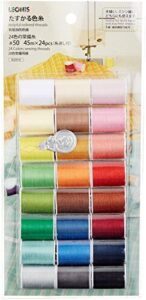
The Leonis Color Sewing Thread Set keeps things simple without skimping on variety. You get 24 spools of 100% polyester thread — each one 50 yards long — plus an aluminum needle threader, all tucked into a compact case.
It’s a smart grab for quick repairs, hand‑sewing projects, or travel kits.
The color range covers everything from neutrals to brights, so you’re rarely caught short on a match.
At $7.99, it’s one of the most budget‑friendly options on this list.
| Best For | Casual sewers, travelers, and anyone who needs a go-to set for quick fixes and small projects without spending much. |
|---|---|
| Material | 100% Polyester |
| Spool Count | 24 spools |
| Yards Per Spool | 50 yards |
| Hand Sewing | Yes |
| Machine Compatible | Yes |
| Color Options | 24 assorted colors |
| Additional Features |
|
- 24 colors means you’ll almost always find a close enough match for whatever you’re working on
- Polyester thread holds up well — less breaking and fraying mid-project
- At $7.99, it’s hard to beat for a starter or backup kit
- 50 yards per spool goes fast if you’re tackling anything bigger than a basic repair
- The needle threader has let some people down — a few arrived with missing or broken parts
- Spools are smaller than standard, which can feel limiting if you’re used to full-size
8. Z Thread 36 Color Thread and Needle Set
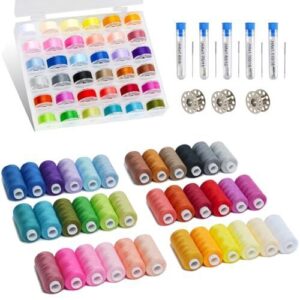
The Z Thread 36 Color Thread and Needle Set is built for sewists who want everything in one box. It’s a solid all-in-one starter kit, though thread quality sits closer to everyday use than premium sewing.
You get 36 polyester spools at 400 yards each — that’s over 14,000 yards total — plus 36 color-matched bobbins and 50 assorted needles covering sizes 65/9 through 110/18. That range covers silk to denim without a second trip to the store.
Three metal bobbins add durability.
| Best For | Sewists who want a ready-to-go kit that covers a wide range of fabrics and projects without buying threads, bobbins, and needles separately. |
|---|---|
| Material | 100% Polyester |
| Spool Count | 36 spools |
| Yards Per Spool | 400 yards |
| Hand Sewing | Yes |
| Machine Compatible | Yes |
| Color Options | 36 colors |
| Additional Features |
|
- 36 color-matched spools and bobbins mean you can jump straight into a project — no winding, no guessing.
- The needle range (65/9 to 110/18) handles everything from delicate silk to heavy denim in one kit.
- Metal bobbins add durability and help reduce thread breakage during faster sewing sessions.
- Thread quality is decent for everyday use but falls short of premium polyester — some users report occasional breakage.
- Pre-wound bobbins can have uneven winding, which sometimes means re-threading before you get started.
- Thread weight and break strength aren’t specified, so it may not hold up well for heavy-duty or high-tension work.
9. Colored Polyester Thread Sewing Kit
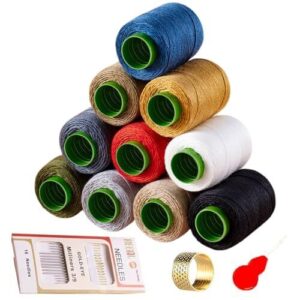
small kit that covers the basics without overwhelming you? This colored polyester thread sewing kit gives you ten 3-strand spools — white, black, gray, beige, red, brown, blue, yellow, olive, and dark gray — each wound to 200 yards.
The heavyweight 203-denier polyester works with denim, canvas, and leather well. It also includes a needle threader, mixed needles, and a thimble.
One heads-up: the rough spool edges can snag, so handle them carefully when pulling thread free.
| Best For | Anyone who sews with heavy fabrics like denim, canvas, or leather and wants a ready-to-go kit with a solid color range. |
|---|---|
| Material | 100% Polyester |
| Spool Count | 10 spools |
| Yards Per Spool | 200 yards |
| Hand Sewing | Yes |
| Machine Compatible | Yes |
| Color Options | 10 colors |
| Additional Features |
|
- Ten colors and 200 yards per spool give you plenty to work with across a variety of projects
- Heavyweight 203-denier polyester holds up well on thick, tough fabrics
- Comes with a needle threader, mixed needles, and a thimble — no extra shopping needed
- Rough spool edges can snag the thread, so you have to be a bit careful when pulling it free
- The thick thread isn’t a good match for lightweight or delicate fabrics
- Needle sizes aren’t labeled, so finding the right one for your fabric takes some trial and error
10. CiaraQ Colorful Sewing Thread Kit
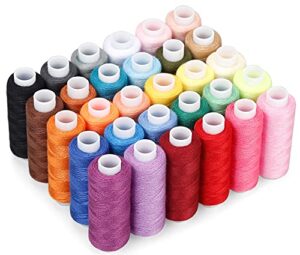
The CiaraQ Colorful Sewing Thread Kit brings 30 polyester spools to your table for just $8.99 — hard to argue with that. Each spool holds around 250 yards, so you won’t run short mid-project. The color variety covers most everyday sewing needs, from garments to pillows and decorative stitching.
It’s best suited for casual and beginner projects, though the thicker thread can challenge fine needles. Think of it as a great starter kit before you invest in specialty thread.
| Best For | Beginners and hobbyists who want a solid variety of colors without spending much. |
|---|---|
| Material | 100% Polyester |
| Spool Count | 30 spools |
| Yards Per Spool | 250 yards |
| Hand Sewing | Yes |
| Machine Compatible | Yes |
| Color Options | 30 colors |
| Additional Features |
|
- 30 colors for under $9 — genuinely hard to beat for the price
- 250 yards per spool means you won’t be re-spooling every five minutes
- Works for hand sewing, machine sewing, and embroidery
- Thread runs thick, so fine needles and delicate fabrics won’t love it
- Can snap under higher tension or with heavier materials
- Not the best choice if you need professional-grade results
Neutral Colors That Blend Best
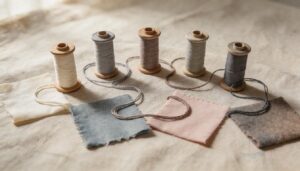
Neutral thread colors are the workhorses of any sewing kit — quietly doing their job without drawing attention. The right neutral doesn’t just disappear into your fabric; it makes your whole project look cleaner and more intentional.
Here are five shades that blend beautifully across a wide range of fabrics.
Light Gray for Everyday Sewing
Light gray might just be the hardest-working spool in your kit. As a flexible neutral choice, it sits comfortably between white and darker tones — giving you natural seam blending without the Seamline Shadow Effect that stark white can cause on off-white or ivory fabric.
Using a neutral thread palette can help reduce visual contrast and improve stitch invisibility.
These thread color matching techniques make light gray essential for everyday sewing:
- It pairs beautifully with pale blue, cream, lavender, and soft pastels through smart Fabric Lightness Pairing.
- It disappears into heathered knits and mottled prints better than pure white.
- It improves Stitch Visibility Tips by softening sharp stitch lines on lightweight fabric.
- It covers warm vs cool undertones across mixed-color projects with one spool.
- It simplifies your Thread Care Routine — fewer changes, faster finishing.
Medium Gray for Dark Fabrics
Once you move into darker fabrics, medium gray earns its spot fast. It’s your go-to for Gray Tone Adaptation across navy, charcoal, and deep green — sitting close enough in value to support Visual Seam Reduction without disappearing like black thread does.
This Thread Value Optimization approach makes Dark Fabric Stitching easier to control, and Subtle Thread Integration happens almost automatically with neutral thread colors.
Beige for Warm-toned Materials
Beige is where Fabric Warmth Matching really clicks. Unlike cool gray, warm beige carries yellow or golden undertones that quietly echo the natural warmth in linen, khaki, tan canvas, and camel fabrics.
That Undertone Harmony keeps your Beige Thread Texture from popping off the surface. On textured weaves, especially, Subtle Stitch Camouflage happens almost on its own — the eye reads the fabric, not the seam.
Off-white for Light Fabrics
Off-white sits even closer to your fabric than beige does — especially on pale cotton and linen. Its Off-white Thread Texture softens seams without creating that stark contrast that bright white can leave behind.
Here’s what makes it work:
- Fabric Drape Compatibility — off-white moves with lightweight cloth naturally
- Undertone awareness — cream, greige, or cool offwhite bone each behave differently
- Seasonal Color Shifts — warm light flatters cream; cool light suits gray-leaning shades
- Storage Conditions matter — yellowing affects Thread Longevity, so store spools away from sunlight
- Choosing neutral thread colors for fabrics — neutral thread stays invisible on most light-value cloth
Thread color matching techniques and basic color theory guide the same principle: match value, not just hue.
Taupe for Earthy Fabric Shades
Taupe might just be your quietest secret weapon. Sitting between gray and brown, stone taupe threads deliver Earthy Tone Harmony without fighting the fabric for attention. It’s a natural fit for Midtone Fabric Matching on linen, canvas, and quilting cotton — exactly where Subtle Stitch Camouflage matters most.
| Fabric Type | Why Taupe Works |
|---|---|
| Linen | Reinforces that soft, lived-in feel |
| Denim/Twill | Blends without looking too sharp |
Natural Fiber Pairings with taupe thread color matching techniques follow a simple rule: match value, not hue. Whether your fabric undertone runs warm or cool, taupe quietly bridges warm and cool undertones in thread selection — keeping Rustic Seam Integration smooth and neutral thread colors working harder for you.
Match Thread Value, Not Hue
Most people grab a thread that looks close in color and call it good — but that’s where things go sideways.
The real secret is matching the value of your thread to your fabric, meaning how light or dark it is, not the exact shade.
Match your thread’s value to your fabric — how light or dark it is matters more than the exact color
Here’s how that plays out across different fabric tones.
Why Lightness Matters More
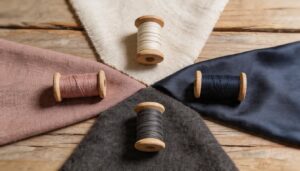
Your eye catches brightness before it catches color — that’s just how vision works. Lightness Dominance explains why a thread’s lightness and darkness contrast matter more than its exact hue.
When thread and fabric share similar value, Seam Visibility Reduction happens almost automatically. This Brightness Over Hue principle, rooted in color theory applied to sewing projects, means a light neutral thread with the right lightness beats a perfectly matched color at the wrong value every time.
Best Choices for Pale Fabrics
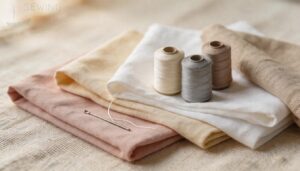
Pale fabrics are where thread choice really shows their hand. Light neutral thread colors like off‑white bone and dove gray softness blend in because they match the fabric’s brightness — not just its color family.
Here are three go-to picks:
- Ivory Blend – ideal for cream and linen pale fabric swatch tests
- Cool gray – reduces subtle stitch visibility on pastel and white cotton
- Stone Taupe Earthy – pairs beautifully with warm beige, blush, and natural cloth
Best Choices for Medium Fabrics
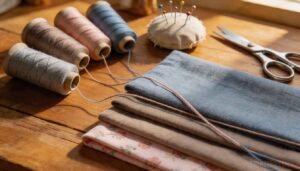
Medium fabrics are actually the sweet spot for thread blending. Chambray, twill, and printed cotton all respond well to mid-value thread — and that’s where medium gray really earns its place.
It hits the right fabric lightness pairing without pulling focus.
For undertone harmony, match warm and cool undertones in thread selection to your fabric’s base tone. That subtle contrast keeps seams clean, not invisible.
Best Choices for Dark Fabrics
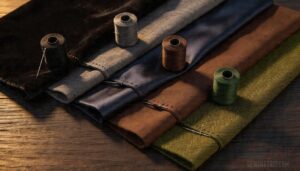
Dark fabrics have a simple rule: match darkness to darkness. Black, charcoal, and navy all hide stitches best when your thread sits close to the fabric’s deepest tone.
Dark gray covers most bases here.
For warm dark shades like chocolate or olive, brown thread blends better than black.
Matte fiber matters too — sheen catches light and undoes all your careful thread matching work.
Blending on Prints and Florals
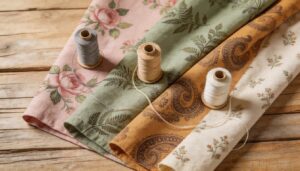
Prints are a whole different puzzle. When your fabric already has five colors in it, which one do you match? None of them — match the value instead.
- Medium gray disappears into multicolor florals and busy prints
- Beige settles quietly into warm, earthy pattern hierarchies
- Off-white blends into light-background floral motif integration
Color harmony wins every time over chasing an exact hue.
Warm and Cool Undertone Matching
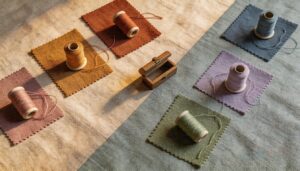
Once you nail value matching, undertones are the next piece of the puzzle. A warm fabric and a cool thread can clash just enough to make your stitches stand out in the wrong way.
Here’s how to match them right.
Warm Beige With Cream and Blush
Warm beige thread is the quiet anchor of a Cozy Bedroom Palette — and it earns that role. Its warm undertones naturally support cream base harmony, keeping stitches soft against blush accent integration without fighting for attention.
Think Subtle Light Reflection across linen or cotton: the thread disappears into the fabric. That’s color theory applied to sewing projects at its most practical. Choose warm beige textures for fabric color coordination that just works.
Cool Gray With Blue and White
Cool gray sits on the opposite end from warm beige — and that shift matters. With its blue undertones, cool gray delivers natural seam invisibility on blues, whites, and lavender fabrics.
It’s the go-to neutral thread for a Coastal Color Palette, where Lighting Influence can make undertones shift throughout the day. Thread color matching here follows simple color theory: match the cool, and your stitches disappear.
Taupe With Linen and Khaki
Taupe sits right between beige and gray — which makes it a quiet workhorse for Layered Fabric Pairings. taupe thread blends cleanly with linen and khaki because all three share the same earthy value range. Natural Material Harmony means your stitches stay Subtle Tone-on-Tone rather than competing with the fabric.
Soft Interior Accents like curtains or cushion covers, it’s one of the smartest neutral thread colors you can reach for.
Spotting Undertones Before Sewing
Before you cut a single seam, hold your fabric next to a scrap in natural light — that’s your fastest Light Source Comparison and Fabric Pairing Test in one move.
Keep an Undertone Reference Swatch nearby for a quick Color Temperature Check.
Shadow Influence Evaluation is simple: warm fabrics go golden, cool ones stay crisp.
That tells you exactly which neutral thread colors to reach for.
Best Colors for Common Fabrics
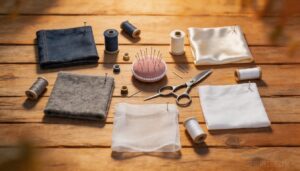
Different fabrics have their own personalities, and your thread color should speak their language.
What works on denim won’t always work on silk — and that difference matters more than most sewers realize.
match thread to five of the most common fabric types you’ll run into.
Cotton and Quilting Cotton
Cotton’s tight plain weave and natural Cotton Fiber Structure mean stitches sit right on the surface — nowhere to hide. For Quilting Cotton Weave, neutral thread in light gray or off-white facilitates color matching beautifully across most prints.
Pre-washing Benefits include better Fabric Shrinkage Management before you cut. Stick with best cotton quilting thread brands like Aurifil 50wt for Stitch Durability Factors that hold wash after wash.
Linen and Canvas
Linen and canvas bring a naturally rustic Surface Texture and variable Weave Structure that changes how thread reads on the surface.
That Humidity Response — linen tightening and slackening with moisture — means seams need to hold.
Pair a neutral palette of stone beige or medium gray with proper priming methods.
Fiber Strength keeps your stitches clean, whether you’re sewing a light linen summer dress or structured canvas tote.
Denim and Twill
Denim’s 3×1 twill structure and Indigo Fade Patterns mean your thread choice really shows over time. For everyday denim and casual wear, medium gray is your go-to neutral thread — it manages Twill Ratio Variations and Broken Twill Benefits without fighting the fabric’s grain.
Stretch Denim Mechanics need polyester thread for give, while Heavyweight Denim Strength calls for 30 wt or lower.
Silk and Satin
Silk and satin demand a gentler touch than denim ever will.
Silk Breathability and delicate Silk Harvesting origins mean the fabric reacts differently to every needle pass — and Fiber Strength matters here.
For thread color matching techniques for seams on these fabrics:
- Use size 100 silk thread for true silk.
- Match neutral grays on medium satin shades.
- Pick warm cream silk hues for warm cream silk hues.
- Choose polyester thread for synthetic satin’s Mirror Finish and Satin Drape.
Knits and Stretch Fabrics
Knits and stretchy fabrics have one rule that overrides everything else: your seam has to move with the fabric.
Use a ballpoint needle so it slides between loops without tearing them, and switch to stretch stitch types so seams don’t pop.
For thread color matching techniques for seams on four-way stretch or elastane blend fabrics, match thread value to fabric value — medium gray works almost universally.
When Contrast Looks Better
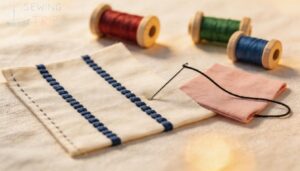
Blending isn’t always the goal — sometimes you want your stitches to show up and make a statement. Contrast thread can turn a simple seam into a design feature, and knowing when to lean into that difference is its own kind of skill.
Here are the best ways to use contrast thread with intention.
Decorative Topstitching Choices
Topstitching is where your thread color stops hiding and starts talking. When contrast is the goal, these choices make a real impact:
- Use Stitch Length Variation (2.5–4 mm) to control how bold your line reads
- Try Twin Needle Techniques for clean parallel rows on hems
- Explore Decorative Stitch Patterns for texture-forward design moments
- Apply a smart Placement Strategy along pockets, collars, and style seams
- Adjust Stitch Density Control so heavier topstitch thread never crowds the fabric
Black Thread on Light Fabric
Black thread on light fabric is the boldest move in your toolkit. The contrast edge definition is immediate — stitches read like drawn lines rather than hidden seams. Light fabric reflection amplifies this, especially under daylight. Tension sensitivity matters here; even tiny loops show clearly.
| Fabric Type | Stitch Visibility | Best Use |
|---|---|---|
| Cotton Poplin | Very High | Decorative outline use |
| Open Weave | Moderate | Edge stitching |
| Knit | Variable | Avoid if possible |
White Thread on Dark Fabric
White thread flips the script the same way — just in reverse. On dark fabrics, white 100 cotton thread creates a graphic, high-contrast effect that’s hard to miss. The visibility benefits are real, especially when decorative accents are the whole point.
- Smooth sateen and twill give the sharpest white-on-dark result
- Fabric texture impact softens contrast on brushed or napped surfaces
- Lighting influence matters — seams read bolder under daylight
- Maintenance concerns include lint pickup and possible dye transfer
- Color matching stops mattering when contrast is your goal
Highlighting Seams Intentionally
Sometimes, a seam deserves the spotlight. Intentional stitch line emphasis — through piped edge definition, raw seam accents, or strategic seam placement — turns construction into character.
Think topstitched denim panels or edge binding highlights on quilts.
When visual contrast replaces color contrast vs blending in quilting, thread color matching techniques for seams shift entirely. Seam visibility becomes the design, not the detail.
Using Variegated Thread for Detail
Variegated thread takes detail work where seams alone can’t go. Instead of swapping spools, one strand manages the color blending in quilts naturally — shifting through shades as you stitch.
Motif Texture Enhancement comes easy: flowers pick up soft petal gradients, borders catch different tones repeat by repeat. Try Stitch Direction Control and Randomized Color Placement on plain fabric first, where every Detail Color Layering shift actually shows.
Thread Weight and Fiber Choices
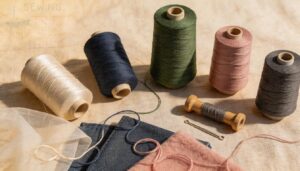
Color gets a lot of attention, but thread weight and fiber type quietly shape how every stitch looks and holds up. The wrong combination can make seams bulky, shiny, or just plain weak.
Here’s what to know before you spool up.
40 Wt Versus 50 Wt
Think of thread weight like a pencil choice — a 40 wt lays down a bolder, more visible line, while 50 wt acts like a fine‑tip, quietly disappearing into the fabric.
For quilting, 50 wt wins when you want seams to vanish. Go 40 wt when stitch definition is the point.
Just know that heavier thread needs a larger needle eye and may require a tension adjustment to keep things balanced.
Cotton Thread for Matte Blending
Cotton thread is the quiet workhorse of color blending — its natural matte finish keeps stitches from catching the light and drawing attention to themselves.
When fabric matching matters most, cotton delivers:
- Matte Finish Benefits soften stitch visibility on natural fabrics
- Fiber Compatibility with cotton and linen means both materials shrink together
- Neutral thread in light gray or cream disappears into most piecing seams
- Color blending stays consistent because cotton absorbs dye evenly
Polyester Thread for Added Strength
Polyester thread earns its place when durability matters most. Its corespun construction gives you a strong core without stiffness, while bonded coating benefits keep it from unraveling mid-stitch.
Low moisture absorption and abrasion resistance properties make it ideal for activewear, bags, and upholstery — anywhere seams take real stress.
For matching thread to fabric types that need heavy-duty tensile strength, polyester simply holds up longer.
Heavy-duty Thread for Thick Fabric
Thick fabric needs thread that can keep up. For denim, canvas, and upholstery, heavy-duty sewing starts with understanding Tex Size Ratings — Tex 70 works well for most upholstery, while Tex 90 supports webbing and reinforced layers.
Bonded Thread Finish reduces fraying through dense material.
Key details to nail:
- Match stitch length settings to 3–4mm for thick layers
- Use needle sizes 100/16 or 110/18 for proper Needle Size Matching
- Choose HeavyDutyUpholstery Thread with a bonded finish for canvas and vinyl
- Matching thread to fabric types means fiber weight matters as much as color
Sheen Effects on Stitch Visibility
Sheen is sneaky. A glossy rayon or smooth polyester thread catches light differently than matte cotton — and that changes everything about stitch invisibility. On satin or other high-gloss fabrics, fabric gloss interaction amplifies the effect, making seams pop when you’d rather they disappear.
For most blending work, matte neutral thread wins. It scatters light softly, reducing stitch direction shine and keeping your seams quietly invisible.
How to Test Before Sewing
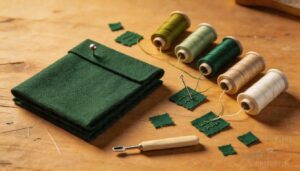
Before you cut a single seam, take a few minutes to test your thread on the actual fabric you’re using. Small checks upfront save you from frustrating do-overs later.
Here’s what to run through before you start sewing for real.
Swatch Testing on Scrap Fabric
Before you cut a single inch of your good fabric, grab a scrap and sew a test seam. Scrap color matching this way shows you exactly how thread color matching techniques for seams perform in real fabric — not just on the spool.
Fabric texture impact matters too: smooth cloth reveals thread sheen more than textured weaves.
A quick pressing effect check after ironing confirms your final look.
Checking Stitch Visibility in Daylight
Once your swatch test is done, take it to a window. Natural light around midday is your best judge — daylight color temperature between 5000K and 6500K shows value contrast evaluation clearly, revealing whether your thread truly disappears or just looks blended under warm room light.
High-CRI lighting does the same indoors.
Fabric texture influence matters too: smooth cloth catches daylight differently than linen.
Adjusting Tension for Cleaner Seams
Good light reveals the problem — now fix it. Start with your Upper Tension Dial, moving one number at a time until stitches lock cleanly in the middle.
Check your Needle Thread Path first, though; skipping a guide causes more tension headaches than the dial itself. Thicker layers change everything too, so always test on matching fabric thickness.
Balanced Bobbin Tension Balance keeps seams smooth before you adjust anything else.
Pairing Needle Size With Thread
Once tension feels right, needle size is your next checkpoint. Think of it as Thread and Needle Pairing at its simplest: the needle eye needs enough room for the thread to move freely. That’s Needle Eye Clearance in action.
A 50 wt thread works well with an 80/12 needle; heavier 40 wt thread often needs a 90/14 for Stitch Quality Optimization.
Smart Thread Buying Tips
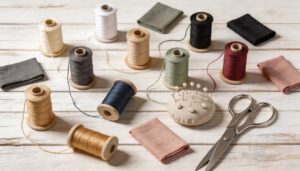
Building a solid thread stash doesn’t have to be complicated or expensive. A few smart choices upfront will save you time, money, and mid-project frustration.
Here’s what to keep in mind before you buy.
Build a Core Neutral Palette
Think of your thread drawer as a capsule wardrobe — a few well-chosen neutrals do more work than a rainbow of shades.
Your Core Palette Essentials: Six colors:
- White — crisp baseline for pale fabrics
- Off-white — softer, reads cleaner on most lights
- Light gray — bridges cool and warm tones
- Medium gray — disappears on prints and denim
- Beige — warm anchor for creams and blush
- Taupe — earthy fabrics’ best friend
That’s your Minimalist Thread Collection, built on Neutral Shade Hierarchy and solid color theory applied to sewing projects.
Keep Fewer Colors, Sew Faster
Here’s a quiet truth about thread: a Limited Color Inventory actually speeds you up. When your drawer holds Pre-sorted Spools of just six neutrals, every Quick Color Decision takes seconds instead of minutes.
That’s your Simplified Thread Workflow in action — Batch Thread Loading your projects with neutral thread that manages multicolor fabrics without second-guessing.
Fewer choices, faster starts, cleaner results.
Choose Singles or Thread Kits
Both singles and kits have a place in smart inventory management — it just depends on your project scope.
- Single spools offer cost efficiency when you need one exact shade
- Starter kits give color flexibility across prints and mixed fabrics
- Larger kits (40–60 colors) suit quilters needing neutral thread usage across piecing and quilting
- Polyester kits work well for general waste reduction across multiple projects
- Cotton singles shine for choosing the right quilt thread color on natural fabrics
Avoid Cheap or Brittle Thread
Cheap thread breaks your momentum — and your seams. Low-grade fiber, poor Twist Ply Control, and minimal Lubrication Benefits mean you’re fighting the machine instead of sewing.
Old thread stored without proper Storage Conditions gets brittle and snaps under tension.
Thread Abrasion Resistance, Thread Strength, and Needle Compatibility all suffer when you cut corners.
Invest in quality thread — your stitches will thank you.
Best Starter Colors to Stock
Five colors carry you through almost every project:
- Off-white — soft on pale cottons and light pastels
- Light gray — your go-to cool gray for prints and florals
- Medium gray — blends into dark fabrics without drama
- Warm beige — essential neutral thread for linens and earth tones
- Black — for denim, contrast, and bold topstitching
That’s your fabric-specific starter set — simple, flexible, done.
Frequently Asked Questions (FAQs)
What color thread matches everything?
No single thread matches everything — but medium gray comes closest. It’s the definitive Chameleon Stitch Color, a true Fabric-Independent Blend that quietly disappears on most fabrics without fighting for attention.
Which color thread is best?
Medium gray wins for most projects. It blends across light, medium, and mixed fabrics — making it the go-to popular neutral thread color for quilting and everyday sewing without second-guessing.
How to pick a thread color?
Start with the fabric’s value — its lightness or darkness — then match your thread to it first.
From there, consider undertone, project style goals, and color psychology to find the thread that feels right.
Can thread color affect fabric texture appearance?
Yes, absolutely.
Thread color shapes how texture reads on fabric. Sheen Texture Interaction, Optical Blending Effect, and Fabric Weave Perception all shift based on your thread choice — affecting Stitch Line Depth and Color Surface Roughness visually.
How do I store thread to prevent fading?
Your thread’s worst enemy isn’t use — it’s sunlight.
Store spools in UV Shielding Containers or Dust‑Free Drawers, away from windows.
Humidity Controlled Cabinets protect fibers from moisture damage and keep colors true longer.
Does thread color matter for hand sewing projects?
Absolutely — thread color shapes how every stitch reads on fabric. Match it closely, and stitches disappear.
Choose contrast, and they pop. Getting this right saves project time and keeps your seams looking clean.
Can wrong thread color weaken a finished seam?
Color alone won’t weaken a seam — that’s one of the biggest seam durability myths out there. Real seam durability comes down to fiber type, thread weight, and tension, not shade.
How often should old thread spools be replaced?
Old spools do not come with expiration dates. Replace them when they fail a Tug Strength Test, show moisture damage signs, or leave excessive lint.
Condition, not age, drives smart replacement scheduling.
Conclusion
Like a master painter, you now hold the brush to create flawless works of art, with the best thread colors for fabric as your guide. Choosing the right thread is akin to finding the missing piece of a puzzle.
With these expert tips, you’ll master the best thread colors for fabric, elevating your sewing to new heights and making every stitch a demonstration of your skill.
- https://www.colormatters.com/color-and-design/basic-color-theory
- https://sewnikkico.etsy.com/
- https://www.pinterest.com/SewNikki6/
- https://www.instagram.com/sewnikki6/
- https://www.noon.com/uae-en/connecting-threads-white-100-cotton-thread-for-sewing-quilting-and-crafting-50weight-1200-yard-large-spool-white/Z58EAF131D92747A8BECAZ/p/