This site is supported by our readers. We may earn a commission, at no cost to you, if you purchase through links.
single quilt takes roughly eight hours to sew by hand. Multiply that across a shelter needing 200 quilts before winter, and the math gets sobering fast.
That’s where the right machine changes everything.
Community quilting programs across the country have learned that equipment choices determine whether a group produces twelve quilts a season or two hundred.
The wrong machine stalls momentum, frustrates beginners, and quietly kills volunteer enthusiasm. Choosing quilting machines for charity and community projects means thinking beyond price tags—durability, portability, and ease of use all carry equal weight when shared spaces and mixed skill levels are part of the equation.
Table Of Contents
Key Takeaways
- Choosing the right machine for charity work means prioritizing durability, portability, and simple controls — not just price — because volunteers of all skill levels will be sharing it.
- Domestic machines win for most community programs: they’re beginner-friendly, lightweight, and fit tight spaces better than long-arm or industrial options.
- Structure is what drives output — pre-cut fabric stations, assembly-line workflows, and rotating volunteer shifts can take a group from 40 quilts a year to nearly 180.
- Donated machines and quilts only reach people when they meet clear standards — clean, functional equipment and size-matched quilts tailored to each recipient’s specific needs.
Choosing Quilting Machines for Charity
The right machine can make or break a charity sewing program. Not every quilting machine is built for shared spaces, back-to-back shifts, or hands that are just learning the craft.
Understanding how a sewing machine actually works helps program organizers choose models that hold up under real, everyday use.
Here’s what to look for before you commit to a machine for community work.
Must-have Features for High-volume Quilt Making
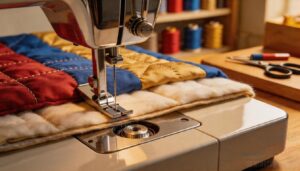
When you’re quilting for charity, the machine has to keep up. Look for:
- Stitch speed of 900+ SPM
- Throat space of 12 inches or more
- Strong motor torque for thick quilting fabrics
- Dual feed for smooth layering
- A large bobbin to reduce stops
Consider using clear acrylic quilting rulers for precise fabric alignment.
These sewing tools keep your sewing machines running strong — shift after shift.
Portability for Sew Days and Shared Spaces
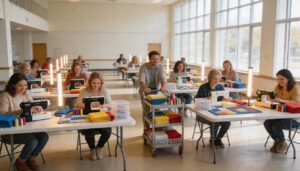
Speed matters — but so does mobility. When you’re setting up for community sewing workshops or charitable quilting sew days, your gear needs to move with you.
Compact Sewing Machines under 25 pounds, Rolling Storage Carts, Foldable Work Tables, Portable Light Kits, and Modular Organization Boxes let you transform community centers into fully functional sewing labs — fast.
Volunteer led garment mending sites run smoother when every sewing machine travels light.
Durability for Beginner and Volunteer Use
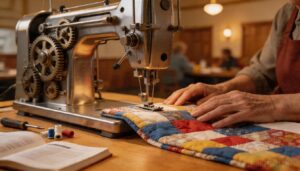
A machine that travels well also needs to hold up under pressure. Beginners make mistakes — that’s part of skill building.
metal frame and solid gear train absorb that learning curve without breaking down. Look for repairable design, easy service access, and strong warranty support.
In community outreach settings, sewing machine maintenance stays manageable when your machines are simply built to last.
Easy Controls for Mixed Skill Levels
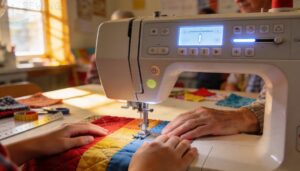
Controls matter just as much as construction. In community sewing workshops, one machine might pass between a first-timer and a seasoned volunteer in the same hour.
Start/Stop Simplicity removes the foot-pedal barrier. Speed Slider Guidance lets each person work at their own pace. Needle Position Clarity and Lock Stitch Automation keep seams consistent. Label Icon Simplicity means less coaching, more sewing.
Domestic Vs Long-arm Vs Industrial Options
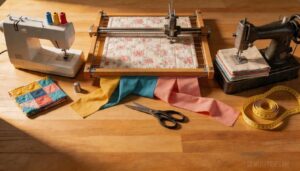
Each option has its place. Domestic sewing machines are lightweight, affordable, and easy for beginners — a low learning curve and small space footprint make them ideal for shared spaces.
Long-arm systems handle large quilts faster, with impressive stitch speed, but demand more room and cost. Industrial machines offer durability, but stay fixed.
For most community sewing machine donation initiatives focused on skill building, domestic wins.
Best Projects for Community Quilting
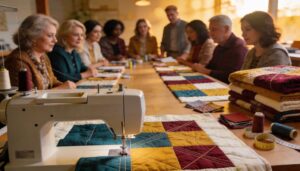
Community quilting is about more than stitching fabric together — it’s about putting something useful in someone’s hands when they need it most. The right project can bring a group together fast and send real impact into hospitals, shelters, and beyond.
Community quilting transforms simple stitches into lifelines for hospitals, shelters, and those who need it most
what works best when you’re quilting for others.
What is a Charity Quilt?
charity quilt isn’t sold — it’s given. That single difference carries real weight.
Rooted in Historical Roots dating back to the early 1800s, charitable quilting has always turned fabric, time, and skill into something meaningful.
Community quilting thrives on Fabric Upcycling, nonprofit collaboration, and sewing volunteers working together.
Each finished quilt holds Community Storytelling, Quilt Signatures, and quiet Emotional Benefits for both maker and recipient.
Quilts for Hospitals, Shelters, and Veterans
Each setting calls for something different. Sewing for hospital patients means soft, allergy-friendly materials — think flannel backs and low-lint fabrics.
Shelters need sturdy, washable quilts.
Veteran care through quilted blankets follows Quilt of Valor standards: 60 by 80 inches, fully quilted, properly labeled.
Charitable quilting works best when you match the quilt to the need.
Beginner-friendly Quilt Patterns for Group Sewing
The right pattern makes or breaks a group sewing day. Stick to designs that anyone can pick up quickly.
- Simple Patchwork — identical squares, no complex matching
- Strip Piecing — long strips, fewer seams, less frustration
- Four Patch Blocks — just four squares per block, easily divided
- Nine Patch Blocks — classic rhythm of cut, arrange, and stitch
- Large Block Quilt — fewer pieces, faster finish
These DIY patterns for charity fit community sewing workshops perfectly.
Standard Quilt Sizes for Donation Programs
Size matters — quilt that’s too small won’t meet a program’s needs.
| Recipient | Size Range | Notes |
|---|---|---|
| Baby/Infant | 30 × 40 in | Baby Quilt Dimensions for NICUs |
| Lap/Wheelchair | 50 × 60 in | Lap Quilt Measurements for shelters |
| Adult/Veteran | 60 × 80 in | Bed Quilt Sizes for full coverage |
Always confirm Recipient Size Matching and Size Allowance Guidelines with your donation program before cutting quilt panels or assembling finished quilt tops and blocks.
Fast Quilting Methods for Volunteer Teams
Speed comes from structure. Set up Pre-cut Fabric Stations so volunteers aren’t wasting time at the cutting table.
Run an Assembly Line Workflow — cutting, sewing, pressing, done. Use Stitch in Ditch to finish layers fast.
Rotating Volunteer Shifts keep energy steady. Track output with Time Tracking Metrics so your community outreach programs stay on pace and your sewing machines never sit idle.
Where Quilts and Machines Help Most
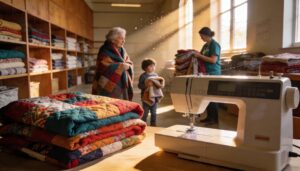
Quilts and machines don’t just sit in storage — they go where people need them most. Some of those places might surprise you.
Here’s a look at where your contribution can land.
Do Charities Take Sewing Machines?
Yes, many charities do accept sewing machine donations — but eligibility criteria matter. Most programs require machines to be clean, functional, and include accessory inclusions like cords, bobbins, and foot pedals.
Condition requirements are firm: no rust, no exposed wiring. Some organizations also need tax documentation for donors.
If your machine doesn’t qualify, alternative contributions like fabric or notions still support nonprofit empowerment through sewing education.
Community Centers and Sewing Labs
Community centers and sewing labs are where sewing machine donations truly come alive.
These spaces offer eight to twelve machines, thoughtful Space Layout, dedicated Fabric Storage, and Accessibility Features like adjustable tables for every volunteer.
With strong Volunteer Scheduling and Community Outreach, they anchor charitable sewing initiatives and community sewing education programs — turning community empowerment from an idea into something you can touch and share.
Hospitals, Shelters, and Care Programs
Hospitals, shelters, and care programs rely on your quilts more than you might realize. Medical respite quilting brings warmth to patients recovering after hospital stays. Palliative care quilts offer comfort when medicine cannot.
Shelters distribute hospital comfort items twice monthly. Nurse-led sewing and infection control textiles guide what’s accepted.
Volunteer housing workshops and community outreach drive sewing machine donations where they matter most.
Veteran and Refugee Support Organizations
Veterans and refugees carry weight that quilts can’t fix alone — but they help. Organizations pair quilts with trauma-informed counseling, housing navigation, legal assistance, and job placement.
Community mentorship programs use refugee employment via sewing to rebuild dignity. Sewing machines distributed since 2005 through community sewing machine donation initiatives like Quilting Hearts Worldwide keep these efforts running where warmth and purpose both matter.
Skill-building Groups Needing Quilting Equipment
Skill-building groups don’t just need fabric — they need machines, mentors, and a plan. Through equipment sharing and skill workshops, organizations can donate machines that enable economic self-sufficiency for learners.
Volunteer-led garment mending sites, community sewing machine donation initiatives, and volunteer recruitment all feed into measurable impact.
Track your numbers. Pursue grant acquisition.
Every sewing machine you donate moves someone closer to independence.
Running Local Charity Quilt Days
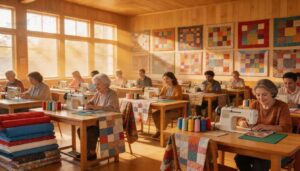
A quilt day works best when everyone knows their role and the machines are ready to go. There are a few key pieces that hold it all together, from how you set up the room to how you measure what you’ve accomplished.
what to focus on.
Setting Up Machine Stations and Workflow
A well-planned station layout makes everything run more smoothly. Place your ironing area at least three feet from cutting tables, and give each sewing machine its own power strip for clean power management.
Use a Kanban workflow so volunteers always know what’s next. Label every tool clearly.
Add ergonomic seating for all body types.
Tool organization keeps volunteer engagement high and quilt output moving.
Training Volunteers on Quilting Basics
Before volunteers touch a machine, a solid sewing education program sets the foundation.
Your 2-hour onboarding covers three essentials:
- Seam allowance and cutting accuracy
- Pressing techniques between blocks
- Free-motion basics and binding finishing
These skills build real community empowerment.
When volunteers understand why each step matters, quilting becomes purposeful — not just busy work.
Loaning Machines for Community Projects
Loaning machines for community projects run on clear structure. The Sewing Machine Project models this well — mid-range domestic sewing machines go out for 4–12 weeks through nonprofit partnership and tool distribution built on user agreements and liability coverage.
Loan scheduling keeps machines moving. Funding partnerships offset costs.
Impact reporting shows donors real numbers. Community outreach grows from there.
Partnering With Local Quilting Circles
Local quilting circles are ready-made partners for charity work. They already bring Circle Leadership Roles, Fabric Swap Programs, and Skill Mentorship Pairing to the table — so you’re not starting from scratch.
Build your partnership around four shared commitments:
- Align on Community Outreach Events and donation goals
- Use Volunteer Scheduling Systems to divide cutting, piecing, and finishing tasks
- Support Local sewing arts initiatives through Nonprofit partnerships
- Promote Skill building for economic self-sufficiency across Community-driven craft projects
Quilting Hearts Worldwide grows one circle at a time.
Tracking Quilt Output and Community Impact
Numbers tell the story of your impact. Log every quilt with a date, pattern type, and size.
Track volunteer hours per session to spot trends and plan smarter.
Collect recipient feedback scores from hospitals, shelters, and Quilts of Valor recipients.
Use a data dashboard for transparency — it shows donors exactly where their support lands.
Quilt production metrics and quilt longevity studies turn your community development work into proof.
Donation Rules, Care, and Safety
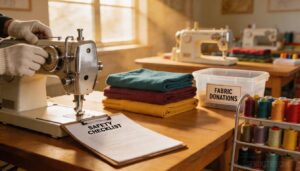
Donating machines and materials is a generous act — but doing it right makes all the difference.
There are a few clear rules around what’s accepted, how things should be prepared, and how to keep shared equipment safe and running.
Here’s you need to know before you contribute.
What Items Do Charities Need Most?
Charities need more than sewing machines and fabric donations. Personal Care Supplies, Bedding Essentials, and Food Staples top most shelter wish lists.
School Materials and Office Supplies keep programs running.
In-kind fabric and sewing supply donations stretch budgets further.
Sewing tools and sewing supplies support skill-building directly.
Match what you give to what each organization actually needs.
Accepted Quilting Machines, Fabric, and Notions
Not everything donated makes it to a volunteer’s hands.
Machines must be domestic, functional, and free of damage. Follow Notion Safety Standards: no rust, no dull blades.
Fabric donations need to meet Fabric Pre-wash Requirements — clean, odor-free, 100% cotton when possible.
A basic Machine Compatibility Matrix helps match equipment to projects. Good charitable sewing initiatives start with quality supplies.
Cleaning and Testing Donated Equipment
Once a machine arrives, your work isn’t done — cleaning comes first.
Every sewing equipment donation goes through Sanitization Protocols before it touches a volunteer’s hands. That means:
- Wipe surfaces with 70% isopropyl alcohol
- Run a Functional Inspection across stitches and tension
- Log every step in your Decontamination Log
- Meet Ventilation Standards during cleaning sessions
equipment maintenance protects everyone.
Safety Practices for Shared Machine Use
Clean equipment is just the start.
Every volunteer in your program needs a Safety Briefing before touching any machine. That means reviewing PPE Requirements — glasses, tied-back hair, closed-toe shoes.
Post guidelines at each station.
Run a quick Machine Inspection at session start.
Use a Buddy System so no one works alone.
Know your Emergency Shutoff before anything goes wrong.
Maintenance Plans for Long-term Community Use
Your machines won’t last without a plan behind them.
- Follow a Preventive Maintenance Schedule — monthly cleaning, quarterly tension checks, annual full service.
- Use a Maintenance Activity Log to track every repair and forecast needs.
- Practice Spare Parts Stocking for needles, belts, and bobbins.
- Lock in Vendor Service Agreements for consistent, transparent support.
Equipment Longevity Planning keeps your program running strong.
Frequently Asked Questions (FAQs)
Do charities take sewing machines?
Yes — and many do.
Organizations like The Sewing Machine Project accept working machines, fabric, and notions through clear sewing equipment donation policies, routing donations to charitable sewing initiatives that meet their eligibility criteria.
What is a charity quilt?
A charity quilt is a handmade item created through collaborative creation to benefit those in need.
It’s community empowerment through needlework — offering emotional comfort, serving as a fundraising tool, and strengthening nonprofit collaborations one stitch at a time.
What items do charities need most?
Most charities need hygiene kits, food pantry staples, warm clothing, and medical supplies.
School supplies and in-kind donations matter too.
Sewing tools and sewing equipment — including items covered under a sewing equipment donation policy — stretch every dollar further.
Can monetary donations fund specific quilting programs?
Your money can go exactly where it’s needed.
Designated fund allocation lets you donate money to specific programs — funding Donor-Driven Kits, fabric, or a sewing machine project that builds real, targeted impact metrics.
How do international partners receive donated sewing machines?
International groups receive donated machines through coordinated shipping logistics, import documentation, and customs clearance.
Partners sign agreements, confirm compliance checks, then complete a training handover so every machine reaches the right hands and gets used.
What is the pay it forward requirement for recipients?
When you receive help, you’re expected to pass it on.
That’s the pay it forward requirement — take what you’ve gained and give back through volunteering, mentoring, or supporting someone else in need.
Which charities coordinate disaster-response quilt donations?
Several organizations step up when disaster strikes. Red Cross Partnerships, Quilts of Compassion, Good360 Coordination, and Salvation Army Relief all distribute handmade quilts.
Guild Network Channels connect local makers directly to those in need.
How are quilts distributed to hospitals and shelters?
Think of it like a relay race.
Quilts move from your hands to intake centers, where color-coded labels and intake quality checks route each one to the right hospital ward or shelter through tight delivery timelines.
Conclusion
One shelter in Ohio went from 40 quilts a year to nearly 180 after upgrading their shared machines and organizing volunteer stations. That’s not luck—that’s the right setup working.
When you choose quilting machines for charity and community projects with durability, ease, and people in mind, the numbers follow.
Every well-maintained machine is a quiet multiplier.
The warmth doesn’t just end up in the quilt. It starts the moment you thread the needle.
- https://www.justserve.org/
- https://www.createthegood.org/
- https://www.stitchingheartsww.org/
- https://www.wrike.com/form/eyJhY2NvdW50SWQiOjE5MDY3MjcsInRhc2tGb3JtSWQiOjIzNTY2N30JNDcxNTYwNTgwODE3MwkwOTNmNGVkNWMxN2ZkNDQ1OTJiMmI0OTE4ZDY5NzZkNjRjYjc3MTA2OWVlNGRmMDFhZDgzNGM1YTQzOTY3MjY2
- https://www.randolphvacsew.com/plastic-vs-metal-parts-getting-a-sewing-machine-that-will-last