This site is supported by our readers. We may earn a commission, at no cost to you, if you purchase through links.
Most sewers learn thread weight the hard way—buying the wrong spool, watching stitches pucker through delicate chiffon, or noticing topstitching disappears into denim like it was never there. The culprit is almost always a mismatch between thread weight and fabric.
Here’s what trips people up: a higher weight number doesn’t mean stronger or thicker thread.
A 60 wt is finer than a 30 wt, which runs opposite to how most numbering systems work.
Understanding the difference between thread weights—and what each range actually does to your seams, stitches, and fabric drape—gives you real control over your results.
Table Of Contents
Key Takeaways
- Thread weight numbers work in reverse — a 60 wt thread is actually finer than a 30 wt thread, because higher numbers mean less thickness, not more.
- Matching thread weight to your project type matters more than matching it to fabric weight — a 40–50 wt handles most garments, 60–80 wt suits delicate fabrics like silk, and 12–30 wt is built for denim and heavy-duty work.
- Needle size must match your thread weight — fine threads need a 70/10–80/12 needle, while heavy threads require a 100/16–120/18 needle to avoid skipped stitches and machine strain.
- Cotton and polyester behave differently even at the same weight — polyester stretches and holds color better, while cotton stays matte and breathes, so your fiber choice should follow the demands of the project, not just the number on the spool.
How Thread Weight Numbers Work
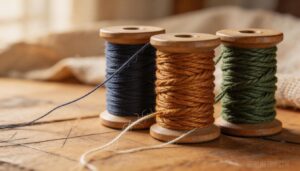
Thread weight numbers follow their own logic — and once it clicks, everything else about choosing thread gets easier. The system isn’t complicated, but it does work differently than you might expect. Here’s what you need to know.
Once you understand the basics, this beginner’s guide to thread weight makes the whole numbering system feel surprisingly intuitive.
Why Higher Weight Numbers Mean Finer Thread
Here’s the rule that trips up almost every beginner: higher numbers mean finer thread. It feels backwards, but it’s just how the inverse rule works.
- A 60 wt thread is thinner than a 30 wt
- Finer threads have a smaller fiber diameter
- Thinner strands create less seam bulk
- Weight-number scaling reflects fiber fineness, not strength
The U.S. weight system assigns higher numbers to finer threads.
How Thread Weight is Measured by Length and Mass
Think of it like measuring rope by how far it stretches per kilogram. Thread weight follows that same mass-length relationship.
A 40 wt thread means roughly 40 kilometers weigh one kilogram. That’s the inverse rule in action.
Thread weight measurement uses length per mass — so more length equals less thickness. It’s a simple, reliable system built on precision and international standardization.
The Difference Between Wt, Tex, and Denier
Three systems measure thread weight, and they don’t speak the same language. Wt follows the inverse rule you just learned.
Tex measures grams per 1,000 meters — higher means thicker. Denier measures grams per 9,000 meters; convert it using Denier × 0.111 to get Tex.
Metric vs Imperial conventions vary by brand, so checking brand conversion tables keeps your thread weight conversion between Tex and Denier units accurate.
What Labels Like 50 Wt and 50/3 Mean
Once you know the measurement systems, labels start making sense fast.
A 50 wt thread follows the inverse rule — it’s a medium-weight option balancing tensile strength and visibility.
The "50/3" label tells you more: fiber composition twisted into three plies.
That ply count means stronger, smoother stitches.
Better color contrast and less breakage.
One label, two pieces of useful information.
Why Thread Weight Differs From Fabric Weight
Here’s something that trips up a lot of sewists: thread weight and fabric weight measure completely different things. Fabric weight tells you how heavy a square yard of material is. Thread weight measures fiber density along a length. They don’t talk to each other — not directly.
Thread weight and fabric weight measure completely different things — never assume one informs the other
- Thread weight basics use length-per-mass measurement systems
- Fabric weight considerations rely on area-based manufacturing tolerances
- Compatibility of thread materials with fabrics depends on drape, not just weight numbers
Choose your thread based on stitch purpose, not fabric heaviness alone.
For a deeper look at matching thread to technique and fabric type, these sewing project problem-solving tips cover everything from seam strength to heat-safe finishing.
Comparing Common Thread Weight Ranges
Thread weight ranges fall into four clear categories, each with its own personality and purpose. Knowing which range fits your project saves you from tension headaches, broken needles, and seams that just don’t look right.
Here’s how each range stacks up.
Fine Threads: 60 Wt to 100 Wt
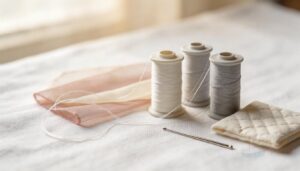
Fine weight threads — from 60wt to 100wt — are nearly invisible on fabric, which is exactly the point. The super fine 100 weight sits around 0.008 mm thick, perfect for micro‑quilting and delicate seams on silk or chiffon.
Thread shine levels vary by fiber: rayon reads glossy, cotton stays matte. Store spools upright for thread longevity factors, and always match your needle size accordingly.
Medium Threads: 40 Wt to 50 Wt
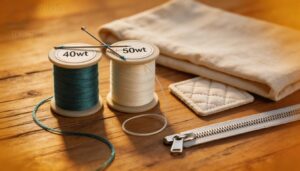
For most projects, medium 40 or 50 weight threads are your sweet spot. Medium weight threads handle everyday garment sewing, quilting, and even zipper compatibility without fuss.
The 40wt gives you a slightly bolder stitch; 50wt stays subtle on lighter fabrics. Both offer excellent color consistency, thread longevity, and cost efficiency — solid thread weight considerations for quilting and general care and cleaning routines alike.
Heavy Threads: 12 Wt to 30 Wt
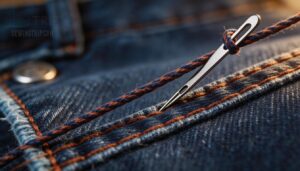
Heavy threads — 12 wt to 30 wt — are built for work that demands to be seen and felt. Think denim topstitching, upholstery, or bold quilting lines where impact of thread weight on seam strength and durability really shows. These are your go-to weights when subtlety isn’t the point.
- thread breakage resistance on canvas, denim, and leather
- Bold, defined stitches ideal for heavy weight thread applications in decorative stitching
- colorfastness on denim keeps seams looking sharp through repeated washing
- Matching thread weight with appropriate needle size — usually 100/16 or larger — prevents skipped stitches
Pair them right, and every seam tells a story.
Extra-heavy Threads: 8 Wt and Lower
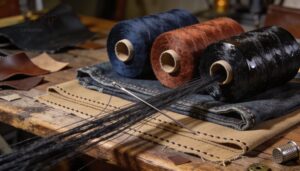
When thread weight drops to 8 wt or lower, you’re working with the heaviest duty thread available. These thick strands excel at heavy-weight thread usage for denim and canvas — bold topstitching, upholstery, and big-stitch quilting.
Waxed thread coating reduces fraying, while lubricated machine parts and slow sewing speed prevent heat buildup. Store spools in cool dry storage, and always check needle eye reinforcement to avoid snags.
Side-by-side Differences in Thickness and Visibility
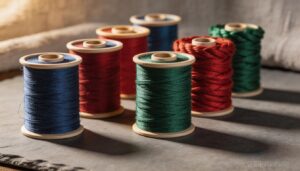
Think of thread weight like a volume dial. At 100 wt, stitches nearly disappear — perfect when Fabric Sheerness Impact demands subtlety on silk or chiffon.
Drop to 12 wt, and Stitch Height Comparison becomes obvious: ridges rise, Thread Finish Gloss intensifies, and Color Contrast Effect sharpens. Lighting Conditions Influence how dramatic that difference looks.
The thread weight numbering and inverse rule explanation is simple — lower number, bolder impact on stitch visibility and thread thickness.
How Thread Weight Affects Stitches
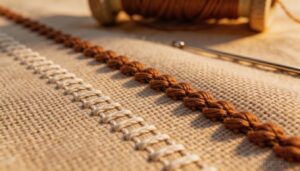
Thread weight doesn’t just change how thread looks on a spool — it changes everything about how your stitch behaves on fabric. The difference between 40 wt and a 12 wt shows up in ways you’ll feel as much as you see.
Here’s exactly where that impact lands.
Stitch Visibility on The Fabric Surface
What you see on the surface often comes down to the combination of thread weight, thread color matching, and fabric sheen. Finer thread (high weight numbers) disappears into the weave. Heavier thread draws focus.
Key factors shaping stitch visibility:
- Color Contrast: High contrast amplifies every stitch line
- Surface Texture: Loose weaves reveal stitches; tight weaves conceal them
- Fabric Sheen: Smooth satin exposes seam appearance more than matte cotton
- Stitch Length: Longer stitches exaggerate definition on smooth surfaces
- Thread Thickness: Heavier thread weight creates bolder, harder-to-hide lines
Seam Bulk and Fabric Drape
Visibility is just the start — what happens beneath the surface matters just as much. Seam bulk builds up fast when thread is too thick for your fabric.
That’s why seam direction stiffness and flat felled bulk placement affect fabric drape directly.
Lightweight silks show seam bulk clearly.
Bias seam drape stays flexible; perpendicular seams stiffen.
Bulk reduction methods like trimming help restore natural drape coefficient balance.
Strength and Durability in Finished Seams
Bulk isn’t the only thing working against you — weak seams fail just as fast. Seam strength and durability depend heavily on thread weight.
A 40–50 wt polyester with reinforced stitch patterns and proper thread tension adjustment resists up to 20 N of pull.
Pair that with smart seam finish types and edge treatment techniques, and your load-bearing seam design holds through repeated wash cycles.
Quilt Texture and Topstitch Definition
Thread weight shapes quilt texture more than most sewers expect. A 12 wt thread creates bold, raised lines — perfect for topstitching and edge reinforcement techniques. Fine 40–50 wt threads let layered batting interaction do the visual work instead.
Stitch interval impact matters too: tighter spacing deepens texture. Contrast thread choice amplifies definition, while consistent foot pressure control keeps every line clean and sharp.
Tension, Lint, and Machine Performance
Heavier threads demand more from your machine — and your tension discs feel it first. Thick thread increases friction, which throws stitch balance off fast.
Lint buildup worsens this: it hides near the bobbin case and feed dogs, causing feed dog slippage and uneven stitches.
lint removal techniques keep things running smoothly.
Rising noise during sewing is your cue for noise diagnosis and bobbin tension adjustment before real damage sets in.
Best Thread Weights by Project
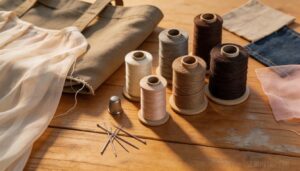
Picking the right thread weight gets so much easier when you think about what you’re actually making. Different projects have different demands — a silk blouse and a canvas tote aren’t playing the same game.
Here’s what works best across the most common sewing situations.
Delicate Fabrics Like Silk, Chiffon, and Organza
Delicate fabrics like silk, chiffon, and organza punish heavy thread fast. Stiffness vs drape matters here — organza holds structure, chiffon flows freely, and the wrong thread ruins both.
Selecting thread weight for delicate fabrics like silk means staying in the 60–80 wt range. Fine thread honors sheer layering techniques, reduces seam bulk, and lets fiber blend impacts and color saturation effects stay true to the fabric’s seasonal wearability.
Everyday Garment Sewing and Repairs
For most garments — think buttonhole techniques, zipper installation, and hem finishing methods — 40–50 wt thread hits the sweet point. It balances seam strength with clean fabric compatibility across cotton, linens, and blends. Match it with needle gauge selection, dial in your thread tension adjustments, and fabric grain alignment stays true.
Keep 40 wt in your repair kit essentials. It covers nearly everything.
Quilt Piecing, Quilting, and Stitch-in-the-ditch
Quilting is where thread weight really earns its keep. For quilt piecing and stitch-in-the-ditch work, 50 wt is your go-to — it disappears into seams and keeps block layout planning clean.
Need thread weight considerations for quilting that show subtle texture? Drop to 40 wt.
Top picks for quilting thread weights:
- 50 wt — ideal for quilt piecing and fabric grain alignment
- 50 wt — perfect for stitch-in-the-ditch with minimal bulk
- 40 wt — balances stitch spacing control and quilt topstitch tension
- 80 wt bobbin — pairs well for flat, even seams
- Color contrast selection — match thread to fabric for invisible or decorative results
Embroidery and Decorative Stitching
Decorative stitching rewards careful thread choices. Rayon and metallic thread add visible sheen, while cotton stays matte. For embroidery design detail, 40 wt fills bold shapes, and 60 wt manages fine lines cleanly. Stitch density control depends on the weight — heavier threads need more spacing.
| Thread Weight | Best Use | Key Consideration |
|---|---|---|
| 12–30 wt | Heavy weight thread applications in decorative stitching, bold outlines | Wide needle, open spacing |
| 40 wt | Satin fills, appliqué borders | Balanced tension |
| 60 wt | Fine embroidery design detail | Stabilizer types matter most |
| Rayon/Polyester | Thread sheen choices for decorative work | Consistent luster |
| Metallic thread | Color contrast techniques, edge accents | Enlarged needle eye required |
Match finishing edge styles — blanket or satin stitch — to your thread weight for clean results.
Denim, Canvas, and Heavy-duty Sewing
Thick fabrics don’t forgive weak thread choices. For denim and canvas, reach for 20–30 wt bonded polyester — it supports the load without shredding.
- heavy-duty needle types (90/14–100/16) to pierce dense layers cleanly
- Stitch length optimization means 3.0–4.0 mm to prevent puckering
- Reinforced seams and bar tacking techniques protect stress points on supports and corners
- Fabric pre-washing effects shrinkage, so always wash first
- Heavy-duty thread weights keep seam strength and durability intact through real wear
Matching Weight, Needles, and Fiber
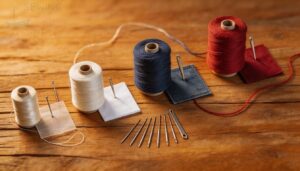
Getting thread weight right is only half the equation — the needle and fiber you pair it with can make or break your results. Each combination has its own rules, and knowing them keeps your stitches clean and your machine happy.
Here’s what you need to match them well.
Needle Sizes for Fine, Medium, and Heavy Threads
Think of your needle as a pipeline — match it to your thread, or things back up fast.
Fine weight threads (60–100 wt) need sizes 70/10 to 80/12 to protect delicate weaves.
Medium weight threads work best with needle size 80/12 or 90/14.
Heavy weight threads demand sizes 100/16 to 120/18, with a wider shaft length, appropriate point style, and coated needles to extend needle lifespan.
Cotton Vs Polyester Thread at Different Weights
Needle size sorted — now let’s talk fiber.
Cotton and polyester behave differently at the same thread weight, and that gap matters.
- Sheen and luster: Cotton stays matte; polyester carries a subtle sheen
- Fiber moisture absorption: Cotton breathes naturally; polyester resists it
- Thread elasticity: Polyester stretches 12–22%; cotton doesn’t
- Colorfastness comparison: Polyester holds color longer through repeated washing
Choose accordingly.
Rayon and Metallic Thread Considerations
Fiber matters beyond cotton and polyester. Rayon brings core flexibility and a glossy finish that catches light beautifully — great for design accents on evening wear or heirloom projects.
Metallic thread delivers serious shimmer retention but demands specialty needles and slower machine speeds. Both need careful wash care and low heat. Test on scraps first — these thread material characteristics and finish options reward patience.
Bobbin Thread Weight for Balanced Stitches
Your bobbin thread does quiet work — but the wrong weight throws everything off. For most projects, a 60 to 80 wt bobbin thread provides balanced stitch strength without adding bulk.
Match your dye lot for bobbin thread color consistency across visible seams. Proper bobbin tension control reduces machine noise, reduction issues, aids bobbin slip prevention, and keeps overlock compatibility smooth on both sides.
Choosing Quality Thread for Consistent Results
Brand consistency matters more than you might think. Premium brands like Gutermann, Mettler, and Aurifil invest in fiber purity and careful ply construction — that’s why their threads produce less lint and run quieter through your machine.
Heat resistance is another quiet advantage: quality cotton threads handle up to 180°C pressing without seam failure.
Choosing the right thread weight for projects starts with trusting what’s on the spool.
Frequently Asked Questions (FAQs)
How should thread weight change for outdoor or weatherproof projects?
Outdoor projects demand heavier thread weights with UV resistance, water repellency, and mildew resistance.
Choose 40–50 wt for cushions, or high denier strength threads for boat covers and tents to enhance thread durability.
Conclusion
With the right thread weight, your stitches will dance across the fabric like a perfectly choreographed ballet. Understanding the difference between thread weights unlocks a world of sewing possibilities.
By matching thread to fabric, you’ll achieve professional-looking results with ease. Your seams will lie flat, your topstitching will pop, and your garments will drape beautifully.
Take control of your sewing with confidence, and let the perfect thread weight be your guiding thread to sewing success always.