This site is supported by our readers. We may earn a commission, at no cost to you, if you purchase through links.
The first time a child guides fabric under a presser foot and hears that steady mechanical rhythm, something clicks—confidence builds stitch by stitch.
But here’s what most parents and teachers discover quickly: the right sewing machine feet for kids learning to sew make the difference between a frustrated beginner and one who can’t wait to start the next project. Wrong feet cause fabric jams, crooked seams, and little fingers dangerously close to the needle.
The good news? Few smart choices up front solve all of that.
From zipper pouches to quilted squares, the right set of feet opens up a whole world of projects your young sewist will be proud to show off.
Table Of Contents
Key Takeaways
- Choosing the right presser foot—starting with a universal foot, then adding a zipper and walking foot—prevents fabric jams, keeps little fingers safe, and builds real confidence from the very first stitch.
- Safety features like finger-guard barriers, snap-on attachment, color-coded feet, and lightweight design isn’t just a nice-to-have; it’s what makes the difference between a frustrated beginner and one who can’t wait to sew again.
- Always check your machine’s shank type (low, high, or slant) before buying any feet, because the wrong fit wastes money and stops the fun before it even starts.
- Simple starter projects—pillowcases, zipper pouches, and quilted squares—paired with the right feet give kids quick wins that turn nervous beginners into proud, enthusiastic sewists.
Top 7 Sewing Machine Feet
Picking the right presser foot can make sewing feel exciting instead of frustrating for young learners. Each option on this list is beginner-friendly, easy to attach, and designed with safety in mind.
For more guidance on choosing options that work across popular brands and keep upkeep simple, this roundup of best presser feet for beginners is a great starting point.
Here are the top seven sewing machine feet worth adding to your starter kit.
1. Tidjani Mini Sewing Machine with Extension Table
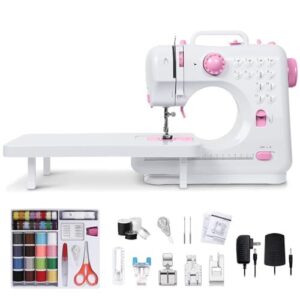
If your child is just starting out, the Tidjani 505A is a great place to begin.
It’s compact, easy to move, and comes with everything they need — six presser feet, a 16-color thread set, bobbins, and more.
The built-in extension table gives little hands more room to guide fabric without it bunching up.
With 12 stitch options and a simple knob to switch between them, your young sewer can feel confident from day one.
| Best For | Kids and beginners who want a simple, affordable machine to learn the basics of sewing without a steep learning curve. |
|---|---|
| Compatibility | Standalone mini machine |
| Piece Count | 6 presser feet |
| Material | Plastic and metal |
| Price (USD) | $32.99 |
| Snap-On Attach | Yes |
| Zipper Foot | Included |
| Additional Features |
|
- Comes with everything you need right out of the box — thread, bobbins, presser feet, and more
- The extension table gives you extra workspace, which makes guiding fabric a lot easier
- Twelve stitch options on a simple knob means no confusing menus or settings to figure out
- Not built for heavy fabrics like denim or leather — the motor just isn’t powerful enough
- Twelve stitches is plenty to start, but experienced sewers will outgrow it quickly
- No digital controls or speed settings, so you can’t fine-tune it the way you could with a higher-end machine
2. Aiskaer Universal Sewing Presser Feet Set
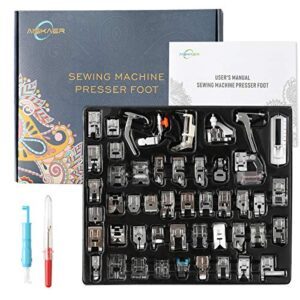
Once your child is ready to expand their toolkit, the Aiskaer Universal Presser Feet Set is worth a good look.
You get 48 different feet — plus two handheld tools — all built for low‑shank machines like Brother, Singer, and Janome.
That means one set can handle zipper work, buttonholes, overcasting, and more.
A full-color guide helps young sewers match the right foot to each project.
It’s a smart way to keep skills growing without buying feet one by one.
| Best For | Young or beginner sewers who want to grow their skills and handle a wide range of projects without buying individual feet one at a time. |
|---|---|
| Compatibility | Low-shank domestic brands |
| Piece Count | 50 pieces total |
| Material | Metal |
| Price (USD) | Not listed |
| Snap-On Attach | Yes |
| Zipper Foot | Included |
| Additional Features |
|
- 48 feet in one set covers everything from zippers to embroidery — great value for the price.
- Works with popular home machines like Brother, Singer, and Janome right out of the box.
- Full-color guide makes it easy to figure out which foot does what, no guesswork needed.
- Won’t fit industrial or mini machines — low-shank domestic only.
- Some feet can feel a little loose on certain holders, which might need a fix to stay secure.
- The box isn’t well-organized, so finding the right foot without the manual can be a bit of a hunt.
3. Fbshicung Sewing Presser Feet Set
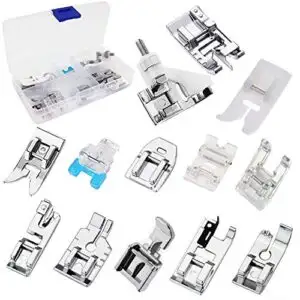
If 48 feet feels like too much to start with, the Fbshicung Set keeps things simple — just 13 well‑chosen feet that cover the basics without overwhelming a young learner.
You get options like a zipper foot, blind hem, overcasting, and satin stitch foot — all snapping on without a screwdriver.
It fits low‑shank machines from Brother, Singer, and Janome, so chances are your child’s machine is already compatible.
At $12.99, it’s a budget‑friendly way to soar through beginner projects with confidence.
| Best For | Beginners and young learners who want a simple, no-fuss set of essential presser feet without the overwhelm of a larger kit. |
|---|---|
| Compatibility | Low-shank domestic brands |
| Piece Count | 13 presser feet |
| Material | Leather-finished metal |
| Price (USD) | $12.99 |
| Snap-On Attach | Yes |
| Zipper Foot | Included |
| Additional Features |
|
- Snap-on design means no screwdriver needed — switching feet takes seconds
- 13 well-chosen feet cover a solid range of projects, from zippers to quilting to buttonwork
- At $12.99, it’s an easy, low-risk buy for hobbyists just getting started
- Only works with low-shank machines, so slant-shank, high-shank, or vintage machines are out of luck
- The leather finish can wear down faster than all-metal feet if you’re sewing heavy or abrasive materials
- 13 feet is a great starter set, but more advanced sewers may find themselves outgrowing it quickly
4. Zigzag Stitch Foot for Sewing Machines
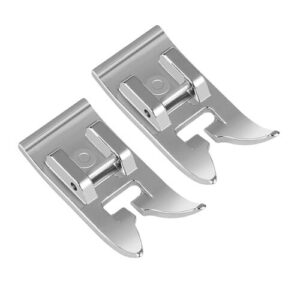
Now, if your young sewer is ready to move beyond straight lines, the Zigzag Stitch Foot opens up a whole new world. It accommodates stitch widths up to 7 mm — perfect for finishing edges, stitching knits, and even simple appliqué work.
The wide needle slot keeps things smooth, and the snap-on attachment means no screwdriver fuss.
It fits most low-shank machines from Brother, Singer, and Janome.
Two feet come in the set, so you’ve always got a spare ready to go.
| Best For | Young or beginner sewers ready to explore stitching beyond straight lines, especially those with low-shank machines from popular brands like Brother, Singer, or Janome. |
|---|---|
| Compatibility | Low-shank domestic brands |
| Piece Count | 2 presser feet |
| Material | Alloy steel |
| Price (USD) | Not listed |
| Snap-On Attach | Yes |
| Zipper Foot | Not specified |
| Additional Features |
|
- Snap-on attachment makes switching feet quick and painless — no tools needed.
- Handles stitch widths up to 7 mm, so it covers everything from edge finishing to basic appliqué.
- Comes as a set of two, so you’ve always got a backup on hand.
- Only works with low-shank machines, so it won’t fit high-shank models or some Pfaff machines.
- The steel construction is heavier than plastic feet, which can be tricky on delicate or lightweight fabrics.
- A 7 mm max stitch width might feel limiting if you’re working with wider decorative stitches.
5. Universal Low Shank Presser Feet
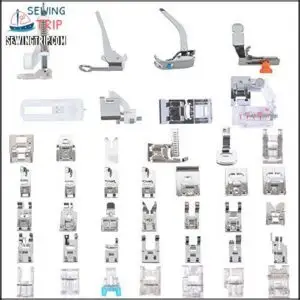
Want a set that does it all? The Universal Low Shank Presser Feet collection packs 42 different feet into one compact white case — and it’s only $22.49.
Each foot unlocks something new, so it helps to understand what each presser foot actually does before diving in.
That’s a lot of sewing power for the price. Every foot works with popular low-shank machines like Brother, Singer, Janome, and Kenmore.
A handy reference booklet with photos helps your child pick the right foot fast. It’s organized, affordable, and ready to grow with every new project they tackle.
| Best For | Hobbyists and sewing enthusiasts with low-shank machines who want a wide variety of presser feet without spending a fortune on individual accessories. |
|---|---|
| Compatibility | Low-shank domestic brands |
| Piece Count | 42 presser feet |
| Material | Metal and plastic |
| Price (USD) | $22.49 |
| Snap-On Attach | Yes |
| Zipper Foot | Included |
| Additional Features |
|
- 42 feet for just $22.49 — seriously hard to beat for the value
- Works with most popular low-shank machines like Brother, Singer, and Janome
- Comes in a compact case with a photo booklet, so everything stays organized
- Feet aren’t pre-labeled in the case, so matching them up takes some extra effort
- Doesn’t work with vintage, mini, industrial, or high-handle machines
- A few specialized feet (like the rolled-hem foot) may not perform well for every fabric or technique
6. Mudder Multifunctional Sewing Presser Feet
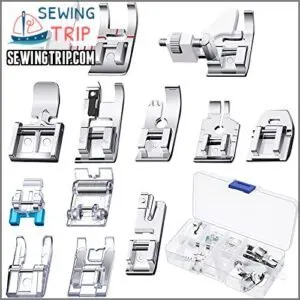
Mudder Multifunctional Sewing Presser Feet — a smart little set that lets your child soar through projects without switching machines.
12 interchangeable heads covering zigzag, decorative stitches, zipper work, and more, it’s like having a whole sewing toolkit in one snap‑on package.
Each foot is color‑coded so kids can grab the right one fast.
The smooth, polished soles protect delicate fabrics, and the lightweight design won’t tire little hands.
All that — for just $8.99.
| Best For | Hobbyist sewists who want to expand their machine’s capabilities without spending a lot — great for beginners and experienced makers alike. |
|---|---|
| Compatibility | Low-shank domestic brands |
| Piece Count | 12 presser feet |
| Material | Alloy steel and plastic |
| Price (USD) | $8.99 |
| Snap-On Attach | Yes |
| Zipper Foot | Included |
| Additional Features |
|
- 12 feet in one box for just $8.99 — seriously hard to beat for the price
- Tool-free snap-on install means you’re switching feet in seconds, not minutes
- Built from metal and alloy steel, so these aren’t going to bend or rust out on you
- Won’t work with high-shank, industrial, or older-style machines, so check your model first
- Some users with Janome and certain Brother machines have had fit issues
- The heavier metal feet might feel a bit bulky if you’re used to lightweight plastic ones
7. Windman Low Shank Sewing Feet
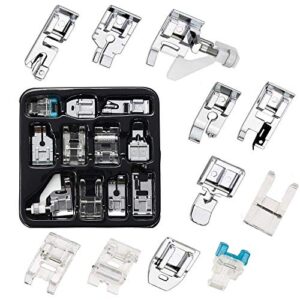
Rounding out our top seven, the Windman Low Shank Set gives young sewers 11 snap-on feet for just $13.99 — that’s a lot of sewing power without the hefty price tag.
From zipper work to quilting to rolled hems, your child can dazzle through all kinds of projects.
No screwdriver needed — feet click on and off in seconds.
Just confirm your machine has a low-shank setup (like Brother, Singer, or Janome), and you’re ready to sew.
| Best For | Young or hobbyist sewers who want versatility on a budget and already own a low-shank machine like a Brother, Singer, or Janome. |
|---|---|
| Compatibility | Low-shank domestic brands |
| Piece Count | 11 presser feet |
| Material | Metal and plastic |
| Price (USD) | $13.99 |
| Snap-On Attach | Yes |
| Zipper Foot | Included |
| Additional Features |
|
- 11 feet for $13.99 — seriously hard to beat for the variety you get
- Snap-on design means no tools, no fuss, just quick swaps mid-project
- Covers a wide range of techniques: zippers, quilting, buttons, rolled hems, and more
- Only works with low-shank machines — won’t fit slant, high-shank, or mini models
- The packaging isn’t great at labeling each foot, so expect a little guesswork upfront
- These are third-party copies, not brand originals, so fit and finish may vary slightly
Safe Features Kids Need
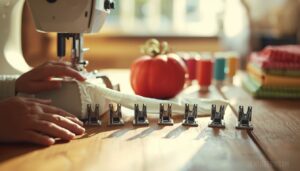
Not every presser foot is built with little hands in mind, but the right ones make a real difference. When kids feel confident at the machine, they learn faster and stay safer.
Here are the key safety features to look for before you buy.
Clear Finger-guard Barriers
Think of a finger-guard barrier as your child’s invisible safety net at the needle zone. A clear acrylic panel — just 2 to 3 millimeters in acrylic panel thickness — blocks hand access without hiding the stitch.
A slim acrylic panel keeps little hands safe from the needle without hiding a single stitch
Many include a magnetic retention strip for quick practice sessions, adjustable clearance for different fabrics, a UV shield to prevent yellowing, and a quick-release clip for easy swaps.
These child-friendly sewing tools meet safety warnings for toy standards.
Rounded, Smooth Foot Soles
Smooth soles make a real difference when kids are just finding their rhythm. Rounded heel curvature guides fabric gently through each pass, while forefoot glide keeps the presser foot moving without catching seams.
Low-profile edges and friction reduction prevent puckering on straight stitches. Hygiene material means easy cleanup after every project — a quiet win for parents, too.
Lightweight Feet for Easier Handling
Heavy feet wear little hands out fast — and that’s no fun for anyone. Kid-friendly machine feet weigh 12–20 grams less than standard ones, giving your child reduced inertia and enhanced comfort during long sessions.
Look for these three wins:
- Ergonomic grip controls for one-handed swapping
- Quiet operation with less machine vibration
- Compact storage that fits small craft bags
Low shank, high shank, or slant shank — lighter feet win every time.
Color-coded Feet for Simple Selection
Color coding turns presser foot selection into a quick color matching game your child can master fast. Visual memory cues mean kids don’t need to read labels — they just match colors.
It’s a real parent supervision aid too, since you can guide from across the room.
Bright packaging and a vibrant colorful box make color-coded inventory easy to manage, supporting kids sewing education and classroom standardization effortlessly.
Low-force Attachment and Removal
Swapping feet on a kid-friendly machine should never feel like a wrestling match. That’s where low-force attachment shines.
- Magnetic Alignment guides the foot into place — no twisting, no frustration.
- Detent Click Feedback gives an audible snap so your child knows it’s seated.
- Spring-Loaded Retainers hold firm during sewing, whether it’s a low shank or slant shank setup.
- Quick-Release Adapters detach with one thumb push — under 1.5 Newtons of force.
Color-coded indicators and the presser foot lever do the rest, keeping everything safe and straightforward.
Best First Feet to Buy
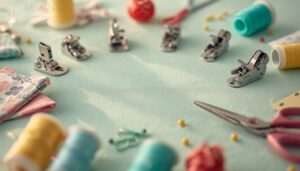
Not every presser foot needs to be in a beginner’s kit — just the right ones. Starting with a small, well-chosen set helps kids build real skills without feeling overwhelmed.
Here are the five feet that make the biggest difference early on.
Universal Foot for Straight Seams
If you’re just getting started, the universal foot is your best friend. It keeps fabric feed consistency steady so your stitches don’t wobble or bunch. The metal finish durability means it lasts through lots of practice runs.
Needle alignment stays centered, making straight-line machine quilting and basic seams a breeze. Every beginner sewing kit should include one — it’s that essential.
A suitable choice for beginners is the standard presser foot.
Zipper Foot for Pouch Projects
Once you’ve nailed straight seams, a zipper foot opens up a whole new world — hello, zipper pouches! The slim metal nose guidance keeps your stitching tight against the zipper teeth. Adjustable positioning lets you sew either side cleanly.
Practice scrap practice techniques first for fabric tension control and bulk reduction tips. Your first pouch will seriously dazzle you.
Walking Foot for Layered Fabrics
When fabric layers start stacking up, a walking foot becomes your best friend. Its even feed mechanism grips top and bottom layers together — no more puckering or slipping!
- Synchronised feed keeps seams straight across bulk fabric handling
- Clear needle visibility helps kids monitor alignment safely
- Adjustable pressure suits knit and slippery fabrics perfectly
- Manages quilting layers without shifting
- A key child-friendly sewing tool for growing skills
Buttonhole Foot for Garment Practice
Once kids are ready to try real garments, the buttonhole foot is a major improvement. It manages buttonhole placement accuracy and button size matching automatically — just snap it on and follow the four-step sequence.
Use practice scrap techniques first, adjusting fabric tension and stitch length settings until each hole looks clean. It’s one of the most rewarding child-friendly sewing tools to master.
Free-motion Foot for Creative Stitching
Once your child is ready to doodle with thread, the Free Motion Quilting Foot opens a whole new world.
Its Open Toe Design gives a clear view of every stitch, while the Spring-loaded Mechanism keeps Fabric Control smooth and steady.
Lower the feed dogs, practice Adjustable Tension on scrap fabric, and watch their Decorative Stitches soar — it’s one of the most exciting Child-Friendly Sewing Tools around.
Match Feet to Machine Shank
Before you buy any presser foot, you need to know machine’s shank type — it’s the one thing that determines what fits and what doesn’t. Getting this wrong means wasted money and frustrated kids, so it’s worth a quick check first.
Here’s what you need to know about the main shank types and how to match them to your machine.
Low-shank Compatibility Basics
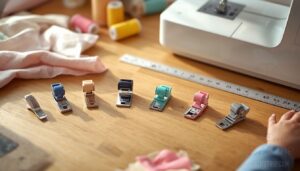
Low shank is the friendliest starting point for most beginners. Your machine’s shank height measurement — just ¾ inch or less from screw to base — tells you everything.
Most modern home machines use a snap-on lock mechanism that clicks feet into place without tools.
Always check your manual for brand-specific shank variations and throat plate alignment before buying any foot.
High-shank Fit Differences
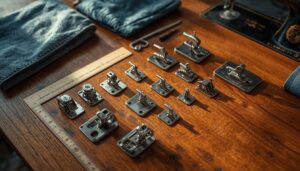
High-shank machines need more room — and that’s not a bad thing once you understand why.
The thicker foot profile and greater attachment height create extra clearance requirements that support bulkier projects like denim or layered quilts. But here’s the catch for beginners:
- Needle visibility shifts slightly with added height
- Fabric grip behaves differently on heavy layers
- Presser foot compatibility with various machine models varies widely
- Low-shank feet won’t seat safely on high-shank hubs
- Always verify clearance specs before swapping feet
Slant-shank Singer Considerations
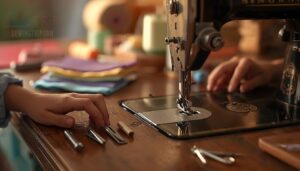
Singer’s slant-shank design tilts 15 degrees forward — and that angled needle visibility makes it easier for young sewers to see exactly where they’re stitching. Models like the 301 and 401 use a thumbscrew torque attachment that must match slant-shank feet only.
Check your manual first. Vintage foot compatibility varies, and foot plate clearance depends on your specific model, so presser foot selection matters for kid-friendly machine safety.
Using Shank Adapters Correctly
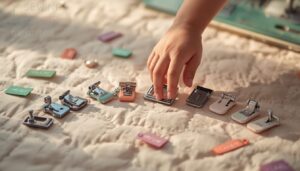
Adapters are your secret weapon when a foot doesn’t match your machine’s shank size. A low shank, high shank, or slant shank adapter bridges that gap fast.
Press it in until you feel the snap fit confirmation click. Then do a quick proper alignment test and needle clearance check before sewing.
Lightweight adapter designs reduce hand fatigue, and a good adapter labeling system helps kids grab the right one every time.
Checking The Manual Before Buying
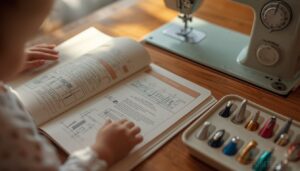
Your manual is the real MVP here.
Before you buy any foot, flip to the compatibility chart review — it matches foot types to your exact model. You’ll also spot adapter requirements and a safety warning checklist right there.
Check warranty conditions too, since using unapproved feet can void coverage.
Choosing the right presser foot for beginners starts with that one simple step.
How to Use Feet Safely
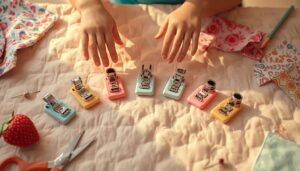
Using presser feet safely is just as important as picking the right ones. A few simple habits can make a big difference in keeping little fingers safe and stitches looking great.
Here’s what every young sewer should know before starting.
Attaching and Removing Presser Feet
Changing presser feet doesn’t have to feel tricky. First, Safety Power-Off is a must — always turn off and unplug your machine.
Raise the needle fully, then use Foot Lever Timing to lift the lever before removal. For snap-on feet, press the back release and swap in seconds.
Screw Tightening Tips? Snug it gently — never too tight. You’ve got this.
Lowering The Lever Before Sewing
Once the foot is locked in, it’s time for your Lever Height Check.
Raise the take-up lever fully first — that’s your Thread Path Confirmation signal that everything’s aligned.
Then place your fabric, do a quick Needle Position Assurance, and lower the presser foot lever slowly.
Hand Clearance Timing matters here: keep fingers back before your Seam Start Control begins.
Parental supervision keeps this step safe on any child-friendly machine.
Setting Speed for Young Learners
Start slow — that’s the golden rule for any kid-friendly machine. Use the Speed Indicator to set a low, steady pace, then build confidence with Gradual Speed Increments of just one or two steps at a time.
Short Practice Timing sessions of 5–10 minutes reinforce control without fatigue.
Visual Pace Cues and careful Foot Pedal Sewing Control give young sewists the Controlled Acceleration they need to soar safely.
Keeping Fingers Clear of The Needle
Keeping your fingers safe is the whole game here. Always guide fabric from the edges — that’s your Fabric Edge Guidance habit.
Hand Positioning Tips start simple: keep fingers flat, never near the needle zone.
Needle Proximity Awareness means watching the presser foot lever before every move. Clear finger-guard barriers on ChildFriendly Sewing Tools do the heavy lifting for you.
Preventing Fabric Slip and Misalignment
Slippery fabric is every beginner’s sneaky enemy — but you can beat it.
A walking foot manages fabric feeding evenly across layers, while clean feed dogs keep things moving smoothly.
Try these quick fixes:
- Place Non-slip Grip Pads under your work
- Use Stay Tape Edges and Pattern Weight Usage to lock pieces in place
- Tune your Stitch Length to 2.0–2.5 mm on slip-resistant fabrics
Beginner Projects for Practice
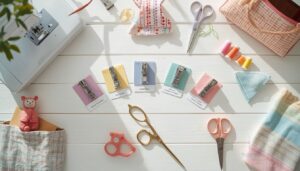
Now that you know how to use presser feet safely, it’s time to put those skills to work. The best way to build confidence is through small, fun projects that feel like wins.
Here are five beginner projects your kid can start today.
Straight-seam Pillowcases
A pillowcase is the perfect first project — simple, useful, and totally rewarding. Start with 100% cotton and a walking foot to keep layers moving smoothly.
Try the burrito method for clean, enclosed edges, or practice a French seam for a tidy interior finish. Pillowcase sizing is forgiving, and straight line machine quilting the cuff with your zig zag universal foot adds a beautiful finishing detail.
Simple Zipper Pouches
Once you’ve nailed pillowcases, zipper pouches are your next big win.
Grab your zipper foot and a beginner sewing kit, and you’re ready.
Choose fabric lining choices that reduce bulk — quilting cotton works great. A ¼-inch zipper seam allowance keeps things neat.
Add interfacing for structure, boxed corner construction for depth, and decorative stitch finishes to make your pouch truly yours.
Buttonhole Sampler Cards
Buttonhole sampler cards are your secret weapon for mastering one of sewing’s trickiest skills.
Use the buttonhole foot and follow the Stitch Length Guides and Buttonhole Style Charts printed right on the card.
The Fabric Thickness Guide helps you adjust pressure, while the Scoring Progress System tracks every win.
Card Material Choices and Safety considerations when changing presser feet keep your kids’ fashion design journey moving forward confidently.
Small Quilted Squares
Once you’ve practiced buttonholes, small quilted squares are your next big win. Start with Fabric Selection — prewashed cotton fat quarters work great.
Cut squares with Square Measurements of 2–4 inches, keeping a ¼-inch Seam Allowance consistent.
Your Walking Foot prevents puckering across layers, while the Zig Zag Universal 14 inch Foot manages Block Layout seams beautifully.
Simple Finishing Techniques make every block shine.
Decorative Stitch Practice Strips
Now that your quilted squares look sharp, decorative stitch practice strips are your next creative leap.
Cut scrap fabric into 6–12‑inch strips, then use stabilizer tips to stop puckering.
Try satin, blanket, and zigzag stitches for real stitch variety.
Add color labels for tension settings and guide templates to keep lines straight.
Your presser foot selection makes every pattern dazzle.
Frequently Asked Questions (FAQs)
What is the learn to sew Kids program?
The Learn to Sew Kids program walks children through machine threading, bobbin winding, and straight stitches — all under Instructor Supervision.
Its Age Guidelines and Progress Tracking Curriculum Overview make it a structured, confidence-building experience.
How do you teach a child to sew?
Start with Hand Stitch Foundations — running stitch, simple knots, felt scraps. Then ease into Speed Control Practice on a machine. Project-Based Learning keeps kids hooked. Encouragement Techniques seal the deal.
Is learning to sew fun?
Yes — sewing is pure creative play! Colorful fabric choices, quick project wins, and family sewing sessions make it feel more like an interactive game than a chore.
Can a child learn to sew?
With parental supervision and age-appropriate materials, kids as young as 5 can build motor skill development through simple stitching.
A beginner sewing kit and kid-friendly machine make confidence building feel natural and fun.
At what age can a child start using a sewing machine?
Most kids are ready around age eight, when hand-eye coordination and focus click into place. Some children aged 6 and up can begin with close supervision and age-appropriate craft activities.
What to sew as a beginner kid?
Try a Felt Mini Plush or Drawstring Tote Bag first — both are perfect beginner sewing projects. Simple shapes, easy stitches, big results.
You’ll love seeing your DIY fashion projects come to life!
Can a 3 year old learn to sew?
Even a 3-year-old can start — think lacing cards, blunt plastic needles, and colorful materials.
Short practice sessions with supervised hands-on play build fine motor skills beautifully before any kid-friendly machine enters the picture.
What age can kids start using sewing machines?
Most experts suggest age eight as the sweet spot for machine sewing, with close adult supervision.
Motor readiness, not just age, matters most — some children develop skill milestones earlier with kid-friendly machines.
How do you clean and maintain presser feet?
Like a trusty tool that lasts longer when cared for, your presser feet need regular wipe-downs, debris removal with a soft brush, and dry storage practices to nail rust prevention every time.
Can kids use adult sewing machines safely?
Yes, kids can use adult machines safely with parental supervision guidelines in place, proper speed limiter installation, and a needle guard retrofit.
Adult machine modifications make most setups age-appropriate for confident young sewers.
Conclusion
The right sewing machine feet for kids learning to sew can turn a nervous beginner into a kid who sews through an entire weekend without stopping. Every project they finish builds real confidence—the kind that sticks.
Start with a universal foot, add a zipper foot, and let them grow from there.
Safe feet mean fewer frustrations and more proud moments. When the tools are right, young sewists don’t just learn—they soar.