This site is supported by our readers. We may earn a commission, at no cost to you, if you purchase through links.

A sewing machine left uncovered collects dust inside its tension discs within a single weekend—and in a classroom where thirty students rotate through twelve machines, that dust adds up fast. After years of watching needles snap and feed dogs jam right before a deadline project, I started treating covers as essential equipment, not optional extras.
The right sewing machine covers for classroom use do more than keep dust out; they hold bobbins, corral foot attachments, and quietly teach students that caring for shared tools is part of the craft. These eight picks make that lesson easy.
Table Of Contents
- Key Takeaways
- Top 8 Sewing Machine Covers for Classrooms
- 1. AMOIGEE Quilted Sewing Machine Cover with Pockets
- 2. ZCFLCK Sewing Machine Dust Cover with Storage Pockets
- 3. Senvitate Purple Sewing Machine Cover with Pockets
- 4. AMOIGEE Quilted Sewing Machine Cover with Storage Pockets
- 5. Clear PVC Sewing Machine Cover with Pockets
- 6. Sewing Machine Cover with Handle and Pockets
- 7. Bohemiaby Sewing Machine Cover with Pockets
- 8. Addicted DEPO Clear Sewing Machine Cover
- Classroom Cover Buying Criteria
- Best Materials for School Covers
- DIY Classroom Cover Features
- Protecting Classroom Sewing Machines
- Frequently Asked Questions (FAQs)
- Conclusion
Key Takeaways
- A good classroom cover isn’t just dust protection — built-in pockets for bobbins, scissors, and cords reduce setup time and keep each station running smoothly.
- Material matters: quilted covers cushion against bumps, clear PVC lets you spot-check machines at a glance, and cotton washes easily after a hard week.
- Color-coding or labeling covers by station is a simple trick that keeps shared spaces organized and teaches students to take ownership of their machine.
- Replacing covers quarterly and washing them regularly isn’t extra work — it’s what keeps your machines humming for years instead of months.
Top 8 Sewing Machine Covers for Classrooms
Finding the right cover for your classroom machines doesn’t have to be complicated.
A quick look at embroidery machines rated for school and classroom use makes it easy to match the right model to your students’ skill levels and daily demands.
These eight options cover a range of styles, materials, and features — so there’s something for every setup and budget. Take a look and see which one fits your classroom best.
1. AMOIGEE Quilted Sewing Machine Cover with Pockets
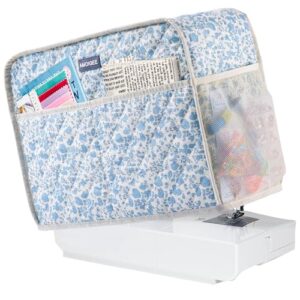
The AMOIGEE Quilted Sewing Machine Cover is one of those finds that just makes classroom life easier. At $15.99, it fits most standard machines up to 17" × 7" × 12" and comes with two front pockets and a side pocket — perfect for storing scissors, bobbins, and spare needles right where your students need them.
The quilted polyester padding protects against dust, bumps, and minor spills, and it’s lightweight enough that even your youngest sewers can handle it independently.
| Best For | Home sewers and crafters who want a simple, affordable way to keep their machine protected and their go-to tools close at hand. |
|---|---|
| Material | Quilted polyester |
| Dimensions | 17×7×12 in |
| Pocket Count | 3 pockets |
| Foldable Design | Yes |
| Dust Protection | Yes |
| Universal Fit | Most standard machines |
| Additional Features |
|
- Keeps your machine dust-free and scratch-free without any fuss — just slip it on and you’re done.
- The built-in pockets are a nice touch, so your scissors, bobbins, and cords stay right where you need them.
- At $15.99 and under 5 oz, it’s a lightweight, budget-friendly pick that doesn’t take up much space when folded flat.
- It’s not a travel case — no handles or padding for lugging your machine around.
- The fit runs a little loose, so it may not feel super snug on smaller or oddly shaped machines.
- Front pockets are on the smaller side, so don’t expect to stuff a manual or bulky accessories in there.
2. ZCFLCK Sewing Machine Dust Cover with Storage Pockets
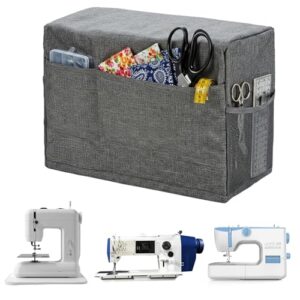
Another solid option for busy classrooms is the ZCFLCK Sewing Machine Dust Cover. It’s designed to fit most standard machines up to about 16 inches wide, and the front pockets are actually useful — divided sections hold bobbins, scissors, and small foot attachments right where students can find them.
The double-layer pocket fabric holds up to daily rough handling, and the whole thing is machine washable. For a shared classroom where multiple hands touch everything, that’s a real plus.
| Best For | Home sewers and hobbyists who want a simple, lightweight cover to protect their machine from dust and keep a few essential tools close by. |
|---|---|
| Material | Quilted Oxford fabric |
| Dimensions | 18.11×12.6×8.27 in |
| Pocket Count | 3 pockets |
| Foldable Design | Yes |
| Dust Protection | Yes |
| Universal Fit | Singer, Brother, Janome |
| Additional Features |
|
- The front-loading main compartment is roomy enough to stash a full needlework kit or bulky accessories.
- Two mesh side pockets put scissors and tape measures right at your fingertips.
- Works with most standard machines from popular brands like Singer, Brother, and Janome.
- The soft fabric has no structure, so it tends to sag and lose its shape when nothing’s inside.
- Mesh pockets collapse when you lift the cover, and anything stored in them can easily fall out.
- It runs a bit large for compact machines, leaving the sides and back of smaller models exposed.
3. Senvitate Purple Sewing Machine Cover with Pockets
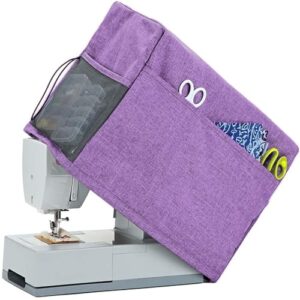
If you want something that doubles as a classroom organization tool, the Senvitate Purple Cover is worth a look. Its color alone makes station assignments easy—students know exactly which machine is theirs.
Made from durable 300D Oxford fabric (great for daily use), it features two front zippered pockets and side mesh pockets to keep scissors, thread, and small notions within reach.
At 18 × 8.3 × 12.6 inches, it fits most standard machines without fuss, ensuring hassle-free use.
| Best For | Sewing teachers and hobbyists who want to keep their machine protected and their go-to tools close at hand. |
|---|---|
| Material | 300D Oxford fabric |
| Dimensions | 18×8.3×12.6 in |
| Pocket Count | 4 pockets |
| Foldable Design | Yes |
| Dust Protection | Yes |
| Universal Fit | Most standard and sergers |
| Additional Features |
|
- Tough 300D Oxford fabric holds up to daily use and keeps dust, lint, and light moisture off your machine.
- Four pockets (two zippered, two mesh) mean your scissors, thread, and presser feet are always right where you left them.
- Folds flat when you’re not using it, so it won’t take up extra space in a drawer or closet.
- Only comes in purple, so it might clash with your setup if that’s not your color.
- Won’t fully cover larger or industrial machines—best suited for standard-size models.
- The mesh side pockets aren’t built for heavy tools; load them too much and you risk tearing the fabric.
4. AMOIGEE Quilted Sewing Machine Cover with Storage Pockets
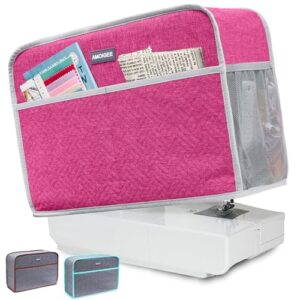
Looking for something a little softer than Oxford fabric? The AMOIGEE Quilted Cover brings a padded, cushioned layer that keeps your machine safe from everyday bumps and dust.
It fits machines up to 17 × 7 × 12 inches, making it ideal for most standard classroom setups.
The cover features three built-in pockets—two front, one side—to hold essentials like scissors, bobbins, and cords right where students need them.
At just 0.64 lb, its lightweight design ensures quick and easy setup and takedown.
| Best For | Hobbyists and home sewers who want a lightweight, everyday cover to protect their machine and keep small accessories close at hand. |
|---|---|
| Material | Padded nylon |
| Dimensions | 17×7×12 in |
| Pocket Count | 3 pockets |
| Foldable Design | Yes |
| Dust Protection | Yes |
| Universal Fit | Most standard machines |
| Additional Features |
|
- Quilted padding gives your machine a soft layer of protection against dust, moisture, and light bumps
- Three built-in pockets keep scissors, bobbins, and other small tools organized and easy to grab
- Super lightweight at 0.64 lb, so it slips on and off without any hassle
- No handles or hard-shell protection, so it’s not meant for travel or transport
- Only fits standard-size machines—larger or oddly shaped models may not be fully covered
- Pockets are on the smaller side, so bulkier accessories or manuals won’t fit
5. Clear PVC Sewing Machine Cover with Pockets
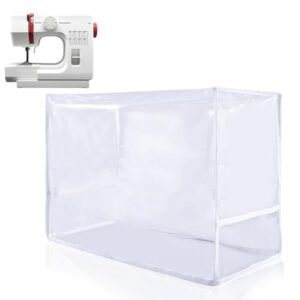
This Clear PVC Sewing Machine Cover offers a simple, practical solution for visibility and organization. Its transparent design allows users to see stored items without effort, while its 17.5 × 8 × 12-inch dimensions ensure compatibility with most standard Singer, Brother, Janome, and Bernina machines.
When you’re done sewing, toss a press cloth over delicate fabrics before storing your machine to keep both the cover and your projects in great shape.
The cover includes two side pockets for storing essentials like scissors, needles, and thread, helping students keep their notions close at hand.
Lightweight and foldable, it stores flat when not in use and wipes clean in seconds, making it ideal for busy classroom environments.
| Best For | Sewists, students, and hobbyists who want to keep their machine protected and their go-to tools within easy reach. |
|---|---|
| Material | Clear PVC |
| Dimensions | 17.5×8×12 in |
| Pocket Count | 2 pockets |
| Foldable Design | Yes |
| Dust Protection | Yes |
| Universal Fit | Singer, Brother, Janome, Bernina |
| Additional Features |
|
- See-through PVC means you can check on your machine and find your tools without lifting a finger
- Built-in side pockets keep scissors, needles, and thread right where you need them
- Folds flat and cleans up fast, so it’s easy to pack for classes or workshops
- The PVC often arrives with heavy wrinkles that you can’t iron out, so it may look a little rough at first
- Thinner material than some users expect, which may not hold up well with heavy daily use
- Can run too tall for smaller machines, leaving a loose, baggy fit
6. Sewing Machine Cover with Handle and Pockets
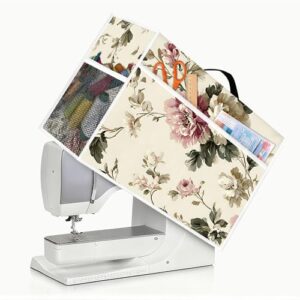
This cover earns its place in any classroom — and the top handle is the reason why. Students can lift it on and off the machine in seconds, without any fumbling.
Designed to fit most standard machines at 17.5 × 8.5 × 12.5 inches, its dimensions ensure universal compatibility. The three-layer build—combining an abrasion-resistant exterior, cotton padding, and water-resistant lining—delivers robust protection without unnecessary bulk.
Practical storage is prioritized: the front zip pocket and two mesh side pockets keep needles, scissors, and thread organized and accessible for students.
| Best For | Home sewists and classroom students who want an affordable, everyday cover that keeps their machine clean and their accessories within reach. |
|---|---|
| Material | 3-layer padded fabric |
| Dimensions | 17.5×8.5×12.5 in |
| Pocket Count | 3 pockets |
| Foldable Design | Yes |
| Dust Protection | Yes |
| Universal Fit | Most standard machines |
| Additional Features |
|
- Three-layer construction (abrasion-resistant outer, cotton padding, water-resistant lining) gives solid everyday protection without adding bulk.
- Three pockets — one zip, two mesh — keep needles, thread, and scissors organized and easy to grab.
- Lightweight and foldable, so it tucks away neatly when you’re not using it.
- The top handle has been reported missing on some units, so it’s worth double-checking before you buy.
- Fabric is thin with no rigid frame, so it won’t hold up against heavy bumps or drops.
- Water resistance is light — fine for dust and the occasional splash, but not meant for real liquid exposure.
7. Bohemiaby Sewing Machine Cover with Pockets
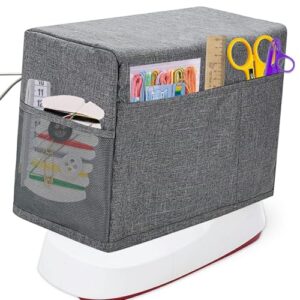
The Bohemiaby cover delivers boho-inspired personality to your classroom, adding a fun yet tasteful touch to any sewing station.
Beyond aesthetics, it offers genuine practicality: quilted fabric cushions the machine, while front slip pockets, a side zip pocket, and a mesh panel keep notions organized and accessible for students.
It fits standard classroom machines up to 16 inches wide and is machine washable, ensuring effortless upkeep.
| Best For | Hobbyists, beginners, and classroom sewists who want a simple, affordable way to keep their machine clean and their accessories in one place. |
|---|---|
| Material | 100% polyester |
| Dimensions | 18×8.2×12.5 in |
| Pocket Count | 3 pockets |
| Foldable Design | Yes |
| Dust Protection | Yes |
| Universal Fit | Brother, Singer and more |
| Additional Features |
|
- Fits most standard machines (Brother, Singer, etc.) and keeps dust, pet hair, and dirt off when you’re not sewing
- Built-in pockets (front zip two mesh side pockets) make it easy to store your go-to tools right on the cover
- Light and easy to move around — the side handles make covering and uncovering quick
- Not waterproof or impact-resistant, so it won’t protect against spills or drops
- Only comes in one grey pattern, which might not match every workspace vibe
- Pocket space is limited — bulkier accessories or larger foot controllers may not fit comfortably
8. Addicted DEPO Clear Sewing Machine Cover
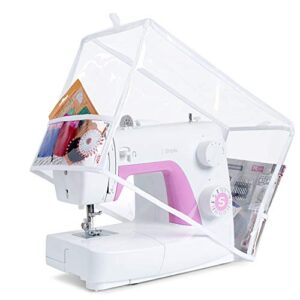
The Addicted DEPO features a fully transparent cover, allowing you to spot-check your machine’s condition without removing it—saving valuable time during busy class periods.
It fits most standard machines, including Singer, Brother, Janome, and Juki models, ensuring broad compatibility in shared environments.
The front pockets keep small notions like scissors or thread within easy reach, streamlining your workflow.
Lightweight, wipes down in seconds, and folds flat for storage, making it effortless to maintain and stow away when not in use.
Simple, practical in a shared classroom, and surprisingly useful for keeping equipment protected and organized.
| Best For | Teachers, studio owners, or hobbyists who want quick visual access to their machine without constantly pulling off a cover. |
|---|---|
| Material | Heavy-duty PVC |
| Dimensions | 8×17.5×12 in |
| Pocket Count | 2 pockets |
| Foldable Design | Yes |
| Dust Protection | Yes |
| Universal Fit | Singer, Brother, Janome, Juki |
| Additional Features |
|
- See-through design lets you check on your machine at a glance—no need to uncover it every time.
- Front pockets keep thread, pins, and small tools right where you need them, no more hunting around.
- Lightweight and folds flat, so storing it between uses takes almost no effort.
- Clear vinyl won’t block UV rays, so machines sitting near windows could still fade or discolor over time.
- The cover may arrive with creases that take some work to smooth out before it looks its best.
- Pocket bulk at the corners can cause fit issues on smaller or unusually shaped machines.
Classroom Cover Buying Criteria

Not every cover works for every classroom, so it helps to know what to look for before you buy. A few key factors can make the difference between a cover that lasts the school year and one that falls apart by October.
Here’s what to keep in mind as you look through your options.
Choosing The Right Size for School Sewing Machines
A cover that’s even half an inch too tight is a daily headache. Before buying anything, measure your sewing machine — width, height, and depth — then add 1 to 2 inches of clearance on all sides. Knowing that common classroom machine dimensions range from about 15 to 20 inches wide can guide your clearance calculations.
A modular fit with adjustable fastening straps mixed machine sizes well. This design ensures flexibility for varying models.
Your group sizing strategy matters too: size up to fit the tallest machine in the room. This approach accommodates diverse equipment efficiently.
Comparing Fabric, Quilted, Vinyl, and Clear PVC Covers
Each cover type brings something different to the table — here’s how they stack up:
- Fabric cover – great material breathability and easy care
- Quilted – best for impact padding against accidental bumps
- Vinyl dust cover – wins on cleaning ease with a quick wipe
- Clear plastic cover – offers visual transparency for fast machine identification
- Custom sewing machine cover – balances cost efficiency with fitted machine protection
Why Storage Pockets Matter in Shared Classrooms
Pockets aren’t just a nice bonus — they’re a classroom transformational tool. Adding a pocket for sewing notions means bobbins, needles, and scissors stay right where students need them, cutting reduced setup time dramatically.
That kind of Student Independence builds good habits fast. A handy pocket on each cover creates a Consistent Layout across every station, making organization intuitive.
This Consistent Layout directly supports Safety Management and Quick Retrieval, turning these practices into second nature.
Handle Openings for Easy Daily Setup
Once pockets are sorted, the next thing worth checking is how the cover actually comes off each day. A well-placed handle opening makes setup quick and easy — no fumbling, no yanking.
Look for these features:
- Oval opening shape reduces snags on cords
- Webbing reinforcement prevents fraying with daily use
- Grip visibility marks show students exactly where to hold
- Adjustable opening mechanism fits different machine sizes
Your sewing machine cover should feel functional and stylish — not like a wrestling match every morning.
Washability and Durability for Repeated Student Use
A cover that falls apart after three washes isn’t doing anyone any favors. Look for stain-resistant fabrics with reinforced stitching — double-stitched seams and bias-bound edges hold up through a full school term.
Breathable construction keeps machines from overheating under wraps, while quick-dry finishes mean covers are back on machines fast.
Low-heat ironing flattens seams between classes without damage.
Labeling or Color-coding Covers by Machine Station
Color-coding your sewing machine covers keeps every station instantly recognizable — no guessing, no mix-ups. Pair each color with a bold text label for students who see color differently. Here’s what makes a labeling system actually work:
- Post a color key design near the room entrance
- Follow placement guidelines — front center, never over pockets or seams
- Use wash-resistant inks that survive repeated laundering
- Add text alongside color for accessibility considerations
- Check label durability each term and replace worn ones within 48 hours
Best Materials for School Covers
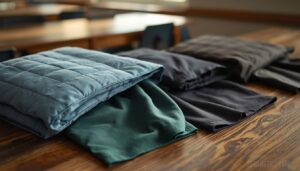
The material you choose for a classroom cover matters more than you’d think. Some fabrics hold up to daily student use better than others, and a few options offer features that make your whole setup easier to manage.
Here’s a look at the best materials worth considering for school use.
Cotton Covers for Washable Classroom Organization
Cotton is your best friend for keeping classroom machines clean and organized. A cotton sewing machine cover washes easily at 40°C, dries fast, and holds up through dozens of laundry cycles — making it perfect for shared spaces.
Low-heat ironing keeps it crisp, while its natural fiber longevity, stain resistance, and eco-friendly washing routine mean less waste and more protection where it counts.
Canvas and Denim for Heavier Daily Use
When your classroom sees heavy daily traffic, canvas and denim are the workhorses you’ll want. Both materials offer serious abrasion resistance, handling everything from pencil scrapes to accidental marker streaks with ease.
Weight selection matters here — 10 to 14 oz provides your sewing machine cover real structure.
Adding reinforced seams, clean edge finishes, and a quick stain treatment ensures a functional and stylish cover that lasts.
Quilted Covers for Added Padding and Protection
Think of quilted covers as your machine’s personal bodyguard. The padding thickness — usually 2.5 to 4mm — provides impact absorption during accidental drops or bumps.
Stitch reinforcement ensures layer bonding remains intact through repeated washes, while breathable batting promotes heat dissipation during extended use.
Your three non-negotiables:
- Consistent padding
- Locked stitching
- Breathable backing
Clear PVC Covers for Quick Machine Identification
Ever wish you could check a machine’s model number without lifting the cover? That’s exactly what clear PVC delivers. With high light transmission around 85–90%, students and instructors can verify thread types, needle placement, and machine labels at a glance.
UV stabilizer coating prevents yellowing under classroom lights, while non-porous surface materials resist chalk dust and spills.
Durable seam construction keeps everything neat, class after class.
Waterproof Materials for Spill-prone Classrooms
Spills happen — juice, water, the occasional mystery splash. That’s why waterproof materials are worth considering for shared spaces. Polyurethane-coated fabric and laminated waterproof fabric both create a reliable reusable waterproof layer that wipes clean in seconds.
Slip-resistant backing keeps your sewing machine cover from sliding off during busy transitions. Sealed zipper systems protect openings, ensuring no moisture seeps through vulnerable points.
Laminated fabric protection holds up through repeated washing without losing its barrier — perfect for custom covers or DIY sewing machine cover tutorial projects. This durability makes it ideal for high-use items needing consistent waterproofing.
Fusible Fleece Lining for Extra Bump Protection
Fusible fleece lining offers a gentle hug for your sewing machine. This 100% polyester batting uses a simple heat-activated bonding technique—press it on, and it stays put.
The cushioning effect absorbs small bumps and desk vibrations without adding bulk, addressing weight considerations in shared spaces.
Available in various loft options, it enhances dust protection and overall fabric durability.
For fleece maintenance, simply use a press cloth during ironing.
DIY Classroom Cover Features
Making your own sewing machine cover is easier than it sounds, and the result fits your machines perfectly.
A few smart features can take a basic DIY cover from functional to genuinely classroom-ready.
Here’s what to think about before you start cutting fabric.
How to Measure Machines for a Custom Fit

Getting the fit right starts with how accurately you measure your sewing machine. Rushed measurements mean a cover that slips, bunches, or won’t go on at all.
Here’s what to measure:
- Bed depth measurement – front face to back edge
- Footprint mapping – width at the widest point, including knobs
- Height clearance – table surface to tallest feature
- Accessory clearance – cord exits and pedal space
- Seam allowance buffer – add 1.5–2 inches all around
Making a Reversible Sewing Machine Cover

Once your measurements are solid, a DIY reversible sewing machine cover is a genuinely fun next step.
Pick two contrasting cotton fabrics — prewash both first (Fabric Prewash Tips save you from a shrunken cover later).
The Turned Shell Construction gives you two finished sides from one project.
Good Reversible Pocket Placement and balanced Weight Distribution keep everything neat.
Contrast Stitching along the bottom edge ties it together beautifully.
Adding Front Pockets for Pedals and Cords
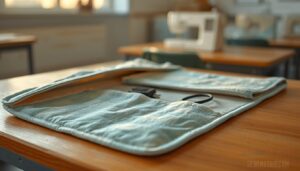
Once your reversible cover is done, a front pocket makes it a true DIY sewing machine accessory project. Stitch one at a comfortable pocket placement height so students won’t have to reach awkwardly.
Use Reinforced Stitching Techniques at the corners, a Water-Resistant Lining inside, and Wide-Mouth Openings for easy cord access. These features ensure durability and functionality.
Removable Pocket Options keep things flexible — perfect for sewing notions storage without the clutter.
Adding Side Pockets for Bobbins and Needles
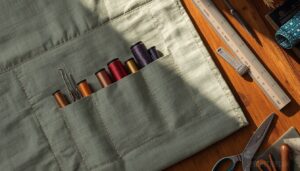
Side pockets take your DIY sewing machine accessory project one step further. A smart Pocket Placement Strategy positions them along the outer panel — out of the way of cords, but Easy-Access Design keeps bobbins and needles within reach.
Aim for 7–9 inches wide for solid Capacity Planning.
Use Reinforced Stitching Techniques at corners, and finish raw edges with Bias Tape Finishing to keep everything tidy.
Using Bias Tape to Finish Bottom Edges
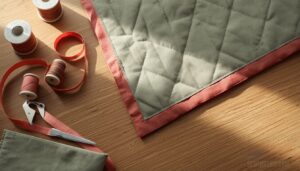
Wrapping the bottom edge with bias tape is one of those finishing touches that makes your cover look truly polished. Pre-washing bias tape first prevents shrinkage surprises later.
Follow these steps:
- Choose tape width selection — extra wide double fold bias tape works best for thicker layers
- Apply the double-fold technique to encase both fabric faces cleanly
- Miter corners for a crisp mitered corner finish
- Topstitch placement close to the inner fold hides stitching beautifully
Pressing Seams for a Clean Classroom-ready Finish
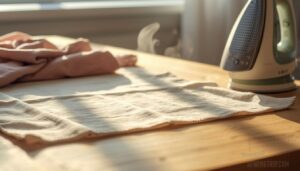
Pressing seams well is what separates a great cover from a lumpy one.
Use steam pressing with your iron and ironing board, and always lay a pressing cloth over the fabric to avoid scorching.
Trim seam allowances before you press — allowance trimming reduces bulk and keeps everything flat.
A tailor’s ham helps with any curves.
Finish by pressing over the bias tape for a dust-free, classroom-ready result.
Protecting Classroom Sewing Machines
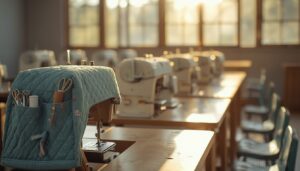
A good cover does more than keep dust off — it protects your machines, keeps supplies organized, and quietly teaches students to take care of shared equipment.
A great sewing machine cover protects equipment, organizes supplies, and teaches students to respect shared tools
Once you know what to look for, choosing the right cover for your classroom gets a lot easier.
Here’s what each approach actually does for your program.
Preventing Dust Buildup Between Student Sessions
Dust is sneaky — it creeps into your machines between every session without anyone noticing. A dust-free classroom starts with simple habits: do a quick microfiber wipe-down after each class, run HEPA vacuuming weekly, and check your airflow management by keeping vents clear.
Scheduled dust checks keep protecting sewing machines from dust, making it feel routine, not like a chore.
Reducing Damage From Spills and Loose Debris
Spills happen — and in a busy sewing room, they happen fast. A layered approach keeps your machines safe without slowing anyone down:
- Absorbent spill mats under each station catch liquids before they reach cords
- Protective machine trays stop threads and debris from settling inside
- Lidded debris bins at every seat keep scraps contained
Pair these with spill response kits and sneeze guards, and protecting sewing machines from dust and daily messes becomes second nature.
Keeping Cords, Pedals, and Notions Organized
A tangled cord is an accident waiting to happen. Keep every station tidy with these simple tools:
| Tool | Purpose |
|---|---|
| Rubber Cable Guides | Route cords safely along machine edges |
| Pedal Clip Racks | Hold pedals securely at each station |
| Tethered Cord Bins | Store pedal cords without excess slack |
| Labeled Accessory Pouches | Separate bobbins, needles, and notions cleanly |
Notion Pocket Inserts on your sewing machine cover keep everything within reach — no searching, no mess.
Extending Sewing Machine Lifespan in Classrooms
A well-loved machine can last decades — if you treat it right. Simple maintenance scheduling goes a long way: build Cleaning Protocols into every class session, follow up with proper Oil Application on moving parts, and swap out needles every 8–10 hours (Needle Replacement really does prevent skipped stitches).
Add smart Cable Management, a dust-free environment, and a good Sewing Machine Cover Class project, and your machines stay protected for years.
Encouraging Student Responsibility for Equipment Care
Keeping machines in great shape isn’t just your job — it’s everyone’s. Start with Care Contracts at the beginning of the term, so students understand what machine maintenance actually means.
Daily Checklists at each station keep habits consistent, and Rotating Duties give every student ownership.
Peer Accountability naturally follows — kids notice when a classmate skips covering their machine. That shared pride in caring for tools and organization is Student Empowerment in action.
Matching Cover Types to Beginner Sewing Programs
Once students own their role in machine care, matching the right cover for your beginner sewing class becomes the next smart step. A simple quilted cotton cover enhances Skill-Level Alignment — easy to handle, machine washable, and safe for new hands.
For Curriculum Integration, a DIY Reversible Sewing Machine Cover doubles as a Visual Learning Aid.
It’s a Cost-Effective Selection that keeps machines dust-free inside a proper protective case.
Frequently Asked Questions (FAQs)
How to make a soft cover for a sewing machine?
Making a DIY Reversible Sewing Machine Cover starts with smart fabric selection and a solid cutting layout.
Prewash your fabric, adding batting padding, choosing matching thread, and finishing the elastic bottom for a snug, protective case.
Why is it important to cover a sewing machine when nobody is using it?
Think of your sewing machine like a sleeping child — it still needs looking after.
A cover ensures dust prevention, rust prevention, and surface scratch avoidance, safeguarding its functionality.
By protecting your machine, you keep it ready whenever you’re ready, ensuring seamless use when inspiration strikes.
What sewing machines do they use in schools?
Most craft class setups rely on mid‑range models from Janome or Brother.
Entry‑level machines with color‑coded threading and foot‑pedal safety features are common, though some beginner sewing class programs use metal‑frame machines like the BERNINA 380 or BERNINA 350 PE.
What materials work best for sewing machine covers?
Cotton is your best bet — breathable fabrics keep machines cool and wash easily. For tougher wear, canvas or denim holds up beautifully. Want extra protection? Add fusible fleece inside.
Can students personalize covers with their names?
Students can personalize covers using Heat Transfer Vinyl, Embroidery Names, Velcro Name Patches, Foil Stamping, or Name Card Slots.
This makes each handmade cover uniquely theirs while reinforcing ownership and classroom organization.
How often should classroom covers be replaced?
Inspect covers quarterly and replace them annually in high-traffic rooms. If stains won’t wash out or seams start splitting, don’t wait — replace them sooner.
A simple budget rotation keeps every machine dust-free year-round.
Are sewing machine covers fire or heat resistant?
Most sewing machine covers aren’t fire resistant or heat-rated. Unless a cover carries a Fire Certification label, don’t assume it’s protected.
Flame Retardant treatments exist but fade with washing, so always check safety guidelines first.
Do covers fit machines with extension tables attached?
Standard covers won’t fit once an extension table is attached — the wider footprint changes everything.
Look for adjustable side panels or Velcro solutions to accommodate the expanded surface.
Always check your table width measurements first to ensure compatibility.
What age groups benefit most from machine covers?
Covers help every age, but younger beginners gain the most.
Early childhood safety improves when cords stay hidden, and elementary organization gets a real boost through labeled pockets designed for age-specific pocket needs.
Conclusion
Even the most well-loved machines need a little quiet time between classes. The right sewing machine covers for classroom use don’t just tuck your equipment in—they keep bobbins corralled, cords tidy, and morning setup from turning into a scavenger hunt.
When students learn to cover what they use, they’re learning something bigger than sewing. That habit of care? It follows them out the door long after the last seam is pressed.
- https://www.threadsmagazine.com/2016/02/11/make-a-sewing-machine-cover
- https://madamsew.com/blogs/sewing-blog/make-a-sewing-machine-cover?srsltid=AfmBOooUBaRRCeu12b7iT2Us56qsOofh2Cw7Ve-tBSZr1YbYkPvOsOui
- https://mariasew.com/blog/sewing-machine-carrying-case/
- https://www.professorpincushion.com/professorpincushion/sewing-machine-cover/
- https://www.sewingpartsonline.com/blogs/education/custom-sewing-machine-cover-a-tutorial