This site is supported by our readers. We may earn a commission, at no cost to you, if you purchase through links.
That shirt you’ve been meaning to "fix someday" has probably been in a drawer for six months. Meanwhile, Americans throw away roughly 81 pounds of clothing per year—most of it still wearable with a little attention. The gap between a garment you love and one you donate isn’t always talent. More often, it’s having the right tool within reach when the moment strikes.
The good news: a handful of sewing machine accessories for upcycling clothes can turn a dusty machine into a full-on creative studio. Small additions like the right presser foot, a fresh set of bobbins, or a seam guide that keeps your stitches honest deliver real results.
Here’s what’s actually worth adding to your kit: a presser foot, fresh bobbins, and a seam guide to elevate your repairs.
Table Of Contents
- Key Takeaways
- Top 7 Upcycling Sewing Accessories
- Essential Presser Feet for Clothing Upcycles
- Cutting and Marking Tools
- Fabric Shears for Clean Garment Deconstruction
- Small Scissors for Trimming Threads and Details
- Seam Rippers for Removing Collars, Sleeves, and Hems
- Tailor’s Chalk for Temporary Alteration Marks
- Disappearing-ink Pens for Precise Pattern Placement
- Rulers and Measuring Tools for Accurate Resizing
- Pins and Clips for Holding Reused Fabric Layers
- Needles, Thread, and Bobbin Supplies
- Universal Needles for Basic Woven Garments
- Ballpoint Needles for T-shirts and Knitwear
- Denim Needles for Jeans and Heavy Jackets
- Stretch Needles for Elastic Fabrics
- Topstitch Needles for Bold Decorative Seams
- Polyester Thread for Durable Everyday Upcycles
- Cotton Thread for Natural-fiber Clothing Projects
- Extra Bobbins for Organizing Thread Colors
- Accessories by Upcycling Project Type
- Hemming Old Jeans Into Shorts
- Cropping Shirts, Sweatshirts, and Jackets
- Adding Patches to Denim or Canvas
- Replacing Broken Zippers on Thrifted Clothes
- Resizing Oversized Dresses, Skirts, and Tops
- Darning Holes in Sweaters and T-shirts
- Adding Decorative Stitching to Plain Garments
- Turning Fabric Scraps Into Pockets or Appliqués
- Frequently Asked Questions (FAQs)
- Conclusion
Key Takeaways
- The right presser foot — walking, zipper, rolled-hem, or free-motion — is the single biggest upgrade you can make to your upcycling game.
- A few cheap supplies like metal bobbins, seam guides, and spool caps quietly solve the tension and alignment issues that wreck most projects.
- Matching your needle to your fabric (ballpoint for knits, denim for thick layers, stretch for elastics) is what separates clean seams from frustrating ones.
- You don’t need much to start — tailor’s chalk, sharp scissors, a seam ripper, and a handful of pins will carry you through almost any clothing rescue.
Top 7 Upcycling Sewing Accessories
The right accessories can honestly make or break your upcycling projects. A few smart picks go a long way — whether you’re hemming thrifted jeans or turning an oversized blazer into something you’ll actually wear.
If you’re cutting fabric with precision, the best Cricut machines for fabric and vinyl projects can save you hours on detail work alone.
Here are seven worth having in your kit.
1. Flannel Crafting Guide for Gifts and Decor
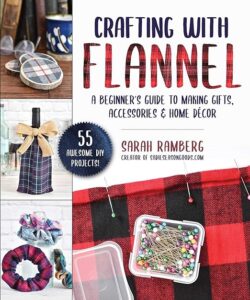
If you’re new to upcycling and want a low-pressure starting point, flannel crafting is your sweet spot. This guide covers 50+ beginner-friendly projects — pillow covers, tote bags, coasters, seasonal garlands, and gift bags made from scraps you’d otherwise toss.
At $16.99, it’s a genuinely useful investment. Pre-wash your flannel before cutting, use a simple ½-inch seam allowance, and you’re already halfway there.
Handmade gifts that cost almost nothing? That’s the magic of working with what you already have.
| Best For | Anyone who loves making handmade gifts or home décor and wants a simple, low-cost way to put scrap flannel to good use — whether they’re just starting out or already comfortable with a needle and thread. |
|---|---|
| Primary Material | Paper/Paperback |
| Skill Level | All levels |
| Retail Price | $16.99 |
| Package Quantity | 1 book |
| Machine Compatibility | No machine required |
| Storage Included | No |
| Additional Features |
|
- 50 projects with full-color photos make it easy to follow along, even if you’ve never sewn a thing in your life.
- At $16.99, it practically pays for itself the first time you gift something handmade instead of buying it.
- Works for all skill levels — quick, easy wins for beginners and more involved builds for crafters who want a challenge.
- Only covers flannel, so it won’t help if you’re working with other fabrics.
- You’ll still need basic tools like scissors, a needle, and thread — none of that comes with the book.
- No digital version, so you can’t pull it up on your phone or tablet while you work.
2. Tigari Magnetic Seam Guide with Clip
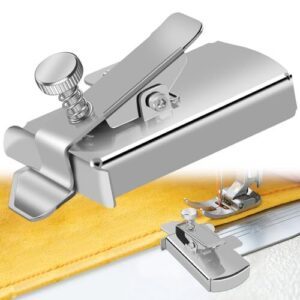
Once you’ve got a project in mind, keeping your seams straight is half the battle. The Tigari Magnetic Seam Guide clips right onto your needle plate — no fuss, no sliding. That built-in neodymium magnet holds firm even at higher speeds, and the measurement marks let you lock in a consistent ¼-inch or ½-inch allowance every time. Stainless steel, so it’ll outlast plenty of projects.
Just note — computerized machines may not play nice with strong magnets, so check yours first.
| Best For | Quilters and sewists who want consistent, straight seams without constantly eyeballing their fabric edge. |
|---|---|
| Primary Material | Stainless Steel |
| Skill Level | Beginner-friendly |
| Retail Price | Not specified |
| Package Quantity | 1 guide |
| Machine Compatibility | Most domestic machines |
| Storage Included | No |
| Additional Features |
|
- That neodymium magnet locks onto the needle plate and stays put, even at faster sewing speeds.
- Stainless steel build means it won’t bend, rust, or wear out after a season of heavy use.
- Works for both straight and curved seam lines, which makes it handy across a lot of different projects.
- Strong magnets and computerized machines don’t always mix well — worth checking your machine’s manual before using it.
- Only covers seam widths up to about 3 cm, so it’s not the tool for wider allowances.
- No instructions in the box, which can make the initial setup a bit trial-and-error for newer sewists.
3. Mr Pen Metal Sewing Machine Bobbins
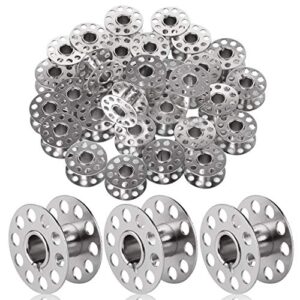
Straight seams are great — but none of that matters if your bobbin runs out mid-project. That’s where the Mr. Pen Metal Bobbins earn their spot. You get 32 galvanized steel bobbins for under five dollars, and they’re compatible with most Brother, Singer, and Janome machines.
Metal holds its shape better than plastic, so thread tension stays consistent — especially on heavier fabrics.
They come in a reusable case, which makes organizing thread colors for multiple upcycles surprisingly satisfying.
| Best For | Sewers who go through bobbins fast and want a durable, budget-friendly metal option that works with most major machine brands. |
|---|---|
| Primary Material | Galvanized Steel |
| Skill Level | All levels |
| Retail Price | $4.95 |
| Package Quantity | 32 bobbins |
| Machine Compatibility | Brother, Singer, Janome |
| Storage Included | Plastic box |
| Additional Features |
|
- 32 galvanized steel bobbins for under $5 — hard to beat for the price
- Metal construction holds shape better than plastic, helping keep thread tension steady
- Comes with a reusable storage case to keep everything in one spot
- Opaque metal can block low-bobbin sensors on some embroidery machines
- Not recommended for certain machines (like some Juki models) that require plastic bobbins
- The storage box is thin, has no compartments, and a few buyers reported getting fewer than 32 bobbins
4. Sewing Machine Spool Pin Caps
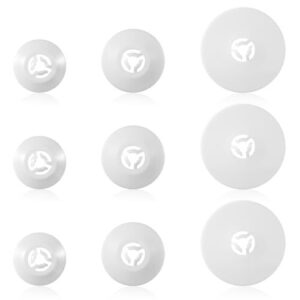
Once your bobbins are sorted, spool pin caps offer another simple yet effective solution. These tiny plastic caps slide onto your spool pin, preventing thread spools from wobbling or flying off during stitching.
The set includes six caps in three sizes: small (2.5 cm), medium (3 cm), and large (4 cm), ensuring compatibility with most spools in your collection.
By stabilizing the spool and ensuring a steady thread feed, these caps significantly reduce tension issues. A small fix with a surprisingly big payoff.
| Best For | Home sewers who deal with spools slipping or wobbling mid-stitch, especially those running machines at high speeds or working with multiple thread sizes. |
|---|---|
| Primary Material | High-Impact Plastic |
| Skill Level | All levels |
| Retail Price | Not specified |
| Package Quantity | 6 caps |
| Machine Compatibility | Singer, Brother, Juki |
| Storage Included | No |
| Additional Features |
|
- Comes in three sizes, so you’re covered whether your spools are small or bulky
- No tools needed — just slide them on and you’re good to go
- Works with popular brands like Singer, Brother, and Juki, making them easy to recommend as a spare
- Fit can be hit or miss depending on your machine — Viking, Pfaff, and some Bernina users have reported sizing issues
- No info provided on spool pin hole size, so you’ll need to double-check compatibility before buying
- Only comes in white, which is a minor thing but worth noting if it matters to you
5. XBA Universal Sewing Machine Presser Foot Set
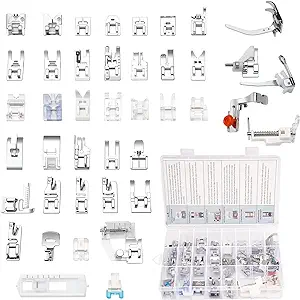
Forty-two presser feet for $24.99 — honestly, that’s hard to beat. The XBA Universal Presser Foot Set covers almost every upcycling task you can think of: rolled hems, zipper installation, buttonholes, quilting, even leather work. Each foot snaps on and off quickly, so switching between projects takes seconds.
Whether you’re a beginner or seasoned crafter, pairing this versatile set with solid fabric upcycling techniques and project ideas means you’ll always have the right foot for the job.
It fits most low-shank machines — Brother, Singer, Babylock — though older Singers may need a small adapter.
A transparent storage case and printed guide are included, so everything stays organized and labeled.
| Best For | Home sewists — beginners and hobbyists alike — who want to get more out of their low-shank machine without spending a fortune on individual feet. |
|---|---|
| Primary Material | Metal & Plastic |
| Skill Level | All levels |
| Retail Price | $24.99 |
| Package Quantity | 42 feet |
| Machine Compatibility | Low-shank domestic only |
| Storage Included | Transparent case |
| Additional Features |
|
- 42 feet for $24.99 is genuinely great value — you’d spend that on one or two feet bought separately.
- Covers a wide range of techniques, from rolled hems and zippers to quilting and leather work.
- Comes with a transparent storage case so the feet stay organized and easy to find.
- Only works with low-shank domestic machines — not compatible with vintage, mini, industrial, or high-handle models.
- Older Singer machines may need an adapter, which is an extra step and potential extra cost.
- The printed manual is brief and not organized to match the box layout, so you may need to make your own reference guide.
6. Purple Sewing Needles with Felt Bag
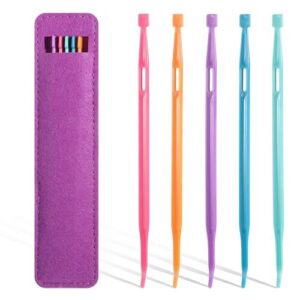
These little needles punch way above their weight. The set includes five 15 cm plastic needles tucked into a soft purple felt bag — compact enough to toss in any project kit.
They’re built for precise fabric handling, corner turning, and keeping your fingers safe while you work.
The felt pouch doubles as a pincushion in a pinch, which is genuinely handy.
Plastic won’t power through thick denim, so keep metal needles nearby for heavier jobs.
| Best For | Sewists who work on light to medium fabrics and want a compact, travel-friendly tool set for precise fabric handling and finger safety. |
|---|---|
| Primary Material | PP Plastic |
| Skill Level | All levels |
| Retail Price | Not specified |
| Package Quantity | 5 needles + 1 bag |
| Machine Compatibility | Universal |
| Storage Included | Felt bag |
| Additional Features |
|
- Five needles in one tidy felt bag — easy to grab and go
- Great for turning corners, guiding fabric, and keeping fingers clear of the needle
- Lightweight and compact enough to fit in any project bag or travel kit
- Plastic bends under pressure — not ideal for denim, canvas, or other heavy fabrics
- Only 15 cm long, which can feel short for bigger or deeper projects
- Comes in purple only, so no options if you want color-coded or matching tools
7. Purple Thang Sewing Fabric Guide
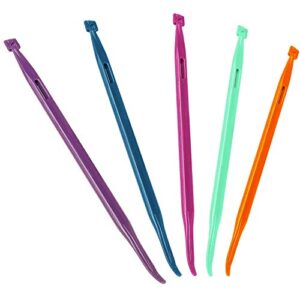
Five purple tools for under six bucks — that’s the Purple Thang in brief. This small plastic guide acts like a fifth finger at your machine, nudging fabric smoothly under the presser foot without risking your fingers near the needle.
It excels at wrestling bulky denim hems or turning tight corners on bag straps, making tricky maneuvers safer and simpler.
The central slit also threads elastic through waistbands, adding versatility to its core function.
Lightweight, flexible, and weirdly satisfying to use, this tool earns its spot by your machine permanently.
| Best For | Sewists who work with tricky fabrics, tight corners, or waistband casings and want a simple tool that keeps fingers safely away from the needle. |
|---|---|
| Primary Material | Injection-Molded Plastic |
| Skill Level | All levels |
| Retail Price | $5.39 |
| Package Quantity | 5 pieces |
| Machine Compatibility | Universal |
| Storage Included | No |
| Additional Features |
|
- Acts as a "fifth finger" to guide fabric smoothly without putting your fingers near the presser foot
- Handles multiple jobs — guiding fabric, threading elastic, checking seam allowances, poking stuffing
- Comes in a pack of five for under $6, so losing one isn’t a big deal
- Works best on light to medium fabrics — heavy or thick layers may give it trouble
- No exact dimensions listed, so it might not slide cleanly under every presser foot
- Plastic construction could wear down over time with heavy daily use
Essential Presser Feet for Clothing Upcycles
The right presser foot can make or break an upcycling project — seriously, it’s that much of a big deal. Different fabrics and techniques call for different feet, and knowing which one to grab saves you time, frustration, and a lot of ripped seams.
Here are the six presser feet worth keeping in your kit.
Walking Foot for Denim, Jackets, and Thick Seams
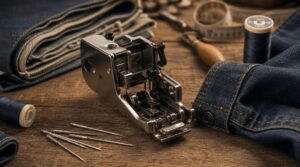
Thick denim doesn’t have to be a fight. A walking foot keeps layer alignment perfect by feeding top and bottom fabric together — no slipping, no puckering. Its dual feed foot design delivers even feeding of thick layers.
For denim repurposing and DIY upcycled fashion projects, pair it with a size 100/16 needle, dial in tension adjustment, use a longer stitch length, and maintain steady speed control.
This essential tool empowers upcycling trends on a budget without compromising quality.
Zipper Foot for Replacing or Adding Closures
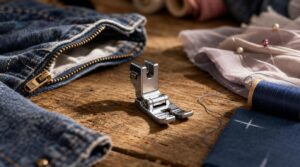
Broken zipper? Don’t trash the jacket — fix it. A zipper foot allows adjustable needle positioning, enabling you to stitch alongside the teeth on either the left or right side, depending on your seam.
For invisible seam alignment on skirts or dresses, switch to an invisible zipper foot. This ensures a seamless finish.
Always baste first and employ fabric stabilization methods on lightweight materials. These steps guarantee clean, pro-looking closures every time.
Rolled-hem Foot for Lightweight Shirts and Dresses
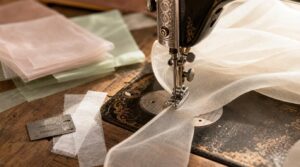
Sheer fabrics are unforgiving — but a rolled-hem foot makes them manageable. It guides the raw edge into a tiny, clean fold as you stitch.
For fabric prep tips, press your edge lightly first and trim any bulk. Hem width adjustment (3mm to 6mm) depends on your fabric weight.
Use stitch length tuning and stabilizer techniques — like tissue paper — to keep delicate upcycled pieces ripple-free.
Blind-hem Foot for Clean Skirt and Trouser Hems
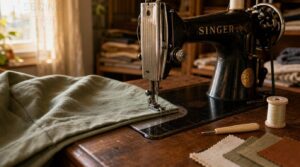
The blind-hem foot hides your stitches almost completely — its central metal guide folds the fabric precisely, so the needle barely grazes the outer layer. Master fold crispness first, then dial in thread tension and stitch length. Test stitching on scrap fabric saves headaches.
It works beautifully on cotton and linen with any Singer or Brother machine.
Edge-stitch Foot for Neat Visible Topstitching
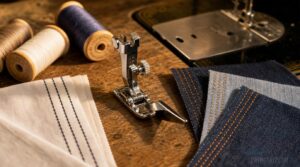
Now, if blind hems hide the stitch, the edge-stitch foot puts it front and center — cleanly. Its built-in guide adjustment keeps your sewing machine running parallel to any edge, ensuring your topstitching lands the same distance every time.
Play with thread contrast and stitch length for bold or subtle results. It works across fabric-compatible ranges — denim, chambray, even poplin.
An underrated garment alteration gem.
Free-motion Foot for Appliqué, Darning, and Decoration
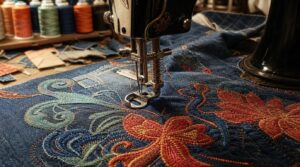
This foot flips the script entirely — you’re in control, not the machine. Drop the feed dogs, set zero stitch length, and guide your fabric wherever you want.
With free-motion sewing, you lead and the machine follows
The spring-loaded mechanism ensures smooth operation, while the open toe version provides clear sightlines for precision in thread painting and appliqué.
Perfect for darning holes or adding freehand art to any DIY upcycling project.
Cutting and Marking Tools
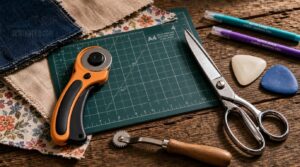
Before you sew a single stitch, you need the right tools to cut and mark your fabric accurately. Think of these as the unsung heroes of every upcycling project — they set you up for clean lines and zero guesswork.
Here are the cutting and marking tools worth keeping close.
Fabric Shears for Clean Garment Deconstruction
Good fabric shears are the unsung heroes of garment deconstruction. Blade sharpness matters more than you’d think — dull edges fray seams and make clean alterations nearly impossible.
Look for long blades (8–9 inches) with smart edge geometry that manages multi-layer cutting through denim or canvas without strain.
With basic shear maintenance — oiling, drying, and storing them properly — they’ll remain budget-friendly essential tools for upcycling clothing for years.
Small Scissors for Trimming Threads and Details
A good pair of scissors does the detail work your fabric shears simply can’t. Think flush thread ends, tight corners, tiny hems — that’s where small scissors shine.
Here’s what to look for in your essential tools for upcycling clothing:
- Precision tip design — reaches into tight seams near your sewing machine
- Micro-serrated blades — grip slippery threads cleanly
- Stainless steel blades — resist rust and stay sharp longer
- Ergonomic grips — reduce fatigue during long sessions
- Simple maintenance routine — wipe, oil, store dry
Budget-friendly upcycling tools don’t get more practical than these.
Seam Rippers for Removing Collars, Sleeves, and Hems
Before you cut a single seam, a sharp seam ripper is your best friend. This small tool — usually 4 to 5 inches long — slips under collars, sleeves, and hems without tearing fabric. Ripper ergonomics matter: a grippy handle ensures control during garment alteration.
Maintenance is key: Keep blade sharpening in rotation and store it capped. Proper ripper storage solutions prevent accidents, safeguarding both the tool and the user.
Essential tools for upcycling clothing don’t get more foundational.
Tailor’s Chalk for Temporary Alteration Marks
Tailor’s chalk is the unsung hero of fashion upcycling — cheap, simple, and totally temporary.
Choose the right chalk color for your fabric: yellow for dark fabrics ensures visibility, while white or blue suits lighter tones.
- Press lightly — marking pressure tips matter
- Brush off marks easily after stitching
- Works on denim, cotton, and most natural fibers
- Safe erasing methods: brush, cloth, or light iron
- Fabric compatibility varies — test on scraps first
Disappearing-ink Pens for Precise Pattern Placement
Disappearing-ink pens are a breakthrough for precise pattern making. Their fine 0.5mm tips create dart marks and seam notches with exceptional precision. Fade timing typically lasts 24–72 hours, though marks disappear faster in warmer environments.
For fabric compatibility, use light cottons and blends; always test on scraps first. Avoid heavier or textured fabrics, as ink visibility and fading may vary.
Removal is straightforward: a damp cloth effectively erases marks. For best visibility during use, mark the wrong side of the fabric to prevent accidental stains on the visible surface.
Rulers and Measuring Tools for Accurate Resizing
Resizing a thrifted piece without the right tools? That’s where things go sideways fast. A clear acrylic ruler keeps your lines true, while dual-scale rulers handle both metric and imperial patterns without mental math.
Add a curved ruler for armholes, a straight ruler for hems, and even digital ruler apps for on-the-go checks.
Tailor’s chalk works beautifully alongside these — your perfect marking tool combo.
Pins and Clips for Holding Reused Fabric Layers
Pins and clips are the unsung heroes of upcycling. You’ll want many, many pins—glass-head steel ballpoint pins for sturdy layers, fine silk pins for delicate fabrics. Layer compatibility matters, so match your pin materials to the job.
Wonder Clips handle the pressure across thick denim without leaving holes. Place everything perpendicular to your seam line for precision.
Smart storage solutions—like a magnetic tray—keep your DIY upcycling projects moving.
Needles, Thread, and Bobbin Supplies
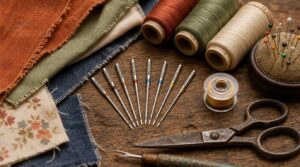
The right needle and thread combo can make or break an upcycling project — seriously, it’s that important. Using the wrong ones means skipped stitches, fraying seams, or fabric that puckers before you’ve even finished.
Here’s what you actually need in your sewing kit.
Universal Needles for Basic Woven Garments
A universal needle is your best starting point for most DIY upcycling projects. It manages cotton, linen, and everyday blends beautifully — the workhorses of sustainable fashion and repurposing garments.
- Needle sizing: sizes 60/8–110/18 cover lightweight to heavy woven fabric weight
- Eye design: polished, friction-reducing — great thread compatibility with polyester and cotton
- Needle lifespan: swap after 6–8 hours for clean, skip-free stitching
Ballpoint Needles for T-shirts and Knitwear
Knits are a different beast — sharp needles snag and tear through T-shirt fabric fast. A ballpoint needle’s rounded tip slides between fibers instead of piercing them, ensuring clean Knit Stitch Tension without pulls.
Master Needle Size Selection (80/12 works for most tees), confirm Thread Compatibility on a scrap, and prioritize Swatch Testing. These steps safeguard your upcycling fashion project every time, achieving Fabric Pull Prevention.
Denim Needles for Jeans and Heavy Jackets
Switch from tees to thick denim, and your sewing machine needs a tougher tool. Denim needles feature reinforced shafts that push through heavy layers without bending — consult a needle size chart to pick between 90/14 and 110/18.
Coated needle durability and ideal needle geometry ensure clean topstitching every time. These features make denim needles budget-friendly staples for any upcycled accessories project, especially when paired with heavy-thread compatibility.
Stretch Needles for Elastic Fabrics
Denim is tough, but elastic fabrics present a unique challenge. Stretch needles feature a rounded tip that glides between knit fibers instead of piercing them, ensuring smooth sewing machine operation and preventing skipped stitches.
For upcycling and textile recycling wins:
- Needle Size Selection — sizes 14/90 or 16/100 suit most jerseys and spandex blends
- Thread Pairing — polyester stretch thread boosts stitch consistency and seam durability
- Fabric Stretch Capacity — manages up to 50% stretch without puckering
Topstitch Needles for Bold Decorative Seams
Want those bold, visible seams that make upcycled denim jackets look intentional? Topstitch needles are your go-to sewing supplies for that. Their larger eye size allows thick decorative thread to pass through smoothly — less friction, fewer breaks.
Needle geometry also matters; the slightly rounded tip manages dense layers without tearing. Durability coatings extend needle life, while color coding keeps your sewing machine setup organized.
Polyester Thread for Durable Everyday Upcycles
Polyester thread is the quiet workhorse of everyday upcycling — and honestly, it earns that reputation. Its tensile strength holds firm through wash after wash, while colorfast durability keeps your seams looking fresh.
Got a sewing machine table full of mixed projects? Recycled polyester options lower your footprint without sacrificing stretch compatibility or low-linting performance. Budget-friendly upcycling tools don’t get more reliable than this.
Cotton Thread for Natural-fiber Clothing Projects
Cotton thread is a natural match for linen, hemp, and cotton upcycles — it moves with the fabric instead of fighting it. Look for a mercerized finish for better color coordination and durability.
Thread weight matters too: 40–50 weight manages most seams cleanly.
Eco-friendly sourcing and sustainable sewing supplies make this a smart pick for textile upcycling without compromise.
Extra Bobbins for Organizing Thread Colors
Extra bobbins aren’t just backup — they’re your color system. Pre-wind a rainbow bobbin tray by shade, and swapping threads mid-project takes seconds instead of minutes.
- Use clear bobbin boxes with 24–36 slots so colors are visible at a glance
- Build an indexed bobbin list matching each bobbin to its spool
- A color wheel organizer on your tray makes shade-matching instant
Accessories by Upcycling Project Type
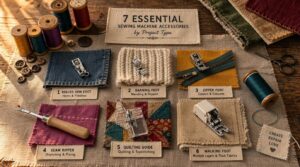
Not every upcycling project needs the same tools — what works for hemming jeans won’t cut it when you’re darning a worn-out sweater. Matching the right accessories to the right project is what separates a clean finish from a frustrating mess.
Here’s a breakdown of what you actually need for the most common upcycling jobs.
Hemming Old Jeans Into Shorts
Old jeans don’t retire — they transform. Start with length measurement on both legs, marking your cut line with tailor’s chalk and a wide variety of rulers for accuracy. A seam ripper removes any factory stitching in the way.
Use a portable sewing machine with a denim needle, shorter stitch length, and your hem style choice.
Post-hem care? Wash inside out, air dry.
Cropping Shirts, Sweatshirts, and Jackets
Cropping a shirt, sweatshirt, or jacket is honestly one of the most satisfying quick wins. Keep collar retention and sleeve alignment intact — don’t touch those seams. Mark your new hem, then use a seam ripper for any interfacing layers.
Stay tape reinforcement prevents stretching on knits. Finish with raw edge treatment or a light fold for proportional balance.
Choosing the right sewing equipment for repurposing garments — even budget-friendly upcycling tools — makes all the difference.
Adding Patches to Denim or Canvas
Patches are one of the best creative sewing ideas for old garments — and repurposing denim into new items gets even better with a few smart moves. Test colorfastness first to ensure durability.
For iron-on adhesive heat guidelines, aim for 150–170°C with a cloth barrier to prevent damage. Edge reinforcement methods — such as zigzag or hand stitching — boost patch longevity.
Decisions about stitch density matter: 2–3 mm spacing holds best for secure application.
Replacing Broken Zippers on Thrifted Clothes
Fixing a broken zipper on a thrift store find is easier than you’d think. Start with length measurement — lay the garment flat and get an exact number. Tape matching ensures your new zipper blends in. If just the pull is gone, slider replacement saves time.
Reinforce both ends with extra stitches — seam reinforcement is what makes it last. Aftercare tips: gentle cycle only.
Resizing Oversized Dresses, Skirts, and Tops
Found a thrifted dress that swamps you? Body measurement mapping is your starting point — know your bust and waist before touching the fabric.
Side seam tapering brings structure back, while waist dart alteration adds shape. Back-zip alignment keeps closures smooth.
Always do a muslin test fitting first.
With basic sewing skills for sustainable fashion, resizing oversized pieces is genuinely satisfying upcycling work.
Darning Holes in Sweaters and T-shirts
A hole in your favorite sweater isn’t the end — it’s actually a beginner sewing project waiting to happen. With basic sewing skills for sustainable fashion, darning is one of the most satisfying budget-friendly upcycling tools in your kit.
- Place fabric over a darning mushroom to keep it flat
- Build a stitch grid — vertical, then horizontal
- Try Swiss Darning to mimic the original knit texture
- Use contrast yarn for visible mending that looks intentional
- Weave thread ends under surrounding stitches to finish cleanly
Adding Decorative Stitching to Plain Garments
Pattern selection begins the transformation—choose a motif that complements your fabric’s character. Sketch placement with tailor’s chalk, then adjust stitch length and tension before finalizing.
Satin stitch fills bold shapes elegantly, while chain stitch outlines offer simplicity. Use embroidery hoops for stability, and always practice on scrap fabric first.
Let layered embellishment elevate the design, allowing intricate details to speak for themselves.
Turning Fabric Scraps Into Pockets or Appliqués
Those leftover scraps? They’re waiting to become something. A patchwork pocket or layered appliqué motif turns waste into detail — and it’s easier than you’d think with basic sewing skills for sustainable fashion.
- Scrap Color Coordination pulls your whole garment together
- Interfacing Choices decide how long your pocket lasts
- Pocket Reinforcement at corners prevents early wear
- Appliqué Stabilizer Methods keep edges clean and flat
- Waste-Free Layout Planning stretches every scrap further
Frequently Asked Questions (FAQs)
Is it legal to sell upcycled clothes?
Yes — selling upcycled clothes is legal, like any small creative business.
Be honest: disclose modifications, label materials accurately, avoid misleading brand use, and follow local textile waste regulations.
Transparency keeps you protected.
Which accessories are needed to sewing craft for the cloth?
You’ll need a few key things: thread (matched tension matters), sharp needles, a bobbin winder, tailor’s chalk, many, many pins, and a stitch selector.
A marking tool ensures clean and accurate cuts.
What useful items will you make out of your old clothes?
Old clothes can become so much more — a tote bag, shoulder clutch, snack bag, fabric storage bin, or jersey headband.
You can even transform jeans into shorts or make your jeans into a skirt.
How do I upcycle clothes without a sewing machine?
Forget the machine entirely — fabric glue, knot-based closures, and DIY fringe edging get you surprisingly far.
No-sew tote conversion, natural dye hacks, even tailor’s chalk for clean cuts.
Budget-friendly upcycling tools, zero stitching required.
Which sewing accessories work best for beginners?
Start simple — a universal needle, some tailor’s chalk, and many many pins get you far. Grab budget-friendly upcycling tools from GoldStar Tool, and you’re already set.
Can I use iron-on patches without sewing them?
Iron-on patches bond beautifully without a single stitch. Match heat settings to your fabric compatibility, press firmly for strong bond strength, and follow simple application steps.
With proper care for longevity, they’ll last.
How do I match thread color to thrifted fabric?
Take your thrifted fabric to natural light and lay a few threads across it — that Grey Scale Matching trick works fast.
Try a Stitch Sample Evaluation on scraps before you commit.
What maintenance keeps upcycling tools lasting longer?
Consistent care keeps your tools sharp and session-ready. Clean after every use, oil pivot points every six to twelve uses, and store everything dry. Simple habits — big difference.
Conclusion
Like the cobbler whose children had no shoes, even the most passionate sustainable fashion lovers let good clothes quietly disappear. Don’t let that be your story. The right sewing machine accessories for upcycling clothes close the gap between "I meant to fix that" and actually wearing it again.
You don’t need a full workshop—just the right tools, close at hand. That drawer of forgotten clothes? It’s really just a project waiting to begin.
- https://www.creativefeet.com/?srsltid=AfmBOorIZom5W_hu6zO8FfshVt-WGiLtorowRc83Su5KZEXgg0CE9P08
- https://www.goldstartool.com/blog/the-complete-guide-to-sewing-machine-needles-and-sizes.htm
- https://www.selfmade.com/nl-be/inspiration/ideas-for-sewing-projects/sewing-machine-needles-the-ultimate-guide/?srsltid=AfmBOorPg4Hjsm5DgAN262tvTdg1qzBZbckgHxKzV76fcomjyWJxJyo4
- https://www.seamwork.com/sewing-tutorials/the-10-best-presser-feet-for-sewing-clothing?srsltid=AfmBOorXg2nnz2I6_mbwFtsU_GgqDSpN9hN6cdH_c3-fXi-uMXpDO-0A
- https://siemachtsewingblog.com/favorite-sewing-supplies/