This site is supported by our readers. We may earn a commission, at no cost to you, if you purchase through links.
A single dropped button once derailed an entire job interview. The candidate had a spare in their bag—safety pin, no thread—and showed up looking like they’d dressed in the dark. That kind of small clothing disaster hits at the worst possible moment, and it’s almost always preventable.
A complete sewing kit sitting in your closet changes that math entirely. It’s not about becoming a tailor. It’s about having the right tool when a seam gives out, a hem unravels, or a trip abroad turns your favorite shirt into a project.
Here are five situations where you’ll genuinely need one: a seam gives out, a hem unravels, or a trip abroad turns your favorite shirt into a project.
Table Of Contents
Key Takeaways
- A complete sewing kit isn’t a hobby tool—it’s emergency preparation for the moments when a busted seam or missing button can actually cost you something important.
- Whether you’re at home, traveling, or mid-project, the same core tools (needles, thread, seam ripper, pins) cover the vast majority of real-world repairs.
- Small problems like loose hems and tiny holes spread quickly, so catching them early with a basic kit saves clothes that would otherwise end up in the trash.
- The one technical detail that separates repairs that hold from ones that fail again in a week is matching the right thread and needle to your fabric.
You Need One for Frequent Repairs
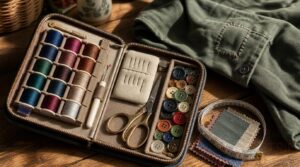
If you sew even a little, repairs come up more often than you’d think. A complete kit means you’re never stuck staring at a split seam or a missing button with nothing to fix it.
Knowing what thread comes in a sewing kit helps you spot gaps before you actually need it.
Here’s what a solid home-repair setup actually covers.
Fixing Torn Seams and Loose Hems
A torn seam doesn’t wait for a convenient time. That’s why your basic sewing kit needs to be ready. For more detailed guidance, consult the needlework resource section.
- Use Backstitch Reinforcement to lock stressed seams tight
- A Slip Stitch Repair closes hems invisibly on woven fabrics
- Zigzag Edge Stabilizer stitching stops fraying before it spreads
Keep dressmaker pins, hand sewing needles, a seam ripper, and cotton thread handy. Thread-Fabric Compatibility matters — match your thread to avoid visible repairs.
A Catch Stitch Hem works beautifully on flexible fabrics without adding bulk.
Replacing Missing Buttons Quickly
Buttons vanish at the worst moments. That’s where your basic sewing kit earns its keep. Button size matching is the first step—select a replacement that mirrors the original’s diameter and hole count. Perform a quick alignment check against the buttonhole before sewing a single stitch.
| Step | Tool Needed | Why It Matters |
|---|---|---|
| Match button size | Sewing supplies bin | Keeps appearance consistent |
| Thread knotting | Cotton thread + hand sewing needles | Locks stitches securely |
| Rapid stitch pattern | Needle | Criss-cross holds longer |
| Alignment check | Your eye | Prevents crooked closures |
| Fasten alternatives | Safety pin | Buys time in a pinch |
Use four to six stitches per hole, and finish with a tight knot at the back.
Mending Small Holes Before They Spread
A small hole spreads fast — like a run in a stocking, it won’t stop itself.
Catch it early with your basic sewing kit. Your hand sewing tools can handle most repairs before they double in size.
- Apply a backing patch behind the damage to stabilize fraying edges
- Use a darning weave to rejoin loose fibers naturally
- Build a cross-stitch lattice across the opening for stitch tightness
- Finish with an iron set finish to flatten everything smooth
Keeping Clothes Wearable Longer
Catching holes early buys time: keeping clothes alive long-term takes a few steady habits. Fabric rotation spreads wear evenly, preventing any single item from being overworked. Proper storage on padded hangers maintains garment shape and prevents stretching. Gentle washing in cold water with a low spin cycle protects delicate fibers. Air drying avoids pilling and breakage by skipping the dryer when possible. Following care labels prevents avoidable shrinkage and damage from incorrect heat or cycles. A basic sewing kit addresses small issues as they arise.
| Habit | What It Does | Tip |
|---|---|---|
| Fabric Rotation | Reduces overuse on single items | Alternate similar pieces weekly |
| Proper Storage | Maintains garment shape | Use padded hangers or fold flat |
| Gentle Washing | Protects delicate fibers | Cold water, low spin |
| Air Drying | Prevents pilling and breakage | Skip the dryer when possible |
| Care Label Following | Avoids heat and cycle damage | Check before every wash |
Tools to Include for Home Repairs
Stock your home repair sewing kit with the right tools and you’ll handle almost anything. A seam ripper gets stitches out cleanly, while fabric scissors and thread snips keep cuts precise. A magnetic pin holder stops pins from vanishing.
For needles and pins specifically, restocking your sewing kit the right way means keeping a variety of sizes on hand so you’re never caught off guard by a tricky fabric.
Adding a protective thimble, measuring tape, thread spools organizer, blade storage case, and a scissor sharpener ensures you’re fully prepared. A simple setup yields serious results.
You Need One for Beginner Sewing
Starting out in sewing doesn’t have to feel overwhelming. The right tools make all the difference between a frustrating first project and one you’re actually proud of.
Here’s what belongs in a beginner’s kit.
Basic Needles, Pins, and Thread
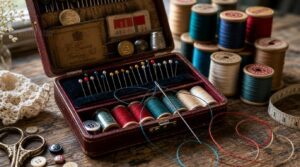
Needle and thread form the foundation of every basic sewing kit. Start with a universal size 80/12 needle, a reliable choice for most fabrics.
For pin type selection, use straight pins for woven fabrics and ballpoint pins for knits.
Thread weight basics are also important; 40-weight polyester covers nearly everything.
Fabric Scissors Versus Household Scissors
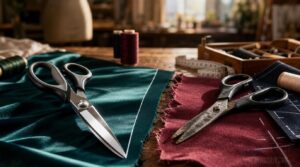
Using household scissors on fabric is a mistake you’ll only make once. Fabric scissors win every Sewing Kit Comparison for Beginners because their Blade Design, curved and micro-serrated, manages Cutting Capacity across multiple layers without fraying. Handle Ergonomics reduce fatigue, and high-grade Steel Quality keeps edges sharp longer.
For your DIY Sewing Kit Assembly, dedicate them to fabric only. That’s Scissor Care Rule Number One.
Measuring Tape and Seam Gauge Essentials
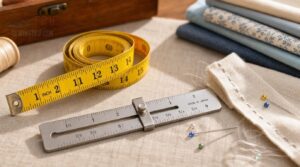
Measurements are where beginner projects live or die. A 60-inch flexible measuring tape manages both body curves and fabric layouts — Hook Calibration keeps the end hook accurate for exterior reads. These are non-negotiable essential tools for any solid DIY Sewing Kit Assembly.
Pair it with a seam gauge; its Gauge Sliding Marker locks repeatable hem depths every time. Together, they ensure precision in foundational sewing tasks, making them indispensable for beginners.
Seam Ripper for Fixing Mistakes
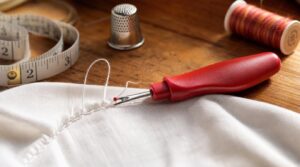
Every beginner makes stitching mistakes — that’s just part of learning. A seam ripper is one of the most essential tools for beginner sewers in any beginner sewing kit.
The blade angle lets you slip under threads cleanly, and an ergonomic grip keeps your hand steady.
Master the thread removal technique: short, gentle strokes.
Store it with the cap on — safety storage matters more than you’d think.
Why Beginners Should Avoid Advanced Tools
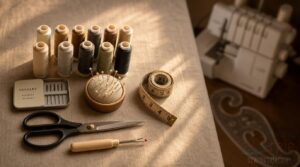
Sophisticated tools are tool overkill for where you’re starting. A serger or French curve ruler brings a steep learning curve — and a real error risk — before you’ve nailed straight seams.
High cost doesn’t equal faster progress either. Your beginner sewing kit’s essential tools already cover everything you need. Master fundamental skills first. The fancy stuff will make sense later.
You Need One for DIY Projects
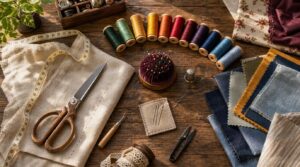
DIY projects are where a complete sewing kit really earns its place. You’re not just fixing something — you’re building it from scratch, and the right tools make all the difference.
Here’s what your kit needs to handle the job.
Tote Bags, Pillow Covers, and Simple Garments
DIY projects like tote bags, pillow covers, and simple garments are where a solid sewing kit really earns its place. Fabric choice shapes everything — cotton canvas for bags, linen for pillows, and lightweight fabric for basic skirts.
A few essentials make all the difference:
- Handle reinforcement for sturdy, load-bearing tote straps
- Pocket design details like placement and depth
- Closure options and size variations for pillow covers
Good sewing kit essentials keep these DIY sewing projects moving.
Matching Thread to Fabric Type
Choosing the right thread is crucial for successful sewing. Natural fiber pairing ensures fabrics and threads behave similarly, such as cotton thread with cotton fabric for synchronized shrinkage. Silk requires fine polyester to maintain its delicate drape, while knits demand stretch thread to prevent seam breakage. Core-spun strength handles heavy-duty fabrics like denim without fraying.
| Fabric Type | Best Thread | Why It Works |
|---|---|---|
| Cotton/Linen | Cotton thread | Matched shrinkage, natural fiber pairing |
| Silk/Chiffon | Fine polyester | Reduces puckering, preserves drape |
| Denim/Canvas | Core-spun strength | Holds heavy seams without fraying |
| Knits | Knit stretch thread | Moves with fabric, prevents breakage |
| Matte fabrics | Matte thread finish | Cohesive surface, no shine contrast |
Thread weight alignment—matching thread size to fabric weight—is essential for seamless results. This small detail prevents puckering or gaping, ensuring a polished finish.
Cutting Tools for Accurate Fabric Pieces
Once you’ve matched your thread, the next step is cutting your fabric cleanly. Sloppy cuts make everything harder downstream.
- Use bent handle shears for visibility along seam lines
- A rotary cutter with a self-healing mat cuts through multiple layers fast
- A clear acrylic ruler keeps your cuts straight and grain-aligned
- Schedule rotary blade replacement every 100–150 projects
An electric rotary cutter and pinking shears round out a serious DIY setup.
Marking Tools for Patterns and Measurements
Clean cuts are only half the battle. You still need to mark where to sew.
| Tool | Best For |
|---|---|
| Water-soluble pens | Light and medium fabrics |
| Tailor’s chalk | Quick, brushable lines |
| Tracing wheels | Transferring pattern lines |
| Hera crease marker | Knits and delicate fabrics |
Water-soluble markers disappear with a damp cloth. Notcher dots keep seams aligned. A clear ruler keeps every line straight.
Pressing Tools for Cleaner Results
Pressing makes or breaks a DIY project. Run your steam iron over a seam right after sewing, and it lays flat instantly.
Ceramic soleplate benefits include smooth glide and even heat — no scorching.
Use a pressing cloth on delicate pieces.
A heat-transfer clapper sets creases fast.
For cuffs and collars, a sleeve board uses tight angles that a regular ironing board simply can’t reach.
You Need One for Travel Emergencies
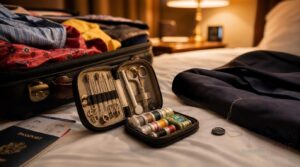
A clothing mishap doesn’t care that you’re three time zones from home. That’s exactly why a compact sewing kit belongs in your travel bag, not your closet.
A clothing mishap doesn’t care how far you are from home, so pack a sewing kit before you need one
Here’s what you’ll want to have on hand.
Repairing Clothing Away From Home
A wardrobe crisis doesn’t wait for a convenient moment. That’s why a portable sewing kit is worth every inch of bag space. Away from home, you’re working with what you’ve got — so pack smart:
- Pins, needles, and thread for quick seam fixes
- A seam ripper for Emergency Sewing Situations done right
- Compact Thread Storage keeps everything tangle-free
Stretchable Stitch Options, Pocket Patch Methods, and Weatherproof Repairs become possible when you’re prepared.
Compact Tools for Small Bags
Size matters when you’re stuffing a sewing kit into a carry-on. Look for a portable sewing kit that weighs under 120 grams — small enough to forget it’s there.
Essential tools for sewing bags and quick repairs should include snap fastener pliers, a mini gusset cutter, and foldable pattern templates.
Think of it as your basic sewing kit for bagmaking, minus the bulk.
Safety Pins for Temporary Fixes
Safety pins are the unsung heroes of travel repairs. A good pin size selection matters — smaller pins work for lightweight fabrics, larger ones for denim or layers.
Place them perpendicular to the fabric edge (your pin placement angle) to avoid puckering.
Tuck pins inside the seam for hidden pin techniques that look clean.
Always choose rust-resistant steel — that’s smart pin material choice.
Travel-friendly Scissors and Thread
Scissors matter more than you’d think when you’re traveling. A pair of scissors with TSA‑Approved Blades and Folding Grips clears security without a second glance — blunt tips, under four inches. Rust‑Resistant Steel keeps them sharp trip after trip.
Tuck in a couple of Miniature Thread Spools of polyester thread and you’ve covered your basic sewing needs.
What to Pack in a Mini Sewing Kit
Think of your mini kit as a tiny toolkit for chaos. Tuck in a compact thimble, a mini needle threader, and a thread storage spool holding black and white polyester thread.
Add a few needles, safety pins, and a small magnetic pin cushion to keep everything from wandering loose. That’s your basic sewing supplies overview handled — all your essential tools included in sewing kits, none of the bulk.
You Need One for Preparedness
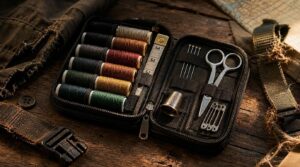
Sometimes the problem hits fast — a busted seam backstage, a broken strap mid-hike, no tailor in sight. These moments highlight the urgency of having a solution at hand.
That’s exactly when a well-stocked sewing kit stops being a nice-to-have and starts being the thing that saves the day. Here’s what to keep in it for those moments when you’re on your own.
Emergency Repairs When Help is Unavailable
When professional help isn’t an option, your kit becomes your lifeline. Field stitching techniques and improvised fasteners carry you through until you reach a proper fix. Emergency kit minimalism matters here — you don’t need everything, just the right things.
- Adhesive workarounds like fabric glue handles tears fast
- Resourceful patch sources include scraps from worn-out garments
- Pins and needles cover what hand stitching can’t
Strong Thread for Heavy Fabrics
Not every fabric plays nice with standard thread. Denim, canvas, and leather demand more—specifically, thread built for heavy use. Look for Core-Spun Construction (cotton wrap, polyester core) or a Bonded Finish that resists moisture and wear. Smart Denier Selection ensures clean seams without added bulk, while Tension Adjustment and Needle Compatibility are crucial—incorrect pairings can quickly lead to skipped stitches.
| Thread Type | Best Fabric | Key Strength |
|---|---|---|
| Bonded Polyester | Canvas, denim | Moisture resistance |
| Core-Spun | Upholstery, blends | Knot security |
| Nylon | Leather, straps | High elasticity |
| Corespun Polyester | Synthetics | Tensile strength |
| Waxed Thread | Thick weaves | Smooth glide |
Keep quality thread spools in your kit—fabric handling starts with the right foundation.
Upholstery and Curved Needles
Once you’ve matched your thread, the next step is picking the right needle. Curved upholstery needles — usually 2 to 4 inches long — handle blind stitching in tight corners where straight needles simply can’t reach. Your sewing supplies checklist should include sizes 6, 8, and 10 for needle size selection across different upholstery materials.
Thread compatibility matters too: pair them with waxed nylon or polyester for clean, strong results. Wipe needles dry after each use — needle maintenance keeps points sharp and fabric handling smooth.
Fabric Glue, Velcro, and Safety Supplies
Needles handle most repairs — but sometimes you need backup. Fabric glue and Velcro fill the gaps fast. Your sewing supplies checklist should cover both:
- Fabric glue alternatives for no-sew fixes on hems
- UV-resistant Velcro for outdoor or bag closures
- Glue curing tips: wait 24 hours before washing
- Adhesive safety gear — gloves and ventilation matter
Always test on a scrap first.
Organizing and Maintaining Your Complete Kit
Organizing a sewing kit well means it actually works when you need it. Use a compartment hierarchy — daily tools on top, specialty items deeper down. A labeling system prevents the frantic rummage.
Keep a digital inventory for quick reordering. Practice tool hygiene with a monthly wipe-down, and do a seasonal rotation to retire dried-out pens or dull needles.
Maintaining sewing supplies this way keeps your kit rescue-ready.
Frequently Asked Questions (FAQs)
Can sewing help with stress relief?
Yes, it genuinely can. Mindful stitching slows your breathing and keeps your focus close.
The repetitive rhythm of hand stitching and the fabric’s tactile feel calm the mind. A calm setup and tool confidence also ease a restless mind.
How to hand sew with arthritis?
Use ergonomic needles and a padded thimble to reduce finger strain. Grip aids can help too.
Take micro breaks every few minutes and maintain a comfortable workspace to minimize fatigue.
Let a needle threader handle the hard part, easing hand tension during threading.
How much does a complete sewing kit cost?
A complete sewing kit can cost as little as $15 or as much as $150 — it all depends on what you need. Most people find solid value somewhere between $20 and $60.
When should you replace your sewing machine needle?
Replace your needle every 6–8 hours of sewing. Skipped stitches, thread breaks, and fabric snags are classic wear indicators. When switching fabric types, a fresh needle protects stitch quality every time.
Which sewing machine is best for beginners?
The simpler the machine, the faster you’ll learn. Look for adjustable stitch length, ease of threading, a durable metal frame, and simple stitch selection.
Budget-friendly models like the Brother CS7000i work great.
What thread works best for stretchy fabrics?
Polyester stretch thread manages most stretchy fabrics well. Wooly nylon gives even more flex for activewear. Pair either with a ballpoint needle and reduced tension so seams move without snapping.
How often should you lubricate a sewing machine?
Aim for every 8–10 hours of heavy use. Light hobby sewing? Once a month is fine.
Always match your Oil Type Selection to the manufacturer’s guide — wrong oil ruins more than it helps.
Conclusion
A well-stocked kit isn’t about being overly cautious—it’s about being ready. Clothes don’t fail on convenient days.
Seams split before big meetings. Hems drop mid-trip. Buttons vanish without warning. Each situation described here is one most people will face.
These common scenarios highlight why preparation matters. A small investment in the right tools quietly protects everything hanging in your closet—and everything you’re wearing when it matters most.
- https://www.mhthread.com/blog/products/sew-kit
- https://mikescustomtoys.com/products/sewing-kit?srsltid=AfmBOopGzKpRbDPcIdxA7cAnlKFYKs_8h0b0MYzGBE5pRKxMOFj3-Wuc
- https://blog.wawak.com/post/essential-sewing-supplies-for-beginners
- https://blog.siysewityourself.com/2022/06/10/15-must-have-notionf-for-your-sewing-kit/
- https://www.brooklynhaberdashery.com/collections/mending-kits?srsltid=AfmBOoqewh7wOcjziEjTWqNleGOhq7eM0HyFyMX6Nj1GirF2BWpBvlm8