This site is supported by our readers. We may earn a commission, at no cost to you, if you purchase through links.
A bobbin might look like a tiny spool, but when you’re quilting, it holds the power to make or break your stitch quality. If you’ve ever stopped mid-project to untangle a thread nest or swap out a jammed bobbin, you know how much a smooth run matters. Different bobbins for quilting carry different thread loads, react to heat in unique ways, and even impact how your machine hums along at high speed.
Choosing the right bobbin isn’t guesswork—it’s a practical step that keeps your quilting sharp, steady, and stress-free. Here’s how to spot the best fit for your machine and your quilting style.
Table Of Contents
- Key Takeaways
- 8 Best Bobbins for Quilting
- 1. Handi Quilter M Class Aluminum Bobbins
- 2. Janome Genuine Plastic Bobbins 10 Pack
- 3. Silver M Class Aluminum Bobbins
- 4. Universal Class 15 Metal Bobbins
- 5. Polyester sewing thread kit with bobbins
- 6. Doublelin Size L Prewound Bobbins
- 7. Grace M Class Longarm Bobbins
- 8. Clear plastic sewing machine bobbins
- Bobbin Types for Quilting Machines
- Choosing The Right Bobbin Material
- Prewound Vs Self-Wound Bobbins
- Bobbin Tension and Troubleshooting
- Frequently Asked Questions (FAQs)
- Conclusion
Key Takeaways
- Bobbin type must match your machine’s exact class (Class 15, L-style, or M-style) since diameter, width, and flange shape aren’t interchangeable between systems.
- Material choice matters: metal and aluminum bobbins resist heat, warping, and corrosion for consistent tension, while plastic bobbins are lighter but prone to cracking and warping under stress.
- Prewound bobbins offer factory-controlled tension and higher thread capacity, making them ideal for large quilts, while self-wound bobbins give you more flexibility for frequent color changes.
- Regular maintenance—cleaning lint, checking for burrs or rust, and replacing worn bobbins every 8–10 hours—prevents thread nests and keeps stitch tension steady.
8 Best Bobbins for Quilting
Choosing the right bobbin can make a big difference in your quilting results. With so many options out there, it helps to know which ones work best for different needs. Here are eight bobbins that many quilters trust for reliable performance.
For tips on finding quality options without overspending, check out this guide to where to buy affordable sewing machine bobbins online.
1. Handi Quilter M Class Aluminum Bobbins
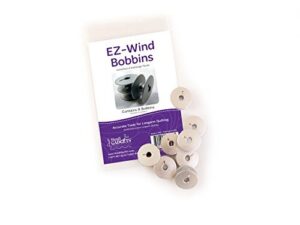
If you’re running a Handi Quilter longarm, M Class aluminum bobbins are your best bet. These bobbins hold more thread than standard types, so you won’t need to stop as often.
The slotted design makes loading simple and keeps your thread flowing smoothly. Aluminum resists heat and deformation, giving stable tension and reliable stitches.
Each pack includes eight bobbins, made specifically for HQ machines. Check for burrs before use, and wipe clean after quilting to keep your bobbins in top shape.
| Best For | Quilters who use Handi Quilter longarm machines and want reliable, high-capacity bobbins for extended quilting sessions. |
|---|---|
| Material | Aluminum |
| Machine Compatibility | Handi Quilter longarm |
| Quantity | 1 |
| Use Case | Longarm quilting |
| Construction Type | Slotted aluminum |
| Storage/Organization | No case included |
| Additional Features |
|
- Slotted design makes thread loading fast and easy
- Large M size holds more thread, reducing bobbin changes
- Durable, lightweight aluminum construction resists heat and deformation
- Only compatible with M-Class bobbin cases
- Designed exclusively for Handi Quilter longarm machines
- Requires occasional maintenance to check for burrs and keep clean
2. Janome Genuine Plastic Bobbins 10 Pack
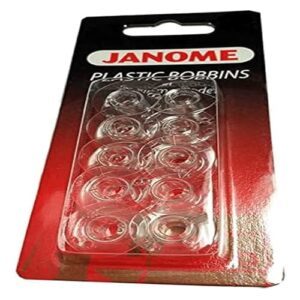
If you want reliable bobbins for your Janome machine, the Janome Genuine Plastic Bobbins 10 Pack stands out. Each bobbin is made from clear plastic, so you can check thread levels at a glance and spot tension issues early.
They’re sized for both top and front loading machines, and fit almost every Janome except models 1600P, HD9, MB4, and MB7. You get ten per pack, which means you’ll always have enough on hand for projects using multiple thread colors.
| Best For | Janome sewing machine owners (except models 1600P, HD9, MB4, and MB7) who want reliable, easy-to-use bobbins for precise stitching and thread organization. |
|---|---|
| Material | Plastic |
| Machine Compatibility | Top and front loading |
| Quantity | 10 |
| Use Case | Quilting and sewing |
| Construction Type | Clear plastic |
| Storage/Organization | No case included |
| Additional Features |
|
- Genuine Janome parts ensure compatibility and optimal performance.
- Clear plastic makes it easy to monitor thread levels and avoid running out mid-project.
- Ten-pack allows convenient organization of multiple thread colors.
- Not compatible with several popular Janome models (1600P, HD9, MB4, MB7).
- Requires careful selection of correct size to prevent machine damage.
- Plastic construction may be less durable than metal alternatives.
3. Silver M Class Aluminum Bobbins
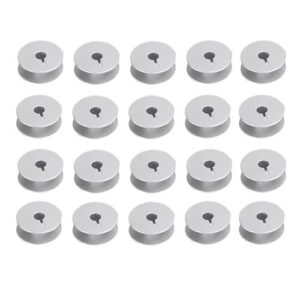
Switching from plastic to Silver M Class Aluminum Bobbins can make a noticeable difference in your quilting workflow. These bobbins are lightweight, which means your machine spins them faster and smoother at high speeds.
Each bobbin holds more thread—almost twice the amount of a typical L-style—so you’ll change them less often during big projects. Their aluminum construction resists warping under tension, giving you reliable tension and consistent stitches.
They fit most longarm brands, including Grace Q’nique and Handi Quilter.
| Best For | Quilters using M-class longarm machines who want reliable, high-capacity bobbins for efficient, large-scale projects. |
|---|---|
| Material | Aluminum |
| Machine Compatibility | Grace Q’nique and longarm brands |
| Quantity | 20 |
| Use Case | Longarm quilting |
| Construction Type | Slotted aluminum |
| Storage/Organization | No case included |
| Additional Features |
|
- Holds more thread, reducing the need to stop and change bobbins during big quilting jobs
- Lightweight aluminum design improves stitch consistency and tension control at higher speeds
- Compatible with popular longarm brands like Grace Q’nique and Handi Quilter
- Only works with M-class longarm machines, limiting compatibility
- Requires a compatible bobbin winder to take full advantage of slotted flange design
- Not suitable for domestic or L-style sewing machines
4. Universal Class 15 Metal Bobbins
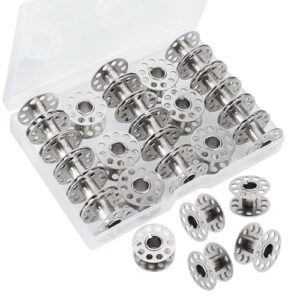
Universal Class 15 metal bobbins are a reliable choice for home quilting machines like Singer, Brother, Janome, and Bernina. Industrial-grade steel gives these bobbins strong resistance to warping, even during heavy use. You’ll notice smoother thread tension and fewer thread snags, especially with metallic or slippery threads.
If you often change thread colors, keeping these bobbins in a transparent storage case helps stay organized. For best results, check your machine’s manual to confirm Class 15 compatibility before mixing with plastic bobbins.
| Best For | Home sewists who frequently switch thread colors and need durable, organized bobbins for quilting, embroidery, and decorative stitching. |
|---|---|
| Material | Steel |
| Machine Compatibility | Singer, Brother, Janome, Bernina |
| Quantity | 28 |
| Use Case | Quilting and embroidery |
| Construction Type | Galvanized steel |
| Storage/Organization | Transparent storage case |
| Additional Features |
|
- Industrial-grade steel construction resists warping and ensures long-lasting performance
- Galvanized surface prevents rust and corrosion, maintaining smooth operation
- Transparent storage case keeps bobbins organized and easy to access
- Must verify Class 15 compatibility with your sewing machine before purchasing
- Not suitable for machines requiring specialty or non-standard bobbin sizes
- Mixing with plastic bobbins may affect thread tension consistency
5. Polyester sewing thread kit with bobbins
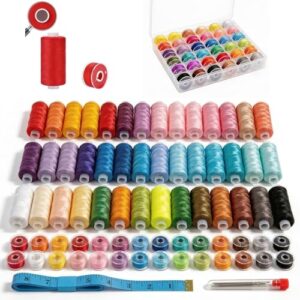
A polyester sewing thread kit with bobbins gives you efficiency and color range. You get 36 spools and 36 prewound bobbins, so matching colors for quilting or repairs is easy.
For tips on choosing the best bobbin style for your machine, check out this guide to different types of sewing machine bobbins and their advantages.
Each spool holds about 400 yards of durable polyester thread that resists fading and breaking. Prewound bobbins cut setup time, letting you swap colors quickly during quilting.
The organized storage case keeps everything tidy, making this kit a smart choice for both beginners and frequent hobbyists.
| Best For | Home sewers, beginners, and hobbyists who want a versatile thread kit for machine or hand sewing projects. |
|---|---|
| Material | Polyester |
| Machine Compatibility | Standard home machines |
| Quantity | 36 |
| Use Case | Sewing and quilting |
| Construction Type | Prewound polyester |
| Storage/Organization | Organized storage case |
| Additional Features |
|
- Wide variety of 36 colors with matching prewound bobbins for easy color changes
- Durable polyester thread suitable for quilting, repairs, and crafts
- Includes needles and measuring tape, all organized in a convenient storage case
- Bobbin size may not fit all sewing machines—check compatibility before buying
- Not designed for heavy-duty or industrial sewing tasks
- Limited to regular sewing needs; may not include specialty threads
6. Doublelin Size L Prewound Bobbins
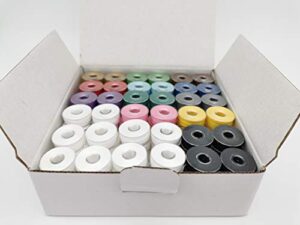
Doublelin Size L prewound bobbins come in packs of 144, offering a 13-color variety for quick color changes.
Their plastic-sided design fits most machines accepting Style L or SA155 bobbins, and reduces risk of deformation.
Each bobbin uses 60S/2 spun polyester thread—stable and colorfast for quilting or piecing. You won’t get contrast dots on the reverse of light fabrics.
Always check your machine’s manual and measure before buying, since Size L isn’t interchangeable with other bobbin types.
| Best For | Dressmakers, quilters, and alteration shops needing fast, reliable color changes for visible seams and piecing. |
|---|---|
| Material | Plastic |
| Machine Compatibility | Front-loading and top/drop-in |
| Quantity | 144 |
| Use Case | Sewing and quilting |
| Construction Type | Plastic-sided prewound |
| Storage/Organization | No case included |
| Additional Features |
|
- Wide 13-color selection for easy seam color matching and creative projects
- Plastic-sided bobbins resist deformation and fit most machines using Style L or SA155
- No rewinding needed, saving time and preventing contrast dots on light fabrics
- Not suitable for embroidery applications
- Only compatible with Size L machines, not interchangeable with Size A or Size M
- Less thread per bobbin compared to cardboard-sided, high-yardage options
7. Grace M Class Longarm Bobbins
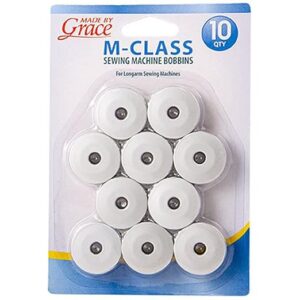
If you want maximum thread capacity for longarm quilting, Grace M Class Longarm Bobbins deliver.
Their aluminum construction means you can reuse each bobbin across multiple projects without worrying about warping or corrosion. Compatible with most longarm machines—especially Grace Qnique—they hold about 80 yards per bobbin, which reduces downtime and lets you quilt longer between changes.
Precision machining ensures smooth rotation and consistent tension at high speeds. Always check your machine’s specs for proper fit and performance.
| Best For | Quilters who use longarm machines and want maximum thread capacity with reusable, durable bobbins for extended quilting sessions. |
|---|---|
| Material | Aluminum |
| Machine Compatibility | Grace Q’nique and longarm brands |
| Quantity | 1 |
| Use Case | Longarm quilting |
| Construction Type | Reusable aluminum |
| Storage/Organization | No case included |
| Additional Features |
|
- Large M-class capacity means fewer bobbin changes and longer quilting runs.
- Durable aluminum construction allows for repeated use without warping.
- Compatible with Grace Q’nique and most other longarm quilting machines.
- Requires manual thread refilling for each use.
- Compatibility may vary depending on your specific longarm machine.
- Slightly heavier than plastic bobbins, which could affect balance in some machines.
8. Clear plastic sewing machine bobbins
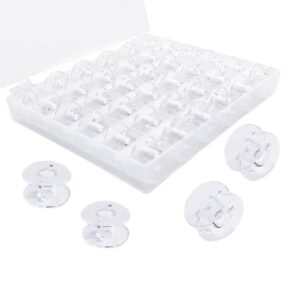
Clear plastic sewing machine bobbins let you see thread levels at a glance, so you don’t get caught mid-seam with an empty spool. Their injection-molded polycarbonate build resists shattering, and rounded rims help reduce thread friction.
These bobbins fit most drop-in and vertical cases for brands like Brother, Janome, and Pfaff. With a transparent storage case, you keep threads organized and ready.
Always check your machine’s manual—dimensions matter. Inspect for scratches and store away from oils to maintain smooth performance.
| Best For | Home sewers and quilters who need reliable, visible bobbins for high-volume or frequent sewing projects. |
|---|---|
| Material | Polycarbonate |
| Machine Compatibility | Front-loading home machines |
| Quantity | Bulk pack |
| Use Case | Quilting and embroidery |
| Construction Type | Injection-molded polycarbonate |
| Storage/Organization | Transparent storage case |
| Additional Features |
|
- Clear design makes it easy to monitor remaining thread at a glance.
- Durable polycarbonate construction resists breaking and reduces thread friction.
- Includes a sturdy storage case with individual slots for organized, easy transport.
- May not fit all machines; users must verify compatibility before purchase.
- Designed mainly for vertical and drop-in bobbin systems, limiting versatility.
- Plastic can scratch if not handled or stored carefully.
Bobbin Types for Quilting Machines
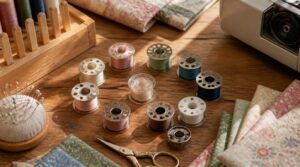
Choosing the right bobbin for your quilting machine starts with understanding the main types available. Each style fits specific machines and quilting needs. Here’s what you need to know before picking the best option for your setup.
Class 15 Bobbins
You’ll spot Class 15 bobbins in most home quilting machines. They measure about 13/16 inch in diameter and 7/16 inch wide. Choose metal for durability, or plastic for easier thread tracking. Always check your machine manual for compatibility. Load them with the thread winding counterclockwise.
Proper installation and tension help avoid stitch issues, making these a staple quilting accessory. These Class 15 metal bobbins are compatible with brands like Brother and Janome.
L-style Bobbins
L-style bobbins stand out for their slim profile—20.3 mm diameter and about 8.7 mm wide—which fits multi-needle and embroidery machines.
Aluminum versions last longer and handle heat, while plastic bobbins spin faster but may warp. Their flat sides prevent lateral movement, keeping tension steady.
Efficient winding means fewer thread breaks. Always align flat sides to your bobbin case.
M-style Bobbins
M-style bobbins bring industrial capacity to quilting machines, holding nearly twice the thread of L-style. Their metal or nylon construction offers durability and stability for high-speed embroidery. Precision rims reduce wobble, so stitches stay consistent. Balanced winding prevents snarls. You’ll find M bobbins ideal for:
- Long runs
- Commercial machines
- Consistent tension
Longarm Quilting Bobbins
Longarm quilting bobbins are engineered for high-speed rotation and minimal wobble.
Most feature M-style capacity, holding more thread for longer runs. Prewound plastic bobbins offer quick swaps and consistent tension, while custom winding lets you fine-tune for specific thread types.
Matching bobbin size to your machine ensures smooth stitches. Industrial bobbin use means durability and reliable performance on demanding quilt projects.
Brand-specific Bobbin Fit
Brand-specific bobbin fit means each machine model may require a unique cavity shape and flange design. For example, Class 15 and Style L bobbins look similar but differ in width and compatibility.
Using the wrong bobbin can cause tension instability or skipped stitches. Always check your machine’s manual or brand cross-reference chart for model range compatibility before choosing bobbins.
Choosing The Right Bobbin Material
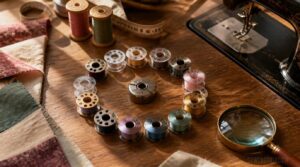
When you’re picking bobbins for quilting, the material matters more than you might think. Each type has its own strengths and challenges that can affect your stitches and your machine. Let’s look at the main options so you can choose what works best for your projects.
Metal Bobbin Durability
Metal bobbins are the backbone of consistent quilting. Their surface hardness resists deformation, keeping stitches even across long sessions. You’ll find corrosion resistance in treated steel and aluminum, perfect for humid environments. Precision machining ensures tight tolerances—no snags or misfeeds. Stable under heat, metal bobbins won’t warp from ironing. With proper care, they’ll outlast plastic every time.
Metal bobbins resist deformation, corrosion, and heat, delivering consistently even stitches and outlasting plastic in any quilting environment
- Surface hardness
- Corrosion resistance
- Machining precision
- Thermal stability
- Wear longevity
Aluminum Bobbin Advantages
Reach for aluminum bobbins when you want less backlashing and fewer “bird nests” on quilt backs. Their lightweight design helps your machine respond quickly to direction changes, especially in detailed quilting. Aluminum’s thermal conductivity keeps bobbin cases cooler, preserving stitch quality during long sessions. These bobbins also hold more thread and resist wear, so you spend less time changing bobbins.
| Advantage | Practical Impact |
|---|---|
| Lightweight construction | Reduces tension adjustments |
| Rapid heat dissipation | Prevents thread melting |
| Dimensional stability | Maintains consistent tension |
| High thread capacity | Fewer bobbin changes |
| Wear resistance | Extends bobbin lifespan |
Plastic Bobbin Limitations
Plastic bobbins can warp under high tension or soften from heat, causing inconsistent stitches. They’re prone to cracking if dropped and may not fit snugly in machines requiring precise bobbin sizes.
Overfilling increases edge burrs that snag thread, while lower rigidity raises the risk of deformation. You’ll need frequent visual checks for micro-cracks and burrs to maintain reliable performance.
Magnetic Core Bobbins
Rely on magnetic center bobbins like MagnaGlide for steady thread tension from start to finish. Their ferrite or nanocrystalline centers create a stable magnetic path that cuts down on flux leaks and keeps winding secure.
Geometry features such as slots and bores help guide thread, while flux capacity limits protect against overheating. These bobbins work well for consistent stitches in high-frequency quilting.
Bobbin Weight and Tension
Think of bobbin weight as your anchor for stitch balance. A heavier filled bobbin increases downward pull, often needing looser tension to avoid loops underneath. Lighter bobbins require tighter tension for crisp stitches.
Material matters—metal bobbins maintain steadier tension than plastic. Always adjust tension in small increments, test on scrap, and match thread weight for smooth results.
Prewound Vs Self-Wound Bobbins
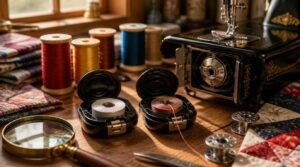
When you’re quilting, choosing between prewound and self-wound bobbins can affect both your workflow and stitch quality. Each option has unique features that suit different projects and machine setups. Here’s what you should know before making your selection.
Thread Capacity Differences
How much thread fits on a bobbin? It often comes down to center material and diameter size. Aluminum bobbins hold more than plastic, thanks to thinner walls. M style bobbins offer more capacity than Class 15, especially for longarm quilting. Winding tension and thread ply—single or multi—also shift the usable yardage. Here’s a quick comparison:
| Bobbin Type | Typical Thread Capacity |
|---|---|
| Class 15 Aluminum | 1200–1500 meters |
| M Style Aluminum | 1200–1800 meters |
| Prewound (Polyester) | 210 yards (Style M) |
Factory-wound Consistency
Ever wonder why prewound bobbins make such a difference in quilting? Their edge lies in servo winding precision and automated tension control. Every bobbin is checked for center alignment within 0.2 mm and winding density by sensors, so each batch meets the same standard. Here’s how factory-wound bobbins stack up:
| Feature | Factory-Wound | Self-Wound |
|---|---|---|
| Tension Uniformity | High | Variable |
| Center Alignment Tolerance | 0.2 mm | Often Inconsistent |
| Winding Density | Measured (g/m²) | Unmeasured |
| Batch Quality Testing | Every 5 Bobbins | Rarely Checked |
These controls mean fewer thread nests, smooth feeding, and predictable results—just what you want in your quilt bobbins and sewing machine accessories.
Reusable Bobbin Options
If you want consistent performance across many projects, reusable bobbin options give you control. Metal bobbins last for years with regular cleaning and deburring. Aluminum bobbins won’t rust—just store them dry. Ceramic bobbins handle heat, while magnetic center bobbins keep tension steady. Plastic bobbins are light but need gentle handling. Here’s a quick comparison:
| Material | Key Benefit | Care Tip |
|---|---|---|
| Metal | Durability | Deburr regularly |
| Aluminum | Rust resistance | Keep dry |
| Ceramic | Heat resistance | Clean gently |
Single-use Prewound Bobbins
Single-use prewound bobbins save you time by skipping winding. Factory winding packs thread tightly, so you get more yards per bobbin and fewer interruptions. You just drop them in and stitch—no setup needed. These bobbins also reduce thread contamination and keep tension consistent. Here’s a quick comparison:
| Type | Capacity | Tension Consistency |
|---|---|---|
| Prewound | High | Excellent |
| Self-wound | Lower | Variable |
| Reusable | Moderate | Good |
| Paper-sided | High | Excellent |
| Plastic-sided | High | Excellent |
Best Uses for Quilting
If you’re quilting a large throw or king-size bed quilt, prewound bobbins give you uninterrupted stitching and fewer stops. They pair well with fine 60 wt. thread for dense quilting or applique, keeping seams tidy. For projects needing frequent color changes or decorative stitching, self-wound bobbins let you match thread precisely. Choose based on quilt size and stitching style.
| Quilt Size | Bobbin Choice |
|---|---|
| Lap/Throw | Self-wound |
| Twin/Queen | Prewound |
| King | Prewound |
| Appliqué | Self-wound |
Bobbin Tension and Troubleshooting
Bobbin tension has a big impact on your stitch quality and quilting results. If you run into problems, a few simple checks can help you spot the issue. Here’s what to look for when troubleshooting your bobbin setup.
Checking Bobbin Tension
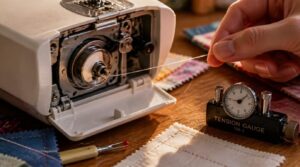
Balanced stitches start with bobbin tension. Inspect both sides of your fabric; straight lines mean good control. Try the manual pull test: the thread should resist gently, not snap or slip freely. Use a TOWA Bobbin Tension Gauge for precision, aiming for the correct range per your machine. Remove lint from the bobbin area, as buildup can disrupt tension stability.
Fixing Uneven Stitches
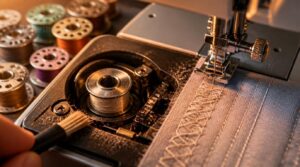
Why do stitches go wonky? Start with a sharp needle and match its size to the fabric. Check your thread pairing—using fine bobbin thread reduces bulk.
Clean feed dogs to avoid skipped stitches. Calibrate tension using your gauge. Remove lint from the bobbin area.
If stitches remain uneven, re-thread both top and bobbin, then test on scrap fabric for balance.
Preventing Thread Buildup
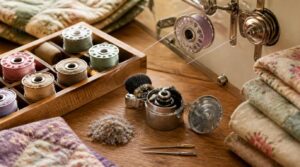
Sometimes, thread buildup sneaks up on you. Keep your bobbin case clean and clear out lint after every project. Use quality bobbins that fit your machine to prevent fiber nests. Guide thread smoothly through all tension discs and thread guides. Choose low-lint thread and stabilize fabric to avoid stray fibers. Replace dull needles—they shed fibers and cause hidden buildup.
- Clean bobbin housing regularly
- Use correct thread paths
- Choose smooth, low-lint thread
- Replace dull needles promptly
Correct Bobbin Installation
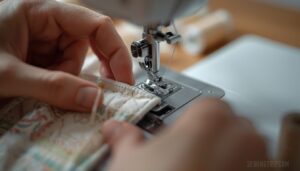
Start by aligning the bobbin case projection with the spring inside your shuttle area. Seat the case flush, allowing a slight play, then push until you feel a secure snap. Guide the thread through the tension spring and confirm the bobbin rotates as the machine indicates. Pull both threads under the presser foot and trim tails. Test stitch for proper thread path alignment.
| Step | Key Action | Result |
|---|---|---|
| Align case | Projection to spring | Flush seating |
| Snap in place | Push until click | Secure fit |
| Thread through spring | Follow guide | Correct tension |
| Pull threads | Use hand wheel | Ready to stitch |
| Test stitching | Scrap fabric | Even stitches |
When to Replace Bobbins
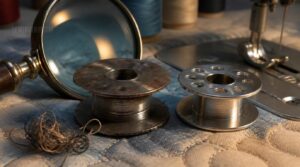
A bobbin’s lifespan isn’t endless. If you see dents or scratches, rust spots, or groove wear, swap it out. A wobbling bobbin means trouble. When thread capacity drops or stitches start skipping, replacement is key. Regular inspection every 8–10 hours helps you catch issues early.
- Dents or scratches
- Rust spots
- Groove wear
- Wobble
- Skipped stitches
Frequently Asked Questions (FAQs)
How do I know what bobbin I need?
Knowing what you need is a puzzle with only one right piece. Measure your bobbin’s diameter and height, check your machine manual for exact class and loading style, and always verify flange shape for perfect compatibility.
What is bobbin quilting?
Bobbin quilting lets you use decorative or thick threads in the bobbin, making the bottom thread visible on your quilt’s surface. Choose the right thread weight, adjust machine settings, and match bobbin types to your quilting style.
Is there an option for a large bobbin when quilting?
Picture filling a gas tank that lasts twice as long—large bobbin options like M-style give you about 210 yards for longarm quilting. You’ll trade some maneuverability for endurance, but many machines offer upgrade paths.
What can I use instead of a bobbin?
You can use nylon fishing line, dental floss, or a cardboard tube cut to size for quick fixes. Repurposed spool holders and serger loopers also work as alternatives when you’re out of regular bobbins.
How do bobbins affect quilting stitch quality?
A bobbin’s size and material influence stitch balance, thread density, and friction. Factory-wound bobbins offer more consistent tension, while improper fit or surface wear can cause tension fluctuations and skipped stitches, affecting overall stitch quality.
Can bobbins be cleaned or maintained for longevity?
Yes, with regular care. Lint removal, hook race lubrication per your manual, and inspecting the case for burrs keep tension steady. Clean tools and documented maintenance dates protect stitch quality and extend your bobbin’s working life a lot.
Are bobbins interchangeable between quilting machines?
Not always. Compatibility risks come from diameter, width, and flange differences between Class 15, L-style, and M-style bobbins. Brand standardization matters too—an incompatible bobbin can jam your bobbin case, throw off tension, or cause real machine damage.
What signs indicate a bobbin is damaged or faulty?
Picture a "bird nest" of tangled thread jamming your machine mid-seam. That’s often the first clue.
Watch for plastic bobbin cracks, metal surface scratches, uneven winding patterns, bobbin case misalignment, or thread looping underneath—each signals damage affecting tension and stitch quality.
How does bobbin size impact thread color selection?
Larger capacity means fewer color swaps, so pick top thread that suits long runs.
Smaller sizes show more underside color, making color contrast planning essential.
For reversible projects, match bobbin thread to your top color for smooth underside color matching.
Conclusion
Small as they’re, bobbins carry the weight of every stitch you sew. Once you match the right bobbins for quilting to your machine, tension troubles fade and thread nests turn rare.
Metal holds up under speed, plastic suits lighter work, and prewound options save time on big projects. Pick with purpose, test before you commit, and your machine will reward you with steady, even stitches every single time you sit down to quilt.
- https://blog.wawak.com/post/bobbin-size-chart
- https://www.sewingpartsonline.com/blogs/education/understanding-bobbins-every-sewist-know
- https://www.qualitysewing.com/blogs/news/all-about-bobbins
- https://www.maggieframes.com/blogs/embroidery-blogs/ultimate-guide-to-bobbin-sizes-choosing-the-perfect-fit-for-your-sewing-machine
- https://lindas.com/blogs/tips-and-tricks/how-to-adjust-bobbin-tension