This site is supported by our readers. We may earn a commission, at no cost to you, if you purchase through links.
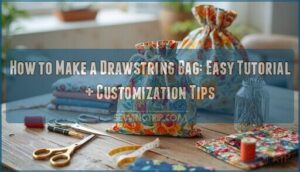
I used to think drawstring bags were too simple to bother making—until I needed 15 gift bags for a party and discovered that buying them would cost more than my entire fabric stash. One afternoon at my sewing machine changed everything.
These little pouches take about 20 minutes to sew, require zero specialized skills, and you can customize them for any purpose imaginable. Whether you’re organizing travel accessories, creating reusable gift wrap, or just tired of losing small items in larger bags, knowing how to make a drawstring bag puts you in control of both function and style.
The best part? You’ll master this technique once and use it forever.
Table Of Contents
- Key Takeaways
- Essential Materials for a Drawstring Bag
- Top 5 Tools for Sewing a Drawstring Bag
- Cutting and Preparing Your Fabric
- Sewing The Bag Body
- Making The Drawstring Casing
- Inserting and Securing The Drawstring
- Customizing and Finishing Touches
- Creative Ideas for Using Drawstring Bags
- Frequently Asked Questions (FAQs)
- Conclusion
Key Takeaways
- You can sew a complete drawstring bag in about 20 minutes using medium-weight cotton fabric, basic sewing supplies, and 44 inches of cord or ribbon cut at 22 inches per side.
- The key construction steps involve pinning fabric pieces right sides together with a 3/8-inch seam allowance, stitching the sides with backstitching at ends, creating a folded casing channel at the top, and threading your drawstring through with a loop turner or safety pin.
- Choosing the right materials makes or breaks your bag—medium-weight fabrics like cotton twill or canvas provide durability without stiffness, while double-faced satin or grosgrain ribbon ensures smooth operation and prevents slipping.
- Customization options like boxed corners for a flat bottom, exterior pockets, decorative appliques, or different sizing let you adapt this basic pattern for gift bags, travel organizers, toy storage, or makeup pouches.
Essential Materials for a Drawstring Bag
You don’t need much to create your own drawstring bag, and that’s what makes this project so satisfying.
A handful of beginner-friendly sewing patterns will help you build confidence before moving on to more complex designs.
The right fabric and a few basic supplies will set you up for success from the start.
Let’s break down exactly what you’ll need to gather before you begin.
Choosing The Right Fabric
Your fabric selection sets the foundation for everything that follows. Grab mediumweight cotton for the perfect balance of drape and durability—it sews cleanly and won’t fight you at the machine.
Weight considerations matter: too light and your bag goes limp; too heavy and it’s stiff as cardboard. Texture options like twill or canvas add visual punch, while fabric scraps and pattern mixing let you break the rules beautifully.
Fabric weight determines whether your bag stands firm or flops limp—twill and canvas add punch, while scraps invite creative rebellion
For more on the importance of fabric weight and garment type, check reliable resources before you choose.
Selecting Drawstrings or Ribbon
Once you’ve nailed your fabric, your drawstring or ribbon becomes the main focus. Cotton cord gives you a soft grip and washes clean every time, while satin ribbon glides smooth but can slip under pressure.
Pick your weapon:
- 4 to 6 millimeter cord for medium to large drawstring bags
- Grosgrain ribbon for texture and no-slip hold
- Contrasting color options to make your closure pop
Cut 44 inches total—22 per side. For more inspiration on different, check out this helpful guide.
Sewing Notions and Tools Needed
With ribbon ready, assemble your arsenal. A sewing machine manages straight stitching fast, while sharp fabric scissors slice clean edges without fraying. Grab a measuring tape (60 inches is typical), sewing needles sized 80/12 or 90/14, and all-purpose polyester thread for solid hold. Ball-head pins, a seam ripper, and tailor’s chalk round out your sewing notions—every tool sharpens your game.
| Tool | Purpose | Why You’ll Love It |
|---|---|---|
| Sewing Machine | Straight seams | Fast, consistent stitches |
| Fabric Scissors | Clean cuts | No fray, perfect edges |
| Measuring Tape | Accurate lengths | Flexible, essential precision |
| Thread (Polyester) | Strong seams | Washable, reliable hold |
| Sewing Needles | Fabric piercing | Right size = smooth sewing |
Top 5 Tools for Sewing a Drawstring Bag
You don’t need a ton of fancy equipment to make a drawstring bag, but having the right tools will make your project go smoothly.
The five essentials below will help you measure, cut, sew, and finish your bag with confidence. Let’s look at what you’ll want to have on hand before you start stitching.
1. Fiskars RazorEdge Fabric Shears
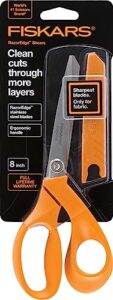
You’ll want scissors that cut through fabric like they mean it, and the Fiskars RazorEdge Fabric Shears deliver exactly that. These 9-inch shears feature premium-grade stainless steel blades that stay sharp through countless projects.
The sculpted finger and thumb loops fit your hand comfortably, so you won’t get tired while cutting multiple layers. They glide smoothly through cotton, felt, and even light leather without snagging. Plus, they come with a protective sheath and a lifetime warranty, making them a solid investment for your sewing arsenal.
| Best For | Sewers and quilters who need reliable, comfortable scissors that cut cleanly through multiple fabric layers without dulling quickly. |
|---|---|
| Material | Stainless steel |
| Primary Use | Fabric cutting |
| Weight | 4 ounces |
| Brand | Not specified |
| Color | Orange |
| Durability | Premium-grade |
| Additional Features |
|
- Ultra-sharp stainless steel blades slice through everything from silk to light leather with smooth, precise cuts
- Ergonomic loops and advanced pivot design reduce hand fatigue during long cutting sessions
- Lifetime warranty and included blade sheath make these a long-term investment
- Higher price compared to basic fabric scissors
- Blades can lose sharpness or get stuck if used on non-fabric materials
- Not designed for cutting thick or hard materials
2. Singer Ball Head Straight Pins
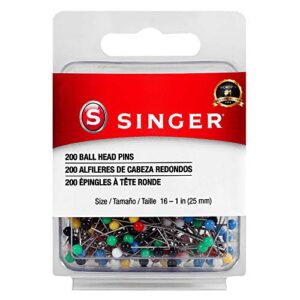
Sharp precision. That’s the advantage of Singer Ball Head Straight Pins when you’re lining up your bag’s edges or prepping seams for stitching. These pins cut the nonsense—nickel-plated for rust resistance, bright heads you can spot in busy fabrics, and a shaft smooth enough to slide through cotton without snagging.
Pair them with a solid backstitch on your sewing machine to lock those seams in place and keep your corners from unraveling.
You won’t waste time searching for lost pins, and their cheerful pinheads make the work feel lighter. Short but sturdy, they hold fabric in place so you can stitch with complete confidence.
| Best For | Sewers, quilters, and crafters who need colorful, rust-resistant pins that are easy to spot on patterned fabrics for basic projects. |
|---|---|
| Material | Nickel-plated steel |
| Primary Use | Fabric holding |
| Weight | 0.32 ounces |
| Brand | Not specified |
| Color | Assorted |
| Durability | Rust-resistant |
| Additional Features |
|
- Nickel-plated steel resists rust and holds up through multiple projects
- Bright, colorful ball heads make them easy to see and grab on busy fabrics
- Smooth shafts glide through cotton and other materials without snagging
- Shorter length can make them tricky to handle and less secure for thick fabrics
- Not as sharp as some users expect, which can cause catching in certain materials
- Quality concerns from some users about long-term durability
3. Omnigrid Quilting Sewing Ruler
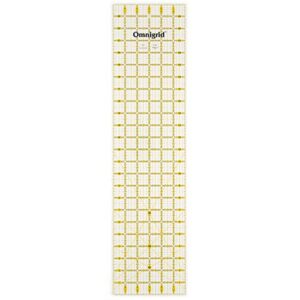
Accurate cuts start with a reliable ruler, and the Omnigrid 6″ x 24″ gives you laser-cut edges and a non-slip underside that grips your fabric. You’ll see clear angle markings—30°, 45°, and 60°—plus 1/8-inch grid lines that work on light or dark prints.
The double-line design is visible from both directions, perfect whether you’re left- or right-handed. Durable acrylic holds up to repeated rotary cuts, and the transparency lets you align fabric squares and strips without guesswork.
| Best For | Quilters and sewers who need precise cuts for strips, bias pieces, and angles but are willing to add their own non-slip grip solution. |
|---|---|
| Material | Acrylic plastic |
| Primary Use | Measuring and cutting |
| Weight | Not specified |
| Brand | Omnigrid |
| Color | Clear |
| Durability | Premium quality |
| Additional Features |
|
- Laser-cut edges and clear 1/8-inch markings deliver consistent, accurate measurements for quilting and sewing projects
- Double-line design shows up on both light and dark fabrics, making alignment easy no matter what you’re cutting
- Durable acrylic construction holds up to repeated rotary cutter use without warping or scratching
- Lacks built-in non-slip backing, so you’ll need to apply tape or grip pads to prevent sliding during cuts
- No included rubber feet means extra prep work before you can use it safely on slippery fabric
- May require one hand to hold it steady while cutting, which can slow down your workflow
4. Dritz Loop Turner Tool
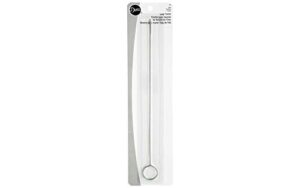
Threading drawstring cord through a narrow casing can test your patience, but the Dritz Loop Turner makes it simple. This slim metal rod—about 9 to 11 inches long—has a hooked latch on one end that grabs your fabric tube and pulls it through without bunching or twisting.
You’ll turn spaghetti straps, button loops, and drawstring channels in seconds. The stainless steel build grips lightweight to medium-weight fabrics securely, and the slender shaft slides through tight openings where your fingers won’t fit.
| Best For | Sewers and crafters who need to turn narrow fabric tubes like spaghetti straps, button loops, and drawstring casings quickly without frustration. |
|---|---|
| Material | Metal wire |
| Primary Use | Turning fabric tubes |
| Weight | 0.64 ounces |
| Brand | Dritz |
| Color | Not specified |
| Durability | Flimsy |
| Additional Features |
|
- Hooks onto fabric securely and pulls it through tight casings in seconds, saving tons of time on fiddly work
- Slim metal design fits through openings where your fingers can’t reach
- Works well on lightweight to medium-weight fabrics for straps, ties, and elastic threading
- Wire construction can feel flimsy and may break with rough handling
- Requires a gentle touch to avoid snagging delicate fabrics or popping the latch
- Some units arrive bent or damaged in shipping
5. Red Satin Ribbon
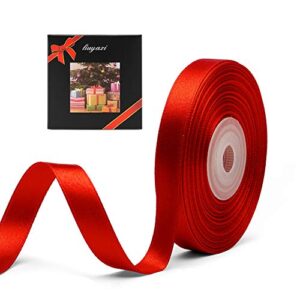
You can’t beat the polished look of satin ribbon gliding through your drawstring casing. Red satin ribbon—especially 3/8″ wide polyester double-faced styles—stays smooth, resists fraying at the edges, and holds its vibrant color through repeated use.
Most rolls come in 25-yard spools, giving you enough length for a dozen bags or more. The glossy finish on both sides means no wrong side to worry about, and it ties into crisp, elegant bows that won’t slip loose when you cinch your bag closed.
| Best For | Crafters and gift-wrappers who want a polished, vibrant red ribbon that works for everything from drawstring bags to holiday decorations. |
|---|---|
| Material | 100% polyester |
| Primary Use | Decorative trim |
| Weight | 0.04 kilograms |
| Brand | LIUYAXI |
| Color | Red |
| Durability | Standard |
| Additional Features |
|
- Double-faced satin means both sides shine equally, so you never have to worry about which side shows
- 25-yard spool gives you plenty of length for multiple projects without running out
- Stitched edges resist fraying, keeping the ribbon looking clean through repeated use
- Some users found the red wasn’t as vibrant as they expected from the photos
- A few reports mention the ribbon may not actually be double-faced despite the description
- Quality can be hit-or-miss depending on what you’re comparing it to
Cutting and Preparing Your Fabric
Before you start stitching, you need to cut your fabric pieces to the right size. This step sets you up for a smooth sewing process and helps you avoid any frustrating mistakes later.
Let’s break down exactly what measurements you need and how to prep everything.
Measuring and Marking Fabric Pieces
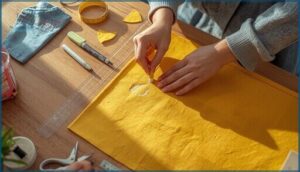
Before you even think about picking up your fabric scissors, you need precise measurements to keep your sewing project on track. Use tailor chalk or erasable fabric markers to draw clear lines directly on your fabric—this is where cutting accuracy begins.
Mark your seam allowance (usually 3/8 inch) along each edge, and double-check those dimensions before moving forward with your drawstring bag pattern.
Cutting Fabric to Size
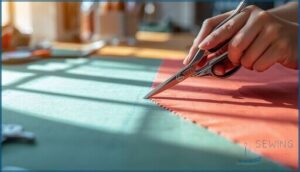
Once your marks are down, grab your sharp fabric scissors or rotary cutter and commit to clean, decisive cuts. Keep your blade parallel to the selvage for grain alignment and steady precision cutting—jagged edges lead to wonky seams later.
Cut confidently through your fabric, respecting that seam allowance you marked. Smooth, controlled motions give you professional results every time.
Cutting Drawstring or Ribbon to Length
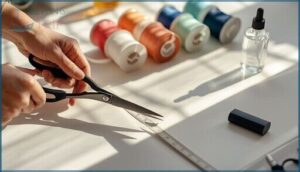
Now you’ll tackle the ribbon or cord that makes your drawstring bag functional. Measure the bag’s opening and tack on 6 to 8 inches for knots and wiggle room—round it to the nearest quarter inch for a polished look. Sharp cutting tools matter here: fabric scissors for flat grosgrain ribbon, a hot knife for synthetic satin ribbon to seal edges instantly.
Fray prevention is your best friend:
- Apply clear fabric glue or fray check at cut ends
- Heat seal synthetic cord tips with a lighter (carefully!)
- Wrap thin tape around fraying edges as backup
Keep those drawstring tips clean and your bag will close smoothly every single time.
Sewing The Bag Body
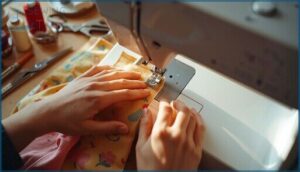
Now you’re ready to bring your fabric pieces together and start building the actual bag. This is where your project really takes shape, and you’ll see all that cutting and prep work pay off.
We’ll walk through pinning, stitching strong seams, and getting your bag flipped right side out so it looks polished and professional.
Pinning and Stitching The Sides
Alignment is everything when you’re ready to conquer your first major sewing project step. Place your fabric pieces right sides together, smoothing any wrinkles flat. Pin perpendicular to the seam line every 2 to 3 inches—this keeps layers from shifting during stitching. Set your sewing machine to a 2.5 millimeter stitch length, then sew along the edges with confidence and precision.
| Pinning Strategy | Result |
|---|---|
| Space pins 2-3 inches apart | Prevents fabric slipping |
| Pin perpendicular to seam | Easy removal while sewing |
| Align edges precisely | Clean, professional finish |
| Smooth before pinning | Eliminates puckers |
Creating Sturdy Seams
Once your sides are stitched, lock in that strength with a backstitch at both ends—this prevents unraveling under stress.
For fabrics prone to fraying, run a zigzag stitch or serging along raw edges. You can also try a French seam for maximum durability. Match your thread tension to fabric weight, and keep stitch length around 2.5 millimeters for balanced seam reinforcement that won’t fail you.
Turning The Bag Right Side Out
After sewing sturdy seams, grab your bag’s opening and gently pull the fabric through—this brings the exterior out and hides the lining inside. Use a loop turner or chopstick for corner pushing to get sharp edges without tearing.
Keep seam alignment tight as you work, smoothing fabric to avoid twists. Press flat once turned for crisp edge finishing and proper bag shaping.
Making The Drawstring Casing
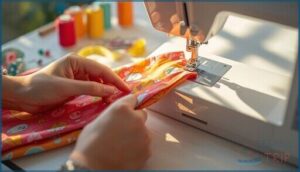
Now you’re ready to create the channel that holds your drawstring in place. This step determines how smoothly your bag opens and closes, so getting the measurements right matters.
Let’s walk through folding, stitching, and reinforcing the casing so it can handle everyday use.
Folding and Pressing The Top Edge
Think of this step as setting the foundation for your drawstring channel—you can’t rush it. Press the top edge toward the wrong side, creating a clean fold about one to two centimeters wide.
Use your hot iron to set that crease firmly, pinning every couple of inches to keep everything perfectly aligned. This edge alignment makes threading your ribbon later feel like pure magic.
Sewing The Casing Channel
Now comes the moment where precision meets rebellion—your casing channel turns fabric into function. Stitch close to the folded edge, backstitching at both ends to lock everything down.
Use a longer stitch length inside the channel to prevent puckering, and keep your needle just outside the fold for a crisp finish. This simple casing technique transforms ordinary fabric into a DIY drawstring bag that actually works.
Reinforcing for Durability
Your drawstring bag deserves serious durability measures—this is where seam reinforcement separates weekend crafts from bags that take a beating.
Add a second stitch line 1/8 inch from your casing seam, bartack every corner where material strength matters most, and finish raw edges with a tight zigzag. These bag making techniques transform any fabric selection into something built to last.
Inserting and Securing The Drawstring

Now you’re ready to bring your drawstring bag to life. This part’s easier than you think—you’ll thread the ribbon or cord through your casing and lock it in place so it works smoothly every time.
Let’s walk through the simple steps to get your drawstring moving and secured.
Using a Loop Turner or Safety Pin
You’ve got two power moves here for pulling that drawstring through. A loop turner tool makes the job almost too easy—slide the hook end through your casing, clamp the ribbon, and pull it back in one smooth motion.
No loop turner? No problem. Thread a safety pin through the cord, then feed it through the channel. Both sewing techniques work like a charm.
Threading Ribbon or Cord
Your DIY drawstring bag deserves smooth closure. Satin or grosgrain ribbon glides through casings effortlessly, while nylon cord materials resist fraying better than cotton.
Keep steady tension as you feed it through—no tugging or bunching. Heat-seal synthetic ribbon types with a lighter for instant fray protection. These threading tools and cord finishing tricks turn amateur work into professional-grade results every single time.
Tying Secure Knots at The Ends
Loose knots unravel under stress resistance—skip that frustration entirely. Double-knot each cord end using two square knots stacked back-to-back for slip resistance that lasts.
Tuck the tails back through for clean end finishing and fray prevention on your DIY drawstring bag. Waxed or braided cord holds knots better than flat ribbon. This simple cord security step separates sloppy work from pro-level sewing tutorials.
Customizing and Finishing Touches
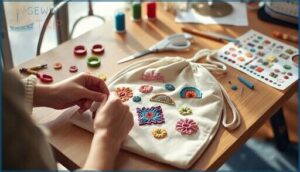
You’ve got the basics down, now it’s time to make this bag truly yours. A few simple tweaks can transform your drawstring bag from functional to fabulous.
Whether you’re adding a pop of personality or solving a specific storage need, let’s look at three ways to customize your finished bag and give it that professional, polished touch.
Adding Decorative Details or Appliques
Transform your plain bag into a showstopper with fabric embellishments and decorative patches. Applique techniques let you break free from basic and make something truly yours.
These fabric crafting moves add personality while you master new sewing tutorials:
- Iron on embroidery designs with fusible web for quick textile accents
- Hand stitch vintage lace or contrasting fabric pieces using blanket stitches
- Glue metallic appliques or beaded trim along the casing for instant flair
This DIY tutorial step elevates your drawstring bag from simple to stunning.
Creating Boxed Corners or Flat Bottoms
A flat bottom gives your drawstring bag real structure. Here’s how to nail corner stitching: pinch each bottom corner so the side seam aligns with the bottom fold, then measure your desired depth from the point. Mark a straight line perpendicular to the seam, stitch across, and trim the excess.
This boxed edge trick creates a sturdy base with sharp corner shaping and seam reinforcement—perfect for heavier items.
Personalizing With Labels or Pockets
Your drawstring bag becomes uniquely yours with custom embroidery or fabric choices that showcase your style. Heat-transfer labels adhere in 15 seconds with a household iron, while sewn fabric labels need careful placement away from the drawstring channel.
Add exterior pockets 3 inches wide for quick access—perfect for sewing projects and bag monogramming. Try contrast topstitching around pocket edges for visual pop that elevates beginner-friendly sewing tutorials and patterns.
Creative Ideas for Using Drawstring Bags

Now that you’ve mastered making your own drawstring bags, it’s time to put them to work. These adaptable little pouches can tackle everything from gift-giving to daily organization around your home.
Let’s look at some practical ways to use the bags you’ve created.
Gift and Jewelry Bags
You’re about to master an elegant twist on drawstring bag design. Gift wrapping and jewelry storage demand a more refined approach than everyday projects, so reach for silky fabrics and grosgrain ribbon to match the sophistication.
Here’s your blueprint for luxury packaging:
- Opt for satin or velvet fabric selection to cushion delicate pieces and prevent scratches
- Cut bags between 4–8 inches wide for rings, bracelets, and small necklaces
- Add a coordinating ribbon drawstring in matching or contrasting tones
- Reinforce corners to protect contents during gifting
Organizing Travel Accessories
Your sewing projects can transform travel storage and luggage organization. Use drawstring bags to create accessory kits for toiletries, cables, and chargers—color-code them for instant recognition.
These reusable bags keep your essentials separated in carry-ons, and TSA-compliant sizes work perfectly for liquids. Transform fabric scraps into custom packing hacks that outlast flimsy plastic organizers every single trip.
Toy Storage and Home Organization
Conquer playroom chaos by making kid-friendly drawstring bags in labeled sets for toy rotation. Stitch them in bright colors so kids can sort blocks, figurines, and art supplies independently.
Wall-mounted bags free up floor space while reinforcing organization tips your family will actually use. These reusable bags transform storage solutions into DIY home decor that keeps clutter under control while teaching lifelong cleanup habits.
Frequently Asked Questions (FAQs)
How to make a bag step by step for beginners?
Start with simple bag patterns like totes or drawstring designs. Gather fabric choices suited for beginner projects, learn basic sewing tips, and follow clear sewing tutorials.
These DIY projects build your crafting basics and confidence fast.
How to make a drawstring make up bag?
Pick cotton twill or canvas for your outer layer and lightweight satin lining.
Cut fabric 8×10 inches, add interfacing for structure, then stitch sides and create a drawstring channel at the top.
How do you make a drawstring bag?
Picture two rectangles of sturdy fabric, right sides kissing.
Stitch the sides and bottom, fold the top edge twice for your drawstring casing, then thread ribbon through—cinch, and you’re done.
How to sew the bag for a drawstring bag?
You’ll sew the side seams of your drawstring bag with a 1/2 inch seam allowance, right sides together. Reinforce corners with backstitching, then turn right side out for a clean finish.
Are drawstring bags a good sewing project?
Absolutely. Drawstring bags make perfect beginner projects because they build essential sewing skills through simple straight stitches.
You’ll master seam finishing and casing creation in under two hours while enjoying endless fabric selection and bag customization options.
How do you sew a drawstring pouch?
Cut two fabric rectangles, sew three sides with right sides together, turn right side out, fold the top edge to create a casing channel, and stitch—leaving openings for threading your drawstring through.
How do I adjust the bag size proportionally?
Mastering measurement techniques means multiplying each dimension—width, height, depth—by the same scaling factor.
This proportional scaling preserves your drawstring bag’s shape while adjusting size, ensuring balanced results every time.
Can I use interfacing for a sturdier bag?
Interfacing types like fusible fleece or woven stabilizers add fabric stability and bag reinforcement.
Choose interfacing weights based on your drawstring bag style—heavier options create extra sturdy bag making results.
Whats the best way to waterproof my drawstring bag?
Apply a DWR treatment or choose PU-coated fabric for solid moisture resistance.
For heavy-duty waterproofing, opt for silicone-coated or laminated materials that create a barrier while maintaining your bag’s flexibility and function.
How do I add interior pockets to the bag?
Sew interior dividers and hidden compartments before assembling your bag for secure storage.
Try elastic pockets or slip pockets in the lining—perfect for phones and keys.
Follow detailed sewing tutorials to master pocket placement and transform basic bag making into professional designs.
Conclusion
Give a person a drawstring bag and they’ll organize for a day; teach them how to make a drawstring bag and they’ll solve storage problems for life.
You’ve just unlocked a skill that costs pennies, takes minutes, and suits whatever you need. No more settling for overpriced, wrong-sized pouches. Your sewing machine is now your shortcut to custom organization.
Twenty minutes from now, you could be holding your first finished bag.
- https://www.wawak.com/garment-construction/bridal/100-polyester-grosgrain-ribbon/
- https://www.allfreesewing.com/
- https://www.reddit.com/r/IWantToLearn/comments/c2176e/how_do_you_even_out_strings_on_drawstring_bags/
- https://www.scribd.com/document/338702548/Introduction-to-Sewing
- https://siemachtsewingblog.com/favorite-sewing-supplies/