This site is supported by our readers. We may earn a commission, at no cost to you, if you purchase through links.

Most sewers abandon buttonholes altogether after a few disastrous attempts—crooked stitches, fabric bunching, or worse, buttonholes that refuse to open cleanly. The frustration stems from a mismatch between machine capabilities and user expectations, not lack of skill.
Modern sewing machines have transformed this once-dreaded task into an eight-second automated sequence, but only if you choose the right features. Automatic buttonhole programs with sensor-controlled sizing eliminate the repositioning dance that plagued earlier generations of machines.
Whether you’re stitching dress shirts weekly or tackling an occasional upholstery project, understanding which buttonhole technology fits your workflow determines whether you’ll master this technique in under an hour or struggle for months with manual methods.
Table Of Contents
- Key Takeaways
- Best Sewing Machines for Easy Buttonholes
- Key Features for Effortless Buttonholes
- How to Choose The Right Machine
- Setting Up Your Machine for Buttonholes
- Tips for Perfect Buttonholes Every Time
- Troubleshooting Common Buttonhole Issues
- Advanced Buttonhole Techniques and Technology
- Frequently Asked Questions (FAQs)
- Conclusion
Key Takeaways
- Modern sewing machines with automatic one-step buttonhole programs complete professional buttonholes in 8-15 seconds through sensor-controlled sizing that eliminates manual repositioning and ensures consistent results across multiple fabric types.
- The divide between successful and frustrated buttonhole sewers comes down to choosing machines with specific features—automatic sensors, adjustable sizing, and variety in buttonhole styles—rather than relying on outdated four-step manual methods that demand weeks of practice to master.
- Proper preparation matters more than machine capabilities alone: stabilizing fabric with interfacing, marking placement accurately, and matching buttonhole size to button diameter plus 3-4mm prevents the puckering, stretching, and uneven stitching that derails amateur attempts.
- Budget-friendly computerized machines ($250-$300) now outperform mechanical models in both speed and precision, with options like the Brother HC1850 and Singer Quantum Stylist 9960 delivering 7-13 automatic buttonhole styles backed by long-term warranties that justify the investment.
Best Sewing Machines for Easy Buttonholes
Finding a sewing machine that makes buttonholes easy isn’t about luck—it’s about choosing the right features and proven performance.
The machines below have earned their place through consistent results, whether you’re working on garments, quilts, or home décor projects.
Each brings something different to the table, so you can match the tool to your specific needs and sewing style.
1. Singer Quantum Stylist Sewing Machine
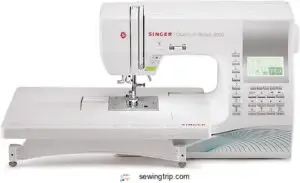
The Singer Quantum Stylist 9960 delivers outstanding control over buttonhole creation with 13 fully automatic one-step programs built into its 600-stitch library. You’ll appreciate the exclusive buttonhole underplate system that stabilizes fabric like a mini hoop, preventing slippage on challenging materials from thick denim to lofty knits.
The automatic needle threader and bright work lighting simplify your setup, while the metal frame ensures rock-solid precision during high-density satin stitching.
This sewing machine transforms buttonhole anxiety into creative confidence across quilting, fashion sewing, and home décor projects.
Best For: Sewers of all skill levels who need reliable, consistent buttonholes across multiple fabric types—from delicate fashion pieces to thick home décor projects—without the timing errors of manual four-step systems.
- 13 fully automatic one-step buttonhole styles with auto-sizing feature that measures your actual button and repeats identical buttonholes across garments
- Exclusive underplate system stabilizes fabric like an embroidery hoop, preventing slippage on challenging materials like thick denim or lofty knits
- Metal frame construction delivers vibration-free precision during high-density satin stitching, while automatic needle threader and bright lighting speed up your workflow
- Automatic needle threader can feel tricky during initial uses until you get the hang of it
- No physical manual included—you’ll need to download and print instructions to reference all 600 stitches and features
- Not designed for heavy-duty industrial work, so commercial sewers tackling canvas or leather may need a more robust machine
2. Brother Sewing And Quilting Machine
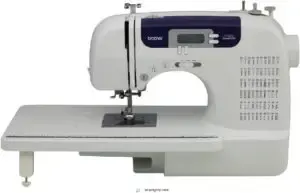
The Brother CS6000i stands out in any machine comparison with 7 automatic one-step buttonhole styles that eliminate guesswork on garment finishing. Buttonhole accuracy stays consistent thanks to the 6-point feed system and automatic needle threader that cuts setup time.
You’ll leverage quilting features like the wide extension table and 850-stitch-per-minute sewing speed to complete multiple buttonholes quickly across large projects.
This sewing machine manages fabric compatibility from silk to denim, making buttonhole sewing easy whether you’re crafting blouses or quilt labels—all backed by thorough sewing machine reviews praising its reliable automation.
Best For: Beginners and intermediate sewers who need reliable one-step buttonhole automation across different fabric types, from lightweight garments to heavier quilting projects.
- Seven automatic buttonhole styles with computerized 1-step programming eliminate the hassle of manual four-step sequencing, letting you finish garments faster with consistent results every time.
- The 850-stitch-per-minute speed combined with adjustable speed control means you can power through multiple buttonholes quickly or slow down for precision work on delicate fabrics.
- Wide extension table and free arm design give you flexibility to handle large quilts and tight spaces like cuffs or sleeves, all while the LED lighting keeps your buttonhole markings visible on darker materials.
- The included case feels cheap and doesn’t protect the machine well during transport to classes or workshops, so you might need to buy a sturdier carrying solution.
- Heavy use of plastic components throughout the construction raises durability concerns compared to metal-bodied machines, especially if you’re planning commercial or high-volume sewing.
- The instruction manual lacks model-specific details for the CS6000i’s buttonhole features, which can leave beginners confused when troubleshooting stitch selection or tension issues.
3. Singer Heavy Duty Sewing Machine Kit
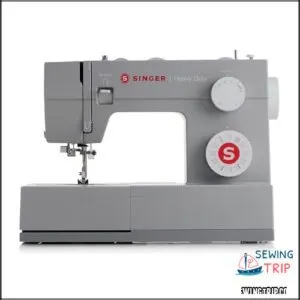
When power meets precision, you get a machine that handles thick denim and delicate buttonholes with equal confidence. The SINGER Heavy Duty 4423 delivers a fully automatic one-step buttonhole system backed by a sturdy metal frame and 1,100-stitches-per-minute speed—completing professional buttonholes in seconds.
The included buttonhole foot and button sewing foot give you immediate control over garment finishing, while the $229.99 kit bundles six presser feet and essential accessories.
This combination of machine durability and extensive sewing kit contents transforms challenging projects into conquerable tasks.
Best For: Sewers who regularly work with heavy fabrics like denim and canvas and need a reliable machine that can create professional buttonholes quickly without breaking the bank.
- One-step automatic buttonhole system creates consistent, professional results in seconds—perfect for garment makers who need multiple identical buttonholes
- Heavy-duty metal frame and 1,100 stitches-per-minute speed handle thick layers and tough materials without bogging down
- Complete accessory kit with buttonhole foot, button sewing foot, and six total presser feet means you can start projects right out of the box
- The metal frame construction makes it noticeably heavier than plastic machines, which can be a hassle if you move it around frequently
- Upright spool pin can cause thread to jump and wrap around itself, leading to frustrating jams mid-project
- Lacks digital features and advanced stitch options that experienced sewers might want for more complex pattern work
4. Brother HC1850 Sewing and Quilting Machine
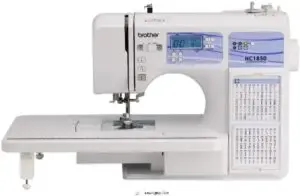
For sewers who prize buttonhole precision paired with creative versatility, the Brother HC1850 opens new territory. Eight one-step auto-size buttonhole styles integrate into a 185-stitch library, giving you control over keyhole, rounded-end, and specialty variants through a backlit LCD interface.
The machine’s 850-stitches-per-minute sewing speed and adjustable width up to 7 mm handle fabrics from silk to denim with confidence. Though some units experience needle jumps at sequence starts, the HC1850’s computerized control and 25-year warranty deliver dependable fabric compatibility for ambitious garment construction.
Best For: Sewers who need reliable one-step buttonholes across multiple garment types and want creative flexibility with 185 built-in stitches for quilting and decorative projects.
- Eight automatic buttonhole styles with auto-sizing eliminate manual measuring and save time on repetitive garment work
- Wide 7mm stitch width and computerized controls handle everything from lightweight silk to heavy denim with consistent results
- 185 total stitches including monogramming fonts give you room to grow beyond basic sewing into quilting and decorative projects
- Some units show needle jumping at the start of buttonhole sequences, which can affect finish quality on certain fabrics
- 10.1-pound weight and 19-inch width make it less portable than compact models if you need to move it frequently
- Limited to 120V AC power, so it won’t work in countries with different electrical standards without a converter
5. Brother Full Size Sewing Machine
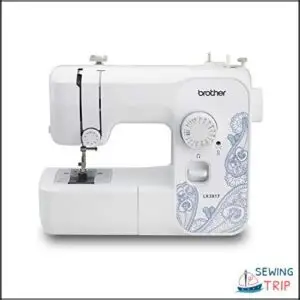
Compact design meets buttonhole precision in the XM2701, a lightweight full-size machine that slots neatly into tight workspaces without sacrificing capability. Its one-step automatic buttonhole program measures your button and stitches all four sides in continuous operation, eliminating the manual dial-turning of four-step systems.
Twenty-seven built-in stitches support stitch customization across projects, while adjustable thread tension and the included buttonhole foot deliver fabric compatibility from cotton to light wool.
The 25-year warranty signals confidence in durability, though sewing machine maintenance remains essential for consistent buttonhole sewing techniques.
Best For: Home sewers who need reliable buttonhole capability for garment projects but want to avoid the complexity of four-step manual systems.
- One-step automatic buttonhole sizing eliminates measurement guesswork and speeds up garment construction
- 27 built-in stitches and adjustable tension handle everything from lightweight cotton to heavier woven fabrics
- 25-year warranty backs long-term home use, giving you confidence in repeated buttonhole sewing
- Plastic components may not hold up under heavy daily use or thick fabric runs
- Some users report tension inconsistencies that require frequent dial adjustments mid-project
- Instructions for initial threading can be confusing for first-time mechanical machine owners
Key Features for Effortless Buttonholes
You don’t need to wrestle with buttonholes anymore—the right machine features turn this once-tedious task into something you can knock out in seconds.
The right sewing machine transforms buttonholes from a tedious struggle into a task you’ll finish in seconds
Modern sewing machines offer a surprising range of buttonhole capabilities, from fully automated systems that do all the thinking for you to customizable options that let you fine-tune every detail.
Let’s break down the features that separate machines that struggle with buttonholes from those that make them effortlessly.
Automatic Vs. Manual Buttonhole Programs
Automatic programs put buttonhole precision on autopilot, measuring your button through the buttonhole foot and reproducing identical openings each time—no manual adjustments needed. Manual routines give you hands-on control but demand more skill and patience to match quality across multiple buttonholes.
- Automatic systems boost sewing efficiency by completing the sequence in 8 to 15 seconds without repositioning
- Sensor-controlled sizing ensures stitch quality and consistent dimensions across every buttonhole
- Manual methods offer fabric compatibility advantages on textured or uneven materials where mid-sequence adjustments help
- OneStep buttonhole features are now standard on most computerized sewing machines by late 2025
- Machine learning curve for automatic buttonhole routine is under an hour versus weeks mastering manual techniques.
Understanding the buttonhole process is essential for achieving professional-looking results.
One-step Vs. Four-step Buttonholes
Speed isn’t the only divide between one-step and four-step buttonholes—control matters just as much. One-step automation finishes in 15 seconds with consistent stitch accuracy, perfect when sewing efficiency drives your project timeline.
Four-step methods demand manual dial changes through stages A to D but reward you with fabric compatibility advantages and density adjustments that automated modes can’t match on challenging materials. The four-step buttonhole process involves understanding the buttonhole sewing technique to achieve professional results.
Adjustable Buttonhole Sizing
Precision buttonhole sizing separates professional garments from homemade approximations. Adjustable buttonhole foot mechanisms let you lock in consistent measurements across multiple closures, while stitch density and fabric thickness adjustments through length controls (around 0.3 to 0.5 mm) deliver secure satin stitches customized to your material weight.
Your sewing machine settings should accommodate the formula of button diameter plus thickness—usually 3 to 4 mm longer than width—ensuring smooth passage without fabric strain.
Variety of Buttonhole Styles
Modern machines transform buttonhole making into an art by offering diverse stitch options customized to different fabric choices and design goals. Instead of settling for one-size-fits-all closures, you’ll command buttonhole variations that match your project’s demands:
- Straight bartack styles for medium-weight cottons and linens
- Keyhole styles designed for thick shank buttons on jackets
- Rounded or no-bartack options protecting delicate silks from fiber damage
- Corded buttonholes reinforcing stretchy knits with embedded thread
- Decorative edges like scalloped or crossed patterns for visible design elements
Buttonhole technique advances when your machine-sewn buttonholes adapt to fabric weight, button thickness, and garment function rather than forcing every closure into identical stitching.
How to Choose The Right Machine

Choosing the right sewing machine for buttonholes isn’t about finding the fanciest model—it’s about matching features to your actual needs. The machine that works perfectly for someone stitching buttonholes on fitted blazers every week won’t be the same one you’d want for occasional craft projects.
Let’s break down the key factors that’ll help you find your ideal match.
Mechanical Vs. Computerized Options
When you’re weighing a machine comparison, the split between mechanical and computerized boils down to control versus convenience. Computerized models deliver enhanced buttonhole accuracy through automated one-step programs—completing machine-sewn buttonholes in seconds with consistent sizing across varied fabric compatibility.
Mechanical options cost less upfront and offer hands-on sewing speed adjustments, but you’ll sacrifice programmable sewing machine features and spend more time mastering sewing machine settings and troubleshooting for reliable results.
Frequency and Type of Sewing Projects
Your sewing frequency and the scope of your sewing projects matter more than spec sheets. Match the machine’s capabilities to your actual sewing habits, not aspirational project variety you might never attempt.
If you tackle garment construction monthly—mending, upcycling, or full garment creation—an automatic buttonhole function saves real time. Occasional fabric selection for simple home décor? A four-step process works fine.
Budget and Value Considerations
Cost Analysis reveals an unexpected sweet spot: budget computerized machines with one-step buttonholes sit between $250 and $300, often outperforming mechanical models in the $180 to $220 range.
The Brother HC1850, for instance, delivers eight buttonhole styles around $270—outstanding value when you factor in the 25-year warranty and included presser feet.
Price Comparison shows you’re not sacrificing capability for Savings Strategies at the entry level.
Machine Durability and Maintenance
Beyond price, Machine Longevity separates smart investments from regrettable purchases. Domestic machines usually last 5 to 25 years—Durability Factors include metal frames versus plastic construction and whether you follow Maintenance Schedules.
Professional servicing every 12 to 18 months keeps your Sewing Machine reliable, while weekly users need attention every 6 to 9 months. Neglect those intervals, and Repair Costs quickly eclipse what you saved buying bargain models.
Setting Up Your Machine for Buttonholes
Getting your machine ready for buttonholes isn’t complicated, but a few simple adjustments make all the difference between a clean finish and a frustrating mess. You’ll need to attach the right foot, choose your stitch, and fine-tune the settings to match your fabric.
Here’s what you need to know to set yourself up for success.
Using The Buttonhole Foot Correctly
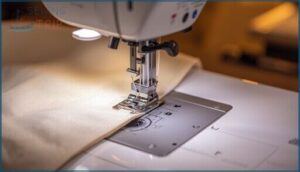
The buttonhole foot is your precision tool for machine-sewn buttonholes, but only when you master foot alignment and thread management first. Start by engaging the sensor lever correctly—misalignment causes incomplete stitching.
Position your fabric’s start line directly under the needle, and always test your sewing sequence on scrap with proper fabric stabilization. This setup ensures buttonhole sizing accuracy and prevents those frustrating feed dog issues that derail perfect buttonholes.
Selecting The Right Buttonhole Stitch
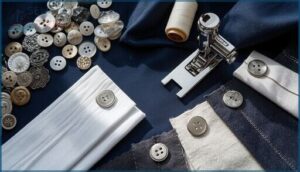
Match your buttonhole stitch to both fabric types and button sizes for impeccable machine-sewn buttonholes. Straight buttonholes with bar tacks work beautifully on shirts and lighter fabrics, while keyhole styles handle thick coats and larger flat buttons without stress.
Consider stitch density and buttonhole length—rounded ends prevent tearing in delicate materials, and bartack options deliver strength in denim. Your buttonhole foot pairs with the right buttonhole technique to accommodate diverse thread selection needs and buttonhole styles.
Adjusting Stitch Length and Width
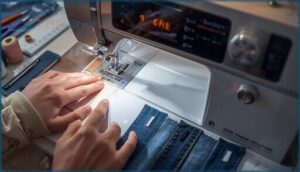
Fine-tune your sewing machine’s stitch length between 0.5 mm for dense, satin-like buttonhole density and 2.5 mm for medium fabrics. Fabric thickness drives width adjustments—narrow beads suit lightweight materials, while heavier projects need wider settings up to 5 mm.
Pair these sewing techniques with proper thread tension and moderate sewing speed, testing combinations on scrap fabric before committing to buttonholes.
Tips for Perfect Buttonholes Every Time
Getting your machine set up correctly is only half the battle—the real secret to impeccable buttonholes lies in proper preparation and technique.
You’ll avoid most common issues if you focus on a few key practices before you even start stitching.
Let’s walk through the essential steps that separate amateur buttonholes from professional results.
Marking Placement and Spacing Accurately
Your buttonhole measurement begins with drawing a precise center-front guideline on the placket using washable fabric marking tools. Standard spacing guidelines call for 3.5-inch intervals on unisex shirts, though fitted garments benefit from tighter 2.5 to 3-inch accurate placement.
Mark both start and end points before your automatic buttonhole routine begins—this placket planning prevents costly mistakes and ensures your sewing machine delivers consistent buttonhole styles with proper buttonhole technique throughout every sewing buttonholes session.
Stabilizing Fabric With Interfacing
Think of interfacing as your buttonhole’s insurance policy against warping and distortion. You’ll want fusible interfacing aligned with the fabric stretch direction—placing the non-stretch side parallel to your buttonhole prevents unwanted elongation during wear.
Medium-weight options work best for shirt plackets, while tear-away stabilizer adds temporary fabric support.
These fabric stabilization techniques transform flimsy buttonholes into crisp, professional openings that withstand countless fastenings.
Sizing Buttonholes for Different Buttons
You wouldn’t force a size 10 foot into a size 8 shoe—the same principle applies to buttonhole ratios and button types. The right sizing formulas account for both diameter and fabric thickness, ensuring smooth fastening without strain.
- Standard shirts: Add 3mm to button diameter (12mm button = 15mm buttonhole)
- Thick buttons: Include button thickness plus 2-3mm ease
- Trouser waistbands: Size 18mm buttons need 21-22mm openings
- Lightweight fabrics: Minimal 2mm allowance suffices
- Test first: Always verify sizing on scrap fabric
Preventing Fabric Puckering and Stretching
Puckering turns professional buttonholes into amateur disasters—but you can prevent it. Stabilize both sides with interfacing or tear-away stabilizer before sewing buttonholes.
Adjust your thread tension and presser foot pressure for the fabric weight you’re handling. Choose appropriate needles and thread selection for your material.
Test stitch regulation on scraps first—your sewing machine’s buttonhole technique improves dramatically when fabric tension stays controlled throughout.
Troubleshooting Common Buttonhole Issues
Even the best sewing machines can throw you a curveball when you’re creating buttonholes. Tension problems, skipped stitches, and fabric jams don’t mean you’ve lost your touch—they’re just signals that something needs adjustment.
Let’s walk through the most common buttonhole headaches and how to fix them so you can get back to sewing with confidence.
Uneven or Skipped Stitches
Precision breaks down when your needle dulls or thread quality slips. Damaged needles top the list of skipped-stitch causes, disrupting thread tension and stitch regulation during sewing buttonholes techniques.
Check your needle selection first—wrong sizes derail machine calibration on dense fabric. Poor-quality thread creates friction that your sewing machine can’t overcome.
Rethreading the upper path and testing with fresh, high-grade thread restores consistent buttonholes and eliminates those maddening gaps.
Buttonhole Not Opening Properly
After mastering stitch consistency, you might discover your buttonhole opening stubbornly resists your seam ripper. Cutting errors happen when fabric fraying weakens edges or excessive stitch density bunches material and closes the slit. Feed issues produce uneven columns that won’t cut cleanly.
Before sewing buttonholes, stabilize fabric with interfacing and adjust thread tension—balanced settings prevent your sewing machine from over-compressing the opening with buttonhole twist thread.
Machine Jams or Thread Bunching
When thread bunching appears beneath your fabric—that telltale bird’s nest—your sewing machine is signaling threading or bobbin issues. Incorrect threading tops the list: if your upper thread bypasses tension disks, the bobbin pulls it downward into tangles.
Check your thread tension settings, rewind uneven bobbins, and clean lint from the bobbin case. Replace bent needles immediately—they snag thread and halt buttonhole progress.
Adjusting Tension for Different Fabrics
Beyond clearing jams, you need to match thread tension to each fabric‘s personality. Cotton quilting weight runs smoothly around 4 to 5, while delicate voile demands 3 or lower to avoid puckering your buttonholes. Thick denim thrives at 4 to 6, and stretchy knits stabilize best near 2 to 3.
Try these fabric-specific strategies:
- Cotton: Set tension between 4 and 5 for balanced stitches
- Lightweight wovens: Lower to 3–4 to prevent tunneling
- Denim: Raise tension to 4–6 with heavier needles
- Knits: Drop to 2–3 and reduce presser-foot pressure
- Test scraps: Adjust in small increments until perfect
Advanced Buttonhole Techniques and Technology
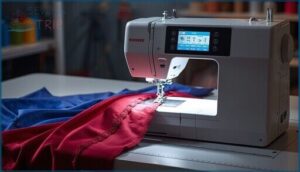
Once you’ve mastered the basics, it’s time to explore what modern sewing machines can really do with buttonholes. Today’s technology opens up creative possibilities that go far beyond the standard functional buttonhole.
Here’s what you need to know about sophisticated features and techniques that’ll give you more control over your projects.
Decorative and Specialty Buttonholes
Modern computerized machines open doors to decorative buttonholes that double as embellishment options. You’ll find keyhole buttonholes on specialty machines like the Dematron DM-9820, designed for high-stress garments and bound buttonholes on fitted pieces.
Mid-range models offer 7 to 16 machine-sewn buttonhole styles—rounded, eyelet, stretch patterns—letting you customize buttonhole design through fabric selection and machine customization that elevates sewing techniques beyond basic utility.
Using Automatic One-step Buttonhole Features
Automatic one-step buttonhole features deliver buttonhole precision through a sensor-equipped buttonhole foot that measures your button and stitches identical closures every time.
You’ll find these automatic buttonhole routines on over 80% of mid-range machines since 2020, cutting setup time and boosting sewing efficiency.
Install the buttonhole foot, clamp your button in the rear slider, and let machine-sewn buttonholes handle fabric compatibility with consistent automatic stitching—machine calibration transforms sewing machine tips into seamless results.
Accommodating Oversized Buttons
When your oversized buttons exceed the 28.5 mm sensor limit, you’ll need manual buttonhole techniques and heavy-duty sewing strategies.
Add 6 mm to button diameter for proper large button accommodations—a 38 mm machine-sewn buttonhole comfortably fits 32–35 mm extra-large buttons.
Increase bead width to 7.5 mm for buttonhole reinforcement, and apply full interfacing across your buttonhole foot placement for durable oversized button solutions.
Latest Innovations in Buttonhole Automation
You’re witnessing a revolution in buttonhole sewing automation. AI sewing systems now guide robotic stitching with real-time visual correction, while smart fabrics interface with digital patterns for precise automated cutting.
Industrial machines like the Jack 1790G combine touchscreen controls with servo motors for energy-efficient, high-speed machine-sewn buttonholes.
These sewing automation technology advances transform traditional automatic buttonhole routines into intelligent, adaptive production systems.
Frequently Asked Questions (FAQs)
Can I make buttonholes without a special foot?
Where there’s a will, there’s a way—you can create buttonholes without a special foot using zigzag techniques and manual stitching on any machine with adjustable width settings, though fabric stabilization and careful practice remain essential.
How do I repair a poorly sewn buttonhole?
You can fix a frayed buttonhole by working dense blanket stitches over the damaged edges.
For torn slits, add fusible interfacing behind the fabric, then restitch using zigzag or hand-sewn buttonhole reinforcement techniques.
What thread weight works best for buttonholes?
Thread selection acts like choosing the right foundation for a house—polyester thread in 40–50 weight balances strength and stitch density beautifully for most fabric types, preventing puckering while ensuring your buttonholes hold firm.
Are buttonholes possible on thick or layered fabrics?
Yes, buttonholes work on thick fabrics—domestic machines handle up to 6 mm, while industrial models manage 8–10 mm layers.
Use proper interfacing solutions, walking feet, and size 90/14–110/18 needles for leather sewing and layered fabric stability.
How do I practice buttonholes for beginners?
Start with scrap fabric that matches your project’s weight and includes interfacing. Sew at least fifteen practice buttonholes, adjusting stitch tension and sewing speed until machine-sewn buttonholes appear balanced. Test each by cutting open and inserting your button.
Conclusion
What separates sewers who confidently tackle buttonholes from those who avoid them? Access to the best sewing machine buttonholes easily features—automatic sensors, one-step programs, and adjustable sizing.
You’ve now seen which machines deliver professional results without the manual repositioning that creates frustration.
Choose technology that matches your project frequency, practice the stabilization techniques that prevent puckering, and you’ll transform this once-intimidating skill into a routine eight-second task that expands your creative possibilities.
- https://www.sewing.org/files/guidelines/12_231_machine_buttonholes_part_2.pdf
- https://www.seamwork.com/sewing-tutorials/buttonhole-sewing-secrets-every-beginner-should-learn
- https://www.jukiclub.com/janet-poole-on-buttonholes/
- https://weaverdee.com/blogs/news/buttonhole
- https://www.youtube.com/watch?v=Tf7mE7EiZQk