This site is supported by our readers. We may earn a commission, at no cost to you, if you purchase through links.
Your suitcase zipper barely closes, and somewhere between the rolled-up dresses and your travel machine, three loose bobbins rattle around like spare change. One’s cracked. One doesn’t match your machine’s class. That’s the moment most travelers realize bobbin choice isn’t an afterthought.
Bobbins for travel sewing face rough handling—dropped bags, humid climates, cramped kits with zero padding. The right material and storage setup means the difference between smooth stitches on day one and a jammed machine in a hotel room.
Here’s what separates a bobbin that survives your trip from one that ruins it.
Table Of Contents
Key Takeaways
- Class 15 bobbins fit most portable machines (Brother, Baby Lock, Juki, Pfaff, Janome, Viking, Singer), while vintage Singers need Class 66 and some brands require proprietary sizes, so checking your machine’s manual before a trip prevents jams.
- Plastic bobbins offer lightweight, rust-resistant, see-through convenience but can crack on impact, while metal bobbins resist drops and corrosion but add weight that can throw off tension calibration.
- Prewound bobbins save setup time and deliver factory-consistent tension, whereas batch-winding your own at 900-1200 RPM and stopping before the rim overfills gives more control for frequent travelers.
- Storing bobbins in clear boxes, foam-lined organizers, or silicone rings, and pairing each with matching thread, keeps them from rattling, tangling, or getting lost mid-trip.
Best Bobbins for Travel Sewing
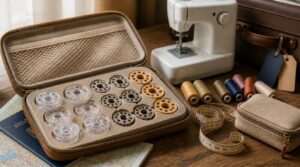
Packing for a trip means picking bobbins that won’t let you down mid-project. Different types handle travel differently, from cracking risk to setup time. Here’s what to look for before you toss them in your bag.
If you’re also choosing gear for the trip itself, this guide to portable sewing machines for travel-friendly projects can help you pair the right bobbins with a machine built for life on the road.
Plastic Travel Bobbins
Clear thread color view – no removal needed
Fits Class 15 bobbin cases – most portables
Lightweight design – won’t weigh down your kit
Rust-resistant in humid climates – beach trips, boats
Polystyrene or polypropylene build – cracks if dropped
Flange edges – stop thread from slipping loose
Reusable across multiple projects – swap thread anytime
Standard sewing machine accessory – easy replacement parts
Artisans may also prefer spinning wheel bobbins for specialized fiber work.
Metal Travel Bobbins
Steel Bobbins – impact resistant, won’t crack if dropped
Rust-resistant finish – stays reliable in humid climates
Class 15 Metal Bobbins – dimensional stability for even tension
Heat stability – resists warping during long sewing sessions
- Corrosion resistance for damp travel bags
- Rotation smoothness for steady stitches
- Heavier feel changes bobbin case balance
Standard sewing machine accessories – swap in when plastic wears thin
Prewound Bobbins
Factory winding precision beats hand winding every time. You get 15-40% more yardage per bobbin, consistent tension, no shredding at high speed.
Prewound Class 15A bobbins simplify machine matching. Skip the bobbin winding kit entirely—color matching efficiency and clear labeling make thread weight selection quick, so you’re stitching, not fiddling with sewing machine accessories mid-trip.
Reusable Bobbins
Skip factory refills — go reusable. Tough clear plastic resists cracking, fits Class 15 winding systems, and smooth edges stop thread fraying mid-stitch.
Metal versions handle high-temperature washes and hold consistent spool tension, though they add weight fatigue on long trips. Check bobbin size and bobbin case compatibility before swapping.
Clean and dry both types after each project — that’s what actually extends material longevity.
Compact Bobbin Sets
One box beats five loose tins. Compact bobbin sets pack multiple sizes and colors into a single case sized for travel kits — think ArtBin’s 30-slot organizer at 7 x 3.5 x 1.25 inches.
Match bobbin size to your machine’s bobbin case before packing. Good sets support color identification, weight management, and multi-size organization — handy for quilting notions and machine embroidery supplies alike.
Match Bobbins to Your Machine
Not every bobbin fits every machine, and travel is the worst time to find that out. Your machine’s class, brand, and build all play a part in what works. Here’s what to check before you pack.
Travel is the worst time to discover your bobbin doesn’t fit your machine
Class 15 Bobbins
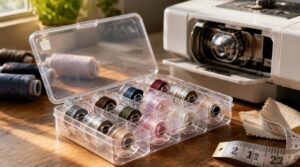
Class 15 bobbins are the closest thing to a universal fit in travel sewing. They work across Brother, Baby Lock, Juki, Pfaff, Janome, Viking, and Singer machines, with a 20.6mm diameter standard.
Clear plastic versions let you monitor thread levels mid-project—handy when packing light. Just confirm your machine’s sensor timing matches, since some brands specify metal or plastic variants for best performance.
Class 66 Bobbins
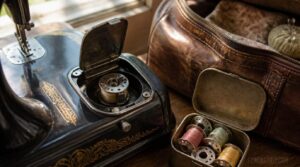
Got a vintage Singer packed for the trip? Class 66 sizing fits top-loading machines only—no swapping with Class 15 here. These bobbins keep vintage Singer models from the 1950s-1980s running smoothly, but stitching system requirements matter for retro machine maintenance.
Check your bobbin case before you travel; mismatched hardware means jammed thread and a frustrating repair stop instead of smooth sewing on the road.
Brand-specific Bobbins
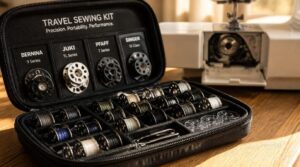
Why leave stitch quality to chance when your machine’s manual already lists the exact part number? Manufacturer compatibility protects tension precision and warranty coverage.
- Original Juki Bobbins (DNU-1541, 25.5mm)
- Metal Sewing Machine Bobbins for industrial classes
- Pfaff proprietary sizing (541, 545, 1245)
- Brother PWB200 prewound sets
These precision sewing components aren’t interchangeable guesswork—they’re engineered for your specific machine’s parts replacement needs.
Portable Machine Compatibility
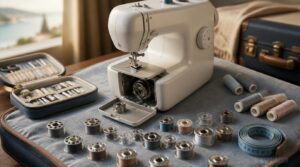
Portable machines aren’t one-size-fits-all — shank type matching matters as much as bobbin class. Mixing them up causes jams or skipped stitches.
| Machine Type | Bobbin Class | Shank Style |
|---|---|---|
| Low shank portable | Class 15 | Standard |
| Heavy duty portable | Class 66 | Wide |
| Mini/travel | Universal size | Compact |
Swapping metal bobbins into plastic-calibrated machines throws off tension fast.
Handheld Sewing Machine Kits
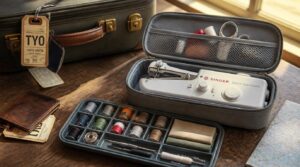
Think of your handheld kit as a toolbox: it needs a good variety of bobbins, not just spares. Pack Class 15 and Class 66 sizes, plus a few brand-specific bobbins for oddball machines.
Good kits balance portable repair readiness with compact organization — a spare bobbin case, correct bobbin sizes, and steady thread tension control matter more than sheer quantity when you’re fixing a seam on the road.
Travel Bobbin Materials Compared
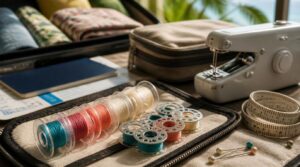
Plastic and metal bobbins each bring something different to your travel bag. The right pick depends on how you pack, how humid your destination is, and how your machine experiences weight. Here’s how the two materials stack up against each other.
Clear Plastic Visibility
Ever peer into a bobbin only to guess how much thread’s left? Clear plastic bobbins solve that instantly.
Optical clarity depends on light transmission, low haze, and smooth surface finish. Clear Glide Plastic Sided and Plastic Sided Class 15 Embroidery Bobbins show thread levels without removing them.
- Check thread supply at a glance
- Match bobbin size to your case
- Avoid guesswork mid-project
- Reduce thread waste
- Simplify travel packing
Rust-resistant Options
Humidity’s one thing—salt air and workshop damp are another story for your bobbin stash.
316 stainless steel holds up best in marine environments, thanks to molybdenum content. 304 stainless steel works fine for general travel. Galvanized steel coatings and anodized aluminum oxide layers also resist corrosion. Titanium alloy bobbins skip rust entirely, while brass patina builds natural protection—smart choices for Metal Bobbins, Steel Bobbins, and Aluminum Bobbins alike, whatever your sewing machine parts demand.
Drop-resistant Metal Bobbins
Rust resistance won’t save your bobbins from a hard drop on a train floor or hotel tile. That’s where inner material stability matters—brass and steel centers resist deformation on impact.
- Reinforced flanges resist bending under pressure
- Chamfered rims reduce thread snagging after drops
- Solid centers prevent hub wobble in your Bobbin Case
Precision-ground Metal Bobbins protect stitch quality even after rough handling.
Tension and Weight Differences
Swap Plastic Bobbins for Metal Bobbins and your machine’s tension calibration can shift. That extra weight changes how thread pulls during sudden tension changes, especially on vertical seams versus horizontal runs.
| Bobbin Type | Tension Behavior |
|---|---|
| Plastic Bobbins | Lighter, stable pull |
| Aluminum Bobbins | Moderate weight shift |
| Steel Bobbins | Highest weight, needs recalibration |
| Mixed-use | Inconsistent stitch quality maintenance |
Bobbin Case Wear
Metal bobbins wear plastic cases faster than plastic-on-plastic ever does. Watch for case housing grooves and surface burrs where the bobbin edge rubs during rotation.
Check tension spring elasticity often — a tired spring throws off stitch quality maintenance fast. Loose latch mechanism stability lets the case wobble mid-seam.
Simple fix: inspect Bobbin Cases before every trip, and treat machine parts replacement as routine sewing machine maintenance, not an emergency repair.
Best Bobbin Storage for Travel
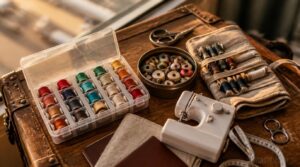
Loose bobbins in a bag are just asking for trouble on the road. The right storage keeps your thread tangle-free, your bobbins safe, and your sewing kit ready to go at a moment’s notice. Here are five ways to keep everything in order, no matter where your travels take you.
Clear Bobbin Boxes
Ever dug through a messy kit hunting one bobbin? Clear boxes end that. Visual color matching works instantly through impact-resistant polycarbonate lids.
- 20-30 bobbin capacity
- 4-6 inch compact storage dimensions
- Dust lint protection built in
- Stackable box configurations for luggage
Whether you’re running plastic bobbins or aluminum bobbins, grid compartments keep bobbin cases from rattling loose, so your thread stays organized mile after mile.
Foam-lined Organizers
A cushioned cutout beats a rattling tin every time. Foam-lined organizers hold bobbins, bobbin cases, and even metal or aluminum bobbins snug in pre-cut slots, so nothing shifts or cracks.
- Closed-cell EVA foam resists moisture
- ABS shells add impact protection
- Trim layouts to fit your kit
- Tested through thousands of insertions
Custom-cut spaces mean plastic bobbins won’t jostle against metal ones.
Flexible Bobbin Rings
Ever tried digging a stray bobbin out of a bag full of loose thread? Flexible bobbin rings solve that. Made from silicone or soft rubber, they stretch to fit both metal and plastic bobbins without distorting the winding.
- Anti-slip interior coatings
- Universal fit for Class 15 and Style M
- Cold-resistant, crack-free elasticity
- Stackable, modular rings
- Slim profile for compact kits
Thread Tail Control
A stray tail can spiral into a thread nest in seconds. Tail length consistency keeps stitches even, especially on portable machines.
| Thread Type | Tail Behavior | Fix |
|---|---|---|
| Metallic | Kinks easily | Gentler handling |
| Nylon | Loops at start | Shorter tail |
| Cotton | Frays less | Standard length |
Humidity impact matters too—dry air stiffens tails, humid air slackens them. Rethread and shorten for troubleshooting nests.
Spool and Bobbin Pairing
Ever open a travel kit to find three bobbins that match nothing? That’s the real cost of skipping spool and bobbin pairing.
Keep matching thread weight and color together before you pack:
- Same-color pairing prevents guesswork mid-project
- Matched thread weight keeps tension balanced top-to-bottom
- Dedicated slots stop mismatched nests before they start
Balanced stitch tension depends on this simple habit every time.
Prewound Versus Self-Wound Bobbins

Prewound or self-wound, the right choice comes down to how you travel and sew. Some folks want thread ready to go, no fuss, no fumbling. Others like winding their own for more control over color and fill. Here’s what to weigh before your next trip.
Time-saving Prewound Packs
Skipping the winding step is the whole point here. Prewound bobbins arrive ready to snap into your case, cutting setup by several minutes per project.
Packs hold 10-20 bobbins for cotton and polyester blends, wound at factory-controlled tension. That consistency matters for Quilt Bobbins and Embroidery Bobbins alike.
| Feature | Benefit | Detail |
|---|---|---|
| Prewound thread | Faster starts | No winding needed |
| Compact packaging | Saves space | Fits travel kits |
| Standard tension | Even stitches | Fewer skipped threads |
Colored Thread Options
Grabbing prewound bobbins doesn’t mean settling for plain white thread. Janome’s 25-packs come in shades like Blue Butterfly Bobbins and Pink Cherry Blossom Bobbins, while a Purple Bobbin Kit rounds out cooler palettes.
- Variegated thread for color shifts
- Metallic thread accents for embroidery
- Neon thread for visibility
- UV-tested, colorfast dye lots
Prewound Reusable Bobbin Thread keeps Embroidery Bobbins matched project after project.
Batch Winding Before Trips
Skip the pre-trip scramble and wind your own stash instead. Batch winding beats buying prewound sets if you travel often.
Set winding speed at 900-1200 RPM, run bobbins in fives, and label each batch by date and material. Keep polyester and cotton separate, wrap metal bobbins in a protective sleeve, then check fill levels before packing into your travel kit.
Avoiding Overfilled Bobbins
A bobbin loaded past the rim will bind in the case and throw off tension fast. Stop winding once thread reaches the outer edge, leaving a small gap for free rotation. Check that layers lay flat, no diagonal wrinkles, before loading into the case.
If a bobbin looks bulged, rewind it. Balanced tension starts with a properly filled bobbin.
Preventing Travel Tangles
Untangling starts before you pack. Secure thread tails with a knot or a dab of clear polish so nothing unwinds mid-transit.
A silicon dampener tucked in the box curbs humidity swings that cause slack. Label thread weights, pair spools with matching bobbins, and store each in its own slot—metal bobbins especially, since loose aluminum bobbins rattle and snag against plastic ones.
Frequently Asked Questions (FAQs)
How do I know what bobbins I need?
Your machine’s manual holds the answer, not guesswork. Check bobbin class, diameter, and loading style first. Then verify brand compatibility—Class 15 fits most portables, but metal bobbins and cases vary by model entirely.
What is a good travel sewing machine?
Look for low portable machine weight and compact kit sizing that fits carry-on space. You’ll want steady machine power for varied fabrics, sturdy sewing machine hardware, and durability for transit—so your needlework equipment survives every trip intact.
What can I use instead of a bobbin?
Panic-sewing a hem with dental floss counts as innovation, technically.
Try magnetic spool adapters, hand embroidery stitches, or perforated panel stitching. A portable overlocker works too, and fabric tie seams handle emergency repairs when your bobbin case goes missing entirely.
Do all bobbins fit in all sewing machines?
No, not even close. Shuttle system differences and diameter mismatches mean Class 15, Class 66, and vintage bobbins rarely swap. Always check your manual — tension settings and bobbin case fit depend on exact model compatibility, not just size guesses.
How many spare bobbins should I pack?
Ten to fifteen bobbins covers most trips without a store run. Pack five as a baseline, two in your main color, one accent, one empty, plus extras for longer stays or dense embroidery work.
Can bobbins go in carry-on luggage safely?
Yes, they clear security screening without issue. Keep metal bobbins in a rigid container, bag everything in clear plastic for carry-on inspection prep, and check your airline’s safety guidelines since rules shift by country.
How do I clean bobbins during travel trips?
Little by little does the trick: brush lint after each session, wipe with a lint-free cloth, use cotton swabs for tight corners, and skip liquid cleaners—just a portable cleaning routine keeping metal bobbins and cases dust-free.
Will airport security flag bobbins in bags?
Metal bobbins in dense clusters can trigger extra screening on X-ray, especially with metallic thread. Clear plastic ones scan as harmless shapes.
Pack loose bobbins in a labeled case—it avoids metal detector triggers and keeps security checks quick and stress-free.
How often should travel bobbins be replaced?
A good rule of thumb: swap plastic bobbins every 6-12 months, metal ones every 1-3 years depending on humidity.
Replace immediately after drops, tension trouble, or visible wear.
Track dates so your bobbin case and thread winding stay reliable mile after mile.
Conclusion
What’s the one thing that turns a packed suitcase into a working sewing kit? The right bobbins. Get the class right, pick a material that survives drops and humidity, and store them where thread tails can’t tangle. That’s the whole game.
Bobbins for travel sewing aren’t glamorous, but they’re the quiet detail that keeps your machine running smoothly from your first stitch abroad to your last. Pack smart, and your sewing kit won’t let you down.
- https://sewcanshe.com/15-bobbin-storage-options-real-product-reviews
- https://www.wawak.com/sewing/thread-racks-and-bobbin-holders
- https://www.superiorthreads.com/bobbin-case-fits-25-bobbins/p/plastic-case-25
- https://undergroundcrafter.com/2020/07/19/sewing-basics-all-about-bobbins
- https://threadworks.com/collections/bobbin-storage