This site is supported by our readers. We may earn a commission, at no cost to you, if you purchase through links.
Most sewists never look past the household names—Singer, Brother, Janome—but the real finds are gathering dust in estate sales and hiding in plain sight on dealer shelves. Machines from companies like Davis, Grover & Baker, and Wheeler & Wilson, once industry titans, now slip under the radar despite offering cast-iron durability and stitch quality that shame modern plastic counterparts.
Even contemporary brands like Bernette deliver Swiss-engineered precision without the luxury price tag, yet they’re routinely dismissed by shoppers chasing familiar logos. These hidden gems in sewing machine brands share a common thread: they outperform their reputations, reward those willing to dig deeper, and often cost a fraction of what you’d pay for an overhyped alternative. Whether you’re hunting vintage iron horses or seeking underrated modern performers, knowing where to look—and what separates genuine value from forgotten junk—puts you ahead of the crowd.
Table Of Contents
- Key Takeaways
- What Defines a Hidden Gem Sewing Machine Brand?
- Overlooked Vintage Sewing Machine Manufacturers
- Underrated Modern and International Brands
- Unique Features of Hidden Gem Machines
- Finding and Evaluating Hidden Gem Brands
- Caring for and Showcasing Your Hidden Gem Machine
- Frequently Asked Questions (FAQs)
- Conclusion
Key Takeaways
- Overlooked brands like Davis, Grover & Baker, and Wheeler & Wilson deliver cast-iron durability and stitch quality that outperform modern plastic counterparts, often at a fraction of the cost you’d pay for household names.
- Hidden gem machines earn their status through five key traits: long-term reliability, affordable pricing, limited mainstream recognition, distinct mechanical innovations, and strong after-sale support with available spare parts.
- Modern underrated brands like Bernette bring Swiss-engineered precision without luxury pricing, while vintage finds from estate sales and auctions offer all-metal construction and rare stitch mechanisms that still outclass contemporary models.
- Successful treasure hunting requires knowing where to search (estate sales, online auctions, antique shops), how to assess condition and functionality through hands-on inspection, and how to verify original parts through serial numbers and factory documentation.
What Defines a Hidden Gem Sewing Machine Brand?
Not every sewing machine brand gets the spotlight it deserves. Some manufacturers flew under the radar despite bringing real innovation to the table, while others built machines so solid they’re still stitching decades later.
If you’re curious which names stand out—or which quiet innovators deserve more attention—this guide to sewing machine brands breaks down the reputations, strengths, and quirks worth knowing.
Let’s break down what separates a true hidden gem from the household names everyone already knows.
Key Criteria for Hidden Gem Status
You’ll spot a hidden gem sewing machine brand when it checks five distinct boxes that separate collectible antique home appliances from mainstream options:
- Long-term reliability with solid build quality across models, proving lesser-known sewing machine brands can outlast household names
- Affordable pricing that delivers performance rivaling bigger competitors, defying market trends
- Limited mainstream recognition due to smaller production volumes and regional focus
- Distinct mechanical innovations featuring repairable components that attract vintage sewing machine collecting enthusiasts
- Strong after-sale support with available spare parts, essential for vintage restoration and sustained brand loyalty
These criteria reveal collector insights into which sewing innovations truly matter, highlighting sewing machine company histories worth exploring.
Differentiating Features and Innovations
Hidden gems often feature Victorian era manufacturing innovations that still impress today. You’ll find differential feed mechanisms on overlooked brands allowing smooth fabric handling, horizontal bobbin systems reducing thread breaks, and all-metal construction surpassing early Singer Sewing Machine models.
These advancements in sewing machine design—from automatic tension to compact footprints with carrying grips—prove antique sewing machine manufacturers pioneered precision engineering long before modern smart stitching arrived.
Brand Rarity and Collector Interest
Rarity factors like low production runs—some brands made fewer than 5,000 units total—drive collector trends for vintage sewing machines. You’ll notice lesser-known sewing machine brands command premium prices when original accessories survive, provenance research confirms factory stamps, and serial numbers fall within limited batches.
Market analysis shows collectible sewing machines with complete documentation and unaltered finishes attract serious sewing machine collectors willing to pay top dollar for authentic vintage finds.
Overlooked Vintage Sewing Machine Manufacturers
Before Singer and Brother dominated showroom floors, dozens of smaller manufacturers built machines that pushed the industry forward with bold innovations. Many of these companies disappeared or shifted to other products, leaving behind mechanical marvels that collectors and sewists are only now rediscovering.
Here are five vintage brands that deserve a second look for their engineering ingenuity, historical significance, and surprising value.
National Sewing Machine Company
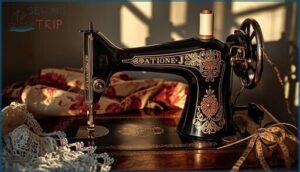
National Sewing Machine Company began as the FT June company in Belvidere, Illinois, crafting sturdy domestic machines with heavy-duty metal construction that defied the era’s throwaway mentality. Their “Jennie June” models borrowed styling cues from Singer’s playbook, yet today’s collectors prize them for ornate lid graphics and model names that persisted across decades, simplifying catalog cross-referencing.
- Distinctive Soviet-style decorative panels attract enthusiasts
- Bobbin thread guides built into needle plates improve feeding
- Working machines in original cabinets sell around $110
Many collectors have also developed an appreciation for the that reveal the broader legacy of global manufacturers.
Davis Sewing Machine Company
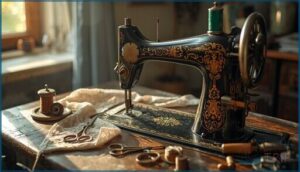
Davis Sewing Machine Company launched in 1868 with a pioneering vertical foot that evolved into today’s walking foot attachment, a feature you’ll find on premium machines tackling thick layers. Their compact, heavy machines delivered reliable straight stitches, making them ideal starter units for vintage models enthusiasts pursuing machine restoration. Serial numbers reveal production years, aiding rare findings research—though original accessories remain elusive, fueling collector tips exchanges.
Today’s compact beginner machines echo that portability legacy, and modern sewing machines for kids carry forward the same space-conscious design Davis pioneered over a century ago.
| Feature | Davis Innovation |
|---|---|
| Feed System | Vertical foot for thick fabrics |
| Build Quality | Compact, heavy cast construction |
| Stitch Type | Reliable straight stitch mechanism |
| Collector Value | $100–$200 range at auctions |
Most survivors lack foot pedestals and attachments, yet their straightforward maintenance and durability keep them sought after in the antique sewing machine brands community, bridging history of sewing machines with hands-on sewing innovations.
Wardwell Manufacturing Company
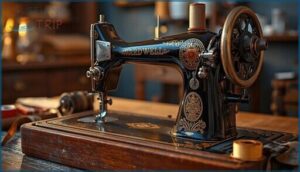
Wardwell sewing machine innovations broke the mold with a 40-piece design requiring no bobbin or shuttle—a radical departure from antique sewing machine brands cluttering workrooms with complexity. Their cam mechanics introduced zigzag capability before mainstream adoption, while rounded-corner cases and decorative decals survive beautifully, making vintage sewing machines from this lesser-known sewing machine brand prized in vintage collecting circles.
The key features of Wardwell sewing machines include:
- Early cam-driven zigzag mechanism predating industry standards
- Simplified 40-piece construction for easier machine restoration
- Durable metal chassis with aesthetically focused cabinet designs
- Distinctive decals aiding Wardwell history dating and provenance
- Rounded cases preserving sewing machine history through decades
Grover & Baker
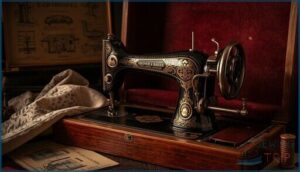
Grover Baker Sewing Machine Company pioneered portable sewing innovations with their box-style chain stitch machines, introducing secure double-thread construction that antique sewing machine brands quickly envied.
Vintage machines from this lesser-known sewing machine brand showcase ornate castings and engraved plates that vintage sewing machines collectors prize, though sewing machine history buffs face restoration tips challenges locating parts—amplifying their collector value among those chasing authentic mechanical heritage.
Wheeler & Wilson
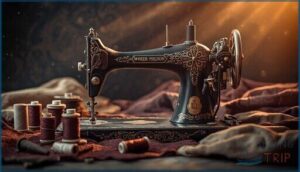
Wheeler Wilson Sewing Machine Company crafted both domestic and industrial machines with tension systems that set them apart from Singer and White, using heavy cast metal frames that vintage sewing machines collectors hunt for today.
You’ll find their sewing innovations in unique feed mechanisms and sturdy drive systems, though vintage restoration projects face hurdles securing original attachments—making complete units prized among antique sewing machines enthusiasts exploring lesser-known sewing machine brands with authentic sewing machine history and technology credentials.
Underrated Modern and International Brands
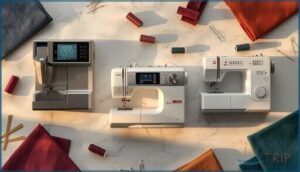
Not every standout sewing machine comes from the usual suspects like Singer or Brother.
Some of the best-kept secrets in the industry are modern brands and international manufacturers that deliver Swiss precision, Japanese innovation, or solid American value without the premium price tag.
Let’s look at a few underrated options that deserve a spot on your radar.
Bernette by Bernina
If you’ve been chasing Bernina heritage without the sticker shock, Bernette delivers Swiss design and sewing precision in a more accessible package. These machines honor Bernina’s DNA—metal frames, smooth operation, and that affordable luxury feel—without requiring a second mortgage.
You’ll find serious build quality inherited from vintage sewing machine collectors’ favorites like the Bernina 117K, proving that smart engineering doesn’t always demand premium pricing among sewing machine brands.
New Home Sewing Machine Company
New Home Sewing Machine Company ran production until the 1950s, and vintage sewing machines from this brand still carry historical significance for collectors hunting lesser-known sewing machine brands.
You’ll spot vintage models with rock-solid metal frames and sewing innovations that predate computerized controls, making them prime candidates for machine restoration.
Antique sewing machine appraisal often rewards New Home finds, especially when you’ve got original attachments—serious collector tips for anyone building a curated lineup.
Kenmore and Its Private Label Machines
Kenmore sewing machines launched in the 1930s and gave budget-conscious home sewing enthusiasts solid Kenmore history through private label partnerships with major manufacturers.
You’ll discover vintage sewing machines with reliable metal guts and surprising collector value, especially portable sewing machine models that blend sewing innovations with affordable pricing. Machine restoration buffs appreciate Kenmore’s straightforward engineering—these sewing machine brands prove you don’t need premium badges to deliver dependable stitching.
Janome’s Lesser-Known Models
Janome innovations show Japanese engineering at its finest, yet many Janome sewing machine models fly under the radar for stitchers chasing big-name validation. Lesser-known sewing machine brands often deliver quilting features and embroidery options that rival premium alternatives, wrapped in durable frames with sewing automation that doesn’t overwhelm beginners.
- Compact flatbed designs with metal inner mechanisms for portability
- Drop-in bobbin systems and high-speed needle threading for convenience
- Quiet operation through optimized pulley dampening
- Wide presser foot compatibility across low-shank systems
Pfaff’s Budget-Friendly Options
Pfaff sewing machines bring Swiss precision to budget sewing with select entry level models featuring the signature IDT system, a differentiator in affordable quilting. These reliable sewing machines offer metal construction and steady feed performance without the premium price, making Pfaff IDT technology accessible.
You’ll spot sewing innovations like integrated dual feed on models that hold their own in vintage sewing machines restoration circles and modern workrooms alike.
Unique Features of Hidden Gem Machines
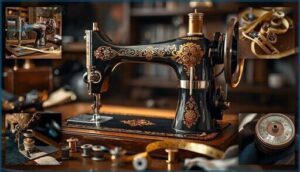
Hidden gem machines aren’t just about nostalgia or affordability—they often pack technical features that set them apart from mainstream models.
You’ll find innovations in construction, mechanics, and design that made these brands stand out in their time, and in some cases, still outperform modern counterparts. Here’s what to look for when you’re hunting down these lesser-known treasures.
All-Metal Construction and Durability
You’ll find that all-metal construction separates true workhorses from disposable machines. Heavy gauge steel frames resist bending under load, with yield strength above 350 MPa in quality vintage sewing machines.
All-metal construction with heavy gauge steel frames separates true workhorse machines from disposable models
Precision engineering keeps moving parts within thousandths of an inch, while corrosion resistance and thermal stability guarantee your find survives decades of workshop humidity and heat cycles, making sewing machine restoration worthwhile.
Rare Stitch Mechanisms and Feed Systems
Sophisticated feeding mechanisms reveal creative possibilities most sewers never experience. You’ll discover innovations that changed fabricwork forever.
- The vertical foot pioneered by Davis became today’s walking foot, gripping stretchy or slippery layers with precision through synchronized rotary motion.
- Unison feed and differential feed prevent puckering on heavy textiles by coordinating needle bar movement with slider feed adjustments.
- Grover & Baker’s double chainstitch and Wheeler & Wilson’s four-motion feed set industry standards still respected today. To better understand these techniques, explore the and their impact on fabric control.
Compact and Portable Designs
Portable machines liberate you from bulky workstations, redefining where and how you create. Compact frames under 6 pounds—like the legendary Singer Featherweight 221—fit airline carry-on standards, while all-metal housing maintains rigidity in 8-by-12-inch bases.
Mini motors deliver smooth variable speed control without the bulk of treadle models. Travel sewing becomes trouble-free when space-saving designs include folding grips, built-in storage compartments, and quick-release accessory latches for smooth portables.
Unusual Attachments and Accessories
Specialty accessories transform hidden gem machines into multi-purpose creative stations, opening new dimensions beyond basic seams. Vintage sewing machine identification often starts with these distinctive tools, revealing a machine’s original capabilities and niche applications.
- Ruffler attachments create adjustable gathered ruffles with controlled spacing up to 1 inch depth
- Edge joiners align precise top-stitching seams on delicate fabrics 9 inches from edges
- Cording feet and piping guides produce consistent decorative piping with 1/4-inch width cords
- Glass presser foot allows clear visibility for intricate pattern following
- Embroidery hoops with guide templates expand decorative stitch placement options
Collectors prize original sewing machine parts and accessories during sewing machine restoration and preservation, as complete sets substantially boost market value and functional versatility.
Finding and Evaluating Hidden Gem Brands
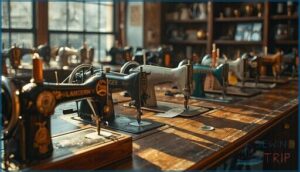
Finding a hidden gem sewing machine isn’t about luck—it’s about knowing where to look and what to check once you’ve got your hands on it. You’ll need to hunt in the right places, assess what you’re really getting, and understand whether that price tag makes sense.
Here’s how to track down these overlooked machines and make sure you’re bringing home a true find, not a project you’ll regret.
Where to Search: Markets, Auctions, and Online
You’ll discover vintage sewing machines in both digital and physical spaces if you know where to look. Online marketplaces like eBay and classified ads connect you with sellers nationwide, while auction houses and online auction platforms specialize in rare finds with detailed provenance.
Don’t overlook local flea markets, antique shops, and estate sales—they’re treasure troves where you can inspect machines in person before buying.
Assessing Condition, Functionality, and Value
Start with machine inspection to catch worn belts, misaligned panels, and dried oil ports that tell the story of a machine’s life. Run functional testing through standard stitches—watch for skips, needle positioning accuracy within 0.3 mm, and consistent feed dog movement.
For collectible sewing machine valuation, match serial numbers to production years, then weigh mechanical analysis against restoration costs to nail your vintage sewing machine value and sewing machine appraisal.
Identifying Original Parts and Accessories
Authentic parts authentication turns into detective work when you spot manufacturer holograms on critical surfaces, match serial numbers across assemblies, and cross-reference part numbers with factory service manuals.
You’ll nail sewing machine identification through packaging inspection—genuine items arrive in factory-sealed boxes with printed codes, dealer certification, and tamper-resistant labels that prove collectible sewing machine valuation for serious sewing machine restoration and preservation.
Researching Comparable Sales and Pricing
After identifying authentic components, you enter the pricing arena with auction strategies rooted in solid sales data. Check sewing machine price guides, scan recent sold listings for your model, and apply sewing machine condition assessment criteria to nail valuation methods.
Market trends shift fast—track price analysis over the last six months to understand the sewing machine market, sharpen your sewing machine buying guide instincts, and support sewing machine restoration and preservation investments.
Caring for and Showcasing Your Hidden Gem Machine
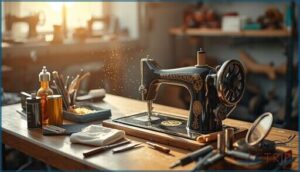
Once you’ve brought home a hidden gem sewing machine, your work isn’t over—it’s just beginning.
These overlooked brands deserve the same care and attention as their famous counterparts, whether you’re restoring a century-old Davis or maintaining a modern Bernette.
Here’s how to keep your machine running smoothly, preserve its history, and connect with others who appreciate these under-the-radar finds.
Cleaning and Maintenance Best Practices
You’ll preserve your hidden gem machine for decades with a deliberate sewing machine maintenance routine that addresses both daily wear and seasonal deep care. Smart sewing machine maintenance tips go beyond a quick wipe, anchoring your machine’s longevity in consistent, strategic attention that protects rare finishes and mechanisms.
- Schedule daily cleaning of lint and debris after each project to prevent buildup in feed dogs and tension discs
- Apply machine lubrication monthly to moving parts using manufacturer-recommended oil to reduce friction and wear
- Implement fabric care protocols by testing cleaning agents on inconspicuous areas before treating upholstery or covers
- Calibrate equipment monthly, checking stitch tension and timing to catch issues before they escalate into costly sewing machine repair needs
- Maintain a maintenance scheduling log documenting tasks, observations, and part replacements for accountability and future sewing machine restoration reference
Restoring Finish and Mechanical Parts
When routine sewing machine maintenance won’t cut it, mechanical overhaul and refinishing techniques bring your vintage sewing machines back to life.
Start with surface repair using furniture grade shellac after gentle rust removal with 0000 steel wool, then tackle part restoration by replacing worn bronze bushings and re-lubricating gear trains. Avoid aggressive replating methods that strip factory patina, preserving both function and sewing machine parts and accessories value.
Sharing Finds With Collector Communities
After restoring your hidden gem, join the sewing enthusiasts community to share your find with fellow collectors. Sewing community platforms standardize posting through community standards that benefit everyone hunting rare sewing items.
Follow these photo guidelines and practices:
- Capture high-resolution shots of the machine’s front, side, and stitch plate
- Include a brief video demonstrating mechanical function
- Document serial numbers and any unusual markings
- Share provenance tracking details like previous owners and acquisition stories
- Note market signals by referencing comparable sales from the sewing collectibles market
Collector networking helps authenticate finds and uncover sourcing tips for your next treasure hunt.
Documenting Brand History and Provenance
A strong provenance research trail starts with serial number dating—brands like Singer offer online databases that pin your vintage sewing machines to exact production years.
Photograph badges, decals, and any original paperwork, then cross-reference historical brand archives to confirm authenticity. This antique machine authentication process anchors your lesser-known sewing machine brands find in sewing machine history, adding credibility when you share your story with the sewing machine collecting community.
Frequently Asked Questions (FAQs)
What is a rare antique sewing machine?
A rare antique sewing machine combines limited production, unique mechanisms, and historical significance.
Collectors value machines with unusual feed systems, original accessories, and documented provenance—factors that enhance their standing in the antique sewing machine market.
Where can I find information about antique sewing machines?
Museum archives, online forums, and antique catalogs offer detailed model histories and pricing data.
Collector guides and vintage manuals provide technical specs, while auction house listings reveal current antique sewing machine market trends.
What are the best antique sewing machines?
The best antique sewing machines combine sturdy all-metal construction, reliable stitch mechanisms, and strong collector demand.
Singer Featherweight, Davis treadle models, and Wheeler & Wilson rotary designs rank highest for durability and restoration potential.
What is the most valuable Singer sewing machine?
Among collectors, the Singer 221 Featherweight and Singer 301 stand out as top-prized vintage models, fetching thousands at auction when they feature original decals, complete accessory sets, and documented provenance from Singer archives.
Which brands made high-quality sewing machines?
Singer Sewing Machine Company, Bernina Sewing Machines, Wheeler Wilson Sewing Machine Company, and Grover Baker Sewing Machine Company dominated sewing machine quality through vintage models featuring exceptional machine durability, brand reputation, and sewing innovations.
What are the most popular sewing machines?
Brother XM2701 tops sewing machine reviews for beginners, while Singer Quantum Stylist 9960 and Janome MOD 60 rank high in buyer guides.
Juki HZL F300 and Bernina 335 dominate best models for precision stitching.
What is the most sought after sewing machine?
Vintage sewing machines like the Singer 1991 command top dollar among collectors for their sturdy metal frames and smooth straight stitch, often selling for several hundred dollars depending on condition and restoration costs.
What is the best brand in sewing machines?
There’s no single “best” when comparing sewing machine brands—your ideal choice depends on budget, project type, and experience level.
Singer sewing machines offer reliability, Bernina sewing machines deliver precision, and Kenmore sewing machines provide value.
Why is Juki so expensive?
Juki’s premium pricing reflects industrial-grade construction, sophisticated engineering with high-torque motors, precision stitch quality across heavy fabrics, and strong brand reputation backed by extensive service networks—features that justify the investment for serious sewers and professionals.
What is the most trouble-free sewing machine?
Finding the most trouble-free sewing machine isn’t about chasing flawless performance—it’s about matching reliability factors and user experience to your skill level, with models offering all-metal construction, self-lubricating bushings, drop-in bobbins, and strong maintenance tips yielding exceptional sewing machine durability across vintage sewing machines and modern trouble-free models alike.
Conclusion
Big-box stores stack their shelves with the same tired lineup, but estate sales and dealer back rooms hold the real prizes.
Hidden gems in sewing machine brands—from vintage Grover & Baker to modern Bernette—reward those willing to look beyond logos. You’ve got the knowledge now: where to hunt, what to inspect, and why cast-iron craftsmanship beats plastic marketing hype.
Skip the crowd, trust your research, and claim machines that outlast their reputations.
- https://www.fiddlebase.com/american-machines/wheeler-wilson/
- https://ismacs.net/singer_sewing_machine_company/serial-numbers/singer-sewing-machine-serial-number-database.html
- https://sewalot.com/dating_singer_sewing_machine_by_serial_number.htm
- https://www.singersewinginfo.co.uk/singer_machines/domestic_machines/decoration/badges/
- https://www.threadsmagazine.com/2012/12/05/identifying-vintage-sewing-machines