This site is supported by our readers. We may earn a commission, at no cost to you, if you purchase through links.
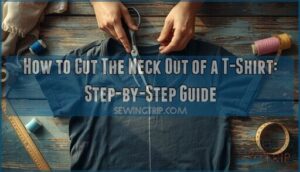
That oversized band tee from 2015 doesn’t fit the way it used to, and the crew neck sits awkwardly high on your collarbone. Before you toss it in the donation pile, grab a pair of scissors.
Transforming a basic tee into something that actually flatters your frame takes about ten minutes and zero sewing skills. You can carve out a relaxed scoop, a sharp V-neck, or even an off-the-shoulder silhouette that turns a forgotten shirt into your new favorite layering piece.
The cut you make changes everything—the drape, the attitude, the entire vibe of the garment.
Table Of Contents
- Key Takeaways
- Why Cut The Neck Out of a T-Shirt?
- Essential Tools and Materials Needed
- How to Select The Best T-Shirt
- Popular Neckline Styles You Can Create
- Step-by-Step Guide to Cutting The Neckline
- How to Finish and Refine The Neckline
- Styling Ideas for Your Modified T-Shirt
- Tips and Troubleshooting for Best Results
- Frequently Asked Questions (FAQs)
- Conclusion
Key Takeaways
- You can transform any basic t-shirt into a custom piece by cutting new necklines—scoop, V-neck, off-the-shoulder, or choker styles—using only scissors, marking tools, and about ten minutes of work.
- Sharp fabric scissors and precise marking prevent common mistakes like uneven cuts or fraying edges, while cotton jersey and interlock knits handle modifications better than tightly woven fabrics.
- Prewashing your t-shirt before cutting accounts for 2-5% fabric shrinkage and removes sizing agents, ensuring your measurements stay accurate and your cuts remain clean.
- Gently stretching the raw edge after cutting makes jersey knit naturally roll inward, creating a finished look without sewing while preventing fraying through multiple washes.
Why Cut The Neck Out of a T-Shirt?
Cutting the neck out of a t-shirt isn’t just about following trends—it’s about taking control of your wardrobe and making pieces work for you.
If you’re ready to customize your own tees, this step-by-step guide on cutting t-shirt necklines walks you through the process from measuring to finishing touches.
You can transform a basic tee into something that fits your vibe, whether that’s laid-back and relaxed or edgy and bold.
Here’s why this simple modification deserves a spot in your DIY toolkit.
Benefits of T-Shirt Neckline Modification
Fashion sustainability starts when you rescue a tshirt from the donation pile. This DIY approach to garment revival lets you build an eco-friendly fashion arsenal without the shopping guilt, turning every cut into a statement of creative freedom.
Plus, you’ll find that smart sewing techniques can dramatically cut costs while you transform those rescued pieces into wearable art.
Rescuing a t-shirt from the donation pile turns DIY cutting into an eco-friendly statement of creative freedom
Modification gives you the power to create a neckline that flatters your shape, whether you’re after comfort enhancement or personal style that screams rebellion.
If you want step-by-step tips for adjusting your dress neckline, check out this guide to sewing a custom dress neckline for inspiration and practical advice.
Sustainable Wardrobe Refresh
You don’t need a new wardrobe when you’ve got a pair of scissors and a stack of forgotten basics gathering dust in your closet. Cutting the neck from a t-shirt delivers an instant wardrobe refresh without the carbon footprint of fast fashion.
This DIY fashion technique transforms repurposed clothing into upcycled style statements that rival any clothing swap find. You’ll master green living through eco-fashion choices that cost nothing but creativity.
Essential Tools and Materials Needed

Before you grab that old t-shirt and start cutting, you’ll need a few basic tools to make the job easier and give you clean, professional-looking results. The right equipment means the difference between a polished DIY piece and a sloppy mess.
If you’re planning to sew your cut pieces together later, check out this guide on how to sew stretch fabric to avoid puckering and thread snapping.
Here’s what you should have on hand before you begin.
Choosing The Right Fabric Scissors
Sharp blades separate the rebels from the frustrated. Your fabric scissors need micro-serrated edges to grip jersey knit without slipping, preventing those jagged disasters that scream amateur hour. Choose wisely:
- Look for stainless steel blades that resist corrosion and stay sharp through multiple DIY fashion projects
- Select ergonomic grips that fit comfortably in your hand during extended cutting sessions
- Match blade thickness to your t-shirt weight—heavier blades for thick cotton, lighter for delicate knits
- Test scissor blade types on fabric scraps before committing to your final neckline cut
- Maintain cutting precision with regular scissor maintenance and proper storage practices
Marking Tools for Precision
Once those blades are sharp, your next weapon is the marking tool. Tailors chalk delivers crisp temporary lines that brush away after cutting, while heat erasable fabric markers vanish with a quick iron pass.
Air soluble pens fade on their own, water soluble versions rinse clean, and permanent ink stakes your claim when you want reference dots that stick around through every wash.
Measuring Tapes and Rulers
A flexible cloth tape wraps around curves and contours where rigid rulers can’t follow, making both tools essential partners in this transformation.
Lock your ruler flat against fabric for marking straight cutting guides from shoulder to sternum, while your tape measures the arc of a scoop or depth of a V-neck.
Together these measurement tools turn rough sketches into precise garment modification blueprints.
Preparing Your Workspace
Before you slice into fabric, claim a flat, hard surface—your table or countertop becomes command center for this transformation. Clear away distractions, wipe down dust, and position a daylight-bulb lamp to eliminate shadows that hide your markings.
Pair this prep with proven techniques to stiffen fabric so your finished pieces hold crisp edges and resist warping over time.
- Spread your t-shirt completely flat without bunching or folding
- Place fabric scissors, ruler, and chalk within arm’s reach in a tray
- Use a cutting mat underneath to protect your table surface
- Position bright lighting directly overhead to see every detail clearly
- Keep a small bin nearby for thread scraps and fabric trimmings
To achieve a professional finish, consider using sharp fabric scissors for precise cuts.
How to Select The Best T-Shirt
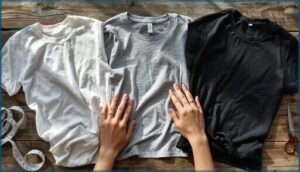
Not every t-shirt is ready to break free from its original design. The fabric you choose, the way it fits your body, and how you prep it before cutting will make or break your final look.
Here’s what you need to keep in mind before making that first cut.
Ideal Fabric Types for Cutting
Not all fabrics play nicely with scissors. Cotton jersey tops the list for neckline cutting—it stretches just enough to recover cleanly without snarling the edge. Interlock knit delivers stable cuts with minimal rolling, while single jersey keeps things soft but needs a firmer hand.
Avoid thick blends or tightly woven fabric that fights back when you’re aiming for smooth, fray-resistant results.
T-Shirt Fit and Style Considerations
Your t-shirt’s starting fit shapes everything—skinny tees create bold scoop neck drama, while looser cuts handle v-neck drops without clinging awkwardly.
Measure shoulder width against your bust: a 2–3 cm gap prevents armhole chafing when you reshape the neckline.
Taller torsos need higher cuts to maintain balance, while petite frames shine with choker-style openings that elongate rather than overwhelm your proportions.
Prepping The T-Shirt for Modification
Prewashing your tshirt before modification matters—cotton shrinks 2–5% in the first wash, shifting your neckline placement. Toss it in cold water to remove sizing agents that stiffen fabric and make clean cuts harder.
Dry completely, then press flat on a cutting mat with shoulder seams aligned. Pin both layers together so your scissors won’t slip mid-cut, keeping your grainline straight and your new neckline perfectly symmetrical.
For a successful modification, consider exploring no sew DIY techniques to achieve your desired look.
Popular Neckline Styles You Can Create
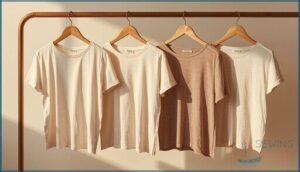
You can create a range of neckline styles depending on the look you’re after. Each style changes the vibe of your t-shirt, from casual and relaxed to bold and fashion-forward.
Here are four popular necklines you can make with a few simple cuts.
Scoop Neck
A scoop neck brings that effortlessly relaxed vibe to any tee, softening the neckline with a gentle curve that sits just below your collarbones.
Start by folding your t-shirt in half lengthwise, then use a plate or bowl as your template to mark the curved cutting line on the fabric. Cut through both layers with sharp scissors, following that smooth arc for symmetrical neckline designs that drape beautifully.
V-Neck
If you’re after something sharper and a little more daring, carving out a V-neck gives your tee an edgier, elongating silhouette that draws the eye down. Fold your tshirt down the center, mark your desired neckline depth with chalk, then follow these steps:
- Cut at a gradual angle from shoulder seam to your marked point
- Keep fabric folding precise for symmetrical vneck patterns
- Trim edges with sharp scissors for clean edge finishing
Off-the-Shoulder
Want even more drama? Go for an off-the-shoulder neckline that exposes both collarbones and creates that casual, romantic vibe.
Fold your t-shirt at the center front, measure diagonally from the shoulder to mid-neck (usually six inches), then mark a gentle curve across. Cut conservatively at first—you can always trim lower.
The fabric draping will naturally roll and soften, while asymmetrical cuts or cold shoulder variations add extra flair.
Choker Neckline
For something edgier that sits close to your neck, try a choker-style neckline that frames your face and adds instant attitude. Mark a shallow curve just below the original seam, cut carefully with sharp scissors, and watch the fabric naturally roll into a band-like edge. This trend transforms any basic T-shirt into a statement piece.
- Break free from boring basics with choker neckline trends that command attention
- Your scissors become tools of transformation, turning thrift finds into fashion wins
- Own your style with DIY crafting hacks that cost nothing but release endless wardrobe updates
Step-by-Step Guide to Cutting The Neckline
Now you’re ready to make the actual cut. This is where your careful prep work pays off—the process is straightforward, but precision matters.
Follow these steps to transform your t-shirt neckline with clean, confident cuts.
Marking The New Neckline Shape
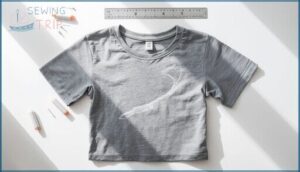
You’ll need to nail the marking before you touch those scissors—this is where symmetry techniques and fabric marking meet precision cutting. Smooth your shirt on a flat surface and fold it vertically down the center. Pin the shoulder seams to lock the layers together.
Use tailor’s chalk or a vanishing fabric marker to draft your curve, whether you’re going for a scoop neck or V-Neck. Mark slowly, measure twice.
Cutting Techniques for Clean Edges
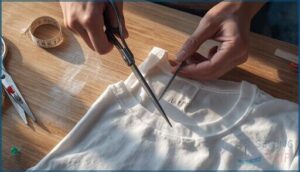
Sharp scissors are your best friend for cutting precision and edge finishing. Dull blades drag through the fabric, creating jagged lines and uneven curves—especially on knit materials like your scoop neck project.
Here’s how to nail clean, fray prevention-worthy cuts:
- Use long, continuous strokes instead of choppy snips to maintain fabric stability along your marked neckline.
- Cut both layers simultaneously with your shirt folded for perfect symmetry.
- Keep scissor maintenance top of mind—sharpen blades regularly for cleaner edges every time.
Trimming and Smoothing The Cut
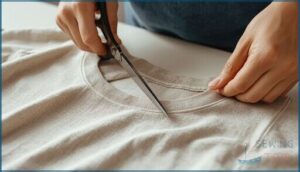
Three careful passes will transform a rough cut into a polished scoop neck. Start with your scissors to trim any stray threads or bumps along the fabric edge—small snips work best for Cut Edge Management.
Then gently stretch the neckline all around, encouraging jersey knits to roll inward naturally. This Fabric Stretching technique softens raw edges while improving Edge Finishing and Fray Prevention without extra tools or Neckline Refining steps.
How to Finish and Refine The Neckline
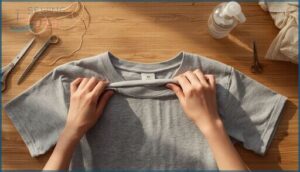
Once you’ve cut your neckline, you’re not quite done yet. The raw edge needs attention to prevent unraveling and give your t-shirt that finished, intentional look.
Here’s how to perfect your cut and make it wearable for the long haul.
Preventing Frayed Edges
A raw neckline won’t survive long without protection. Single jersey cotton T-shirt knits curl naturally at cut edges, which can work in your favor—gently stretching the scoop neck edge helps it roll inward and resist unraveling.
For synthetic blends, quick heat sealing with a lighter melts fiber ends together. Sharp fabric scissors create cleaner cuts that fray less than dull blades.
Optional Sewing for a Polished Look
A topstitched neckline transforms a DIY cut into a garment that looks intentionally designed, not accidentally chopped. Thread your machine with matching thread and stitch a quarter-inch from the scoop neck edge using a stretch stitch.
Sewing techniques that enhance T-shirt modification:
- Zigzag stitching prevents raw edges from unraveling
- Bias tape binding creates professional edge finishing
- Twin needle hemming methods add designer details
- Stretch thread choices maintain fabric flexibility
- Topstitching reinforces the neckline shape
These fabric binding approaches work with your fabric scissors’ clean cuts.
Shaping The Neckline After Cutting
Your freshly cut neckline won’t lie flat until you coax the fabric into its final shape with a few strategic pulls and stretches. Grasp the raw edge between your thumbs and forefingers, then gently tug outward to activate the fabric’s natural curl. This edge smoothing technique makes jersey knit roll inward, hiding raw edges without additional seam finishing.
| Shaping Technique | Result |
|---|---|
| Horizontal stretching | Widens neckline opening |
| Vertical pulling | Creates deeper curve cutting |
| Diagonal tugging | Softens sharp corners |
| Fabric folding test | Reveals uneven areas |
| Steam pressing | Sets final T-shirt shape |
Styling Ideas for Your Modified T-Shirt

Now that you’ve transformed your t-shirt, it’s time to put your creation to work. The right styling can take your modified piece from basic to bold, making it the centerpiece of your outfit.
Here’s how to pair it, accessorize it, and adapt it for any season.
Outfit Pairings and Layering Tips
Once you’ve mastered the cut, it’s time to break some rules with your outfit pairings. High-waisted jeans or denim shorts balance an off-the-shoulder neckline, creating instant casual chic.
Layer your modified t-shirt under a denim jacket or structured blazer for dimension—this wardrobe styling idea works year-round and captures current fashion trends. Tuck the front for definition, or let it hang loose for that easy, layered looks vibe.
Accessorizing for Added Flair
Statement necklaces and layered chains frame your new neckline—off-the-shoulder and scoop styles give you extra canvas for bold costume jewelry.
Pair sculptural earrings with wide cuts when you skip the necklace, or stack mixed-metal rings and chunky cuffs to echo your rebellious DIY fashion projects.
Belt options define your waist under loose cuts, turning simple t-shirt modifications into polished, head-turning looks.
Seasonal Styling Suggestions
Beyond jewelry, your DIY fashion projects shift with the calendar. Spring trends call for pastel T-shirt neckline cuts under denim jackets, while summer vibes embrace off-the-shoulder styles in coral or yellow-green—perfect for shorts and sandals.
Fall layering stacks your T-shirt modification under chunky knits in jewel tones, and winter accessories like turtleneck underlayers keep exposed cuts warm in rust or caramel seasonal colors.
Tips and Troubleshooting for Best Results
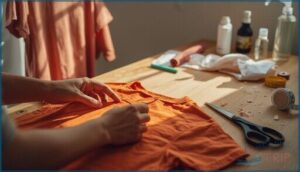
You’ve learned the cutting techniques, but knowing what to watch out for will save you from rookie mistakes and fabric mishaps.
Proper care keeps your modified tee looking fresh wash after wash, while a few expert tricks can take your customization to the next level.
Here’s what you need to know to nail the process and keep your creation looking sharp.
Common Mistakes to Avoid
Most neckline disasters stem from overcutting risks—snipping more than 2 to 3 cm below the original line exposes bra straps and throws off shoulder balance.
Inaccurate marking without measuring creates lopsided curves, while dull scissors fray fabric instead of delivering clean cuts.
Skipping edge finishing lets knit fabric stretch and roll during washing, warping your custom neckline within a few laundry cycles.
Care Instructions for Modified T-Shirts
Once you’ve dodged those pitfalls, protect your handiwork with smart laundry tips. Machine wash your modified t-shirt in cold water on gentle—hot cycles accelerate fiber breakdown and distort cut edges.
Toss it in a mesh bag for edge protection against snagging, skip the bleach to preserve fabric integrity, then air dry flat instead of hanging.
This shrinkage control routine keeps your custom neckline looking sharp wash after wash.
Advanced Customization Ideas
Take your scissors past basic necklines and you’ll discover a whole universe of rebellious design tweaks—asymmetrical cuts, strategic slashes, knotted hems, and woven-in fabric strips that turn plain tees into wearable art.
Try braiding cutout strips back through the neckline for DIY embellishments, or layer contrasting fabric beneath slashes.
These creative restyling fashion hacks transform t-shirt upcycling into your personal style revolution—no pattern required.
Frequently Asked Questions (FAQs)
How do I measure for a v-neck or scoop neck?
Imagine slicing in too deep—disaster averted with precision. For a v-neck, measure 8 inches down from the shoulder seam.
Scoop necks work best using a dinner plate as your cutting template for smooth, symmetrical curves.
What types of t-shirts are best for cutting necklines?
Medium-weight cotton blends with elastane offer the best fabric choices for t-shirt modification, providing stable materials that resist fraying.
Pre-shrunk tees with tight knit structures maintain shape after cutting a v-neck or scoop neck neckline.
How do I sew a neckline?
Finishing a neckline like a pro means folding the raw edge inward and topstitching close to the fold, or adding a narrow knit neckband cut to about 75 percent of your neckline’s total length for a snug, polished fit.
Is there an easy way to make an off-the-shoulder t-shirt?
Yes—fold your t-shirt in half lengthwise, measure 2 inches below the neckline on both shoulders, then cut straight across.
This off-shoulder hack transforms your fabric into a simple style makeover using just scissors.
What other types of t-shirt modifications can I do?
You can explore tie-dye, embroidery, patchwork, distressing, and appliqués to enhance your t-shirt customization game.
These garment alteration techniques transform basic pieces into bold fashion DIY statements that reflect your unique style and creative vision.
Can you cut necklines on graphic tees?
Absolutely—cotton jersey graphic tees handle neckline cutting beautifully. Plan your cuts to frame the design, staying 2–5 centimeters below printed edges. Sharp fabric scissors prevent distortion, and the knit naturally rolls instead of fraying.
How do you fix an uneven cut?
Don’t panic if your DIY neckline goes sideways. Trim the uneven spots carefully with sharp scissors, then gently stretch the fabric to help edges roll inward—this prevents fraying and creates a cleaner, more polished look.
Whats the best neckline for broad shoulders?
V-neck, scoop neck, and asymmetrical styles flatter broad shoulders best by creating vertical emphasis and drawing eyes downward. These neckline options balance body proportion, while boat necks and off-the-shoulder cuts widen your frame visually.
Can you modify stretchy athletic t-shirts?
Stretchy athletic fabrics handle neckline modification surprisingly well—think telegraph operators tailoring wool uniforms.
Focus on fabric behavior and knit structure: polyester blends with spandex resist fraying better than cheap jerseys.
Use edge finishing techniques like serging or twin-needle topstitching to control stretch limits and maintain recovery.
How do you create an asymmetrical neckline?
An asymmetrical v-neck draws the eye diagonally across your t-shirt by marking a slanted cutting line from one shoulder toward the opposite collarbone.
Use sharp scissors, then smooth edges by gently stretching the fabric to prevent fraying.
Conclusion
The shirt you almost threw away might outlast half the pieces you bought this season. Learning how to cut the neck out of a t-shirt hands you control over fit, style, and longevity—no brand dictates what works for your body.
You’ve turned fabric scraps into intention, a ten-minute project into a wardrobe shift. Stretch the neckline, let it settle, and wear it like you meant it all along. That’s the difference between following trends and creating them.
- https://pinterest.com/pin/create/button/?url=https%3A%2F%2Foutfitlovers.com%2Fhow-to-cut-the-neck-off-a-t-shirt%2F&media=&description=How+to+Cut+the+Neck+Off+a+T+Shirt%3A+A+Step-by-Step+Guide+for+Stylish+Makeovers
- https://en.wikipedia.org/wiki/T-shirt
- https://lizhaywood.com.au/like-or-loath-it-tailors-chalk/
- https://topologyclothing.com/blogs/news/fabric-marker-uses-safety-tricks
- https://sewcutepatterns.com/blog/tips-for-measuring-fabric-a-seamstresss-guide