This site is supported by our readers. We may earn a commission, at no cost to you, if you purchase through links.
A drawstring bag takes about 30 minutes to sew and costs less than five dollars in materials—yet it’s one of those things most people keep buying instead of making.
Cotton, a needle, some cord, and you’ve got a bag that holds gym shoes, wraps a gift, or carries your lunch.
The best part? You don’t need experience to get it right the first time.
Whether you’re picking up a sewing machine for the first time or just adding a new project to your rotation, learning how to make a drawstring bag is the kind of skill that pays off every single week.
Table Of Contents
- Key Takeaways
- Essential Supplies for Making a Drawstring Bag
- Measuring and Cutting Fabric Accurately
- Step-by-Step Drawstring Bag Sewing Guide
- Threading and Securing The Drawstring
- Customizing and Embellishing Your Drawstring Bag
- Top Sewing Tools and Fabrics for Drawstring Bags
- Frequently Asked Questions (FAQs)
- Conclusion
Key Takeaways
- drawstring bag takes about 30 minutes and under five dollars to make, so there’s no good reason to keep buying them.
- Fabric choice drives everything — lightweight cotton works for gifts, canvas handles heavy loads, and polyester dries fast for gym use.
- Nailing your measurements before you cut is the single step that saves the most time and frustration later.
- Once you know the basics, you can resize, reshape, and personalize every bag you make — the skill compounds fast.
Essential Supplies for Making a Drawstring Bag
Before you sew a single stitch, it helps to have the right stuff on hand. Grabbing your supplies ahead of time keeps things moving and saves you from stopping mid-project to hunt down a tool.
If you’re just getting started, this guide on how to sew a button is a great first skill to have in your back pocket.
Here’s what you’ll need to get started.
Choosing Fabric Types and Patterns
Picking the right fabric sets the whole project up for success.
Lightweight cotton (around 170–230 GSM) is perfect for gift bags, while canvas supports heavier loads without sagging.
Polyester benefits include fast drying and fade resistance — great for gym use.
For pattern scale matching, medium-scale prints work beautifully on bag bodies.
And don’t overlook your fabric scraps — they’re ideal for mini sizes.
The industry standard canvas weight is 8oz, which balances durability and cost for promotional campaigns.
Selecting Drawstring Materials
Once your fabric selection is sorted, the cord choice matters more than you’d think.
Cotton fabric cords feel soft and natural — great for eco‑friendly fibers and casual gift bags. For gym or travel bags, prioritize cord material strength: nylon or polyester supports real weight and delivers solid colorfastness considerations year‑round.
Grosgrain ribbon threads beautifully through drawstring casings and adds a polished, seasonal flair. Consider using recycled PET material for eco‑friendly durability.
Must-Have Sewing Tools and Notions
Now that your cord is chosen, the right tools make the whole process click. Here’s what you’ll want on hand:
- A reliable sewing machine — the Singer Heavy Duty 4452 manages seam finishes at 1,100 stitches per minute.
- Sharp fabric scissors for clean, accurate cuts.
- A bodkin to thread cords through casings without the frustration.
- Sewing pins and a clear ruler for precise needle selection, thread types, pressing techniques, and storage solutions.
Measuring and Cutting Fabric Accurately
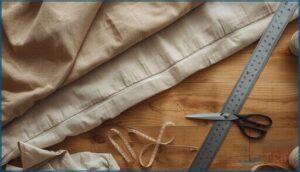
Getting your measurements right is honestly the step that makes everything else easier.
Cut too small, and the bag won’t hold what you need — cut sloppy, and the whole thing looks off.
Here’s exactly what you need to nail this part.
Determining Bag Dimensions
Getting the size right before you cut is everything in bag construction. Start by measuring your item — length, width, and height for boxy things, or maximum circumference for irregular shapes.
Use this standard size chart as your guide:
| Bag Size | Fabric Cut Dimensions |
|---|---|
| Mini | 5 × 10 inches |
| Small | 5 × 13 inches |
| Medium | 7 × 9 inches (×2) |
| Large | 9 × 11 inches (×2) |
Purpose-based sizing matters too — a mini drawstring bag fits jewelry, a small drawstring bag holds party favors, a medium drawstring bag works for everyday use, and a large drawstring bag carries gym gear.
Finished bag height ranges from 5 to 30 inches depending on your needs.
Adding Seam Allowance
Once you’ve nailed your dimensions, seam allowance is what turns flat numbers into a real bag. Think of it as your safety net — that extra fabric you sew into, not through.
Seam allowance is your safety net — the extra fabric you sew into, not through
Here are your go-to Seam Width Options:
- 3/8 inch — ideal Fabric‑Specific Allowances for lightweight quilting cotton
- 1/2 inch — better for canvas or loosely woven fabrics
- 5/8 inch — your best Resizing Allowance Strategies if you want flexibility later
Cutting Fabric Pieces Precisely
Cutting cleanly is where your bag starts to take shape. Use a rotary cutter with a clear ruler for straight, confident cuts — a 60mm blade supports multiple fabric layers without slipping.
Check your grain alignment first so panels don’t twist later.
Mark cutting lines with fabric chalk, then trim with sharp fabric scissors along edges.
For printed fabrics, fussy cutting centers motifs beautifully.
Always cut outside your seam allowance line.
Step-by-Step Drawstring Bag Sewing Guide
Now comes the part where your bag actually starts looking like a bag. Each step builds on the last, so just take it one move at a time.
Here’s exactly how to stitch it all together.
Sewing The Bag Sides and Bottom
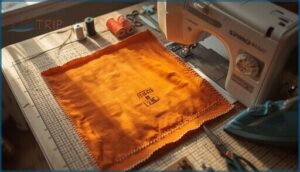
Place your two fabric pieces right sides together — this is where your bag starts taking shape. Mark 2 inches down from the top edge on each side, then sew straight seams down both sides and across the bottom using a ½‑inch seam allowance. Box corner construction gives your bag a flat base.
- Backstitch at every start and stop for side seam reinforcement
- Press seams open using proper pressing techniques to reduce bulk
- Finish raw edges with a zigzag stitch for clean bottom edge finishing
Creating and Sewing The Casing
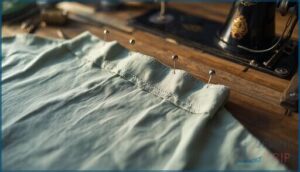
The casing is what gives your bag its magic — without it, there’s no channel for the drawstring to glide through.
Start with the Casing Fold Technique: fold the top raw edge under ¼ inch, press it flat, then fold down again 1 inch. Pin every 2 inches. Stitch ⅛ inch from the lower fold using a 2.5 mm Stitch Length Selection.
| Step | Measurement | Purpose |
|---|---|---|
| First fold | ¼ inch | Encloses raw edge |
| Second fold | 1 inch | Forms casing channel |
| Stitch position | ⅛ inch from edge | Secures Channel Width Adjustment |
Leave a 1‑inch opening at each side seam for drawstring casings access. Backstitch firmly for Seam Reinforcement Methods, then finish with Pressing Casing Edges from the wrong side.
Turning The Bag Right Side Out
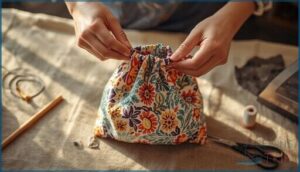
Here’s where your bag finally comes to life.
Use the Safety Pin Technique — attach a pin to the closed end, then ease it through the casing inch by inch until it emerges.
Prefer speed? A Quick Turn Tool slides the whole bag out smoothly.
The Loop Turner Method works great for narrow openings.
Finish by pushing corners out with a chopstick, then pressing the final shape with a warm iron.
Threading and Securing The Drawstring
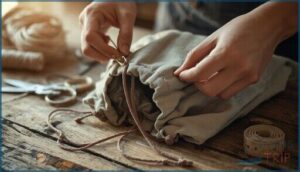
You’re almost done — just one step left before your bag is ready to use.
Threading the drawstring sounds simple, but a few small decisions here can make a big difference in how your bag looks and works.
Here’s what you need to know to get it right.
Methods for Threading The Drawstring
Threading a drawstring doesn’t have to be a guessing game. You’ve got five solid methods to choose from, and each one works beautifully depending on what tools you have nearby.
- Safety Pin Technique — attach a pin to the cord and push it through the casing for the drawstrings steadily
- Bodkin Threading — use a flat bodkin to guide thicker cords without snags
- Straw & Staple Hack, Fork Insertion Trick, or a Drawstring Threader — clever alternatives using everyday sewing notions
Preventing Fraying on Drawstring Ends
drawstring is threaded through the casing, don’t let fraying ruin your work.
For synthetic cords, heat sealing melts the tip into a clean bead — just rotate the end near a flame briefly.
Cotton cords need a liquid fray sealant like Fray Check, an overhand knot stopper, or whipping with waxed thread. Metal end caps give any cord a polished, finished look.
Single Vs. Double Drawstring Styles
Now that your cord ends are secured, it’s time to pick your style. A single pull drawstring bag uses one cord looped fully through the casing — simple threading technique, casual bow appearance on one side. A double pull drawstring bag threads two cords in opposite directions for closure symmetry.
- Casing depth stays 1.5 inches for both styles
- Cord length differs — single needs more, double splits it evenly
- Double style suits polished sewing patterns; single fits relaxed, handmade looks
Customizing and Embellishing Your Drawstring Bag
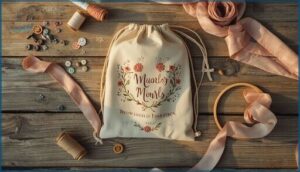
Once your bag is sewn and drawstring is in place, the fun part begins.
You can take it from plain to personal with just a few simple touches.
Here are three easy ways to make your drawstring bag feel like yours.
Adding Embroidery or Patches
Personalizing your bag with embroidery or patches is where the real fun begins. Place your design 3 to 4 inches below the top edge so drawstrings won’t cover it.
Use tear-away stabilizer for clean stitches on cotton. For Placement Planning, backstitch works great for hand sewing names or motifs.
Iron-on patches bond fast — sew the edges for extra staying power.
wash gently to protect your embellishment techniques.
Using Ribbons, Cords, or Beads
Once your patch or embroidery is set, it’s time to make your drawstring do double duty — looking good and working great.
- Grosgrain ribbon holds shape beautifully inside a casing for drawstrings.
- Flat cording gives you real cord strength selection for heavier bags.
- Bead placement patterns at cord ends add instant personality.
Mix ribbon color combos or try mixed material embellishments for adjustable drawstring finishes that feel totally yours.
Creating Different Sizes and Shapes
Sizing up — or down — is where bag making gets really fun.
Mini bags start at just 5 by 10 inches, while large versions stretch to 20 by 30.
Use pattern scaling to hit the right fit, then try boxed bottoms or circular cutouts for structure and shape variety.
Cylindrical adjustments and mini bag ratios let your sewing patterns and techniques grow with every project.
Top Sewing Tools and Fabrics for Drawstring Bags
The right tools and fabrics can make or break your drawstring bag project.
Whether you’re a total beginner or just looking to upgrade your setup, having the right gear saves time and frustration.
Here are seven tried-and-true picks worth adding to your sewing space.
1. Singer Heavy Duty 4452 Sewing Machine
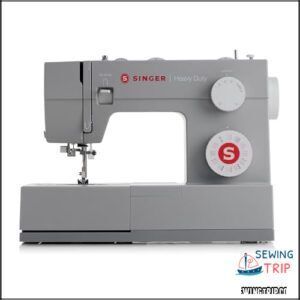
The Singer Heavy Duty 4452 is the kind of machine that doesn’t quit. It powers through denim, canvas, and thick cotton at up to 1,100 stitches per minute — well above the average machine’s 700–800.
That speed matters when you’re cutting your project time in half.
Its full metal frame keeps everything steady, while the top drop-in bobbin lets you check your thread at a glance.
With 110 stitch applications and a built-in needle threader, it manages drawstring bags with ease.
| Best For | Anyone who sews regularly and wants a reliable machine that handles heavy fabrics like denim and canvas without breaking a sweat — great for beginners and experienced sewists alike. |
|---|---|
| Material | Metal, Plastic |
| Primary Use | Sewing garments & bags |
| Skill Level | Beginner to advanced |
| Brand | SINGER |
| Weight | 14.6 pounds |
| Bag Suitability | Sews bag fabric |
| Additional Features |
|
- Punches through thick fabrics and multiple layers with ease, making heavy-duty projects way less frustrating
- 110 stitch options gives you plenty of variety whether you’re hemming jeans or making a tote bag
- The built-in needle threader and top drop-in bobbin make setup quick and simple
- At 14.6 pounds, it’s not the easiest machine to move around or store
- The upright spool pin can be a bit finicky, which is a small but annoying design quirk
- The price point at $215 might feel steep for casual sewists who only sew occasionally
2. Kai Pink Handle Sewing Scissors
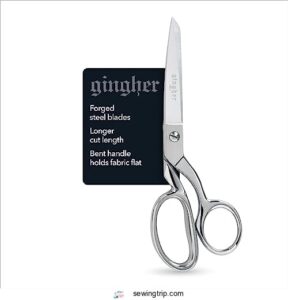
Sharp scissors are a breakthrough — and the Kai Pink Handle Scissors deliver exactly that. Built with NSSWR-2 stainless steel blades hardened to 56 HRC, they slice cleanly through silk, denim, and multiple layers without slippage.
The 6.5-inch compact size gives you real control for precise cuts and fabric notches. That pink soft-touch ergonomic handle isn’t just cute — it reduces hand fatigue during longer sessions.
Made in Japan with over 100 years of craftsmanship behind them, these scissors mean business.
| Best For | Sewers, quilters, and embroidery enthusiasts who need a reliable, longer blade for cutting patterns, seams, and thick fabric layers with precision. |
|---|---|
| Material | Stainless Steel |
| Primary Use | Cutting fabric |
| Skill Level | All skill levels |
| Brand | Gingher |
| Weight | 7.2 ounces |
| Bag Suitability | Cuts bag fabric |
| Additional Features |
|
- Bent handle keeps fabric flat for smooth, accurate cuts across any surface
- Knife edge slices through multiple layers cleanly
- Chrome-over-nickel finish adds durability and a polished look
- Finger holes may feel tight for people with larger hands
- Thick blades can leave a small thread tail when cutting close to fabric
- Pricier than many comparable scissors on the market
3. Dritz Ezy Pull Bodkin Elastic Threader
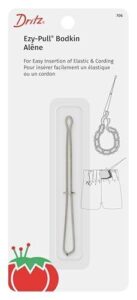
Threading a drawstring through a tiny casing used to mean 15 minutes of frustration with a safety pin.
The Dritz Ezy Pull Bodkin fixes that fast.
Its special gripping teeth clamp onto elastic or cord, and the sliding lock ring holds everything tight so nothing slips mid‑pull.
At just 4.7 inches and under $3, it’s a small tool that saves serious time.
Finishing your drawstring bag goes from tedious to smooth — usually done in under 30 seconds.
| Best For | Anyone who sews regularly — especially people who make scrunchies, joggers, bags, or anything with a waistband or drawstring casing. |
|---|---|
| Material | Silver Metal |
| Primary Use | Threading elastic |
| Skill Level | All skill levels |
| Brand | Dritz |
| Weight | 0.352 ounces |
| Bag Suitability | Threads bag drawstrings |
| Additional Features |
|
- Grips elastic and cord firmly so nothing slips while you’re threading
- Works as a tweezer too, so you can rescue a drawstring that disappeared into its casing
- Tiny and lightweight — easy to toss in your sewing kit and forget about until you need it
- Takes a little practice before it feels natural to use
- Pull too hard and you risk yanking the drawstring right back out
- Only useful for elastic and drawstrings — don’t expect it to handle other tasks
4. Dritz Clear Flexible Sewing Ruler
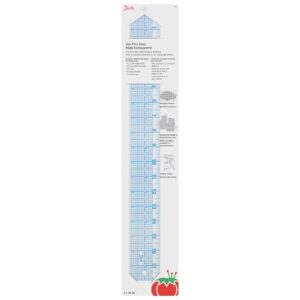
Good measurements make or break a clean bag. The Dritz Clear Flexible Sewing Ruler gives you both precision and flexibility in one tool — it’s 18 inches long, 2 inches wide, and see-through, so you can line it up directly over your fabric without guessing.
The 1/8-inch grid helps you mark casings at a consistent depth, while the center holes let you space drawstring openings evenly. At under an ounce, it slips right into your project bag without adding bulk.
| Best For | Sewists and quilters who need a reliable, easy-to-read ruler for marking fabric, checking seam allowances, and drafting patterns with precision. |
|---|---|
| Material | Plastic |
| Primary Use | Measuring fabric |
| Skill Level | All skill levels |
| Brand | Dritz |
| Weight | 0.176 ounces |
| Bag Suitability | Marks bag patterns |
| Additional Features |
|
- See-through plastic means you can lay it right over your fabric and mark exactly what you see — no guessing or shifting
- The 1/8″ grid and fine edge markings make seam allowances and casing depths quick and consistent
- Lightweight and flexible, so it’s comfortable to use and easy to toss in your project bag
- The small centering holes make it tricky to use with a suction-cup handle, so rotary cutter work gets a little awkward
- Leave it in a hot car and it may warp — store it somewhere cool and flat
- The ruler markings can leave blue smudges on paper, which is worth knowing before you mark up a good pattern
5. OZXCHIXU Coffee Floral Cotton Fat Quarter Fabric
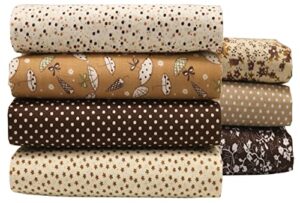
Seven patterns, one bundle — that’s the kind of creative freedom that makes a project feel less like work and more like play. The OZXCHIXU Coffee Floral Cotton Fat Quarter Fabric gives you exactly that.
Each pre-cut square measures 19.7 x 19.7 inches, which cuts cleanly into two bag panels without waste.
The 100% cotton is lightweight and breathable, so it glides under your presser foot without puckering.
Colors stay vivid after washing, and the coffee-themed florals coordinate beautifully for mix-and-match drawstring bags.
| Best For | Quilters, sewists, and DIY crafters who want a ready-to-mix bundle for bags, patchwork, or home décor projects. |
|---|---|
| Material | 100% Cotton |
| Primary Use | Quilting & crafts |
| Skill Level | All skill levels |
| Brand | Unbranded |
| Weight | 5.9 ounces |
| Bag Suitability | Bag-making fabric |
| Additional Features |
|
- Seven unique coffee-floral patterns in one bundle — no hunting for coordinates
- 100% cotton feels easy to work with and holds up well after washing
- Generous 19.7 x 19.7 inch cuts give you real usable fabric, not scraps
- Lighter colors can run sheer, so it’s not great for projects that need structure
- May have a chemical smell out of the package — give it a wash before you sew
- Non-Prime shipping adds cost and wait time, which stings for a small bundle
6. Whaline Summer Cotton Bee Fabric Quarters
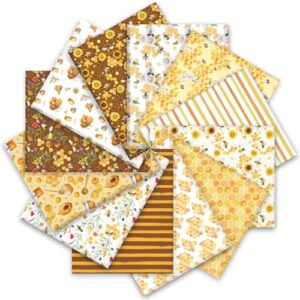
If bees and sunshine are more your style, the Whaline Summer Cotton Bee Fabric Quarters are worth a close look.
You get 12 fat quarters — each measuring 18 x 22 inches — packed with honeycomb patterns, sunflowers, and boho rainbow accents that practically beg to become a cheerful drawstring bag.
The 100% cotton cuts cleanly, threads easily, and holds its color after washing.
Mix and match the coordinated prints for bags that genuinely look like you planned them that way.
| Best For | Crafters and hobbyists who love bright, summer-themed prints and want an easy, affordable way to stock up on coordinated cotton fabric for small sewing projects like bags, pouches, or gifts. |
|---|---|
| Material | Cotton |
| Primary Use | DIY sewing crafts |
| Skill Level | All skill levels |
| Brand | Unbranded |
| Weight | Not specified |
| Bag Suitability | Bag-making fabric |
| Additional Features |
|
- 12 fat quarters with cheerful bee, honeycomb, and sunflower designs that coordinate well together
- 18 x 22 inches is a generous size — easy to cut and work with for most small projects
- 100% cotton feels comfortable to handle and works well for DIY crafts and decorations
- Some buyers found the fabric thinner than expected, which can make it less ideal for quilting
- A few users reported a mildew-like smell or fraying edges after washing
- The prints run large and bold, so crafters looking for delicate or dainty patterns may be disappointed
7. Whaline Christmas Cotton Fabric Fat Quarters
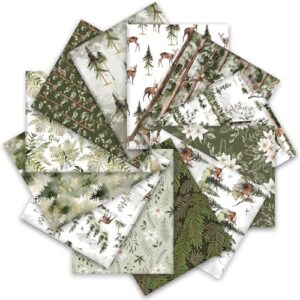
Swap sunshine for snowflakes, and the Whaline Christmas Cotton Fabric Fat Quarters deliver the same reliable quality in a festive palette.
You get 12 fat quarters — each 18 x 22 inches — featuring holly, Santa figures, snowflakes, and poinsettias in classic red, green, and gold. The premium cotton cuts cleanly, irons flat, and manages drawstring casings without bulk.
With 12 coordinated prints in one bundle, you can sew a full set of holiday gift bags before December even arrives.
| Best For | Quilters and holiday crafters who want a coordinated set of festive prints ready to cut and sew right away. |
|---|---|
| Material | Cotton |
| Primary Use | Quilting & patchwork |
| Skill Level | All skill levels |
| Brand | Whaline |
| Weight | 1.06 pounds |
| Bag Suitability | Bag-making fabric |
| Additional Features |
|
- 12 different designs in one bundle means you get plenty of variety without hunting for matching fabrics
- Premium cotton cuts cleanly and irons flat, making it easy to work with on detailed projects
- Fat quarter size is perfect for smaller holiday items like gift bags, ornaments, and patchwork squares
- Fabric runs on the thinner side, so it may not hold up well for projects that need more structure
- Edges can fray quickly, which means you’ll want to finish seams carefully
- Not every print is strictly Christmas-themed, so the bundle may feel a bit off if you’re going for a purely festive look
Frequently Asked Questions (FAQs)
How to make a cord for a drawstring bag?
A cord is the lifeline of your bag. Twist 20–30 strands of polyester thread, fold at the midpoint, and let it self-twist into a smooth, strong drawstring ready to use.
What kind of string for drawstring bag?
Cotton, nylon, and paracord are all solid choices. Cotton cord feels soft and natural. Nylon manages moisture well. Paracord 550 is tough enough for heavy loads.
Stick to 2mm–4mm thickness for most bags.
How to make a drawstring dolly bag out of fabric?
Fabric folded, fitted, and finished — that’s the secret to a sweet dolly bag. Cut a rectangle, sew the sides, create a casing, thread your cord, and you’re done.
How do you wash finished drawstring bags?
Turn your bag inside out, toss it in a mesh laundry bag, and run a gentle cold cycle.
Air dry flat — never wring it — and remove the drawstrings first to avoid knots.
Can drawstring bags be made without machines?
Yes, absolutely. You can hand-sew a drawstring bag using a whip stitch along the sides and a simple running stitch for the casing.
A blunt tapestry needle and some twill tape are all you really need.
What causes drawstring cords to get stuck?
Ever wonder why drawstring suddenly won’t budge?
Usually, casing is too narrow, cord absorbed moisture and swelled, or lint and detergent buildup created gritty friction spots inside the tunnel.
How long do homemade drawstring bags last?
It depends on how you use and care for it. A cotton bag lasts 6 months to 5 years. Canvas holds up 2 to 4 years. Synthetic fabrics often last even longer.
Can you repair torn drawstring bag seams?
Absolutely — torn seams don’t mean the end of your bag.
Pin the edges together, backstitch along the original seam line, and lock your threads at both ends. It’s a five-minute fix.
How do you wash and care for drawstring bags?
Turn your bag inside out, pop it in a mesh laundry bag, and wash cold on a gentle cycle. Air dry flat in the shade — never the dryer.
Can drawstring bags be made without a sewing machine?
Yes, you can make a drawstring bag without a sewing machine. Use fabric glue, hand stitching, or even knotting techniques to build a sturdy, functional bag with no machine required.
Conclusion
Some say handmade gifts carry more meaning than anything money can buy—and once you learn how to make a drawstring bag, you’ll see exactly why.
What started as fabric and cord becomes something you actually use, give, and feel proud of.
Every bag you sew gets faster and more personal.
Change the size, swap the fabric, add your own touch.
You didn’t just follow steps—you built a skill that sticks.
- https://initibag.com/best-fabric-for-drawstring-bags/
- https://totebagfactory.com/blogs/news/what-are-drawstring-bags-made-of-a-beginner-s-fabric-guide
- https://www.chicaandjo.com/how-to-make-a-drawstring-bag/
- https://www.dianerooney.co.uk/easy-drawstring-bag-tutorial
- https://www.wzbiben.com/drawstring-bag-dimensions-size-guide/