This site is supported by our readers. We may earn a commission, at no cost to you, if you purchase through links.
Your Bernina hums along beautifully for months, then suddenly starts skipping stitches or making odd grinding noises. Before you panic about expensive repairs, there’s a simple fix most sewers overlook: proper lubrication.
Like any precision machine with moving metal parts, your Bernina needs regular oiling to keep its gears, hook race, and timing system running smoothly. Without it, friction builds up, dust particles become abrasive, and components wear down prematurely.
The good news? Oiling a Bernina takes less than fifteen minutes once you know which points need attention and how much oil to use. Master this essential maintenance skill, and you’ll keep your machine stitching flawlessly for decades while avoiding costly breakdowns.
Table Of Contents
- Key Takeaways
- Why Oiling Your Bernina Sewing Machine Matters
- How Often Should You Oil a Bernina?
- What Oil is Best for Bernina Machines?
- Essential Tools for Oiling Your Bernina
- Preparing Your Bernina for Oiling
- Where to Oil a Bernina Sewing Machine
- Step-by-Step Guide to Oiling a Bernina
- Post-Oiling Maintenance and Troubleshooting
- Frequently Asked Questions (FAQs)
- Conclusion
Key Takeaways
- Oil your Bernina every 3-4 bobbins or 8-12 hours of sewing to prevent friction damage, with heavier projects like quilting requiring more frequent lubrication every 4-6 hours.
- Always clean lint and debris from the hook race before applying oil, since dirt mixed with lubricant creates contaminated buildup that damages moving parts and voids warranties.
- Use only light, non-staining sewing machine oil specifically formulated for Berninas—never cooking oils, WD-40, or motor oils—and apply just 1-2 drops at designated points to avoid over-lubrication.
- Run your machine unthreaded on scrap fabric after oiling to distribute lubricant evenly and catch excess oil before starting actual projects, preventing stains on your finished work.
Why Oiling Your Bernina Sewing Machine Matters
Your Bernina isn’t just a machine—it’s an investment that deserves proper care. Regular oiling keeps the moving parts working smoothly, preventing problems before they start.
Most sewing machine user guides include a detailed maintenance schedule, so check yours to stay on track with oiling intervals.
Regular oiling protects your Bernina investment by keeping moving parts smooth and preventing problems before they start
Let’s look at three key reasons why this simple maintenance step makes all the difference.
A well-cared-for serger fabric guide helps you achieve consistent, professional-looking seams every single time you sew.
Preventing Wear and Tear
Your Bernina’s moving parts face constant friction during every seam you stitch. Without proper machine lubrication, that friction accelerates wear and can compromise your sewing machine’s internal components. Here’s what regular oiling prevents:
Regular oiling also helps prevent common causes of sewing machine jams, which often result from the combination of friction, lint, and dried lubricant residue.
- Friction Reduction: Lubrication creates a protective barrier between metal surfaces, preventing direct contact that grinds down gears and hook mechanisms
- Heat Management: Oil dissipates heat buildup from high-speed operation, protecting seals and bearings from thermal degradation
- Gear Longevity: Consistent maintenance scheduling keeps your BERNINA’s timing system running smoothly, reducing resistance in the shuttle mechanism
- Oil Migration Prevention: Applying the correct amount to designated points keeps oil in the reservoir where it belongs, away from belts and electronics
- Abrasive Protection: Sewing machine oil traps dust particles that would otherwise act like sandpaper on precision components
Improving Stitch Quality
Well-maintained machine lubrication directly impacts your stitch quality. When you oil your BERNINA regularly, you’ll notice fewer skipped stitches and smoother thread tension across various fabric selections.
Proper sewing machine maintenance keeps feed dog adjustment consistent, preventing puckering during delicate work.
The right needle choice combined with correct stitch length becomes more effective when your embroidery machine runs without internal friction compromising precision.
If your machine feels sluggish or skips stitches unexpectedly, replacing a worn sewing machine belt can restore smooth motor performance and improve stitch consistency.
Extending Machine Lifespan
Your BERNINA can serve you faithfully for decades if you treat its moving parts with consistent care. Regular maintenance with proper machine lubrication prevents costly repairs down the road. Quality sewing machine oil reduces friction that wears down gears, while consistent oiling preserves your machine’s resale value.
Here are durability tips for maximizing machine longevity:
- Use only recommended sewing machine oil to protect internal components
- Schedule routine maintenance sessions based on your sewing efficiency needs
- Monitor performance changes that signal the need for professional servicing
How Often Should You Oil a Bernina?
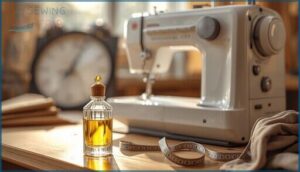
You can’t just oil your Bernina on autopilot and hope for the best. The right schedule depends on how much you sew, what kind of projects you tackle, and whether your machine is already crying out for attention.
Let’s break down exactly when your Bernina needs oil so you can keep it running smoothly without guessing.
Frequency Based on Usage
Think of oiling like tuning an instrument—timing matters. Your BERNINA’s usage patterns determine sewing intensity levels, guiding when you’ll need sewing machine oil. Light domestic sewing requires lubrication every 6 to 12 months, while moderate to heavy daily use demands oil inspection every 1 to 3 months. Dense fabrics and decorative stitches increase friction factors, shortening maintenance schedules.
| Usage Level | Recommended Oiling Frequency |
|---|---|
| Light (few hours weekly) | Every 6–12 months |
| Moderate (several hours daily) | Every 2–3 months |
| Heavy (continuous daily use) | Every 1–2 months |
| Dense fabrics/decorative stitches | More frequent inspection |
Recognizing Signs Your Machine Needs Oil
Friction speaks before your BERNINA fails entirely. When moving parts cry out for sewing machine oil, they broadcast Lubrication Warning Signs through performance changes and sounds. Machine Noise Analysis reveals grinding or squeaking from dry components, while Stitch Quality Issues like puckering or skipped stitches point to inadequate maintenance. Oil Leak Detection around joints, alongside thread breaks and overheating, confirms your oil reservoir needs attention—Friction Reduction Methods start with recognition.
Listen for these warning signals:
- Unusual grinding or squeaking sounds emerging from the needle bar or shuttle mechanism
- Fabric puckering or skipped stitches caused by insufficient lubrication in moving parts
- Frequent thread breaks or sluggish response indicating friction in internal components
- Visible dried residue or accumulated lint around moving joints requiring fresh sewing machine lubrication
- Increased motor heat or overheating signaling lubrication-related friction buildup
Oiling Schedule for Different Projects
Project Based Oiling adjusts to your workload intensity. Heavy quilting projects demand fresh sewing machine oil every 4–6 hours to counter fabric type impact on BERNINA components, while garment sewing with lightweight materials extends intervals to 8–12 hours. Industrial-speed stitching requires daily checks of your oil reservoir.
Sewing Frequency shapes Machine Longevity. If you sew seasonally, apply Sewing Machine Oil Usage before restarting to protect dormant parts through proper Sewing Machine Maintenance Tips.
Machines handling tough materials like leather require frequent lubrication, so check your leathercrafting sewing machine manual for recommended oil intervals.
What Oil is Best for Bernina Machines?
Choosing the right oil for your Bernina isn’t a matter of personal preference—it’s about protecting your investment. The wrong lubricant can damage internal components, void your warranty, or create sticky buildup that interferes with smooth operation.
Let’s look at what works, what doesn’t, and where to find the oil your machine needs.
Recommended Bernina Oils
Your Bernina sewing machine thrives on the right lubricant. Bernina offers synthetic sewing machine oil formulated for precision mechanisms, with carefully calibrated viscosity levels to minimize residue.
Look for light, non-staining machine oil specifically designed for bobbin hooks and feed mechanisms. Professional-grade lubricant properties guarantee machine compatibility with both metal and plastic components.
Always verify the oil bottle confirms it’s safe for household sewing machines, not general-purpose lubricants.
Oils to Avoid
Not all oils belong in your BERNINA sewing machine. Using the wrong lubricants can damage precision components and void your warranty.
Here’s what to avoid in your oil and lubrication guide:
- Cooking oils (olive, vegetable) gum up mechanisms and attract dust
- Motor oils formulated for engines leave heavy residue on cams
- Automotive lubricants and synthetic oils impede precise component movement
- WD-40 and household mineral oils lack proper machine oil lubrication properties
Where to Buy Suitable Oil
Finding the right oil for your BERNINA sewing machine starts with authorized dealers. Over 2,000 worldwide stock authentic products formulated for specific hook systems. Online stores like The Quilting Bee and Sewing Machine Shop offer convenient shipping, while local sewing shops provide immediate access.
For reliable sewing machine repair and maintenance, stick with Bernina Dealers who guarantee compatibility with your oil and lubrication guide requirements.
To maintain peak performance, it’s critical to use the correct sewing machine oil for your device.
Essential Tools for Oiling Your Bernina
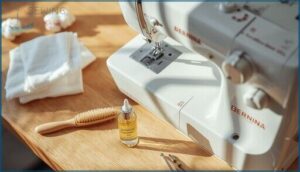
You don’t need much to oil your Bernina properly, but having the right tools makes the job easier and safer. Most of these items come with your machine or you probably already have them at home.
Let’s look at what you’ll need to gather before you start.
Cleaning Brushes and Cloths
You’ll need a few simple tools on hand to clear out lint and debris before you apply any oil to your machine. A microfiber cloth works perfectly for wiping down surfaces without leaving residue. For tight spots around the hook compartment, grab a small brush or clean paintbrush. Tweezers help you pluck out stubborn thread remnants that brushes can’t reach.
Regular sewing machine maintenance is essential for peak performance.
Oil Dispensers and Applicators
Once you’ve cleaned the machine, the right applicator makes oiling precise and mess-free. Bernina’s precision oil pen delivers single drops exactly where they belong—the hook race, oiling pad, or rotary hook compartment—without flooding surrounding parts.
Look for these features in any dispenser:
- A fine metal or plastic tip that reaches deep into the bobbin area
- A transparent body so you can monitor lubricant flow and refill on time
- A protective cap to prevent lint contamination between maintenance sessions
- Leak-resistant construction that won’t drip oil into your storage trays
Keep the spout clean by threading the supplied wire through clogs, never forcing debris back into the reservoir.
Safety Supplies and Accessories
Before you apply a single drop, protect yourself and your workspace with a few simple safeguards that prevent oil stains, needle pricks, and accidental damage. Lay down microfiber cloths beneath your machine to catch drips. Store needles safely in needle protectors once removed.
Keep tweezers, tools, and cleaning brushes nearby for lint extraction. A vacuum cleaner with a narrow attachment clears dust before you start, while a sharp thread cutter speeds up bobbin removal without fraying fabric.
Preparing Your Bernina for Oiling
You can’t just grab your oil bottle and start dripping it into your machine. Proper preparation protects your Bernina from damage and ensures the oil reaches exactly where it needs to go.
Here’s how to get your machine ready for its maintenance session.
Powering Down and Unplugging
Electrical safety comes first when preparing your BERNINA sewing machine for oil and cleaning. Turn the power switch to position 0, then remove the plug from the outlet—never pull the cord itself. This shutdown sequence protects you during sewing machine repair and cleaning:
- Switch the machine to 0 off
- Grasp the plug firmly
- Pull straight from the outlet
- Verify complete disconnection
Removing Needles, Presser Foot, and Bobbin
With power off and your machine unplugged, it’s time to access the interior. Turn the handwheel until the needle bar hits its highest position, then loosen the needle clamp screw and pull the needle straight down. Press the presser foot release to detach it, then raise the needle bar fully using the handwheel before removing the bobbin case.
| Component | Removal Method |
|---|---|
| Needle | Loosen clamp screw, pull downward |
| Presser Foot | Press release lever, detach |
| Bobbin Case | Raise needle bar, pull latch |
Cleaning The Machine Before Oiling
Lint and thread fragments clog your hook race faster than you think, turning fresh oil into sticky grime. Here’s your pre-oil cleaning routine:
- Remove the stitch plate and lift out the bobbin case to expose the hook compartment
- Use your supplied brush to sweep lint from the hook race, feed dogs, and surrounding surfaces
- Wipe the hook and race cover with a clean microfiber cloth to eliminate oil residue
- Extract stubborn thread remnants with tweezers from tight spaces the brush can’t reach
Never use compressed air—it pushes debris deeper into your Bernina’s internal mechanisms where only a technician can retrieve it.
Where to Oil a Bernina Sewing Machine
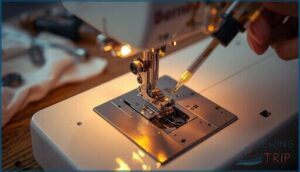
Knowing where to oil your Bernina isn’t guesswork—it’s about targeting specific points where metal parts move against each other. Your machine’s hook type determines exactly which spots need attention, and missing even one can affect performance.
Let’s break down the key locations you’ll need to focus on.
Identifying Key Oiling Points
Your Bernina’s manual pinpoints exact oiling locations, but knowing where metal meets metal under friction makes the difference between smooth operation and unnecessary wear. Focus on the hook race where the bobbin case rotates—this high-speed contact zone demands proper machine lubrication. The felt pad beneath also needs attention.
Different BERNINA models feature varying hook types, so check your specific configuration before applying oil.
Oiling The Hook and Bobbin Area
Start by placing one or two drops of oil directly onto the hook race, where the bobbin case makes constant contact during sewing. Don’t exceed three drops—excess oil creates messy buildup rather than improving machine lubrication.
Next, apply a single drop to the felt pad if your BERNINA model includes one. This systematic oil application ensures proper hook maintenance while supporting overall sewing efficiency through consistent bobbin cleaning practices.
Special Instructions for CB and Rotary Hooks
CB Hook systems differ from rotary designs in how you access and maintain them. On CB models, you’ll remove the entire hook assembly for complete cleaning and direct oil application to the race.
Rotary care requires a different approach—add just one drop through the race opening without removing the hook.
Each design demands specific lubrication tips for proper BERNINA sewing machine hook maintenance and peak CB servicing or rotary hook performance.
Step-by-Step Guide to Oiling a Bernina
Now that you know where to apply oil, it’s time to walk through the actual process.
The steps below break down exactly how to oil your Bernina, from the first drop to the final test run. Follow these carefully to guarantee your machine gets the care it needs without overdoing it.
Applying Oil to The Correct Locations
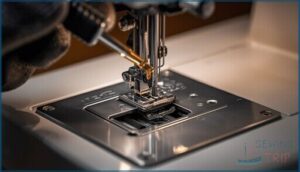
Precision makes all the difference when placing oil drops on your BERNINA sewing machine. For the Bernina hook, place one drop directly into the hook race and one on each visible felt pad.
Rotary hook models need a single drop at the bobbin basket race opening—rotate the handwheel until you spot it.
CB hook systems require one to two drops on the metal race before reassembly, ensuring smooth weaving motion during cleaning and ongoing bobbin area maintenance.
Reassembling Your Machine Properly
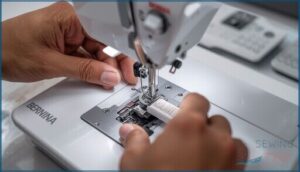
After applying oil to your BERNINA sewing machine, proper hook alignment is critical. Line up the hook’s locating hole with the gray mark at the 6 o’clock position before closing the race cover. You’ll hear an audible click when it seats correctly.
Next, snap in your bobbin reinstallation, ensuring it locks without wobbling. Replace the needle plate over the feed dog area, securing from the left side first for accurate machine calibration during maintenance.
Distributing Oil After Application
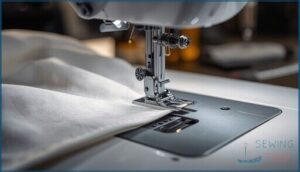
Once everything’s back in place, running the machine without thread for a few cycles helps work that fresh oil into all the moving parts where it belongs. Here’s how to handle oil distribution effectively:
- Run the machine at medium speed for 30 seconds to distribute oil throughout the hook mechanism
- Insert a needle but leave it unthreaded during this oil absorption phase
- Sew on scrap fabric for several inches to catch any excess oil before starting your real project
- Check for oil spots on your test fabric—if you see them, wipe the hook area gently
- Switch to normal sewing once the test cloth shows no oil transfer
This oil distribution step prevents stains on your good fabric while ensuring proper machine lubrication reaches every critical point.
Post-Oiling Maintenance and Troubleshooting
Oiling your Bernina is only half the job. You’ll need to deal with any excess oil and set up a maintenance routine that keeps your machine running smoothly.
Let’s cover how to handle common post-oiling issues and create a schedule that works for your sewing habits.
Addressing Excess Oil Issues
Over-oiling happens when even experienced sewers get generous with the oil bottle, but you can fix it. Here’s what to watch for and how to respond:
| Excess Oil Symptoms | Oil Leak Prevention & Machine Cleaning Tips |
|---|---|
| Oil splatters on test fabric after maintenance | Sew on scrap or darker fabric for several minutes to absorb surplus oil before starting your project |
| Wet or translucent stitches from hook race over-lubrication | Run your Bernina at moderate speed without thread, then wipe accessible metal surfaces with a lint-free cloth |
| Pooling or shiny residue around hook or bobbin case | Remove bobbin and bobbin case, gently dab visible oil inside hook area with a cotton swab |
| Irregular stitch formation or skipped stitches initially | Rotate handwheel several turns after reassembly to redistribute remaining oil evenly |
| Persistent oil traces on project underside after extended sewing | Apply only one small drop at the designated hook point—never multiple drops in one session |
For oil stain removal on fabric, treat fresh stains immediately before washing. Apply commercial spot lifter spray from 6 to 10 inches away, let it dry completely, then brush off the powder. Repeat until the darkened areas disappear, then launder according to care instructions.
Following lubrication best practices means applying just one drop of recommended Bernina oil at each service interval. Skip an application if the hook area still looks wet from recent sewing machine maintenance—cumulative over-lubrication causes more problems than it solves. This approach to sewing machine care and troubleshooting keeps your Bernina running smoothly without the mess.
Scheduling Regular Maintenance Sessions
Regular sewing machine maintenance keeps your Bernina performing reliably between home oil changes and shop visits. Build a preventive maintenance rhythm that matches your workload:
- Oil your hook every 3 to 4 bobbins during typical projects, or daily when sewing continuously at high speeds.
- Clean lint from the bobbin area after each project or every 8 to 10 hours of active stitching.
- Schedule professional service intervals every 12 to 18 months for calibration, internal cleaning, and full lubrication by certified Bernina technicians.
- Track your stitch counts and service dates in a simple notebook so you can plan appointments before lubrication degrades.
- Watch for unusual noises, skipped stitches, or thread breakage that signal you need immediate sewing machine troubleshooting before your next scheduled maintenance.
Heavy embroiderers and quilters may reach a million stitches in under a year, shortening the oil change frequency needed for proper Bernina sewing machine care.
Coordinate firmware updates with annual mechanical service so software and hardware maintenance schedules align, ensuring complete textile equipment maintenance during each shop visit.
Frequently Asked Questions (FAQs)
Can I oil my Bernina without cleaning first?
No, never oil without cleaning first. Dirt and lint will mix with fresh oil, creating a contaminated film that clogs your hook, soils thread, and damages moving parts over time.
What happens if I use the wrong oil?
Using the wrong oil causes gumming, corrosion, and friction increase in your Bernina sewing machine. Lubricant failure leads to oil damage, premature wear, and stitch problems—cooking oil and WD‑40 leave parts sticky or unprotected.
How do I oil older Bernina models?
Think of older Bernina models like the 830 or Record series as vintage engines—they need slightly heavier, yellow-capped Bernina oil on hook races, exposed shaft bearings, and upper linkages after thorough cleaning.
Should I oil before long storage periods?
Yes, you should oil your Bernina before extended storage. The oil film provides rust prevention and protects metal components from corrosion, supporting longevity and reducing friction when you restart after months of inactivity.
Does temperature affect oiling frequency or oil performance?
Temperature effects play a big role in sewing machine maintenance. Viscosity changes make oil thicker in cold rooms, thinner in heat. Oil degradation speeds up in warmth.
Always let your textile equipment reach thermal equilibrium before cleaning and re-oiling. Lubricant stability matters.
Conclusion
Most sewers spend hours perfecting their stitches but ignore the five-minute task that prevents machine failure entirely. Now that you know how to oil a Bernina sewing machine, friction won’t silently destroy precision components while you work.
Apply two drops every eight hours of use, wipe away excess, and distribute oil through gentle handwheel rotations. Your Bernina will reward consistent maintenance with perfect stitches long after neglected machines require costly rebuilds.