This site is supported by our readers. We may earn a commission, at no cost to you, if you purchase through links.
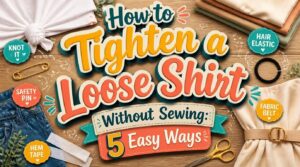
That shirt you love — the one that fits perfectly in the shoulders but swims everywhere else — doesn’t have to live at the back of your closet. Fit issues derail great outfits every day, and most people assume the only fix involves a needle and thread.
It doesn’t.
How to tighten a loose shirt without sewing is less about fashion hacks and more about knowing which technique matches your fabric, your look, and how much time you have. A coin and a hair elastic can reshape a boxy tee in under a minute. A well-placed belt can do what tailoring takes weeks to schedule.
Five methods — from knotting and cinching to pinning, hem tape, and strategic layering — give you real control over how any shirt fits your body.
Table Of Contents
Key Takeaways
- Knotting, the coin trick, belts, pins, and hem adjustments are five no-sew methods that can reshape a loose shirt in minutes without a tailor.
- Fabric matters: cotton, linen, and knits hold techniques like knotting and cinching well, while slippery fabrics like silk will undo your efforts fast.
- Placement is everything — a knot too low, a coin off-center, or an uneven pin can create bulk instead of fixing it, so always check symmetry before committing.
- Most of these fixes aren’t just for shirts: belts, hem tape, and layered tanks work across dresses, hoodies, and skirts, making them versatile tools for your whole wardrobe.
Tighten Shirts With Knots

Knotting is one of the fastest ways to take a shirt from boxy to polished — no tools, no sewing, no fuss. The trick is knowing where and how to place the knot so it actually flatters your shape. Here are five knotting methods worth having in your back pocket.
Once you’ve mastered the knot placement, pairing it with clean seams can take your DIY style even further — these stitching techniques for stronger, neater seams are a great next step.
Side Seam Knot
Pull the fabric at your side seam and tie a firm overhand knot from the inside. Place it near the hip, just below the natural waist, where looseness is most visible. Mark the spot first with tailor chalk so both sides stay even.
Knits and fabrics with at least 5% spandex hold the knot best. Press it flat after tying to keep the exterior clean.
Front Waist Knot
Grab the center of your shirt and tie a simple knot just at or above your natural waist. Knot placement matters — higher up creates an empire waist effect that lengthens your torso; lower pulls attention to the abdomen.
For knits, gather a little extra fabric before tying so the knot holds its shape without stretching out. This technique can also help shorten garment length for a more flattering silhouette.
Back Knot Method
The back knot works the same way — just moved to the rear. Pull fabric toward the center back, twist it, and tie a snug knot.
Keep it flat against your spine so nothing bulges under a jacket. Distribute tension evenly on both sides; uneven pulling causes bunching. Matte knits hold this best since they don’t catch light at the fold.
Cropped Shirt Knot
The cropped knit knot sits 1 to 2 inches above your natural waist, giving boxy tees a cleaner shape. Knit fabric’s elasticity does the work — no slipping, no extra fasteners.
Try a simple overhand or a twisted bow to change how much fabric bunches above the knot. Don’t overstretch the knit while tying; that causes sagging.
Best Fabrics for Knotting
Not every shirt is worth knotting. Cotton and linen hold best — their dense fiber structure grips under tension without slipping.
- Cotton (prewashed)
- Linen
- Hemp blends
- Twill weaves
- Poplin
Avoid silk or sateen — smooth surfaces loosen fast. Stick to medium-weight fabrics (180–260 g/m²) for knots that actually last.
Use The Coin Trick
The coin trick is one of those clever little hacks that looks like magic but takes about ten seconds to pull off. All you need is a coin, a hair elastic, and a loose shirt you’re tired of swimming in. Here’s how to make it work.
For a cleaner finish that actually holds up, beginner-friendly sewing projects and techniques can show you how to use a stretch stitch so the seams flex with the elastic instead of popping on the first wear.
The coin trick turns a loose shirt into a fitted one with just a coin, elastic, and ten seconds
Choose Coin Size

Coin size matters more than you’d think. A 1.5 inch coin works for light gathering, but a 2 inch coin hits the sweet spot — enough surface area to create clean fabric folds without slipping.
Go bigger, like 2.5 inches, for thicker fabrics that need stronger tightening. Larger coins cost more but deliver noticeably better grip and visual results.
Place Coin Outside

Position the coin along the outside waistline, not against your skin — that gap prevents irritation and keeps fabric tension smooth. Jersey knits drape cleanly over it; stiff wovens don’t cooperate.
- Aim for the side seam area
- Keep the coin flat against the outer fabric layer
- Avoid decorative buttons nearby
Smooth-edged coins redistribute fold lines without creating awkward creases during movement.
Secure With Elastic

Wrap a hair elastic around the coin once it’s in place. Loop it snugly — tight enough to hold the gathered fabric, loose enough that it doesn’t bite into the material. Think of it like tightening some regulations: you want control, not restriction. One or two loops usually does the job cleanly.
Create Waist Gathering

Pull the fabric toward the coin and distribute it evenly on both sides. Uneven gathering creates bulk on one side — the same way straps on a backpack dig in when they’re not balanced.
Smooth the folds out with your fingers so the waistline sits symmetrically, giving your silhouette a clean, intentional shape rather than a pinched, rushed look.
Try Back Cinching

Back cinching works the same way — gather from behind rather than the front.
Reach around to the back of your shirt, pinch a small section of fabric at the waist, and secure it with an elastic band or coin trick. This pulls the silhouette inward without bunching the front, keeping your look clean and intentional from every angle.
Cinch With Belts and Elastics

Belts and elastics are some of the easiest tools you can reach for when a shirt doesn’t quite fit right. They work fast, leave no trace, and give you real control over how your outfit looks. Here are five ways to make them work for you.
Natural Waist Belt
A natural waist belt sits at the narrowest part of your torso, just above the belly button, pulling a loose shirt into shape instantly. Slim belts (2–3.5 cm) work for lighter fabrics, while wider styles add stronger definition.
Choose leather or faux leather with a traditional buckle closure for a secure, adjustable fit you can dial in precisely.
Wide Belt Grip
A wide belt — 3 to 4 inches — does something a slim one can’t: it distributes tension evenly, so the shirt molds cleanly without bunching or shifting.
Go for leather or sturdy fabric. These hold their shape through movement. Place it snug but not tight enough to compress your ribs. If pull lines appear, shift it half an inch up or down.
Hair Elastic Hack
No belt on hand? A hair elastic works surprisingly well. Loop it through a shirt button or gather a small section of fabric, then wrap the elastic around it two to three times to create a snug, ruched effect.
- Wrap fabric sections cleanly for a smooth gather
- Distribute tension evenly to avoid pull lines
- Remove instantly without leaving marks
Magnetic Shirt Cinchers
If elastics feel too fiddly, magnetic shirt cinchers skip the wrapping entirely. Small clips with embedded neodymium magnets attach along your side seam, instantly gathering fabric into a fitted shape — no tools, no stitching.
They’re built for lightweight fabrics like cotton jersey and knits. One heads-up: keep them away from credit cards or your phone. The magnets are strong enough to cause interference.
Corset Belt Styling
A corset belt does more than tighten — it sculpts. Worn at the natural waist, it creates an hourglass shape over oversized shirts instantly. Choose steel boning for heavier fabrics; plastic works fine for lighter layers.
Match the belt color to your shoes, keep jewelry minimal, and let the cinch speak for itself.
Hide Looseness With Pins

Pins are one of the easiest ways to fake a perfect fit without touching a needle and thread. A few well-placed clips can pull extra fabric toward your body and keep it there all day. Here’s how to make it work:
Inside Safety Pins
Safety pins are your secret weapon for a cleaner fit — no needle, no thread, no commitment.
- Choose 1–2 inch pins for light fabrics
- Thread the pin parallel to the fiber
- Use stainless steel pins for durability
- Engage the spring-loaded clasp fully to lock
- Test on a fabric scrap first to avoid snagging
Side Seam Pinning
Pinning along the side seam gives you precise control over how much fabric you pull in. Place pins perpendicular to the seam line — never parallel — so the fabric stays flat without puckering. Near the waist and hip, increase pin density since curves shift more under movement.
Smooth fabric outward from center before each pin to reduce bulk and keep the silhouette clean.
Back Fabric Clips
Clips work differently than pins — they grip without piercing. Back fabric clips use heat-resistant plastic jaws to gather excess shirt fabric and hold it flat against your back, protecting delicate knits from snag marks.
Space them 2 to 3 inches apart for even pressure. Choose smaller clips for lightweight fabrics, jumbo versions for thicker layers.
Mark Pin Placement
Before you pin anything, mark your spots first. Set marker pins perpendicular to the fabric — never diagonal — so they hold without shifting.
- Check symmetry on both sides
- Place pins 1 to 2 inches from the seam edge
- Test tension by gently pulling
That small tug confirms even distribution before you commit.
Avoid Fabric Damage
Sharp pins tear fibers the same way overstretched fabric gives out — quietly, then all at once.
Always check your care label before pinning. Use soft-tipped clothing clips on delicates, and place a cotton scrap as a barrier beneath each pin to reduce friction.
| Risk | Cause | Fix |
|---|---|---|
| Pilling | Direct pin contact | Fabric barrier |
| Fraying | Edge tension | Hem tape |
| Snags | Diagonal pins | Perpendicular placement |
Adjust Sleeves and Hem

Sometimes the fix isn’t at the waist — it’s at the edges. Sleeves that bunch and hems that hang too low can make even a decent fit look sloppy. Here are five quick ways to clean up the details and pull the whole look together.
Roll Loose Sleeves
Loose sleeves can make a shirt look sloppy. Rolling them up takes seconds and instantly sharpens your look.
The Classic Cuff Method folds the sleeve upward once or twice, hiding the cuff inside for a clean line. The Italian Roll creates a smoother, fashion-forward finish. For a bolder, high-arm look, try the Master Roll — tight, narrow folds stacked up toward the bicep.
Fold Shirt Hem
Sleeves sorted — now look down. A hem that hangs too low or billows out drags the whole shirt with it.
Fold it up once or twice and press it flat. Ironing precision sets a crisp crease that holds through movement. Lighter fabrics like cotton take a narrow 1/4-inch fold cleanly. Heavier material needs a wider fold to lie flat without bulk.
Use Hem Tape
A folded hem is fine — but if you want something that holds, hem tape delivers.
It’s a double-sided fusible tape that bonds fabric with heat. No needle needed. Press with a dry iron, let it cool fully, and the edge locks in place. Test a small strip first — lighter fabrics need lighter tape, or you’ll get stiffness or bleed-through.
Tuck Excess Fabric
Tucking excess fabric at the hem is one of the fastest fixes you have. Pull the front panel in, fold the extra material under, and secure it against your waistband.
This works especially well with side seam tucks — pinch small amounts of fabric at each side and tuck evenly so the shirt drapes cleanly without bunching.
Layer Fitted Tanks
Slip a fitted tank underneath and watch the shirt’s loose silhouette snap into shape instantly. The base layer compresses excess fabric against your body, so the outer shirt drapes cleanly rather than floating around you.
Think of it like thermal layering — each layer has a distinct role, and the tighter foundation controls everything above it.
Frequently Asked Questions (FAQs)
What types of fabric can I use the techniques on?
Most techniques work on cotton, linen, knits, and synthetics. Silk needs extra care to avoid slipping. Wool blends hold shape well. Always test on a small area first.
How much fabric should I use for hem tape?
Cut tape to match your hem length, then add ½ inch extra per side for overlap. Use 3/8 inch width on lightweight shirts to avoid bulk at the fold.
How do I know when the shirt is too tight?
Your shirt is too tight when chest buttons gap, armholes restrict arm movement, or waist tension lines appear. Run the collar clearance test: if two fingers don’t fit, it’s too snug.
Can I use the same technique for other types of clothes?
Yes, most of these methods work on dresses, hoodies, and skirts. Dress cinching limits apply near zippers. Hoodies risk torso distortion when knotted. Woven fabrics need stronger holds. Outerwear may reduce shoulder mobility when belted.
Is there any way to avoid shrinking the shirt?
Cold water washing keeps your shirt from shrinking. Always air dry, and gently reshape while damp. Check the care label — it tells you exactly how to wash without losing that perfect fit.
Can I tighten a shirt using iron-on tape?
Iron-on tape can tighten a shirt by fusing fabric layers together with heat. It works best on cotton and cotton blends. Always test a small swatch first to avoid scorching delicate fabric.
Will these methods work on plus-size clothing?
Yes, these methods work on plus-size clothing. Use wide belts and reinforced elastics to manage fuller waists. Choose fabrics with moderate drape to keep knots smooth and seams stress-free.
How do I keep adjustments secure all day?
Double-check tension points after the first hour. Knots loosen, coins shift, and pins migrate. A quick tug test keeps everything in place before you’re too far into your day to fix it.
Can childrens oversized shirts be resized this way?
Surprisingly, yes — children’s shirts respond well to these methods. Cotton jersey knit fabrics tolerate knotting and cinching without fraying. Side seam adjustments can reduce width by up to 2 to 6 inches, keeping proportions intact.
Do these tricks work on button-down shirts?
Yes, these tricks work well on button-down shirts. Cotton blends hold knots and pins best. Avoid back knots if your shirt has a yoke — they add bulk. Button alignment stays intact with most front-knot methods.
Conclusion
Fitting frustration fades fast when you know how to tighten a loose shirt without sewing. A knot, a coin, a well-placed pin — each method hands you back control without waiting on a tailor. Your wardrobe doesn’t shrink; your options expand.
Pick one technique, try it today, and notice how a shirt you’d given up on suddenly earns its place again. The fix was always simpler than you thought.
- https://docs.google.com/forms/d/1GAQr3Kn1cURCVHUA82hAga1Wv8DCH0IuqDLRUrOpN7M/viewform?ts=63f4f653&entry.1515682415=https://www.merriam-webster.com/dictionary%2Ftighten
- https://unabridged.merriam-webster.com/check-redirect-premium?utm_source=mw&utm_medium=inline-def&utm_campaign=evergreen&headword=tighten
- https://www.thesaurus.com/browse/fasten