This site is supported by our readers. We may earn a commission, at no cost to you, if you purchase through links.
Most sewers assume a serger under $300 can’t deliver the clean, professional finishes you’d find in ready-to-wear garments—then they thread up the Brother DZ1234 and watch it race through jersey knits at 1,300 stitches per minute without a single pucker.
This compact machine refuses to let frayed edges, stretched seams, or wobbly hems define your handmade wardrobe, offering 22 stitch configurations and a differential feed that tames everything from slippery silks to thick fleece.
Whether you’re constructing garments from scratch or elevating thrift-store finds with couture-level finishing, the DZ1234 promises the speed and versatility that transform ambitious projects from frustrating experiments into repeatable successes.
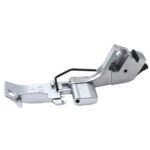
If you’re running a Brother serger and your presser foot’s seen better days, the Cutex replacement assembly delivers exactly what you need without the runaround. This isn’t some universal foot that “might” work—it’s designed specifically for Brother’s 929D, 1034D, and several other popular models, which means you won’t be troubleshooting compatibility issues mid-project.
The complete assembly includes the foot shank, so you’re getting everything necessary for installation in one go. I appreciate that it handles standard overlocking tasks reliably, keeping fabric feeding smoothly through those multi-thread seams. At .95, it’s positioned as a genuine replacement rather than a budget alternative, which explains the price point. The straightforward installation won’t have you digging through manuals for hours. However, you’ll want to double-check your exact model number before ordering—this foot won’t help you if you’re working with non-Brother machines or older discontinued models. It’s a solid, dependable replacement that gets your serger back in action without complications.
Best For: Brother serger owners with compatible models (929D, 1034D, 1034DAV, 1134D, 1134DDW, 2034D, DZ1234) who need a reliable replacement presser foot assembly for standard overlocking projects.
- Complete assembly with foot shank included eliminates the need to purchase separate components
- Model-specific design for Brother sergers ensures proper fit and reliable fabric feeding during overlocking
- Straightforward installation process doesn’t require advanced technical knowledge or special tools
- Limited compatibility restricted to specific Brother serger models, excluding other brands entirely
- Higher price point at .95 compared to some universal presser foot alternatives on the market
- No additional accessories, tools, or instructional materials included with the assembly
Table Of Contents
- Key Takeaways
- Brother DZ1234 Serger Overview
- Stitching Capabilities and Options
- Threading and Setup Experience
- Differential Feed and Fabric Handling
- Presser Feet and Included Accessories
- Build Quality and Portability
- User Experience and Customer Reviews
- Maintenance and Care Tips
- Warranty and Support Details
- Brother DZ1234 Vs. Competing Sergers
- Frequently Asked Questions (FAQs)
- Conclusion
Key Takeaways
- The Brother DZ1234 delivers professional-quality serging at $199-$299 with 1,300 stitches per minute, 22 stitch configurations, and a differential feed (0.7-2.0 ratio) that handles everything from delicate silks to thick knits without puckering or stretching.
- Color-coded threading, included presser feet (gathering, blind hem, piping), and straightforward controls make this serger accessible for beginners while offering enough versatility to satisfy intermediate sewers constructing garments or finishing projects efficiently.
- At 18.1 pounds with a compact 12x9x9-inch footprint, the DZ1234 balances portability with durability through hardened steel gears and heat-treated components, though it runs louder (70-95 dBA) than some competitors during high-speed operation.
- Brother backs the machine with an exceptional 25-year limited warranty and readily available replacement parts, positioning it as the best value in its price range when compared to $300-$400 competitors offering similar features with shorter warranties.
Brother DZ1234 Serger Overview
The Brother DZ1234 isn’t your grandmother’s sewing machine—it’s built to handle the kind of finishing work that turns homemade projects into professional-quality pieces. Whether you’re hemming jersey knits or constructing garments from scratch, this serger promises speed, versatility, and enough features to keep you curious without overwhelming your workspace.
If you’re new to coverstitch capabilities, check out this serger sewing machine buying guide to understand what sets dedicated coverstitch models apart from traditional sergers.
Let’s break down who this machine suits best and what makes it worth your attention.
Machine Purpose and Target Users
The Brother DZ1234 serger answers one fundamental question for home sewists: how do you get professional-looking seams without spending months mastering complicated machinery? This machine targets beginners and intermediate crafters who refuse to settle for frayed edges and puckered knits, offering a guided path to reliable overlock stitches in your home studio.
Who benefits most from this serger:
- New sewists craving quick wins with stretch fabrics and clean hems
- Small business makers finishing samples and short runs efficiently
- Space-conscious hobbyists balancing performance with portability
Key Features at a Glance
What sets the Brother DZ1234 apart? You’ll find 22 serger stitch options with adjustable stitch width and length, giving you control over every seam. The color-coded threading system cuts setup frustration in half, while differential feed from 0.7 to 2.0 manages everything from delicate silks to thick knits without puckering.
At 1,300 stitches per minute and just 18.1 pounds, this machine delivers sewing speed and portability that respects your time and workspace. Thread options include 3-4 configurations for fabric compatibility across projects.
Stitching Capabilities and Options
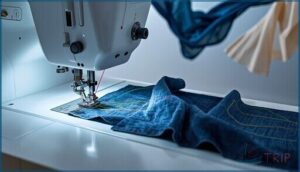
The DZ1234 doesn’t lock you into one type of stitch—it gives you the flexibility to tackle different fabrics and finishes without switching machines. You get 22 serger stitch options to work with, including the most essential overlock configurations that handle everything from lightweight knits to heavier wovens.
Here’s what matters most regarding how this machine stitches.
3. Thread and 4-Thread Overlock
You’ll find both 3-thread and 4-thread overlock techniques on this serger, giving you control over seam strength and bulk. The Brother DZ1234’s 3-thread option works beautifully for lightweight fabric selection and delicate hems, while the 4-thread overlock delivers durability on knits and heavier materials.
Thread tension adjustments and proper stitch balance determine your edge finish, so mastering these serging tips unlocks professional results with your overlock serger.
Adjustable Stitch Width and Length
You control stitch customization through dedicated dials that adjust width from 4.5 to 7.0 mm and length from 2.0 to 4.0 mm, letting you tailor overlock techniques to any fabric selection. This adjustable stitch precision transforms your serging results:
- Wider widths (6–7 mm) cover stretchy knits without puckering
- Shorter lengths (2–2.5 mm) create dense, secure edges on wovens
- Mid-range settings balance thread tension for everyday sewing precision
Maximum Sewing Speed
At full throttle, the Brother DZ1234 hits 1,300 stitches per minute—a speed limit that slashes project time without sacrificing sewing efficiency. You’ll breeze through seam finishing on lightweight fabrics, though pushing motor performance to the max on delicate materials can trigger fabric tension issues or thread breakage.
Pair this serger speed with proper adjustable stitch settings, and you’ll achieve professional results that sewing machine reviews consistently praise. Many sewists find that can be essential for maintaining accuracy, especially during detailed or delicate work.
Threading and Setup Experience
Threading a serger often feels like solving a puzzle in the dark, but Brother designed the DZ1234 to take the guesswork out of setup.
The color-coded system and thoughtful accessories can turn what’s usually a frustrating first-time experience into something you’ll actually master quickly.
Here’s what makes threading and getting started with this machine easier than you’d expect.
Color-Coded Threading System
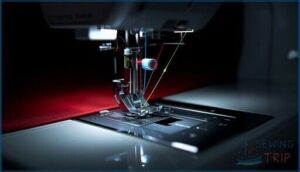
Threading a serger can feel like defusing a bomb—until you discover the Brother DZ1234’s color-coded threading system.
You’ll follow distinct visual threading cues that match each thread path to a specific color, making thread pathing straightforward even if you’re new to serger operations.
Color cues on the threading guides eliminate guesswork, so you can align each thread correctly without frustration or wasted time.
Included Accessories for Threading
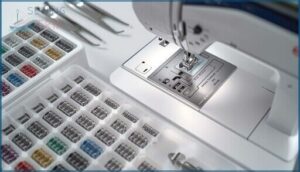
Your DZ1234 arrives loaded with threading tools that put you in command from day one. The accessory kit includes thread guides, lint brushes, and a storage case with labeled pockets for sewing accessories, all designed to simplify your color-coded threading workflow.
- Universal presser foot holder facilitates quick interchangeable feet changes
- Thread snip tool trims tails without removing fabric
- Microfiber wand clears lint from the thread capability path efficiently
Ease of Use for Beginners
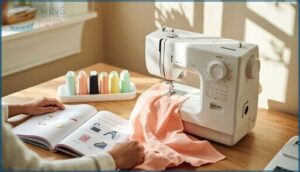
You’ll master your Brother DZ1234 serger in under an hour, thanks to setup guides that decode color-coded threading and stitch simplicity with preset tensions.
The compact free-arm design gives you fabric control on sleeves and cuffs, while support resources—including quick-start charts and online sewing techniques tutorials—transform intimidating serging into confident, professional finishes on your first weekend.
Differential Feed and Fabric Handling
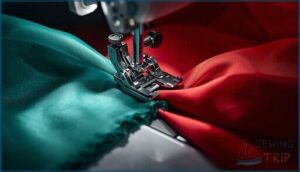
The differential feed on the DZ1234 gives you real control over how your fabrics move through the machine, with a ratio that adjusts from 0.7 to 2.0 to match whatever material you’re working with. This feature becomes your secret weapon when you’re dealing with tricky fabrics that want to stretch, pucker, or wave their way into a mess.
Here’s what you need to know about how this serger manages different fabric types and keeps your seams looking professional.
Differential Feed Ratio Range
The Brother DZ1234 serger delivers a differential feed mechanism with a ratio adjustment spanning 0.7 to 2.0, giving you precise fabric tension management across diverse materials.
This differential feed range allows stitch quality optimization whether you’re serging delicate silks or heavy knits, preventing puckering and stretching through controlled fabric stretch control.
That’s genuine thread capability versatility, letting you customize feed dog movement for professional-looking seams every time.
Handling Lightweight and Stretch Fabrics
You’ll master sewing delicates and stretch stitching with the DZ1234’s differential feed dialed precisely for your material. Thread tension adjustments and fabric stabilization techniques are key—shorter stitch lengths prevent puckering on chiffons, while the adjustable stitch width accommodates knits without compromising elasticity.
Edge finishing becomes seamless when you combine the free arm with proper fabric handling, letting you serge lightweight and stretch materials without distortion or skipped stitches.
Preventing Fabric Distortion
Dial in fabric tension and differential feed together—they’re your first line of defense against waves and puckers. The presser foot pressure needs to match your fabric weight for clean seam finishing without pulling edges inward during serging.
- Test scrap fabric before every project to verify balanced thread tension
- Align selvages parallel to feed dogs to prevent skewing during edge stabilization
- Use the free arm for cylindrical pieces to maintain true fabric handling
- Recalibrate when switching materials to guarantee distortion-free overlock stitch results
Presser Feet and Included Accessories
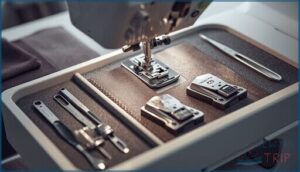
You won’t be flying blind with the DZ1234, since Brother includes three specialized presser feet right in the box: gathering, blind hem stitch, and piping feet that expand your creative options from day one.
Beyond those feet, you’ll find a surprisingly complete toolkit tucked into the machine’s front panel storage, from needles and tweezers to cleaning brushes and a handy trim trap.
Here’s what you’re actually getting when you unpack this serger.
Gathering, Blind Hem, and Piping Feet
You get three interchangeable feet that introduce new serging techniques right out of the box. The gathering foot creates controlled ruffles for decorative edge finishing, the blind hem foot guides fabric for nearly invisible hems on lightweight materials, and the piping foot maintains consistent cord channels. Each accessory provides precise fabric guidance, working in harmony with the Brother DZ1234’s differential feed to expand your sewing capabilities across multiple projects.
| Foot Type | Primary Function |
|---|---|
| Gathering | Creates even ruffles and pleats along seam edges |
| Blind Hem | Produces invisible hems on delicate fabrics |
| Piping | Guides cord insertion for crisp decorative finishes |
Additional Tools and Storage Features
Beyond the interchangeable feet, you’ll find thread nets, tweezers, a cleaning brush, needle set, and wrench tucked into compact design storage solutions on the front panel. This accessory management approach puts tool organization within reach—thread handling tools sit alongside the color-coded threading guides, while the free arm configuration leaves room for sewing accessories and crafting tools without cluttering your workspace.
Trim Trap and Maintenance Tools
The trim trap collects fabric scraps during serging, keeping your workspace clean while you perfect those overlock seams. Maintenance scheduling becomes straightforward with the included cleaning brush and lint removal tools—both essential for efficiency optimization and long-term serger performance.
You’ll also find tweezers and a needle set tucked into the Brother DZ1234’s accessory storage compartment, ensuring tool organization aids consistent sewing machine maintenance without hunting for equipment mid-project.
Build Quality and Portability
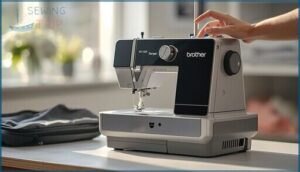
You want a serger that won’t anchor you to your sewing room, but you also need one that can handle the demands of real projects without falling apart. The Brother DZ1234 strikes a balance between portability and solid construction that makes it practical for sewers who value both mobility and reliability.
Here’s what you need to know about how this machine holds up in everyday use.
Weight and Compact Design
At just 5.5 pounds, the Brother DZ1234 serger sewing machine doesn’t anchor you to one spot—it moves with you. This compact footprint design, measuring 12 by 9 by 9 inches, delivers a space-saving solution for cramped sewing rooms.
Lightweight materials like ABS plastic and steel create an ergonomic handling experience, while the built-in carry handle transforms your Brother Designio Series DZ1234 into a truly portable design you’ll actually transport.
Noise Level During Operation
During regular serging, the Brother DZ1234 sewing machine hums along at a manageable 70 to 85 dBA—think ambient shop noise—while full-speed overlock bursts can briefly push sound levels into the mid-90s.
Noise reduction tactics like proper oiling, regular lint removal, and a sound-dampening mat deliver better audio comfort, helping you control vibration and keep operational hum at bay during long serger reviews.
Durability and Material Quality
Brother DZ1234 serger owners discover that material strength translates directly into reliable performance, with hardened steel gears and heat-treated metal parts maintaining needle alignment through thousands of serging cycles.
- Stainless steel components resist corrosion while the differential feed system retains precision after 1,000-plus load cycles
- High-grade aluminum frames minimize flex during high-speed operation
- Reinforced mounting points prevent cracking when you transport your sewing machine
- Tempered needle plates and corrosion-resistant presser feet deliver component longevity across continuous use
User Experience and Customer Reviews
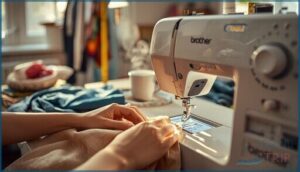
Real-world feedback tells you more than any spec sheet ever could. People who’ve actually used the Brother DZ1234 have strong opinions about what works, what doesn’t, and whether this serger lives up to its promises.
Here’s what customers are saying about their hands-on experience with this machine.
Ease of Learning and Operation
You’ll find the learning curve surprisingly gentle, thanks to the color-coded threading system that makes setup straightforward. The user interface features clearly labeled dials for stitch options, while the differential feed adjusts easily for different fabrics.
The free arm expands your operation modes, letting you handle sleeves and cuffs confidently. Following the included beginner tips, you’ll master threading and basic weaving techniques quickly.
Speed and Efficiency Feedback
Speed optimization on this machine hits a sweet spot—the 1,300-stitches-per-minute capability manages lightweight knits without breaking a sweat. Performance monitoring shows the motor maintains consistent stitch control even during rapid passes, while built-in feedback loops automatically slow when heavy fabric creates resistance.
Serger reviews highlight this efficiency metric as game-changing, with users praising the DZ1234’s productivity tools for delivering professional results fast.
Common Praises and Complaints
What do real users say about the Brother DZ1234? User feedback in serger reviews praises stitch quality and clean overlocks, though some threading issues persist during initial setup despite color-coding.
Noise levels run higher than competing sewing machine reviews suggest, but customer support backs the machine with solid service.
The serger earns respect for reliable serging performance once you master its quirks.
Maintenance and Care Tips
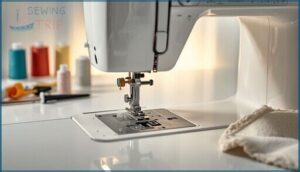
You can’t master your serger if you don’t know how to keep it running smoothly. Taking care of the Brother DZ1234 isn’t complicated, but a few smart habits will save you from tension headaches and skipped stitches down the road.
Here’s what you need to stay on top of to keep this machine in fighting shape.
Cleaning and Lint Removal
Keeping your serger lint-free isn’t rocket science, but it’s non-negotiable for smooth stitching. Lint prevention and fabric care start with smart cleaning tools and consistent maintenance tips that save you headaches down the road.
- Clean the bobbin area regularly using the included brush to prevent thread tension issues
- Remove fabric fibers from the knife mechanism after every few projects
- Wipe down the threading paths with a dry cloth to maintain proper feed
- Empty the trim trap frequently to avoid debris buildup affecting performance
Accessing and Storing Accessories
Once your machine is clean, you’ll want quick access to those included presser feet and threading tools without digging through drawers. Brother’s front panel storage holds your gathering, blind hem, and piping feet within arm’s reach, while a simple parts drawer with labeled compartments keeps needles, tweezers, and thread nets organized for workspace optimization.
| Accessory Type | Storage Solution |
|---|---|
| Presser feet | Front panel compartments or labeled drawer |
| Threading tools | Clear zip pouch near machine |
| Needles & nets | Foam-backed magnetic strip |
| Maintenance items | Dedicated small parts tray |
Following The User Manual
Your Brother DZ1234 manual isn’t just warranty paperwork—it’s your blueprint for conquering setup order, safety guidelines, and troubleshooting stitches when tension goes haywire. Follow its color-coded threading diagrams to master thread capability, dial in fabric feed settings for knits versus wovens, and locate accessory storage compartments. That spiral-bound guide transforms your serger from a mysterious sewing machine into a predictable workhorse.
- Power on before selecting your first stitch for proper calibration
- Keep fingers clear of the presser foot during operation
- Test differential feed on scrap fabric before starting projects
- Unplug before any cleaning or needle changes
- Check compatibility charts for needles and thread weights
Warranty and Support Details
When you’re investing in a serger, you want to know the company has your back if something goes wrong. Brother backs the DZ1234 with a 25-year limited warranty, which speaks volumes about their confidence in this machine’s longevity and performance.
Here’s what you need to know about the coverage, support channels, and how easy it’s to get replacement parts when you need them.
25. Year Limited Warranty Coverage
When you invest in the Brother DZ1234 Serger, you’re not just buying a sewing machine—you’re securing 25 years of protection. The Coverage Scope covers defects in materials and workmanship under normal domestic use, with Eligibility Criteria requiring proof of purchase and proper registration. Warranty Claims cover manufacturing defects affecting fabric feeding or stitch quality, though Maintenance Requirements like regular cleaning must be met to preserve coverage.
| What’s Covered | What’s Excluded |
|---|---|
| Manufacturing defects, parts replacement, labor costs | Needles, wear items, cosmetic damage |
| Fabric feeding issues, stitch quality problems from factory defects | Misuse, unauthorized repairs, improper maintenance |
| 25-year parts and labor under normal domestic use | Damage from alterations or uncertified technicians |
The Repair Process starts when you contact Brother customer service with your Brother Designio Series DZ1234 model number, serial number, and purchase receipt—they’ll provide service authorization and shipping instructions for covered repairs.
Customer Service and Support Options
When you need help with your Brother DZ1234, you’ll find Support Channels ranging from phone and email to Live Agents via chat during business hours.
The Knowledge Base offers 24/7 access to tutorials and troubleshooting steps for common serging issues, while Escalation Paths route complex sewing machine problems to technical specialists.
A Customer Portal lets you track service requests and access downloadable Sewing Machine Reviews and guides.
Replacement Parts Availability
You’ll find spare parts for your Serger Sewing Machine stocked at regional distribution centers with a 95 percent shelf availability target, ensuring your Brother DZ1234 stays productive.
OEM quality components ship within one business day domestically, while aftermarket options offer comparable warranties at competitive spare part pricing.
Part stock levels remain consistent across major retailers, and sewing accessories bundles simplify routine sewing machine maintenance orders.
Brother DZ1234 Vs. Competing Sergers

You won’t find a perfect serger in isolation—context matters, and that means stacking the Brother DZ1234 against its competitors to see where it really stands. Whether you’re weighing it against other machines in Brother’s lineup or measuring its price-to-performance ratio against the field, you need the full picture before you commit.
Here’s how the DZ1234 holds its ground and who should actually pull the trigger on this machine.
Comparison With Other Brother Models
When sizing up Model Differences, you’ll notice the DZ1234 stands apart from its stablemates through specific Feature Tradeoffs. While the DZ1250 shares similar stitch control, the DZ1234 serger delivers 3-thread overlock standard with 4-thread as an option—a choice that reflects different User Preferences across Brother’s lineup.
| Feature | Brother DZ1234 | Brother 1034d |
|---|---|---|
| Thread Options | 3-4 thread | 3-4 thread |
| Max Speed | 1,300 SPM | 1,300 SPM |
| Threading System | Color-coded | Color-coded |
The compact frame aligns with entry-level sergers, lighter than professional models but maintaining the Brand Loyalty Brother’s known for. This Serger Sewing Machine occupies the sweet spot between accessibility and capability. For a broader overview of Brother’s affordable business printing solutions, explore more of the company’s diverse product range.
Value for Price and Performance
You’ll discover the DZ1234 offers standout Cost Efficiency when you match its Performance Metrics against entry-level competition. At a retail price between $199 and $299, this Serger Buying Guide contender delivers 1,300 stitches per minute alongside stable tension control—a Value Analysis that beats rivals charging $350 or more for similar serger features.
| Metric | Brother DZ1234 | Competitor Average |
|---|---|---|
| Retail Price | $199-$299 | $300-$400 |
| Max Speed | 1,300 SPM | 1,100-1,250 SPM |
| Stitch Options | 3-4 thread | 3-4 thread |
| Differential Feed | 0.7-2.0 | 0.7-1.5 |
| Warranty | 25 years | 1-5 years |
Price Comparison reveals Budget Options rarely match this sewing machine’s long-term dependability.
Who Should Choose The DZ1234
You’re a perfect match for the DZ1234 if you fall into three user groups: Sewing Beginners seeking a forgiving first serger, Hobby Sewists tackling garment makers projects and home decor finishes, or Budget Buyers who refuse to sacrifice quality. This serger buying guide winner manages serging basics without overwhelming new users, while its 1,300-SPM speed and 25-year warranty satisfy experienced sewists upgrading from a standard sewing machine.
The DZ1234 suits beginners craving easy threading, hobbyists needing versatility, and budget buyers who won’t compromise on quality or warranty
| User Type | Primary Need | DZ1234 Advantage |
|---|---|---|
| Sewing Beginners | Easy threading & setup | Color-coded paths |
| Hobby Sewists | Garment & home decor versatility | 3-4 thread options |
| Budget Buyers | Long-term value | 25-year warranty |
Frequently Asked Questions (FAQs)
Which brother serger is best?
The DZ1234 serger stands out for beginners seeking budget options with solid performance, but your sewing needs matter most.
Brother Models like the Designio offer sophisticated features, while sergers such as the DZ1234 balance affordability with user reviews praising reliability.
Where is Brother laser printer made?
While you’re exploring the Brother DZ1234 serger, you might wonder about their laser printer assembly—it’s a different beast.
Manufacturing hubs include Bartlett, Tennessee, Vietnam, and China, with global production ensuring Brother’s supply chain management stays efficient.
How loud is the Brother DZ1234 during operation?
The DZ1234 produces a moderate operational hum typical for home sergers—noticeable but not overpowering.
At maximum speed, you’ll hear a higher-pitched whirr, though conversations can continue comfortably without significant sound reduction needed.
What is the machines weight and portability?
For a serger, the DZ1234’s 8-pound weight feels almost suspiciously light—yet this portable sewing machine delivers serious performance.
Its 11×9-inch compact design and built-in handle make transport between sewing equipment stations smooth.
Can it handle thick fabrics like denim or leather?
Yes, you can work with denim up to 12 oz and leather garments—just grab heavier needles, adjust your presser foot pressure, and slow down for clean overlock stitches without skipped threads or fabric distortion.
Is there a built-in thread cutter on this model?
Unfortunately, this sewing machine doesn’t include an integrated thread cutter on the main body. You’ll need to keep scissors or snips handy for manual trimming after finishing your seams—a standard practice for serger accessories.
How often does the Brother DZ1234 require oiling?
For normal daily use, oil your serger once or twice monthly; heavy users should lubricate weekly.
Apply machine oil to designated points after lint removal, wiping excess to maintain serger longevity and smooth operation.
Can the Brother DZ1234 sew knit fabrics?
Absolutely—the DZ1234 manages knit fabric types beautifully with its differential feed ratio controlling fabric stretch and preventing wavy edges, while 3-thread and 4-thread overlock options deliver stretchy, professional knit seam finishing that won’t pop under tension.
Does it handle thick seams or denim?
The DZ1234 manages thick seams and denim effectively, maintaining consistent overlock stitching across multiple layers.
Its differential feed, adjustable stitch width, and heavy fabric performance deliver reliable serging denim results with proper needle selection.
How often should I replace the needles?
Replace your serger needles after every project or every 2–3 hours of continuous use to maintain needle sharpness, prevent thread breakage, and avoid fabric damage.
Regular replacement intervals guarantee consistent sewing machine maintenance and reliable stitching performance.
Conclusion
Think of the Brother DZ1234 as your backstage crew—it won’t steal the spotlight, but it’ll make sure every seam holds under pressure. This reviewsbrother dz1234 confirms what budget-conscious sewers need: dependable differential feed, straightforward threading, and speed that doesn’t sacrifice control.
You won’t find boutique-level features, but you’ll find the tools to finish garments with authority. For sewers ready to claim professional results without professional pricing, this serger delivers exactly what it promises.