This site is supported by our readers. We may earn a commission, at no cost to you, if you purchase through links.
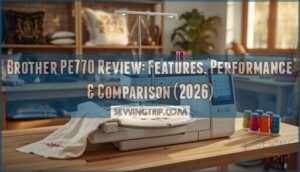
The Brother PE770 embroidery machine has held its position in workshops and craft rooms since its release, outlasting countless competitors that promised more but delivered less. While newer models flood the market with touchscreen bells and wireless whistles, this dedicated embroidery-only machine continues to earn recommendations from serious hobbyists and small business owners who need consistent results without the learning curve of industrial equipment.
Its 5×7 inch embroidery field, 138 built-in designs, and USB import capability represent a deliberate balance between accessible pricing and professional-grade features that actually matter when you’re six hours into a custom jacket. Understanding where the PE770 excels—and where it shows its age compared to 2026 alternatives—determines whether you’re investing in reliable craftsmanship or chasing specifications that won’t improve your finished projects.
Table Of Contents
Key Takeaways
- The Brother PE770 remains competitive in 2026 despite its 2012 release because it prioritizes proven reliability over trendy features, delivering consistent results through its 5×7 inch embroidery field, 650 stitches per minute speed, and USB design import capability at sub-$700 pricing that newer touchscreen models struggle to match for value.
- This dedicated embroidery-only machine excels for home hobbyists and small business owners through automated convenience features like the automatic needle threader, jam-resistant Quick-Set bobbin system, and built-in thread trimmer that reduce setup frustration, though it lacks regular sewing functionality and requires proper stabilizers for heavier fabrics like denim.
- The PE770’s practical design import workflow centers on USB flash drive transfers supporting PES and DST file formats with on-machine editing capabilities for rotation, sizing, and color sequencing, while iBroidery.com compatibility requires computer downloads rather than direct machine access, making the USB port your primary tool for accessing custom designs beyond the 138 built-in patterns.
- Beginners benefit from the straightforward LCD touchscreen interface and logical controls that shorten the learning curve to an afternoon rather than weeks, while the machine’s adjustable speed settings, LED work area lighting, and compatibility with light-to-medium weight fabrics handle diverse projects from monogrammed gifts to custom apparel without the complexity of industrial equipment.
Brother PE770 Embroidery Machine Overview
The Brother PE770 markets itself as a dedicated embroidery machine for sewers who want computerized precision without the added complexity of a sewing-embroidery combo unit. Whether you’re personalizing gifts, creating custom apparel, or exploring decorative stitching, understanding what this machine offers—and what it doesn’t—helps you determine if it fits your creative workflow.
If wireless design transfer appeals to you, check out options like embroidery machines with WiFi connectivity that streamline your creative process even further.
Three core specifications define the PE770’s capabilities and set realistic expectations for your projects.
Computerized Embroidery-Only Functionality
The Brother PE770 is a dedicated embroidery machine, meaning it doesn’t handle regular sewing tasks like hemming or garment construction. Instead, it interprets digital design files through computerized embroidery, automatically translating stitch paths and color changes into precise needle movements.
Key automated features include:
- Automatic needle threader for quick setup
- Thread detection to prevent mid-project failures
- Stitch optimization for consistent pattern quality
For more on how modern embroidery machines handle digital design interpretation and process, see this in-depth resource.
5×7 Inch Embroidery Area
You get a 5 x 7 inch embroidery area on this embroidery machine, which translates to a 130 mm by 180 mm hoop compatibility that accommodates designs up to five inches wide and seven inches tall in a single pass. This embroidery area suits monograms, floral borders, and small logos while reducing rehooping steps.
Proper fabric selection and design density management prevent puckering near the boundaries, especially with heavier stitch fills requiring appropriate stabilizers and strategic project planning for tote bags, pillow fronts, and garment panels.
For more detailed information about, you can explore additional resources.
Built-in Designs and Fonts
You’ll find 138 built-in embroidery designs spanning floral, geometric, and holiday patterns, which you can preview on the LCD before stitching to verify proper placement and thread colors.
Multiple script and block font styles enable custom monograms with adjustable sizing, while on-screen design editing lets you rotate, mirror, and reposition embroidery patterns without needing a computer, making customizable embroidery accessible for quick personalization projects.
Key Features and Accessories
The Brother PE770 packs several convenience features that separate it from bare-bones embroidery machines, making your workflow smoother from the first thread to the final stitch.
You’ll find both time-saving automation and practical accessories designed to reduce common frustrations during setup and operation.
Here’s what comes standard with this machine and how each feature assists your embroidery projects.
Automatic Needle Threader and Thread Trimmer
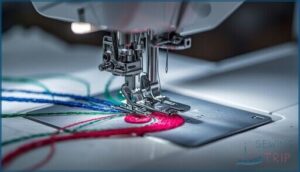
Threading your Brother PE770 embroidery machine becomes nearly straightforward with the automatic needle threader, which uses a small hooked wire to pass thread through the needle eye in one motion. The built-in thread trimmer cuts thread automatically after each thread color, leaving a clean tail for quick rethreading. These features boost cutter efficiency and simplify thread management, though you’ll need to keep the trimmer blade free of lint to maintain proper needle alignment and consistent thread tension.
Adjusting your optimal sewing speed settings helps maintain even tension throughout embroidery projects, especially when switching between delicate and heavy-duty threads.
- Lower the threader lever to position the hook above the needle eye
- Guide thread through the built-in tensioning loop for proper alignment
- Clean lint regularly around the blade to prevent skipped cuts
- Inspect the small hook periodically to verify smooth automatic threading
Quick-Set Bobbin and Jam-Resistant System
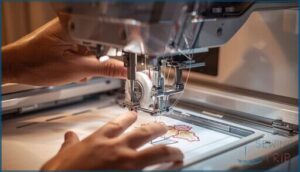
Your Brother PE770’s Quick-Set bobbin drops into a top-loading slot that auto-centers when you lower the presser foot, cutting setup time and reducing jam risk through a guided tension path that keeps thread flowing smoothly.
The jam-resistant mechanism uses low-friction channels to prevent bunching during dense designs, though you should clean the bobbin area regularly to maintain consistent stitch quality and avoid threading issues mid-project.
LCD Touchscreen Controls
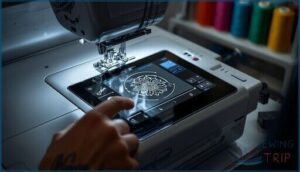
Your Brother PE770 LCD screen brings menu organization and touchscreen navigation together in a monochrome backlit display that reacts to taps within milliseconds, letting you preview designs, adjust rotation in 1-degree increments, and confirm thread colors before each stitch cycle.
The easy-to-use interface combines:
- High-contrast iconography sized for easy reading at arm’s length
- Gesture controls that mirror smartphone-style swipes for natural browsing
- Tempered glass surface resistant to minor scratches from fabric snags
- Real-time status updates showing stitch count and memory usage during high-speed stitching
Included Hoops and Accessory Pack
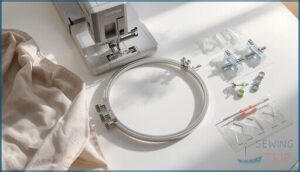
Your PE770 arrives with a precision-engineered embroidery hoop measuring 5 x 7 inches, constructed from lightweight aluminum with corrosion-resistant finishes and reinforced corners that resist warping under continuous stitching.
The Accessory Kits include protective fabric liners, color-coded mounting hardware, laser alignment guides, and reusable template spacers that guarantee Embroidery Precision across varied Hoop Sizes and project types.
| Component | Purpose |
|---|---|
| Standard 5×7″ hoop | Maximizes embroidery area for medium designs |
| Alignment templates | Places designs within embroidery field |
| Mounting hardware | Secures hoops to PE770 frame rails |
Design Import and Customization Options
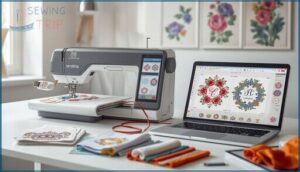
The PE770’s true value extends beyond its built-in library—it’s the machine’s ability to accept custom designs that transforms it from a starter model into a flexible creative tool. You’ll import designs through a standard USB port, choosing from multiple file formats and design sources that work with the machine’s built-in memory.
The PE770 transforms from a starter machine into a flexible creative tool through its ability to accept custom designs via USB
Here’s how you can expand your embroidery options and customize projects to match your vision.
USB Port and Built-in Memory
Your embroidery machine’s data management capabilities center on two key methods for accessing patterns. The Brother PE770’s USB port accepts standard flash drives formatted in FAT32, allowing you to transfer PES and DST file formats directly into the machine’s built-in designs library.
Here’s what you need to know about memory capacity and file transfer:
- Design Storage – The built-in memory stores multiple large embroidery patterns, eliminating constant computer connections.
- USB Compatibility – Standard USB-A port recognizes common embroidery file extensions when properly seated.
- File Transfer Speed – USB access rates determine how quickly designs load into the embroidery engine for stitching.
- LCD Screen Navigation – The monochrome touchscreen displays design previews and facilitates organization of imported patterns into folders.
Compatibility With IBroidery.com and Embroidery Cards
While the Brother PE770 advertises iBroidery.com compatibility, the practical workflow requires downloading designs to your computer first, then transferring them via USB rather than direct machine access. Embroidery Card slots accept legacy Brother-branded cards, though USB transfers prove faster and more reliable for modern users.
| Design Source | Transfer Method |
|---|---|
| iBroidery Designs | Computer download → USB |
| Embroidery Card | Direct card slot insertion |
| Third-party files | USB flash drive |
| Built-in patterns | Internal memory |
| Custom creations | USB or card media |
Compatibility issues arise when file formats don’t match PES specifications or when older card firmware conflicts with current machine updates.
Supported File Formats (PES, DST)
You’ll work primarily with two file formats when importing embroidery designs into the Brother PE770, each serving a specific purpose. PES files represent Brother’s native format, preserving stitch data, color changes, and machine-specific commands with precision, while DST files offer broader cross-brand compatibility though minor stitch alignment differences may occur during format conversion.
- PES format advantages: Maintains thread management instructions, color palette mapping, and jump commands specific to Brother embroidery machines
- DST compatibility trade-offs: Provides universal design import capability but may require stitch editing to restore Brother-specific features
- File conversion considerations: Converting between formats through embroidery design software can introduce subtle changes in stitch execution and density
- USB port workflow: Transfer designs via USB memory stick in either PES or DST format, with the machine’s built-in memory storing frequently used patterns for quick access
On-Machine Design Editing Capabilities
Once your design loads onto the embroidery machine, you’ll access editing functions through the LCD screen’s intuitive interface, adjusting placement, rotation, and size without embroidery design software.
The PE770’s vector tools preserve design integrity while you mirror patterns, adjust stitch optimization, or resequence colors for efficient hoop management—streamlining workflow before stitching begins.
| Editing Function | Adjustment Options | Application |
|---|---|---|
| Design Rotation | 1°, 10°, 90° increments | Precise alignment within hoop |
| Size Modification | Resize within 5×7″ field | Fit designs to fabric space |
| Color Sequencing | Rearrange thread order | Minimize thread changes |
| Mirror/Flip | Horizontal/vertical | Create symmetrical patterns |
Performance and User Experience
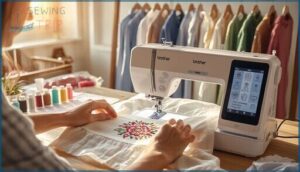
Understanding how the PE770 performs in real-world conditions tells you whether it matches your expectations for speed, versatility, and reliability. You’ll want to know which fabrics it manages comfortably, how the controls respond during longer sessions, and whether beginners can navigate it without frustration.
The machine’s practical strengths show up in four key areas that define your daily embroidery experience.
Embroidery Speed and Adjustable Controls
At a maximum of 650 stitches per minute, the Brother PE770 embroidery machine delivers controllable highspeed stitching with adjustable speed settings that let you match pace to design complexity and fabric handling requirements.
Reducing speed minimizes thread tension issues on delicate materials, while acceleration control prevents thread breakage during startup, ensuring consistent stitch density whether you’re tackling intricate monograms or simple border patterns.
Fabric Compatibility and Project Types
You’ll find varied fabric selection with this embroidery machine, handling light to medium weight materials from cotton blends and canvas to denim and interlock knit, making it ideal for textile crafts ranging from monogrammed aprons and quilt appliques to baby apparel and home decor projects.
Proper material considerations including stabilizer pairing and thread choices guarantee successful fabric decoration across diverse embroidery techniques and project planning scenarios.
LED Lighting and Work Area Visibility
Built-in LED lighting on the Brother PE770 embroidery machine delivers visibility enhancement across the embroidery area, with task lighting positioned to provide shadow reduction around the needle zone for precise stitch placement and color accuracy checks.
The embroidery machine features several key benefits, including:
- Cool white LED brightness illuminates thread colors and fabric textures without heat buildup
- Wide beam angles minimize harsh shadows on the sewing and embroidery surface
- Instant-on LEDs provide consistent work area visibility throughout extended sessions
- Energy-efficient fixtures reduce eye strain during detailed embroidery projects
Ease of Use for Beginners and Experienced Users
Surprisingly, the Brother PE770 delivers a straightforward interface that shortens the learning curve for beginner embroidery enthusiasts while offering enough depth for seasoned crafters.
Automatic thread management, consistent stitch quality, and logical error handling make this one of the most accessible sewing machines in embroidery machine reviews, with straightforward controls that don’t sacrifice functionality for simplicity.
Brother PE770 Compared to Other Models
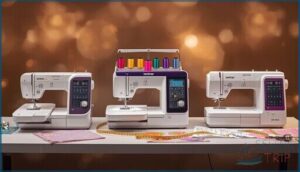
When you’re weighing whether the PE770 is the right machine for your projects, it helps to see how it stacks up against other Brother models and whether it fits your specific embroidery goals.
The PE770 occupies a particular spot in Brother’s lineup, with distinct trade-offs compared to newer or alternative machines. Here’s how it compares regarding features, intended use, and long-term value.
Differences From Brother PE800 and DZ820e
When you’re weighing the Brother PE770 against the Brother PE800 or DZ820e in embroidery machine reviews, several differences emerge in design capacity, speed variance, and thread handling.
The PE800 offers a color touchscreen and expanded font library, while the DZ820e usually includes broader built-in design options and faster stitching rates. All three models share similar warranty differences, with Brother’s standard 25-year limited coverage.
Suitability for Home and Small Business Use
The Brother PE770 excels in home embroidery settings where space efficiency and accessible sewing machines matter most, accommodating typical craft room footprints while delivering consistent results for customized gifts and apparel.
For small business embroidery operations requiring limited production runs, its USB design import and cost analysis reveals entry-level pricing with lower ongoing expenses, though embroidery machine reviews suggest commercial-scale users may need faster alternatives.
Warranty, Durability, and Availability in 2026
You’ll want to verify that the Brother PE770‘s 25-year limited warranty remains active, though extended warranties and repair services through authorized centers usually add 2–5 years of coverage depending on your region.
Parts availability stays strong in 2026 across major retailers, with embroidery machine reviews noting that customer support response times and maintenance costs remain competitive for home-use models.
Frequently Asked Questions (FAQs)
Is the Brother PE770 good?
Yes, the Brother PE770 embroidery machine delivers solid value for beginners and hobbyists, offering reliable performance with 136 built-in designs, a 5×7-inch embroidery area, and straightforward controls that justify its cost-effectiveness and high user satisfaction ratings.
What is the Brother PE770 used for?
Primarily positioned for custom embroidery projects, this embroidery machine creates custom designs on fabric types including apparel and home decor within its 5×7 embroidery area, though machine limits exclude heavy-duty materials.
How loud is the Brother PE770?
The Brother PE770 embroidery machine operates at moderate noise levels, producing a rhythmic hum during stitching and brief mechanical sounds when repositioning the hoop, with quieter performance at reduced embroidery speeds.
What year was the Brother PE770 made?
Long before smartphones crowded our pockets, the Brother PE770 embroidery machine debuted in 2012, bringing computerized embroidery capabilities with its signature 5×7-inch field, 136 built-in designs, and reliable USB import functionality to home sewers.
Does the Brother PE770 have a foot pedal?
The Brother PE770 embroidery machine operates primarily through touchscreen and control panel interfaces rather than a foot pedal, though some regional configurations and aftermarket accessories may offer optional pedal control compatibility.
How fast is the Brother PE770?
At a top embroidery speed of 650 stitches per minute, the Brother PE770 isn’t exactly racing through projects—but that steady pace delivers outstanding stitch quality, thread tension control, and motor efficiency across its 5×7 embroidery area.
Can the Brother PE770 do hats?
Yes, you can embroider hats with the PE770, though the 5×7 inch embroidery area works best for smaller cap logos and initials rather than full hat layouts, requiring proper stabilization for curved surfaces.
How long does it take to embroider designs?
Ironically, a machine embroidery project can finish faster than your morning coffee or outlast your entire workday.
Design complexity, stitch density, fabric types, and color changes determine whether your 650 stitches per minute embroidery machine completes customizable patterns in fifteen minutes or stretches beyond four hours.
Can the PE770 handle thicker fabrics like denim?
While the Brother PE770 embroidery machine can handle denim embroidery, you’ll need heavy-duty stabilizers, size 90/14 needles, and slower stitching speeds to achieve quality results on thick fabric projects without compromising stitch accuracy.
What maintenance does the Brother PE770 require?
Regular cleaning of lint from the bobbin area, proper oil lubrication every 20 hours, routine needle care after eight hours of stitching, careful thread management, and consistent hoop maintenance keep your embroidery machine performing reliably.
Conclusion
The learning curve you’re imagining doesn’t exist—the PE770‘s LCD touchscreen and automatic features put custom embroidery in your hands within the first afternoon, not weeks from now.
This reviewsbrother pe770 confirms that while 2026 brings flashier alternatives, the combination of a proven 5×7 field, reliable USB design import, and sub-$700 pricing still defines the standard for dedicated embroidery machines that prioritize finishing projects over collecting dust in your workspace.