This site is supported by our readers. We may earn a commission, at no cost to you, if you purchase through links.
Threading a sewing machine needle used to mean squinting under a lamp, licking thread ends, and muttering under your breath after the fifth failed attempt. That frustration drove manufacturers to develop automatic needle threaders—mechanical systems that guide thread through the eye with a simple lever pull or button press.
Self-threading sewing machine features now include sensor-based mechanisms, top-loading bobbins, and jam-resistant threading paths that eliminate the tedious setup work. These innovations don’t just save you a few minutes per project. They transform sewing from a test of patience into an accessible craft, especially if you’re dealing with shaky hands, poor lighting, or just want to spend more time actually stitching.
Understanding how these features work helps you choose a machine that matches your skill level and project needs.
Table Of Contents
- Key Takeaways
- Essential Self-Threading Sewing Machine Features
- How Self-Threading Mechanisms Work
- Benefits of Self-Threading Sewing Machines
- Top 9 Self-Threading Sewing Machines
- 1. Janome Easy Sewing Machine
- 2. Brother Lightweight Sewing Machine
- 3. Brother Automatic Sewing Machine GX37
- 4. Brother Computerized Sewing Machine
- 5. Millepunti Sewing Machine for Beginners
- 6. Brother Sewing Machine XM3700
- 7. Singer Sew Mate Sewing Machine
- 8. Juki Portable Sewing Machine
- 9. Brother Computerized Sewing Machine Model
- Maintenance Tips for Self-Threading Features
- Frequently Asked Questions (FAQs)
- Conclusion
Key Takeaways
- Self-threading mechanisms—whether lever-based or sensor-driven—cut setup time by 40–60% and eliminate the manual dexterity frustrations that used to block beginners and anyone dealing with vision or hand strength challenges.
- Machines like the Brother CS7000X and Janome Easy deliver automatic needle threaders alongside top-loading bobbins and 20+ built-in stitches, giving you the control to handle everything from repairs to quilting without constantly switching equipment.
- Regular maintenance—daily lint removal, weekly needle replacements, and proper lubrication of moving parts—keeps your automatic threader working reliably so you’re not stuck troubleshooting mid-project.
- When you’re shopping, prioritize models that pair automatic threading with jam-resistant paths and adjustable stitch controls, since those features transform frustrating setup routines into seamless starts that let you focus on the actual sewing work.
Essential Self-Threading Sewing Machine Features
When you’re shopping for a self-threading sewing machine, you’ll want to know which features actually matter. The right combination of technology and practical design can transform your sewing experience from frustrating to smooth.
Let’s look at the essential features that separate a good self-threading machine from a great one.
Automatic Needle Threader Technology
Automatic needle threader technology transforms your setup routine by eliminating manual threading frustration. Modern threader mechanisms use small hooks or lever-based systems to guide thread through the needle eye in 5 to 15 seconds—precision engineering that saves time on every project.
These automatic threading systems feature needle guidance paths and sensors that reduce errors, while self-threading sewing machines deliver consistent results cycle after cycle. The precision of these systems can be compared to the methodological rigor found in scientific research, where attention to detail is essential.
Top-Loading Bobbin Systems
Top-loading bobbin systems give you quick access to thread changes without removing the needle plate—you’ll drop the bobbin in from above, often through a clear window that shows thread tension and bobbin capacity at a glance. Self-threading sewing machines with top-loading bobbin management usually support threading paths that minimize snags, and many models accommodate various bobbin materials while maintaining consistent sewing speed across cotton and polyester threads.
To better understand the terminology used in sewing, you can explore language resources to find definitions and related words.
Built-in Stitch Variety
Most self-threading sewing machines give you 20 or more built-in stitch patterns—straight, zigzag, decorative, and stretch options that expand your sewing techniques across different fabric compatibility needs.
Computerized sewing machine models let you dial in stitch customization through buttons or touchpads, and some offer embroidery capability for heirloom projects.
For those seeking a reliable entry-level option with mechanical durability, the Janome 3128 offers excellent stitch quality backed by that impressive long-term warranty.
That stitch variety means you won’t outgrow your machine as your skills develop.
Many models with extensive stitch libraries also include beginner-friendly automatic threading systems that simplify setup as you explore new techniques.
Adjustable Stitch Length and Width
Once you’ve chosen your stitch variety, you’ll want precise control over how those stitches look. Most self-threading sewing machine models let you adjust stitch length from 0 to roughly 4 millimeters and width from 0 to 6 millimeters, giving you:
- Straight seams at 2.5 mm for general fabric compatibility
- Wide zigzags for stretch materials and finishing edges
- Fine-tuned sewing precision through 0.1 mm increments on higher-end units
- Preset programs that fine-tune stitch quality and thread tension automatically
That control means better sewing techniques across wovens, knits, and decorative projects.
Mastering gathering stitches adds another layer of precision when you need to create ruffles or adjust fabric fullness.
Accessory Kits and Included Tools
Every machine ships with sewing accessories and tools that expand your creative options. You’ll usually find 5–10 presser feet for zippers, buttons, and hems, plus extra needles, bobbins, a lint brush, and a seam ripper. Kit organization matters—clear compartments and storage solutions keep your sewing notions accessible. Better accessory quality means durable foot attachments and tool variety that support sophisticated sewing tips and tricks across diverse projects.
| Component Type | Typical Contents |
|---|---|
| Presser Feet | Zipper, buttonhole, blind hem, zigzag, walking feet |
| Replacement Parts | Universal bobbins, assorted needle sizes, spare bulb |
| Cleaning Tools | Lint brush, microfiber cloth, small screwdriver |
| Cutting Aids | Seam ripper, thread snips, measuring guide |
| Storage | Modular case, on-board compartment, zipper pouch |
How Self-Threading Mechanisms Work
Self-threading technology isn’t magic—it’s clever engineering that makes needle threading almost automatic. Different manufacturers use different approaches, from simple lever systems to advanced sensors that detect and guide the thread.
Understanding how these mechanisms work helps you choose a machine that matches your needs and keeps it running smoothly.
For example, knowing which basic portable sewing machine features matter most can help you avoid models that disappoint with heavy fabrics.
Lever and Manual Threading Systems
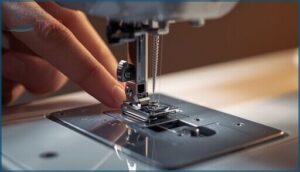
Lever systems guide thread through the needle eye with a simple press-and-release motion, reducing finger dexterity requirements considerably. These manual guides rely on your alignment of thread along a mechanical path that leads directly into the needle bar area.
Many lever threading designs incorporate a spring or cam mechanism that returns to the ready position after you complete each threading sequence, ensuring consistent needle alignment and proper thread tension throughout your sewing projects.
Sensor-Based and Motorized Threaders
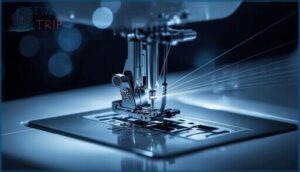
Modern sensor calibration technology takes automatic needle threader systems to a new level of precision on self-threading sewing machines. Motorized systems detect thread position using optical or mechanical sensors, then use small actuators to guide the thread through the needle eye with minimal input from you.
- Thread detection sensors monitor placement and tension, preventing needle damage during automated threading
- Precision guides adjust to multiple needle sizes and thread weights through variable motor speeds
- One-touch activation reduces grip strength requirements, perfect for beginners or those with limited dexterity
- Visual indicators (LEDs or LCD prompts) confirm threading status and alert you to misalignment issues
Threading Path Guides and Jam-Resistant Designs
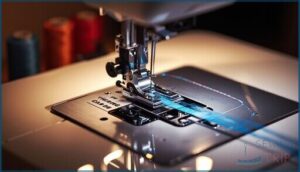
Threading path guides in self-threading sewing machines follow a carefully engineered route that keeps the thread aligned through every turn. Jam prevention features include curved channels and low-friction guide materials that eliminate sharp corners where thread snags. Path optimization ensures threading geometry works with standard needles, while visual markers help you follow the correct route from spool to automatic needle threader.
| Design Element | Function | Benefit |
|---|---|---|
| Contoured thread routing | Guides thread smoothly around components | Reduces snags and missed catches |
| Low-friction materials | Minimizes resistance during threading | Extends component life and reliability |
| Visual path indicators | Shows correct thread alignment | Speeds setup and prevents user error |
Benefits of Self-Threading Sewing Machines
Self-threading technology transforms how you approach every sewing session. Whether you’re just starting out or dealing with vision challenges, this feature removes one of the most frustrating barriers between you and your creative projects.
Let’s look at the specific ways a self-threading machine can improve your sewing workflow.
Time and Effort Savings
When you’re racing against a deadline, a self-threading sewing machine becomes your secret weapon for speed optimization. Automatic needle threaders slash your setup time by 40–60%, transforming what used to be a frustrating warm-up into instant sewing efficiency.
Here’s how sewing automation delivers real productivity gains:
- Time Management: Cut thread setup from 6–8 steps to just 1–2 actions
- Effort Reduction: Top-loading bobbins reduce project prep by 15–30%
- Simplified Workflow: Built-in stitches eliminate machine-switching delays
- Fewer Interruptions: Jam-resistant paths reduce troubleshooting time by 10–20%
- Faster Project Starts: Reach your first stitch 5–15 minutes sooner
Self-threading sewing machines boost your daily throughput by 8–12%, giving you more time to focus on creative work instead of wrestling with thread.
Accessibility for Beginners and Limited Dexterity
If you struggle with fine motor tasks or you’re brand new to sewing, self-threading machines level the playing field. Their ergonomic design and adaptive controls make automatic needle threader functions operable with minimal hand strength, while user interface elements like color-coded dials and visual guides walk you through every step without confusion or strain.
Assistive technology built into self-threading sewing machines transforms frustration into confidence, making sewing for beginners and sewers with physical limitations genuinely achievable. Sewing machine accessories like ergonomic hand wheels further customize your setup for comfort.
| Accessibility Features | How They Help |
|---|---|
| One-handed threading levers | Reduce grip demands |
| Large, high-contrast controls | Aid limited dexterity users |
| Audible error alerts | Confirm correct threading |
Enhanced Sewing Experience and Productivity
Beyond accessibility, your self-threading sewing machine delivers measurable productivity gains. Automatic needle threader technology cuts time per seam, letting you focus on fabric handling and sewing accuracy instead of wrestling with thread management.
Top-loading bobbins and built-in stitch variety simplify workflow optimization, while LED lighting reduces errors. That means more productive sewing minutes every session—sewing efficiency that transforms how you work with sewing technology advancements.
Top 9 Self-Threading Sewing Machines
After years of testing machines in my workshop, I’ve narrowed down the models that consistently deliver on the self-threading promise without the usual headaches.
These nine machines stand out for their reliable automatic threaders, solid construction, and the kind of features that actually matter when you’re mid-project.
Here’s what you need to know about each one before you commit your money.
1. Janome Easy Sewing Machine
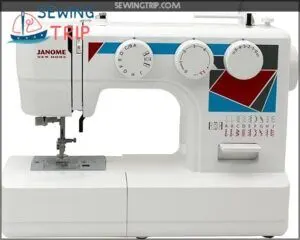
You’ll find the Janome Easy Sewing Machine offers 19 built-in stitches and a reliable automatic needle threader that works with standard low-shank needles. This self-threading sewing machine weighs just 11.7 pounds, making it portable for various sewing projects.
User reviews highlight its beginner-friendly design, though some note it struggles with thicker fabrics.
When comparing Janome features across models like the Janome 2212 or Janome JW8100, this machine strikes a balance between affordability and functionality, backed by a 25-year limited warranty that speaks to machine durability.
| Best For | Beginners and casual sewers looking for a lightweight, portable machine to handle basic repairs, small projects, and light quilting without a steep learning curve. |
|---|---|
| Built-in Stitches | 19 |
| Automatic Needle Threader | Yes |
| Buttonholes | 1 (4-step) |
| Weight | 11.7 lbs |
| Frame Material | Metal |
| Free Arm | Yes |
| Additional Features |
|
- Automatic needle threader and top-loading bobbin make setup quick and frustration-free, especially for first-time users
- 19 built-in stitches give you enough variety for most everyday sewing projects, from hemming to decorative touches
- Lightweight at under 12 pounds and comes with a 25-year warranty, so you get portability plus long-term peace of mind
- Struggles with thick fabrics like fleece or heavy denim, limiting what projects you can tackle
- Some users report tension issues and needles that move or break during use, which can interrupt your work
- Not built for heavy-duty sewing—regular intensive use might wear it down faster than sturdier machines
2. Brother Lightweight Sewing Machine
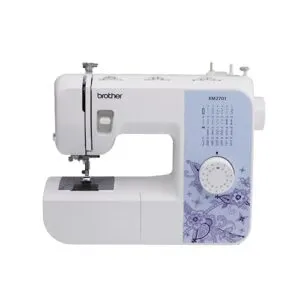
The Brother XM2701 delivers 27 built-in stitches and weighs just 12.6 pounds, offering portability features that let you move between rooms without hassle. You’ll appreciate the sewing speed control and automatic needle threader that work together smoothly.
Machine durability shines through the 25-year limited warranty, though the user interface keeps things simple with straightforward dials.
Storage options include a compact 12.1 x 15.3-inch footprint that fits neatly in closets, while the included free arm handles sleeves and cuffs with ease.
| Best For | Beginners and casual sewers who need a portable machine for everyday projects like hemming, alterations, and quilting without the bulk of heavier models. |
|---|---|
| Built-in Stitches | 27 |
| Automatic Needle Threader | Yes |
| Buttonholes | 1 (1-step) |
| Weight | 12.6 lbs |
| Frame Material | Metal |
| Free Arm | Yes |
| Additional Features |
|
- 27 built-in stitches plus automatic needle threader and one-step buttonholer make setup and switching between projects quick and painless
- Weighs only 12.6 pounds with a compact footprint, so you can easily carry it to classes or tuck it away when you’re done
- Comes with a 25-year limited warranty and includes 6 sewing feet right out of the box for various tasks
- Struggles with very thick fabrics like multiple layers of denim, limiting you to lighter materials
- The spool pin feels flimsy and can break, plus the foot pedal requires firm pressure and can feel sticky
- Only works with 120 volts, so it’s restricted to US outlets and isn’t suitable for heavy-duty or professional work
3. Brother Automatic Sewing Machine GX37
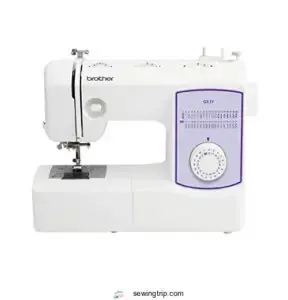
With 37 stitches onboard, the Brother GX37 steps up your creative options while keeping that automatic needle threader you’ve come to expect. You’ll find the user interface refreshingly straightforward, with dials that adjust stitch length and width without confusion.
Portability features include a 10.14-pound frame that won’t wreck your back when moving between projects. The self-threading sewing machine manages everyday garments and quilting without hesitation, though thread quality matters—cheap spools can cause snags.
Machine durability gets mixed reviews, so treat it as a reliable workhorse for light to medium tasks rather than heavy-duty construction.
| Best For | Beginners and casual sewers who want an easy-to-use machine with plenty of stitch options for everyday garments, quilting, and simple projects without breaking the bank. |
|---|---|
| Built-in Stitches | 37 |
| Automatic Needle Threader | Yes |
| Buttonholes | 1 (1-step) |
| Weight | 10.14 lbs |
| Frame Material | Not specified |
| Free Arm | Yes |
| Additional Features |
|
- 37 built-in stitches give you solid creative range, from basic straight stitches to decorative options for different projects
- Automatic needle threader and drop-in bobbin system cut down on setup frustration, especially if you’re new to sewing
- Lightweight at just over 10 pounds, so you can move it around without throwing out your back
- Durability concerns pop up in reviews—some users report issues with the reverse function and overall longevity
- Struggles with cheap thread, leading to jams and threading headaches that can slow you down
- Not built for heavy-duty work, so thick fabrics or intensive quilting projects might push it past its limits
4. Brother Computerized Sewing Machine
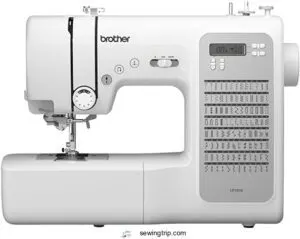
When you need more horsepower, the Brother CS6000i and CS5055 deliver computerized controls that handle everything from delicate silks to denim. The automatic needle threader pairs with an easy-to-use interface—you’ll navigate 60 to 100 stitches without hunting through menus.
Sewing speed adjusts via slider, letting you creep through tricky corners or fly through straight seams. Stitch customization includes length and width tweaks on the fly.
Machine durability leans toward intermediate projects rather than industrial workloads, but the Brother CS7000X offers solid construction for dedicated hobbyists.
| Best For | Beginners and intermediate sewers who want computerized controls and a wide range of built-in stitches for everyday projects like quilting, garment construction, and home décor. |
|---|---|
| Built-in Stitches | 100 |
| Automatic Needle Threader | Yes |
| Buttonholes | 8 (auto-size) |
| Weight | 10.5 lbs |
| Frame Material | Metal |
| Free Arm | No |
| Additional Features |
|
- 60 to 100 built-in stitches with easy customization of length and width give you plenty of creative options without a steep learning curve.
- Automatic needle threader and jam-resistant bobbin system save time and reduce frustration during setup and long sewing sessions.
- Adjustable sewing speed lets you slow down for tricky details or speed up for straight seams, making it versatile across different fabrics.
- The needle threader can feel bulky or finicky, and some users report it requires patience to get consistent results.
- Bobbin winding may need manual tweaking to stay consistent, which adds an extra step to your workflow.
- The machine isn’t built for heavy-duty or commercial use, so thick layers of denim or canvas might push its limits.
5. Millepunti Sewing Machine for Beginners
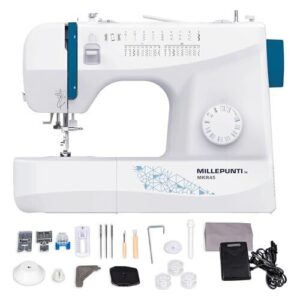
If you’re just starting out, the MILLEPUNTI MKR45 self-threading sewing machine offers 25 stitches and a straightforward user interface that won’t overwhelm you. The automatic needle threader simplifies setup, though sewing machine reviews mention occasional hiccups with this feature.
Machine durability leans toward beginner projects rather than heavy fabric work, but the free arm and included accessory kit help you practice essential sewing techniques.
You’ll appreciate the lightweight design—14.92 pounds makes it easy to store or move. Connect with the sewing community online for beginner tips and project ideas.
| Best For | New sewers who want an affordable, portable machine with helpful features like automatic threading and enough stitch variety to practice basic techniques without getting overwhelmed. |
|---|---|
| Built-in Stitches | 25 |
| Automatic Needle Threader | Yes |
| Buttonholes | Not specified |
| Weight | 14.92 lbs |
| Frame Material | Metal |
| Free Arm | Yes |
| Additional Features |
|
- Automatic needle threader and bobbin winder take the hassle out of setup, so you can focus on learning to sew instead of fighting with threading
- 25 built-in stitches give you room to grow beyond basic straight stitches without jumping into overwhelming professional territory
- Lightweight at under 15 pounds with a free arm feature makes it easy to store, carry to classes, and maneuver around sleeves or pant legs
- Automatic needle threader can be finicky and may not work consistently, based on user feedback
- Not built for heavy fabrics or large projects—this is a starter machine, not a workhorse
- Some users experience thread breakage issues, which can frustrate beginners still learning tension and technique
6. Brother Sewing Machine XM3700
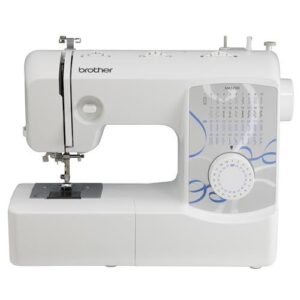
You’ll find versatility in the Brother XM3700, which offers 37 built-in stitches—more than the Brother XM2701 or Brother CS5055 in similar price ranges. The automatic needle threader and jam-resistant bobbin system simplify your workflow, while thread tension adjustments let you tackle various fabric compatibility challenges.
At 12.5 pounds, machine durability meets portability for garment construction and quilting. The user interface stays straightforward with stitch length and width controls, and the free arm opens opportunities for cuffs and sleeves—this self-threading sewing machine balances features with ease of use.
| Best For | Beginners and intermediate sewers who want a feature-rich machine that handles everything from simple repairs to quilting without the complexity of advanced models. |
|---|---|
| Built-in Stitches | 37 |
| Automatic Needle Threader | Yes |
| Buttonholes | 1 (auto-size) |
| Weight | 12.5 lbs |
| Frame Material | Metal/Plastic |
| Free Arm | Yes |
| Additional Features |
|
- 37 stitch options give you room to grow from basic projects into decorative work and garment construction without needing to upgrade
- Automatic needle threader and jam-resistant bobbin cut down on the frustrating setup time that usually trips up new sewers
- Free arm design lets you tackle tricky cylindrical items like sleeves and pant hems that flat-bed machines struggle with
- At 120 volts US-only, you can’t use it abroad without voiding the warranty—limiting portability for international moves
- 12.5 pounds makes it lighter than industrial machines but still awkward to carry between rooms or classes regularly
- Tension adjustments require manual tweaking for different fabrics, which takes practice to get right on stretch materials
7. Singer Sew Mate Sewing Machine
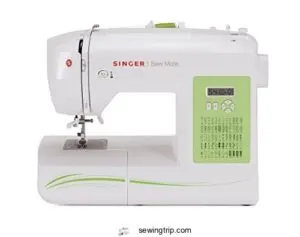
You’ll appreciate the Singer Sew Mate 5400’s practical approach to beginner projects—60 built-in stitches and an automatic needle threader simplify your setup. At 13 pounds, machine durability combines with portability for home decor and basic garment work.
Sewing machine reviews note its heavy-duty metal frame delivers skip-free stitching, while the LED lighting and automatic tension keep you focused on technique. This self threading sewing machine includes sewing accessories and manages everyday repairs, though you’ll want metal bobbins for consistent performance.
| Best For | Beginner sewers and casual crafters who want an affordable, easy-to-use machine for everyday projects like repairs, simple garments, and home decor. |
|---|---|
| Built-in Stitches | 60 |
| Automatic Needle Threader | Yes |
| Buttonholes | 4 (1-step) |
| Weight | 13 lbs |
| Frame Material | Metal/Plastic |
| Free Arm | No |
| Additional Features |
|
- Automatic needle threader and automatic tension make setup quick and reduce frustration for newcomers
- 60 built-in stitches and 4 one-step buttonholes give you versatility for different projects without overwhelming complexity
- Heavy-duty metal frame at 13 pounds balances durability with portability for stable, skip-free stitching
- Some users report reliability issues including broken needles, bobbin problems, and occasional odd noises
- Only compatible with metal bobbins (not universal plastic ones), which limits your bobbin options
- Requires time with the manual and tutorial DVD to fully understand all functions and avoid common setup mistakes
8. Juki Portable Sewing Machine
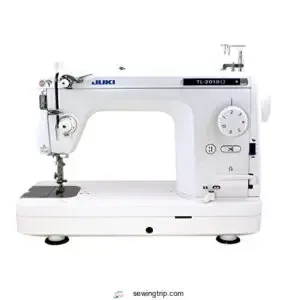
The Juki TL2010Q stands as a serious performer in portable sewing machine territory—at 38 pounds, portability features meet industrial-grade machine durability. You’ll command impressive sewing speed with its aluminum construction, perfect for quilting capabilities that handle bulky layers without hesitation.
While this self-threading sewing machine model doesn’t include a dedicated scant 1/4″ foot, the knee lifter lever and automatic needle threader deliver professional control. The user interface stays straightforward, though you might want external lighting for precision work.
| Best For | Quilters and serious sewers who need a workhorse machine that can handle large projects and bulky fabrics with professional-level speed and control. |
|---|---|
| Built-in Stitches | N/A |
| Automatic Needle Threader | Yes |
| Buttonholes | N/A |
| Weight | 38 lbs |
| Frame Material | Aluminum |
| Free Arm | No |
| Additional Features |
|
- Aluminum build delivers industrial durability while keeping the machine portable enough to move between workspaces
- Automatic thread trimmer and knee lifter let you keep both hands on your fabric for better control during complex projects
- Powerful straight stitch performance makes it ideal for piecing quilts and sewing through multiple layers
- At 38 pounds, it’s heavier than typical portable machines and requires some effort to transport
- Built-in lighting falls short for detailed work, so you’ll likely need an external lamp
- Missing a dedicated scant 1/4″ foot means quilters need to buy separately or adjust settings for precision seams
9. Brother Computerized Sewing Machine Model
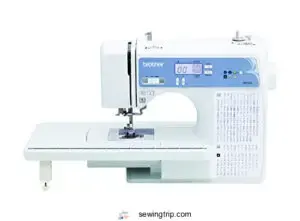
The Brother CS7000X leads this computerized sewing lineup with 70 built-in stitches and an LCD screen that puts you in command of every setting. This Brother model delivers serious sewing automation through its automatic needle threader and top-loading bobbin—features that keep your focus on creation, not frustration.
The Brother CS6000i and Brother CS5055 offer similar user interface simplicity with slightly fewer stitches. These machine upgrades transform tedious setup into seamless starts, letting you tackle projects with confidence from day one.
| Best For | Sewers who want computerized precision and a wide stitch library without the learning curve of industrial machines. |
|---|---|
| Built-in Stitches | 70 |
| Automatic Needle Threader | Yes |
| Buttonholes | 7 (auto-size) |
| Weight | 14 lbs |
| Frame Material | Metal |
| Free Arm | No |
| Additional Features |
|
- LCD screen and automatic needle threader eliminate setup headaches and get you sewing faster
- 70 built-in stitches give you creative flexibility for garments, quilts, and home décor projects
- Top-loading bobbin system makes thread changes quick and frustration-free
- Struggles with heavy-duty fabrics like denim or canvas, limiting project types
- Needle breaks have been reported by some users during extended use
- Top cover doesn’t latch securely, which could be annoying if you move the machine often
Maintenance Tips for Self-Threading Features
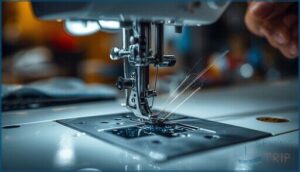
Your self-threading mechanism won’t stay reliable without proper care. Regular maintenance keeps the automatic threader working smoothly and prevents frustrating breakdowns mid-project.
Here’s what you need to do to protect your machine’s most convenient feature.
Regular Cleaning and Debris Removal
You’ll want to clear lint from your bobbin area daily—fabric fibers build up fast. Use a soft brush to sweep feed dogs after each project, and wipe the needle plate weekly with a damp cloth.
Keeping debris-free thread paths prevents jamming and keeps your self-threading mechanism running smoothly. A quick cleaning schedule matched to your usage prevents most threading headaches.
Lubrication of Moving Parts
Once your sewing machine maintenance includes debris removal, oil application becomes your next priority. Light machine oil on moving metal parts keeps everything running smoothly and prevents wear on your self-threading sewing machine’s threading mechanism.
- Inspect the presser foot bar, feed dogs, and needle bar for wear
- Apply light machine oil to metal components per your manual
- Use mineral oil or dedicated sewing machine lubricant only
- Wipe excess oil after running the machine
- Increase lubrication frequency in dusty environments
Needle Replacement and Tension Adjustments
Proper needle maintenance complements oiling by preserving your self-threading sewing machine’s stitch quality. Replace needles every eight hours of sewing or when you notice thread breakage and fabric snagging. Match needle sharpness and size to your fabric compatibility requirements—lighter fabrics need finer needles.
Adjust tension settings on scrap material first, balancing upper thread with bobbin tension until stitches lie flat and even across both sides.
Troubleshooting Common Threading Issues
When your automatic needle threader acts up, start with the basics: check that your thread path follows the correct route and inspect tension settings for balance.
Thread breakage often signals bobbin issues or needle damage, while looping points to tension imbalance.
Clean lint from the threading mechanism and replace worn needles immediately—threading errors multiply fast when you ignore small problems.
Frequently Asked Questions (FAQs)
Can self-threading work with specialty or metallic threads?
Self-threading mechanisms can handle specialty and metallic threads with careful setup. Your machine needs compatible needles, proper tension adjustments, and clean threading paths.
Test on scraps first—metallic threads tend to fray easily through automated needle threading systems.
Are replacement parts readily available for threading mechanisms?
Major brands stock replacement threading levers and spare components for their automatic needle threader systems, while aftermarket threading kits offer alternatives.
Replacement lead times usually span one to three weeks for mechanism repair parts.
How does thread weight affect automatic threading performance?
Think of thread weight as the gatekeeper to smooth automatic threading. Heavier threads create more friction in the threading path, while lighter weights may slip past sensors, affecting your automatic needle threader’s reliability and threading speed markedly.
Can you disable automatic threading for manual control?
Yes, many self-threading sewing machines let you switch threading modes via a manual override lever or switch, giving you control options for delicate fabrics or when automatic needle threader precision isn’t needed.
Conclusion
Self threading sewing machine features don’t just eliminate frustration—they release confidence, speed up your workflow, and let you focus on the creative work that matters. You’ve seen how automatic threaders function, compared nine solid machines, and learned maintenance habits that keep everything running smoothly.
Now you can choose a model that matches your skill level and project demands. Stop wrestling with needles under dim light. Start stitching with the ease these features were designed to deliver.
- https://craftsy.com/
- https://en.wikipedia.org/wiki/Sewing_machine
- https://science.howstuffworks.com/engineering/mechanical/sewing-machine.htm
- https://academichelpexpress.blog/2024/08/please-use-the-bulleted-points-and-the-rubric-below-to-guide-your-work-your-pa/
- https://www.onelook.com/?loc=olthes1&w=subpoint