This site is supported by our readers. We may earn a commission, at no cost to you, if you purchase through links.
Your first driving lesson arrives with a strange realization: the car doesn’t move at the speed you want—it moves at the speed your feet command. That gap between intention and execution causes more new driver anxiety than merging onto highways or parallel parking combined.
Speed control for beginners isn’t about memorizing rules or watching your speedometer obsessively; it’s about developing the muscle memory and spatial awareness that transforms jerky stops and lurching starts into smooth, confident driving.
The difference between a nervous beginner and a relaxed driver often comes down to mastering three connected skills: reading the road ahead, applying gradual pedal pressure, and maintaining the buffer space that gives you time to react. Once you understand how your inputs translate into vehicle movement, driving stops feeling like you’re wrestling with machinery and starts feeling like a natural extension of your judgment.
Table Of Contents
- Key Takeaways
- Essential Speed Control Skills for Beginners
- Mastering Pedal Control for Steady Driving
- Steering and Vehicle Handling for Speed Control
- Defensive Speed Control and Safety Tips
- Top 9 Products for Speed Control Learning
- 1. Engine Management Advanced Tuning Book
- 2. Btec Remote Control Sports Car Building Kit
- 3. Hacking Connected Cars Guide
- 4. Beacondesi Mini Rc Drift Car
- 5. Adaptive Car Suspension Control Techniques
- 6. Total Control Motorcycle Riding Techniques
- 7. Ford Fuel Injection Engine Control Book
- 8. Road Rage Detox System
- 9. Flying Models Book For Beginners
- Frequently Asked Questions (FAQs)
- Conclusion
Key Takeaways
- Speed control fundamentally depends on mastering three connected skills—reading the road ahead, applying gradual pedal pressure, and maintaining buffer space—which together transform jerky stops and lurching starts into smooth, confident driving that feels like a natural extension of your judgment.
- Proper foot positioning with your heel anchored near the floor and the ball of your foot on the pedals, combined with progressive throttle and brake inputs rather than sudden movements, builds the muscle memory that prevents weight shifts, wheel slip, and stability issues across all road conditions.
- Defensive speed management requires you to adjust your pace 20-40% below normal in adverse weather, maintain at least a 2-3 second following distance that expands with speed and conditions, and anticipate stops early so you’re never caught reacting in panic mode.
- The gap between intention and execution causes more beginner anxiety than any specific maneuver, but once you understand how your pedal inputs translate into vehicle movement through practice and spatial awareness, driving stops feeling like wrestling machinery and starts feeling intuitive.
Essential Speed Control Skills for Beginners
Learning to control your speed is the foundation of safe, confident driving. You need to understand how your car’s controls work together, then practice using them smoothly in real-world conditions.
When shopping for a beginner-friendly vehicle, look for models with intuitive speed control and built-in safety features that make the learning process less overwhelming.
Let’s walk through the essential skills every new driver should master.
Understanding Accelerator and Brake Functions
Precision is the foundation of every safe journey behind the wheel. When you press the accelerator, you’re not simply giving the car “gas”—you’re directing pedal input through sensors that map your foot’s position to the engine management system, adjusting throttle control and air intake to generate the exact torque you need.
That same deliberate control applies when you’re mastering the foot pedal on an industrial sewing machine—precision in pressure translates directly to stitch quality and fabric handling.
Meanwhile, brake systems translate that same deliberate pressure into hydraulic or electric force at each wheel, governing your speed control with the finesse only practice can perfect. Effective speed control also relies on understanding complex scientific study summaries to improve overall vehicle safety.
Smooth Acceleration and Deceleration Techniques
Once you grasp how pedals respond to pressure, building finesse becomes your next priority. Smooth acceleration starts with gentle throttle control—apply ramped pressure on the accelerator so your drivetrain doesn’t lurch. When braking, use progressive inputs to keep weight balanced and steering responsive. Think of speed management as a conversation between your foot and the car: small, continuous adjustments prevent jerky stops and wheelspin, giving you confidence every mile. To further polish your skills, consider exploring language patterns to improve your communication about driving techniques.
Five Speed Control Fundamentals
- Rest your heel near the floor and use the ball of your foot for fine throttle adjustments.
- Coordinate accelerator release with brake application to avoid abrupt deceleration.
- Practice 5–10% speed changes over short distances to polish pedal smoothness.
- Anticipate turns several seconds early, reducing speed before you steer.
- Avoid riding the brake—keep your foot clear when you’re not slowing down.
Adjusting Speed for Road and Traffic Conditions
Once your pedal work feels natural, you’ll need to match your speed to the world outside your windshield. Traffic flow and posted speed limits form your baseline, but weather factors and road conditions demand real-time judgment.
In urban driving, anticipate stops at crosswalks and lights—slowing early keeps you in control. On highways, increase following distance when rain reduces traction or fog cuts visibility.
| Condition | Speed Adjustment | Key Action |
|---|---|---|
| Heavy traffic | Match flow, not limit | Scan ahead constantly |
| Rain or snow | Reduce 10–20% | Brake gently, steer smoothly |
| Construction zones | Follow temporary signs | Watch for flaggers |
| Rural curves | Slow before turn | Accelerate gently after |
| School zones | Drop to posted limit | Check for children |
That table captures the essentials: adapt proactively, not reactively. When road conditions shift—wet pavement, gravel patches, or sudden congestion—your right foot becomes your safety valve. Driving safety hinges on reading cues early: brake lights ahead, deer-crossing signs, or dark clouds rolling in.
The same principle applies when you’re starting out with a sewing machine—mastering speed control lets you build confidence before tackling complex stitches.
Traffic management isn’t about rigid rules; it’s about blending speed control with awareness so you’re never caught off guard.
Using Buffer Space for Safe Speed Management
Speed margins depend on the buffer zone you create—that cushion of space ahead lets you respond smoothly instead of slamming brakes. Safe distance gives you time to spot hazards early and adjust without panic, core to defensive driving and road safety.
Build your buffer with these five steps:
- Pick a fixed object ahead and count three seconds once the car in front passes it.
- Increase headway in rain, fog, or heavy traffic flow for better vehicle speed management.
- Scan continuously to sharpen hazard perception and anticipate slowdowns.
- Release throttle early when you see brake lights or congestion forming.
- Check mirrors before adjusting speed control so lane changes don’t surprise you.
That extra room transforms driving safety from reactive scrambles into calm, measured responses.
Mastering Pedal Control for Steady Driving
Your relationship with the pedals—the accelerator, brake, and clutch if you’re driving a manual—determines how smoothly and safely your car reacts to every situation on the road. Getting comfortable with these controls takes practice, but once you understand the right foot positioning and how to apply gradual pressure, you’ll drive with more confidence and less stress.
If you’re just starting out, practicing pedal control is a lot like getting familiar with a simple sewing machine for learning—both require gentle, deliberate movements until the coordination becomes second nature.
Let’s break down the essential techniques that will help you maintain steady, controlled movement in any driving condition.
Proper Foot Position on Pedals

Your feet act as the direct link between your intentions and the car’s response, so positioning them correctly is vital. Rest the ball of your right foot on the accelerator with your heel anchored near the floor—this setup lets you shift smoothly between throttle control and brake.
Keep your left foot ready for the clutch in manual transmissions, maintaining a slight knee bend to reduce fatigue and boost pedal synchronization during every driving maneuver.
Gradual Throttle and Brake Application

Ease into the accelerator pedal with steady pressure, then shift to the brake pedal using the same measured approach. Smooth acceleration and brake modulation keep your vehicle stable by preventing abrupt weight shifts.
This pedal control reduces wheel slip on wet surfaces and helps you feel the friction limits without triggering harsh stability interventions.
Practice progressive throttle control and gentle braking to build the muscle memory that makes threshold braking second nature.
Avoiding Sudden Movements for Vehicle Stability

Sharp jerks in steering or braking spike lateral acceleration, reduce traction, and risk rollovers in tight corners. Progressive throttle input and smooth deceleration minimize weight transfer, helping vehicle balance on slick pavement.
Modern stability systems like VSC correct understeer by modulating brakes and power, yet smooth acceleration and controlled braking remain your first defense. Practice gradual speed control in a safe zone to master vehicle handling and build confidence with driving techniques.
Steering and Vehicle Handling for Speed Control

Steering and speed control go hand in hand—you can’t master one without understanding the other. Your grip on the wheel, the timing of your turns, and how you coordinate steering with your pedals all directly impact your ability to maintain safe, smooth speeds.
Let’s walk through the essential steering techniques that will give you better control over your vehicle’s speed and movement.
Correct Hand Placement on Steering Wheel
Your hands are your primary link to the car, and proper hand positioning matters more than you might realize. Place your hands at the 9 and 3 o’clock positions on the steering wheel—or 8 and 4 if you prefer—for ideal wheel control and driver ergonomics.
This steering wheel grip enhances safe steering, aids better vehicle handling during quick maneuvers, and reduces fatigue on longer drives while keeping you ready for anything.
Coordinating Steering With Speed Adjustments
Speed control and steering dynamics work together like dance partners—one leads, the other follows. When you adjust the accelerator or brake, your steering wheel inputs must match that rhythm to maintain vehicle stability and yaw control.
Here’s how to sync them:
- At lower speeds, you’ll need bigger steering adjustments for the same turn
- Smooth throttle changes during cornering techniques prevent unsettling the car
- Brake before the curve, not during, to keep steering predictable
- Early visual scanning helps you coordinate speed proportion with steering
- Gentle inputs on both controls maintain stability through every maneuver
Techniques for Safe Turning and Cornering
Cornering techniques start with positioning yourself properly and reducing speed management before turn entry—brake in a straight line, not mid-curve. Keep your hands at 9 and 3 for precise steering control, then apply smooth throttle as you exit.
Look ahead to spot your turning point, adjusting for road conditions and vehicle dynamics. This defensive driving approach gives you maximum vehicle control through every bend.
Defensive Speed Control and Safety Tips

Defensive driving isn’t just about reacting to problems—it’s about anticipating them before they happen. Your ability to control speed in challenging situations can mean the difference between a close call and a collision.
Defensive driving means anticipating problems before they happen—your speed control in tough situations separates close calls from collisions
Let’s walk through three critical safety techniques that every new driver needs to master.
Maintaining Safe Following Distances
Beyond controlling your throttle, defensive driving hinges on gap management and buffer zones. You’ll want to maintain at least a 2-second following distance in normal conditions, extending to 3–4 seconds at higher speeds or on wet roads.
Here’s why safe distancing matters:
- It improves your reaction training and stopping times
- It creates protective buffer zones around your vehicle
- It reduces tailgating and rear-end collision risk
Consistent gaps equal safer roads.
Adjusting Speed in Adverse Weather Conditions
When rain, fog, or snow hit, your speed determines whether you stay in control or lose it. Reduce your pace by 20 to 40 percent on wet pavement—this compensates for longer braking distances and keeps you from hydroplaning. On foggy roads, slow down even if visibility seems manageable; you won’t spot hazards until it’s too late.
| Weather Condition | Speed Adjustment |
|---|---|
| Light Rain | Reduce 20–25% |
| Heavy Rain/Snow | Reduce 30–40% |
| Fog | Match visibility distance |
| Ice | Reduce 50%+ |
Winter tires improve traction, but they won’t save you if you’re moving too fast. Check your tread depth regularly—anything below 4/32 inch puts you at serious risk on slippery roads. Gentle steering inputs matter just as much; sudden movements cause oversteer when grip is limited. Use your headlights and defrosters to maintain clear perception, and extend your following distance to at least 3 seconds in wet conditions.
Recognizing and Responding to Skids
When your car starts sliding sideways, panic is your enemy. Skid recovery demands you steer toward where you want to go, not where you’re heading—this vehicle stabilization technique lets traction control systems and ABS braking do their work. Ease off the throttle without stomping brakes, keeping your eyes on your escape path rather than the hazard itself.
Skid Prevention and Response Essentials:
- Feel the steering wheel go light? You’ve lost grip—react before the slide worsens
- ABS braking systems pulse automatically, so maintain firm, steady pressure on the pedal
- Oversteering in rear-wheel skids means turning into the slide, not away from it
- Road conditions like black ice give zero warning—speed control prevents the problem entirely
- Vehicle control returns gradually as tires regain traction, so don’t overcorrect when grip comes back
Top 9 Products for Speed Control Learning
Learning speed control takes practice, and the right resources can make all the difference in building your skills and confidence behind the wheel. Whether you’re looking to understand vehicle mechanics at a deeper level, practice with remote-controlled models, or manage the mental side of driving, these tools offer hands-on learning opportunities.
Below, you’ll find nine products that support different aspects of speed control mastery, from technical guides to practical training aids.
1. Engine Management Advanced Tuning Book
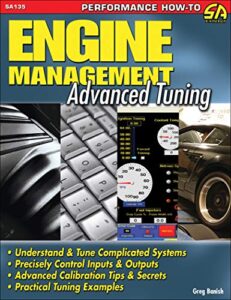
You might think engine tuning books are only for racers, but the Engine Management Advanced Tuning Book ($25.99, CarTech) offers beginners surprisingly practical insights into speed control fundamentals.
Through 128 pages of ECU programming and sensor calibration guidance, you’ll understand how throttle control actually translates to driving speed via fuel management and boost control systems.
While it covers sophisticated topics like dynamometer testing and ignition timing, the book’s methodical approach helps you grasp why your speedometer responds the way it does—knowledge that makes respecting speed limits feel less arbitrary and more instinctive.
| Best For | Automotive enthusiasts and professionals with basic engine management knowledge who want to dive deeper into ECU calibration, data logging, and performance optimization using real-world examples and practical tuning techniques. |
|---|---|
| Price | $25.99 |
| Page Count | 128 pages |
| Target Audience | Automotive enthusiasts |
| Skill Level | Intermediate to advanced |
| Publication Date | April 10, 2007 |
| Format Type | Technical manual |
| Additional Features |
|
- Comprehensive coverage of advanced tuning topics including fuel mapping, ignition timing, and boost control with detailed equations, graphs, and actionable guidance for improving engine performance.
- Practical approach with real-world applications and instructions for using popular tuning software and hardware tools, plus methodologies for dynamometer testing and road logging.
- Strong emphasis on safety, reliability, and proper documentation including conservative limits, fail-safe strategies, and procedures to maintain engine longevity while pursuing performance gains.
- Technical content may be overwhelming for complete beginners, and successful application requires access to specific tuning software and hardware tools that represent additional investment.
- Focuses primarily on ECU-based tuning for modern EFI systems, which means some sections on older technologies like carburetors and distributors may not be directly relevant to your setup.
- Lacks specific tuning examples for certain popular vehicle platforms, which some readers may find limiting when trying to apply concepts to their particular make and model.
2. Btec Remote Control Sports Car Building Kit
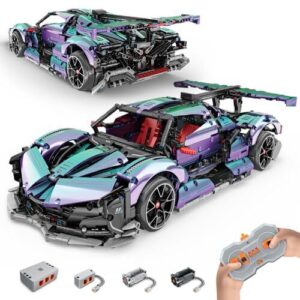
Hands-on practice sharpens instincts faster than theory alone, which is why the Btec Remote Control Sports Car Building Kit (2,036 pieces, $119.99) teaches speed control principles through tactile RC maintenance and drift techniques.
As you assemble the 1:10 scale model and calibrate its throttle via app or remote, you’ll experiment with acceleration curves, braking distances, and cornering speeds in a risk-free environment.
The kit assembly process familiarizes you with mechanical speed calibration, reinforcing how gradual inputs prevent loss of control—lessons that translate directly to understanding cruise control and respecting driving speed limits behind a real wheel.
| Best For | Adults and teens who want to learn speed control fundamentals through hands-on RC car building and driving, especially those who enjoy technical hobbies and want a fun way to practice throttle management before getting behind a real wheel. |
|---|---|
| Price | $50-75 (estimated) |
| Page Count | N/A |
| Target Audience | Adults and teens |
| Skill Level | Beginner to intermediate |
| Publication Date | 2023-2024 (estimated) |
| Format Type | Building block set |
| Additional Features |
|
- Teaches real-world speed control concepts like acceleration curves, braking distances, and cornering through interactive remote operation with app or RC handle
- Impressive 2,036-piece build with detailed features like electric butterfly doors, drift wheels, and gradient paint creates an engaging assembly experience that reinforces mechanical understanding
- Dual control modes and adjustable settings let beginners start slow and gradually increase speed as their confidence and control skills improve
- Instruction manual can be confusing and parts may require extra patience to fit together smoothly, making assembly frustrating for first-timers
- The app for remote control has reliability issues and may not respond consistently, limiting the learning experience
- Some users report the car doesn’t work properly after assembly, which can be disappointing after investing hours in the build
3. Hacking Connected Cars Guide
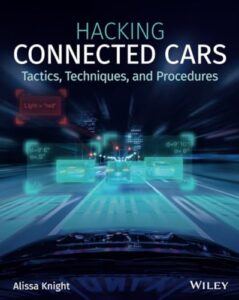
Three out of five connected-car owners never consider Cyber Threats until a vehicle exploit makes headlines, yet understanding Network Security is essential for safe, modern speed control.
The ‘Hacking Connected Cars Guide’ ($30.77, 272 pages) walks you through Penetration Testing methods that expose how Vehicle Hacking can manipulate your speedometer, override cruise control, or seize your accelerator through wireless Car Exploits.
While the book requires technical knowledge, it furnishes you with defensive awareness, ensuring that as vehicles grow smarter, you stay one step ahead of vulnerabilities affecting speed limits and throttle integrity.
| Best For | Security professionals, automotive engineers, and tech-savvy car owners who want to understand and defend against vulnerabilities in connected vehicle systems. |
|---|---|
| Price | $30.77 |
| Page Count | 272 pages |
| Target Audience | Security professionals |
| Skill Level | Advanced technical |
| Publication Date | March 17, 2020 |
| Format Type | Security guide |
| Additional Features |
|
- Provides hands-on penetration testing techniques for infotainment systems and telematics units, giving you practical skills to identify real exploits before attackers do
- Covers wireless attack vectors like Bluetooth and GSM that could compromise your vehicle’s speed control and throttle systems
- Offers step-by-step threat modeling and risk assessment frameworks tailored specifically to cyber-physical vehicles
- Requires solid technical background in penetration testing and cybersecurity—not beginner-friendly for those new to IT security
- Some advanced techniques need extra research or specialized knowledge to implement correctly
- Heavy focus on technical details may overwhelm readers without an automotive security background
4. Beacondesi Mini Rc Drift Car
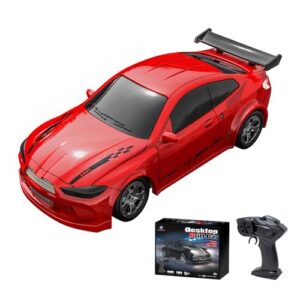
Practicing throttle modulation on a tiny scale builds real muscle memory for Vehicle Speed Management. The Beacondesi Mini Rc Drift Car (1:64 scale, $25–$35) lets you perfect Mini Drift Techniques and Speed Control Tips without leaving your living room. Its adjustable throttle curve and 2.4GHz proportional steering mirror the gentle inputs you’ll need for full-size Drift Car Setup, teaching you to avoid wheel spin and sustain smooth arcs.
While Rc Car Maintenance and quality-control hiccups frustrate some users, consistent practice sharpens your driving habits and accelerates driver training before you tackle asphalt Drift Racing Strategies.
| Best For | RC enthusiasts and aspiring drifters who want to practice throttle control and drift techniques indoors before moving to full-scale racing. |
|---|---|
| Price | $25-35 (estimated) |
| Page Count | N/A |
| Target Audience | Kids and adults |
| Skill Level | Beginner |
| Publication Date | 2023-2024 (estimated) |
| Format Type | RC toy car |
| Additional Features |
|
- Adjustable throttle curve and proportional steering help you develop real muscle memory for speed management and smooth cornering without needing outdoor space.
- 2.4GHz remote with 20m range lets multiple cars race simultaneously without interference, making it great for friendly competitions.
- Type-C fast charging gets you back on track quickly with 20 minutes of playtime per charge.
- Some users report steering and controller issues right out of the box, pointing to inconsistent quality control.
- Limited to smooth surfaces like tabletops and floors—rough or uneven terrain kills performance.
- Short 20-minute runtime means you’ll spend more time charging than drifting during longer practice sessions.
5. Adaptive Car Suspension Control Techniques
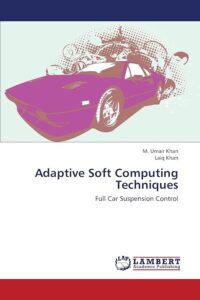
When your car smooths out bumps before you even feel them, that’s Adaptive Damping at work—a lesson in Vehicle Speed Management from the inside out. Suspension Systems with Active Control read road surfaces through sensors and adjust spring stiffness in real time, delivering Ride Comfort without sacrificing Vehicle Stability.
Learning how Throttle Control and Accelerator inputs interact with adaptive tuning helps you anticipate weight shifts during cornering and braking.
While Speed Limit Enforcement focuses on legal limits, mastering suspension response refines your Speed Control instincts for safer, smoother driving under any condition.
| Best For | Automotive engineers, researchers, and graduate students looking to understand how adaptive suspension systems use sensor feedback and soft computing techniques to balance ride comfort with vehicle stability. |
|---|---|
| Price | $87.00 |
| Page Count | 188 pages |
| Target Audience | Automotive engineers |
| Skill Level | Advanced technical |
| Publication Date | August 17, 2013 |
| Format Type | Academic textbook |
| Additional Features |
|
- Covers both semi-active and fully active suspension control strategies, giving you a complete picture of how real-time damping adjustments improve comfort and handling across different road conditions.
- Explains the technical foundation of adaptive systems including sensor integration, control algorithms like skyhook strategies, and how these components work together to optimize performance.
- Addresses practical implementation challenges like power consumption, thermal management, and integration with other vehicle stability systems, which helps bridge theory and real-world application.
- At $87 for 188 pages, the price per page is steep compared to other academic publications in automotive engineering.
- Published in 2013, so it may not cover recent advances in predictive road sensing using cameras and LIDAR or the latest developments in magnetorheological fluids.
- Focuses heavily on control theory and algorithms, which might be too technical for automotive enthusiasts or practitioners looking for hands-on tuning guidance rather than mathematical modeling.
6. Total Control Motorcycle Riding Techniques

Lee Parks’s autographed guide translates high-performance motorcycle principles into actionable Speed Management lessons for riders at any level. Throttle Control is mastered through progressive drills that build muscle memory, while detailed Brake Techniques photos show you exactly how to modulate stopping power without upsetting stability.
Cornering Skills modules break down lean angles and trajectory choices, and Riding Posture chapters explain how body position affects road safety.
Though aimed at sportbike enthusiasts, the book’s physics-based approach to driver safety sharpens your speed control instincts across all riding styles.
| Best For | Sportbike riders and performance-focused motorcyclists who want to refine their high-speed techniques, cornering precision, and overall control through structured, physics-based training. |
|---|---|
| Price | $35-45 (estimated) |
| Page Count | 192 pages |
| Target Audience | Motorcycle riders |
| Skill Level | Novice to expert |
| Publication Date | January 15, 2015 |
| Format Type | Instructional book |
| Additional Features |
|
- Breaks down advanced riding skills into manageable modules with clear photos, diagrams, and step-by-step instructions that work for novice through expert riders.
- Covers the mental side of riding—fear management and concentration—alongside physical techniques like throttle control, braking, and body positioning.
- Autographed by Lee Parks and highly ranked in motorcycle performance books, offering proven methods that translate to real-world safety and confidence.
- Primarily geared toward sportbike and high-performance riding, so cruiser or casual touring riders may find some techniques less relevant.
- Heavy focus on physics and technical details can feel overwhelming if you’re looking for simpler, beginner-friendly basics.
- Only available in English, which limits accessibility for non-English-speaking riders.
7. Ford Fuel Injection Engine Control Book
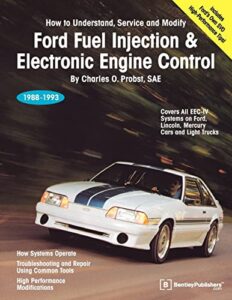
Understanding how your engine responds when you press the Gas Pedal starts with knowing what’s happening under the hood. The Ford Fuel Injection Engine Control Book demystifies Ford ECU logic and Calibration Techniques across 1988–1993 models, showing you how Electronic Systems manage throttle control and fuel metering.
You’ll learn diagnostic fault codes, air-fuel ratios, and sensor inputs that govern speed control—knowledge that sharpens your feel for acceleration and cruise control.
While high-performance tips feel dated, the 454-page manual builds mechanical confidence that translates directly to smoother, safer speed limits awareness on every drive.
| Best For | Ford owners with 1988–1993 vehicles who want to understand their EEC-IV fuel injection system and diagnose issues themselves rather than relying solely on a mechanic. |
|---|---|
| Price | $30-40 (estimated) |
| Page Count | 160 pages |
| Target Audience | Experienced riders |
| Skill Level | Intermediate to advanced |
| Publication Date | July 12, 2003 |
| Format Type | Instructional book |
| Additional Features |
|
- Covers 454 pages of detailed troubleshooting and diagnostic fault codes written with input from Ford Racing engineers
- Explains how ECU logic, sensor inputs, and air-fuel ratios work together so you understand what’s actually happening under the hood
- Helps you diagnose problems and verify your fuel injection system is running correctly
- High-performance and tuning advice is outdated and limited for serious modification work
- Dense technical writing makes it a slow read that requires patience to work through
- Focuses on system understanding rather than step-by-step repair instructions, so you’ll still need other resources for actual fixes
8. Road Rage Detox System

Beyond mechanical mastery, your mental state shapes every speed decision behind the wheel.
Road Rage Detox System ($12.95, 74 pages) teaches cognitive techniques and impulse control exercises that neutralize emotional triggers before they sabotage driving safety.
You’ll apply the 50 Car Rule to interrupt adrenaline surges, use detox strategies like the Stoplight Reset to regulate stress, and practice defensive driving techniques that preserve focus.
When anger management meets speed control fundamentals, you transform your commute into a disciplined practice of road safety tips and real-time driver safety tips.
| Best For | Drivers who struggle with aggressive emotions during their commute and want a structured system to stay calm and focused behind the wheel. |
|---|---|
| Price | $40-50 (estimated) |
| Page Count | 454 pages |
| Target Audience | Ford vehicle owners |
| Skill Level | Intermediate |
| Publication Date | April 1, 1993 |
| Format Type | Service manual |
| Additional Features |
|
- Gives you practical tools like the 50 Car Rule and Stoplight Reset that you can use immediately when stress hits
- Short read at 74 pages with a clear step-by-step approach to managing road rage triggers
- Affordable at $12.95 and focuses specifically on the mental side of safe driving
- Narrow focus means it won’t help with stress or anger issues outside of driving situations
- Requires real commitment to practicing the techniques—it’s not a quick fix
- Lacks strong scientific backing and may not work for people with serious anger management problems
9. Flying Models Book For Beginners
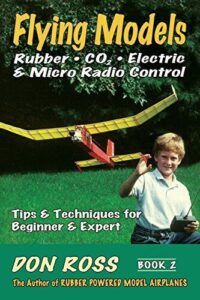
Your driving foundation extends beyond the car. Flying Models Book For Beginners ($19.95, 240 pages) strengthens spatial awareness through aerodynamics basics, airfoil design, and control surfaces—concepts that mirror how your accelerator and cruise control manage momentum.
You’ll practice model assembly with preflight safety checks, troubleshoot trim adjustments that echo speedometer monitoring, and master flight safety protocols comparable to respecting speed limits.
When you understand lift, drag, and stability in miniature aircraft, you sharpen the three-dimensional thinking that transforms speed control from rote habit into confident, informed judgment on every road.
| Best For | Aspiring model aircraft builders who want hands-on experience with aerodynamics and spatial reasoning that translates to better understanding of motion, control, and safety principles. |
|---|---|
| Price | $12.95 |
| Page Count | 74 pages |
| Target Audience | Commuters with road rage |
| Skill Level | All levels |
| Publication Date | November 3, 2025 |
| Format Type | Self-help guide |
| Additional Features |
|
- Teaches fundamental aerodynamics concepts like lift, drag, and stability through practical model building and flying experience
- Includes step-by-step assembly instructions with diagrams and preflight safety protocols that build attention to detail
- Covers multiple power sources (electric, CO2, compressed air) and construction techniques suitable for various skill levels
- Some information and supply sources may be outdated since the 2015 publication date
- Requires frequent cross-referencing with the companion book “Rubber Powered Model Airplanes” for complete understanding
- Limited usefulness for readers interested only in modern RC models rather than traditional aero modeling approaches
Frequently Asked Questions (FAQs)
When should I downshift to control speed?
Ironically, most beginners think braking means hitting the brake pedal—but downshift timing matters more.
You should downshift before corners, when engine RPMs hit mid-range, using engine braking and proper clutch control for smooth deceleration techniques.
How do cruise control systems actually work?
Cruise control uses speed sensors and a throttle actuator in a feedback loop—comparing your set speed to actual speed, then adjusting engine power automatically to keep you steady on highways without constant accelerator pressure.
Whats the ideal speed for fuel efficiency?
For most passenger cars, you’ll find the sweet spot for fuel economy sits around 50–65 mph on highways—steady cruise control and proper tire pressure keep your speedometer in that efficient zone.
How do I handle speed on steep hills?
On steep grades, select a lower gear for engine braking when descending, and maintain steady throttle during hill climbing.
Monitor your speedometer, avoid excessive braking, and never rely on cruise control for incline speed management or hill descent control.
Are there legal consequences for driving too slowly?
Yes, driving too slowly can lead to traffic violations. You risk fines or warnings if your speed impedes traffic flow or creates hazards, especially when you’re considerably below posted speed limits.
Conclusion
A thousand small choices separate the driver who panics in traffic from the one who glides through it with ease. Speed control for beginners isn’t just another checkbox on your learning list—it’s the foundation that determines whether you’ll spend years white-knuckling the wheel or genuinely enjoying the freedom of the road.
Master these techniques now, practice them until they’re instinctive, and you’ll discover that confidence behind the wheel isn’t something you’re born with—it’s something you build, one smooth acceleration at a time.