This site is supported by our readers. We may earn a commission, at no cost to you, if you purchase through links.

Teaching kids to sew opens up a world of creativity—but every beginner hits a moment where a seam goes wrong and needs to come out. That’s where things get tricky for parents. Handing a child a sharp, exposed blade feels like a liability, not a learning tool.
The good news is that seam rippers for kids have come a long way. Today’s options offer rounded safety tips, grippy grips sized for small hands, and protective caps that make accidental pokes far less likely.
Knowing which features actually matter helps you pick a tool your child can use with confidence—and one you won’t be nervous handing over.
Table Of Contents
Key Takeaways
- Kid-friendly seam rippers stand apart from adult tools through specific safety features — rounded tips, protective caps, and textured grips sized for small hands — so the design, not just the size, is what makes a tool actually safe for kids.
- Matching the tool to your child’s age and skill level matters more than picking the most popular option; kids under 7 need hands‑on adult guidance, while those 10 and up can start building real independence with the right ergonomic design.
- Teaching good habits from the start — practicing on fabric scraps, holding material steady, cutting one stitch at a time, and capping the blade after every use — builds both skill and a safety mindset that sticks.
- A seam ripper isn’t just a fix-it tool; it teaches kids that mistakes are part of the process, turning every crooked seam into a confidence‑building moment rather than a reason to give up.
What Are Kid-Friendly Seam Rippers
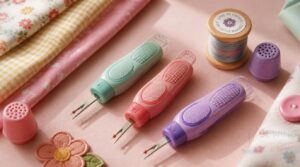
Kid-friendly seam rippers aren’t just smaller versions of the grown‑up tool — they’re designed with safety features that make them genuinely appropriate for young hands. Knowing what sets them apart helps you choose the right one with confidence.
Safety-focused designs, rounded guards, and ergonomic grips are among the features covered in this guide to seam rippers for quilting, making it easier to spot tools built with younger crafters in mind.
Here’s a closer look at what makes a seam ripper work well for kids.
Child-safe Stitch Removal
For young sewists just starting out, child-safe stitch removal comes down to one thing: control. A kid‑friendly seam ripper is a small helpful tool designed to sever thread without catching skin or tearing fabric.
Safe models focus on:
- Blunt or rounded tips that minimize skin puncture risk
- Protective caps covering sharp edges during storage
- Textured grips preventing slipping in small hands
- Shields that stop accidental fabric snags mid‑cut
If a child suffers a deep cut, seeking urgent evaluation needed can prevent complications.
Common Seam Ripper Parts
Every seam ripper has the same basic parts.
The handle — made from plastic, rubber, or wood — gives you a firm grip. A metal shaft connects it to the blade head. The blade V-gap guides thread into the cutting edge cleanly. A small protective safety ball (often a red ball) sits at the tip, shielding delicate fabric from snags.
Thread Ripper Vs Seam Cutter
These two tools sound alike but work differently.
A thread ripper targets single stitch precision — perfect for correcting sewing mistakes without disturbing nearby fabric.
A seam cutter manages bulk thread removal, slicing through multiple threads fast.
For kids learning control, a thread ripper’s accuracy beats speed every time.
When Kids Need One
Once kids start their first sewing projects, mistakes happen fast. A skipped stitch, a crooked seam — that’s where a seam ripper earns its place. Correcting sewing mistakes early keeps frustration low and confidence growing. It also teaches iterative design — the idea that fixing and trying again is part of learning, not a sign of failure.
Every seam ripped and restitched teaches young sewers that fixing mistakes is how mastery is made
| Situation | Why a Seam Ripper Helps |
|---|---|
| Uneven seam | Redo it cleanly without cutting fabric |
| Accidental snag | Remove damaged stitches safely |
Top 8 Seam Rippers for Kids
Not every seam ripper is built with kids in mind, but the eight picks below are. Each one balances safety, comfort, and ease of use so young sewists can fix mistakes without frustration. Here’s what made the cut.
1. Dritz Deluxe Seam Ripper
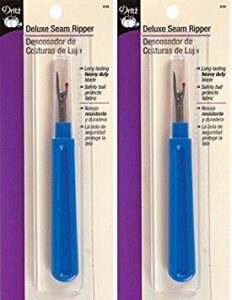
The Dritz Deluxe Seam Ripper is a solid first tool for young sewers ready to fix their own mistakes. Its large blue handle — about 3.5 inches long — fits a full hand comfortably, even for older kids and teens.
The hardened steel blade stays sharp through plenty of practice sessions, and the clear protective cap keeps the blade covered safely between uses.
A rounded safety ball at the tip protects fabric from accidental tears.
| Best For | Sewers of all skill levels who need a reliable, everyday tool for cleanly removing stitches without damaging their fabric. |
|---|---|
| Blade Material | Hardened steel |
| Safety Cover | Clear plastic cap |
| Handle Grip | Plain plastic |
| Tool Length | ~2.5 in |
| Pack Count | 2 |
| Primary Purpose | Stitch and tag removal |
| Additional Features |
|
- Hardened steel blade stays sharp through heavy use, making stitch removal quick and clean
- Built-in safety ball protects fabric from accidental tears while ripping seams
- Comes as a pack of two, so you can keep one at your machine and one at your cutting table
- May struggle with thick or heavy fabrics where a larger blade would be more effective
- Small parts like the cap and safety ball are easy to lose if you’re not careful about storage
- No ergonomic grip, which can lead to hand fatigue during longer sewing sessions
2. Singer Comfort Grip Seam Ripper
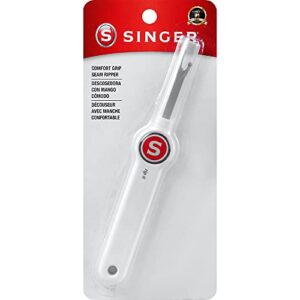
The Singer Comfort Grip Seam Ripper is a friendly-looking tool that’s easy for young sewers to pick up and use. Its soft pink and white rubber handle fits naturally in the hand and won’t slip, even during longer projects. That’s a real plus when a kid is learning to work carefully.
Pair it with beginner-friendly scrap fabric sewing projects so kids can practice ripping and re-stitching without worrying about ruining anything important.
A protective cap covers the blade when the tool isn’t in use — a simple but important safety detail. At just 27 grams, it’s light enough for smaller hands to control without strain.
| Best For | Young or beginner sewers who want a safe, comfortable tool for removing stitches and making quick fabric repairs. |
|---|---|
| Blade Material | Straight steel edge |
| Safety Cover | Rubber tip and lid |
| Handle Grip | Rubber comfort grip |
| Tool Length | Compact |
| Pack Count | 1 |
| Primary Purpose | Thread and buttonhole opening |
| Additional Features |
|
- The soft rubber grip is comfortable to hold for extended periods, reducing hand fatigue
- The protective lid covers the blade when not in use, adding a layer of safety
- At just 27 grams, it’s light and easy for smaller hands to maneuver
- Only available in pink and white, so it might not appeal to everyone’s taste
- The straight cutting edge can struggle in tight or curved stitching areas
- The rubber tip and lid are small, separate pieces that are easy to lose if you’re not careful
3. Clover White Ergonomic Seam Ripper
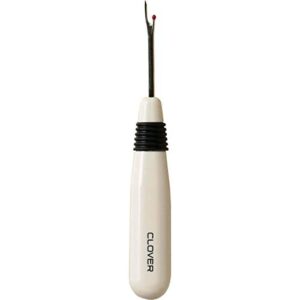
The Clover White Ergonomic Seam Ripper is a standout pick for young sewers — and for good reason. Its contoured handle fits small hands naturally, with a non-slip coating that keeps it steady under light pressure.
The sharp steel blade slips cleanly under stitches without snagging fabric, while the small ball tip adds an extra layer of protection.
At just 5 inches long, it’s compact enough for precise work. A replaceable blade means you won’t need to buy a whole new tool when it dulls.
| Best For | Sewers dealing with hand strain or carpal tunnel who need a comfortable, lightweight tool for everyday seam removal and light sewing projects. |
|---|---|
| Blade Material | Sharp steel shaft |
| Safety Cover | Vinyl safety cap |
| Handle Grip | Ergonomic vinyl |
| Tool Length | 5 in |
| Pack Count | 1 |
| Primary Purpose | Seam and hem removal |
| Additional Features |
|
- Ergonomic handle reduces hand fatigue, making it a great fit for users with carpal tunnel or chronic hand pain
- Sharp steel shaft cuts cleanly through stitches without snagging or damaging fabric
- Compact 5-inch size is easy to control for detailed, precise work
- The vinyl safety cap can wear out or tear over time with regular use
- No hard storage cap included, so the blade isn’t as protected between uses
- Best suited for light-to-moderate tasks — may struggle with heavy-duty fabrics or high-volume ripping
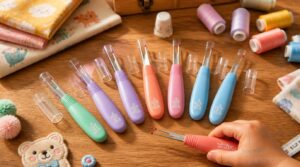
4. Ergonomic Colored Seam Ripper Set
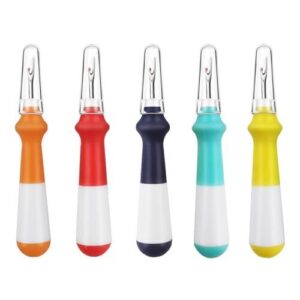
If your young sewer works across multiple projects, a colored seam ripper set might be the smartest buy you’ll make. Each tool is color‑coded — red, blue, green, yellow — so finding the right one on a busy craft table takes seconds.
The rubber ergonomic grips fit small hands comfortably and resist slipping, even when fingers are tired. Protective caps snap securely over each blade between uses.
It’s a practical, organized solution for growing sewers juggling more than one project at a time.
| Best For | Young or beginner sewers managing multiple projects who need an organized, easy-to-grip set of seam rippers that are simple to tell apart at a glance. |
|---|---|
| Blade Material | Stainless steel |
| Safety Cover | Individual protective caps |
| Handle Grip | Rubber-covered ergonomic |
| Tool Length | 5.1 in |
| Pack Count | 5 |
| Primary Purpose | Multi-fabric thread removal |
| Additional Features |
|
- Color-coded tools make it fast and easy to grab the right ripper from a crowded craft table
- Rubber ergonomic grips reduce hand strain and are comfortable for small or tired hands
- Protective caps keep blade tips covered between uses, adding a layer of safety
- Sharp tips make these unsuitable for very young children without close adult supervision
- Rubber grips can wear down with heavy, prolonged use over time
- Applying too much force risks breaking the tip or dislodging the protective mini-ball
5. Fiskars Easy Change Fabric Knife
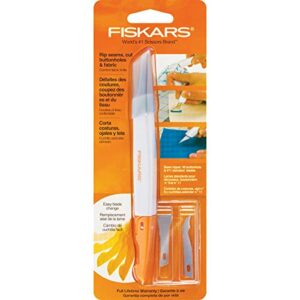
The Fiskars Easy Change Fabric Knife is more than a seam ripper — it’s three tools in one. It ships with a seam ripper blade, a buttonhole blade, and a standard #11 fabric blade. Swapping between them takes seconds using the orange release lever.
The SoftGrip handle reduces hand fatigue and won’t roll off the table. At 3.5 inches, it fits smaller hands well. A blade cap keeps the sharp edge covered when you’re done.
| Best For | Sewists, crafters, and hobbyists who frequently switch between seam ripping, buttonhole cutting, and detailed trimming and want one versatile tool that handles it all. |
|---|---|
| Blade Material | Interchangeable metal |
| Safety Cover | Removable safety cap |
| Handle Grip | Softgrip ergonomic |
| Tool Length | 3.5 in |
| Pack Count | 1 knife + 3 blades |
| Primary Purpose | Multi-blade precision cutting |
| Additional Features |
|
- Ships with three interchangeable blades (seam ripper, buttonhole, and #11 fabric cutter), making it a genuine multi-tool for sewing and fine-detail work
- The SoftGrip handle is comfortable to hold for long sessions and the no-roll design keeps it from sliding off your work surface
- Backed by a full lifetime warranty, so it’s a one-time buy you can rely on
- The plastic blade storage case is lightweight and prone to wearing out or breaking with regular use
- The blade cap doesn’t clip to the handle when removed, making it easy to misplace mid-project
- The three-step blade-change process can feel unintuitive at first, especially for beginners or anyone with limited hand dexterity
6. Portable Mini Seam Ripper
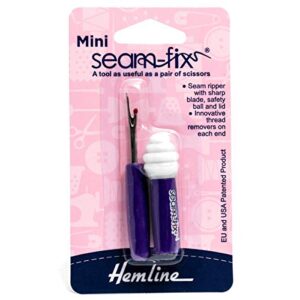
Sometimes the best tool is the one that fits right in your pocket. A portable mini seam ripper measures just 2.5 to 3 inches long, making it easy to tuck into a sewing kit or backpack.
The protective cap covers the blade when you’re not using it, so there’s no need to worry about accidental nicks. It’s a smart pick for young sewers doing light projects on the go.
| Best For | Young sewers and on-the-go crafters who need a compact, travel-friendly seam ripper for light sewing projects. |
|---|---|
| Blade Material | Sharp steel |
| Safety Cover | Integrated lid |
| Handle Grip | Rubberized ends |
| Tool Length | Mini (~1 in blade) |
| Pack Count | 1 |
| Primary Purpose | Stitch removal and thread cleanup |
| Additional Features |
|
- Protective cap keeps the blade covered when not in use, making it safe to toss in a bag
- Dual-ended thread remover tips make it easy to clean up stray threads right after ripping
- Slim, lightweight design slips into any sewing kit or backpack without taking up space
- Short blade can struggle with thicker seams, requiring extra effort to get through
- The small size means it can roll off flat surfaces if set down carelessly
- Extended use may feel uncomfortable due to limited leverage on the handle
7. Dritz Large Ergonomic Seam Ripper
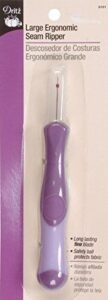
If small tools aren’t quite the right fit, the Dritz Large Ergonomic Seam Ripper is worth a look. Its oversized rounded handle gives kids a secure, comfortable grip — especially helpful for beginners who need extra control.
The ergonomic shape reduces hand strain during longer sessions, and the sharp, fine blade cuts everything from basic seams to buttonholes cleanly. A protective cap covers the blade between uses, making storage safer.
It’s a solid, no-fuss choice for kids ready to sew with more confidence.
| Best For | Sewers with arthritis, limited hand strength, or anyone who struggles with standard small-handled seam rippers. |
|---|---|
| Blade Material | All-metal |
| Safety Cover | None included |
| Handle Grip | Oversized metal |
| Tool Length | Standard |
| Pack Count | 1 |
| Primary Purpose | General seam removal |
| Additional Features |
|
- Oversized ergonomic handle provides a comfortable, secure grip and reduces hand strain during extended use
- All-metal construction makes it durable and built to last
- Works well across a variety of fabrics, making it a versatile addition to any sewing kit
- The large handle can feel bulky in tight or small workspaces
- Metal is susceptible to rust if it gets wet and isn’t dried off properly
- One fixed size means it won’t adjust to fit narrow seams or hard-to-reach spots
8. Dritz LED Magnified Seam Ripper
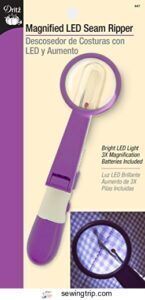
The Dritz LED Magnified Seam Ripper takes things up a notch.
It has a built-in LED light and a 3× magnifying lens — both hugely helpful when working on dark fabric or tiny stitches.
The soft, slip‑resistant grip keeps hands steady, and a protective cap covers the blade when you’re done.
It runs on three included AG13 batteries.
For kids who want to see exactly what they’re doing, this tool makes the details impossible to miss.
| Best For | Sewers who work with dark fabrics or fine stitches and want built-in lighting and magnification to see their work clearly. |
|---|---|
| Blade Material | Small sharp blade |
| Safety Cover | Protective cap |
| Handle Grip | Soft ABS finger grips |
| Tool Length | 7.75 in |
| Pack Count | 1 |
| Primary Purpose | Low-light precision ripping |
| Additional Features |
|
- Built-in LED light and 3× magnifier make it easy to see exactly what you’re doing, even in low-light conditions
- Soft, slip-resistant grip provides steady control during use
- Compact and travel-friendly with a lanyard hole for easy attachment to a sewing kit or bag
- Blade is on the larger side, making it less ideal for very fine or delicate stitches
- LED brightness may not be enough for very dark workspaces
- Slightly bulkier than a standard seam ripper, which can make maneuvering in tight spots trickier
How to Choose Safely
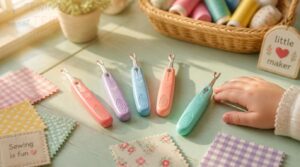
Not every seam ripper belongs in a kid’s hands — the right one makes all the difference between a safe craft session and a stressful one. A few key features separate the child-friendly picks from the rest. Here’s what to look for before you buy.
Protective Caps and Covers
Every seam ripper you hand a child should have a protective cap or cover. When the blade is stored away, it can’t poke curious fingers — or get damaged itself.
Many caps are color-coded by size, which also makes organizing sewing tools easier. A cap kept on between sessions quietly extends the tool’s life.
Rounded Safety Tips
The cap keeps the blade safe — but the tip design matters just as much. A rounded safety tip lets the seam ripper glide under stitches without snagging fabric threads or pinching fingers.
Look for a gentle curve with small radius, which gives you control over cutting pressure. That combination makes sewing mistakes correction far less stressful for small hands learning the craft.
Easy-grip Handles
The handle is where control begins. A textured rubber sleeve or soft gel overlay helps young hands grip firmly without squeezing too hard. Molded plastic grips with contoured finger grooves guide correct placement naturally, reducing strain.
Here’s what to look for:
- Textured rubber sleeves for secure friction control
- Soft gel overlays that cushion pressure points
- Contoured finger grooves for beginner guidance
- Ergonomic handle curves that reduce fatigue
- Non-slip coatings that hold even with sweaty hands
Size for Small Hands
Size matters more than most parents realize. For young sewers, the ideal grip diameter sits between 3.0 and 3.5 millimeters — wide enough for finger placement security without cramping small hands.
A shaft length of 40 to 45 millimeters reduces wrist strain noticeably, and keeping the seam ripper under 14 grams means kids can practice longer without fatigue.
Bright Visible Colors
Color does more than look fun — it works as a safety signal. Fluorescent yellows, lime greens, and oranges stay highly visible across a cluttered sewing table, helping you spot the tool fast.
These hues also help caregivers quickly distinguish kid-safe tools from sharper equipment nearby.
Look for durable, fast-dyed grips that won’t fade after repeated handling.
Teaching Kids Seam Ripping
Teaching a kid to use a seam ripper isn’t complicated — it just takes the right starting point. A few simple habits make all the difference between a frustrating first try and a skill they’ll actually want to practice. Here’s how to walk them through it, step by step.
Practice on Fabric Scraps
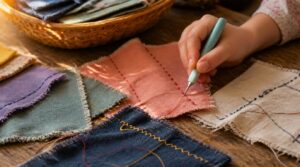
Before your child touches a real project, practice on fabric scraps first. Grab a few scrap pieces with different stitch types — running stitches, backstitches, zigzag — and let them rehearse slow, controlled ripping motions. This builds confidence without risking a real garment.
- Choose scraps with visible stitching so progress is easy to see
- Practice one stitch at a time to minimize fraying
- Jot quick notes on what worked best for each stitch type
Hold Fabric Steady
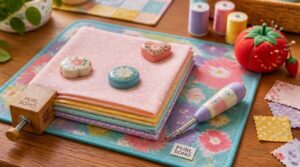
Wobbly fabric is the enemy of clean seam ripping. Proper fabric alignment makes every cut safer and more controlled.
Before your kid picks up any hand sewing tools, set them up with a non-slip mat or shelf liner under their work. It keeps everything from sliding around.
A sewing clamp or small weights holds layers flat without pinholes — perfect for delicate pieces.
Cut One Stitch Carefully
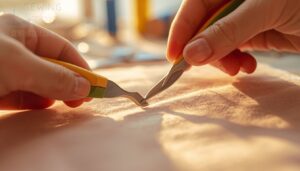
Think of each stitch as its own small decision. Before your kid cuts, have them assess the stitch carefully — slide the blade under just one thread, not the whole seam.
Fabric tension control matters here: keep the material taut so the blade glides cleanly. Slow, steady pressure prevents nicking the fabric and keeps fingers safe.
Remove Loose Threads
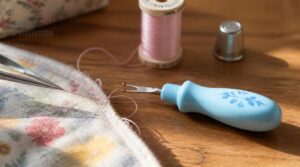
Once the stitch is cut, loose threads need to come out cleanly. Use tweezers for precision — they grip individual threads without disturbing surrounding fibers.
Gently lift each thread at the base and pull away from the seam in small sections.
After clearing the area, run a finger along the seam line to catch any stragglers.
Store After Every Use
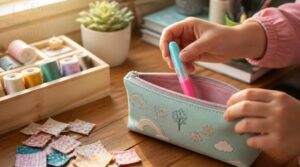
Once the loose threads are cleared, the last step is just as important: put the seam ripper away properly.
- Snap the protective cap back on
- Return it to its designated storage spot
- Keep it in a childproof container
- Check that the blade is fully covered
This simple routine keeps your sewing kit essentials safe and your craft space organized.
Buying Tips for Parents
Picking the right seam ripper for your child comes down to more than just grabbing the cheapest one off the shelf. A few key factors will help you choose something safe, comfortable, and built to last. Here’s what to look for before you buy.
Best Age Considerations
Age shapes everything regarding seam ripper safety. Children under 7 need full adult hands‑on guidance.
Ages 10–12 can practice on fabric scraps using tools with rounded safety tips and protective caps.
By 13–15, ergonomic kid‑friendly designs build real confidence.
Match the tool to where your child actually is — not just how old they are.
Supervision and Storage
Even with the right tool in hand, supervision is what keeps kids safe.
Stay within arm’s reach during every session — not just nearby, but close enough to step in instantly.
After use, cap the blade, wipe it dry to prevent corrosion, and lock it away in a labeled container on a high shelf, out of unsupervised reach.
Durability and Blade Sharpness
A dull blade is the last thing you want mid-project. Look for stainless steel blades — they resist rust and hold their edge through dozens of small seam removals.
Blade edge geometry matters too; a fine bevel cuts cleanly without fraying surrounding threads.
Clean off lint after each use and replace the blade once cutting feels forced.
Ergonomic Comfort Matters
When a child uses a poorly designed hand tool, their grip tires fast. Reducing hand fatigue starts with choosing a seam ripper built around ergonomic design. Three features make the biggest difference:
- Balanced tool weight under 20 grams
- Proper thumb placement via a contoured rest
- Grip strength needs cut by 25% with textured grips
Minimizing wrist deviation keeps craft hobbyist sessions comfortable and safe.
Starter Sewing Kit Fit
A good starter sewing kit sets your young crafter up for real success.
Look for light kit weight, a short handle sized for small hands, bright colors for tool visibility, and a few fabric scraps to practice on.
Storage organization — like a labeled pouch — keeps beginner sewing tools safe and easy to find every time.
Frequently Asked Questions (FAQs)
How often should kids replace seam ripper blades?
For occasional use, blades last several years. With regular projects, plan to replace every 6–12 months. If cutting feels resistant or threads slip, that’s your sign — swap it out promptly.
What fabrics work best for beginner practice?
Cotton and muslin are practically magic for beginners. Cotton percale and poplin minimize puckering, while muslin’s durability makes it perfect for practice without wasting good fabric.
Are there seam rippers designed for small hands?
Yes — several seam rippers are built specifically for small hands. Compact grips, soft-grip materials, and a small red ball on the tip make precise stitch removal safer and more comfortable for young sewists just developing fine motor skills.
When should kids transition to adult seam rippers?
Most kids are ready to progress around ages 9 to 12, once they show steady hand strength and careful habits. Watch for consistent control over several weeks before removing training wheels.
Can a seam ripper damage delicate or sheer fabric?
A seam ripper is like a scalpel — precise in trained hands, risky on delicate sheer fabric. The sharp tip can snag fine weaves or pierce them, so always use the fabric protection ball and move slowly.
How often should kids replace a dull blade?
Replace the blade every 3 to 5 uses on thick fabrics, or every 5 to 7 uses on lighter materials. If it tugs or frays threads, swap it immediately — don’t wait.
Are ceramic blade seam rippers safer for children?
Like a butter knife versus a paring knife, ceramic blades use safety grind technology to stay finger-friendly while cutting thread cleanly. They’re rust-resistant but brittle — handle with care.
What sewing mistakes do kids most commonly fix?
Every young sewer makes sewing mistakes — crooked seams, uneven allowances, and overstitched areas are the most common. Loose threads and fraying edges also pop up often when kids are learning.
Conclusion
Choosing the wrong tool could turn a simple seam fix into a frustrating setback that makes a child want to quit sewing altogether. right seam rippers for kids change that story completely.
safe grip, a capped tip, and a blade sized for small hands can transform a tricky mistake into a quiet confidence builder. fits your child’s hands and skill level—and watch a small tool do surprisingly big things.
- https://simplysewingmag.com/guides/best-seam-rippers
- https://www.asg.org/the-humble-seam-ripper
- https://mypacklove.com/blogs/heat-transfer-labels/what-is-a-seam-ripper-uses-parts-how-to-guide
- https://fabricninja.com/notions-and-tools-picking-the-perfect-seam-ripper
- https://suzyquilts.com/worlds-best-seam-ripper