This site is supported by our readers. We may earn a commission, at no cost to you, if you purchase through links.
Your first sewing project shouldn’t fail because of tangled, broken, or mismatched thread. Yet that’s exactly what happens when beginners grab random spools without understanding what makes quality thread sets work.
The right starter collection gives you polyester’s strength for everyday projects, cotton for quilting, and enough color variety to match any fabric—all organized so you’re not wrestling with knots before you even start.
Good thread sets for beginners include essential tools like needles, scissors, and storage solutions that prevent the frustrating tangles plaguing new sewists.
With dozens of kits claiming to be perfect for first-timers, knowing which features actually matter—and which are just marketing fluff—saves you money and countless headaches as you build your sewing skills.
Table Of Contents
- Key Takeaways
- Best Thread Sets for Beginners in 2026
- Top 5 Thread Sets and Kits Reviewed
- Essential Thread Types for New Sewists
- How to Choose Thread Colors and Collections
- Thread Quality: What Beginners Should Know
- Thread Set Accessories Every Beginner Needs
- Budgeting for Beginner Thread Sets
- Tips for Using and Maintaining Thread Sets
- Common Thread Set Mistakes to Avoid
- Frequently Asked Questions (FAQs)
- Conclusion
Key Takeaways
- Quality beginner thread sets should include 40-50 weight polyester thread for versatility across most fabrics, along with essential tools like needles, scissors, and organized storage to prevent tangling and frustration during your first projects.
- Start with neutral colors (black, white, gray) as your foundation rather than buying large rainbow collections, since most everyday sewing relies on these basics and you can add specialty colors as specific projects demand them.
- Thread deteriorates over time, so buying individual spools for actual projects proves more cost-effective than multipacks where most colors sit unused, though bundled starter sets under $30 can provide good initial variety for learning.
- Match your thread fiber to your fabric fiber (cotton thread for cotton fabric, polyester for synthetics) and store spools in cool, dry conditions away from UV light to maintain strength and prevent breakage that can ruin mid-project seams.
Best Thread Sets for Beginners in 2026
You deserve thread sets that grow with your skills, not frustrate your first projects. The best beginner collections balance quality with variety, giving you reliable spools for everything from quick hems to creative experiments.
Pairing your starter set with techniques for sewing with metallic threads adds decorative flair once you’ve mastered the basics.
Let’s look at what separates the starter sets that empower you from the ones that just take up drawer space.
What Makes a Thread Set Beginner-Friendly
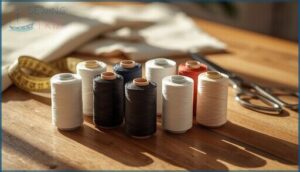
You want Thread Quality that won’t quit mid-seam. Beginner-friendly Starter Sets prioritize polyester thread in 40-50 weight—it’s forgiving, strong, and works beautifully on most fabrics. Look for Sewing Essentials with clear labeling, adaptable colors for Fabric Matching, and enough variety to tackle your first projects without confusion. The best Beginner Kits empower you with reliable Thread Selection so you’re stitching confidently, not troubleshooting tangles. For tips on choosing and handling thread, explore these to build your sewing confidence.
If you’re tackling buttonholes specifically, check out this guide on sewing machines built for easy, professional buttonholes to pair with your thread choice.
Top Features to Look For
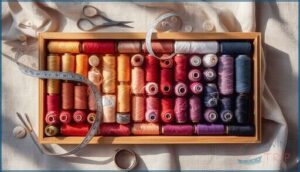
A great thread set does more than fill a drawer—it gives you the right colors, the right strength, and the right tools to turn fabric into something you love.
Getting the color right matters just as much as the thread itself—choosing the right thread color for topstitching can make the difference between stitches that blend seamlessly or stand out as a bold design feature.
A great thread set gives you the right colors, strength, and tools to transform fabric into something you love
Organizing your supplies with the best thread storage containers guide ensures your thread remains protected and accessible.
When you’re choosing Thread Sets for Beginners, focus on these three essentials:
A well-rounded sewing kit for adults like the Vellostar includes multiple thread colors, varied needle sizes, and compact scissors for versatile repairs.
- Thread Quality and Fabric Compatibility – Polyester or cotton Thread Types that handle woven and knit fabrics without snapping mid-project
- Color Variety – At least 20-40 spools so you can match fabrics confidently without emergency store runs
- Storage Options and Needle Types – Organized cases and assorted needles that keep Sewing for Beginners simple and frustration-free
Popular Brands for Starter Thread Sets
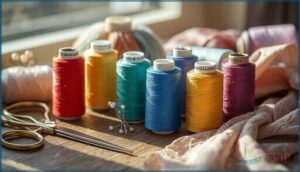
When you’re comparing brands for thread quality and sewing essentials, Gutermann and Coats & Clark dominate beginner kits. Gutermann Sew-All delivers strength and smooth finish, while Coats Dual Duty manages garment and craft projects reliably.
Mettler and Aurifil offer premium thread selection for quilting, and Simthread’s multicolor sets give you budget-friendly variety.
These names empower your thread kit choices with proven performance for sewing for beginners.
Top 5 Thread Sets and Kits Reviewed
You’ve got your priorities straight, now let’s look at the kits that actually deliver.
Each option below brings something different to your workspace, whether it’s portability, specialty tools, or a complete collection in one box.
Here’s what stands out in each set and how it can empower your sewing journey.
1. A Dinsenen Wooden Sewing Box
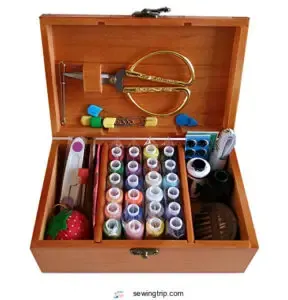
The A.Dinsenen kit brings everything together in a lidded wooden sewing box that protects your tools from damage and looks good on a shelf. This sewing kit essentials package weighs just 1.7 pounds and measures 8.27 by 5.12 by 3.54 inches, making it one of the most practical portable storage solutions for beginners learning quick repairs at home or while traveling.
You’ll find 24 polyester thread color options, metal scissors, hand-sewing needles, buttons, a seam ripper, and a measuring tape, all designed for basic mending tasks.
| Best For | Beginners who want a complete starter kit for quick clothing repairs, travelers needing compact mending supplies, or anyone looking for a giftable all-in-one sewing solution that stays organized on a shelf. |
|---|---|
| Primary Use | Basic repairs & light sewing |
| Skill Level | Beginners |
| Includes Scissors | Yes |
| Includes Needles | Yes |
| Includes Threads | 24 colors |
| Storage Type | Wooden basket |
| Additional Features |
|
- Rigid wooden box protects scissors, needles, and other sharp tools while keeping everything in one place
- 24 thread colors cover most everyday fabric-matching needs without buying individual spools
- Compact size (8.27 x 5.12 x 3.54 inches) fits easily in luggage or dresser drawers for quick access
- Some customers report the box feels too small for comfortable organization
- Thread quality has disappointed users who expected more durable polyester
- Missing or damaged items like needle threaders have been reported in some shipments
2. Vellostar Portable Sewing Kit
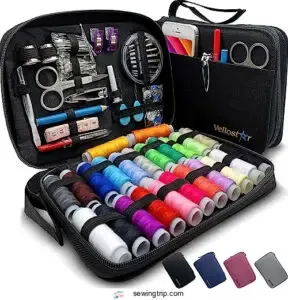
When emergency repairs strike, Vellostar’s zippered fabric case becomes your go-to lifeline. This portable sewing kit packs 24 threads, 30 needles, sharp scissors, and essential sewing tools into a compact 8-by-5.5-inch design you can toss in any bag. The durable 600D outer shell protects everything inside, while the included threaders, seam ripper, and safety pins handle quick fixes on clothing or small sewing techniques projects.
You’ll love the organized layout that keeps beginners from digging through messy drawers, and at roughly fifteen dollars, it delivers genuine value for travel kits or home use.
| Best For | Beginners, travelers, and anyone who needs a compact emergency repair kit for quick clothing fixes on the go. |
|---|---|
| Primary Use | Emergency repairs & travel |
| Skill Level | Beginners & experienced |
| Includes Scissors | Yes (stainless steel) |
| Includes Needles | Yes (30 needles) |
| Includes Threads | 24 spools |
| Storage Type | Portable case |
| Additional Features |
|
- Compact 8×5.5-inch zippered case fits easily in luggage, dorms, or office drawers while keeping 24 threads, 30 needles, and essential tools organized
- Sharp scissors and durable 600D outer shell deliver reliable performance for emergency repairs and small sewing projects
- Great value at around fifteen dollars with everything included—threaders, seam ripper, safety pins, and buttons—so you don’t need to buy items separately
- Needle container can be difficult to use and needles sometimes fall out during storage or travel
- Some components like needles and pins may bend or break easily, suggesting lower-quality materials
- Missing larger-sized needles limits versatility for heavier fabrics or certain repair jobs
3. Bagerla Leather Working Tool Set
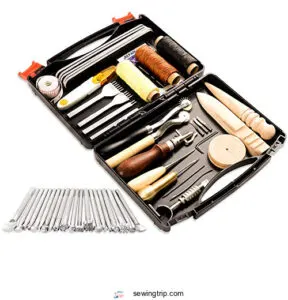
If leatherworking sparks your creativity, Bagerla’s 273-piece kit equips you to tackle beginner projects with confidence. You get leather rivets, stamps, hole punches, and a stitching groover—all organized in a dedicated tool box that weighs just over eight pounds.
Once you’ve mastered the basics, you can explore small sewing project ideas for sale to turn your leatherworking skills into a profitable side venture.
This set suits crafting safety by including fixing tools and protective storage, though sharp edges require caution. While some tools may not endure heavy-duty use, the collection covers essential leather types like belts, bags, and watch bands, giving new sewists and crafters threads of possibility to explore DIY leatherworking techniques.
| Best For | Beginners and DIY enthusiasts who want an affordable, all-in-one starter kit to learn basic leatherworking techniques like stitching, punching, and stamping. |
|---|---|
| Primary Use | Leather crafting & DIY |
| Skill Level | Beginners & experienced |
| Includes Scissors | Yes |
| Includes Needles | Yes |
| Includes Threads | Included |
| Storage Type | Leather tool box |
| Additional Features |
|
- Comprehensive 273-piece set includes everything needed for entry-level projects like belts, bags, and watch bands
- Comes with organized tool box and leather stamps for creative customization
- Budget-friendly option that covers multiple techniques without buying tools separately
- Some tools may lack durability for heavy or long-term use
- Sharp components require careful handling and storage
- Tool box may struggle to fit all pieces, and advanced crafters will likely outgrow the kit quickly
4. Little Monsters Sewing Kit
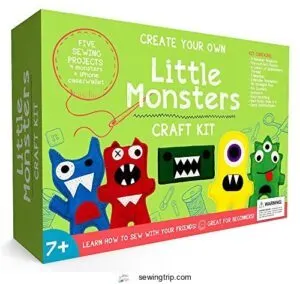
If you’re teaching a child the timeless art of sewing, the Little Monsters Sewing Kit equips young hands with over 100 sewing supplies and five felt projects designed for ages seven to thirteen. This kid-friendly set includes pre-cut monster shapes, pre-punched holes, and essential sewing threads and tools—perfect for sewing education at home.
You’ll love that beginners can create an iPhone case plus four plush monsters while mastering basic stitches. Though some instructions may need your guidance and the glue could disappoint, this thread kit fosters creativity and builds lasting confidence in monster crafts.
| Best For | Parents and teachers looking to introduce kids ages 7-13 to hand sewing through fun, beginner-friendly monster projects that build creative confidence. |
|---|---|
| Primary Use | Kids sewing crafts |
| Skill Level | Beginners (ages 7-13) |
| Includes Scissors | Yes |
| Includes Needles | Yes (100+ supplies) |
| Includes Threads | Included |
| Storage Type | Craft kit box |
| Additional Features |
|
- Includes everything needed to complete 5 monster projects—over 100 supplies, pre-cut felt shapes, pre-punched holes, needles, thread, and stuffing
- Great educational value that teaches basic hand stitching techniques while fostering creativity, problem-solving, and fine motor skills
- Makes an excellent gift for birthdays or craft parties, with finished projects kids can use or give to friends
- Some stitch instructions can be unclear and may require adult help, especially for younger kids
- The included glue is reportedly low quality and may not hold up well
- Younger children will likely need supervision due to needles and small parts, plus the pin cushion doesn’t keep needles well organized
5. Premium Sewing Kit Supplies
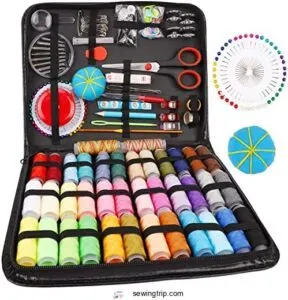
When you’re ready to invest in professional-quality sewing kit essentials, the Marcoon Premium Sewing Kit Supplies delivers 184 large premium threads and accessories in a compact leather case. You’ll find 38 XL thread spools, needles, buttons, pins, and fabric notions—everything you need for DIY projects, travel repairs, and quick fixes.
Though the tight packing makes thread spindles tricky to handle and scissors won’t match premium sewing tool sets, this extensive thread kit equips beginners and frequent travelers with reliable storage solutions for camping, hiking, and emergency mending.
| Best For | Travelers, beginners, and anyone who needs a portable all-in-one kit for quick fixes, emergency repairs, and light DIY sewing projects on the go. |
|---|---|
| Primary Use | General sewing & emergencies |
| Skill Level | Beginners & travelers |
| Includes Scissors | Yes |
| Includes Needles | Yes |
| Includes Threads | 38 XL spools |
| Storage Type | Compact leather case |
| Additional Features |
|
- Comes with 184 premium items including 38 XL thread spools, needles, buttons, pins, and other essentials—basically everything you need in one compact case
- Lightweight leather case (just over 1 pound) makes it super easy to toss in a bag for camping, travel, or keeping at home for quick repairs
- Versatile enough for fixing buttons, mending seams, and handling everyday sewing tasks without needing to buy separate supplies
- Thread spindles are packed tightly, making them frustrating to pull out and use quickly
- Scissors aren’t great quality and can be difficult to work with for clean cuts
- Not built for professional seamstresses or heavy-duty projects—some components like the threader don’t work well with smaller needles
Essential Thread Types for New Sewists
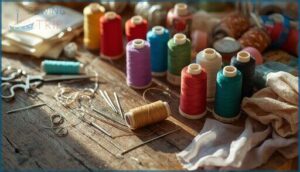
You can’t build a strong sewing practice without understanding the threads you’re working with. Each type brings its own strengths, and knowing the difference enables you to choose wisely for every project.
Let’s break down the three essential thread types that will become your go-to materials as you grow your skills.
Polyester Thread Benefits
Polyester threads equip you with superior versatility for nearly every fabric in your sewing journey. This fiber type delivers remarkable tensile strength and color retention, even after aggressive washing cycles, while its shrink resistance keeps your seams flat and stable. Here’s why polyester belongs in your starter kit:
- Fabric compatibility across wovens, knits, and stretch materials
- Thread durability that withstands abrasion better than cotton
- Quality thread selection with minimal lint for smooth machine sewing
Cotton Thread for Quilting
Cotton fiber shines in quilting techniques because it ages alongside your cotton fabrics, creating that cohesive heirloom finish you love.
Choose 50-weight cotton threads for piecing quilt blocks—they produce flatter seams with less bulk—and switch to 40-weight for prominent quilting lines.
Thread durability improves with long-staple, mercerized cotton, though sewing machines will need more frequent cleaning due to natural lint production.
Silk and Specialty Threads
Silk thread brings strength and a bit of give to your heirloom projects, perfect for luxury fabrics that deserve extra care.
Metallic embroidery threads add sparkle to decorative work but demand patience—loosen your thread tension to about “1,” slow your machine speed, and use a 90/14 topstitch needle.
- Silk thread properties: High tensile strength (337–618 MPa) with natural elasticity
- Metallic embroidery: Use polyester bobbin thread and specialty yarns for balanced stitches
- Thread tension adjustments: Start silk around setting 3; metallics need looser tension
How to Choose Thread Colors and Collections
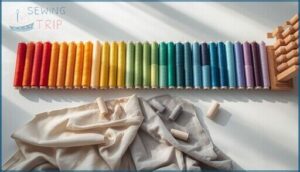
Choosing the right thread colors can feel overwhelming when you’re staring at rows of spools, but it doesn’t have to be. The key is knowing when to match your fabric, when to build a varied collection, and when specialty threads make sense for your projects.
Let’s break down how to make smart choices that’ll save you time and money.
Matching Thread to Fabric
You can’t just grab any thread and hope for the best—fabric compatibility matters. Match thread fiber to fabric fiber: cotton thread for cotton fabrics, polyester for synthetics. Thread weight should align with fabric density; lightweight threads suit delicate materials, while heavyweight options tackle denim and canvas. Color matching works best in natural light, choosing slightly darker shades for invisible seams. Needle selection completes the trio, preventing yarn damage and ensuring seam strength.
| Fabric Type | Recommended Thread | Ideal Needle Size |
|---|---|---|
| Lightweight cotton, silk | 50-60 weight cotton or polyester | 60/8 to 70/10 |
| Medium weight woven, knits | 30-40 weight all-purpose polyester | 80/12 to 90/14 |
| Heavyweight denim, canvas | Tex 40+ polyester or silk | 90/14 to 100/16 |
| Delicate sheers, lace | Tex 8-25 fine threads | 60/8 to 65/9 |
All-in-One Color Packs Vs. Individual Spools
Once you’ve nailed fabric matching, the real question arrives: should you buy all-in-one color packs or individual spools? Here’s what guides smart thread selection and quality sewing:
- All-in-one kits (24–50 colours, $15–$30) average under $0.60 per spool—tempting colour variety, but you’ll likely use only neutrals and a few shades, leaving most threads untouched.
- Individual spools ($1.50–$2.50 each) cost more upfront but deliver colour accuracy for precise fabric matching, preventing visible seams and wasted purchases.
- Thread deteriorates over time, so unused colours from multipacks become sunk costs, while project-specific buying builds a curated collection naturally.
For sewing efficiency and storage solutions, buy black, white, and grey in bulk; choose other sewing thread kits and thread types as projects demand. This spool management strategy maximizes thread variety without clutter, letting you focus on weaving quality stitches instead of managing surplus inventory.
Embroidery and Decorative Thread Sets
Moving beyond everyday spools, embroidery thread sets reveal decorative stitches with specialized fibers. DMC’s 100% mercerized cotton delivers a gentle shine across 196 colorfast shades, perfect for appliqué and quilting, while trilobal polyester in 40-weight balances strength for dense machine designs.
Stranded floss—six separable cotton strands—lets you adjust thickness for varied fabric selection and color theory effects.
These thread materials empower embroidery techniques that transform plain textiles into art.
Thread Quality: What Beginners Should Know
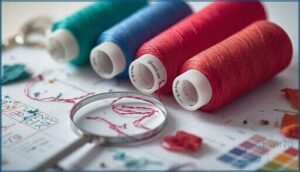
Not all thread is created equal, and understanding quality markers will save you from frustration and failed seams. You’ll want to know what separates premium thread from bargain spools that break, shed, or tangle halfway through your project.
Let’s break down the essential quality factors that directly impact your sewing success.
Thread Weight and Strength
Think of thread weight as the backbone of your sewing success. Higher numbers mean thicker threads that match heavier fabrics like denim, while lower numbers suit delicate materials.
Thread tension and fabric thickness go hand in hand—pairing polyester threads or cotton threads correctly prevents breakage prevention nightmares.
For embroidery thread projects, choosing the right material compatibility ensures sewing durability that lasts through countless washes and wear.
Lint and Shedding Considerations
Fiber shedding can quietly sabotage your machine’s timing and tension. Cotton threads produce more lint than polyester threads because of their staple fiber structure, while filament polyester keeps your workspace cleaner.
Thread twist matters—tighter construction means better lint reduction and smoother sewing.
Choose quality over bargain spools, and you’ll spend less time cleaning your machine. This beginner sewing tip protects your investment and keeps projects flowing.
Best Thread for Machine Vs. Hand Sewing
Your machine demands different thread than your hand projects. Machine threads use Z-twist construction—this twist tightens under sewing speed and thread tension, delivering stitch quality across fabric types and ensuring machine compatibility. Hand sewing thrives on S-twist cotton threads or silk, which control beautifully between your fingers.
- Polyester thread: your all-purpose workhorse for nearly all machine sewing and embroidery thread projects
- Cotton threads: gentle on natural fabrics, perfect for hand quilting and delicate hand stitches
- Match thread types to motion: machines love filament polyester sewing thread kits; hands prefer natural fibers
Thread Set Accessories Every Beginner Needs
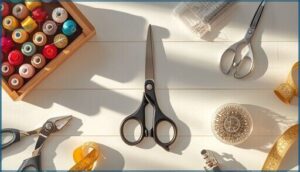
You can’t sew effectively without the right accessories backing up your thread collection. Beyond spools of thread, you need tools that cut cleanly, organize your workspace, and keep your projects flowing smoothly.
Let’s look at the must-have accessories that transform a basic thread set into a complete beginner’s toolkit.
Needles and Bobbins
Your sewing machine runs on the right needle types and bobbin sizes—get these wrong, and thread tension goes haywire. Universal needles in 80/12 or 90/14 handle most cotton fabrics, while ballpoint needles love knits. Class 15 bobbins fit many domestic machines, but always check your manual. Match needle materials to your thread types, and you’ll avoid jams, skipped stitches, and frustration.
Scissors and Seam Rippers
You can’t fix mistakes without a sharp seam ripper and dedicated fabric scissors—both empower you to cut with confidence and rip stitches safely. Eight-inch dressmaking shears with bent grips keep your fabric flat and your cuts clean, while a seam ripper’s safety ball glides along cloth without tearing. Ergonomic grips with soft grips reduce hand fatigue during long cutting sessions, especially if you’re building skills.
- Scissor sharpness determines whether you get clean edges or frayed nightmares
- Seam removal becomes painless with a forked ripper designed for precision
- Fabric safety starts when you reserve one pair of scissors only for textiles
Storage Solutions for Thread Organization
Keep your thread storage simple—closed fabric boxes and sewing bins protect spools from light, dust, and humidity that weaken fibers and fade color. Store embroidery thread and sewing thread kits in cool, dry spaces between 59 and 77 degrees with 40 to 60 percent humidity; attics and basements accelerate decay. Label yarn organizers clearly, use crafting shelves away from windows, and your sewing accessories and sewing tools stay strong.
| Storage Solution | Best For | Protection Level |
|---|---|---|
| Closed fabric boxes | Embroidery thread kits | Blocks light and dust |
| Sewing bins with lids | Multi-color thread sets | Moderate humidity control |
| Labeled yarn organizers | Specialty and silk threads | Easy inventory, reduced handling |
| Opaque crafting shelves | Large sewing thread collections | UV and temperature buffering |
| Original packaging | Individual sewing accessories | Preserves labels, protects fibers |
Budgeting for Beginner Thread Sets
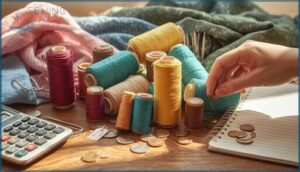
You don’t need to break the bank to build a solid thread collection. Smart shopping enables you to find quality sets that won’t drain your wallet, especially when you know where to look.
Let’s break down what you can expect to spend and how to stretch every dollar.
Starter Set Price Ranges
You’ll find beginner sewing thread kits priced across three clear tiers. Budget analysis reveals your affordable options:
- Portable repair kits ($10–$20) — Mass-market sets with 90–228 pieces, perfect for learning basics and travel fixes
- Branded starter packs ($30–$60) — High-quality polyester or cotton collections offering better durability
- Premium collections ($70–$120) — Professional-grade cone sets with extensive color ranges
- Specialty kits ($45–$60) — Leathercraft bundles pairing thread with essential tools
Price comparison shows thread discounts frequently drop costs 10–45%.
Value in Bundled Collections
Bundled thread packs deliver serious cost savings compared to buying spools one at a time. A 30-color polyester kit spreading 7,500 yards across one price lowers your per-yard cost, while 100-color sets let you tackle any project without repeated trips to the store.
You’ll love how these sewing thread kits combine variety with kit durability, enabling beginners to explore embroidery thread sets and everyday repairs confidently.
Where to Find Deals and Discounts
Big box retailers and dollar stores routinely offer beginner sewing thread kits under $20, and national craft chains advertise weekly 50-percent-off sewing notions.
You’ll find online sales slashing entry-level 40-color polyester sets from $219 to around $55, while clearance events add coupon codes for extra savings.
Bundle deals combine hundreds of pieces—thread, needles, scissors—at sub-$25 price points, equipping beginners with variety and embroidery thread options without stretching your budget.
Tips for Using and Maintaining Thread Sets
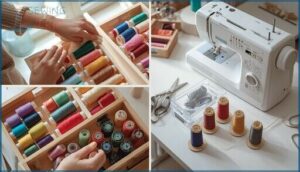
You’ve invested in a quality thread set, and now it’s time to make it last. Proper care keeps your threads strong, tangle-free, and ready for any project that comes your way.
Here’s how you protect your investment and avoid those frustrating moments at the sewing machine.
Proper Thread Storage
Your thread deserves a safe home—think of it as protecting a small investment that enhances every stitch you make. Store spools in cool, dry conditions with stable temperature control and humidity levels below 60 percent to prevent mildew and fiber damage.
- Use enclosed storage containers like drawers or boxes to block UV light and dust
- Organize thread by color and type for quick access and reduced tangling
- Monitor shelf life by rotating older spools first and inspecting for brittleness
Preventing Tangles and Breakage
You won’t master sewing tips overnight, but correct thread tension and needle selection stop most tangles before they start. Always hold thread tails for the first few stitches, lower your presser foot to engage tension discs, and match sewing needles to your fabric choice.
Cotton threads and embroidery thread require proper storage solutions—keep spools separated on racks to prevent unwinding and maintain smooth feeding through your sewing machine.
When to Replace Old Thread
Old thread loses strength like fabric left in the sun, quietly degrading until it snaps mid-seam and ruins your careful stitching. Watch for fading signs and breakage points in your sewing threads:
- Cotton threads older than 3-5 years show brittleness
- Embroidery thread develops weak spots from storage effects
- Your thread set needs replacement schedules, not sentiment
- Trust fresh spools over vintage finds
Common Thread Set Mistakes to Avoid
You’re ready to stock up on thread, but a few common mistakes can trip you up before you even start sewing. New sewists often choose thread that doesn’t match their fabric needs, skip essential colors, or grab the cheapest option without checking quality.
Let’s walk through these missteps so you can build a thread collection that actually aids your projects.
Choosing The Wrong Thread Type
You wouldn’t build a house with the wrong nails, and sewing with mismatched thread can unravel your project just as fast. Heavy polyester on delicate silk causes fabric damage and tension issues, while cotton thread on stretchy knits won’t flex.
Material compatibility matters—match your thread to your fabric’s weight and fiber, and you’ll prevent headaches before they start.
Overlooking Color Variety
A rainbow of random colors looks exciting, but sewing mistakes multiply when your thread pack can’t match real fabric. Many beginners grab large embroidery thread sets or konfetti thread collections without understanding palette building—then discover they need tan, gray, or navy for most seams.
Thread matching succeeds when you build a neutral foundation first, using color theory and fabric selection to guide expansion. Sulky 50wt cotton works beautifully, but only when colour variety meets actual projects, not shelf appeal.
Ignoring Thread Quality for Price
Bargain thread may seem like smart budgeting, but cheap alternatives create sewing mistakes that cost far more later. Thread breakage ruins seams mid-project, while excess lint clogs your machine, potentially triggering a $150 service visit.
Quality all-purpose polyester—around $3 per spool—prevents fabric damage and stitch failures that waste materials. Even embroidery thread sets deserve this standard, because ignoring thread quality for price becomes the most expensive beginner mistake you’ll make.
Frequently Asked Questions (FAQs)
What is the easiest sewing machine to thread for beginners?
Machines with auto threaders handle threading for you, making setup quick and frustration-free. Look for models with clear thread paths, numbered guides, and built-in needle threaders—features that eliminate guesswork and empower confident sewing basics from day one.
What sewing supplies do I need as a beginner?
Start with basic sewing supplies: fabric scissors, straight pins, a tape measure, hand-sewing needles, all-purpose polyester thread in neutral colors, a seam ripper, and a reliable iron for pressing seams flat.
Can I mix thread brands on one project?
You can mix thread brands on one project, though tension issues may arise.
Adjust your machine settings carefully, test first, and watch for color consistency problems between different manufacturers’ dyes and finishes.
How many thread colors does a beginner need?
You don’t need a rainbow when you’re learning. Three to five neutral palette colors—white, cream, gray, and black—cover most projects beautifully.
Add two personal accent shades later when confidence grows.
What thread weight works best for clothing repairs?
Most clothing repairs thrive with medium weight thread—40 to 50 wt polyester works beautifully on shirts, dresses, and everyday garments. Match your thread weight to fabric thickness for smooth, strong repairs.
Do thread sets include pre-wound bobbins?
You won’t find pre-wound bobbins in most general thread sets, but machine-specific starter bundles sometimes include them.
They’re sold separately as add-ons, letting you skip winding and boost sewing efficiency when you need them.
Should beginners buy thread cones or standard spools?
If you’re just starting out, standard spools win for Beginner Thread Management and Sewing Machine Compatibility.
Cones offer better Thread Cost Comparison, but demand Cone Storage Solutions and extra gear.
Spool Versus Cone Efficiency matters most for frequent sewing or embroidery.
Conclusion
Don’t put the cart before the horse—invest in quality thread sets for beginners before tackling ambitious projects. The right collection enables you to match thread type to fabric, prevent frustrating tangles, and build skills without constant interruptions.
Your thread choice directly impacts every seam’s strength and appearance, making starter sets with polyester, cotton, and essential tools your foundation for sewing mastery. Choose wisely now, and you’ll avoid re-buying basics later.
- https://www.sewingpartsonline.com/blogs/education/quilting-thread-the-ultimate-guide
- https://www.threadart.com/collections/all-thread-sets
- https://kismetfarms.net/list/60-Color-Sewing-Thread-Set-Cotton-Thread-For-Machine-Hand/684467
- https://www.snugglymonkey.com/collections/sewing-thread
- https://shopwonderfil.com/tips-avoid-thread-breaks/