This site is supported by our readers. We may earn a commission, at no cost to you, if you purchase through links.
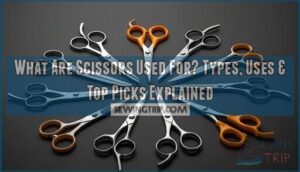
Most people own three or four pairs of scissors and still reach for the wrong one half the time—trimming fabric with office scissors, then wondering why the edges fray. That frustration usually comes down to one thing: not knowing what each type was actually built to do.
Scissors have evolved into dozens of specialized forms, from convex-edged haircutting shears to trauma shears designed to cut through a seatbelt in seconds. Understanding what scissors are used for across different types means you stop fighting your tools and start working with them—whether you’re at a cutting mat, a salon chair, or a garden bed.
Table Of Contents
- Key Takeaways
- Common Scissor Types and Their Uses
- Sewing and Fabric Scissors Explained
- Specialized Scissors for Crafts and DIY
- Scissors for Hair, Medical, and Grooming
- Gardening and Industrial Scissors
- Top 10 Scissors for Every Purpose
- 8 Gingher Fabric Scissors With Sheath
- Gingher 10-Inch Dressmaker Shears
- Large Micro Serrated Scissors by Karen Kay Buckley
- Double Curved 5-Inch Kai Scissors
- Klein Tools Embroidery Nipper
- 8 Inch Multi-Purpose Scissors 2-Pack
- Colorful Stainless Steel Office Scissors
- Titanium Tradesman Pro Shears by Wiss
- Titanium Bonded Non-Stick Scissors 2-Pack
- KitchenAid Black All Purpose Shears
- Frequently Asked Questions (FAQs)
- Conclusion
Key Takeaways
- Using the wrong scissors for a task—like cutting fabric with office scissors—causes poor results because each type is engineered for specific materials, blade angles, and cutting mechanics.
- Scissors split into clear categories—fabric, craft, hair, medical, and industrial—and picking within the right category matters as much as picking a quality brand.
- Blade material and design details like serration, tooth count, and tip shape define what a pair can actually do, so matching those specs to your task is more reliable than guessing by size alone.
- Keeping scissors dedicated to one purpose and maintaining them with regular cleaning, oiling, and sharpening extends their lifespan and protects the materials you’re cutting.
Common Scissor Types and Their Uses
scissors are built the same, and choosing the wrong pair can make even a simple task frustrating.
The gap between them goes deeper than you’d expect — fabric scissors vs. regular scissors comes down to blade angle, steel quality, and how each handles delicate material without fraying.
The type you reach for depends on what you’re cutting, how often you’re cutting it, and whose hand is holding it.
Here’s a breakdown of the most common types and what each one is actually designed to do.
Standard Scissors
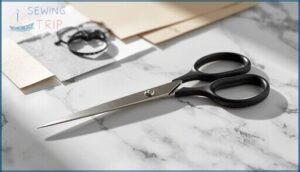
Standard scissors are your go-to cutting tool for everyday tasks — paper, light cardboard, packaging, even thin fabric.
Most models range from 180 mm to 305 mm, with stainless steel blades that resist rust and hold a clean edge.
Pivot tension keeps the blades aligned, while ergonomic grips reduce hand fatigue.
For basic scissor maintenance, wipe blades dry after use. Ergonomic designs reduce strain.
Right and Left-Handed Scissors
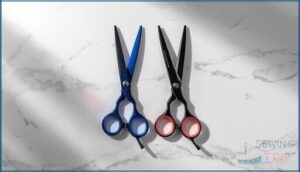
Once you move beyond standard scissors, handedness matters more than most people think. Blade orientation, ergonomic grips, and cutting mechanics all change depending on which hand you use.
- Right-handed blades sit on top for clear sightlines
- Left-handed scissors mirror the bevel for precision cutting
- Identification markings like "L" stamps make shopping easier
- Brand options include Fiskars, Kai, and Gingher
- Proper hand‑matched scissors reduce cutting errors markedly
The left blade stays on top for better visibility, as explained in the left‑handed blade alignment guide.
Ambidextrous Scissors
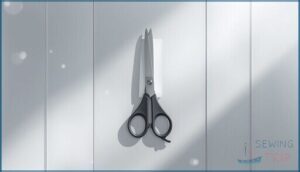
Not everyone cuts with the same hand — and ambidextrous scissors are built around that reality. Their ergonomic symmetry means both finger holes mirror each other, so there’s no awkward repositioning mid-project.
A swivel thumb mechanism and fatigue-reducing grip support cross-dominant comfort across long sessions. With dual-blade balance and precision cutting built in, these hand tools handle everyday tasks without fuss.
Utility Scissors
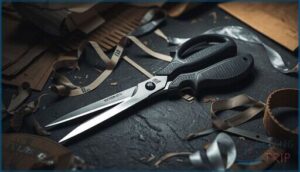
While ambidextrous scissors grip everyday symmetry, utility scissors step in for tougher jobs. Built with German medical-grade stainless steel blades, these cut tools slice through fabric, plastic, cardboard, and even light metal without hesitation.
Ergonomic grips with non-slip grip reduce hand fatigue across long sessions. At 5.75 to 7.5 inches, size variations cover everything from detail work to heavy-duty cutting.
Office Scissors
The unsung hero of any desk, office scissors handle far more than you’d expect from a standard cutting tool. Hardened stainless steel blade materials resist rust through thousands of cuts, while ergonomic handles reduce hand fatigue during long sessions. Non‑stick coating keeps adhesive residue from building up after taping projects.
- Size options range from compact 14 cm to full 25 cm
- Pivot adjustment screws let you tune blade tension precisely
- Soft‑grip grips work as office and school supplies for all hand types
- Asymmetrical designs give right‑handed users better control
- Titanium‑fused blades outlast standard steel considerably
Paper Scissors
Paper scissors are built for one thing: clean, controlled cuts every time. Precision-ground blade materials resist rust and hold their edge through heavy use. Ergonomic grips reduce fatigue, and non-stick coatings prevent tape residue buildup — a small detail that makes a big difference.
| Feature | Standard | Premium |
|---|---|---|
| Blade Material | Stainless Steel | Titanium-Bonded |
| Grip | Plastic | Softgrip |
| Size Range | 13–16 cm | 16–26 cm |
Kitchen Scissors
Kitchen scissors are the Swiss Army knife of kitchen tools. Unlike standard scissors, a good pair manages herb stripping, fish scaling, and even meat tenderizing without missing a beat.
Kitchen scissors are the Swiss Army knife of the kitchen, handling everything from herb stripping to meat tenderizing
One blade is usually serrated to grip slippery proteins, while bone notches near the base tackle small joints and cartilage.
Many models also include bottle opening and nutcracking functions — genuinely useful kitchen utensils that pull their weight daily.
Sewing and Fabric Scissors Explained
one-size-fits-all — the right pair depends entirely on what you’re cutting and how precise you need to be.
Using the wrong scissors on fabric can ruin your material before you’ve even started.
Here’s a breakdown of the main types you’ll want to know.
Fabric Scissors
Fabric scissors are the workhorse of any serious sewing kit. Built with high-carbon steel blades, these cutting tools hold a sharper edge far longer than standard stainless steel.
Blade lengths usually run 8 to 9 inches, giving you control on curves, while ergonomic grips reduce fatigue during long sessions.
Serrated edges grip slippery materials cleanly. Wipe blades after every use — small habits protect big investments.
Dressmaker Shears
Dressmaker shears are the heavy hitters of fabric cutting — built longer, heavier, and sharper than your average sewing scissors. Precision knife edges slice cleanly through multiple layers without fraying or dragging.
- Blade length options run 7–10 inches for full-garment cuts
- Ergonomic bent grips keep fabric flat against the table
- Gingher and Fiskars lead the brand comparison for durability
- High-carbon steel maintains edges on denim and wool
- Wipe and oil blades regularly — maintenance tips matter
Tailor Scissors
Tailor scissors sit a step below dressmaker shears — slightly shorter blades, same sharp intent. Tapered blades manage curved seams and tight corners without slipping on delicate fabric.
Stainless steel blade materials resist rust and sharpen easily, while ergonomic handles reduce hand strain during long cutting sessions.
For size selection, 8–9 inches hit the sweet spot for most tailoring work.
Follow basic maintenance practices, and they’ll outlast dozens of projects.
Pinking Shears
Where tailor scissors handle curves, pinking shears handle chaos — specifically, the fraying kind. That zigzag edge benefit isn’t just decorative; it shortens fray threads so they shed instead of unravel.
- Teeth come in 3mm, 5mm, and 7mm depths for fabric compatibility
- Blade alignment prevents uneven wear over time
- Louise Austin’s 1893 patent shaped the modern design
- Regular oiling and professional sharpening extend blade life
Embroidery Scissors
From zigzag edges to razor-fine tips — embroidery scissors are a different tool entirely. Blade curvature lets you snip close to hoops without catching fabric, while tip precision manages tight stitch spaces cleanly.
For sewing and embroidery work, appliqué scissors and thread snips earn their place in your embroidery tools kit.
Handle ergonomics and material choice matter too — Gingher’s stainless steel holds an edge longer than budget brands.
Buttonhole Scissors
Precision work doesn’t stop at embroidery — buttonhole scissors bring that same controlled accuracy to one of tailoring’s trickiest tasks.
The Blade Notch Design lets you start cuts mid‑fabric without fraying edges. An Adjustable Stop Mechanism controls exact cut length every time. Material Construction generally uses stainless or nickel‑plated carbon steel for lasting sharpness.
- Blade notch catches fabric cleanly for centered starts
- Brass screw adjuster locks consistent cut depth across garments
- Short 1¾‑inch blades deliver tip‑level precision in tight spots
Specialized Scissors for Crafts and DIY

Craft and DIY projects demand tools that go beyond basic cutting, and the right scissors can make all the difference in your results.
Whether you’re working on scrapbooks, paper art, or detailed handmade projects, specialized scissors give you cleaner cuts, better control, and more creative options.
Here are the key types worth knowing about.
Craft Scissors
Craft scissors are the workhorses of any serious maker’s toolkit. Whether you’re tackling paper cutting, appliqué, or mixed-media projects, the right pair makes a real difference.
Look for ergonomic grips to reduce fatigue, blade material choices like titanium or stainless steel for durability, and spring mechanism types that ease repetitive cuts. Size variations and precision tips help you match the tool to the task.
Decorative Edge Scissors
Decorative edge scissors are a breakthrough for paper craft borders, greeting cards, and DIY card embellishment projects. Their patterned blade designs — zigzag, scallop, wave, and Victorian lace — cut decorative edges in one clean stroke.
You’ll find seasonal theme cuts perfect for holiday cards, plus kids‑safe edge versions for classroom crafts. Among scissor types and uses, these sit comfortably alongside craft scissors, appliqué scissors, and embroidery scissors.
Scrapbooking Scissors
Scrapbooking scissors are purpose-built for paper crafting detail work that standard craft scissors simply can’t handle. Their precision tips measure under 1mm, letting you cut tight silhouettes and photo corners cleanly every time.
- Precision Tips slice through vellum and cardstock without tearing
- Ergonomic Grips fit left- and right-handed users comfortably
- Blade Materials include non-stick, rust-resistant stainless steel
- Compact Sizes run 3–5 inches for controlled fussy cutting
- Protective Covers keep sharp tips safe between crafting sessions
Rotary Cutters
Rotary cutters are a breakthrough in crafting and DIY, rolling a circular blade forward instead of snipping. Blade size comparison matters here — 28 mm grips tight curves, 45 mm suits everyday fabric cuts, and 60 mm powers through thick stacks.
Ergonomic handle reduces wrist strain, while the safety guard and cutting mat keep every pass controlled and accurate.
Scissors for Hair, Medical, and Grooming
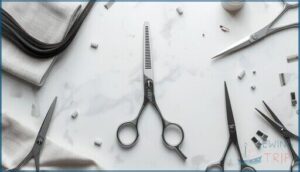
Not every pair of scissors is built for paper and fabric — some are made for much more precise, personal work.
Hair, grooming, and medical tools each come with their own blade shapes, sizes, and safety features for a reason.
Here’s a closer look at the main types you should know.
Haircutting Shears
Haircutting shears are the cornerstone of any serious hair styling toolkit. Unlike standard scissors, these hair cutting scissors feature convex edge profiles that glide through hair cleanly, reducing split ends.
Blade steel grades like Japanese 440C and VG-10 keep edges sharper longer. Handle ergonomics — especially offset or crane designs — minimize wrist strain, while proper tension adjustment and the right blade length options guarantee consistently precise cuts.
Thinning Scissors
Thinning scissors sit in a different lane than your standard haircutting shears — their whole job is removing bulk without touching length.
Tooth count drives everything here: 20–30 teeth for fine hair, 40-plus for thick.
Japanese blade steel keeps edges clean cut after cut.
Offset grips reduce wrist strain across long days.
Work in small sections, check often, and oil the pivot daily.
Texturizing Shears
Where thinning scissors remove bulk quietly, texturizing shears make a statement. These hair styling tools use wide‑spaced teeth — generally 7 to 20 — to carve visible movement and separation into a cut. Tooth count shapes your results entirely.
- Blade Materials: VG10 or 440C Japanese steel keeps teeth sharp and snag‑free
- Tooth Count: Fewer teeth (7–10) create chunky texture; more teeth (25–40) blend softly
- Application Zones: Target mid‑lengths and ends, not roots
- Styling Techniques: Use after shaping is complete to fine‑tune and personalize
- Maintenance Routine: Wipe blades clean, oil the pivot daily, sharpen every 3–6 months
Nail Scissors
From shaping texture in hair to shaping the tip of a fingernail, precision stays the same — just scaled down.
Nail scissors use short curved blades, roughly 1–2 cm, making them ideal for pediatric use and grooming scissors routines where control matters most.
| Feature | Detail |
|---|---|
| Blade Materials | Hardened stainless steel |
| Travel Safety | Rounded tips for carry-on |
Surgical Scissors
From nail care to the operating room, precision takes on a whole new level of responsibility.
Surgical scissors are medical scissors built for specific tissue work, with blade configurations and material choices designed for each procedure:
- Metzenbaum scissors handle delicate soft tissue with long, slender curved blades
- Mayo scissors tackle tough fascia and muscle with a heavy semi‑blunt build
- Iris scissors deliver ultra‑sharp precision edge designs for ophthalmic incisions
- Ergonomic grips reduce fatigue during extended procedures
- Sterilization methods require surgical stainless steel for reliable scissor maintenance and care
Bandage Scissors
Where surgical scissors cut into tissue, bandage scissors protect what’s already healing. The classic Lister design features an angled lower blade with a blunt, widened tip that slides safely under wraps without catching skin.
Ergonomic grips give you controlled leverage, while autoclave-safe materials simplify scissor maintenance and care.
Color-coded grips help staff grab the right medical scissors fast — veterinary use versions run slightly larger for thicker animal wraps.
Trauma Shears
Trauma shears take emergency cutting a step further than bandage scissors. Where bandage scissors ease off wraps, trauma shears tear through denim, boots, and heavy gear in seconds.
The blunt tip design keeps rounded ends safely away from skin, while stainless steel blades manage thin metal without flinching. Ergonomic handles reduce fatigue under pressure, and compact kit size means they fit any first responder bag.
Gardening and Industrial Scissors
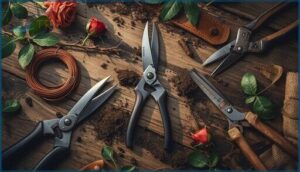
Once you step outside the craft room, scissors take on a whole new level of toughness.
From trimming rose bushes to cutting through wire or thick leather, the right tool makes all the difference. Here’s a look at the gardening and industrial scissors built for the jobs that demand real muscle.
Pruning Shears
Pruning shears are the Swiss Army knife of gardening tools — compact, precise, and endlessly useful. Pick the right type and you’ll protect your plants; pick the wrong one and you’re just making a mess.
- Bypass Design makes clean cuts on living stems up to 1 inch thick
- Anvil Design manages dead, woody growth without blade strain
- Ratchet Mechanism multiplies cutting power for arthritic or weaker hands
- Ergonomic Grips with rotating grips reduce wrist strain by up to 68 percent
Blade materials matter too — high-carbon steel holds its edge through 3,000 cuts, while stainless suits humid climates better.
Lopping Shears
Lopping shears step in where pruning shears tap out — these long-handled gardening tools handle branches up to 2 inches thick with confidence.
Bypass and anvil blade types each suit different wood conditions, while geared or ratchet systems multiply your cutting force by up to 45 percent.
Telescopic handle configurations extend up to 6.6 feet, giving you reach and control without a ladder.
Hedge Shears
Hedge shears are the go-to tool for shaping hedges and trimming rose bushes with long, flat blades usually 7–10 inches. Quality blade materials like high-carbon steel stay sharp through repeated sharpening sessions.
Lever mechanisms, including compound and gear-based systems, reduce hand fatigue markedly. Ergonomic grips with shock bumpers absorb end-of-cut impact, and basic maintenance tips — cleaning sap, lubricating the pivot — keep them cutting cleanly for years.
Grass Shears
Grass shears are the finishing touch your lawn deserves after the mower has done its job. With horizontal blade types for missed patches and vertical ones for edge trimming techniques along sidewalks, you’ve got real precision in your hands.
Ergonomic grips with offset grips keep your knuckles clear, while swivel mechanisms let blades rotate to awkward angles.
Stainless steel blade materials resist rust beautifully.
Wire Cutters
Wire cutters are the workhorses of any serious DIY toolkit. Diagonal cutters handle everyday electrical trimming, while flush cutters leave near-flat leads on circuit boards — perfect for electronics work.
Need heavy-duty gauge capacity? High-leverage mechanisms multiply your hand force dramatically, making thick cables manageable.
Just make sure insulated safety standards, like IEC 60900 certification, on any cutter you’re using around live wiring.
Bolt Cutters
Bolt cutters take leverage mechanics to another level — long grips and compound hinges multiply your hand force up to 20 to 1.
That’s serious cutting power for industrial applications like rebar, heavy chain, and rusted locks.
Jaw styles include center cut, angle cut, and shear cut options.
Always pair them with proper safety gear and keep up a simple maintenance routine: clean, oil, and check pivot alignment.
Leather Cutters
Where bolt cutters dominate metal, leather cutters own thick hides — and the right pair makes all the difference.
Blade materials, like high carbon steel, keep edges sharp through dense vegetable‑tanned leather. Ergonomic Grips spread pressure so your hand doesn’t cramp mid‑project. Think of them as your most reliable DIY equipment for leatherwork.
- Rough-cut large hides into panels
- Trim bag straps and wallet pieces
- Level uneven seams after sewing
- Cut webbing and upholstery canvas
Top 10 Scissors for Every Purpose
Finding the right scissors can feel overwhelming with so many options out there.
Whether you’re cutting fabric, trimming hedges, or snipping thread, the right pair makes all the difference.
Here are ten scissors worth knowing about, each built for a specific job.
8 Gingher Fabric Scissors With Sheath
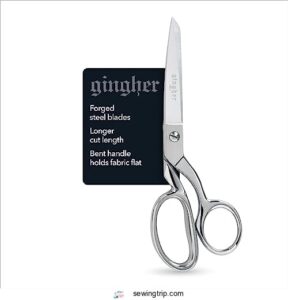
Few scissors earn a permanent spot in a sewing room, the way the Gingher 8-inch Fabric Scissors do. The forged steel blades hold a sharp edge through quilting cotton, denim, and multiple layers without crushing fibers.
That bent handle design keeps your fabric flat on the table, so your cuts stay true along every pattern line. At 7.2 ounces, they’re light enough for long sessions. The included nylon sheath protects the knife edge between uses.
| Best For | Sewers, quilters, and crafters who need a reliable, sharp scissor that handles everything from delicate pattern cutting to thick layers of fabric. |
|---|---|
| Blade Material | Forged steel |
| Length | 8 inches |
| Weight | 7.2 oz |
| Handedness | Right-handed |
| Primary Use | Fabric cutting |
| Blade Protection | Nylon sheath included |
| Additional Features |
|
- The bent handle keeps fabric flat on the surface, so your cuts follow the line exactly where you want them.
- Knife-edge blades slice through multiple layers cleanly — great for quilting, denim, or anything heavier.
- Comes with a nylon sheath, so the blade stays protected and sharp between projects.
- The finger holes run a bit small, which can feel tight if you have larger hands.
- Thick blades can leave a tiny thread tail when you’re trying to cut right up against the fabric.
- They cost more than your average fabric scissors — though most people find it worth it.
Gingher 10-Inch Dressmaker Shears
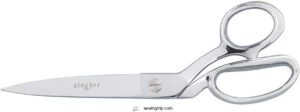
When your projects scale up — think upholstery, leather, or heavy drapery — you need blades that won’t flinch. The Gingher 10-inch Dressmaker Shears are built for exactly that.
Those extra-large bent grips keep fabric flat on the table while the 5-inch knife edge slices through multiple layers cleanly, right to the tip. The double-plated chrome-over-nickel finish resists wear over years of hard use. At 10 inches, they’re made for serious cutting — not light trimming.
| Best For | Professionals and serious crafters who regularly work with heavy materials like leather, upholstery, or thick drapery fabric. |
|---|---|
| Blade Material | Chrome-over-nickel steel |
| Length | 10 inches |
| Weight | Not specified |
| Handedness | Right-handed |
| Primary Use | Heavy fabric cutting |
| Blade Protection | Not included |
| Additional Features |
|
- Chrome-over-nickel finish holds up to years of heavy use without wearing down
- Hand-tuned knife edge cuts cleanly through multiple layers with less effort
- Bent grips keep fabric flat on the table, so your cuts stay accurate
- At 10 inches, they’re bulky — not great for small hands or lighter projects
- Extended cutting sessions on heavy material can cause hand fatigue or blisters
- Blades will need occasional sharpening to stay at peak performance
Large Micro Serrated Scissors by Karen Kay Buckley
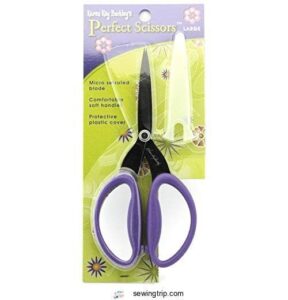
Where the Gingher grips power, Karen Kay Buckley’s Large Micro Serrated Scissors grip precision.
These 7.75‑inch scissors are built for quilters and sewers who need clean, controlled cuts — even through up to eight layers of fabric. The micro‑serrated blades grip fabric and pull it in, so nothing slips or frays.
Purple cushioned grips fit both right‑ and left‑handed users comfortably, and the adjustable screw lets you dial in blade tension exactly how you like it.
| Best For | Quilters, sewers, and crafters who need precise, clean cuts through multiple fabric layers without fraying. |
|---|---|
| Blade Material | Stainless steel |
| Length | 7.75 inches |
| Weight | Not specified |
| Handedness | Ambidextrous |
| Primary Use | Quilting and sewing |
| Blade Protection | Not specified |
| Additional Features |
|
- Micro-serrated blades grip fabric firmly, giving you clean cuts with zero slipping — even through up to 8 layers
- Comfortable purple handles work for both righties and lefties, so they’re easy to use for long crafting sessions
- Adjustable blade tension means you can fine-tune the feel to match exactly how you like to cut
- Needs periodic oiling to keep the blades in good shape, which adds a little maintenance to your routine
- On the pricier side, so budget-conscious crafters might hesitate before pulling the trigger
- Designed specifically for fabric, so don’t expect them to double as your go-to all-purpose scissors
Double Curved 5-Inch Kai Scissors
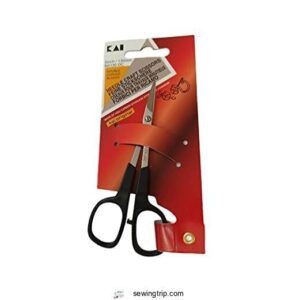
Thread trimming gets a serious upgrade with the KAI 5130DC.
These 5-inch double curved scissors are designed for one thing: getting into tight spots without the struggle.
The double curve angles the blade downward, so you can snip threads close to the fabric surface — even inside an embroidery hoop — without bumping or snagging.
Hardened stainless steel with vanadium keeps the edge sharp and consistent.
At just 0.7 ounces, your hand won’t tire through long stitching sessions.
| Best For | Embroiderers, quilters, and stitchers who need precise control in tight spaces — whether you’re a weekend hobbyist or a seasoned pro. |
|---|---|
| Blade Material | Hardened stainless steel with vanadium |
| Length | 5 inches |
| Weight | 0.7 oz |
| Handedness | Right-handed |
| Primary Use | Thread trimming |
| Blade Protection | Not specified |
| Additional Features |
|
- The double-curved blade gets you close to the fabric surface without awkward hand angles
- Hardened stainless steel with vanadium holds a sharp edge through long sessions
- At 0.7 ounces, it’s light enough that hand fatigue isn’t really a concern
- A few users feel the scissors are a bit flimsy for the price
- The plastic covering on the steel part has been known to crack with use
- At 5 inches, some people wish they had just a bit more length to work with
Klein Tools Embroidery Nipper
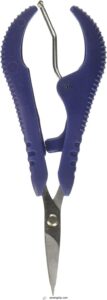
Tiny but mighty, the Klein Tools VP51 is built for the kind of detail work where bigger scissors just get in the way.
At under 5 inches long and barely a third of an ounce, it slips into tight spots effortlessly.
The curved microtip blade cuts flush to material — ideal for embroidery, appliqué, and paper piecing.
A built-in spring auto-returns the blade after every snip, cutting your hand fatigue in half during long sessions.
The included protective boot and lanyard keep it close whenever you need it.
| Best For | Quilters, embroiderers, and crafters who need precise, comfortable cuts in tight spaces — especially those dealing with arthritis or long stitching sessions. |
|---|---|
| Blade Material | Stainless steel |
| Length | Under 5 inches |
| Weight | 0.32 oz |
| Handedness | Ambidextrous |
| Primary Use | Detail embroidery |
| Blade Protection | Protective boot included |
| Additional Features |
|
- Curved microtip blade cuts flush to material, perfect for detailed embroidery and appliqué work
- Featherlight at 0.32 oz — easy to maneuver for hours without hand strain
- Built-in auto return spring means one less thing to think about mid-project
- Blade can dull faster than expected, especially with heavy use
- Tips are fragile — one drop on a hard floor can bend them
- The spring has been known to break off entirely, which pretty much ends its usefulness
8 Inch Multi-Purpose Scissors 2-Pack
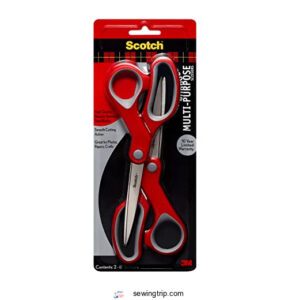
Two scissors for the price of focus — that’s the real pitch here.
This 2-pack gives you one red-handled pair and one gray, so you’re not hunting down the same scissors twice when you’re mid-project.
Both are 8-inch stainless steel blades with soft comfort-grip grips that work for right- or left-handed use. They handle paper, light fabric, wrapping paper, and packaging without complaint.
A 10-year warranty backs both pairs, which is solid for an everyday workhorse.
| Best For | Anyone who needs a reliable pair of everyday scissors at home, school, or the office — especially if you’re always misplacing one. |
|---|---|
| Blade Material | Stainless steel |
| Length | 8 inches |
| Weight | Not specified |
| Handedness | Ambidextrous |
| Primary Use | Everyday general use |
| Blade Protection | Not included |
| Additional Features |
|
- Comes as a 2-pack so you can stash one in two different spots without thinking twice
- Works for both righties and lefties, which is a nice touch
- Backed by a 10-year warranty, so you’re covered well beyond the average junk drawer find
- Too light and basic for heavy-duty cutting — thick cardboard or craft foam will give these a hard time
- No tension adjustment, so what you get out of the box is what you’ve got
- Some people may find the lightweight feel a little flimsy compared to bulkier scissors
Colorful Stainless Steel Office Scissors
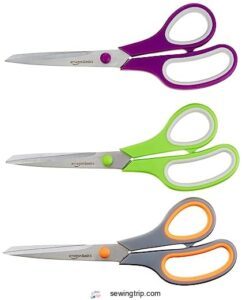
Color-coded organization isn’t just aesthetic — it’s practical. These Amazon Basics scissors come in a 3-pack with grey, green, and purple grips, so different household members or workstations each get their own pair.
The PVD-coated stainless steel blades stay sharp well past 100,000 cuts, and the ambidextrous comfort-grip grips make them easy for anyone to use. At 8 inches and 2.72 ounces, they cut paper, photos, fabric, and cardboard cleanly.
Solid everyday value without overcomplicating things.
| Best For | Families, home offices, and crafters who want a reliable everyday scissors set that’s easy to share and organize. |
|---|---|
| Blade Material | PVD-coated stainless steel |
| Length | 8 inches |
| Weight | 2.72 oz |
| Handedness | Ambidextrous |
| Primary Use | Everyday general use |
| Blade Protection | Not included |
| Additional Features |
|
- Three colors mean no more scissors mix-ups — easy to assign one per person or workstation
- PVD-coated blades stay sharp through 100,000 cuts, so these last a long time
- Works for both right- and left-handed users, which is a nice touch for shared spaces
- Not built for heavy-duty or industrial cutting — these are everyday scissors, not workhorses
- Fiskars and other premium brands still have an edge in overall cut quality
- The multicolor look isn’t for everyone if you prefer a cleaner, uniform aesthetic
Titanium Tradesman Pro Shears by Wiss
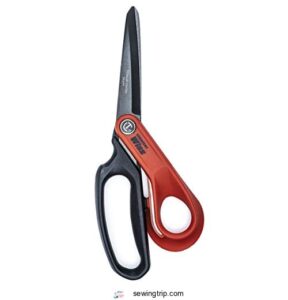
When heavy-duty work meets precision engineering, the Wiss Titanium Tradesman Pro Shears (model CW10TM) deliver. The titanium-coated blades are three times harder than standard steel, so they stay sharp through cardboard, carpet, vinyl flooring, and even wire. Serrations on the bottom blade grip slippery or fibrous materials for cleaner cuts every time.
At 10 inches long with a full metal core, these shears offer serious cutting power — just note the XL grips may feel oversized for smaller hands.
| Best For | Tradespeople and DIYers who regularly cut through tough materials like carpet, cardboard, vinyl flooring, and wire. |
|---|---|
| Blade Material | Titanium-coated steel |
| Length | 10 inches |
| Weight | Not specified |
| Handedness | Right-handed only |
| Primary Use | Heavy-duty trades |
| Blade Protection | Not included |
| Additional Features |
|
- Titanium-coated blades stay sharp way longer than standard steel — great for heavy, repeated use
- Serrated bottom blade grips slippery or fibrous materials so you get cleaner, more controlled cuts
- Versatile enough to handle everything from landscape fabric to wire and alcantara foil
- XL handles can feel awkward or oversized if you have smaller hands
- Right-hand-only design means lefties are out of luck
- Not offset enough for cutting certain materials like aluminum grating safely
Titanium Bonded Non-Stick Scissors 2-Pack
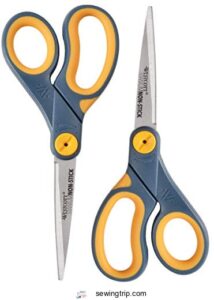
One pair of scissors that manages tape, Velcro, and sticky craft supplies without gunking up? That’s the promise of the Westcott Titanium Bonded Non-Stick Scissors 2-Pack — and it holds up.
The titanium-bonded blades are five times harder than standard stainless steel, so they stay sharp longer. The tool-free tension dial lets you adjust cutting resistance on the fly, which is genuinely handy when you’re switching between paper and cardboard. Large ergonomic loops fit both hands comfortably.
| Best For | Crafters, teachers, and anyone who regularly deals with tape, Velcro, or sticky packaging and wants scissors that won’t gum up mid-project. |
|---|---|
| Blade Material | Titanium-bonded stainless steel |
| Length | Not specified |
| Weight | Not specified |
| Handedness | Ambidextrous |
| Primary Use | Sticky material cutting |
| Blade Protection | Not included |
| Additional Features |
|
- Titanium-bonded blades resist adhesive buildup, so they stay clean and sharp through tape, hook-and-loop, and sticky craft supplies
- The tool-free tension dial is a small but genuinely useful feature — easy to tweak on the fly without any extra tools
- Works for both lefties and righties, making it a solid pick for shared workspaces or classrooms
- The finger holes run a bit small, which can be uncomfortable if you have larger hands
- The center pivot can wear out over time, so these aren’t a lifetime investment
- Not a premium shear — great for everyday cutting, but probably not what you’d reach for on serious sewing or tailoring work
KitchenAid Black All Purpose Shears
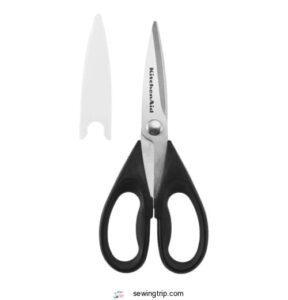
Sticky crafts handled — now what about the kitchen? The KitchenAid Black All Purpose Shears are built for everyday cooking tasks, from snipping herbs and trimming poultry to slicing pizza and cutting twine.
The 4.5-inch stainless steel blades have micro-serrated edges that grip rather than slide, which makes a real difference on slippery foods. At under five ounces, they’re light enough for extended use. The ambidextrous grips fit both hands, and they’re dishwasher safe when you’re in a hurry.
| Best For | Home cooks who want a reliable, comfortable pair of kitchen shears for everyday tasks like cutting herbs, trimming meat, and slicing pizza. |
|---|---|
| Blade Material | Premium stainless steel |
| Length | 8.73 inches |
| Weight | 4.8 oz |
| Handedness | Not specified |
| Primary Use | Kitchen tasks |
| Blade Protection | Protective sheath included |
| Additional Features |
|
- Micro-serrated blades grip slippery foods instead of sliding off, making cuts cleaner and easier
- Light at under five ounces, so your hand won’t tire out during longer prep sessions
- Dishwasher safe and easy to maintain with minimal effort
- Hand washing is recommended if you want the blades to stay sharp longer
- No warranty information, so it’s hard to know what you’re covered for
- May not match the sharpness of higher-end shears if you have heavy-duty cutting needs
Frequently Asked Questions (FAQs)
How do you properly sharpen dull scissors at home?
Start with a whetstone — use the coarse side first for dull blades, then finish on the fine grit.
Stroke from handle to tip along the beveled edge, keeping light, steady pressure.
What materials are scissors typically made from?
Scissors are built from the ground up on stainless steel — rust-resistant, durable, and sharp.
Grips come in ABS plastic, rubber grips, or full metal, depending on the job they’re made for.
How were scissors invented and when did they originate?
earliest scissors trace back over 4,000 years to ancient Mesopotamia, where two blades connected by a thin metal strip let users cut by squeezing.
Pivoted designs followed around 100 AD in Rome.
How should scissors be safely stored to prevent accidents?
Store them closed, blades shut or latched, in their own case or slot. Keep them dry, out of reach of children, and away from other sharp tools.
Can scissors be recycled or disposed of responsibly?
Yes, you can recycle scissors responsibly.
All‑metal pairs go to scrap metal yards, while plastic‑handled ones may need blade separation first.
If recycling isn’t an option, tape the blades, wrap them, and bin safely.
Conclusion
The right tool for the job isn’t just a saying—it’s the difference between clean fabric edges and frayed ones, between a precise haircut and an uneven one.
Now that you understand scissors are used for across every type, you’re not guessing anymore.
Match the blade to the task, keep your shears dedicated to their purpose, and the work gets easier almost immediately.
Your cutting game just got a serious upgrade.
- https://www.lauratanzerstudio.com/tools-of-the-trade/four-types-of-scissors-you-must-have
- https://ciselier.com/blogs/news/anatomy-of-a-scissors
- https://www.ciamedical.com/insights/surgical-scissors/
- https://sewingmachinetalk.com/what-are-scissors-used-for-types/
- https://stationers.pk/blogs/news/what-are-the-types-of-scissors-and-how-are-they-used-in-school-projects