This site is supported by our readers. We may earn a commission, at no cost to you, if you purchase through links.
Most quilters pick fabric based on color and pattern. Thread count barely gets a second thought—until a seam puckers, a needle snaps, or finished blocks refuse to lie flat. That’s when the weave density hiding inside your fabric starts to matter.
The best thread count for quilting fabric sits around 68 × 68 threads per inch for standard quilting cotton, though the right number shifts depending on how you stitch and what you’re building.
Too loose, and your fabric frays at the cutting line. Too dense, and hand quilting turns into a workout for your fingers.
Getting this number right changes how your quilt behaves from the first cut to the final press.
Table Of Contents
Key Takeaways
- The sweet spot for most quilting cotton is 68×68 threads per inch, giving you flat seams, strong piecing, and fabric that just behaves.
- For machine quilting, a thread count in the 200–300 range keeps stitches tight, layers stable, and blocks lining up the way you planned.
- Hand quilting gets harder above 200 threads per inch — dense weaves fight your needle, tire your fingers faster, and make every imperfect stitch show.
- Thread count works hand in hand with fabric weight (GSM), so matching both to your project is what actually determines how your finished quilt looks, feels, and holds up.
What Thread Count Works Best?
Not all quilting fabrics are created equal, and thread count is one of the biggest reasons why. The right count depends on your project, your quilting method, and the kind of finish you’re after.
For a deeper dive into which thread types hold up best for different quilting styles, choosing the right thread for quilting projects walks you through the key differences.
Here’s what you need to know to choose well.
The Quilting Cotton Standard: 68 × 68
Regarding quilting fabric, the 68 × 68 standard is your best starting point. This means 68 warp and 68 weft threads per square inch — and that balance matters.
You get weave consistency, strong seam strength, and excellent print fidelity. Fiber alignment stays uniform, so fabric transparency is minimal. That’s why standard quilting cotton at this count simply works.
Ideal Range for Most Quilt Tops
So where does that leave most quilters? Right in the sweet spot — 200 to 300 threads per inch.
Standard quilting cotton in this range gives you fabric softness without sacrificing stitch density. Color vibrancy stays rich, seams lie flat, and cost efficiency makes sense for everyday projects.
Seasonal suitability shifts things slightly, but for most quilt tops, this medium thread count hits the mark.
When 200–300 Threads Per Inch Helps
200–300 range really earns its place on your cutting table.
At this weave density, you get noticeable stitch gap reduction — stitches stay tight and defined.
Basting pin retention improves too, so fabric won’t shift mid-assembly.
For white-on-white clarity, it’s a significant improvement.
Edge finish flatness and wear resistance boost are real bonuses, making medium thread count a smart pick for fabric selection in quilts.
Studies indicate that satin weave fabrics show higher air permeability than other weaves.
Why “best” Depends on Quilt Type
The "best" count really shifts once you factor in quilt purpose. A breathable summer throw needs lighter, lower-count fabric. A dense winter quilt rewards heavier layering strategy and higher stitch density.
Pattern complexity matters too — intricate piecing calls for stable, mid-range weaves.
So the importance of thread count in quilting fabrics isn’t fixed. Your quilt’s job defines the answer.
Why Thread Count Affects Quilting
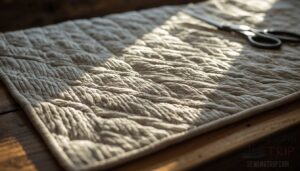
Thread count isn’t just a number on a bolt of fabric — it shapes how your quilt comes together from the very first cut. The way threads are packed into that one square inch affects everything from how your scissors glide through the fabric to how the finished quilt drapes across a bed.
A higher thread count also influences how your backing fabric holds up over time, so it’s worth exploring quilt backing fabric selection tips before you commit to a design.
Thread count shapes every quilt, from the first cut of scissors to the final drape across a bed
Here’s what you need to know about why it matters.
Durability and Fraying During Cutting
Fraying is a real headache when you’re cutting quilt pieces. Low-count fabrics — roughly 60×60 threads per inch or fewer — ravel fast. That’s where fabric durability takes a hit.
Pre-wash prep helps by removing loose fibers before you cut. sharp rotary blade matters too — blade sharpness directly reduces fiber tearing.
overlock finishing, fusible stabilizers, or edge stabilization stitching, and your pieces stay clean.
Ease of Piecing and Stitching
Thread count shapes how smoothly your pieces come together. Fabrics around 68×68 threads per inch feed evenly under the presser foot — Presser Foot Adjustment becomes almost easy.
Needle Size Selection matters too; a size 11–14 needle glides through without snagging.
Seam Allowance Consistency, solid Thread Tension Tips, and Fabric Pre-washing Benefits, and your blocks align beautifully every time.
Fabric Drape and Stiffness
Weave Influence matters more than most quilters expect. A tightly woven fabric resists bending — that’s Stiffness Measurement in action.
Fabric drape shifts based on Fiber Flexibility, GSM, and Finish Effects like calendaring.
Lightweight fabrics under 150 GSM fall softly and fold easily. Bias Cut Drape adds even more flow.
Fabric weight and fabric flexibility together shape how your finished quilt lies flat or bunches.
How Thread Count Changes Quilt Feel
Run your hand across a finished quilt — that sensation tells the whole story.
Low thread count fabrics feel looser, breathier, with an airy breathability feel and rougher texture. High thread count options offer better hand glide but trap more heat, reducing temperature softness.
Layered thickness, drape, and stitch visibility all shift with fabric weight.
Count shapes everything you feel.
Best Counts for Machine Quilting
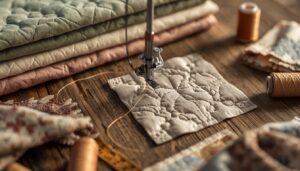
Machine quilting gets a lot easier when your fabric is working with you, not against you. The right thread count makes a real difference in how your blocks come together and how smoothly everything runs under the needle.
Here’s what to keep in mind as you choose your fabric.
Why Even-weave Cotton Works Well
Even weave cotton is a machine quilter’s best friend. Because the warp and weft threads are identical in count, you get grid consistency across every inch — meaning stitch alignment stays true from your first block to your last.
That uniform structure also delivers color fidelity in printed fabrics, predictable shrinkage after washing, and low pilling over time. Your quilt simply behaves.
Thread Count for Clean Block Assembly
Clean block assembly starts with the right thread count. A 68 × 68 fabric gives you Seam Alignment Precision and Pinning Stability that looser weaves simply can’t match.
You’ll notice better Edge Tension Consistency when cutting and trimming, and Fabric Feed Smoothness through your machine improves noticeably. Stitch Visibility stays crisp too. That’s the real importance of thread count in quilting fabrics.
Balancing Smoothness and Grip
Thread count shapes more than durability — it directly affects how fabric feels under your hands and moves through your machine. The right Weave Consistency balances fabric smoothness with just enough grip to keep layers from shifting.
Here’s what to look for:
- Finish Texture — A matte finish grips better than glossy.
- Fiber Composition — Pure cotton feeds more predictably than blends.
- Needle Glide — Even weave lets the needle move without drag.
- Hand Comfort — Mid-range counts reduce fatigue during long sessions.
- Weave Consistency — Uniform threads prevent puckering and skipped stitches.
Best Counts for Intricate Piecing
Intricate piecing demands a little more thought. Aim for a medium thread count fabric — around 60 to 80 threads per inch — with stable fabric stretch and consistent seam allowance built in.
Fine needles, size 70/10 or 80/12, handle dense weaves cleanly. Sample block testing before cutting your full project saves real headaches.
And don’t underestimate color contrast selection — sharp contrast makes precise points pop.
Best Counts for Hand Quilting
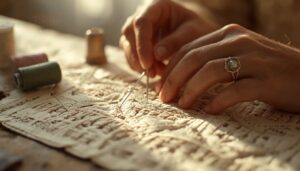
Hand quilting has its own set of rules regarding thread count. The fabric you choose can make your needle glide — or fight you every single stitch.
Here’s what to watch for before you start.
Why Very High Counts Are Harder
Hand quilting on fabric with over 200 threads per inch is genuinely tough work.
The dense weave raises Thread Breakage Likelihood because fine thread snaps under pressure, and Thread Slippage Risk grows as the needle fights through packed fibers.
You’ll also notice Stitch Visibility Issues — every imperfect stitch shows clearly.
Batting Compatibility Challenges and Tool Wear Increase follow, making high-count fabric less forgiving for hand quilters.
Needle Penetration in Dense Fabrics
Dense fabric fights back — that’s just physics. With high thread count fabric, penetration force increases because tighter weaves leave less space between fibers.
Needle geometry matters here: a finer, sharper needle cuts through fabric density more cleanly than a blunt one. Needle coatings reduce friction too, helping with layered fabric and heavy fabric thickness.
Even fabric tension stays consistent — and that makes a real difference.
Finger Fatigue and Stitch Control
tight weaves wear your fingers out faster than you’d think. After about 20 minutes of pushing through high thread count fabric, grip strength drops noticeably. Your Needle Grip Technique, Hand Posture, and Finger Warmth all matter here.
- Stick to a Break Schedule — rest 5–10 minutes every 20 minutes
- Focus on Stitch Length Consistency to reduce strain
- Keep wrists neutral and shoulders relaxed
When to Avoid Batiks and Pima Cotton
Batiks and Pima cotton look beautiful, but they can fight back during hand quilting.
Batik’s wax resist finish creates needle snagging and wax bleed risk when pressed.
Pima’s smooth fibers cause shrinkage sensitivity and color transfer issues if not prewashed.
Moisture finish effects also shift how batting sits beneath your quilt top.
| Fabric | Key Hand Quilting Challenge |
|---|---|
| Batik | Needle snagging, wax bleed risk |
| Pima Cotton | Shrinkage sensitivity, color transfer |
Choosing Quilt Fabric by Weight
Thread count doesn’t tell the whole story — weight matters just as much when you’re picking the right fabric. A fabric’s weight, measured in grams per square meter (GSM), works hand in hand with thread count to shape how your quilt looks, feels, and holds up over time.
Here’s what to know about matching weight to your project.
Matching Thread Count With GSM
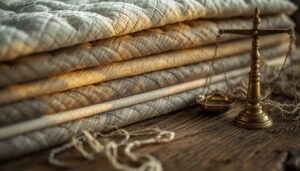
Think of thread count and GSM as partners — one without the other tells only half the story. GSM, or grams per square meter, measures how heavy your fabric feels. Thread count measures how tightly it’s woven.
Getting your Thread-GSM Ratio right is everything. Weight-Count Harmony prevents stiff, unworkable fabric or limp, saggy quilts.
Density-Weight Matching: around 200–300 threads per inch with 120–180 GSM for reliable Softness Durability Balance.
Medium-weight Cotton for Everyday Quilts
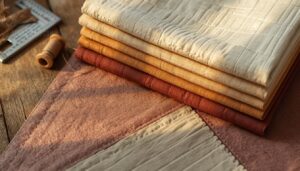
Medium-weight cotton — around 140 to 160 gsm — is the sweet spot for everyday quilts. Its print-friendly surface keeps your seam lines sharp and your blocks precise.
You get beginner-friendly handling with consistent seam allowances, plus real colorfastness durability through repeated washes. Softness after wash improves with every cycle too.
For durability considerations for heavy-use quilts, this cotton weave and thread count combination simply delivers.
Lightweight Fabrics for Delicate Projects
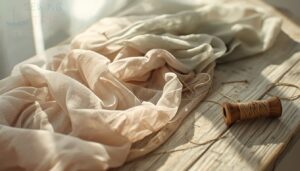
Delicate quilts call for a lighter touch. Sheer handling starts with fiber content — cotton voile and lawn, both around 40 to 60 gsm, are go-to choices.
Use careful pinning techniques to keep slippery layers from shifting. Finishing seams with French seams keeps edges clean.
For care and storage, skip direct sunlight. Smart fabric selection for quilts based on thread count really pays off here.
Heavyweight Fabrics for Warmth and Structure
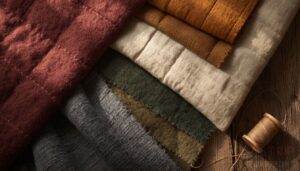
Heavyweight fabrics — think wool blends, cotton flannel, and heavy canvas — bring serious warmth to a quilt. Their fiber insulation and bulk stability trap air naturally, boosting thermal clo value without added layers.
Dense weaves improve wind resistance too. Pair them with tight thread counts for durability in high-use quilts.
The impact of fabric weight on quilt warmth is real — and immediately noticeable.
Frequently Asked Questions (FAQs)
What is the 60 30 10 rule for quilting?
The 60-30-10 rule is your quilting roadmap. Sixty percent goes to your hero fabric, thirty to supporting colors for palette balance, and ten to an accent fabric.
Use the squint test to confirm it feels right.
Does thread count affect fabric shrinkage after washing?
Yes, it does. Lower thread counts mean looser weaves, which absorb more water and shrink more after washing.
Higher counts resist that.
Pre-shrunken fabrics and cool wash temperatures help keep any count stable.
How do I test thread count before buying fabric?
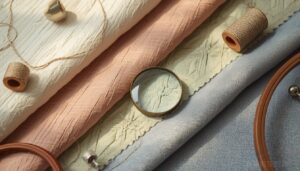
Grab a swatch before you commit. Use a jeweler’s loupe or magnification tools, count warp and weft threads separately in one square inch, then add them. That’s your thread count.
Can thread count impact a quilts color vibrancy?
Thread count does affect color vibrancy. Higher counts reduce fabric porosity, slightly muting brightness, while lower counts can dull colors through uneven dye penetration.
Mid-range counts balance color saturation and light reflection beautifully.
Does thread count matter for quilt backing fabric?
It cuts both ways.
Yes, thread count matters for quilt backing fabric. Aim for 200–300 threads per inch to balance wash longevity, prevent backing fabric transparency, and support overall quilt backing considerations without sacrificing softness.
How does thread count vary across fabric brands?
Brand labels don’t always tell the whole story. Multi-ply inflation can push numbers past 400, while real-world performance stays moderate.
Fiber type influence and weave style differences mean a 220-count from one brand can outperform a 280 from another.
Conclusion
Funny how quilters spend hours debating whether burnt sienna or terracotta reads warmer from six feet away—then grab whatever cotton’s on sale without a second thought about what’s actually holding those colors together.
But now you know what’s the best thread count for quilting fabric, and why it shifts depending on your project. That knowledge quietly improves every cut, every seam, every finished block.
The fabric hasn’t changed. You have.