This site is supported by our readers. We may earn a commission, at no cost to you, if you purchase through links.
Thread choice shapes everything—the drape of a finished piece, how colors hold after washing, even how your needle moves through fabric. Cotton and silk have anchored embroidery for centuries, but polyester and nylon have quietly taken over commercial production for good reason.
Each fiber type carries trade-offs you’ll feel in your hands before you ever see them on the fabric. Understanding the core differences between natural vs synthetic embroidery thread puts you in control of your results, whether you’re stitching heirloom linens or durable outdoor pieces.
Table Of Contents
Key Takeaways
- Natural fibers like silk and cotton reward precision work with superior texture and drape, but synthetics like polyester outlast them in colorfastness, moisture resistance, and high-friction environments.
- Matching your thread to the project’s demands—not just your preference—is what separates work that holds up from work that falls apart after a few washes.
- Needle size, thread weight, and fiber type all work together, so getting one wrong throws off the others and leads to skipped stitches, fraying, or puckering.
- Proper storage at 40–50% humidity and 60–70°F, combined with UV‑blocking containers, extends the life of both natural and synthetic threads significantly.
Key Differences Between Natural and Synthetic Threads
Natural and synthetic threads aren’t just different materials — they behave differently in your hands, under your needle, and after a dozen washes. Understanding what sets them apart helps you make smarter choices for every project.
A solid sewing thread material guide can save you from a lot of frustrating trial and error before you even thread your needle.
Here’s what you need to know across three key areas.
Fiber Sources and Production Methods
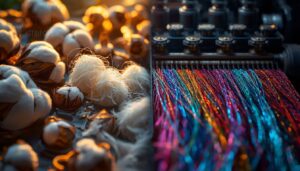
Where your thread comes from shapes everything about how it performs.
Natural fibers like cotton and linen start with plant retting — soaking raw stalks to loosen fibers — while wool and silk rely on animal gland filaments.
Synthetic fibers skip nature entirely, built through petrochemical polymerization and an extrusion process that pushes melted polymer into continuous strands.
Regenerated cellulose spinning, used for rayon, sits between both worlds.
Natural fibers are absorbent while synthetics repel water.
Thread Texture and Appearance
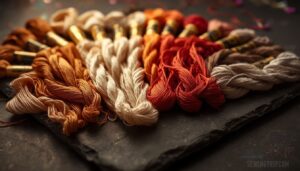
How a thread catches light tells you almost everything about its character.
Natural fibers offer quiet Lustre Variations — cotton’s Surface Fuzziness gives a matte finish, while silk’s tight filaments produce a pronounced sheen level. Synthetics flip that script entirely with a Matte Glossy Contrast that’s hard to miss:
- Silk — deep, warm Color Sheen Shifts
- Cotton — soft, muted matte finish
- Polyester — bright, consistent color vibrancy
- Spun Texture Effects in wool — irregular, light-scattering surfaces
Smooth stitching experience or textured threads — your eye decides first.
Common Types and Uses
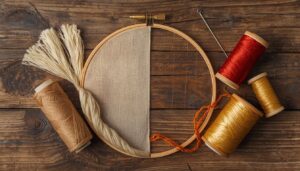
Your eye picks the fiber, but the project picks the type.
Cotton floss splits into six strands for fine detail or bold fills. Silk thread manages delicate satin stitches with ease. Linen thread delivers crisp, matte edges for folk-style work.
On the synthetic side, polyester thread covers heavy fabrics fast, metallic thread adds decorative sparkle, and elastic thread lets you build stretch right into your design.
Durability and Performance Factors
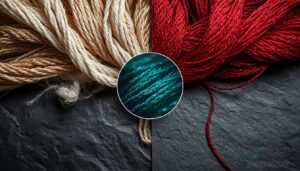
Choosing the right thread isn’t just about looks — it’s about how well it holds up over time. Durability comes down to a few specific factors that separate threads that last from ones that let you down.
Here’s what you need to know before you decide.
Strength and Abrasion Resistance
Regarding wear and tear, synthetics win — but knowing why helps you choose smarter.
Synthetic threads hold up through repeated washing and friction, and picking the right one from a quality sewing thread set for hand stitching makes that durability even easier to achieve.
- Polyester uses Trilobal Thread Design and Fiber Coating Techniques to minimize fuzzing under repeated rubbing.
- Nylon Core Reinforcement gives metallic threads real thread durability in high-friction areas.
- Resin Treated Fibers bring natural cotton closer to synthetic performance levels.
- Surface Hardness Treatments on nylon extend wear life considerably.
- Linen naturally outperforms cotton in thread strength, thanks to its longer fiber structure.
Colorfastness and Fading
Color holds a design together — and losing it early stings.
Synthetic fibers, especially polyester, earn top Lightfastness Ratings because their Dye Fixation process bonds Disperse Dyes deep into the fiber. Natural fibers are more porous, making them vulnerable to UV Exposure, Chemical Bleach, and high Wash Temperature.
Want lasting colorfastness? Polyester’s fade resistance outlasts cotton and silk in almost every real-world test.
Moisture and Environmental Effects
Moisture is a silent wrecker. When humidity climbs above 60 percent, mold growth accelerates on natural fibers like cotton and linen, which absorb moisture readily.
Condensation effects and temperature cycling make things worse, weakening fiber structure over time. Synthetic threads resist humidity effects and sunlight degradation far better.
For outdoor or high-moisture environments, synthetic vs natural fibers isn’t really a debate — synthetics win.
Choosing The Right Thread for Embroidery
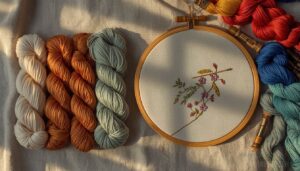
Picking the right thread isn’t just a technical decision — it’s what separates a finished piece you’re proud of from one that falls apart after a few washes. Several key factors work together to point you toward the best choice for your specific project.
The right thread choice separates a finished piece you’re proud of from one that falls apart
Here’s what to think about before you thread that needle.
Project Type and Thread Compatibility
Think of thread selection as matching the right tool to the job.
For hand embroidery techniques on heirloom linen, silk or mercerized cotton wins every time.
Choosing natural or synthetic sewing threads for outdoor fabric projects? Polyester holds up far better.
Machine embroidery settings demand consistent polyester or rayon for specialty fabric compatibility.
Thread selection for different embroidery applications really comes down to one question: what does your project need to survive?
Needle Pairing and Thread Weight
Needle size selection is simpler than it sounds. Match your thread weight to the right needle, and everything runs smoothly.
A Thread Weight Scale helps here: 60–100 weight silk or fine cotton needs a 60/8–70/10 needle, while heavy thread guidance puts 12–30 weight metallics at 90/14 or larger.
Fine Needle Compatibility and proper Needle Gap Tolerance prevent skipped stitches and fraying before they start.
Hand Vs Machine Embroidery Considerations
Hand embroidery gives you real Design Flexibility — you can shift direction mid‑stitch, adapting to irregular textures with natural fibers like silk or linen. Machine embroidery demands Thread compatibility with embroidery machines, meaning synthetic fibers win for Stitch Speed and consistency.
Consider your Tool Investment and Learning Curve honestly.
Fabric Compatibility matters too: delicate fabrics suit hand work, while stable wovens handle machine tension best.
Care and Maintenance of Embroidery Threads
Good thread deserves good care — and that goes for natural and synthetic alike. How you store, wash, and handle your thread makes a real difference in how long it lasts and how well it stitches.
keep your threads in top shape.
Storage Practices for Longevity
Your thread collection is only as good as how you store it. Aim for 40–50% humidity — use desiccants for humidity control and airtight archival packaging to keep moisture out year‑round. Temperature stability matters too: 60–70°F slows fiber breakdown.
UV shielding via opaque bins protects color. Natural fibers like cotton and linen are especially vulnerable, but good care and storage practices extend every thread’s life.
Washing and Handling Tips
Good storage sets the stage, but how you wash matters just as much. Use gentle cycle settings and cool to warm water — synthetics handle up to 40°C, while natural fibers prefer cooler. For detergent selection, choose a mild, color-safe liquid to protect colorfastness.
- Prioritize air drying tips: lay flat, away from sunlight
- Apply low heat pressing with a pressing cloth
- Use moisture protection via silica-sealed storage after drying
Preventing Breakage and Fraying
Washing is only half the battle — breakage and fraying can still quietly undo your work.
Matching your needle size to thread weight prevents unnecessary fiber stress, while stabilizer placement keeps fabric from shifting and fatiguing the thread.
Use pinking shears on raw edges, apply Fray Check Sealant at thread tails, and heat setting locks synthetic fibers in place.
| Method | Best For | Benefit |
|---|---|---|
| Needle Size Matching | All fiber types | Prevents core damage |
| Fray Check Sealant | Natural fibers | Seals fraying ends |
| Heat Setting | Synthetic fibers | Locks fiber structure |
Top Recommended Products for Embroidery Thread Comparison
Once you understand the thread itself, the next step is finding the right resources to guide your projects. A few well-chosen books can help you apply that knowledge directly to real patterns and garments.
Here are three worth adding to your collection.
1. The Tailoring Book Tailoring Guide
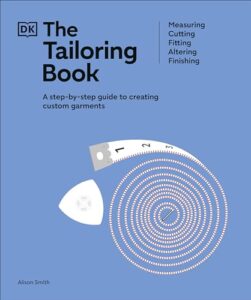
Mastering thread choices means understanding the full picture — and The Tailoring Book by DK gives you exactly that. Published in September 2024, this 304-page guide walks you through fabric selection, hand-stitching techniques, and couture-level finishes across 10 complete garment projects.
At $22.66, it’s a solid investment for intermediate sewers ready to level up.
You’ll get downloadable PDF patterns and high-resolution visuals that make technical concepts click.
Fair warning: it assumes you already know basic sewing terms.
| Best For | Intermediate sewers who already know the basics and want to build real tailoring skills — from clean finishes to full garment projects. |
|---|---|
| Language | English |
| Format | Paperback Book |
| Price | $22.66 |
| Skill Level | Intermediate to Advanced |
| Project Type | Full Garments |
| Instructions Included | Yes, step-by-step |
| Additional Features |
|
- 80 techniques plus 10 complete projects give you both the "why" and the "how," all in one book.
- Downloadable PDF patterns mean you can jump straight into practice without drafting anything from scratch.
- At $22.66 for 304 pages of high-res visuals and couture-level instruction, the value is hard to beat.
- Not beginner-friendly — if you’re still learning what a seam allowance is, this one might frustrate you.
- The binding has gotten some complaints; it’s a hefty book and a few readers felt the construction didn’t match the price.
- You’ll need a device and printer handy to use the PDF patterns, so it’s not fully self-contained off the shelf.
2. Butterick Misses Collared Shirt Shorts Sewing Pattern
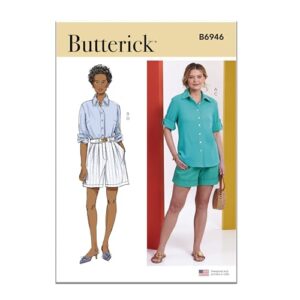
If The Tailoring Book builds your technical foundation, the Butterick Misses Collared Shirt Shorts pattern puts it into practice.
At $12.56, this US-made pattern covers Misses’ sizes 4–12 and includes two coordinated pieces: a collared shirt with bust darts, button cuffs, and topstitching, plus pleated shorts with a front fly and side pockets.
Fabric choices matter here — cotton poplin or lightweight linen work best.
Your thread selection directly affects those crisp collar seams and neat topstitched hems.
| Best For | Home sewers with basic to intermediate skills who want to make a matching shirt-and-shorts set without spending a lot on ready-made clothes. |
|---|---|
| Language | English |
| Format | Paper Pattern Kit |
| Price | $12.56 |
| Skill Level | Beginner to Intermediate |
| Project Type | Shirt & Shorts |
| Instructions Included | Yes, step-by-step |
| Additional Features |
|
- Covers two pieces in one pattern — a collared shirt and pleated shorts — so you get a full coordinated outfit for $12.56.
- Lots of built-in flexibility, like rolled sleeves and optional turn-back cuffs, so you can tweak the look to suit your style.
- Made in the US with clear sizing guides and step-by-step instructions, which makes it easier to follow along as you go.
- Sizes only go up to Misses’ 12, so anyone outside that range will need to grade the pattern themselves.
- No fabric, thread, buttons, or zipper included — you’re buying the instructions only, so budget extra for supplies.
- Does require real sewing know-how; if you’re a total beginner, some details like the collar band and front fly might feel tricky.
3. Doll Couture Red Carpet Pattern Book
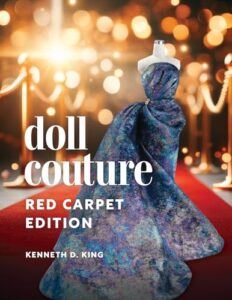
Scale changes everything regarding thread choice, and the Doll Couture Red Carpet Pattern Book makes that crystal clear. This 232-page hardcover by Kenneth D. King covers haute-couture sewing for 1/8-scale fashion dolls — think silk dupioni, fine tulle, and hand-finished invisible seams at miniature level.
At that scale, thread weight becomes critical. Fine mercerized cotton or lightweight rayon keeps seams clean without bulk.
If you’re working on detailed doll garments, this book’s quick-reference fabric and needle chart alone is worth the $28.67 price tag.
| Best For | Doll collectors and crafters who want to make high-end, red-carpet-style outfits for 1/8-scale fashion dolls, from total beginners to seasoned sewists. |
|---|---|
| Language | English |
| Format | Hardcover Book |
| Price | $28.67 |
| Skill Level | Beginner to Advanced |
| Project Type | Doll Clothing |
| Instructions Included | Yes, step-by-step |
| Additional Features |
|
- Covers both women’s gowns and men’s formalwear, so you can dress the whole crew for your miniature gala
- Kenneth D. King walks you through the tricky stuff — tiny zippers, micro snaps, fabric selection — with clear visuals and step-by-step instructions
- The red-carpet narrative woven through the book makes the whole project feel fun and purposeful, not just like a technical manual
- Patterns only work for 1/8-scale dolls, so if your collection runs bigger or smaller, you’re out of luck
- You’ll need to track down miniature sewing supplies separately — none of them come with the book
- No digital version available, which is a bit of a miss for crafters who like to zoom in on pattern details
Frequently Asked Questions (FAQs)
Is it better to use natural or synthetic material?
Neither is universally better — it depends on your project. Natural threads feel softer and look more textured, while synthetics stay consistent and hold color longer.
Match the thread to what your work actually demands.
Can you embroider on viscose?
Yes, you can embroider on viscose — but it needs proper stabilizing to prevent puckering. Use a tear-away stabilizer, a size 75/11 needle, and always prewash the fabric first.
Can embroidery thread be used for knitting?
Technically, yes — embroidery thread can be knitted, though it’s not ideal. Single strands map to lace weight, while splitting floss adjusts thickness.
Expect more tangling, tension issues, and careful needle matching throughout.
Are natural threads more expensive than synthetic ones?
Generally, yes.
Natural threads like silk and linen cost noticeably more than polyester or rayon, mainly because farming, harvesting, and processing raw fibers take more time, labor, and resources than manufacturing synthetics.
Which thread types work best for beginners?
Start with all-purpose polyester thread. It’s strong, forgiving, and works on most fabrics without fuss. A 50-weight polyester paired with universal needles gives you the smoothest learning curve possible.
Do synthetic threads cause skin irritation or allergies?
Synthetic threads can feel perfectly fine on most skin — yet the same fabric can leave another person red and itching.
Usually, the culprit isn’t the fiber itself but dyes or finishing chemicals applied to it.
Can old or expired thread still be used safely?
Old thread can still work, but test it first.
Give it a firm tug — if it snaps easily or feels brittle, skip it for anything important and use it for basting instead.
Conclusion
Like choosing between a cast-iron skillet and a nonstick pan, the natural vs synthetic embroidery thread decision comes down to what you’re actually cooking up. Natural fibers reward patience and precision; synthetics handle the heat of heavy use. Neither wins every project.
But now you know what each thread brings to the table—its strengths, its limits, and when to reach for it. That knowledge is what separates a frustrated stitcher from a confident one.