This site is supported by our readers. We may earn a commission, at no cost to you, if you purchase through links.
Sewing slippery silk, thick denim, or a quilted sandwich with a standard presser foot is a lesson in frustration—layers shift, seams pucker, and your careful fabric prep unravels stitch by stitch.
That’s not a skill problem. It’s a tool problem.
A walking foot grips both fabric layers from the top and bottom simultaneously, feeding them through your machine in perfect sync.
Knowing when to use a walking foot on fabric changes everything from quilting straight lines to sewing leather without that maddening drag.
The right foot for the right job isn’t a luxury—it’s the difference between a finished seam you’re proud of and one you’ll rip out twice.
Table Of Contents
Key Takeaways
- A walking foot solves fabric shifting by gripping both layers at once, making it essential for slippery silks, stretchy knits, thick denim, and quilted sandwiches.
- Setting it up correctly matters — mount it on the needle bar, raise the feed dogs, test on scraps, and match your needle to your fabric before touching your real project.
- Dial in your machine settings too: sew at a steady moderate pace, lengthen stitches for dense fabrics, and adjust tension or presser-foot pressure to stop puckering.
- Know when to swap it out — tight curves, buttonholes, wide decorative stitches, and ultra-light fabrics all need a different foot for the best results.
Use a Walking Foot for Difficult Fabrics
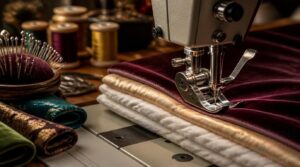
Some fabrics just don’t play nice with a regular presser foot — they slip, stretch, or bunch up no matter what you do. That’s exactly where a walking foot earns its place at your machine. Here are the fabrics that benefit most from that synchronized feeding action.
For stretchy fabrics especially, pairing a walking foot with the right tension settings makes all the difference — check out this guide on tension settings for stretchy fabric to dial in your machine before you start.
Slippery Silk and Satin
Silk and satin are gorgeous — but notoriously slippery to sew. The satin weave creates a lustrous face that slides right out from under a regular presser foot.
A walking foot grips both fabric layers at once, so the top layer can’t creep ahead. You’ll get smooth, even seams without puckering, snagging, or ruining that beautiful drape.
Stretchy Jersey and Knits
Jersey and knits are a whole different challenge. Unlike silk, the problem isn’t sliding — it’s stretching out of shape as you sew.
- Jersey curls at the edges, pulling seams off-grain
- Spandex blends snap back unevenly without even feeding
- Interlock knits shift and distort under a standard foot
- Slub knit textures feed inconsistently, causing uneven stitches
- Ponte di Roma loses its structured drape when stretched mid-seam
A walking foot keeps both layers moving together, so fabric distortion disappears.
Thick Denim and Canvas
Now, thick denim and canvas bring a completely different problem — sheer weight.
These heavyweight fabrics resist the machine’s bottom feed dogs, causing uneven stitch lengths.
| Challenge | Walking Foot Fix |
|---|---|
| Fabric weave density | Synchronized feed grips both layers |
| Denim shrinkage prevention | Prewash, then sew flat without stretching |
| Canvas abrasion resistance | Even feed preserves seam integrity |
| Heavyweight needle selection | Use a 100/16 for clean penetration |
A size 100/16 needle punches through that tight twill weave without skipping. The walking foot’s fabric feed mechanism manages the rest.
Sticky Vinyl or Leather
Vinyl and leather behave like divas at the machine — they grip, slip, and stick unpredictably. Plasticizer migration makes vinyl develop a tacky surface over time, causing drag.
A walking foot’s synchronized dual-feed grips both layers evenly, so nothing bunches or slides. Keep vinyl away from heat to slow that tackiness, and you’re in control.
Layered Quilting Fabrics
Quilts are basically a triple-decker sandwich, and keeping all three layers moving together is the real challenge. Your walking foot manages this beautifully with even feeding across every layer.
- Top fabric sets the design
- Batting adds loft and warmth
- Backing provides durability
- Stitching locks everything in place
Remember that the backing fabric extension should be 4–6 inches beyond the top edges for easy binding.
Quilt sandwich stability depends on matching fabric shrinkage and balancing stitching density so layers never tunnel or pucker.
Use It When Fabric Shifts
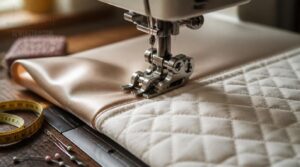
Fabric shifting is one of the most frustrating things that can happen mid-seam — and a walking foot confronts it head-on. The synchronized feed grips both layers at once, so nothing slides, stretches, or creeps out of place. Here’s what that control actually looks like in practice.
Prevent Top-layer Creeping
Ever notice how your top fabric slowly creeps ahead, leaving the bottom layer behind? That’s differential movement at work.
Testing your stitch settings on a scrap first helps you catch this slipping before it ruins your project — here’s why understanding zigzag stitch mechanics can make all the difference.
A walking foot’s synchronized feed action grips both layers at once, so they move together as one. This dual-layer grip eliminates that sneaky shift before it builds into a crooked seam. Consistent fabric stability means your edges stay exactly where you placed them.
Stop Seam Puckering
Puckered seams are frustrating — but a walking foot fixes this fast. Its even feeding action balances both fabric layers, so neither layer gets pulled or compressed.
Match your thread weight to your fabric, keep tension balanced, and use a medium stitch length. A quick test on scraps confirms your settings before you touch the real piece.
Reduce Fabric Stretching
Stretchy fabric has a mind of its own — it loves to creep and warp under the presser foot. A walking foot fights back with even feeding on both layers, reducing distortion as you sew.
Always cut with the grain, baste first, and choose a stabilizer for knits. Balanced tension and a stretch needle keep everything smooth and flat.
Keep Edges Aligned
Fabric edges have a sneaky habit of drifting apart as you sew. A walking foot solves this by keeping both layers feeding evenly, so your edges stay perfectly flush from start to finish.
Here’s what it helps with:
- Preventing edge drift on slippery layers
- Maintaining edge parallelism on chiffon and silk
- Controlling edge bunching over smooth seams
- Stabilizing bias edges that love to stretch
- Ensuring edge flushness on bulky quilt sandwiches
Improve Stitch Consistency
Inconsistent stitches are one of the sneakiest signs of fabric slippage. A walking foot fixes this by stabilizing fabric feed, so both layers move together at the same pace.
That synchronized layer movement means every stitch lands at an even distance. You get uniform stitch density from seam start to finish — no loose loops, no bunching, just clean, consistent results.
Use It for Quilting Layers
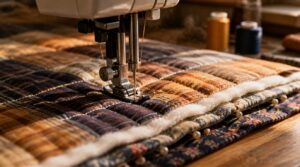
Quilting is where a walking foot truly earns its keep. The moment you layer fabric, batting, and backing together, keeping everything smooth and even becomes the real challenge. Here’s where a walking foot makes all the difference across every stage of the process.
Quilt Sandwiches
Once you’ve layered your top, batting, and backing, that quilt sandwich needs steady handling. A walking foot grips all three at once, giving you even feeding without slippage.
Pick your batting loft for warmth, choose a smooth backing fabric, then pin or clip layers securely. Good layer alignment now prevents shifting and shrinkage once quilting begins.
Straight-line Quilting
With your sandwich pinned, you’re ready for straight-line quilting. Mark lines using chalk for precision, or stick down painter’s tape as your guide.
A walking foot keeps even feeding across all your fabric layers, so lines stay parallel.
Try a diagonal grid design or tight matchstick quilting texture for a clean, modern quilt look.
Quilt Binding
Once straight-line quilting is done, quilt binding is your finish line. A walking foot feeds your cotton binding strip evenly across all layers — no shifting, no puckering.
It works with continuous strip construction beautifully and keeps mitered corners crisp and clean. You’ll love how smooth each edge looks when the foot does its job.
Multiple Fabric Layers
Binding done? Now push further into multiple fabric layers. When you stack batting, interfacing, and fashion fabric together, managing bulk becomes your biggest challenge. A walking foot manages layered fabric feeding with ease, keeping every layer locked in place.
- Prevents top-layer creep on slippery surfaces
- Delivers even feeding across thick multilayer sandwiches
- Reduces shifting caused by fiber interaction between layers
- Maintains seam alignment without extra pinning
Even Topstitching
Even topstitching is where a walking foot truly shines. Your even feed foot keeps fabric moving smoothly, so every stitch lands exactly where it should. Use topstitching thread — heavier weight grips layers firmly. Match it with a 90/14 or 100/16 needle for clean penetration.
| Element | Recommendation |
|---|---|
| Stitch spacing | 1–2 mm from edge |
| Thread weight | Heavy topstitch thread |
| Tension balance | Test on scraps first |
Use It for Pattern Matching
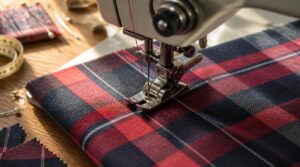
Pattern matching is one of those sewing challenges that looks impossible — until you have the right tool. A walking foot holds both fabric layers steady so your stripes, plaids, and prints line up exactly where you want them. Here’s where it really shines.
Plaid Seams
Plaid is one of those patterns that looks stunning — until the seams don’t match. A walking foot keeps both fabric layers feeding evenly, so plaid lines stay locked together as you stitch.
Before you sew, baste your pieces to test the match. Check grain line alignment on every piece, and clip notches carefully at your match points to hold symmetry through the seam.
Striped Fabrics
Stripes demand respect — one slipped stitch and your perfectly planned seam turns into a zigzag disaster. A walking foot gives you even feeding across both layers, keeping stripe alignment locked as you sew.
Always pre-wash to stop color bleeding before it ruins your match.
Cut panels from the same fabric length, then let your walking foot do the rest.
Large Print Repeats
Think of large print repeats like a puzzle — the pieces have to line up at every seam. These bold motifs are measured in inches, and even a small shift ruins the look.
A walking foot keeps even feeding on both layers, so your print alignment stays locked. Match your repeat measurements before cutting, and you’ll get continuous, eye-catching results.
Matched Garment Panels
When garment panels come together, fabric alignment is everything. Your seams must meet edge-to-edge — within about 1/8 inch — or the whole look falls apart.
- Map pattern layout accuracy before cutting
- Keep seam allowance consistency across every piece
- Try motif mirroring techniques for balanced panels
- Check fabric tone matching at joining edges
- Use texture alignment strategies at seams
A walking foot prevents fabric shifting throughout.
Precise Seam Alignment
Precise seam alignment is where a walking foot truly earns its place.
Even feeding stops edge drift, so your seam allowances stay uniform from start to finish. Stitch intersection accuracy keeps perpendicular seam lines true across every layer.
The result? Symmetric pattern joins that look intentional, not accidental — exactly what sharp, professional sewing always comes down to.
Set Up The Foot Correctly
A walking foot only works its magic when it’s set up right. Skip a step, and you’ll fight skipped stitches or uneven feeding all day. Here’s how to get it ready, piece by piece.
Attach The Walking Foot
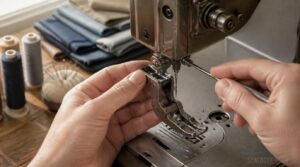
Start by removing your standard presser foot and sliding the walking foot into position on your sewing machine’s presser bar. Hook the mounting claw carefully onto the needle bar — alignment here matters. Secure the attachment screw firmly so nothing wobbles mid-stitch.
Here’s your quick checklist:
- Confirm needle bar alignment before tightening
- Check feed dog engagement underneath
- Test on scrap fabric first
Raise The Feed Dogs
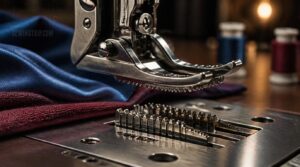
With your walking foot attached, raise the feed dogs so they sit above the throat plate. Correct feed dog height lets the foot’s upper teeth sync with the lower ones for true even feeding.
Raised dogs grip slippery or stretching fabrics, boosting fabric slip control and stitch skip prevention. Recheck your thread path before stitching thick layers.
Test on Fabric Scraps
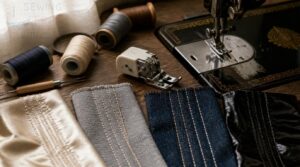
Before stitching your real project, grab fabric scraps and run a quick test swatch.
Try slippery silk trials, knit distortion checks, dense denim testing, and a vinyl drag assessment to match the right machine settings to your fabric type selection.
Test stitching reveals skipped stitches or puckering early, so you can verify pattern alignment before committing to the final seam.
Use The Right Needle
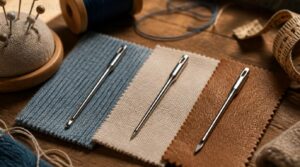
Once your scrap test looks good, grab the right needle.
Ballpoint needles protect knits by sliding between fibers instead of piercing them. Sharp needles glide cleanly through woven fabrics like linen or cotton. Working with leather or vinyl? Use a leather needle — its chisel tip perforates cleanly.
Match your needle size to fabric weight for the best stitch quality.
Try a Sewing Screwdriver
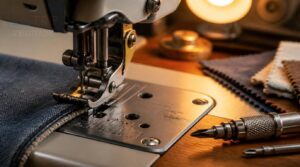
Don’t overlook your screwdriver when setting up the walking foot. A sewing screwdriver with three settings helps you swap feet and needles without stripping those tiny screws.
Setting one controls needle and foot changes perfectly. The short handle tucks easily into tight spots near the throat plate.
The right tool keeps your machine safe and your setup smooth.
Adjust Settings for Best Results
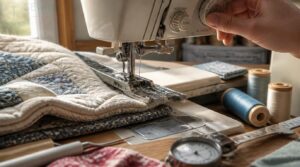
Getting your walking foot attached is only half the job. Your machine still needs the right settings to make the most of it. Here are five quick adjustments that’ll get you stitching like a pro.
Sew at Moderate Speed
Speed is your secret weapon with a walking foot. Sew at 1–2 inches per second — that moderate pace keeps tension stable and feed dogs working in perfect sync.
Rush it, and you’ll lose stitch consistency fast. Maintaining rhythm also reduces machine vibration and operator fatigue.
Think of it like driving: steady wins every time.
Lengthen Dense-fabric Stitches
When dense fabric fights back, your stitch length is the first dial to turn. Set it between 2.5 and 4.0 mm — longer stitches reduce tension across thick layers and let fabric shear naturally.
Pair that with a heavy-duty or denim needle to punch through cleanly. Always test on a scrap first to confirm seam strength before committing.
Reduce Puckering Tension
Puckering usually means your top-thread tension is too tight. Drop it slightly — just one notch at a time — and watch the fabric relax.
Bobbin tension matters too. Unbalanced tension between top and bottom threads pulls stitches unevenly, gathering the fabric. Always test adjustments on a scrap with matching thread weight and needle size before touching your real project.
Lower Presser-foot Pressure
Presser-foot pressure quietly controls how well your fabric moves. Too much pressure squeezes layers together, causing bunching and uneven stitch depth. Too little lets fabric slide, inviting edge creep and crooked seams.
For satin, lower the pressure slightly to reduce drag and keep edges flush. For thick layers, raise it just enough to balance the feed rate without distorting your fabric.
Clean Feed Dogs Regularly
Think of your feed dogs as tiny tire treads — when they’re clogged, your fabric loses grip fast. Lint buildup between the teeth causes skipped stitches and uneven feeding, especially with a walking foot working double duty.
- Use a soft nylon brush to sweep lint from the teeth after every project
- Remove the needle plate for deeper access every few weeks
- Try compressed air or tweezers for stubborn, packed-in buildup
- Always make sure teeth are dry before sewing to prevent rust
A quick brush-out after each session keeps your feed dogs gripping cleanly and your stitches tracking true.
Avoid It for Some Sewing
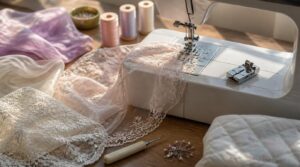
The walking foot is an excellent tool, but it’s not the right choice for every sewing situation. Knowing when to put it aside is just as important as knowing when to reach for it. Here are the times you’ll want to swap it out for something else.
Knowing when to put the walking foot aside is just as important as knowing when to reach for it
Tight Curves
Tight curves are where the walking foot meets its match. Its bulky frame blocks needle visibility, making it hard to guide fabric precisely through small bends.
The synchronized feed grips so firmly that pivoting at the turning point becomes awkward — you’ll likely see skipped stitches or puckering.
For curves, swap in a standard presser foot and keep full control.
Buttonholes and Zippers
Just like tight curves, buttonholes and zippers demand specialty presser feet, the walking foot simply can’t replace.
Satin stitch buttonholes need a buttonhole foot for precise, dense stitching.
Invisible zipper installation requires a zipper foot for close-edge placement. Always baste your zipper first, then swap in the right foot for clean, durable results.
Wide Decorative Stitches
Wide decorative stitches are another spot where the walking foot falls short. These stitches—spanning 6 to 20 millimeters wide—need precise stitch density and bobbin tension that the walking foot can’t reliably deliver.
- Use a standard foot with balanced bobbin tension
- Choose polyester embroidery thread for clean motifs
- Apply a tear-away stabilizer underneath
- Set stitch length to 2.0–2.5 mm
- Test stitch density on scraps first
Ultra-light Delicate Fabrics
Ultra-light fabrics like silk, chiffon, and voile weigh just 20 to 60 grams per square meter.
That’s featherweight territory, and the walking foot’s strong grip can actually harm them. It may over-grip and cause unwanted puckering or tunneling.
Swap it out for a regular presser foot, use a fine 60/8 or 70/10 needle, and keep your stitch length around 2.0–2.5 mm.
High-speed Sewing Projects
The walking foot actually slows your machine down — and that matters for high-speed sewing projects. Its synchronized mechanism needs time to grip and feed both layers properly.
Pushing past that limits stitch speed control and risks skipped stitches.
For quick seams or rapid pattern matching, a standard foot accommodates the pace better.
Frequently Asked Questions (FAQs)
Why should you use a walking foot when sewing?
A walking foot gives you synchronized feed between top and bottom layers, so slippery fabrics and stretchy fabrics move together. You get even stitching, less fabric distortion, better layer alignment, and zero seam drifting across multiple layers.
What is a walking foot on a sewing machine?
A walking foot (also called an even feed foot) is a special presser foot with built-in upper feed dogs.
Its lobster-claw attachment grips the needle bar, creating synchronized feeding between top and bottom layers through true dual-feed mechanism action.
What is a walking foot used for?
A walking foot — the sewing world’s secret weapon since the 1800s — uses synchronized feeding action to grip multiple layers evenly, preventing slippage, stretching, and puckering across slippery fabrics, stretchy fabrics, and thick materials.
Why does my sewing machine have a walking foot?
Your sewing machine includes a walking foot to solve a common frustration: uneven fabric feeding. Its synchronized feeding action grips both fabric layers at once, so your stitches stay smooth and even every time.
What fabrics benefit from a walking foot?
Fabrics that tend to slip, stretch, or stack up are where a walking foot truly shines — think silks, knits, denim, vinyl, and multilayer quilts.
Is a walking foot good for thick fabric?
Yes — a walking foot is a workhorse for thick fabric. Its dual feed dogs grip multiple layers evenly, preventing slippage. Heavy material feeding becomes easy, even through denim, canvas, or upholstery seams.
Why is a walking foot called even-feed?
The name says it all. A walking foot earns the "even-feed" title because it moves top and bottom layers at the same time, giving you perfectly synchronized, smooth fabric feeding with every stitch.
Can a walking foot sew in reverse?
Technically, a walking foot can’t reverse stitch reliably. Its upper feed dogs only sync forward, so backstitching causes misfeeds. Instead, switch to a regular foot for any reverse stitch workaround on your sewing machine.
How do I check machine compatibility first?
Before buying, check your machine model and shank type — low, high, or snap-on. Your machine manual confirms compatibility. Some feet need an adapter plate. Always verify feed dog engagement works correctly with the walking foot attached.
Why might skipped stitches still occur regularly?
Even with a walking foot, skipped stitches happen. A dull or wrong needle, poor hook timing, or thread tension mismatch can all cause misses. Always troubleshoot the basics first.
Conclusion
walking foot keeps every layer moving in perfect sync. Knowing when to use a walking foot on fabric means fewer ripped seams, less wasted time, and projects you’ll actually finish with pride.
It won’t handle every job—tight curves and buttonholes still belong to other feet—but for quilts, plaids, denim, and slippery fabrics, it’s your most dependable tool.
Reach for it confidently, and watch your results transform.
- https://www.fieldtexcases.com/blog/walking-foot-complete-guide
- https://madamsew.com/pages/how-to-use-the-walking-foot
- https://sherriquiltsalot.com/2020/09/30/almost-everything-you-need-to-know-about-a-walking-foot
- https://sewingmachineman.substack.com/p/lets-talk-about-walking-feet
- https://www.quiltingboard.com/main-f1/feed-dogs-up-down-t211387.html