This site is supported by our readers. We may earn a commission, at no cost to you, if you purchase through links.
Sewing through thick fabric tests your machine’s limits fast. Denim layers bunch, leather drags, and vinyl sticks to a standard presser foot like it’s fighting back.
Most sewists blame their machine or their thread—but the culprit is almost making contact with the fabric.
Specialty feet exist precisely because different materials need different grip, glide, and clearance to feed correctly. A walking foot synchronizes your fabric layers from top and bottom simultaneously, while a roller foot glides over leather grain without leaving a mark.
The right foot doesn’t just help—it transforms what your machine can actually do.
Table Of Contents
Key Takeaways
- A walking foot syncs top and bottom feed dogs simultaneously, making it your best defense against shifting, bunching, and skipped stitches on thick or layered fabrics.
- Matching your foot to your material is non‑negotiable — roller and nonstick Teflon feet handle leather, vinyl, and suede without leaving drag marks or surface damage.
- Your machine settings do as much work as the foot itself: dial in a 3–4 mm stitch length, reduce presser foot pressure, drop your speed, and size up your needle (100/16 to 120/19 for heavy fabrics).
- Shank type — low, high, or slant — determines which specialty feet actually fit your machine, so confirm compatibility before you buy anything.
How Specialty Feet Solve Thick-Fabric Problems
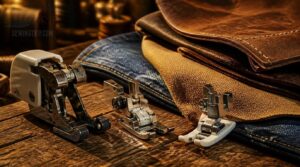
Thick fabric has a way of exposing every weakness in your setup — skipped stitches, shifting layers, seams that bunch and drag. The right specialty foot addresses these problems at the source, not as a workaround but as a real fix. Here’s what each one actually solves.
Getting the details right matters too — adjusting presser foot height on a Singer keeps layers feeding evenly and stops skipped stitches before they start.
Preventing Uneven Fabric Feeding
A walking foot also align patterned fabrics to prevent shifting when sewing thick layers.
Uneven feeding often starts before you sew a single stitch. If your walking foot isn’t installed correctly — arm seated on the needle clamp screw, foot tightened firmly — it wobbles, and your feed dogs never sync properly.
Then adjust presser-foot pressure in small increments and drop your speed to half. That combo keeps thick layers feeding consistently, without bunching.
Reducing Layer Shifting
Layer shifting is the quiet project-killer. Even with perfect installation, thick fabrics creep if your foot isn’t actively gripping both layers at once.
Synchronized feeding mechanisms solve this by driving top and bottom layers at identical speeds. Here’s what keeps layers locked:
- Top-layer grip holds slippery materials like vinyl and denim
- Dual feed mechanisms eliminate differential feeding entirely
- Reducing speed to 50–75% maintains alignment across bulky stacks
Managing Bulky Seam Height
Keeping your seams flat when they suddenly stack up is one of those skills that separates confident sewers from frustrated ones. When your foot hits a thick seam, it tilts — and that tilt throws off everything.
That’s where bi-level clearance and self-leveling mechanisms earn their place. Tools like the Hump Jumper slide under the foot heel, keeping it level as you cross the bump.
Improving Stitch Consistency
Once your foot stays level, your stitches follow suit. Synchronized feeding mechanics pull every layer at the same rate, so your needle hits the fabric consistently — no skipping, no bunching.
A walking foot or compound-feed system keeps that rhythm locked in, while pressure adjustment fine-tunes tension across thick stacks for even, reliable results every time.
Protecting Fabric Surfaces
Even the best stitching can’t save a surface that’s already damaged. A nonstick foot glides over leather, vinyl, and suede without friction marks, while Teflon coatings prevent sticky fabrics from dragging or distorting under tension.
- Hydrophobic bead technology keeps spills from soaking into fibers
- UV color preservation shields fabric from fading
- Nano-filler abrasion resistance hardens surface fibers against scuffs
- Stain neutralizer efficacy blocks oils and dyes at contact
- Protective coating maintenance restores barrier strength after cleaning
Best Feet for Thick Fabrics
Not all presser feet are built for the heavy stuff, but a few genuinely are. The right foot can mean the difference between a frustrating jam and a clean, confident seam. Here are three worth keeping in your kit.
1. Brother Heavy Duty Walking Foot
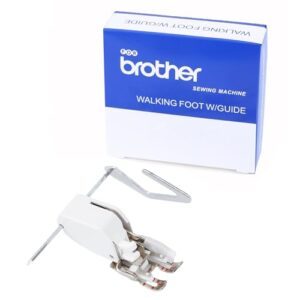
The Brother Heavy Duty Walking Foot is one of the best tools you can add to your heavy-fabric setup.
It uses built-in feed dogs to grip both the top and bottom fabric layers simultaneously, keeping everything moving at the same rate. That means no more drifting or puckering across thick quilts, denim, or upholstery.
It also offers interchangeable soles — including an open-toe option — so you maintain clear visibility while stitching dense layers.
| Best For | Quilters and sewists working with heavy or layered fabrics like denim, leather, or upholstery who want consistent, even feeding without the high cost of an OEM walking foot. |
|---|---|
| Primary Use | Quilting & heavy fabric sewing |
| Compatibility | Low-shank home machines |
| User Level | Hobbyists & professionals |
| Project Types | Garments, quilts, home décor |
| Key Limitation | Straight stitch only |
| Material | Metal & plastic construction |
| Additional Features |
|
- Feeds multiple fabric layers simultaneously, preventing shifting and puckering on thick materials
- Includes a built-in ¼-inch quilting guide for clean, straight-stitch precision
- Compatible with Brother and several other low-shank machines, making it versatile for hobbyists and professionals alike
- The snap-fit attachment can be unreliable, with some users reporting the foot detaching after minimal use
- Plastic components like the dog teeth and fork may wear down quickly under heavy stress or snag fabric
- Limited to straight stitches only — zigzag or decorative stitch options won’t work with this foot
2. Schmertz Universal 80/12 Needles
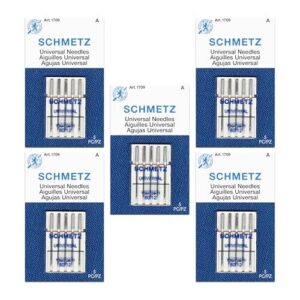
Pair your walking foot with the right needle, and everything clicks into place. The Schmertz Universal 80/12 is a reliable choice for medium-weight projects — quilting cotton, broadcloth, and linen all respond well to its fine, snag-resistant point.
Before committing to a walking foot, run your machine and needle combination through a quilting machine compatibility chart to confirm the pairing holds up across your go-to fabrics.
The 80/12 size isn’t built for heavy denim or thick upholstery stacks, but it manages consistent layered stitching cleanly. Each pack holds roughly 100 needles, so you won’t be scrambling mid-project.
| Best For | Home sewers who regularly work with medium-weight fabrics like quilting cotton, broadcloth, and linen and want a reliable, long-lasting needle supply on hand. |
|---|---|
| Primary Use | Quilting, embroidery & apparel |
| Compatibility | All home sewing machines |
| User Level | Occasional to regular sewers |
| Project Types | Woven & knit apparel, quilts |
| Key Limitation | Single needle size only |
| Material | Steel needle, plastic shank |
| Additional Features |
|
- Universal fit works with virtually any home sewing machine, so no compatibility guesswork
- Ball-point tip reduces fabric snags and delivers consistent stitch quality on both woven and knit materials
- ~100 needles per pack means fewer mid-project supply runs
- Single size (80/12) isn’t ideal for very delicate fabrics like fine silk or heavy-duty materials like thick denim
- Bulk quantity is overkill for occasional hobbyists or anyone with limited storage
- Not compatible with industrial or heavy-duty machines that need larger specialty needles
3. Natural Cotton Quilt Batting
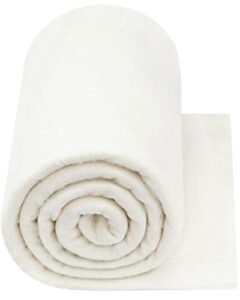
Think of cotton batting as the quiet foundation that holds your quilt’s layers together.
This 100% cotton batting is flat, lightweight, and cuts cleanly — making it easy to layer under your walking foot without fighting the fabric.
It holds stitches up to 4 inches apart and shrinks by less than 3% after washing.
No pre-washing needed; just flatten any vacuum-pack creases, load it up, and stitch.
| Best For | Quilters of all skill levels who want a breathable, easy-to-work-with batting for all-season quilts, wearable art, or craft projects like pot holders. |
|---|---|
| Primary Use | Quilting & craft projects |
| Compatibility | Hand & machine quilting |
| User Level | Home quilters & crafters |
| Project Types | Quilts, costumes, pot holders |
| Key Limitation | No pre-washing allowed |
| Material | 100% pure cotton |
| Additional Features |
|
- Pure cotton construction means it’s breathable, flat, and cuts cleanly — no bunching or fighting the fabric
- Supports stitches up to 4 inches apart with minimal shrinkage (under 3%), so your finished quilt holds its shape
- Machine washable after quilting with no pre-washing required, making it low-maintenance from start to finish
- Vacuum packaging can leave creases that need to be flattened out before you start stitching
- Pre-washing will damage the batting, so you have to follow post-quilting wash instructions carefully
- Some users report lint shedding or have doubts about cotton purity, so it’s worth testing a small piece first if you’re sensitive
Walking Feet for Layer Control
If you’ve ever watched thick layers creep and bunch under a standard presser foot, a walking foot is the fix you’ve been missing. It grips both the top and bottom layers at once, keeping everything moving together smoothly. Here’s what makes it such a breakthrough for heavy fabrics.
Dual-feed Gripping Action
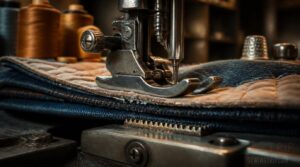
A walking foot works like a team of hands gripping your fabric from both above and below at once. That’s dual-feed gripping action — and it’s what sets a walking foot apart.
Synchronized jaw tracking keeps each side aligned independently, so fabric creep prevention stays consistent even across uneven layers.
Bidirectional motion pulls fabric evenly, and built-in tension sensors catch resistance before skipped stitches happen.
Denim and Canvas Seams
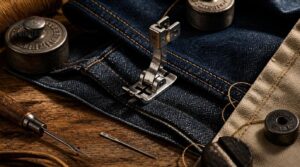
Denim and canvas fight you every step. Their twill stress patterns pull diagonally across seams, which is exactly why skipped stitches appear without warning. A walking foot grips both layers simultaneously, keeping everything moving at the same pace.
Use flat felled seams with reinforced topstitching — and always grade your seam allowances to cut bulk. Size 14–16 needles handle the job cleanly.
Quilting Bulky Layers
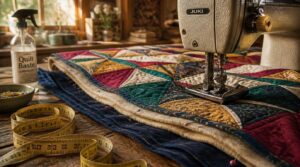
Quilting thick layers is a different challenge altogether. Spray basting all three layers first keeps everything locked before a single stitch drops. Give your backing fabric an extra two inches — it shifts more than you’d expect.
- Manage batting loft to avoid lumps
- Use 3.0–4.0 mm stitch length to prevent stacking
- Let the walking foot feed evenly
- Never tug — let the machine lead
Reducing Fabric Drag
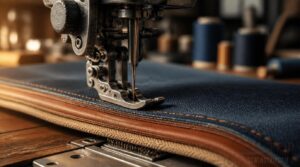
Drag sneaks up on you — suddenly your fabric’s fighting the machine instead of flowing through it. Surface friction is usually the culprit.
A walking foot synchronizes top and bottom feed dogs, moving every layer together and eliminating that tug-and-resist cycle. Pairing it with thread tension calibrated for your fabric stack keeps things gliding, not grinding.
When to Use One
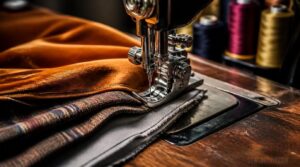
So when should you actually reach for a walking foot? Think three or more layers, slippery materials like silk or vinyl, or any project where pattern alignment can’t afford to drift — matching plaids, quilted panels, directional velvet.
It also shines on upholstery-weight fabrics and layered garment assembly, where lining and outer fabric must feed together without shifting.
Roller and Nonstick Feet Benefits
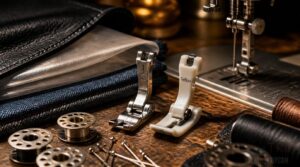
Walking feet handle layers beautifully, but when your project involves leather, vinyl, or thick seams, you need a different kind of muscle.
Roller and nonstick feet are built specifically for these trickier materials — keeping things moving smoothly without sticking, slipping, or leaving marks.
Here’s what makes them worth having in your presser foot lineup.
Climbing Over Thick Seams
Thick seams are like speed bumps — your foot hits the ridge and everything stalls. That’s where a bulky seam jumper earns its place.
- Use a Hump Jumper to level the foot instantly
- Extend stitch length to 3–4 mm for even fabric feeding
- Slow your speed to improve needle penetration through bulky layers
Managing seam ridges this way helps you avoid skipped stitches every time.
Feeding Leather Smoothly
Leather has a way of fighting back — it grips, sticks, and scuffs if your foot isn’t right.
A roller foot glides over the grain instead of dragging across it, keeping the surface immaculate. Pair it with a nonstick Teflon coating, and the hide feeds smoothly, stitch after stitch, without skipping or shifting layers.
Handling Vinyl and Suede
Vinyl and suede demand a nonstick Teflon foot — nothing else keeps these materials moving smoothly. Unlike leather, vinyl can crack at sharp bends, so reduce presser foot pressure to avoid stressing the surface. For suede, a walking foot prevents slipping while protecting the nap.
Always dry both fabrics naturally; heat warps vinyl and watermarks suede permanently.
Preventing Sticky Fabric Drag
Sticky fabric drag sneaks up on you — one moment the material flows, the next it’s grabbing against the foot. A nonstick Teflon foot eliminates most of that friction instantly.
For stubborn materials, try a light fabric dampener mist along the edge before feeding.
Anti-static spray neutralizes electrical cling, while controlling ambient humidity keeps synthetic fabrics from generating fresh static as you sew.
Avoiding Surface Marks
Even a perfect seam loses its finish if the foot drags marks across your fabric.
A nonstick foot glides cleanly over leather, vinyl, and suede without catching fibers.
Balance your thread tension carefully — too tight and the needle pinches the surface.
Lower presser foot pressure reduces distortion on thick layers, while a protective press cloth shields delicate surfaces from heat impressions.
Clearance Designs for Bulky Seams
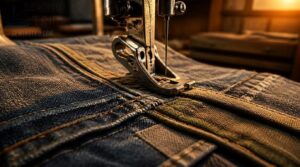
When thick seams pile up, a standard presser foot can stall, tilt, or crush your fabric before you finish a single pass. That’s where clearance designs step in — built to handle the height and bulk that regular feet simply can’t. Here’s what makes them work so well on heavy stacks.
High-clearance Foot Soles
A high-clearance sole raises the foot 1.5 to 3.0 mm above thick layers, so bulky seams pass underneath without binding. That small lift makes a real difference when your walking foot hits a denim stack or heavy-material quilting project.
Composite plate construction keeps the sole rigid yet light, preventing flex under pressure while protecting fabric surfaces from snagging during every pass.
Open-toe Visibility Benefits
An open-toe walking foot is like a window into your work. Stitch alignment monitoring becomes second nature when you can actually see the needle drop in real time.
You’ll catch fabric snagging before it ruins a seam, and needle entry precision improves noticeably. That clear sightline also protects delicate surface finishes from accidental foot contact.
High-shank Foot Options
If open-toe feet give you visibility, high-shank feet give you stability. Machines with taller needle bars need this extra height to stay properly aligned.
Here’s what high-shank options bring:
- Lateral stability — less side-to-side wobble during stitching
- Extended contact area — better guiding leverage over thick material
- Reinforced mounting plates — resist bending under heavy presser foot pressure
You’ll often need high-shank adapters to mount a walking foot correctly.
Thick Stack Movement
Stability matters — but so does movement. When you’re feeding thick fabric stacks, something surprising happens: air trapped between layers creates buoyant resistance that disrupts even feeding. Stack height amplifies this, and humidity makes fabric stiffer, slowing how layers settle.
A walking foot coordinates top and bottom movement, keeping multilayer fabric handling smooth and consistent even as conditions shift.
Reduced Seam Distortion
Distortion often sneaks in when seam bulk forces the needle off its ideal angle. That’s why grain line alignment matters — a walking foot keeps layers moving together, so needle penetration angles stay consistent. Stitch density adjustments and thread tension balance work together to prevent seam puckering. Control those three, and fabric distortion reduction happens naturally.
Here’s what to monitor:
- Check that layer compression stays even before stitching.
- Set stitch density lower on thick fabrics to ease tension.
- Confirm thread tension is balanced top to bottom for even fabric feeding.
Matching Feet to Your Machine
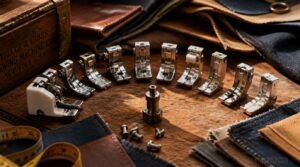
Not every specialty foot fits every machine, and using the wrong one is a fast track to frustration. Your machine’s shank type is the starting point — get that right, and everything else clicks into place. Here’s what you need to know before you shop.
Low-shank Compatibility
Most domestic machines use a low-shank system — roughly ¾ inch from the needle bar to the foot mounting screw. This means your heavy duty sewing foot snaps on without fuss.
| Feature | Benefit |
|---|---|
| Snap-on mechanism stability | Fast swaps, secure fit |
| Universal shank adapters | Broader foot compatibility |
| Needle groove alignment | Prevents skipped stitches |
Always check brand compatibility charts before buying. Clean your foot saddle regularly to keep thick fabrics feeding smoothly.
High-shank Requirements
Unlike low-shank machines, high-shank systems measure 1¼ inches from needle bar to mounting screw — and that extra height changes everything.
- Shank adapter compatibility determines which feet actually fit
- Needle eye clearance reduces deflection through thick layers
- Vertical space advantages let bulky stacks pass cleanly
- Pressure adjustment benefits prevent crushing dense seams
Always confirm your shank height measurement before buying any sewing machine accessories.
Slant-shank Limitations
Singer’s slant-shank machines have an angled presser bar, and that diagonal tilt creates real headaches when you’re working with thick fabrics.
Standard walking feet simply won’t attach — the diagonal alignment stress shifts needle penetration angles, risking fabric skew across bulky layers.
Your machine shank compatibility must match exactly, or you’ll fight uneven feeding and skipped stitches on every heavyweight seam.
Brand-specific Adapters
If your machine is a Bernina or Pfaff, brand-specific adapters are non‑negotiable — generic feet simply won’t mount correctly. Bernina requires its own adapter system, while Pfaff IDT machines accept only designated rotary holders.
Buy from authorized dealers to protect your warranty.
Keep adapter contact surfaces clean and lint‑free, and check attachment screws regularly to guarantee secure, consistent feeding.
Snap-on Versus Screw-on
Think of it as speed versus strength. Snap-on feet attach in seconds — press, click, done — making mid-project swaps seamless. Screw-on feet take longer but hold tighter under heavy-duty stitching.
- Snap-on: fast changes, great for varied projects
- Screw-on: rigid fixation, ideal for thick upholstery runs
- Both: inspect regularly for wear and debris
Settings That Support Specialty Feet
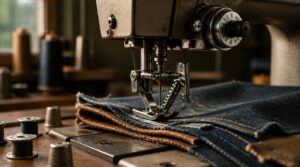
Your specialty foot is only half the equation — the settings you dial in do just as much heavy lifting. Even the best walking foot will struggle if your needle, thread, and pressure aren’t matched to the job. Here are the key adjustments that keep everything working together on thick fabric.
A specialty foot means nothing if your needle, thread, and pressure aren’t matched to the job
Heavy-fabric Needle Sizes
Your needle is your first line of defense on thick fabric. For denim and canvas, needle sizes 100/16 to 110/18 give you the shaft strength to punch through dense layers cleanly.
Leather demands 120/19 or larger to prevent deflection.
A bigger needle also means a wider eye — essential for heavier threads to pass without shredding.
Strong Thread Choices
Your thread has to match the muscle of your fabric. For thick layers, polyester thread is your go-to — strong, stretch-resistant, and virtually shrink-proof. Nylon adds elasticity for seams that flex.
Here’s your shortlist for heavy fabrics:
- Core spun thread — polyester core, cotton sheath — combines strength with smooth feeding
- Bonded or waxed coatings reduce friction and skip-stitching through dense layers
- Heavier Tex weight thread builds seam durability where it counts
Longer Stitch Length
Once your thread is dialed in, stitch length becomes the next lever to pull. For thick fabrics, 3–4 mm is your target range.
Longer stitches improve thread load distribution, reduce needle hole density, and give seams room to flex. With a walking foot, longer stitches work with the grip for steady, even feeding through heavy layers.
Reduced Presser-foot Pressure
Stitch length sets the rhythm — but presser foot pressure controls the grip. Too much pressure crushes thick materials, causing seam puckering and thread nests underneath.
Drop it slightly on heavy fabrics, and you protect delicate fibers, enhance layer feeding, and reduce heat buildup in the mechanism.
Start mid-range, test on scrap, then fine‑tune.
Slow Bulky-seam Stitching
Speed is the enemy of bulky seams. Slowing down lets your machine feed thick fabrics evenly and prevents skipped stitches.
| Technique | Benefit |
|---|---|
| Handwheel rotation | Precise needle placement at peak bulk |
| Stitch length 3–3.5 mm | Flatter seam, less thread strain |
Pause at the thickest point, check alignment, then continue with steady, consistent pedal pressure.
Frequently Asked Questions (FAQs)
Does a walking foot help with thick fabric?
Yes — a walking foot excels with thick fabrics. Its dual-feed action moves every layer in sync, preventing fabric bunching and ensuring consistent stitch alignment across denim, quilts, and canvas with far less drag.
How long do specialty presser feet typically last?
Metal feet outlast plastic ones easily — often beyond a million stitches. With regular cleaning, a walking foot can serve you 5 to 10 years. Heavy projects shorten that window fast.
Can specialty feet work on vintage sewing machines?
Absolutely — vintage machines can work with specialty feet, though shank type matters most. Check if yours is low, high, or slant-shank first. Use vintage shank adapters if needed, and always test on scrap fabric before committing.
What maintenance do thick-fabric feet require after use?
After each sewing session, brush away lint with a soft brush, wipe the shank with a damp cloth, dry thoroughly, and store in a lined case to prevent rust and warping.
How do shims help when crossing uneven seam heights?
When your foot hits a thick seam, the whole rhythm breaks. Shims — like the Hump Jumper — level that height instantly, stabilizing layers and preventing skipped stitches as you cross.
Conclusion
The difference between a frustrating project and a perfect finish often comes down to one small attachment. That’s the quiet truth most sewists discover too late—after the bunching, the drag marks, the skipped stitches.
Understanding how specialty feet help with thick fabric isn’t just technique; it’s the shift that changes everything.
Match the right foot to your material, dial in your settings, and suddenly your machine stops fighting you. It starts working with you.
- https://www.singer.com/collections/singer-presser-feet-attachments
- https://www.goldstartool.com/sewing-machine-feet-and-attachments
- https://www.creativefeet.com
- https://treelinequilting.com/fabric-shifts/?srsltid=AfmBOophsG8ZgzmqoGsabW0a8DtmmT9yQh9vyyVKyaZqPsWEy0kgG_Fg
- https://tuffsew.com/using-a-heavy-duty-walking-foot-sewing-machine-for-thick-fabrics